“Were I a nightingale, I would act the part of a nightingale; were I a swan, the part of a swan.”
Epictetus · Discourses, Book I, chapter 16
 quolira
.com
Epictetus said it, in Discourses, Book II, chapter 5.
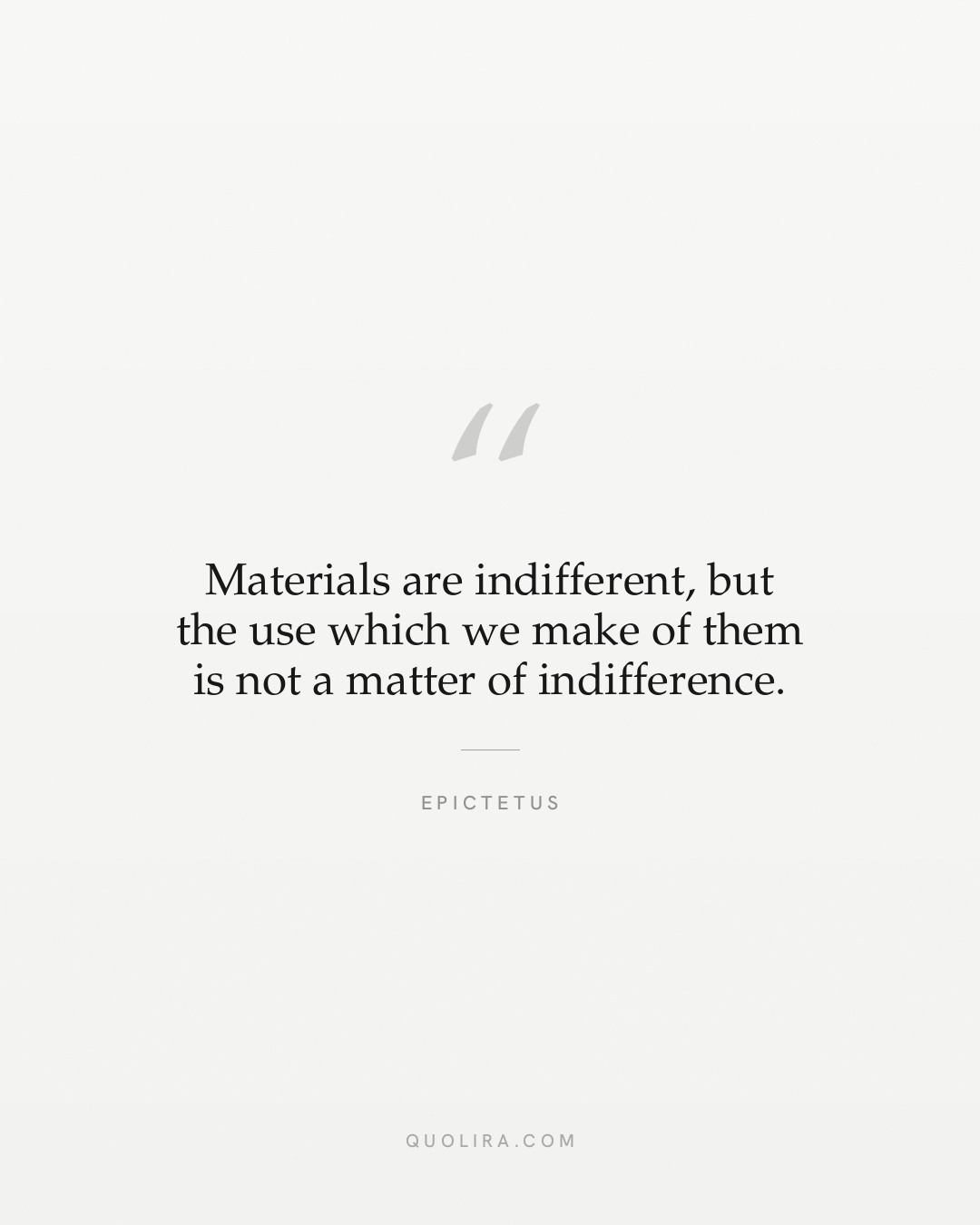
Epictetus says external materials, like wealth or a body, are neutral. What matters is how you use them. A bank balance is not a moral verdict, but the choices you make with the money are.
From the collection: 23 Best Epictetus Quotes on Fear, Freedom, and Control · More Epictetus quotes
The quote means that external things have no value in themselves, but the way we handle them does matter because it reflects our character. Epictetus separates the objects of life, such as wealth, health, and reputation, from the moral quality of our response to them. Possessions are neither good nor bad by nature, yet the choices we make about them are entirely ours and carry real moral weight.
This passage is from Book II, chapter 5 of the Discourses. Epictetus often uses the Stoic term indifferent for things that are neither virtuous nor vicious, and he insists that such things, which he calls materials, should not be treated as sources of happiness or misery. The real subject of moral attention is the use we make of them. The chapter is part of a broader discussion of how a student should understand the difference between what matters and what merely comes our way.
Epictetus was a Stoic philosopher who lived in the late first and early second centuries CE. He was born into slavery, was later freed, and taught in Rome before establishing a school in Nicopolis in western Greece. He wrote no surviving works of his own. His lectures were recorded by Arrian, who published them as the Discourses and also compiled the Enchiridion. His thought centers on the distinction between what is up to us, our judgments and choices, and what is not, and on the view that virtue alone is good.
“Were I a nightingale, I would act the part of a nightingale; were I a swan, the part of a swan.”
Epictetus · Discourses, Book I, chapter 16
“Show that you know this only, how you may never either fail to get what you desire or fall into what you avoid.”
Epictetus · Discourses, Book II, chapter 1
“Let whatever appears to be the best be to you an inviolable law.”
Epictetus · Enchiridion, sections 50-51
“Everything has two handles, the one by which it may be carried, the other by which it cannot.”
Epictetus · Enchiridion, section 43
“Don't you know that a good and excellent person does nothing for the sake of appearances, but only for the sake of having acted right?”
Epictetus · Discourses, Book III, chapter 24
“Reason is not measured by size or height, but by principle.”
Epictetus · Discourses, Book I, chapter 12
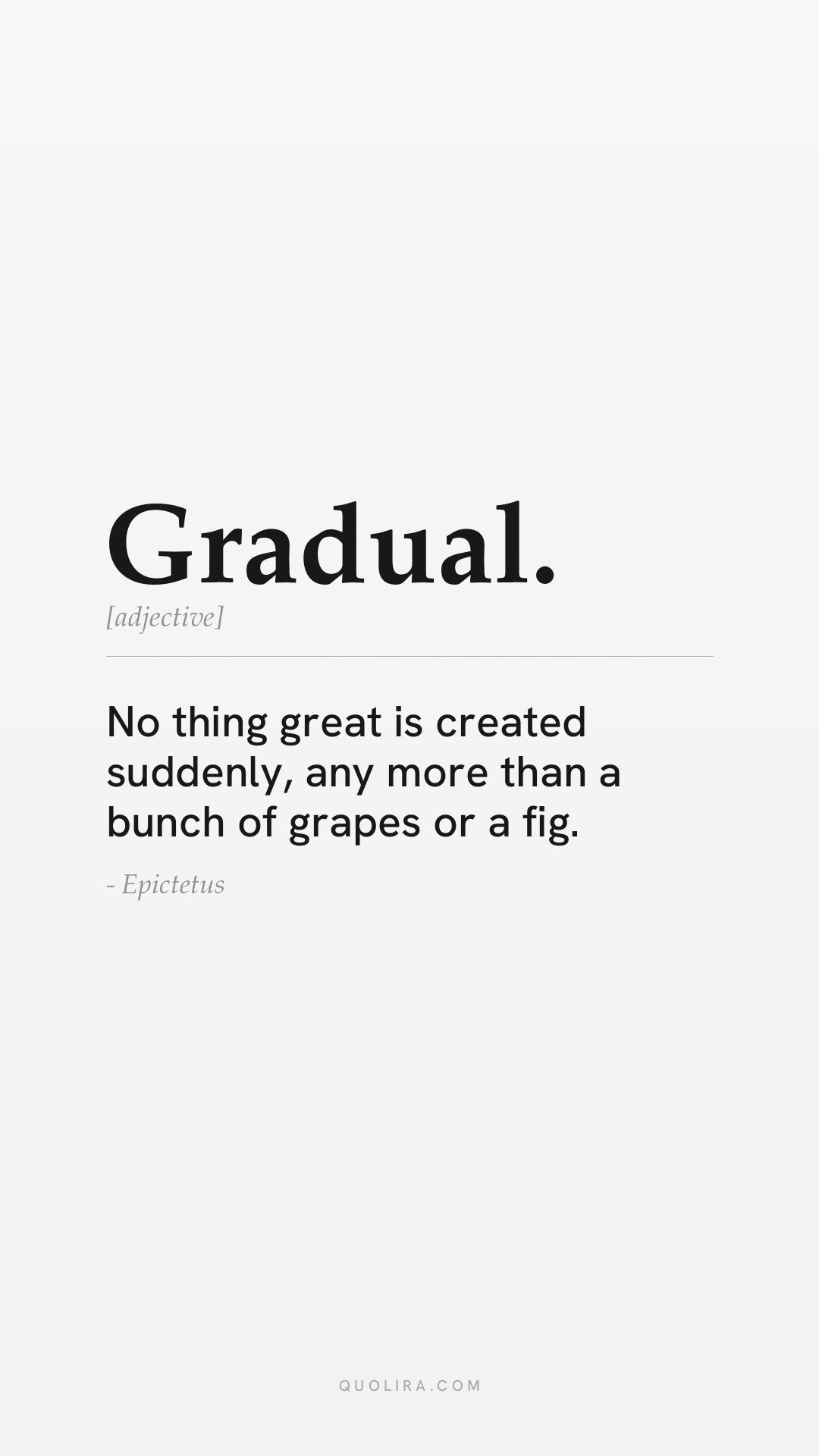
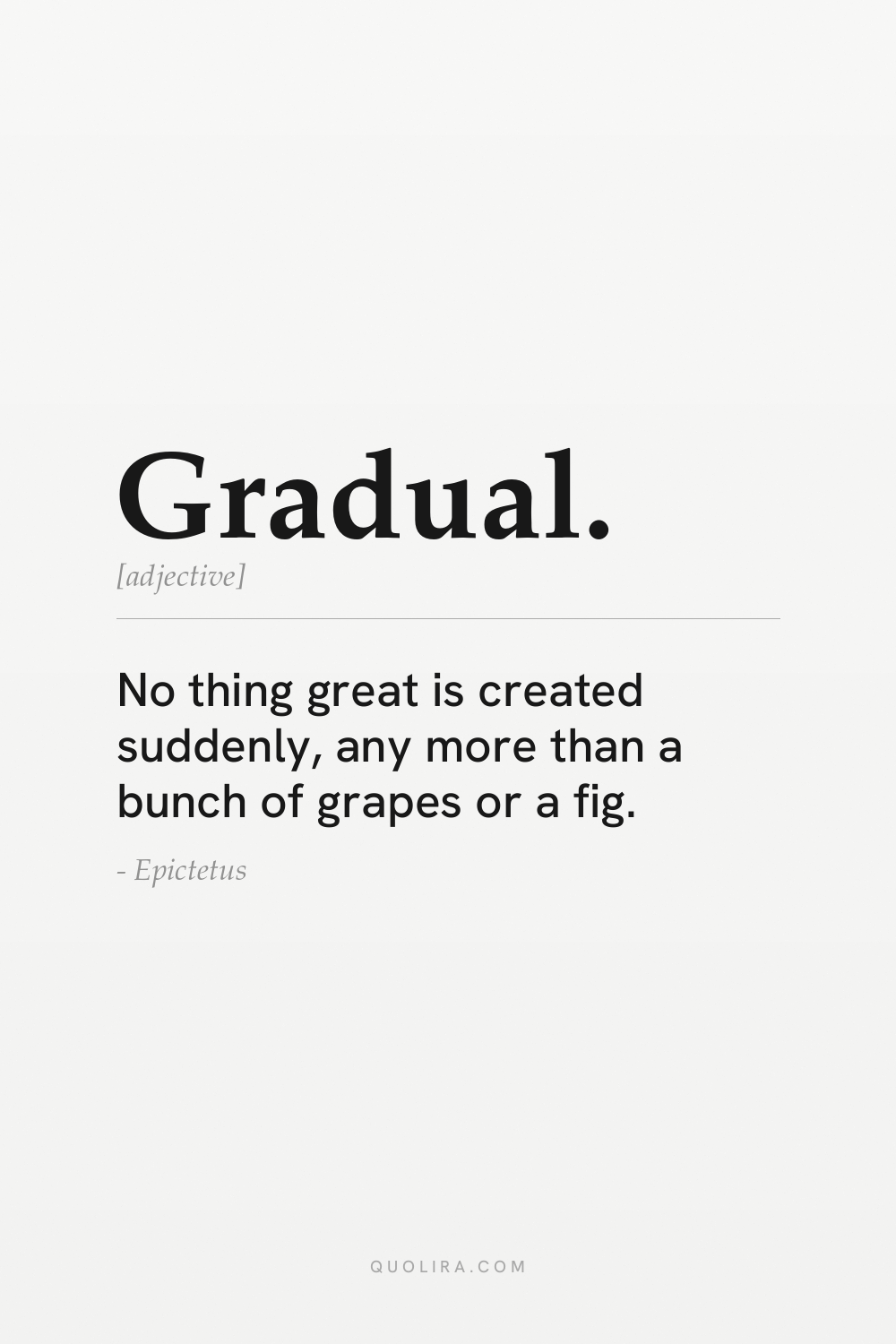
“No thing great is created suddenly, any more than a bunch of grapes or a fig.”
Epictetus · Discourses, Book I, chapter 15
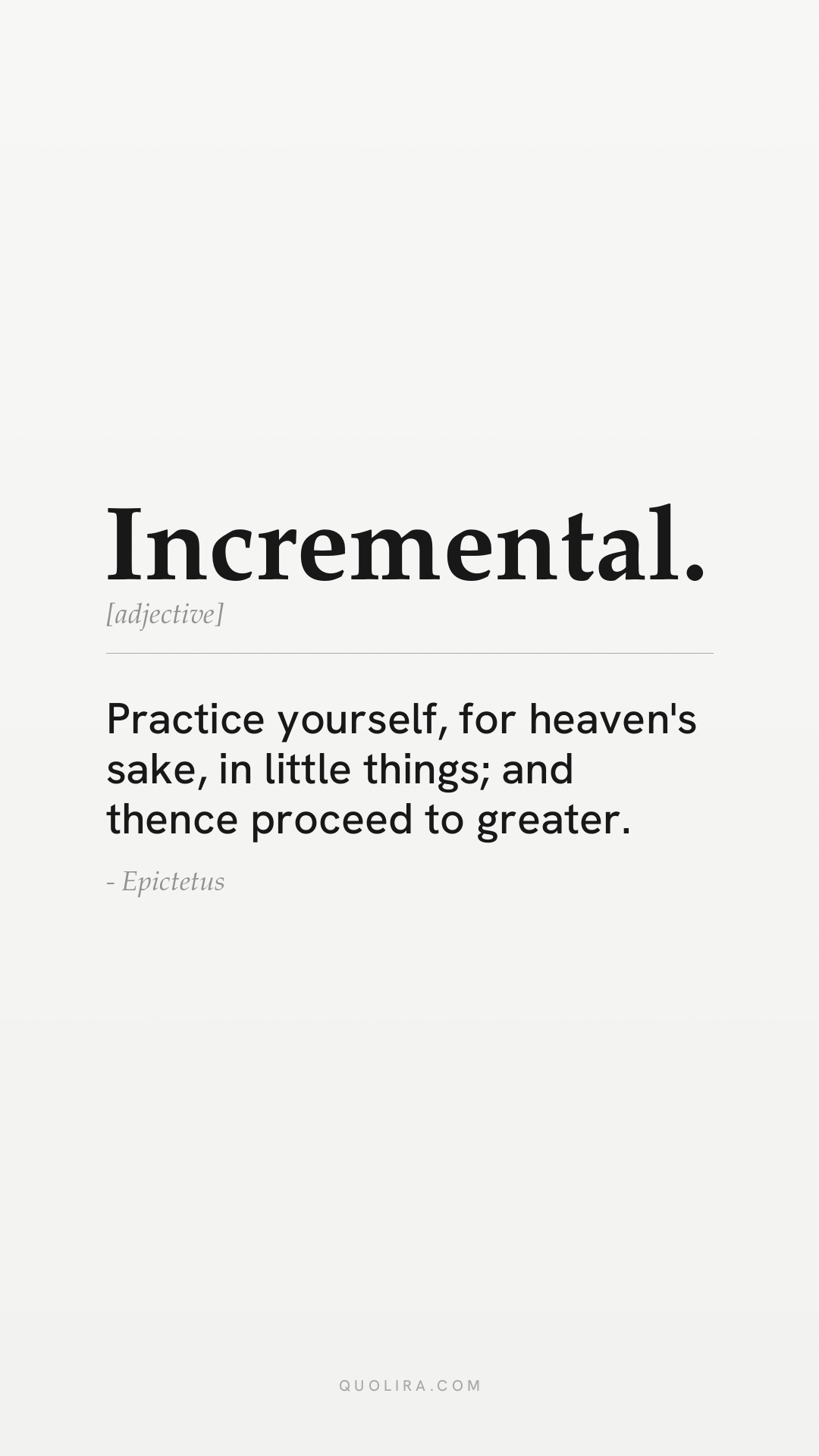
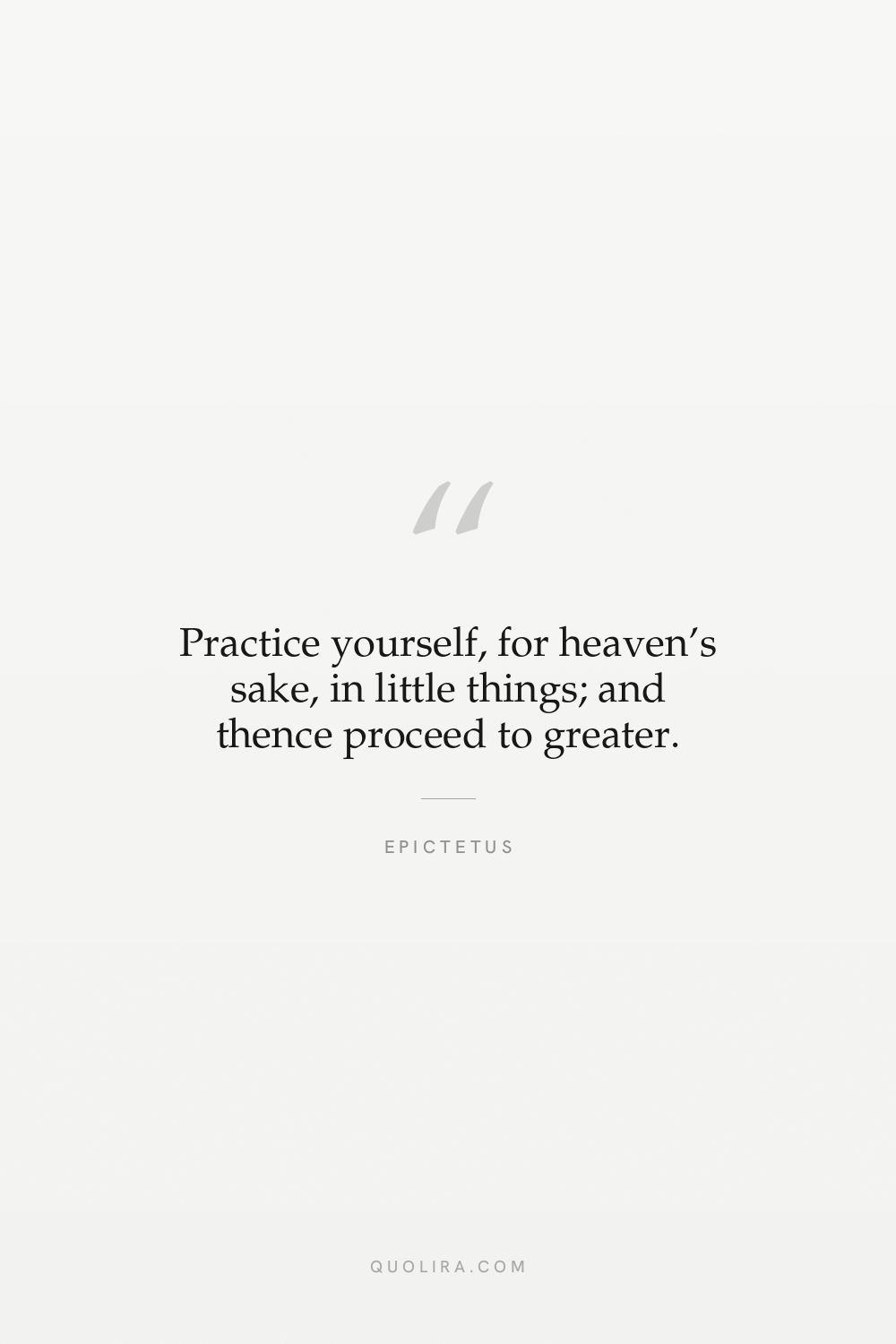
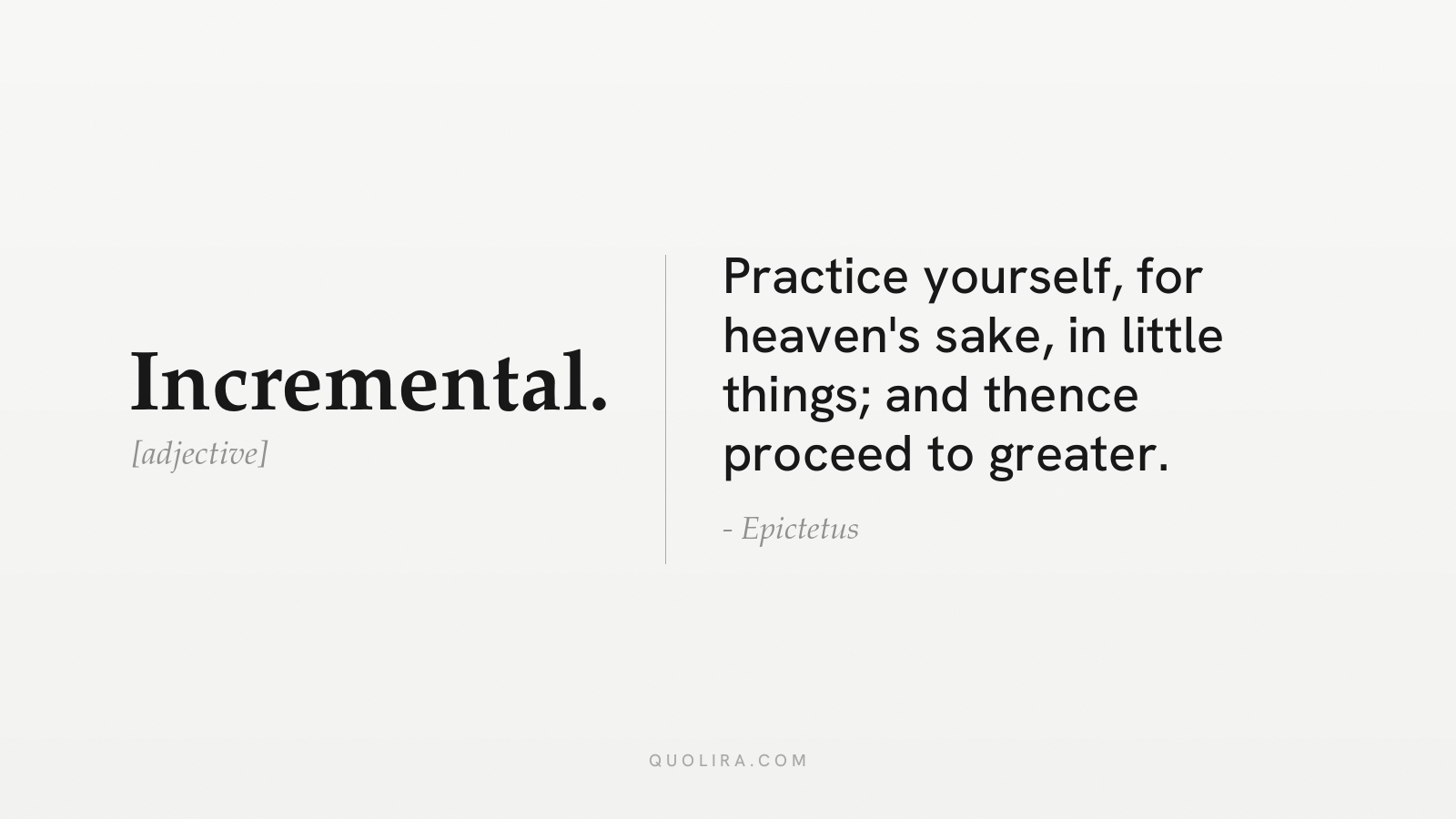
“Practice yourself, for heaven's sake, in little things; and thence proceed to greater.”
Epictetus · Discourses, Book I, chapter 18
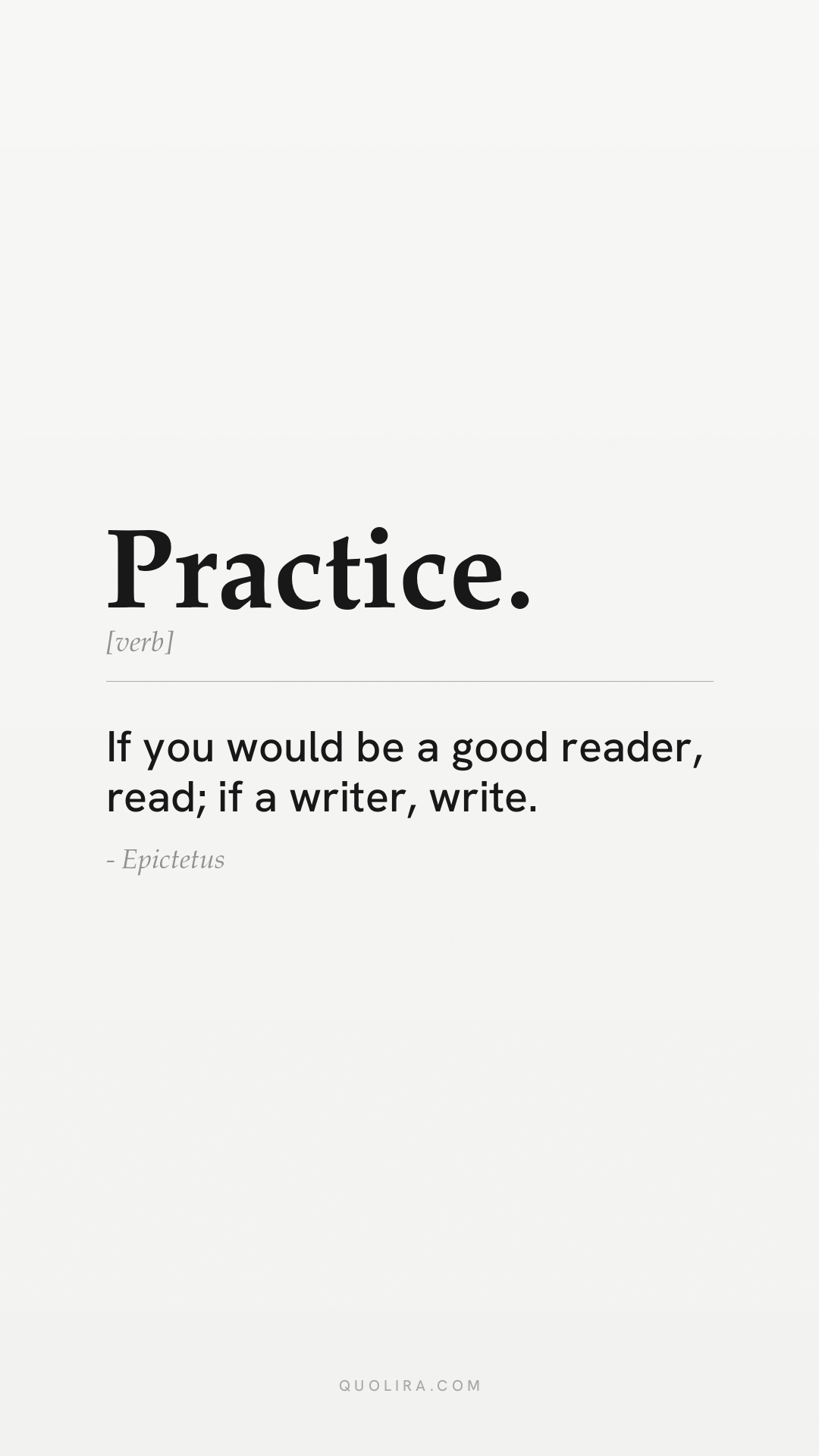
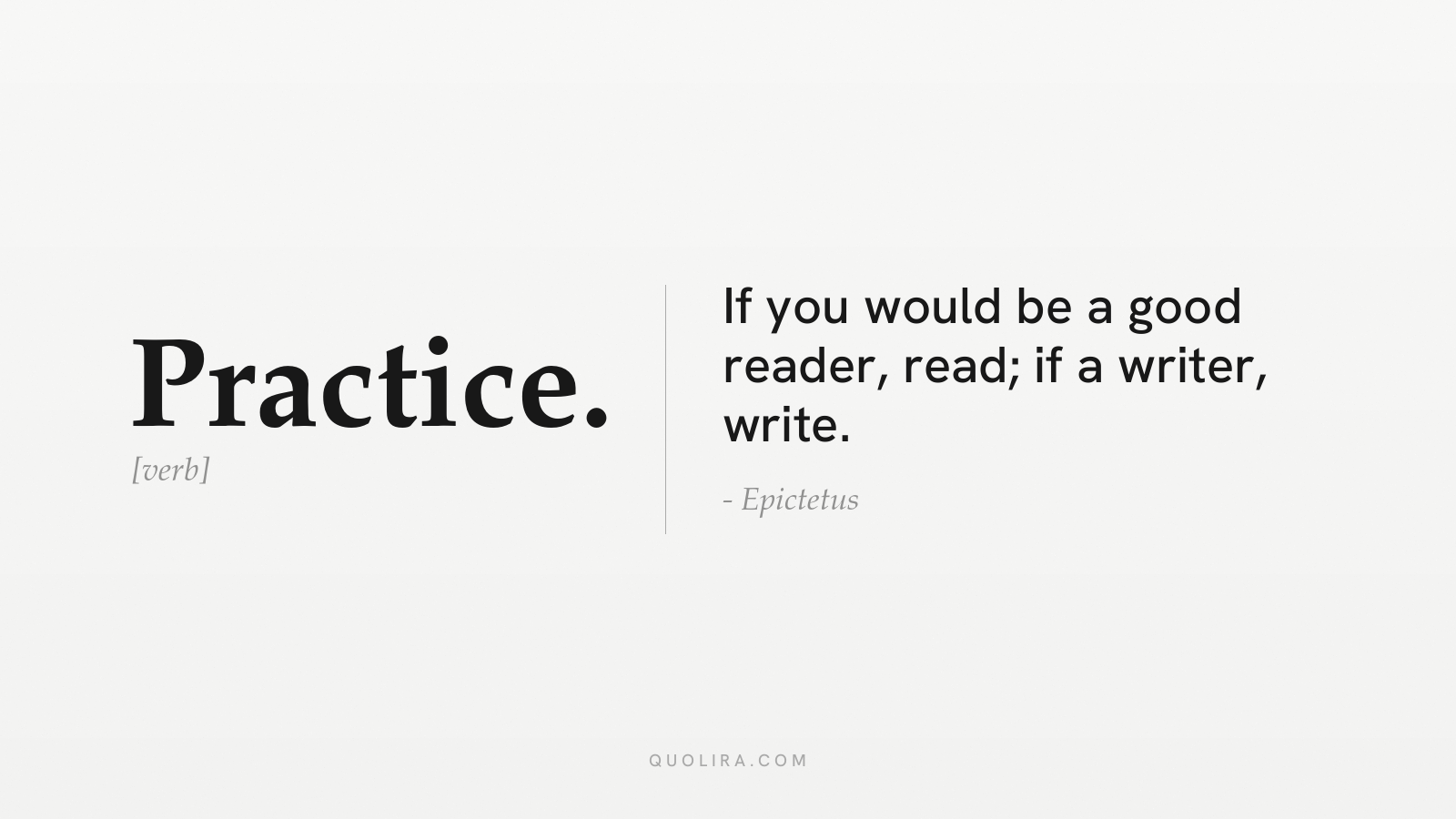
“If you would be a good reader, read; if a writer, write.”
Epictetus · Discourses, Book II, chapter 18
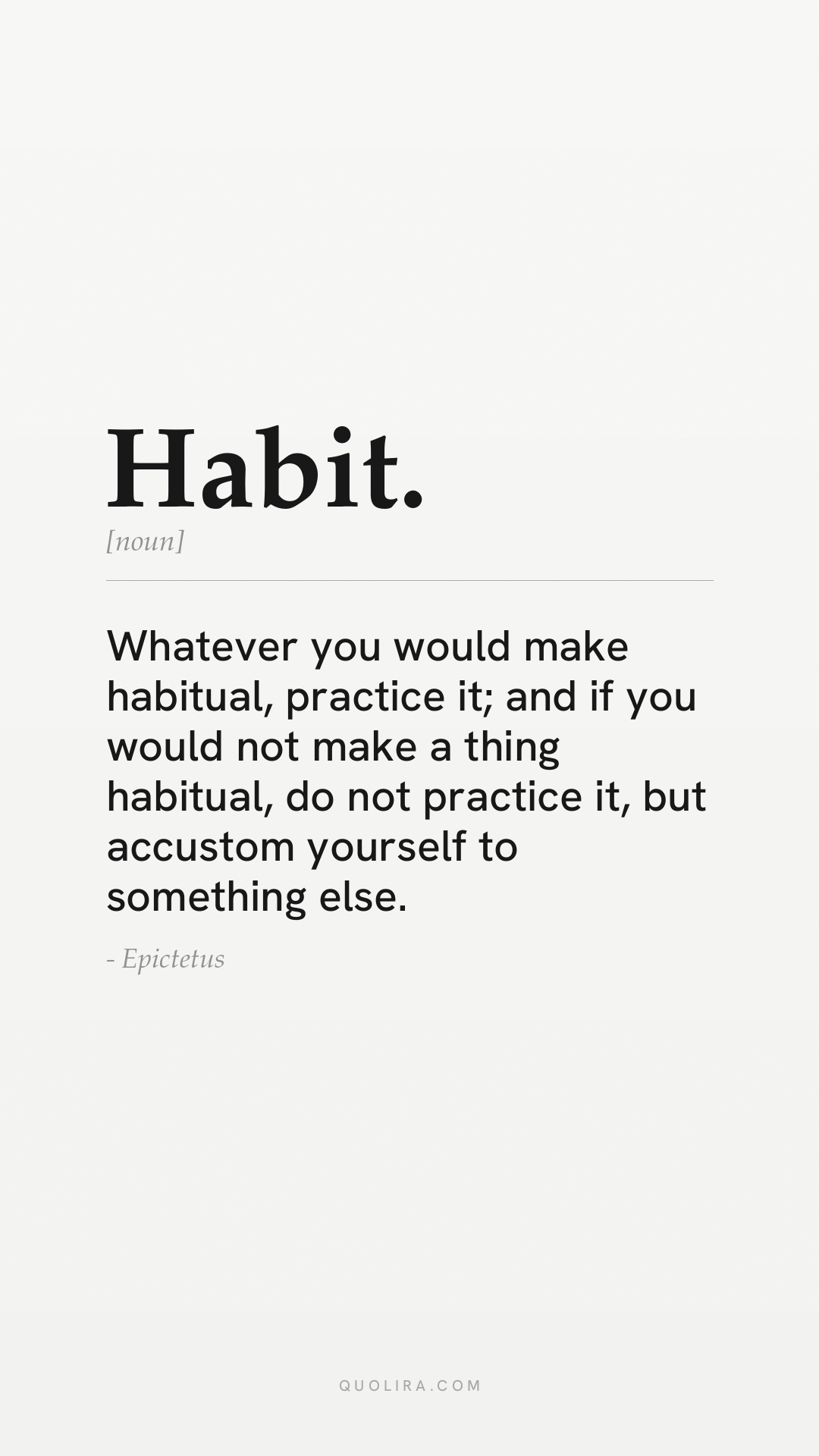
“Whatever you would make habitual, practice it; and if you would not make a thing habitual, do not practice it, but accustom yourself to something else.”
Epictetus · Discourses, Book II, chapter 18
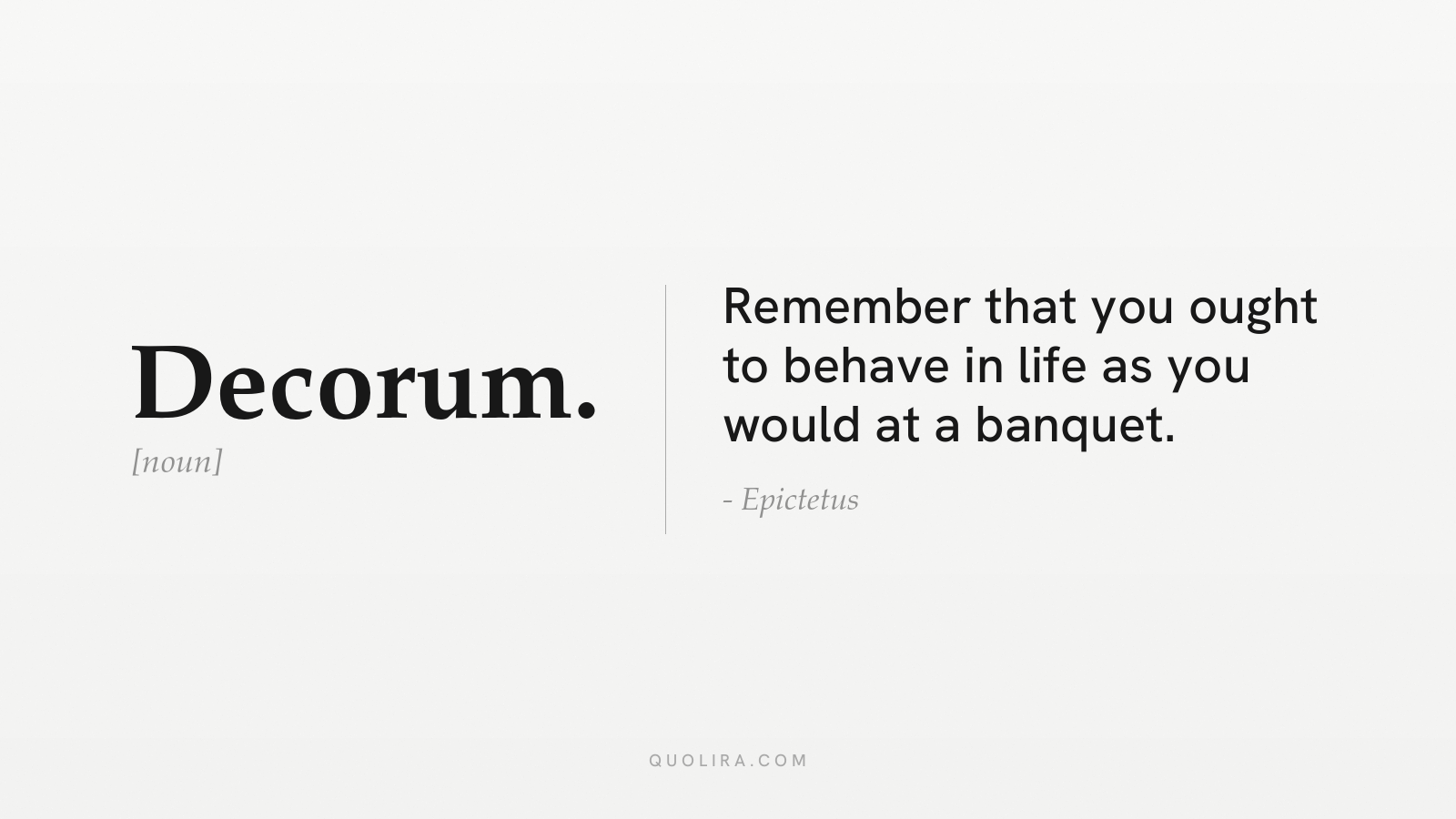
“Remember that you ought to behave in life as you would at a banquet.”
Epictetus · Enchiridion, section 15
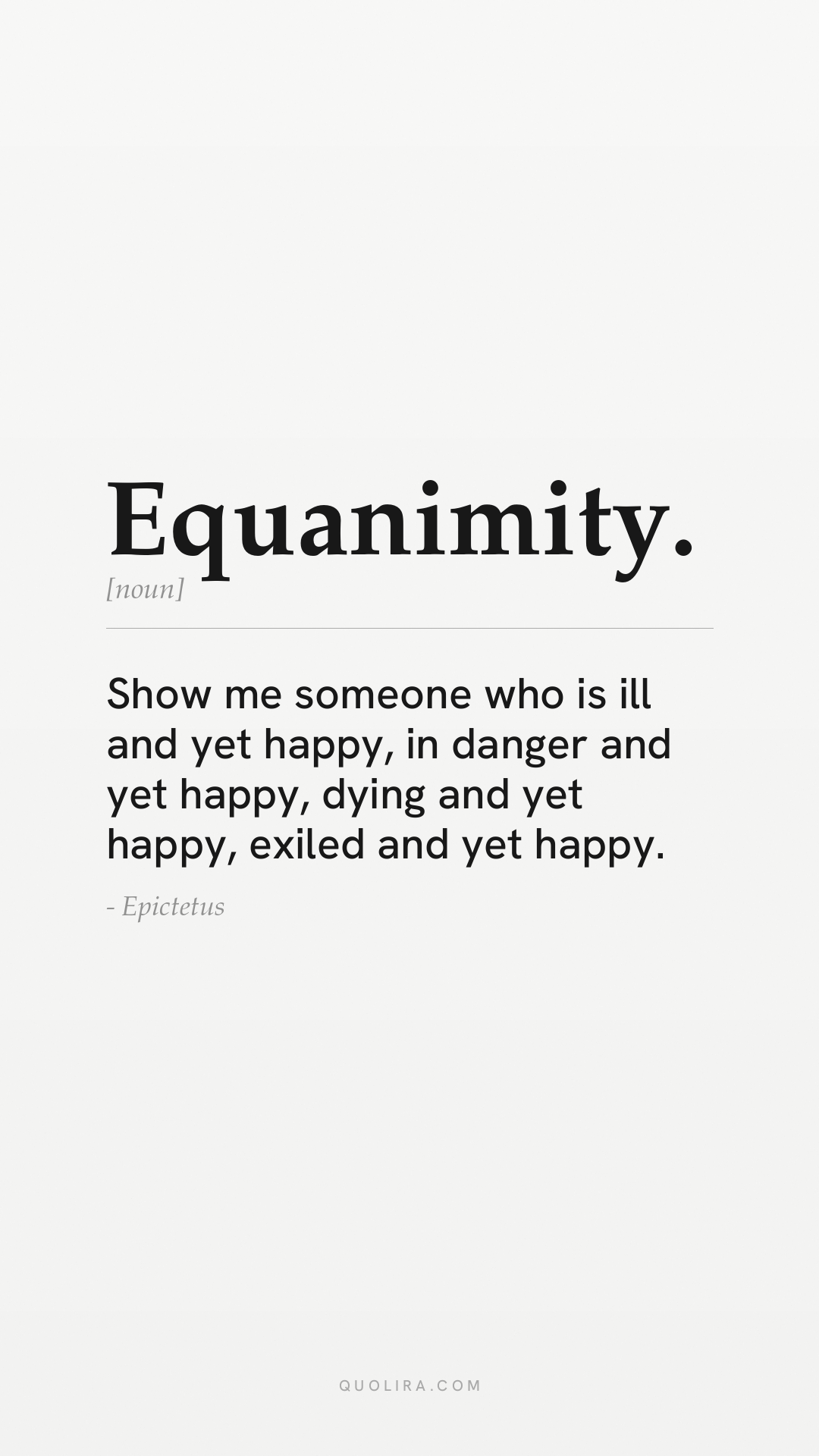
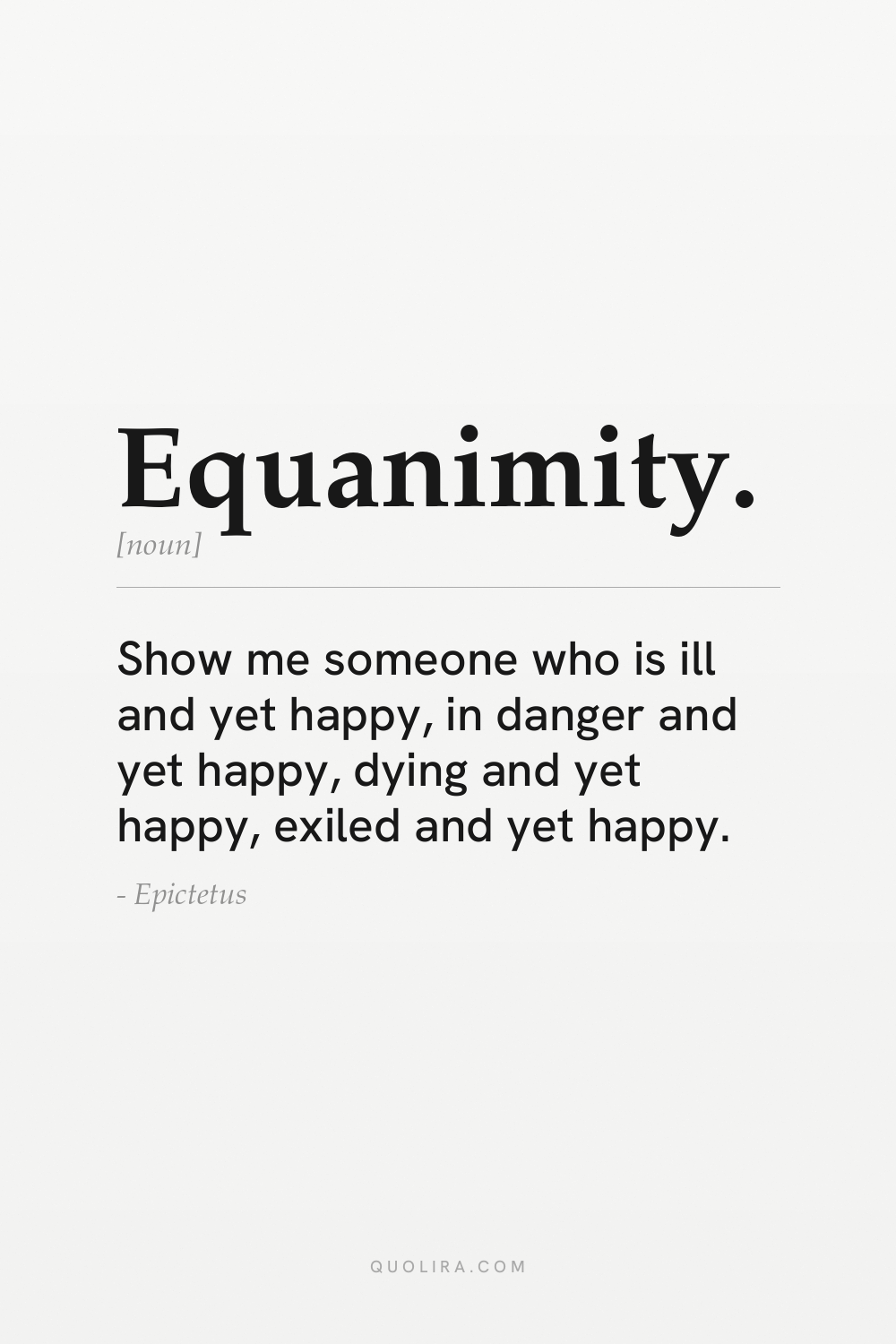
“Show me someone who is ill and yet happy, in danger and yet happy, dying and yet happy, exiled and yet happy.”
Epictetus · Discourses, Book II, chapter 19