18 Rumi Love Quotes That Still Hit Hard
Eighteen lines from the Masnavi and Divan-i Shams on love as shelter, fire, and the road back to God.
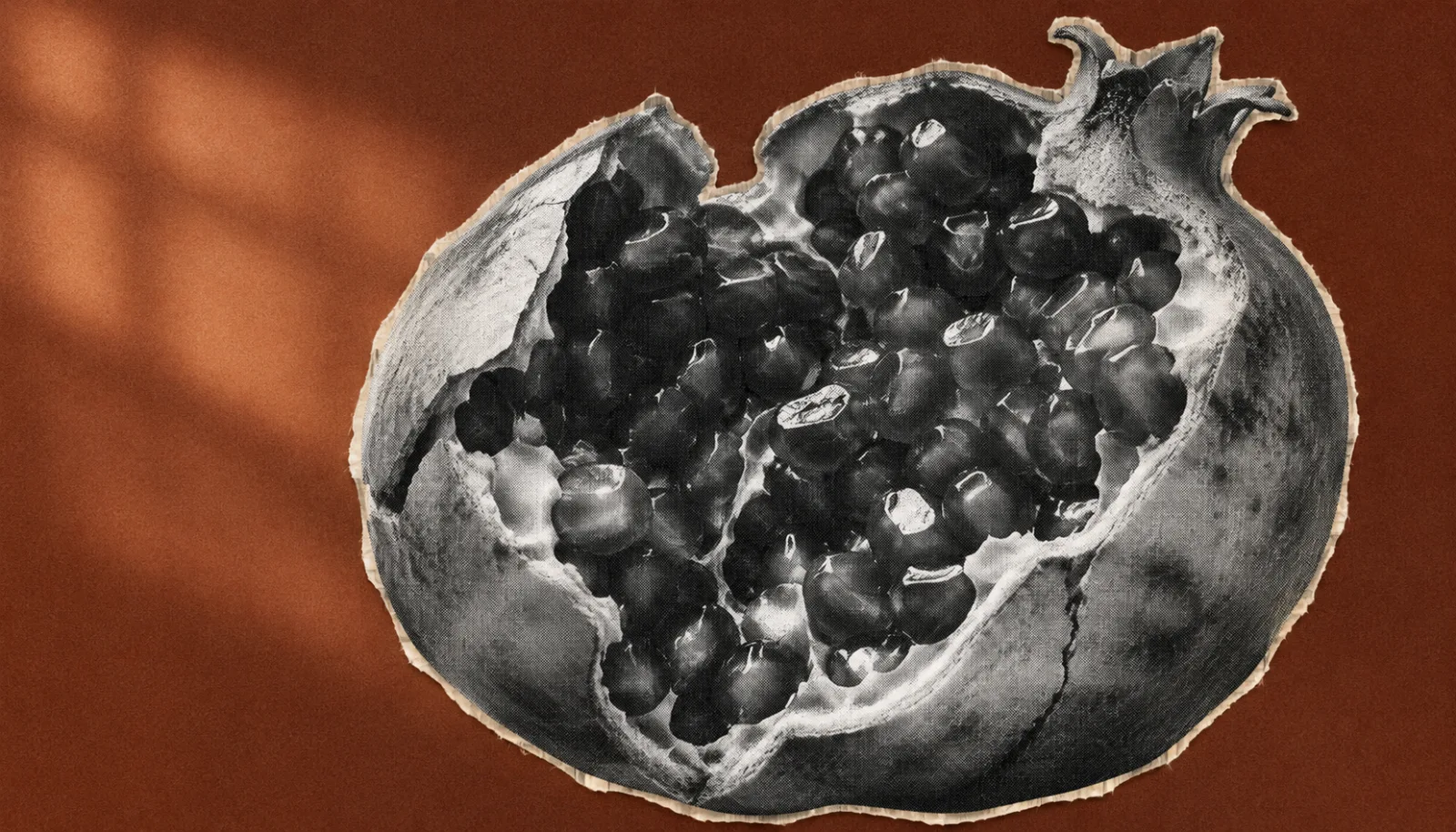
Rumi love quotes are some of the most shared lines in Sufi poetry, and the best of them are less about romance than about the heart's long road back to God. This list gathers 18 lines drawn from Rumi's Masnavi and Divan-i Shams, with the translator and source for each one. The theme of divine love runs through most of them, and they grow out of the Sufi poetry tradition that shaped Rumi's work. Start with the lines people save most often, then move to quieter passages that reward a slower read. We also flag popular lines that circulate under Rumi's name but never appear in the documented texts, so you know what you can quote with confidence. Each entry comes with a short note on what it means today.
The Most Famous Rumi Quotes on Love
Love is the ark appointed for the righteous, which annuls the danger and provides a way of escape.
Sell your cleverness and buy bewilderment. Cleverness is mere opinion, bewilderment intuition.
Rumi Masnavi, Book IV, Story 2 (tr. E. H. Whinfield, 1898)
Whinfield's 1898 translation gives this line its punch: cleverness is only opinion, while bewilderment is a kind of knowing. Most of us are too proud to stay lost for long, and that is why we stop learning. Try sitting in not-knowing for an afternoon and see what turns up.

Are you fleeing from Love because of a single humiliation? What do you know of Love except the name?
Rumi Masnavi, Book V, lines 1163-1169 (tr. Helminski, 1996)
Rumi wrote this for anyone who quit love after one humiliation. He asks a blunt question: what do you know of love beyond its name? It's a fair challenge, because one bad moment often gets treated as the whole story.

Love has a hundred forms of pride and disdain, and is gained by a hundred means of persuasion.
Rumi Masnavi, Book V, lines 1163-1169 (tr. Helminski, 1996)
Love wears a hundred kinds of pride and disdain, and it can be won in a hundred different ways. That's a useful reminder if you think one failed approach means the door is shut. Try another way in.

Love is the path and road of our Prophet. We were born from Love and Love was our mother.
Rumi The States of the Lover (tr. Gamard and Farhadi, 2008)
Rumi calls love the road of the Prophet and the mother who gave us birth. It's an unusually bold image, and it places love before identity, reason, and every other claim on us. Read it slowly and notice what you feel.

The fire of Love cooks me. Every night it drags me to the Tavern.
Rumi The States of the Lover (tr. Gamard and Farhadi, 2008)
Rumi describes love as a fire that drags him to the Tavern every night. The image is playful and a little dangerous. It asks what you would give up to belong somewhere that sees you completely.

Rumi Quotes on Divine Love and the Heart
The intellect cannot comprehend the creed of love.
Rumi says the intellect cannot grasp the creed of love. If you have ever tried to think your way out of a heartbreak, you already know how that goes. Some things you can only enter, not analyze.

Divine love elevates and sanctifies everything; without love, the world is worthless and incomplete.
Rumi calls divine love the force that lifts and sanctifies everything, and he says a world without it is empty. That's a sweeping claim, so test it against your own days. Notice which moments feel complete and which feel hollow.

The very One who makes your heart heavy and sorrowful is the same One who makes you flourish, fresh, and rose-colored.
Rumi writes that the One who makes your heart heavy is the same One who makes you flourish. It's a hard idea to accept in a bad season, and he doesn't pretend otherwise. Use it to ask what your sorrow might be growing.

That which God said to the rose, and caused it to laugh in full-blown beauty, He said to my heart, and made it a hundred times more beautiful.
Rumi Masnavi, Book III, line 4129 (tr. Helminski, 1996)
Rumi turns a line about a rose into a message about the heart. The idea is old, but it still works for anyone who has felt their heart open without warning. Look for your own rose this week.
Forgive our faults; the true lover seeks God's presence itself, not paradise.
Rumi says the true lover wants God's presence itself, not the reward. Plenty of people chase the prize, and this line asks you to chase the one who grants it. It's a quiet test for anyone whose love depends on what they get back.

Everyone sees the unseen in proportion to the clarity of his heart, and that depends upon how much he has polished it. Whoever has polished it more sees more.
Rumi Masnavi, Book IV, lines 2909-10 (tr. Chittick)
Rumi ties what we see to how clean our hearts are. The more we polish them, the more becomes visible to us. That makes love a practice, not a talent: you clean the glass, then you look again.
Rumi Quotes on Longing, Fire and Surrender
Since Love is loyal, it purchases one who is loyal: it has no interest in a disloyal companion.
Rumi Masnavi, Book V, lines 1163-1169 (tr. Helminski, 1996)
Rumi says love buys only the loyal, because it has no interest in a disloyal companion. It's a demanding line, and a fair one for anyone who wants love without commitment. Ask yourself whether your own loyalty is on the table too.

If in thirst you drink water from a cup, you see God in it. Those who are not in love with God will see only their own faces in it.
Rumi Masnavi, Book VI, line 3640 (ed. Fadiman and Frager, 1997)
A plain drink of water becomes a window onto God for Rumi. Those who are not in love with God, he says, see only their own faces in the cup. It's a sharp test of what you are looking for in ordinary moments.

I am so happy, I cannot be contained in the world; but like a spirit, I am hidden from the eyes of the world.
Rumi Divan-i Shams, ghazal 1740 (tr. Fatemeh Keshavarz, 1998)
Rumi says he is too happy to fit inside the world, so he hides like a spirit. It's a joyful confession from a poet often read as a serious mystic. Feeling too big for your circumstances is a good sign, honestly.

If you wish to shine like day, burn up the night of self-existence. Dissolve in the Being who is everything.
Rumi Masnavi, Book I, lines 3009-12 (tr. Helminski, 1990)
Rumi is harsh about ego here, asking you to burn up the night of self-existence. Still, it's an invitation to let go. For him, dissolving into something larger is how love reaches its fullest form.

Come, seek, for search is the foundation of fortune: every success depends upon focusing the heart.
Rumi Masnavi, Book III, lines 2302-5 (tr. Helminski, 1996)
Rumi says search is the foundation of fortune, and every success depends on focusing the heart. It's a practical line dressed as poetry. If your love life feels stuck, try giving more attention to what you actually want.

God turns you from one feeling to another and teaches by means of opposites, so that you will have two wings to fly, not one.
Rumi Masnavi, Book II, lines 1552-1554 (tr. Helminski, 1990)
Rumi says God teaches through opposites so you have two wings to fly. Love and loss, joy and grief, are those two wings. One wing only circles, which is a useful thought when a relationship pulls you in two directions.

Quotes often misattributed to Rumi
- "Wherever you stand, be the soul of that place." Patricia Flasch's Becoming a Love Dog (2009) attributes this to Rumi, but it does not appear in the documented Rumi texts, so treat it as unverified.
- "Everyone has been made for some particular work, and the desire for that work has been put in every heart." Jan Phillips's Marry Your Muse (1997) carries this line, and it is not traced to any Rumi work.
- "You were born with wings. Why prefer to crawl through life?" Larry Chang's Wisdom for the Soul (2006) cites this, but no Rumi source supports it.
- "Our caravan leader is the pride of the world, Mustafa [Muhammad]." Annemarie Schimmel's 1985 study quotes this devotional line, but it is not in the sourced Rumi material.
- "Let the beauty of what you love be what you do." Linda J. Ferguson's Path for Greatness (2000) credits Rumi, but this line is not among the documented texts.
About Rumi
Rumi, known in full as Jalal al-Din Muhammad Balkhi, lived from 1207 to 1273 and wrote as a Sufi mystic and poet. His work shaped Persian literature, and it is now read in translation all over the world.
- Rumi's family hailed from Balkh, and he is one of the most influential figures in Sufism.
- He founded the Mevlevi Order, an Islamic brotherhood.
- The Masnavi and the Divan-i Shams are the works most quoted in this list.
- Translators such as Coleman Barks, Reynold Nicholson, and William Chittick have made his poems widely available in English.
What these quotes have in common
Most of these lines circle one idea: love changes the person who pursues it. The Masnavi's ark line promises shelter, while the line that asks "Are you fleeing from Love because of a single humiliation?" scolds the reader for quitting too early. For Rumi, love is a discipline as much as a feeling, and it asks for loyalty and patience in return.
A second thread is the heart as the place where God is found. The rose line turns a garden image inward, and "If in thirst you drink water from a cup, you see God in it" makes the same move with the humblest object imaginable. The Masnavi's point about polishing the heart says it outright: the clearer the heart, the more of the unseen it sees.
Pain and opposites run through the rest. The two wings passage insists that joy and sorrow belong to the same flight, and the fire line describes a love that burns the poet every night. Rumi doesn't treat the hard parts of love as a malfunction. He treats them as the mechanism.
"God turns you from one feeling to another and teaches by means of opposites, so that you will have two wings to fly, not one."
Reading Rumi in translation
Every line in this list reaches you through a translator's choices. Persian poetry often leaves room for more than one reading, so one translator may bring out the lover's longing while another stresses the Beloved. Neither version is wrong, but they can feel quite different on the page.
A good habit is to read two translations of the same passage side by side. The translator names in each entry give you a starting point. If a line moves you, look up a second rendering before you build a whole idea on it. You will often find a word or image that makes the meaning clearer.
When you quote a line, name the translator, not just Rumi. That small step keeps your readers honest about where the words came from, and it tells them which version to look for.
Common misunderstandings
The first mistake is reading Rumi only as a love poet in the romantic sense. Many of these lines speak to a love that is directed toward God, and they are easier to understand when you keep that frame in view.
The second mistake is assuming every viral line is authentic. The misattribution list above exists for this reason. A line can be beautiful and still be a modern paraphrase, so check before you quote it as Rumi's own words.
The third mistake is taking the imagery of wine, taverns, and fire only literally. In Sufi poetry these images are commonly read as symbols, and the lines in this list are best approached the same way.
The last mistake is treating one quote as the whole teaching. Rumi often builds an argument across a story or several couplets. When a line surprises you, read the surrounding passage in a full edition before deciding what it means.
A small reading practice
You don't need a long session to get something from these lines. Set aside ten minutes, choose one quote from the list, and check its source entry. Then read the lines around it in a complete edition if you can find one.
Next, write one sentence about where you felt the line in your own life. Keep the sentence plain. Rumi's images work best when they meet ordinary moments, such as a conversation that went badly or a walk that suddenly felt full.
Over a few weeks, you may notice that the same lines come back to you at different times. That return is part of how these poems work. They were written to be reread.
How to use these quotes
These lines land best when you pair them with a small action. Pick one, sit with it for a week, and watch where it shows up in your relationships.
- Caption a photo with the rose line, and credit Masnavi, Book III, line 4129, in Helminski's translation.
- Open a wedding or memorial speech with the thirst-and-cup line, since it fits anyone who notices the sacred in ordinary things.
- Write the "Sell your cleverness" line on a card for a friend who keeps overthinking a breakup.
- Use the two wings passage as a journaling prompt: describe a feeling that pulled you in opposite directions.
- Teach the "Love is the ark" passage in a reading group, then ask people what they think the ark protects them from.
- Build a reading list by pairing Rumi with other love writers, such as 19 Love Quotes in English That Still Hit Hard or 14 Seneca Self Love Quotes on Befriending Yourself.
Sources
Save the line that made you stop scrolling, and check its source before you share it. Rumi's love poems reward the reader who keeps coming back to them.
Frequently asked questions
What is Rumi's most famous quote?
Did Rumi really say "Wherever you stand, be the soul of that place"?
What does Rumi mean by love?
Who was Rumi?
Where can I read Rumi's love poems in English?
Keep reading

15 Vatpornima Quotes That Honor Devotion and Quiet Strength
Reflections on faith, marriage, and the patience that holds a family together on Vat Purnima.

13 Good Morning Cute Text for Him Quotes That Feel Like a Warm Start
Real lines about love and mornings you can borrow when words won't come easy.













































12 Meaningful Father's Day Messages That Honor Dads Quietly
Quotes about fathers that say more than a card ever could.
Rumi's Masnavi offers love as shelter, not as a gamble. He says it cancels danger and opens a way out, which is a bold claim for anyone who has been hurt. Next time you want to guard your heart, ask whether you are hiding from the ark.