11 Letting Go Quotes That Help You Loosen Your Grip
Eighteen real, sourced lines for the moment you're ready to put something down.
The best letting go quotes come from people who learned the lesson the hard way, and this list gathers 11 of them with their sources. I stuck to lines I'm confident were actually written or said by the person credited, so you won't find a made-up Emerson or a fake Rumi here. Most of them circle the same struggle: holding on to a person, an old version of yourself, or a plan that stopped working. Some are sharp, some are gentle, and a few are the kind you read twice on a bad Tuesday. Taken together, they show that release takes effort, and you choose what to put down one piece at a time. If you're in the middle of moving on right now, start with the first few, then jump to the section that matches what's weighing on you. Real progress with letting go of the past rarely arrives in one clean moment, so read slowly.
The Most Famous quotes about letting go Quotes
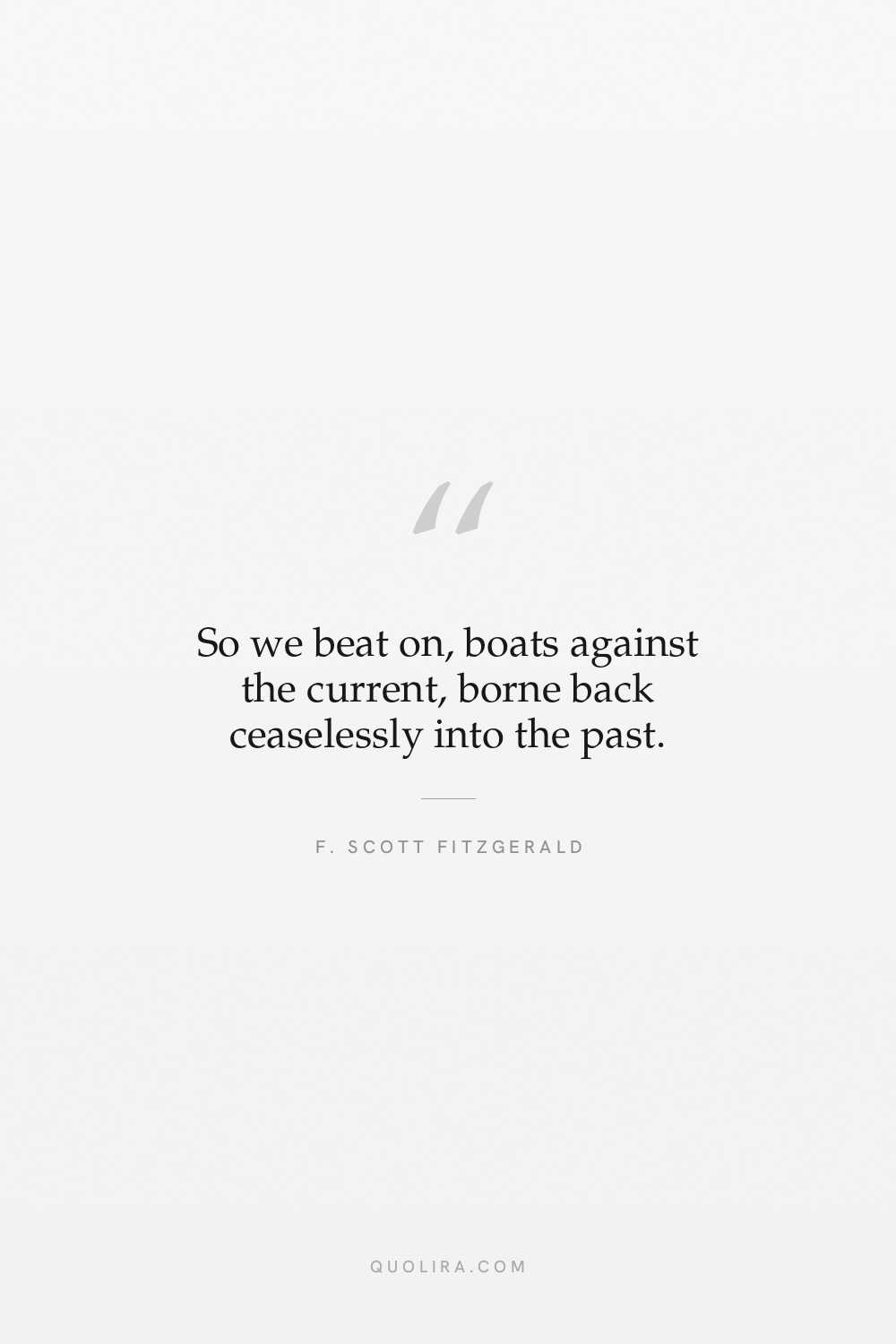
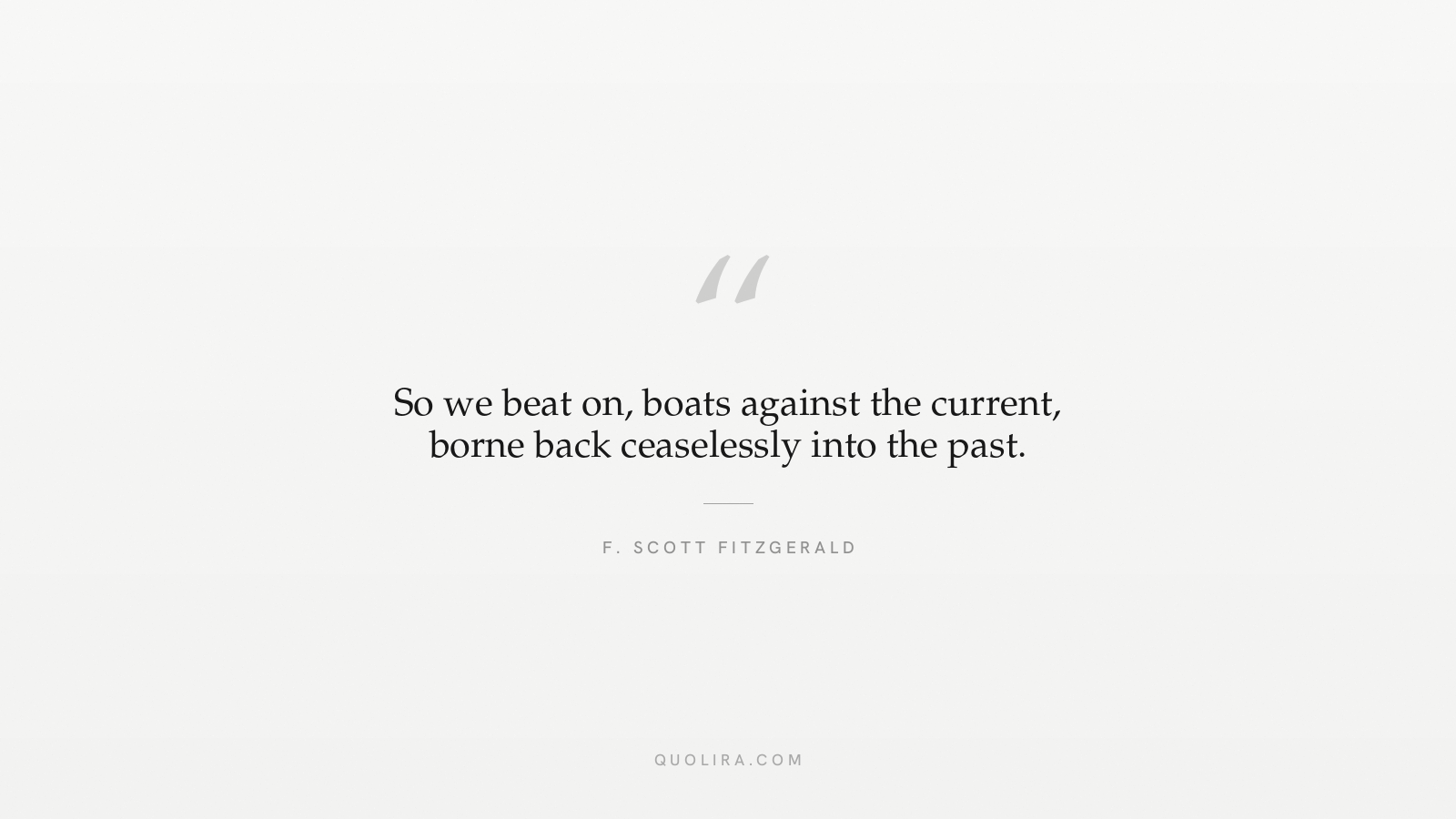
So we beat on, boats against the current, borne back ceaselessly into the past.

A time to get, and a time to lose; a time to keep, and a time to cast away.
Ecclesiastes Ecclesiastes 3:6, King James Version
These lines appear in the book traditionally attributed to Solomon, though scholars debate its authorship. The point is seasonal: some things are meant to be kept, and some are meant to be released. Knowing which season you're in is most of the work.

Letting go quotes on the cost of holding on
Nothing ever goes away until it teaches us what we need to know.
Chödrön, an American Buddhist nun and author, has taught this idea for decades in talks and books about impermanence. I can't point to a single title where it first appears, so think of it as a teaching rather than a cited sentence. For grief, it's a useful reframe: the thing you're clinging to may still be teaching you as it leaves.

We tell ourselves stories in order to live.
Joan Didion The White Album (1979)
Didion opens the title essay with this line, and she uses it to show how people organize chaos into narrative. Letting go often means noticing which story you keep retelling. You don't have to delete the story, but you can stop living inside it.

Letting go quotes on control, fear, and acceptance
Realize deeply that the present moment is all you ever have.
Eckhart Tolle The Power of Now (1997)
Tolle makes this point throughout The Power of Now, arguing that the present is the only place you can actually live. Much of what you're holding onto is a replay of something that already ended. You don't need to erase the past, just stop feeding it your attention.
Letting go quotes for love, children, and release
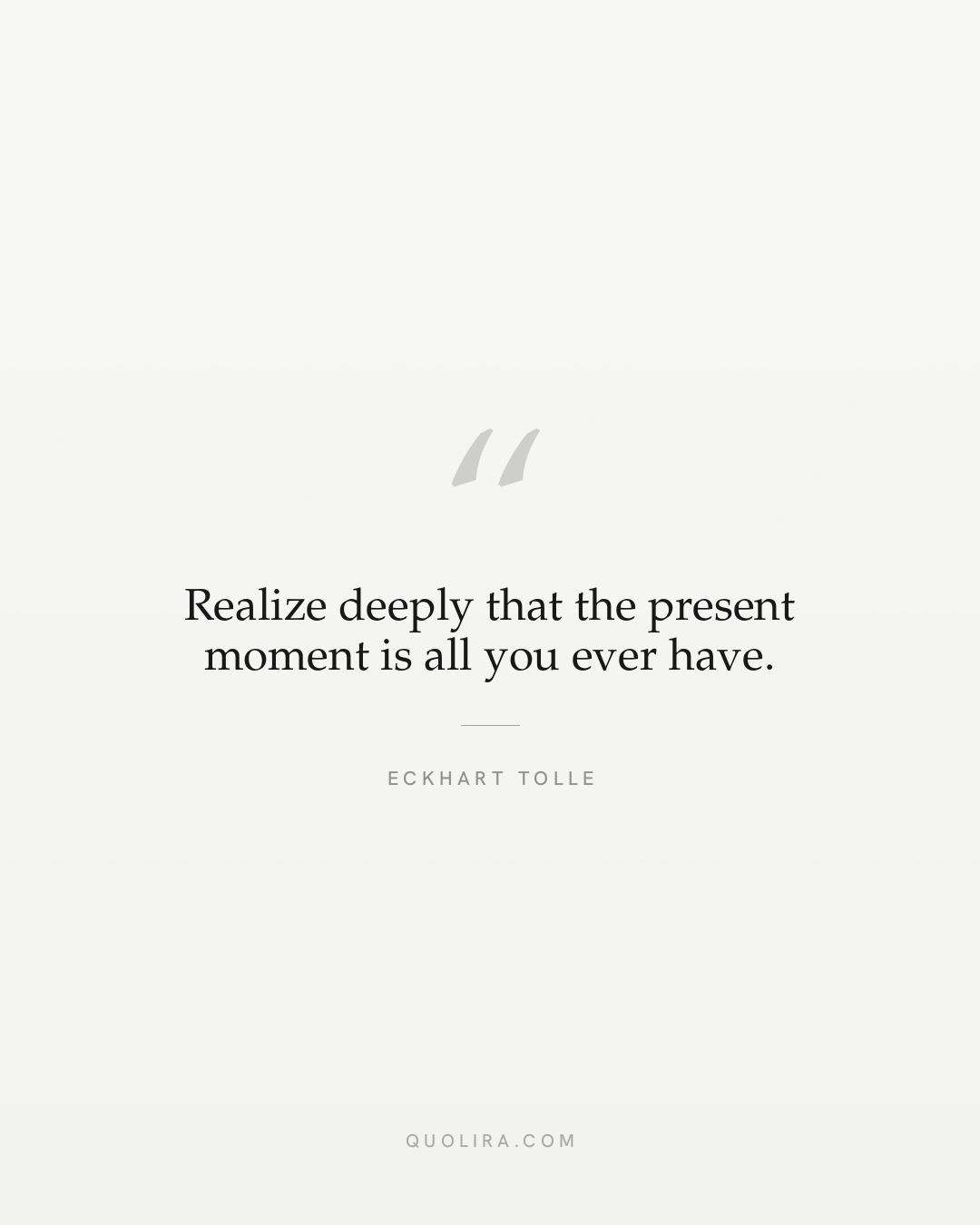
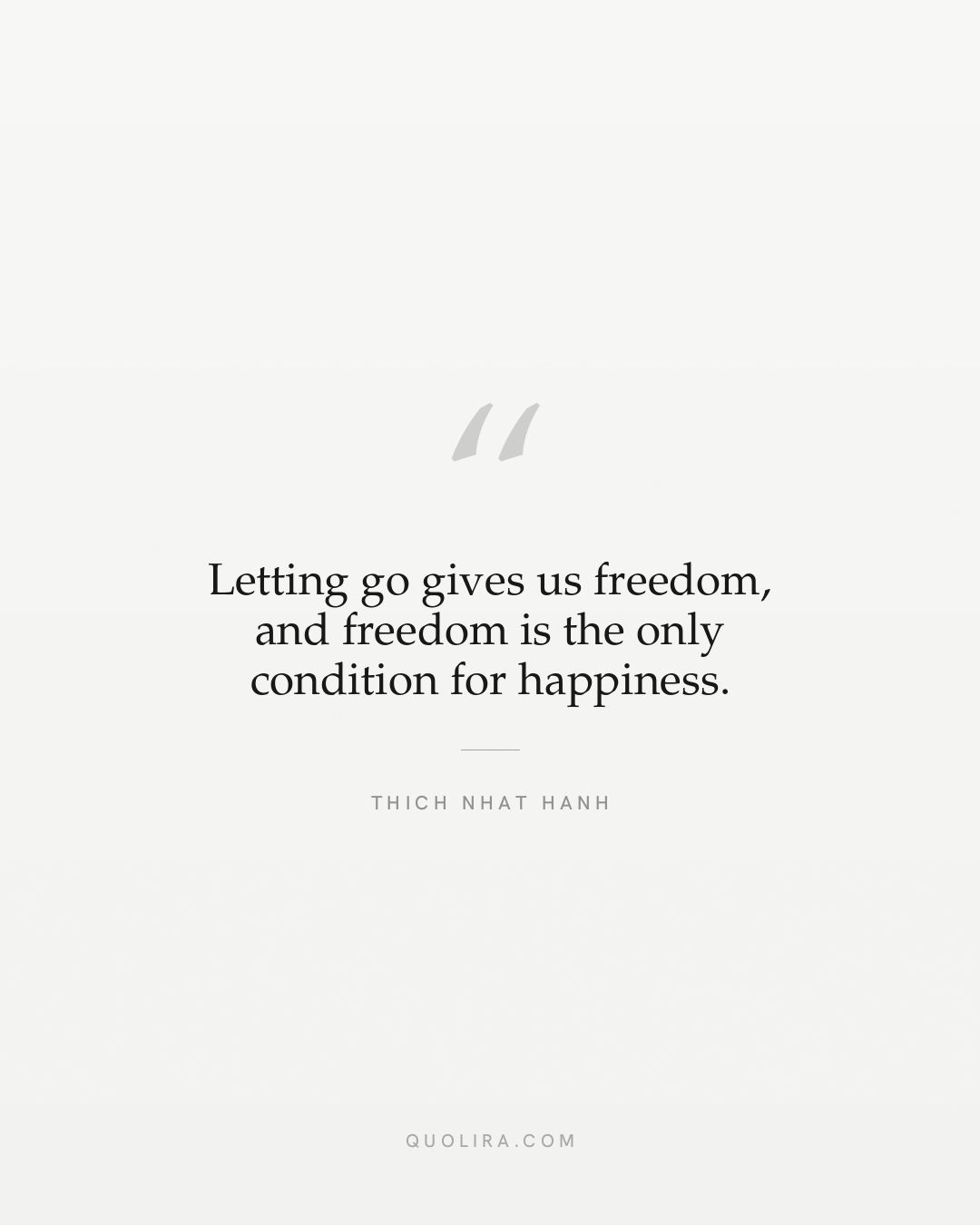
Letting go gives us freedom, and freedom is the only condition for happiness.
The Vietnamese Zen teacher wrote widely about releasing anger and attachment, and this line is quoted in his name often. I can't verify the book it first appeared in, so treat the wording as the popular version. The idea holds up: freedom usually shows up the moment you loosen your grip.
You may give them your love but not your thoughts, for they have their own thoughts.
Kahlil Gibran The Prophet (1923), On Children
Gibran wrote this about parents and children, but it fits anyone you're tempted to manage. Love them fully, then let them keep their own mind, even when you think they're wrong. Holding tight to someone's choices is a form of gripping too.

Let there be spaces in your togetherness.
Kahlil Gibran The Prophet (1923), On Marriage
From the chapter On Marriage in The Prophet, this line describes love that doesn't swallow the other person. Couples often hold so tightly that they lose themselves. Leave room in a relationship, and you give both people space to breathe.

Let the soft animal of your body love what it loves.
Mary Oliver Wild Geese, in Dream Work (1986)
Oliver wrote this line in a poem about the body's instinct to love and to keep going. It's an instruction to your heart and your gut rather than your reasoning mind. When something hurts, let the feeling move through you, then decide what to do next.

Letting go quotes for starting again after loss
Be patient toward all that is unsolved in your heart and try to love the questions themselves.
Rainer Maria Rilke Letters to a Young Poet
Rilke wrote this to Franz Xaver Kappus, a young military cadet who had asked for advice about his poems. For anyone releasing an old answer, the line suggests you don't need to rush to a new one. Live inside the question for a while.

Experience is the name everyone gives to their mistakes.
Oscar Wilde Lady Windermere's Fan (1892)
Wilde's line works as a quip, but it also reframes the past. Calling a mistake experience doesn't erase it, and that small shift often loosens its grip. It's a good line to borrow when you're stuck replaying a bad decision.

Why quotes about letting go matters
Most people know they should release something. Few have a clear picture of how to do it. A good quote gives you one sentence to come back to when your mind keeps replaying the same argument at 2 a.m.
That's the real value here. A quote compresses a whole philosophy into a line you can carry around, which helps when you're too worn out to reason through a problem from scratch. Epictetus's Enchiridion works as a handbook, the kind you reread rather than read once, and that habit of returning to a short idea is the point.
Context matters too. Several of these lines come out of grief, war, or a hard season. Frankl wrote about freedom from inside Nazi concentration camps, and Hemingway drew on his own wartime experience when he wrote A Farewell to Arms. Knowing that keeps a quote from sounding like a greeting card.
It also helps to remember that a quote is not a method. Reading Seneca will not, by itself, stop you from checking your ex's social media, and reading Frost will not untangle a business partnership. What a quote can do is change the question you ask yourself. Instead of "How do I make this stop hurting?" you might ask "What part of this is mine to carry?" That shift is small, but it is often where release begins.
What these quotes have in common
The biggest shared idea is control. Epictetus opens by splitting what's in your power from what isn't, and Frankl makes a similar cut when he says the one freedom left to him was his attitude. Both give you a way to set down the outcome while keeping hold of your response. If you want the Stoic version in more depth, the Epictetus quotes roundup goes further into that idea.
The second theme is the past. Fitzgerald's boats keep pushing against the current, Didion admits we tell ourselves stories to get through the day, and Wilde turns a mistake into a kind of label you can live with. Seneca's point about wasted time sits right beside them. Holding on to the past costs time, and most of us don't count that cost until we look at the calendar. The Lao Tzu quotes on humility and letting go pair well with this, since the Tao Te Ching is also about things settling on their own schedule.
The third theme is that release can keep the heart open. Gibran asks for spaces in your togetherness, and Mary Oliver tells you to let the soft animal of your body love what it loves. Thich Nhat Hanh says letting go brings freedom, while Frost and Hemingway both suggest the way forward runs through damage. Read together, the quotes describe a release you can live with: you loosen your grip, you keep your capacity to love, and the broken places become part of who you are.
Notice what is missing from this list: any suggestion that letting go is a single decision. Almost every line describes a process. Fitzgerald's boats are still moving, Frost's road runs through the hard part, and Rilke asks you to live with a question rather than close it on the first try. That is worth keeping in mind when a quote seems to promise more than your week can deliver.
Common misunderstandings
A few mistakes come up again and again when people use quotes about letting go. The first is treating release as forgetting. Didion does not ask us to erase our stories, only to notice that we are telling them. Wilde does not say a mistake disappears when you rename it. In both cases the work is changing your relationship to the memory, not wiping it out.
The second mistake is reading "let go" as permission to stop caring. Gibran's line about spaces in a relationship is about loving someone without owning them, which is different from withdrawing. You can release a person's outcome, their choices, or their approval while still wishing them well.
The third mistake is using a quote as a shortcut around grief. Hemingway's line about being strong at the broken places assumes the break happened and was felt. If you skip the feeling to get to the lesson, the lesson tends to arrive hollow. Give the hard emotion its time first, then return to the quote when you're ready.
The last one is expecting the quote to act on its own schedule. Lao Tzu's point about nature not hurrying is a reminder that forced release often snaps back. If you find yourself checking whether a quote has "worked" after a day, you are gripping again. Let the reading be one small step among many.
How to use these quotes
Pick one quote and sit with it for a week before you decide whether it fits. A line that irritates you can be as useful as one that comforts you, and it's worth asking why it bothers you.
- Captions: Pair Mary Oliver's line with a photo of an open window and post it on a morning you need to reset.
- Journaling: Split a page into two columns using Epictetus. Write what you control on the left and what you're releasing on the right.
- Speeches or toasts: Gibran's line about spaces in your togetherness lands well at weddings and anniversaries.
- Cards: Send Frost's line about the best way out to a friend moving through a hard diagnosis or breakup.
- Teaching: Put Seneca's line about wasted time beside a calendar exercise and ask students to count what they're still holding onto.
- Next step: Once a quote lands, read the starting over list to see what comes after the release.
A simple weekly practice
Choose one quote on Sunday and write it on an index card. Each evening, spend two minutes asking whether anything you did that day was an attempt to control something outside your reach. If it was, write it down and cross it off in your mind. You are not trying to solve anything, just noticing. By the end of the week, the card will likely have changed meaning, because you'll have tested it against real situations rather than just admiring its wording.
This works best with a single quote at a time. Rotating through several at once tends to turn the practice into reading rather than reflection. Slow repetition is what lets a sentence move from your head into how you act.
Pick the one that made you wince, because that's usually the one you need. Start there, and let the rest wait for a slower day.
Frequently asked questions
What is the most famous quote about letting go?
Did Mark Twain really say 'Twenty years from now you will be more disappointed...'?
Who said 'Let go or be dragged'?
Is 'Some things are in our control and others not' from Epictetus?
Where does 'The best way out is always through' come from?
Is 'We tell ourselves stories in order to live' from Joan Didion?
Keep reading

25 Quotes on Patience That Teach You to Wait
From Milton's blind sonnet to Seneca's hard-won letters, these lines show that waiting is a skill you can practice.

20 The Mountain Is You Quotes That Expose Self-Sabotage and Make You Act
Brianna Wiest's 2020 book argues that the obstacle between you and your goals is usually you, and these 20 lines explain why.



















Komorebi Meaning Explained: The Light That Lives Between Leaves
A Japanese word for the moving light under a tree, and a small habit for noticing the ordinary brightness you usually walk past.
Nick Carraway closes the novel with this image, and it's the cleanest picture of someone who can't let go. The boats keep pushing even after the current has shoved them back. Letting go starts when you stop rowing against a tide that was never going to change.