“Realize deeply that the present moment is all you ever have.”
Eckhart Tolle · The Power of Now (1997)
 quolira
.com
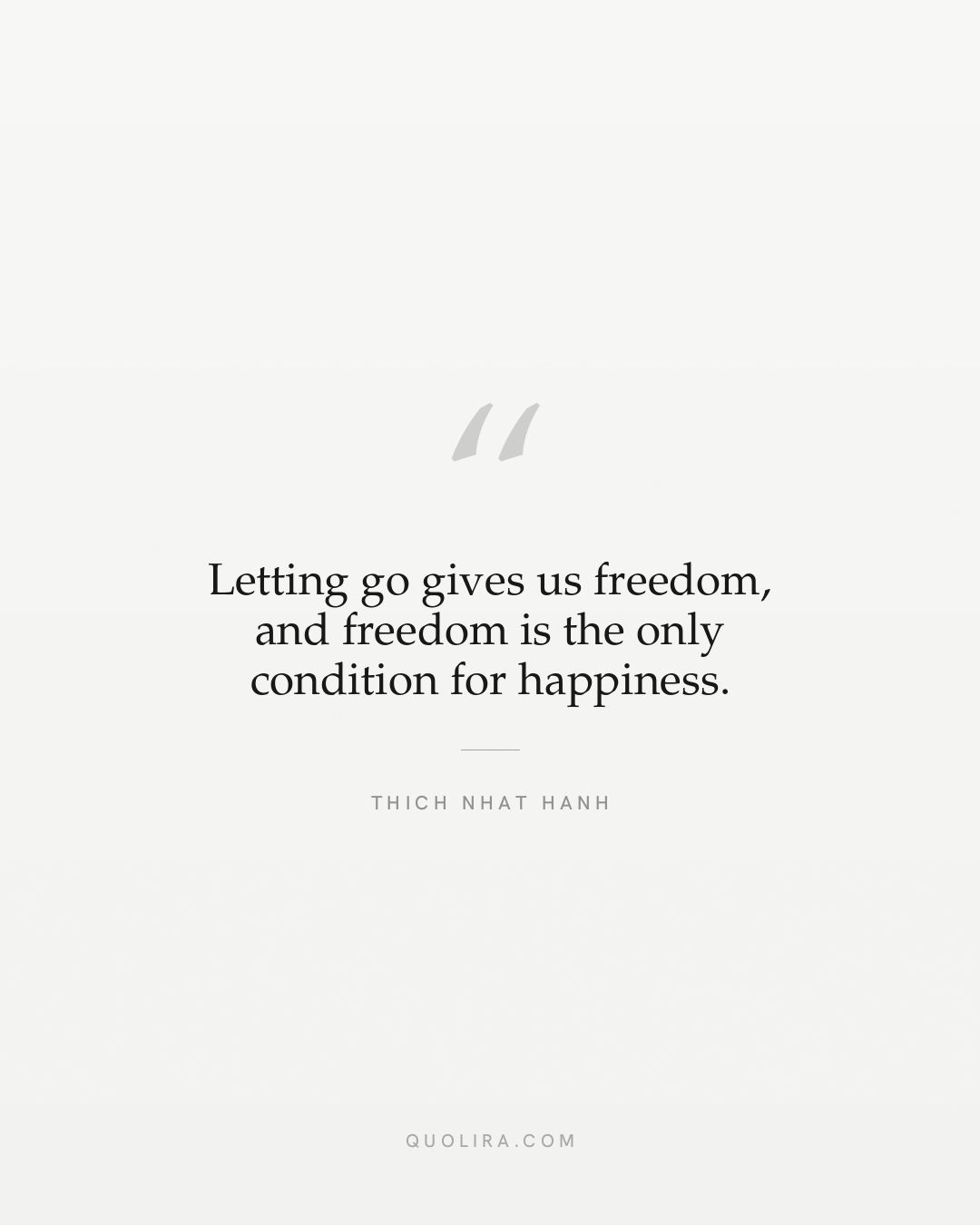
Thich Nhat Hanh said it.
The Vietnamese Zen teacher wrote widely about releasing anger and attachment, and this line is quoted in his name often. I can't verify the book it first appeared in, so treat the wording as the popular version. The idea holds up: freedom usually shows up the moment you loosen your grip.
From the collection: 11 Letting Go Quotes That Help You Loosen Your Grip · More Thich Nhat Hanh quotes
The quote means that releasing attachments and expectations brings a kind of inner liberty, and that this liberty is what makes a happy life possible. Holding tightly to people, outcomes, or possessions tends to create tension and dependence. The idea presents release as a path toward peace rather than a loss.
This line is widely attributed to Thich Nhat Hanh, the Vietnamese Zen monk and peace activist, and it is frequently shared in discussions of mindfulness and emotional well-being. The specific book, talk, or interview from which it comes is not identified here, so it should be read as a commonly circulated expression of his teachings rather than a passage with a confirmed source. Its message aligns with themes that appear throughout his writing about impermanence and non-attachment.
Thich Nhat Hanh was a Vietnamese Zen Buddhist monk, poet, and peace activist who wrote and taught widely about mindfulness, compassion, and engaged Buddhism. He lived for many years in exile and founded a community in France that became well known for retreats and teachings. His books have been translated into many languages and are read by people across many faith backgrounds. His calm, gentle style makes ideas about letting go feel practical, which is why this line continues to resonate with readers.
“Realize deeply that the present moment is all you ever have.”
Eckhart Tolle · The Power of Now (1997)
“We tell ourselves stories in order to live.”
Joan Didion · The White Album (1979)
“Nothing ever goes away until it teaches us what we need to know.”
Pema Chödrön
“A time to get, and a time to lose; a time to keep, and a time to cast away.”
Ecclesiastes · Ecclesiastes 3:6, King James Version
“So we beat on, boats against the current, borne back ceaselessly into the past.”
F. Scott Fitzgerald · The Great Gatsby (1925)
“Most of the light we live in has already passed through something else first.”
Original
“God turns you from one feeling to another and teaches by means of opposites, so that you will have two wings to fly, not one.”
Rumi · Masnavi, Book II, lines 1552-1554 (tr. Helminski, 1990)
“Come, seek, for search is the foundation of fortune: every success depends upon focusing the heart.”
Rumi · Masnavi, Book III, lines 2302-5 (tr. Helminski, 1996)
“If you wish to shine like day, burn up the night of self-existence. Dissolve in the Being who is everything.”
Rumi · Masnavi, Book I, lines 3009-12 (tr. Helminski, 1990)
“I am so happy, I cannot be contained in the world; but like a spirit, I am hidden from the eyes of the world.”
Rumi · Divan-i Shams, ghazal 1740 (tr. Fatemeh Keshavarz, 1998)
“If in thirst you drink water from a cup, you see God in it. Those who are not in love with God will see only their own faces in it.”
Rumi · Masnavi, Book VI, line 3640 (ed. Fadiman and Frager, 1997)
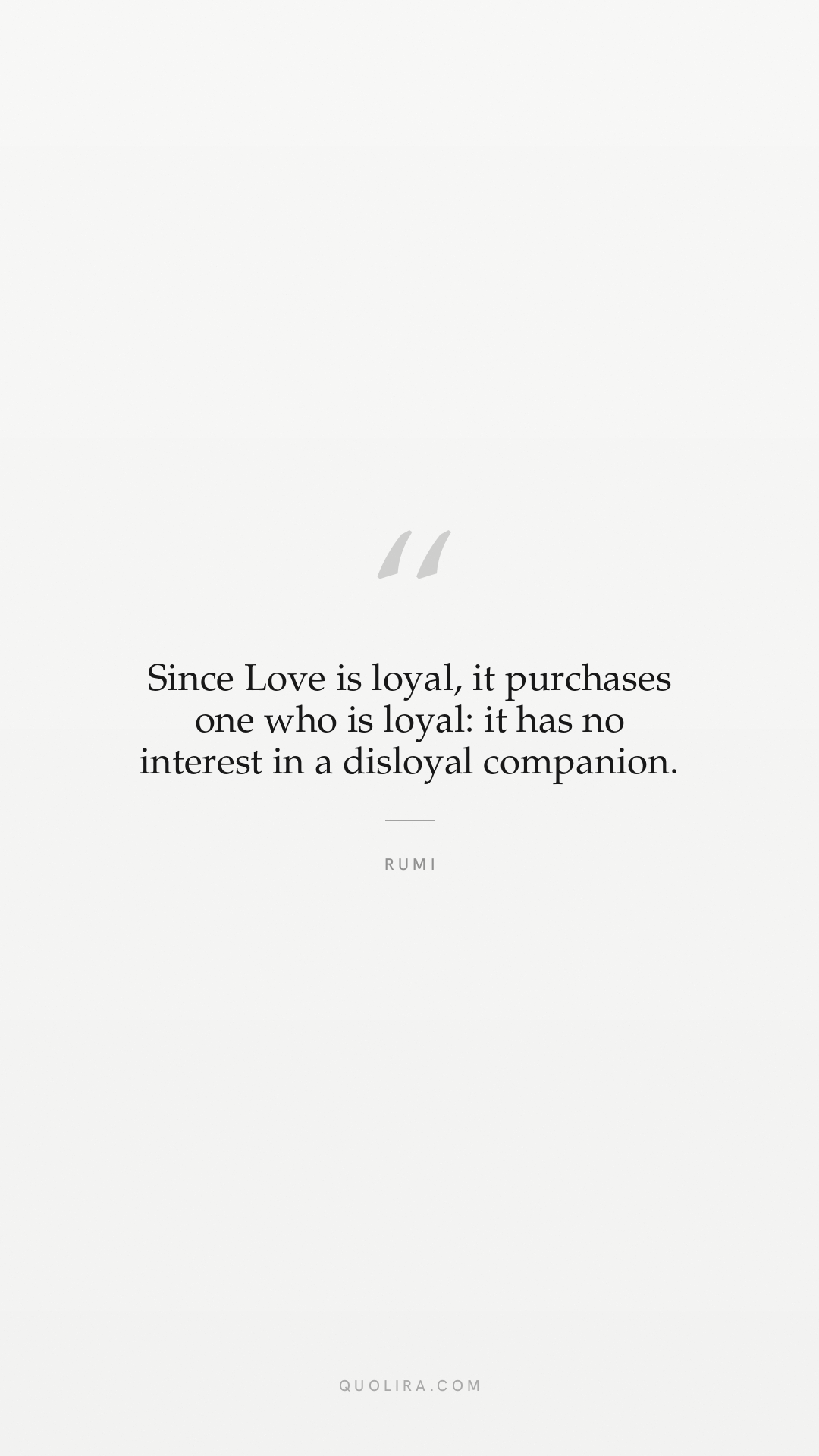
“Since Love is loyal, it purchases one who is loyal: it has no interest in a disloyal companion.”
Rumi · Masnavi, Book V, lines 1163-1169 (tr. Helminski, 1996)