15 Quotes About Starting Over That Prove It's Never Too Late
These real quotes from writers, athletes, and philosophers make a clean restart feel possible on the hardest days.

Starting over quotes are the lines people reach for when they're standing at the edge of a fresh start and need a push. The most quoted one here is Robert Frost's "The best way out is always through," a reminder that the route forward usually runs straight through the mess. Below are 15 real quotes from writers, athletes, philosophers, and a few people who knew how to dust themselves off. Some are old enough to come from Horace and Marcus Aurelius, while others come from Steve Jobs's 2005 Stanford speech. I've sorted them into four sections so you can jump to the kind of push you need, whether that's courage, purpose, or small steps. Pick the one that stings a little, read it twice, and let it set your first move. This list is full of fresh start quotes and new beginning quotes you can actually use.
The Most Famous quotes about starting over Quotes
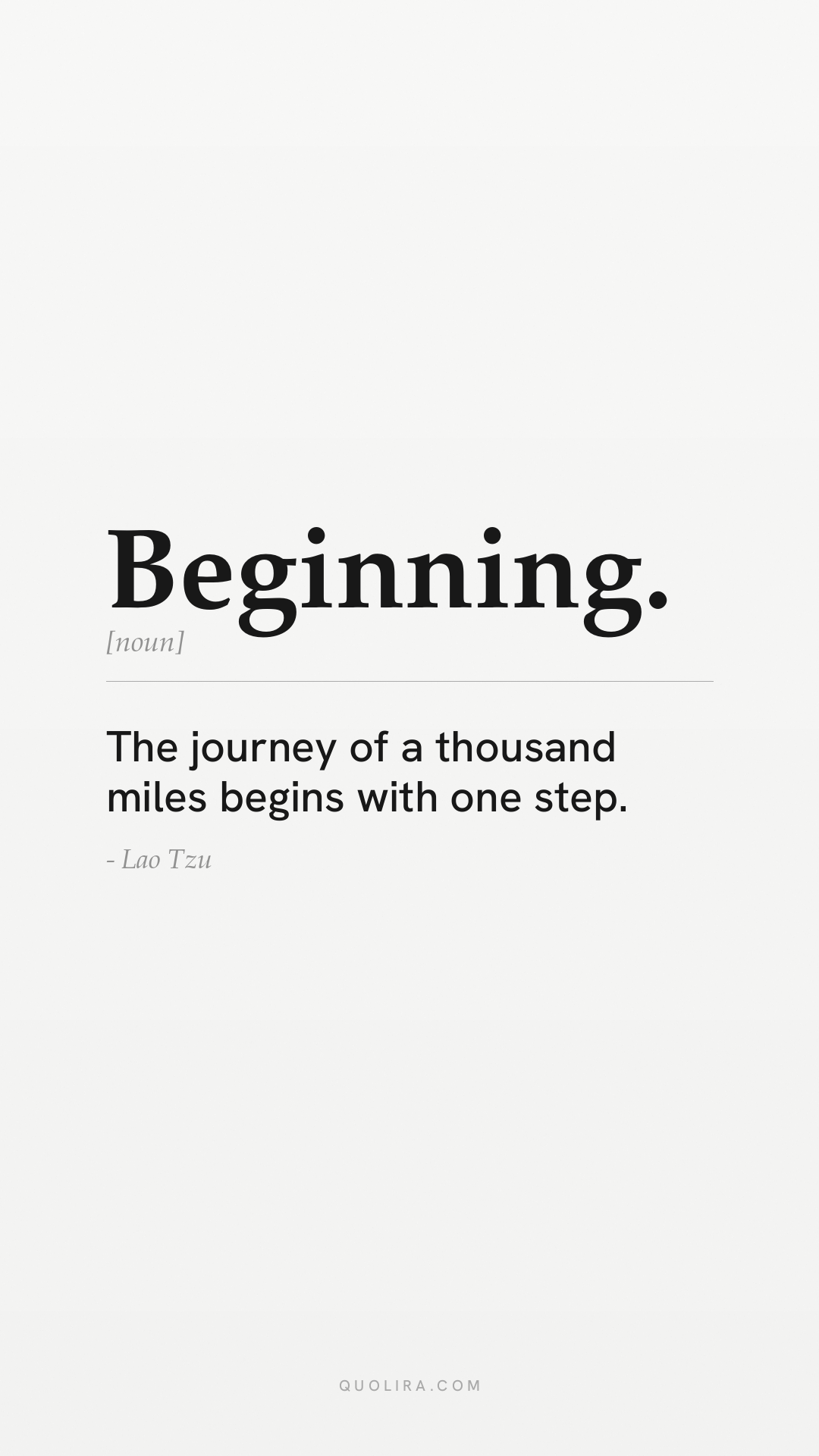
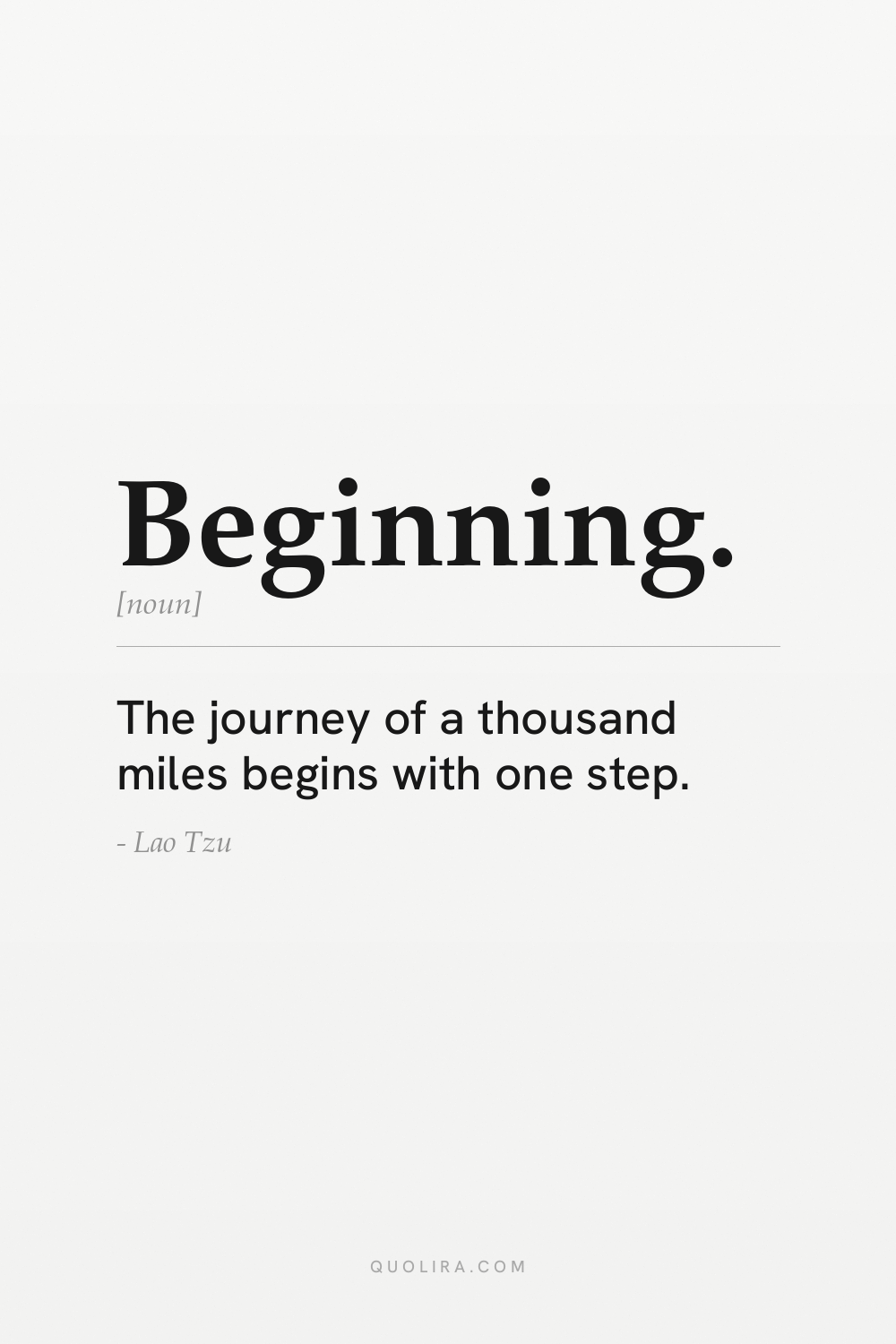
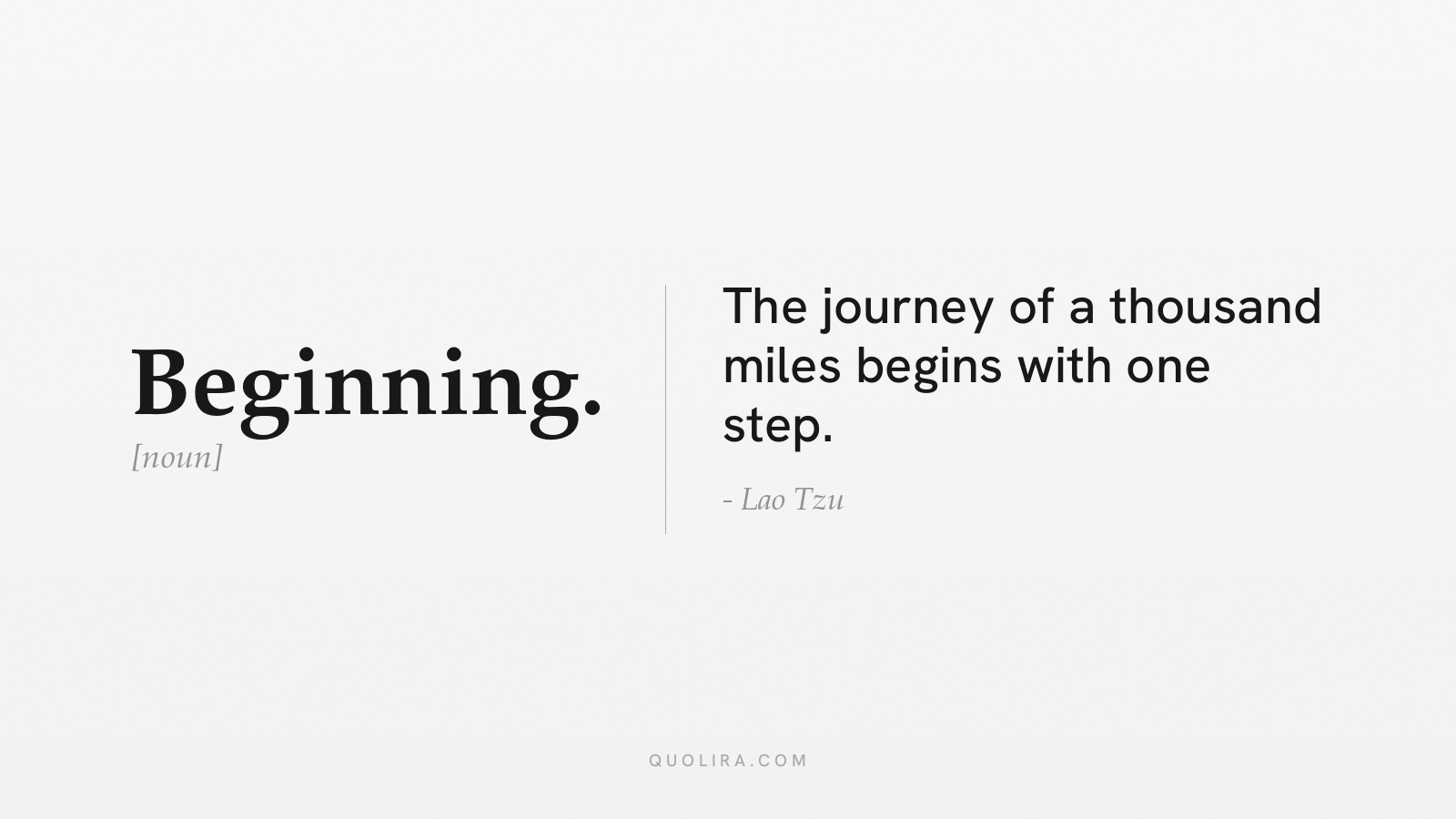
The journey of a thousand miles begins with one step.
The only way to do great work is to love what you do. If you haven't found it yet, keep looking. Don't settle.
Steve Jobs Stanford University commencement address, 2005
Jobs gave this speech in 2005 and talked about being fired from Apple before starting over with NeXT and Pixar. Keep looking for your work. Don't accept the first thing that feels like a compromise.

Quotes on Courage and Trying Again
The world breaks everyone and afterward many are strong at the broken places.
Ernest Hemingway A Farewell to Arms, 1929
Hemingway wrote this in A Farewell to Arms (1929), and it is blunt about damage and honest about recovery. The strength he means is not untouched strength. It is the kind earned after the break.

Ever tried. Ever failed. No matter. Try again. Fail again. Fail better.
Samuel Beckett Worstward Ho, 1983
This is from Worstward Ho (1983), one of Beckett's late prose works, and it reads like a dare. The repetition is the point: each failure becomes a rehearsal. Read it when you're tired of trying and you might laugh.
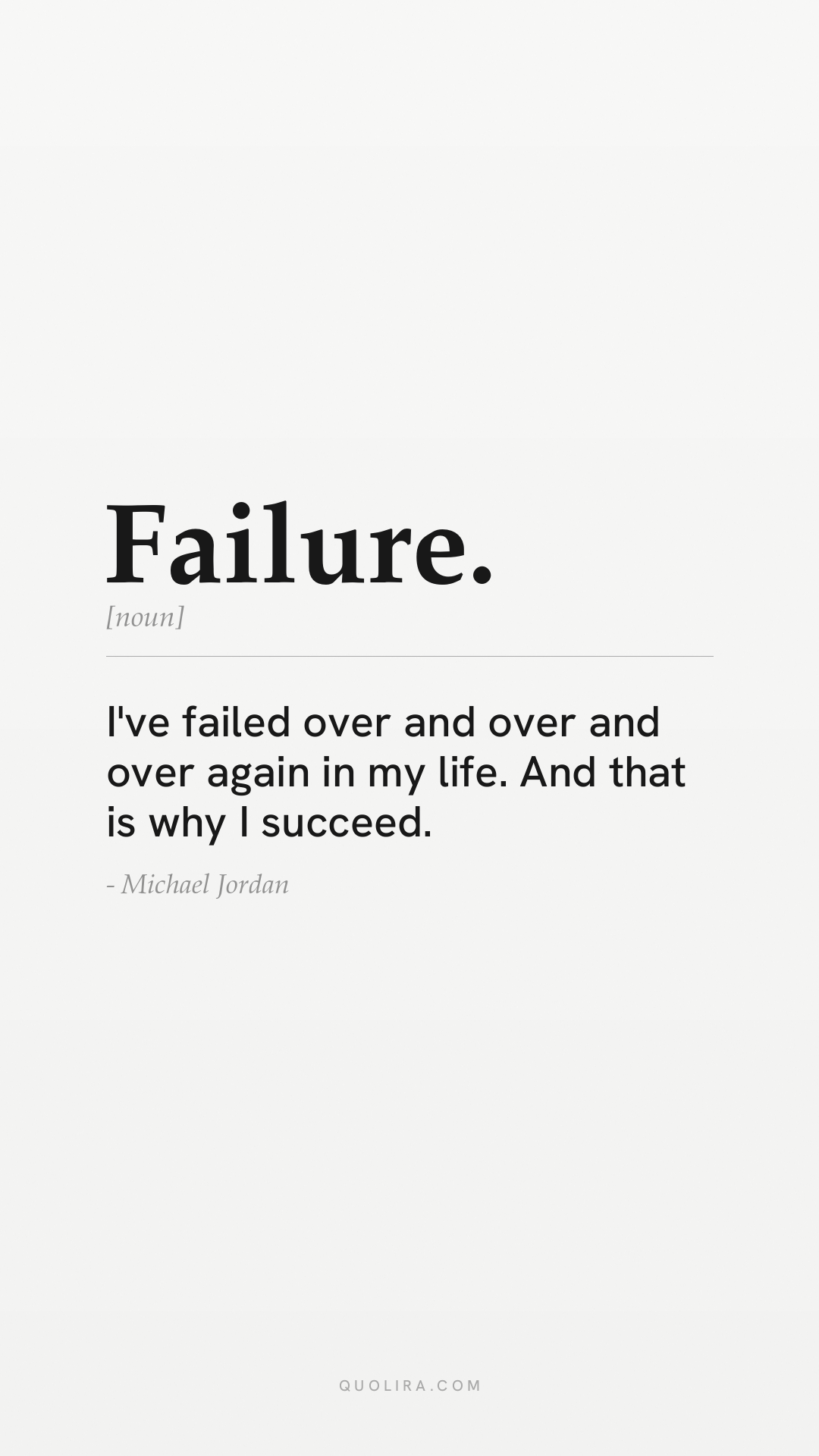
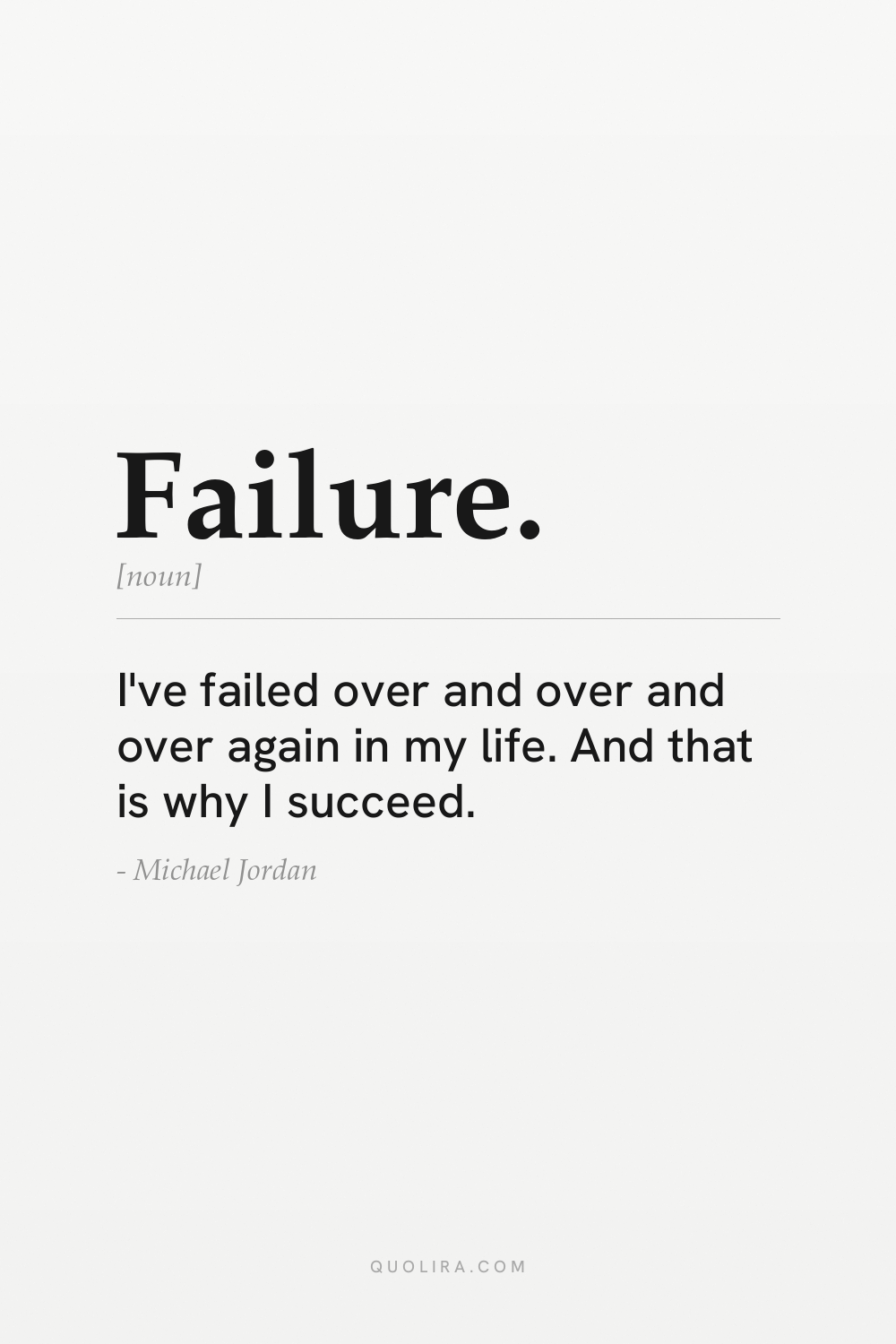
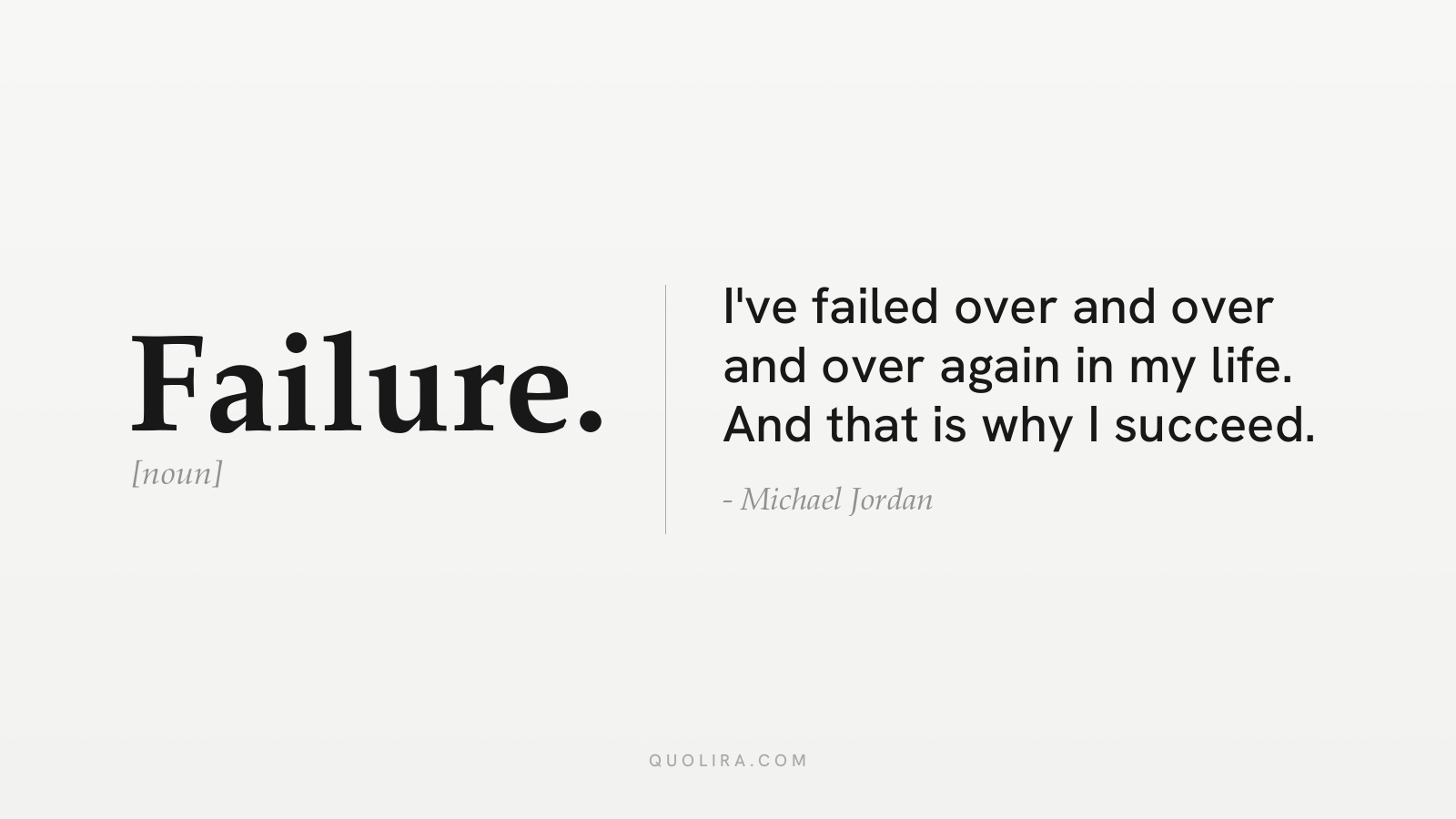
I've failed over and over and over again in my life. And that is why I succeed.
Michael Jordan Nike advertisement, 1997
Michael Jordan said this in a 1997 Nike commercial, where he listed missed shots and lost games as proof of his work ethic. Failure is the raw material here. It is not the verdict.

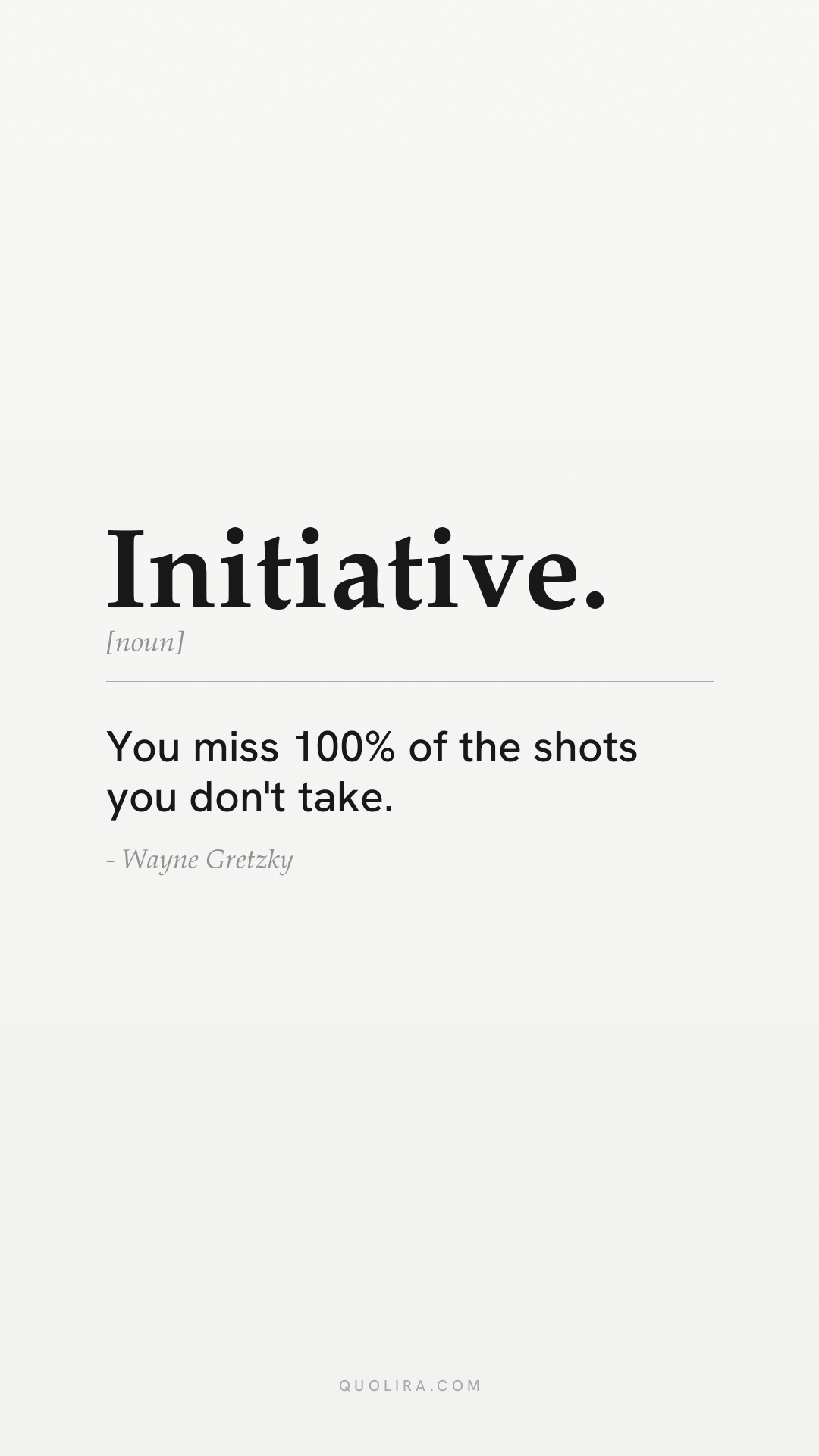
You miss 100% of the shots you don't take.
Gretzky is widely credited with this line, though I can't point to one exact interview. The math is simple: you can't score from the bench. Every restart begins with a shot you can take today.
Still I'll rise.
Maya Angelou Still I Rise, 1978
This line comes from Maya Angelou's poem Still I Rise (1978), a defiant answer to being pushed down. The word still does the heavy lifting. It means the fall was never the end of the story.
Quotes on Purpose, Passion and Choice
Stay hungry. Stay foolish.
Steve Jobs Whole Earth Catalog, 1974; repeated at Stanford, 2005
Jobs printed this line on the back cover of the final 1974 Whole Earth Catalog and repeated it at Stanford in 2005. It is a restart message in bold type. Curiosity drives it, and being foolish means being willing to look clumsy while you learn.
I went to the woods because I wished to live deliberately, to front only the essential facts of life, and see if I could not learn what it had to teach.
Henry David Thoreau Walden, 1854
Thoreau wrote this in Walden (1854) after moving to a cabin near Walden Pond. He went there to reset his life on purpose. For a restart, the lesson is to cut away the noise and see what remains.

Do not let what you cannot do interfere with what you can do.
John Wooden, the UCLA basketball coach, is often credited with this line. It moves the focus from what's lost to what is still available. Starting over usually begins with a shorter list of what you can actually do.

Quotes on Small Steps and Fresh Starts
'Hope' is the thing with feathers
Emily Dickinson Poem 254, published 1891
This line opens Emily Dickinson's poem 254, first published in 1891 after her death. Hope here is a small bird that keeps singing without asking for much. It is a useful image when a fresh start still feels fragile.
Today you are You, that is truer than true. There is no one alive who is Youer than You.
Dr. Seuss Happy Birthday to You!, 1959
Dr. Seuss wrote this in Happy Birthday to You! (1959). It is a children's book line, but adults need it just as much. Starting over often means you stop comparing yourself with people who began earlier.
You have brains in your head. You have feet in your shoes. You can steer yourself any direction you choose.
Dr. Seuss Oh, the Places You'll Go!, 1990
This comes from Oh, the Places You'll Go! (1990), a book Dr. Seuss wrote as a send-off for new graduates. Its message is that you pick the direction. It fits anyone starting a new chapter at any age.

Dimidium facti, qui coepit, habet.
Horace wrote this line in Latin in his Epistles. Starting is half the job, according to the Roman poet. Once you have begun, the rest is a matter of follow-through.
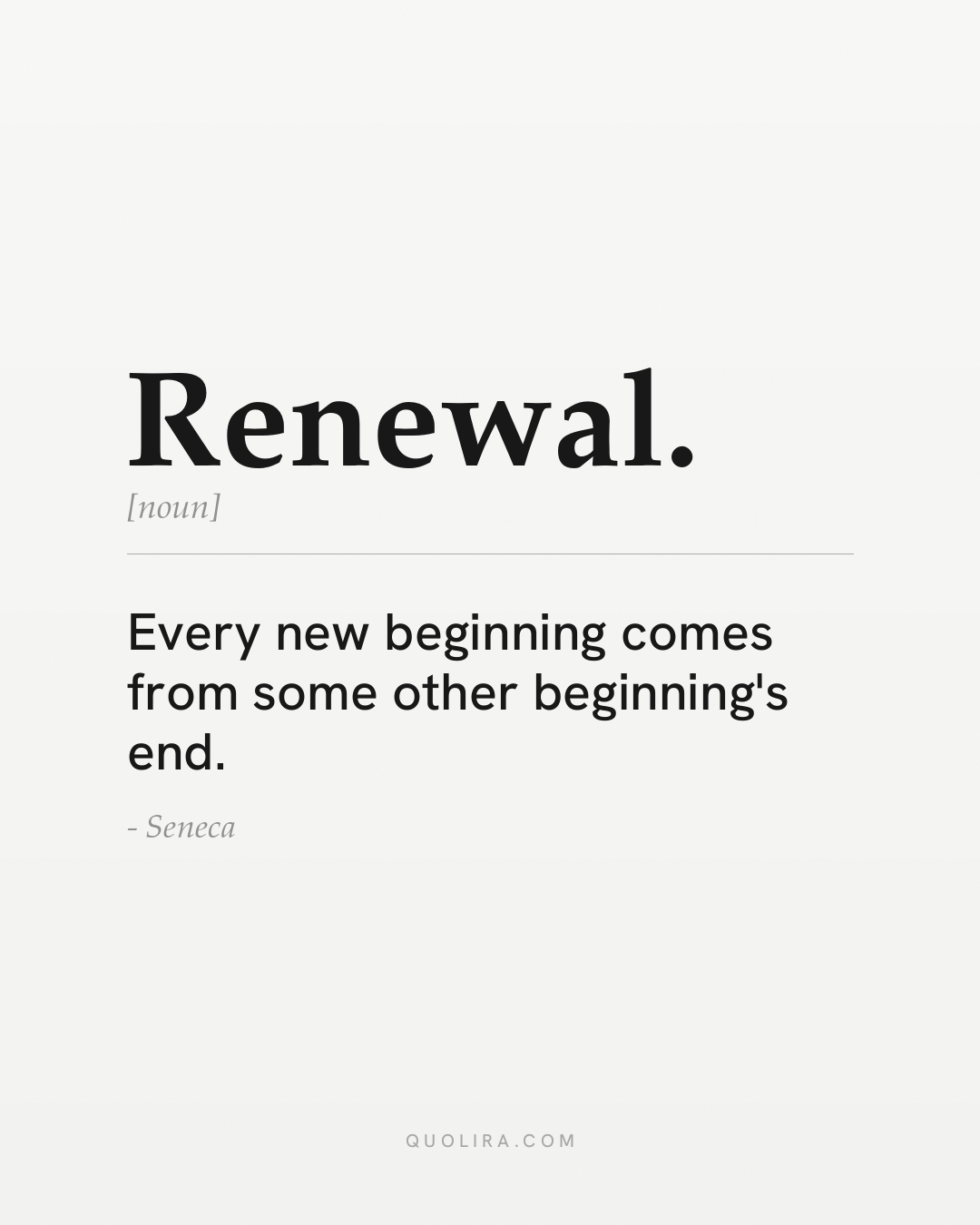
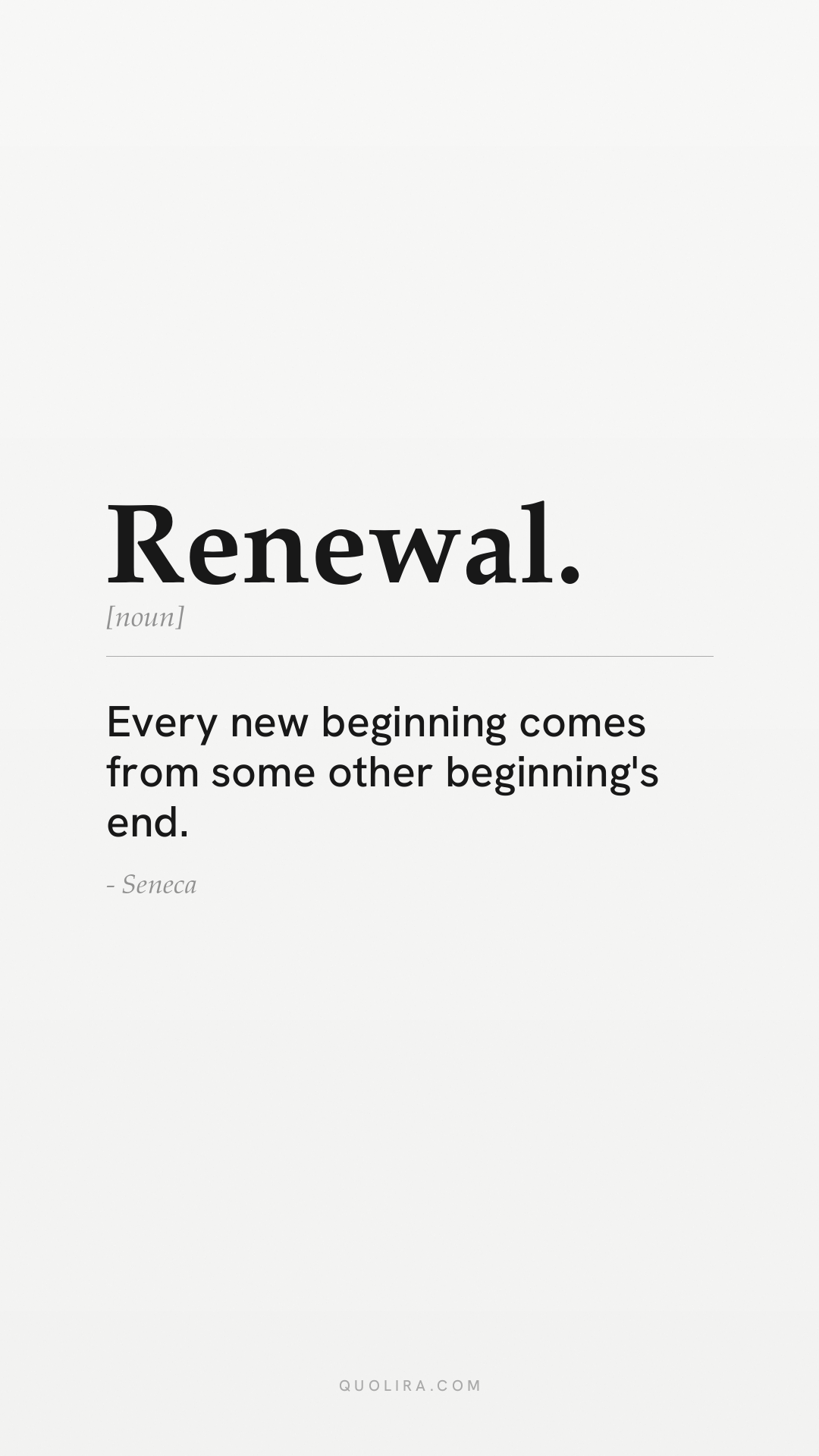
Every new beginning comes from some other beginning's end.
Seneca gets credit for this line, though the exact wording is a popular version of his ideas. The point holds up. Every fresh start grows out of an earlier ending, so your past is material you can build with.
Why quotes about starting over matters
Starting again is rarely a clean break. Most people who begin over do it in the middle of something messy: a job that stopped fitting, a relationship that ended, a plan that fell apart at the second step. A good quote won't fix any of that, but it can shrink the moment long enough for you to take one small action.
That is why short lines travel so well. Steve Jobs told Stanford graduates in 2005 that he had been fired from Apple and then built new companies that changed his life. A decision that looked like a detour became the path. Quotes like his work because they hand you a true story in one sentence.
And the idea is old. Horace wrote about beginning in Latin, and Marcus Aurelius wrote about obstacles in his private notebook. People have been turning to lines like these for centuries because the feeling of stalling is ancient too.
The value of a quote is not that it is wise on paper. The value is that it interrupts the loop in your head that says you should wait until things are calmer, clearer, or more certain. When you read a line that fits your situation, it gives you permission to move before you feel fully ready.
What these quotes have in common
Look across the list and three ideas keep coming back. The first is that the beginning is ordinary. Lao Tzu's "The journey of a thousand miles begins with one step" and the proverb about planting a tree say the same thing from different traditions: the best start is the small one you can actually make today.
The second idea is that failure is part of the route. Samuel Beckett's "Ever tried. Ever failed. No matter. Try again. Fail again. Fail better." turns a dead end into a loop you can repeat. Michael Jordan's line about failing over and over is less polished, but it makes the same point with his own record behind it.
The third is that you choose the start. Viktor Frankl wrote about the last of the human freedoms, which is choosing your attitude in any set of circumstances. Arthur Ashe's "Start where you are. Use what you have. Do what you can." makes that choice practical. None of these quotes asks you to feel ready. They ask you to move.
Common misunderstandings
People often misread starting-over quotes in a few predictable ways, and each mistake can stall a restart before it begins.
The first mistake is waiting to feel ready. Many people assume a quote should create motivation first and action second. It usually works the other way. The line gives you a reason to take a step, and the step creates the momentum. If you wait for a surge of confidence, you may wait for a long time.
The second mistake is treating a quote as a plan. A line like "Fall seven times, stand up eight" can steady you on a hard day, but it cannot tell you what to do on Tuesday. Use the quote to open the door, then write down one concrete next action.
The third mistake is measuring your restart against someone else's timeline. Starting late can feel like falling behind, but the George Eliot line and the Chinese proverb both point to the same answer: the clock you are comparing against is not yours. Dr. Seuss's "There is no one alive who is Youer than You" makes the same point in playful language.
The last mistake is reading every setback as proof that the attempt was wrong. Beckett's "Fail better" and Jordan's remark about repeated failure both treat setbacks as information. A missed step tells you where to adjust, not whether you are finished.
How to use these quotes
Pick a quote that fits the moment rather than the mood, then put it where you'll see it every day. If you want more company on this road, 25 Eleanor Roosevelt Quotes on Courage and Living Well pairs nicely with her line above, and 25 Lao Tzu Quotes on Wisdom, Humility, and Letting Go goes deeper on the first-step idea.
- Write one line on an index card and tape it where you start your morning routine.
- Open a talk about career change with Steve Jobs's "Stay hungry. Stay foolish." and tell the story behind it.
- Use Frost's "The best way out is always through" as a caption for a before-and-after photo of a project.
- Journal with Mary Oliver's question about your one wild and precious life.
- Send Helen Keller's "daring adventure" line to a friend about to leave a stable job.
- Read a Monday line from 21 Monday Motivation Quotes That Make the Week Worth Starting when the week feels like a restart you didn't ask for.
A simple first week
If you are starting over and do not know where to begin, a short structure can help. Think of the first week as a test, not a verdict.
On day one, choose a single quote that speaks to your situation. Write it down, then write one action you can finish within 30 minutes. Keep the action small enough that skipping it would feel silly.
On days two and three, repeat the action. The goal is consistency, not intensity. If the quote is Arthur Ashe's "Do what you can," then doing what you can on a tired day still counts.
On day four, look back at what happened. Note one thing that worked and one thing that got in the way. Frost's idea of going through the trouble applies here: the obstacle you noticed is useful information about the route.
By day seven, pick the next small step. Do not write a five-year plan. A restart grows from the actions you can repeat, and a quote is most useful when it keeps you returning to those actions.
A quote won't do the work for you, but the right line can get you to the first step. Pick one, write it down, and act on it before the week is out.
Frequently asked questions
What is the most famous starting over quote?
Did Wayne Gretzky really say you miss 100% of the shots you don't take?
Where does fall seven times, stand up eight come from?
How do I start over after a big failure?
Which starting over quote works best for a graduation speech?
Keep reading

10 Ansel Adams Quotes on Seeing, Silence, and the Beauty of Stone
Ansel Adams wrote about light, granite, and the stubborn work of making a good picture, and these ten lines still hold up.

22 Happy Women's Day Quotes That Ask You to Sit With Their Weight
A quiet collection of lines about courage, worth, and the women who kept going.


















16 Positive Life Quotes That Shift How You See Ordinary Days
A quiet collection of lines about hope, purpose, and the good that hides in plain sight.
This line comes from the Tao Te Ching, the short text traditionally attributed to Lao Tzu. It matters because it refuses to start with a grand plan. Take the first step today and the rest becomes a practical question.