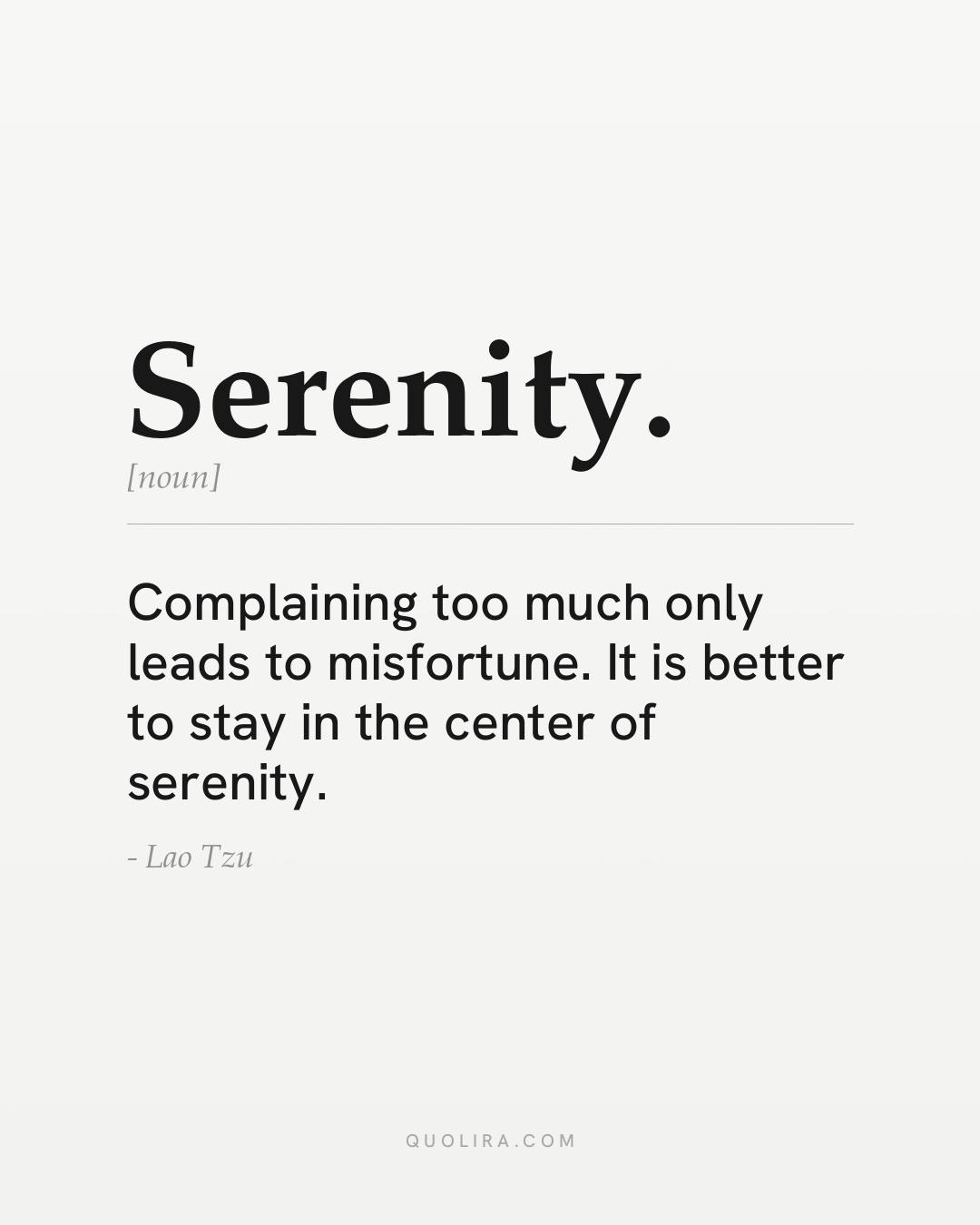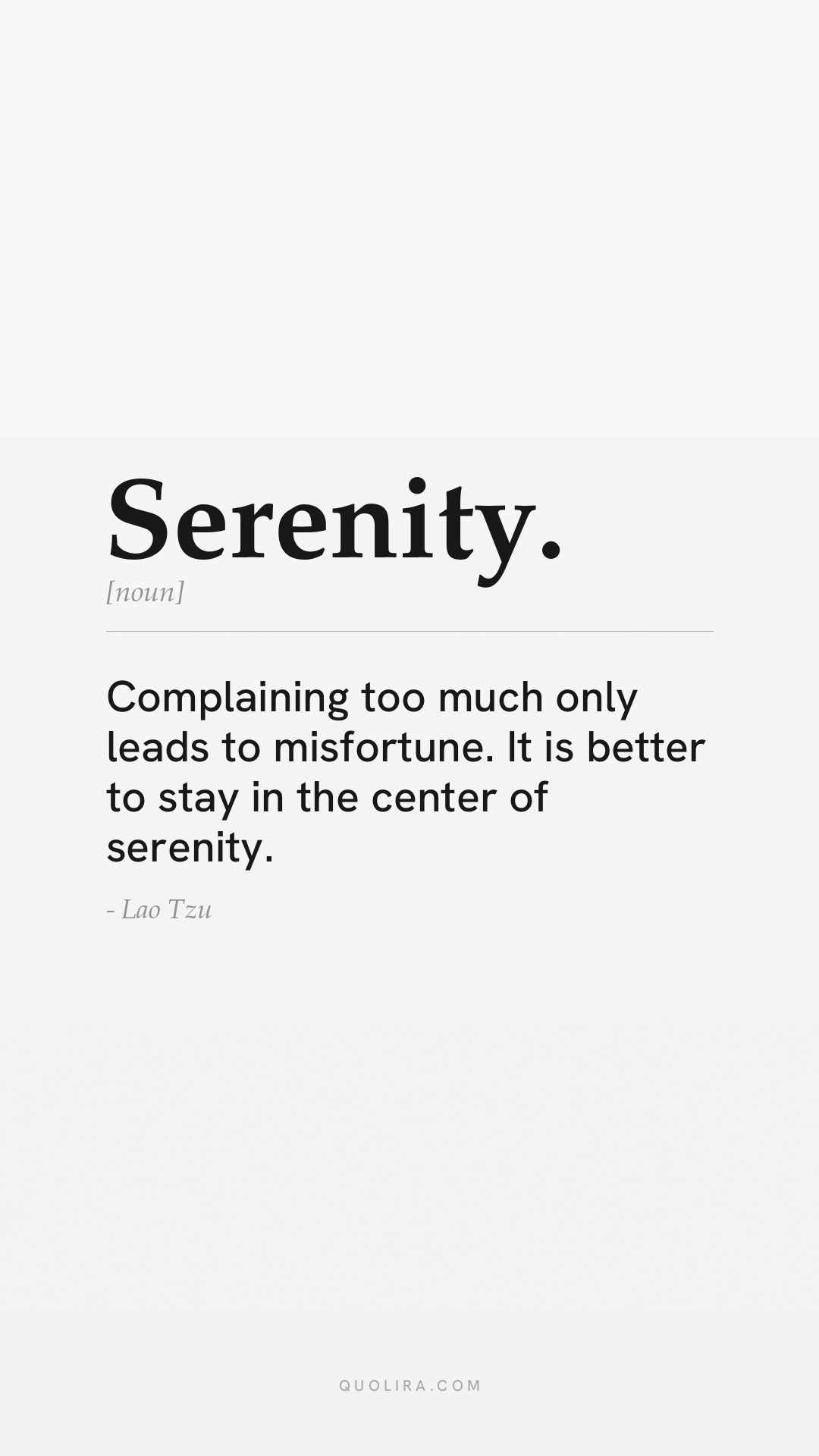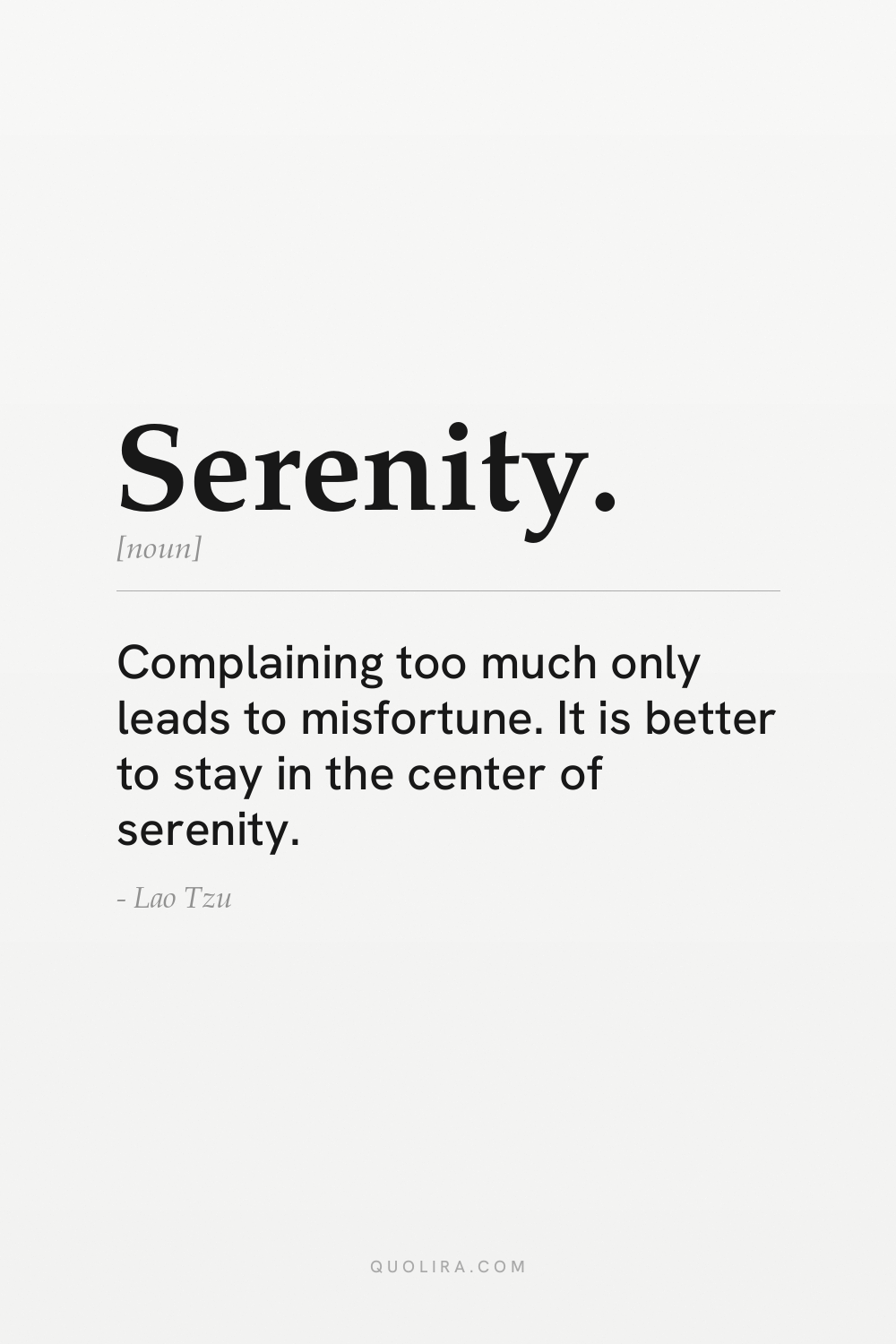
“Complaining too much only leads to misfortune. It is better to stay in the center of serenity.”
Lao Tzu · Tao Te Ching, chapter 5, translated by Yuhui Liang
 quolira
.com
Lao Tzu said it, in Tao Te Ching.
This line comes from the Tao Te Ching, the short text traditionally attributed to Lao Tzu. It matters because it refuses to start with a grand plan. Take the first step today and the rest becomes a practical question.
From the collection: 15 Quotes About Starting Over That Prove It's Never Too Late · More Lao Tzu quotes
The quote means that any long undertaking begins with a small, concrete action, so the first step deserves as much care as the distance ahead. It is less a promise about speed than a reminder that momentum starts where you are standing.
The line is attributed to Lao Tzu and is commonly traced to the Tao Te Ching, a short foundational text of Taoism that is traditionally associated with him. It appears in a passage about how large achievements grow from modest beginnings and how careful attention to each present step matters more than fixing on the destination. Translations differ considerably because the original Chinese has been rendered into English in many ways, so this wording is one common version rather than a single fixed text. Scholars continue to debate when the book was composed and whether it came from one person, so its dates are best described as traditional.
Lao Tzu is traditionally described as a sage of ancient China, and later accounts say he worked as a keeper of records. Very little about his life can be confirmed, and many stories about him come from centuries after he is said to have lived. What survives is mainly the Tao Te Ching, a compact collection of verses on humility, balance, and acting in harmony with natural processes. Its influence reached far beyond philosophy into religion, politics, and art across East Asia, and it remains one of the most translated works in the world.
“Complaining too much only leads to misfortune. It is better to stay in the center of serenity.”
Lao Tzu · Tao Te Ching, chapter 5, translated by Yuhui Liang
“The good are not argumentative; the argumentative are not quite good.”
Lao Tzu · Tao Te Ching, chapter 81, translated by Yuhui Liang
“Truthful words are not fancy; fancy words are not truthful.”
Lao Tzu · Tao Te Ching, chapter 81, translated by Yuhui Liang
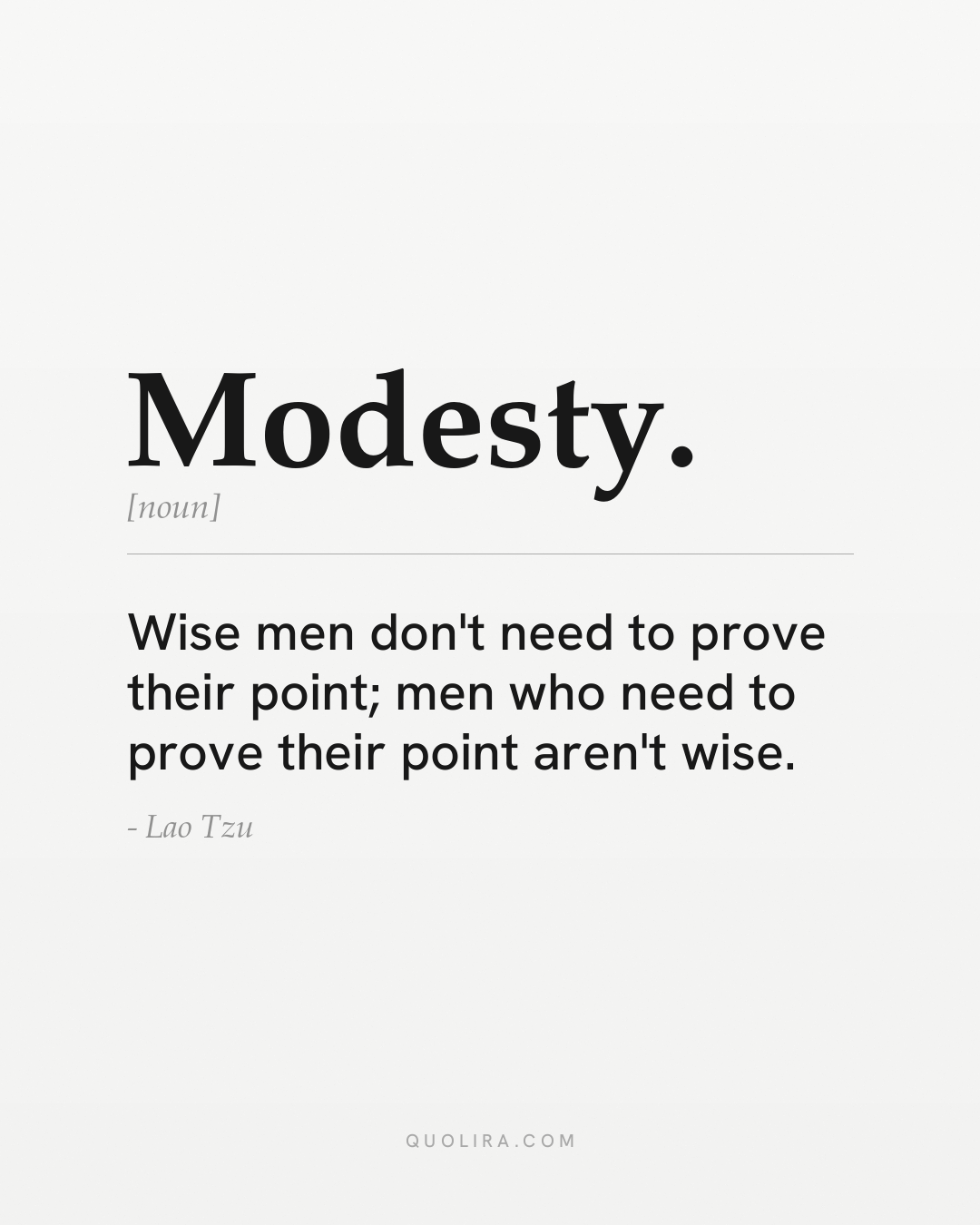
“Wise men don't need to prove their point; men who need to prove their point aren't wise.”
Lao Tzu · Tao Te Ching, chapter 81, Stephen Mitchell interpretation (1992)
“The Master has no possessions. The more he does for others, the happier he is.”
Lao Tzu · Tao Te Ching, chapter 81, Stephen Mitchell interpretation (1992)
“The sage wears coarse clothing over his shoulders, but carries jade within his bosom.”
Lao Tzu · Tao Te Ching, chapter 70, translated by Victor H. Lang
“It is because he does not contend that no one in the world can contend against him.”
Lao Tzu · Tao Te Ching, chapter 22, translated by Lin Yutang (1948)
“Thirty spokes unite at the single hub; it is the empty space which makes the wheel useful.”
Lao Tzu · Tao Te Ching, chapter 11
“A violent wind does not outlast the morning; a squall of rain does not outlast the day.”
Lao Tzu · Tao Te Ching, chapter 23, translated by Lionel Giles
“By letting it go it all gets done. The world is won by those who let it go. But when you try and try, the world is beyond the winning.”
Lao Tzu · Tao Te Ching, chapter 48, translated by Raymond B. Blakney (1955)
“A good traveler has no fixed plans and is not intent upon arriving.”
Lao Tzu · Tao Te Ching, chapter 27, Stephen Mitchell interpretation (1992)
“The more prohibitions that are imposed on people, the poorer the people become.”
Lao Tzu · Tao Te Ching, chapter 57