“The good are not argumentative; the argumentative are not quite good.”
Lao Tzu · Tao Te Ching, chapter 81, translated by Yuhui Liang
 quolira
.com
Lao Tzu said it, in Tao Te Ching, chapter 5, translated by Yuhui Liang.
Complaints are a loop, not a release, and Lao Tzu saw that long before group texts existed. Staying centered sounds easy on paper and feels like a workout in a crowded commute.
From the collection: 25 Lao Tzu Quotes on Wisdom, Humility, and Letting Go · More Lao Tzu quotes
This quote means that dwelling on complaints tends to bring more trouble, and that a steady, calm mind is a wiser place to act from. When we keep voicing grievances, we feed the frustration behind them, while a settled center lets us see situations more clearly and respond with less harm.
The line is credited to Lao Tzu and linked on this site to chapter 5 of the Tao Te Ching, in a translation by Yuhui Liang. Chapter 5 is known for its image of heaven and earth as impartial, and for a passage observing that many words quickly run out, so it is wiser to hold to the center. The wording here should be read as a modern rendering of that teaching in the translator's phrasing, not as a sentence that appears word for word in every edition. Readers who want the exact text should compare the translation directly, since versions of the Tao Te Ching differ widely.
Lao Tzu is traditionally regarded as the author of the Tao Te Ching, a short classic of Chinese philosophy. Historians know little about his life with certainty, and many scholars doubt that a single person wrote the whole book. The text's emphasis on humility, restraint, and returning to a natural balance is central to Daoist thought and continues to shape how readers approach stress and conflict.
“The good are not argumentative; the argumentative are not quite good.”
Lao Tzu · Tao Te Ching, chapter 81, translated by Yuhui Liang
“Truthful words are not fancy; fancy words are not truthful.”
Lao Tzu · Tao Te Ching, chapter 81, translated by Yuhui Liang
“Wise men don't need to prove their point; men who need to prove their point aren't wise.”
Lao Tzu · Tao Te Ching, chapter 81, Stephen Mitchell interpretation (1992)
“The Master has no possessions. The more he does for others, the happier he is.”
Lao Tzu · Tao Te Ching, chapter 81, Stephen Mitchell interpretation (1992)
“The sage wears coarse clothing over his shoulders, but carries jade within his bosom.”
Lao Tzu · Tao Te Ching, chapter 70, translated by Victor H. Lang
“It is because he does not contend that no one in the world can contend against him.”
Lao Tzu · Tao Te Ching, chapter 22, translated by Lin Yutang (1948)
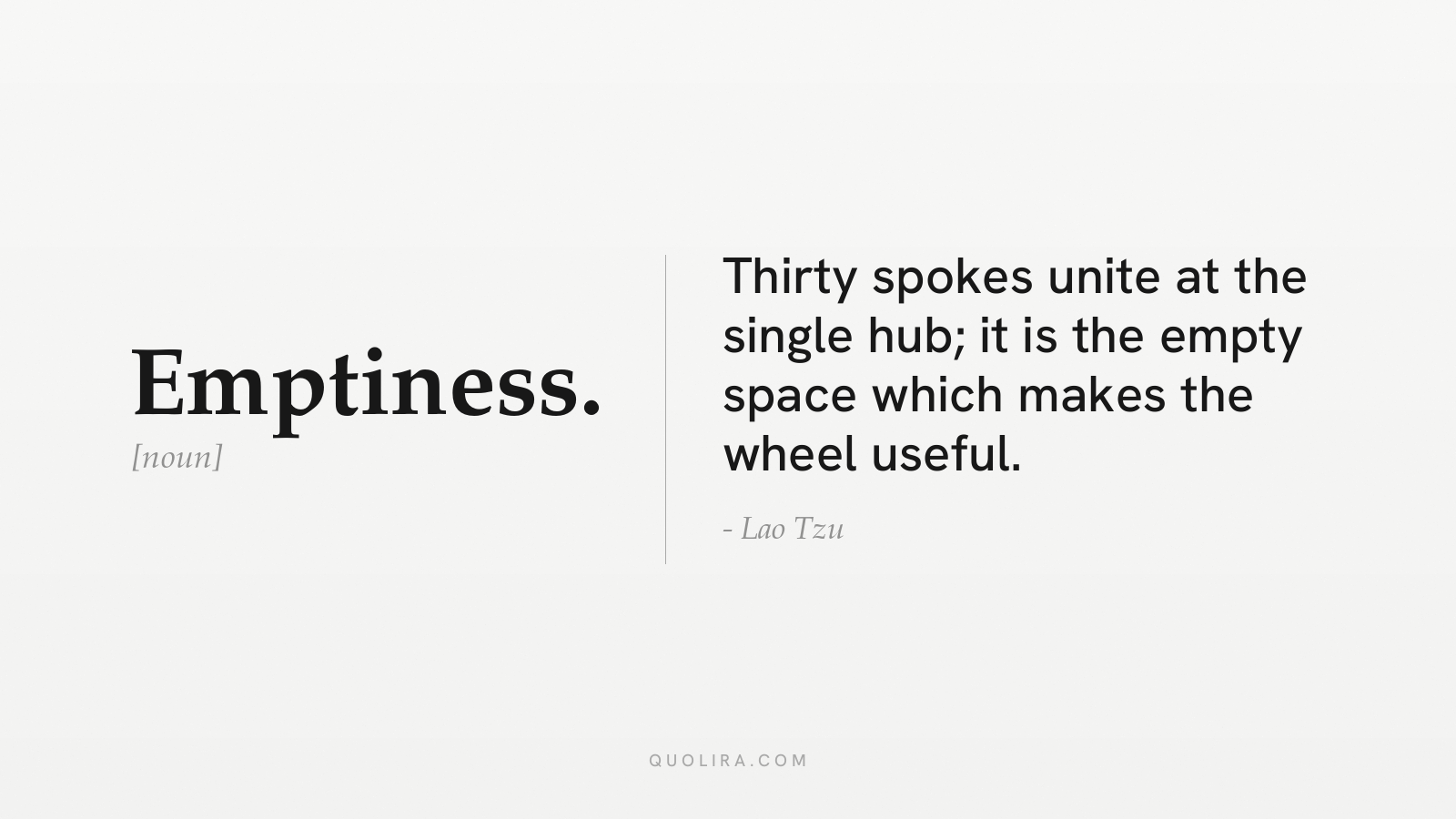
“Thirty spokes unite at the single hub; it is the empty space which makes the wheel useful.”
Lao Tzu · Tao Te Ching, chapter 11
“A violent wind does not outlast the morning; a squall of rain does not outlast the day.”
Lao Tzu · Tao Te Ching, chapter 23, translated by Lionel Giles
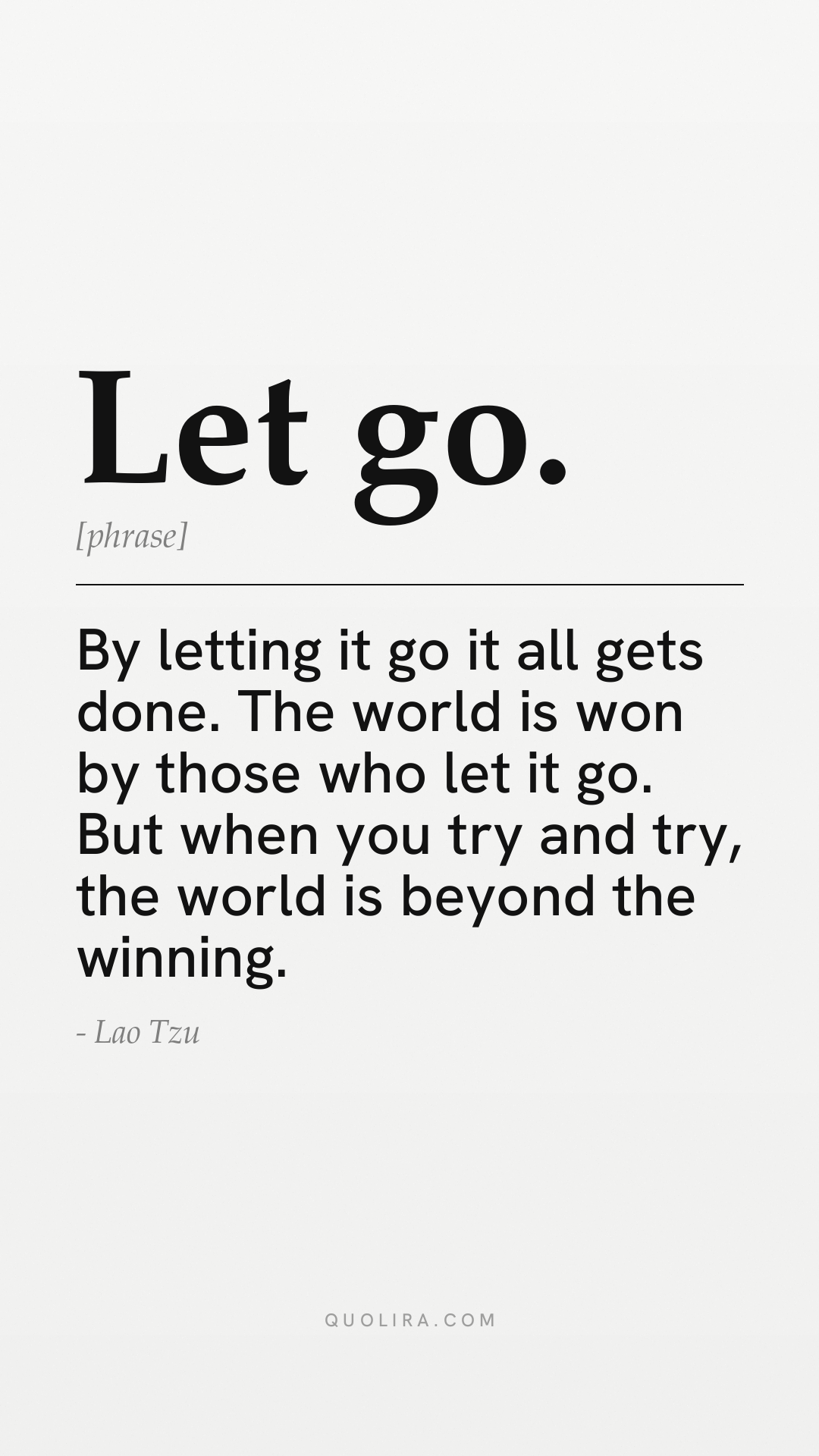
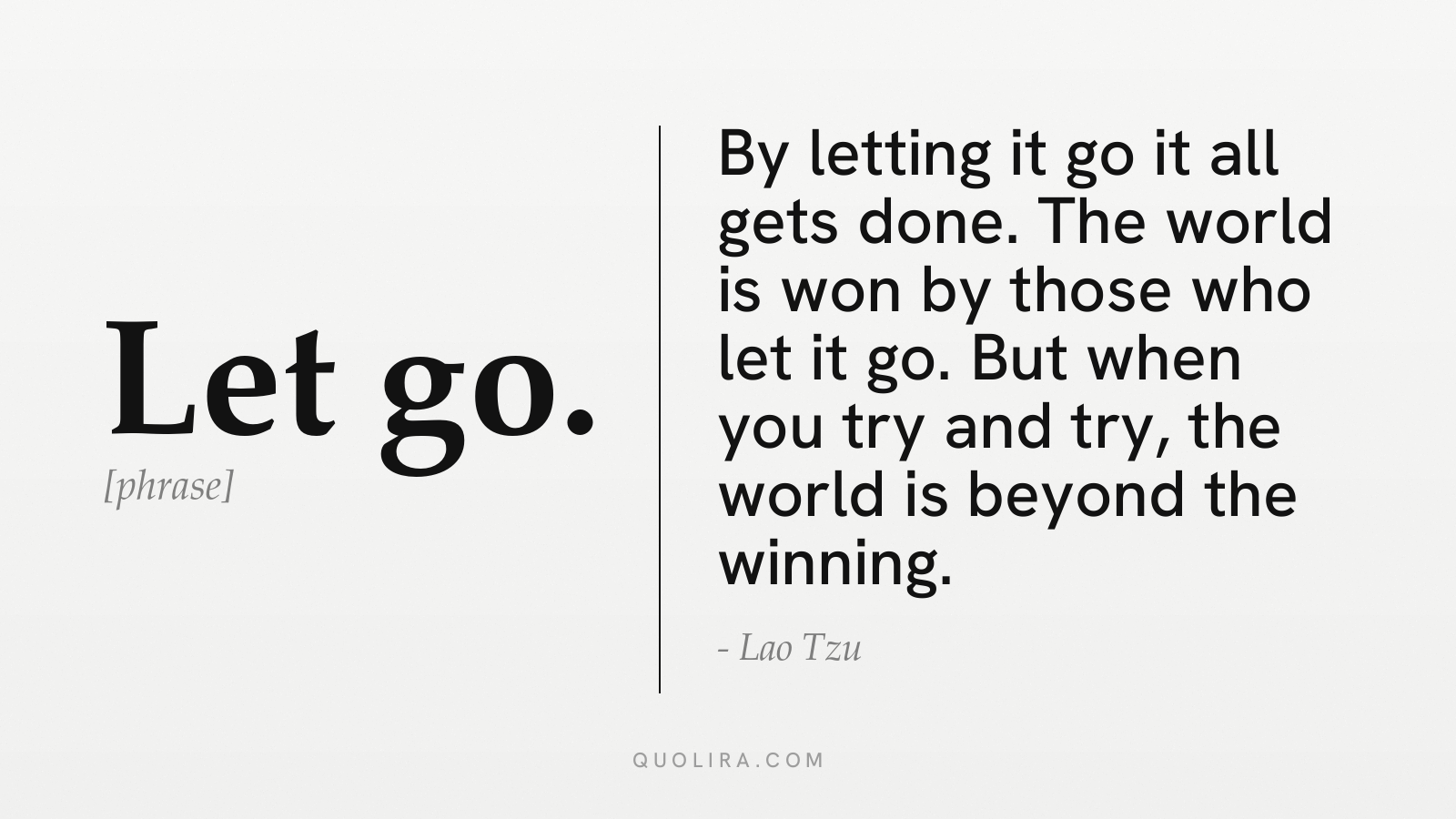
“By letting it go it all gets done. The world is won by those who let it go. But when you try and try, the world is beyond the winning.”
Lao Tzu · Tao Te Ching, chapter 48, translated by Raymond B. Blakney (1955)
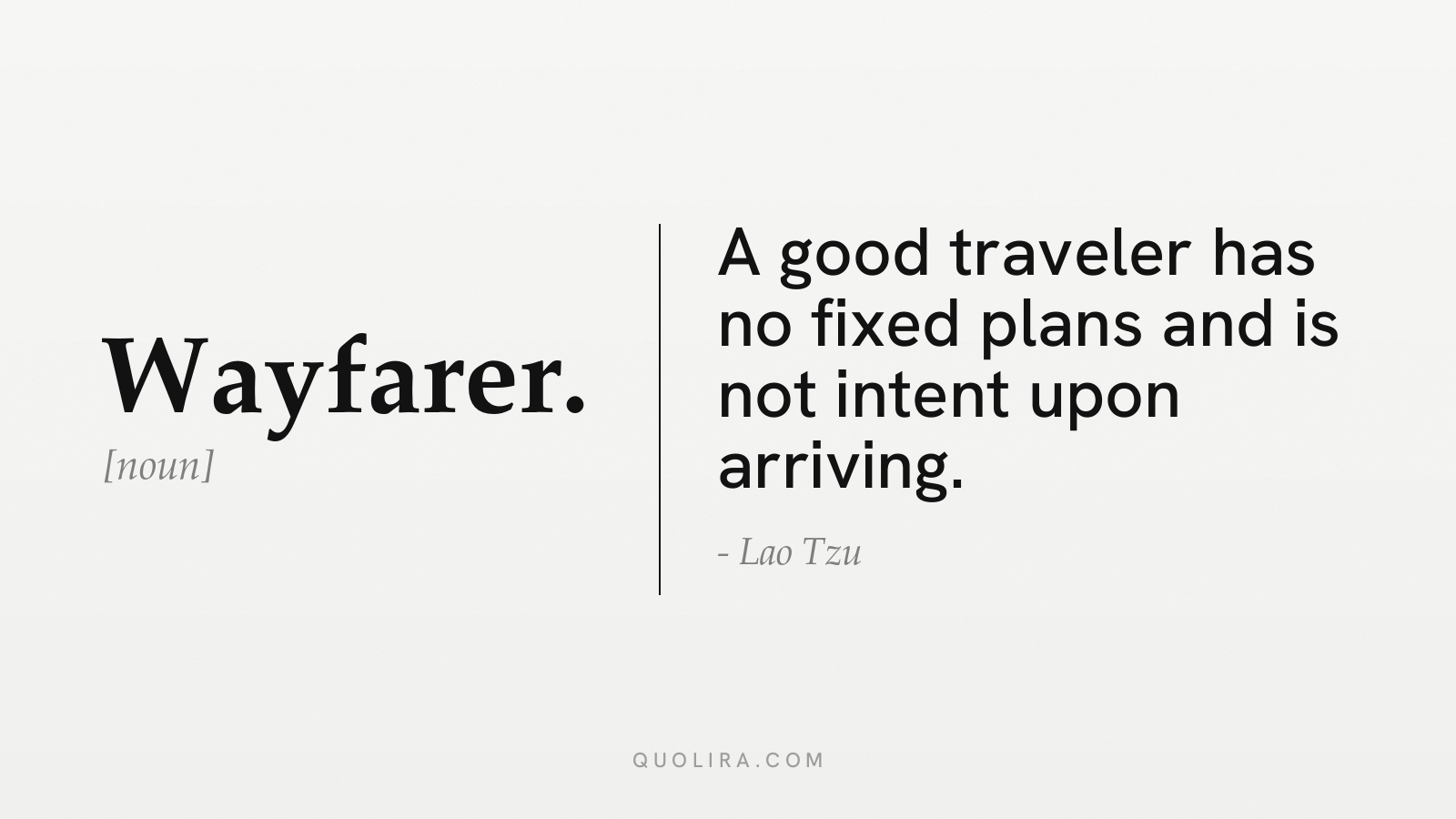
“A good traveler has no fixed plans and is not intent upon arriving.”
Lao Tzu · Tao Te Ching, chapter 27, Stephen Mitchell interpretation (1992)
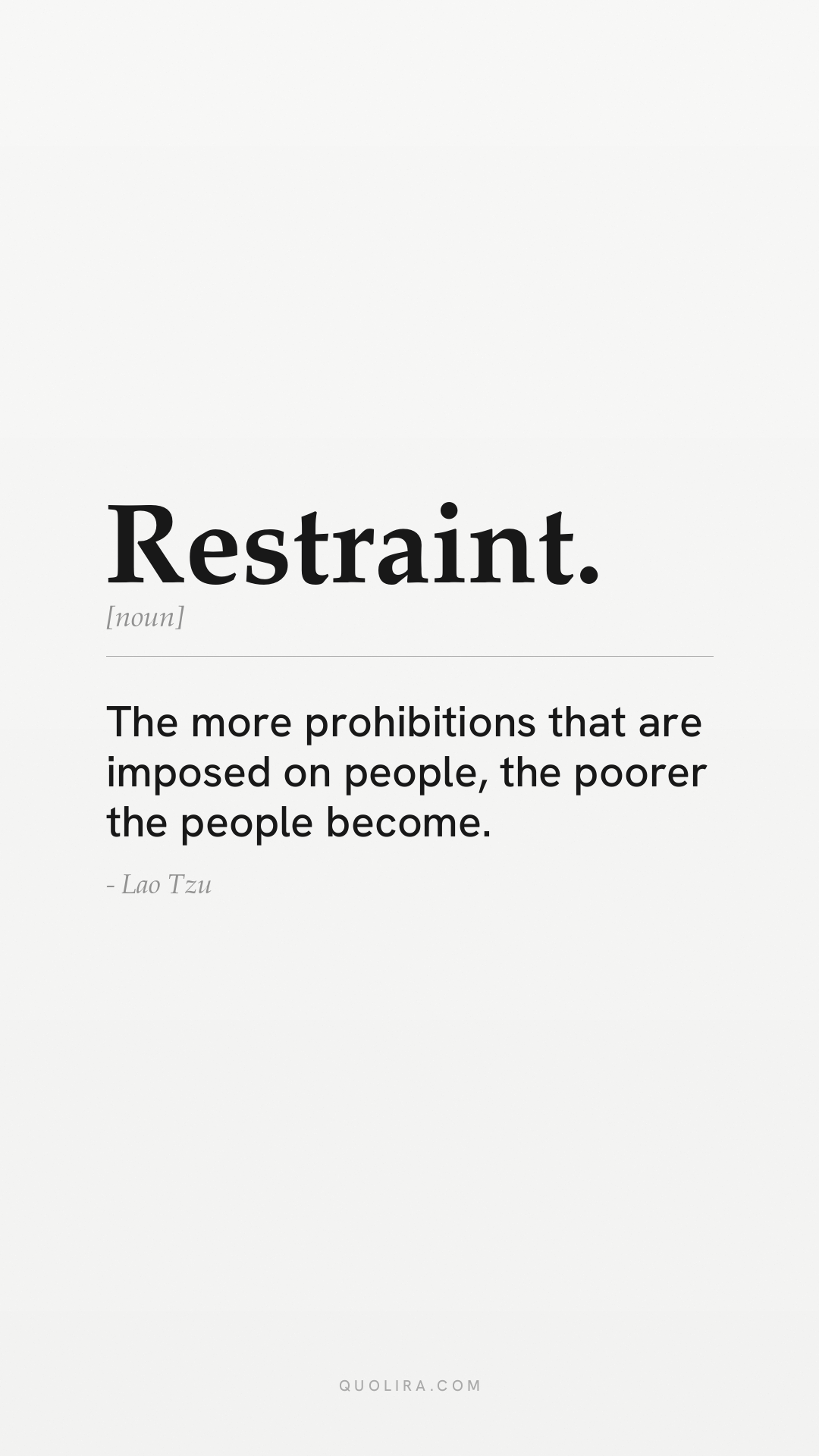
“The more prohibitions that are imposed on people, the poorer the people become.”
Lao Tzu · Tao Te Ching, chapter 57
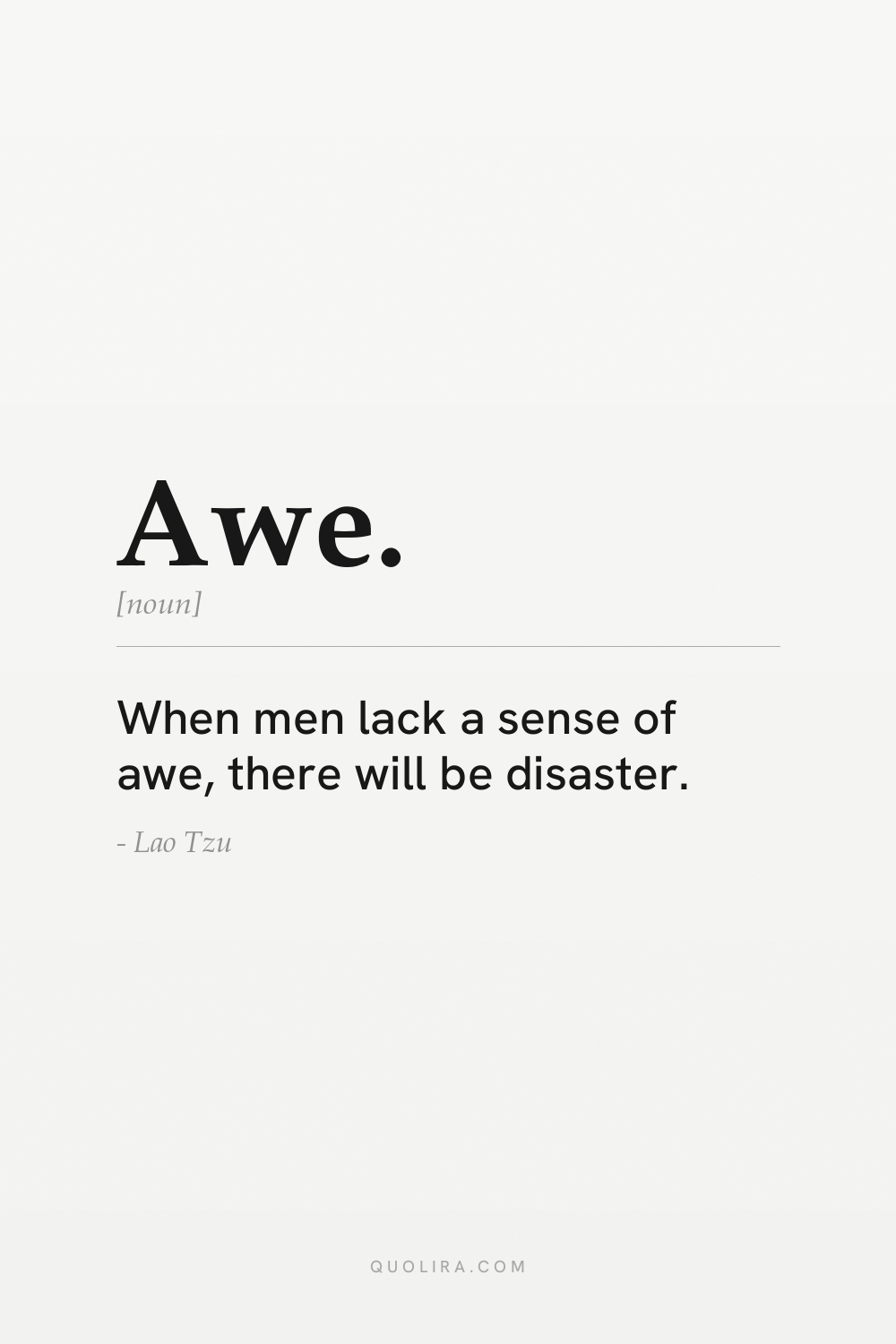
“When men lack a sense of awe, there will be disaster.”
Lao Tzu · Tao Te Ching, chapter 72, translated by Gia-Fu Feng