“The Master has no possessions. The more he does for others, the happier he is.”
Lao Tzu · Tao Te Ching, chapter 81, Stephen Mitchell interpretation (1992)
 quolira
.com
Lao Tzu said it, in Tao Te Ching, chapter 81, Stephen Mitchell interpretation (1992).
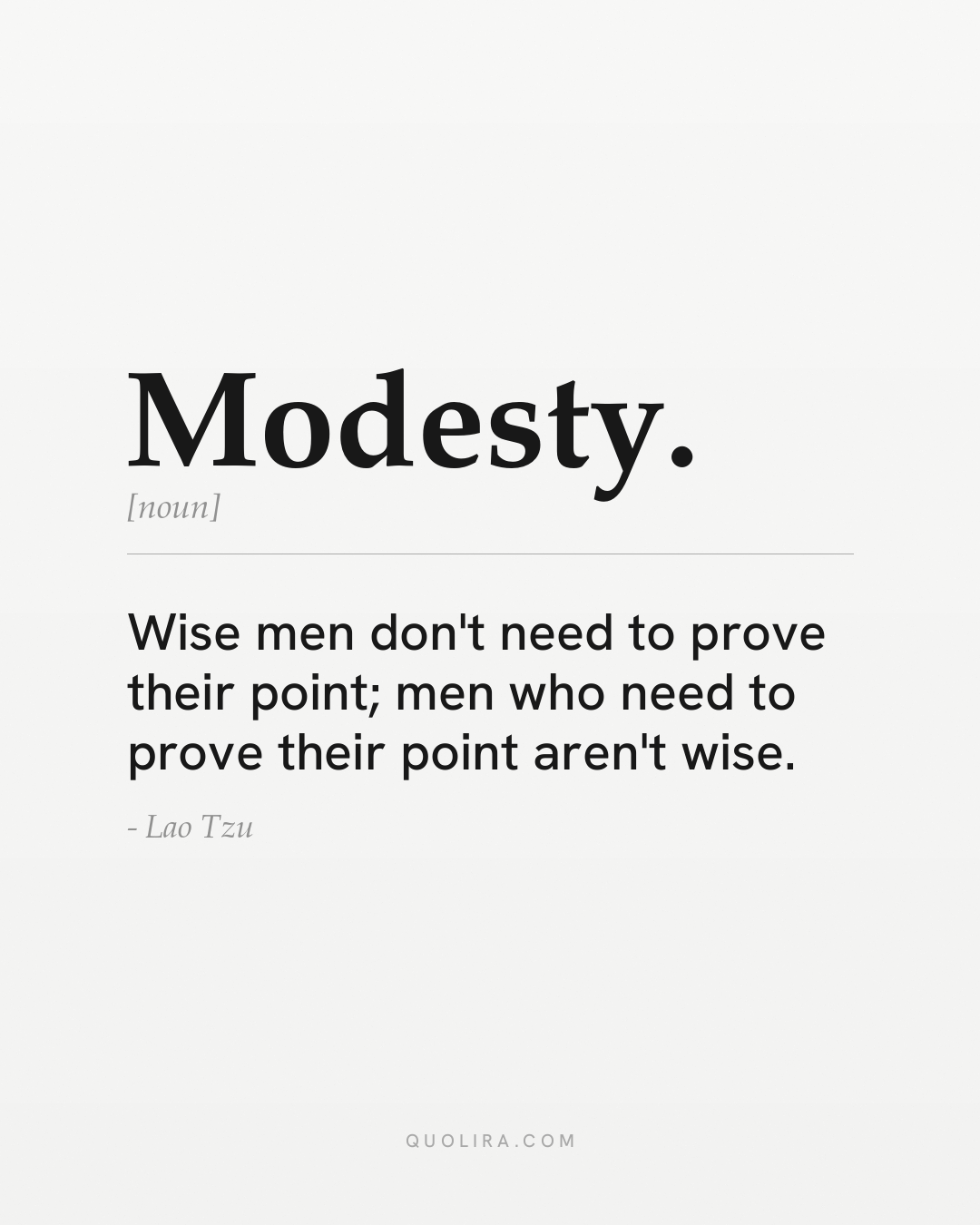
The person still shouting in the argument probably isn't the one who knows. It's a sentence I wish I'd memorized before my last group chat fight.
From the collection: 25 Lao Tzu Quotes on Wisdom, Humility, and Letting Go · More Lao Tzu quotes
The quote means that wise people feel no need to win every argument, while those who insist on being right often reveal their own insecurity. Real understanding does not depend on defeating others in debate. The contrast is between quiet confidence and the restless urge to prove oneself. A person secure in their judgment can let others hold different views without feeling threatened.
The line comes from chapter 81 of the Tao Te Ching, in Stephen Mitchell's 1992 interpretation. Mitchell's version is a free and reflective reading of the text rather than a literal translation, so the sentence reflects his choice of words. Chapter 81 closes the book with brief statements about truth, goodness, and the sage's way of acting without contention. The passage is one of several that warn against cleverness and display.
Lao Tzu is traditionally regarded as the author of the Tao Te Ching and is placed in the same broad period as Confucius. Historians are uncertain whether a single person by that name wrote the text, and its authorship and dating remain debated among scholars. What is widely accepted is that the book has shaped Daoist thought and continues to be read across many cultures in translation.
“The Master has no possessions. The more he does for others, the happier he is.”
Lao Tzu · Tao Te Ching, chapter 81, Stephen Mitchell interpretation (1992)
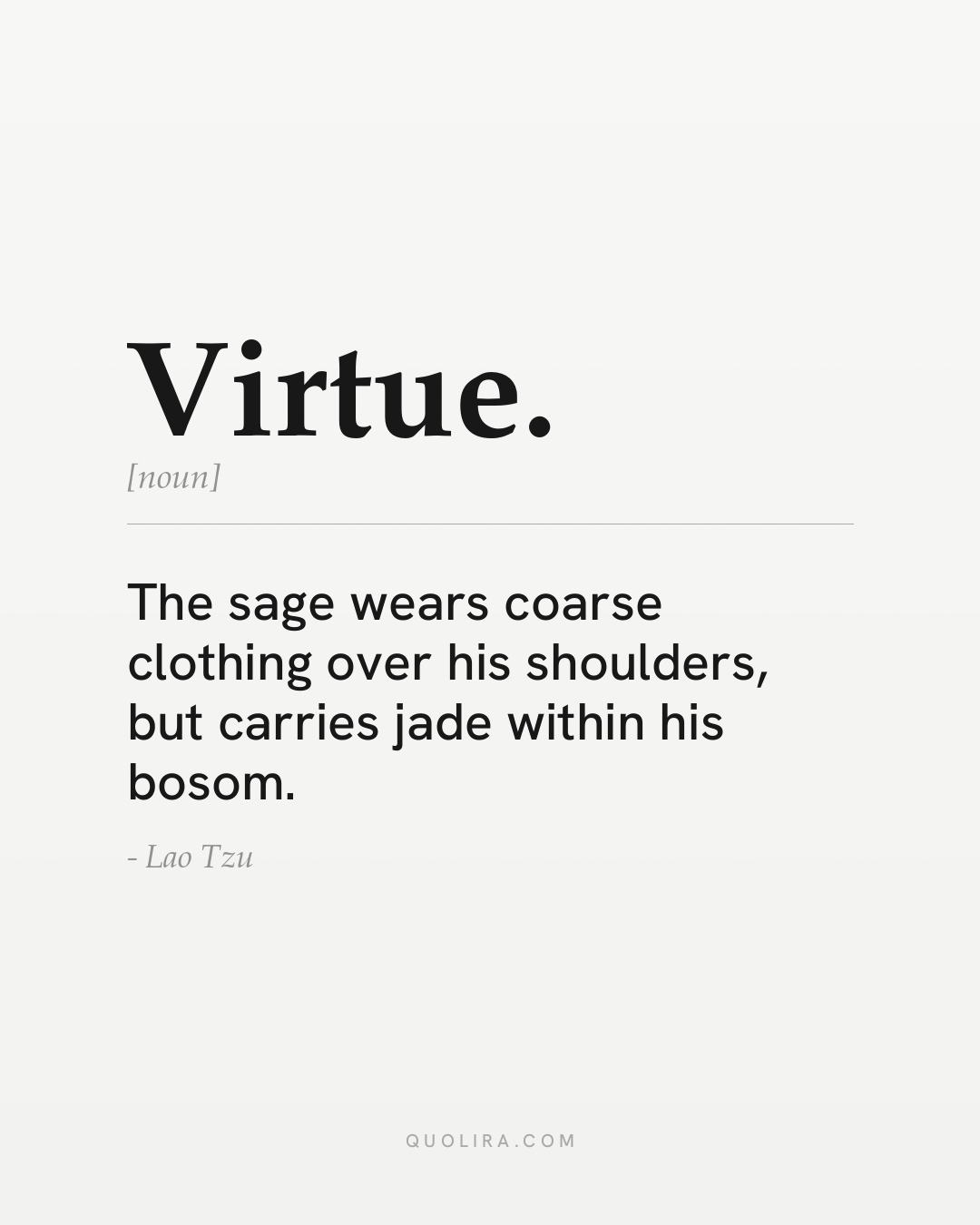
“The sage wears coarse clothing over his shoulders, but carries jade within his bosom.”
Lao Tzu · Tao Te Ching, chapter 70, translated by Victor H. Lang
“It is because he does not contend that no one in the world can contend against him.”
Lao Tzu · Tao Te Ching, chapter 22, translated by Lin Yutang (1948)
“Thirty spokes unite at the single hub; it is the empty space which makes the wheel useful.”
Lao Tzu · Tao Te Ching, chapter 11
“A violent wind does not outlast the morning; a squall of rain does not outlast the day.”
Lao Tzu · Tao Te Ching, chapter 23, translated by Lionel Giles
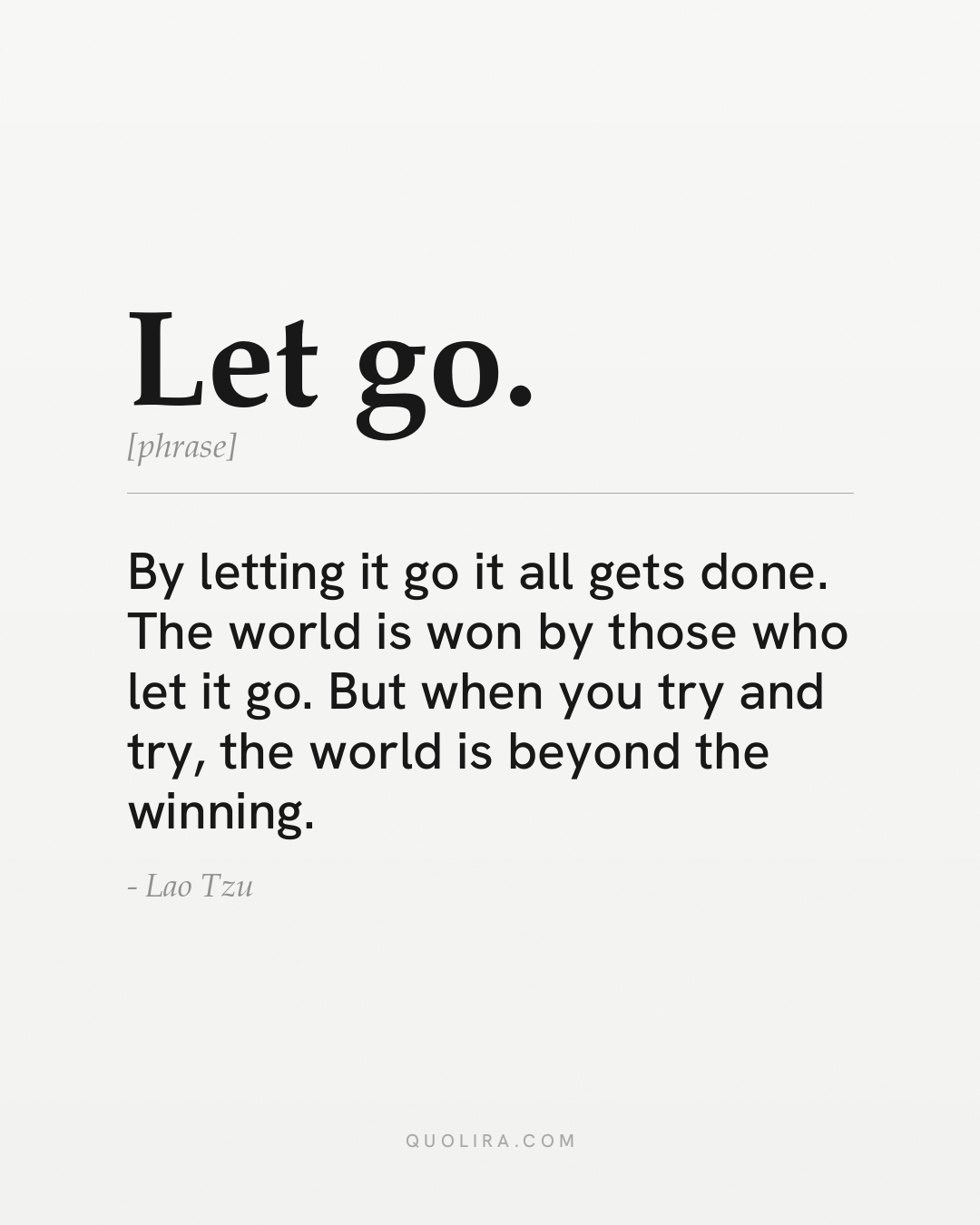
“By letting it go it all gets done. The world is won by those who let it go. But when you try and try, the world is beyond the winning.”
Lao Tzu · Tao Te Ching, chapter 48, translated by Raymond B. Blakney (1955)
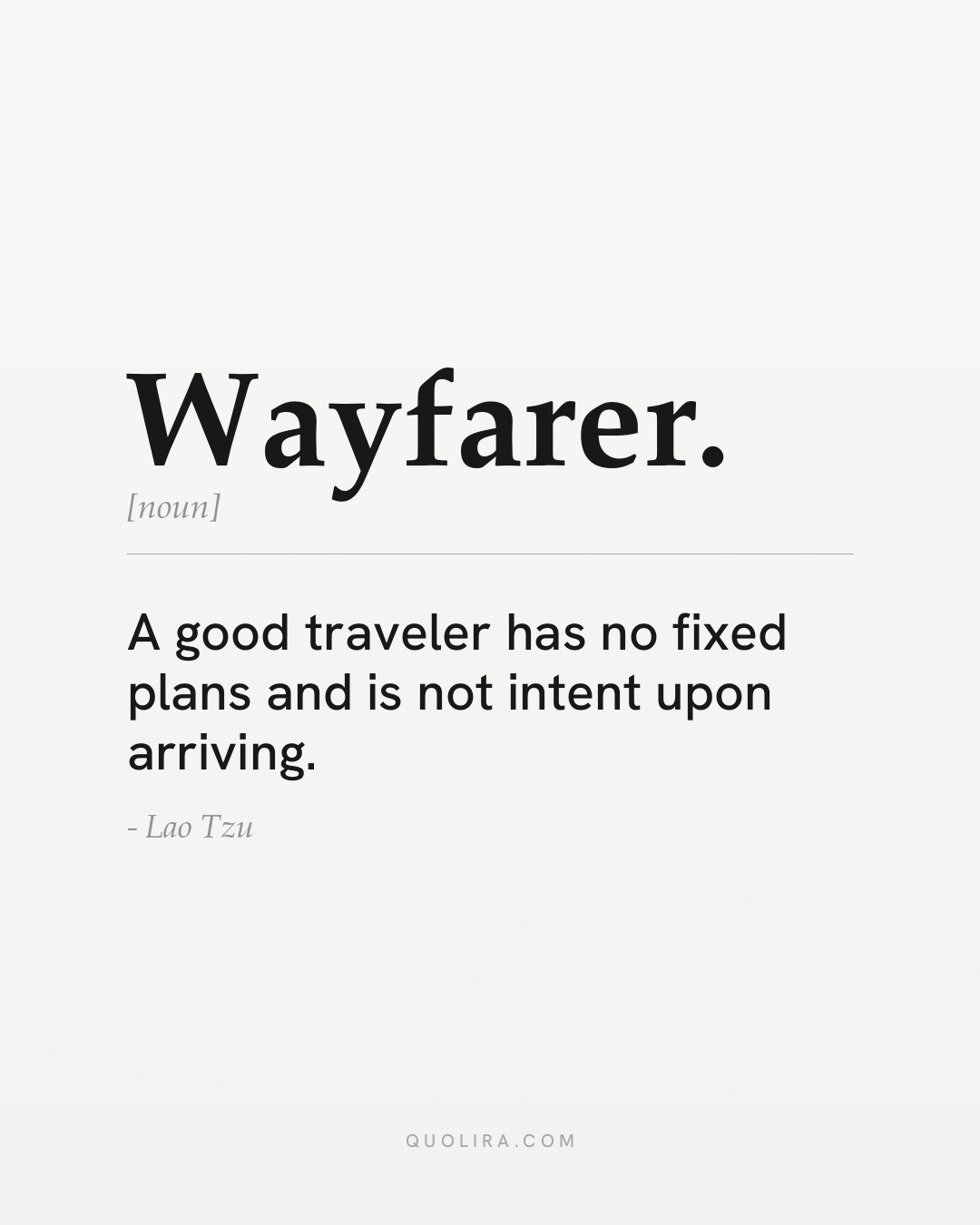
“A good traveler has no fixed plans and is not intent upon arriving.”
Lao Tzu · Tao Te Ching, chapter 27, Stephen Mitchell interpretation (1992)
“The more prohibitions that are imposed on people, the poorer the people become.”
Lao Tzu · Tao Te Ching, chapter 57
“When men lack a sense of awe, there will be disaster.”
Lao Tzu · Tao Te Ching, chapter 72, translated by Gia-Fu Feng
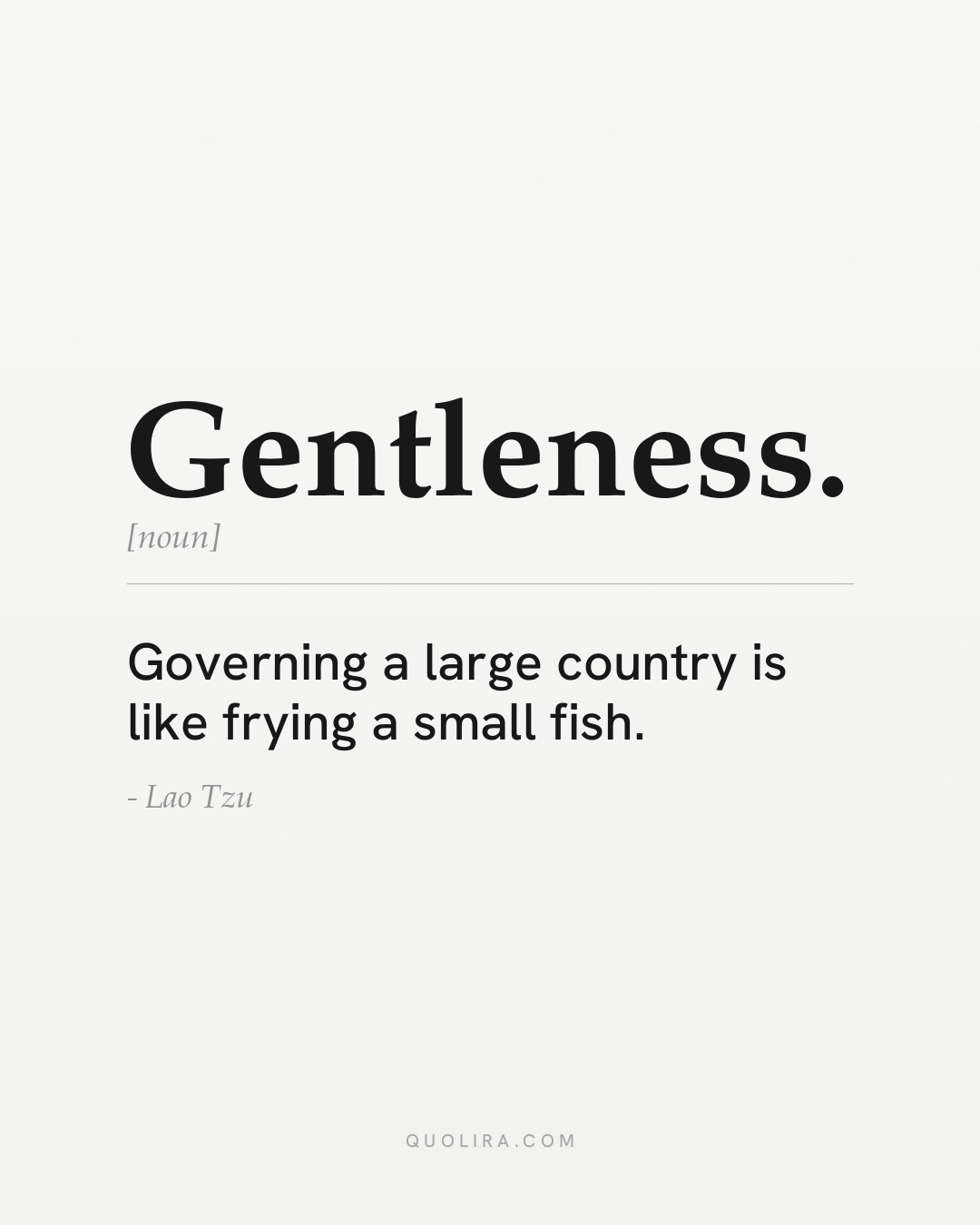
“Governing a large country is like frying a small fish.”
Lao Tzu · Tao Te Ching, chapter 60
“Scholars of the lowest class, when they hear of it, laugh at it. Without the laughter, there would be no Tao.”
Lao Tzu · Tao Te Ching, chapter 41
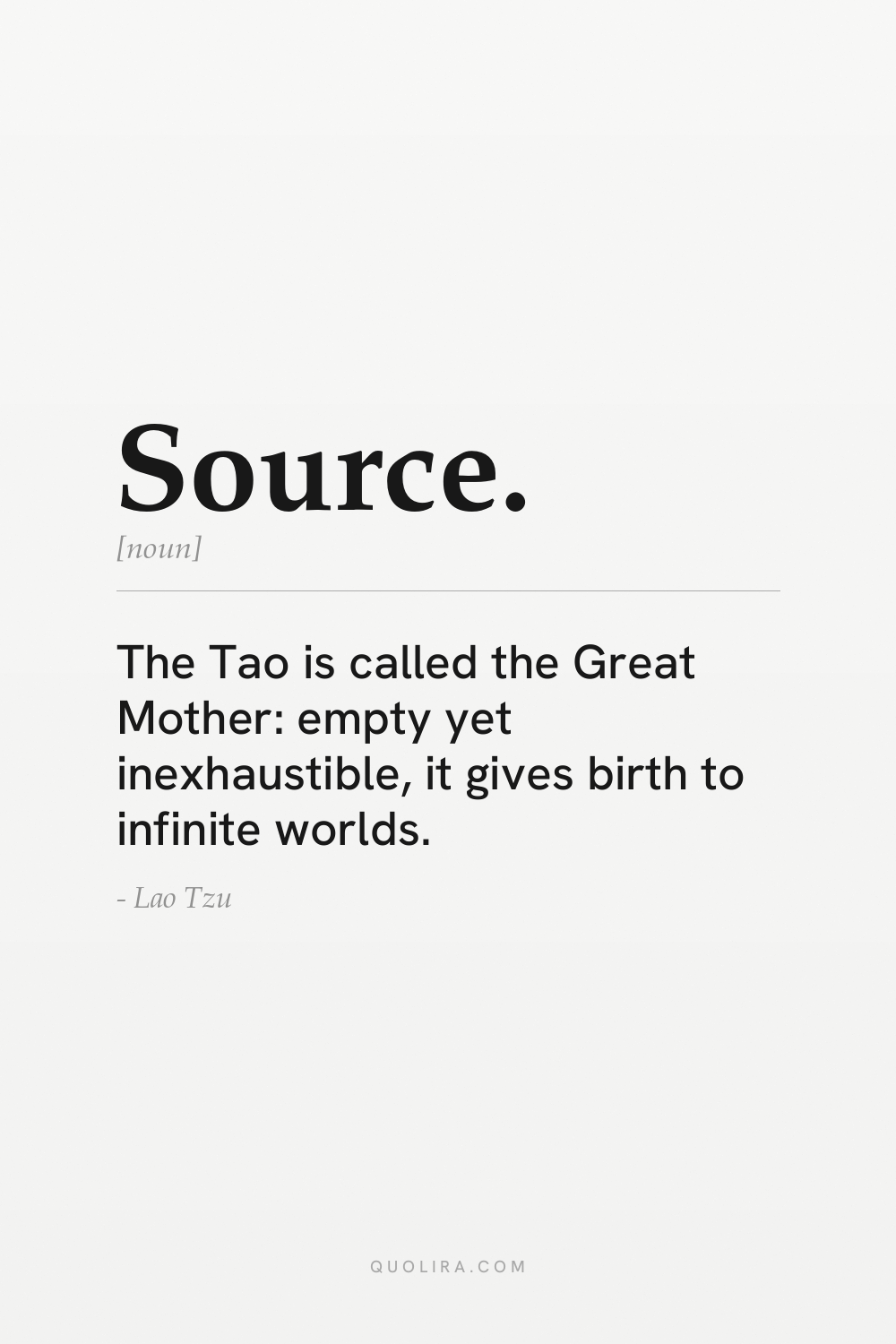
“The Tao is called the Great Mother: empty yet inexhaustible, it gives birth to infinite worlds.”
Lao Tzu · Tao Te Ching, chapter 6, Stephen Mitchell interpretation (1992)