“Governing a large country is like frying a small fish.”
Lao Tzu · Tao Te Ching, chapter 60
 quolira
.com
Lao Tzu said it, in Tao Te Ching, chapter 72, translated by Gia-Fu Feng.
Feng's wording is blunt, and it reads as a warning about arrogance. A society that stops being amazed by anything tends to stop being careful.
From the collection: 25 Lao Tzu Quotes on Wisdom, Humility, and Letting Go · More Lao Tzu quotes
The quote means that people who no longer feel reverence for life, nature, or the limits of their own knowledge tend to act carelessly, and that carelessness eventually brings harm to individuals and communities. Awe here is a humble attentiveness to things larger than oneself, the opposite of arrogance.
The line comes from the Tao Te Ching, chapter 72, in which the text warns that when people stop respecting what is greater than them, they fall into fear and force. The chapter contrasts a ruler who governs with restraint and respect against one who governs through pressure and display. Gia-Fu Feng's translation, made with Jane English, is one of the most widely read English versions, and it renders the idea in plain language that stays close to the classical Chinese.
The Tao Te Ching is traditionally attributed to Lao Tzu, a name that means roughly "Old Master." Tradition places him in ancient China, probably around the sixth century BCE, but historians debate whether he was a single historical person or a name gathered around a body of teachings. Because of that uncertainty, the book is best understood as a collection of sayings developed over time, reflecting Daoist ideas about balance, simplicity, and living in accord with the natural order.
“Governing a large country is like frying a small fish.”
Lao Tzu · Tao Te Ching, chapter 60
“Scholars of the lowest class, when they hear of it, laugh at it. Without the laughter, there would be no Tao.”
Lao Tzu · Tao Te Ching, chapter 41
“The Tao is called the Great Mother: empty yet inexhaustible, it gives birth to infinite worlds.”
Lao Tzu · Tao Te Ching, chapter 6, Stephen Mitchell interpretation (1992)
“The Tao is like a well: used but never used up.”
Lao Tzu · Tao Te Ching, chapter 4, Stephen Mitchell interpretation (1992)
“The Tao is like a bellows: it is empty yet infinitely capable. The more you use it, the more it produces; the more you talk of it, the less you understand.”
Lao Tzu · Tao Te Ching, chapter 5, Stephen Mitchell interpretation (1992)
“Since before time and space were, the Tao is. It is beyond is and is not. How do I know this is true? I look inside myself and see.”
Lao Tzu · Tao Te Ching, chapter 21, Stephen Mitchell interpretation (1992)
“To attain knowledge, add things every day. To attain wisdom, remove things every day.”
Lao Tzu · Tao Te Ching, chapter 48
“A leader is best when people barely know that he exists, not so good when people obey and acclaim him, worst when they despise him.”
Lao Tzu · Tao Te Ching, chapter 17
“A journey of a thousand miles starts with a single step.”
Lao Tzu · Tao Te Ching, chapter 64 (translations vary)
“He who knows does not speak; he who speaks does not know.”
Lao Tzu · Tao Te Ching, chapter 56
“Knowing others is intelligence; knowing yourself is true wisdom. Mastering others is strength; mastering yourself is true power.”
Lao Tzu · Tao Te Ching, chapter 33, Stephen Mitchell interpretation (1992)
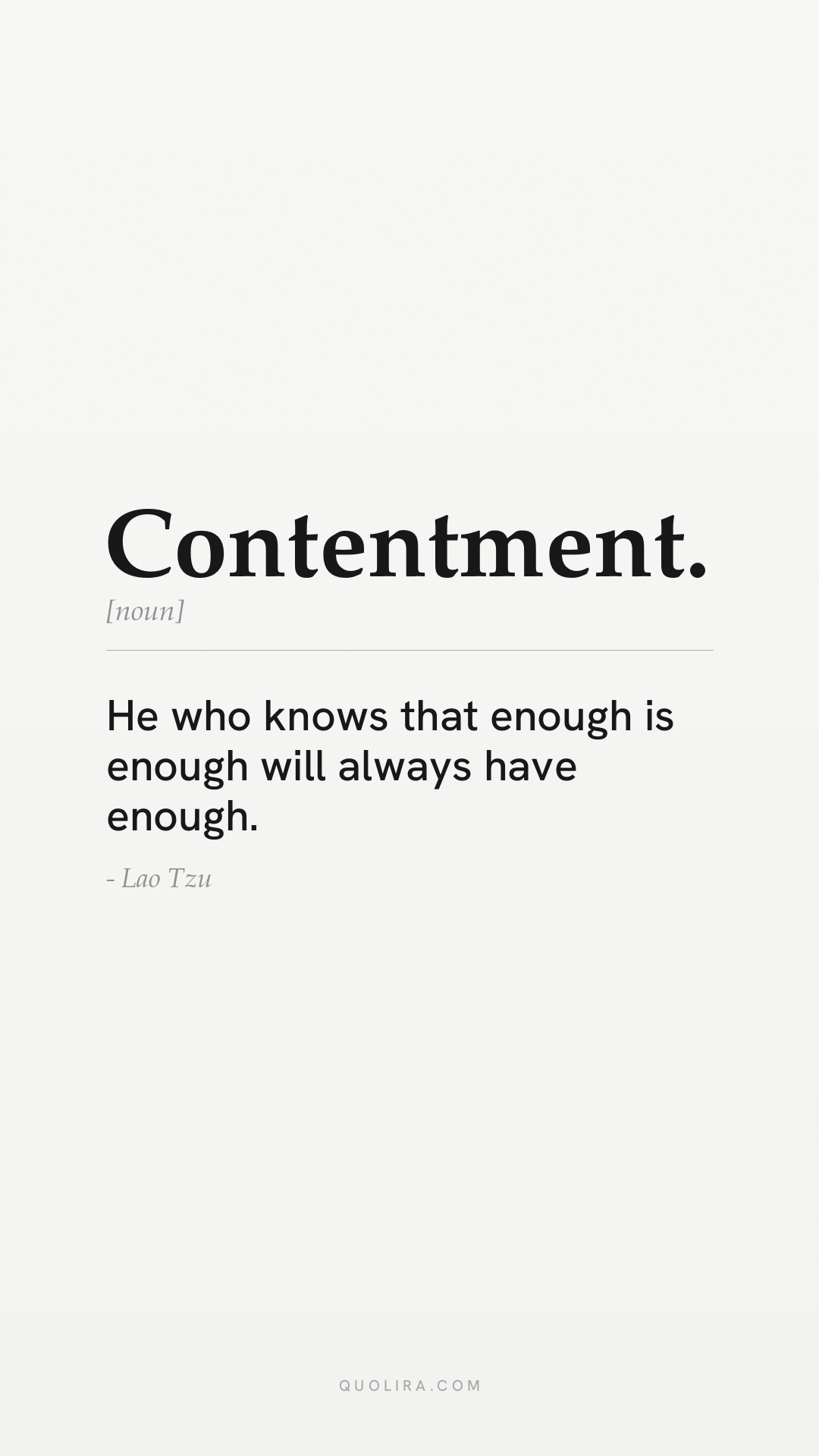
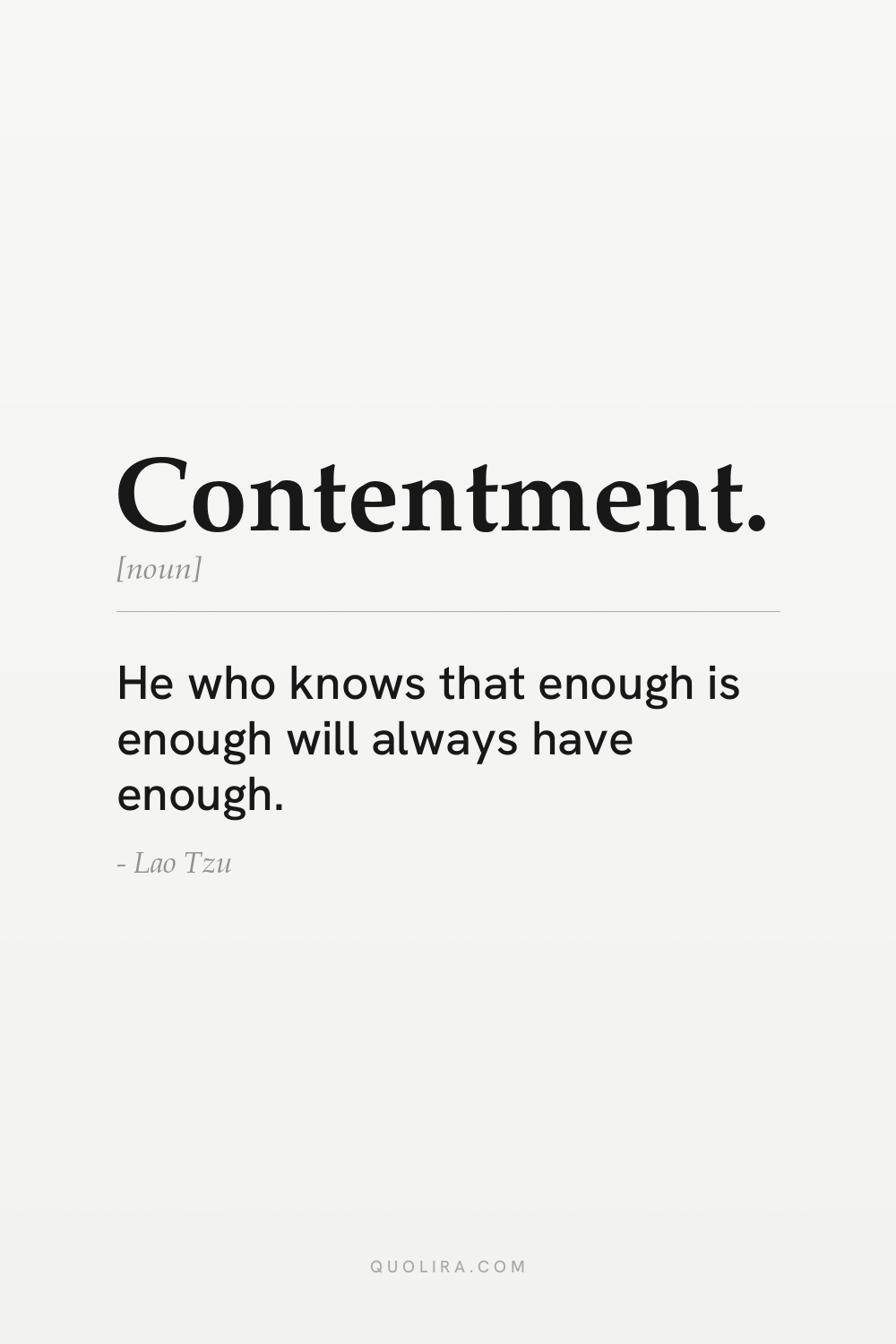
“He who knows that enough is enough will always have enough.”
Lao Tzu · Tao Te Ching, chapter 46