“Show me someone who is ill and yet happy, in danger and yet happy, dying and yet happy, exiled and yet happy.”
Epictetus · Discourses, Book II, chapter 19
 quolira
.com
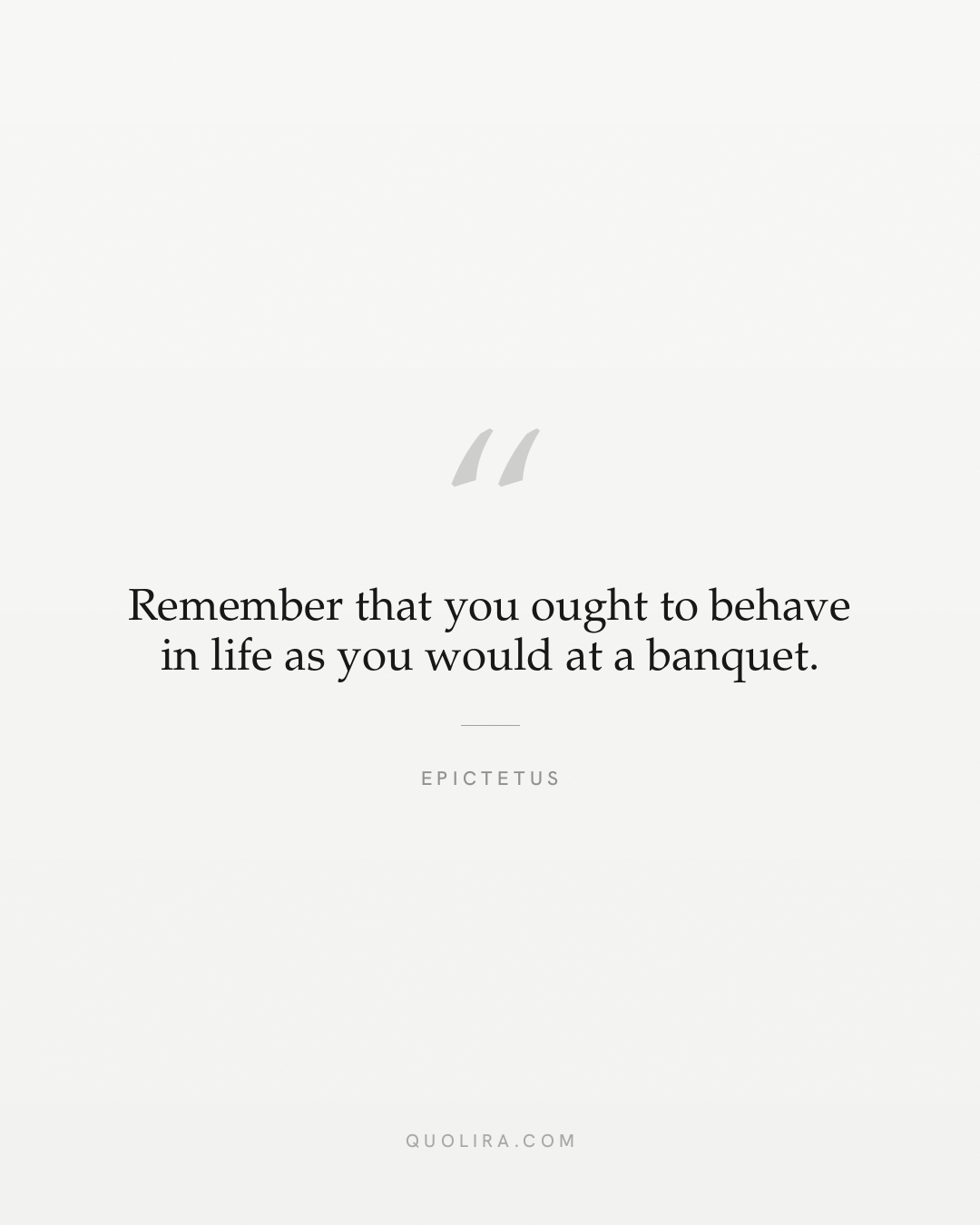
Epictetus said it, in Enchiridion, section 15.
Epictetus compares life to a dinner where dishes pass around. Take what comes to you politely, and do not grab for what has not arrived. It works as a rule for ambition, relationships, and money alike.
From the collection: 23 Best Epictetus Quotes on Fear, Freedom, and Control · More Epictetus quotes
Epictetus advises that we should conduct our lives as a thoughtful guest behaves at a dinner. We accept what is offered, we do not grab for what has not yet arrived, and we do not cling to what is taken away. The image asks for moderation, gratitude, and a willingness to let things pass.
This saying comes from the Enchiridion, a short handbook of practical guidance. Arrian compiled it from the teachings of Epictetus, and it was intended as a compact reference for daily conduct rather than a systematic treatise. The banquet image is one of several simple comparisons used to make Stoic principles easy to remember. It reflects the broader Stoic view that we should accept what lies outside our control and respond to it with calm and good manners.
Epictetus was born around 50 CE in Hierapolis, a city in Phrygia within the Roman Empire. He spent his early life enslaved in Rome before being freed and beginning a career as a teacher. Later he ran a philosophical school in Nicopolis, in western Greece. He did not write down his own lectures in a form that survives. The Enchiridion and the Discourses reach modern readers through Arrian, who recorded and arranged his master's words.
“Show me someone who is ill and yet happy, in danger and yet happy, dying and yet happy, exiled and yet happy.”
Epictetus · Discourses, Book II, chapter 19
“Little is needed to ruin and upset everything, only a slight aberration from reason.”
Epictetus · Discourses, Book IV, chapter 3
“In a word, neither death, nor exile, nor pain, nor anything of this kind is the real cause of our doing or not doing any action, but our inward opinions and principles.”
Epictetus · Discourses, Book I, chapter 11
“It is not death or pain that is to be feared, but the fear of pain or death.”
Epictetus · Discourses, Book II, chapter 1
“Freedom is not acquired by satisfying yourself with what you desire, but by destroying your desire.”
Epictetus · Discourses, Book IV, chapter 1
“Know, first, who you are, and then adorn yourself accordingly.”
Epictetus · Discourses, Book III, chapter 1
“It is difficulties that show what men are.”
Epictetus · Discourses, Book I, chapter 24
“Remember that it is not he who gives abuse or blows who affronts, but the view we take of these things as insulting.”
Epictetus · Enchiridion, section 20
“Some things are in our control and others not.”
Epictetus · Enchiridion, section 1
“Men are disturbed, not by things, but by the principles and notions which they form concerning things.”
Epictetus · Enchiridion, section 5
“Every new beginning comes from some other beginning's end.”
Seneca
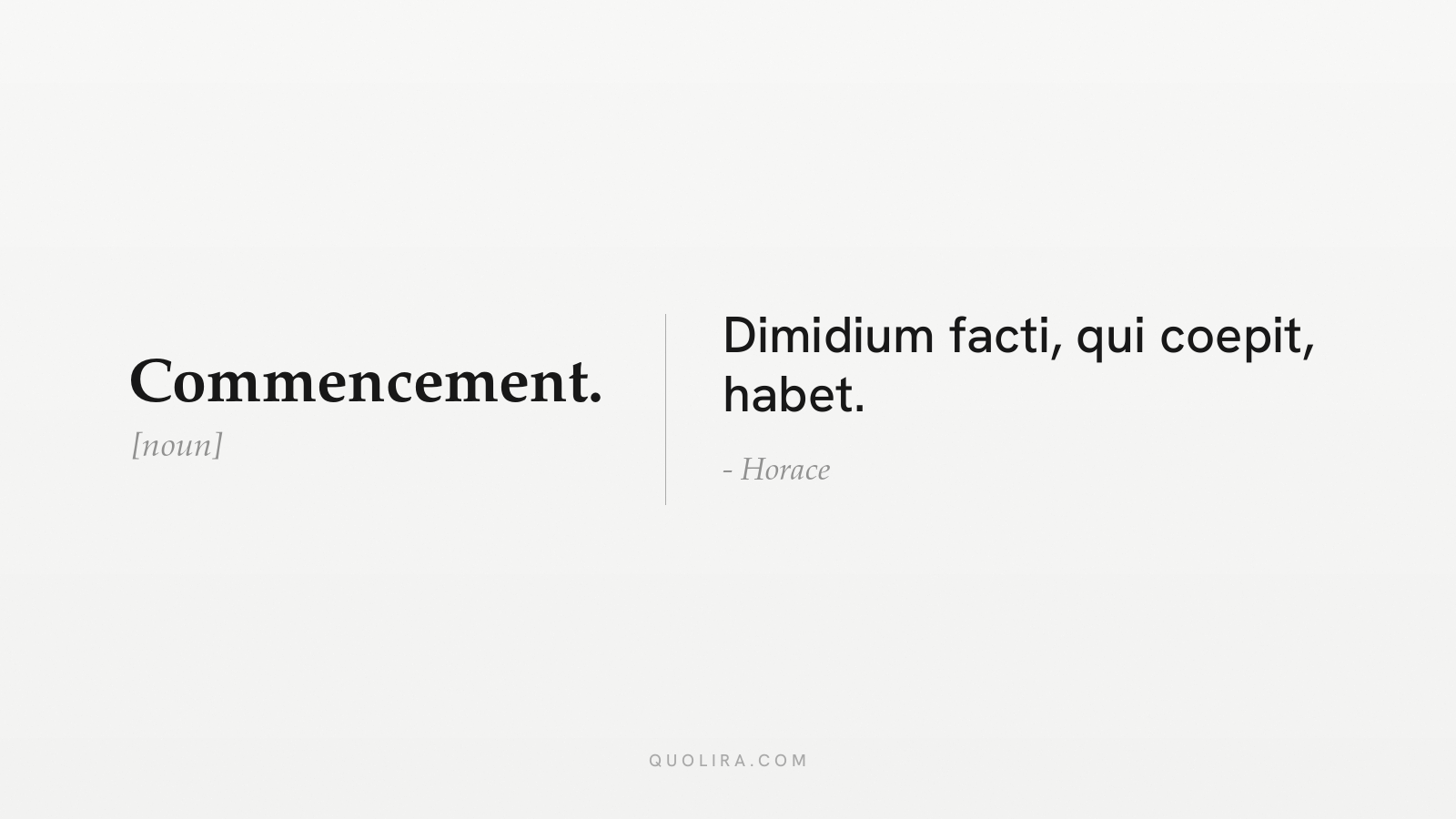
“Dimidium facti, qui coepit, habet.”
Horace · Epistles, Book 1