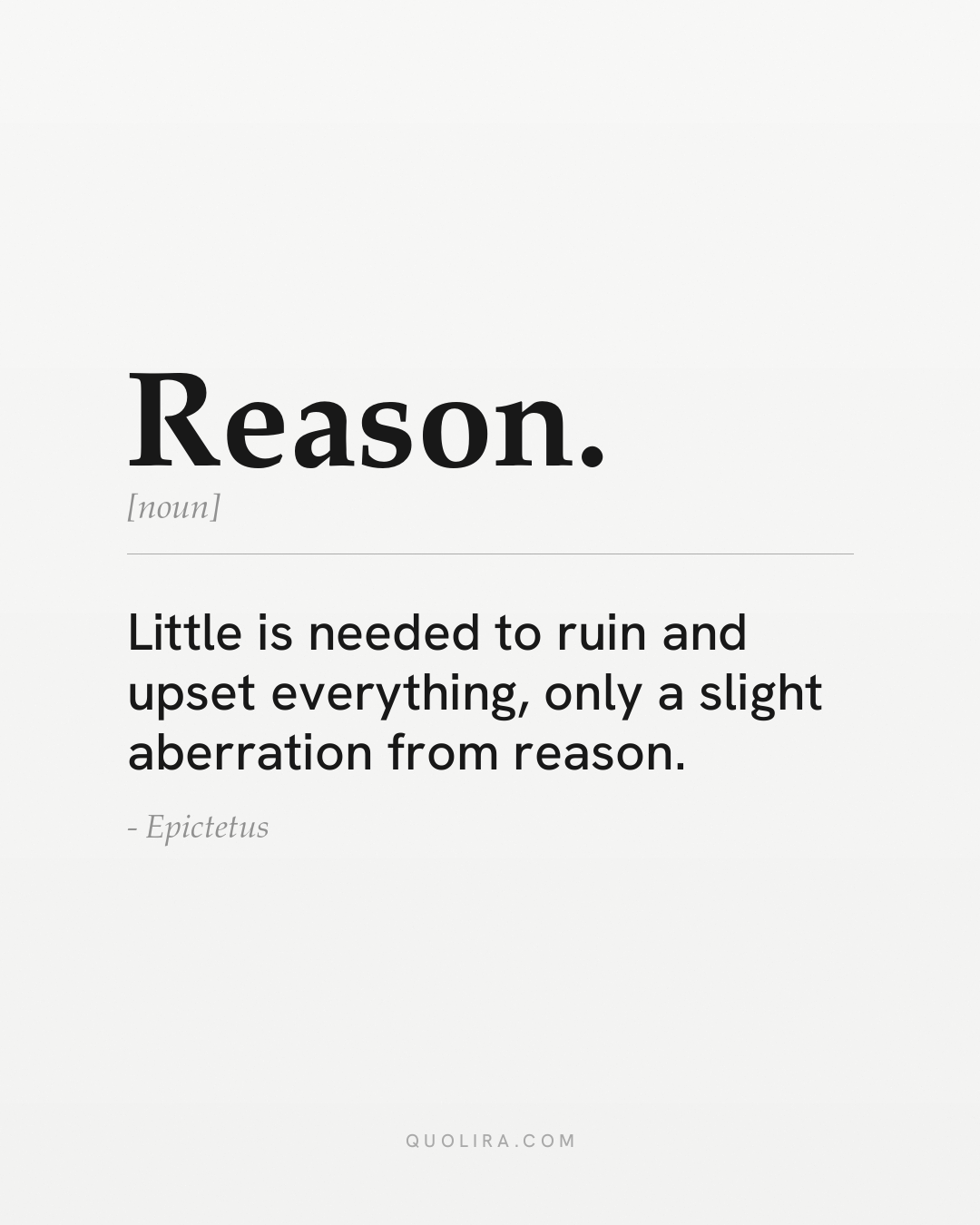
“Little is needed to ruin and upset everything, only a slight aberration from reason.”
Epictetus · Discourses, Book IV, chapter 3
 quolira
.com
Epictetus said it, in Discourses, Book II, chapter 19.
Epictetus is daring you here. Show him a Stoic who stays happy through illness, danger, and exile, and he says he longs to see one. It challenges you to measure joy by what you control, not by your circumstances.
From the collection: 23 Best Epictetus Quotes on Fear, Freedom, and Control · More Epictetus quotes
Epictetus asks his listener to find anyone who remains happy while sick, in danger, dying, or exiled. The implication is that happiness does not depend on these circumstances but on how a person judges them. He invites us to test the idea against real cases.
The passage is drawn from Book II of the Discourses, as recorded by his student Arrian. Epictetus often uses vivid, almost challenging questions in his lectures to press students toward a new way of seeing. Here the rhetorical demand serves to show that hardship alone does not determine a person's inner state. The surrounding material explores how a rational person should respond to difficulties that lie beyond their control, a central concern of Stoic teaching.
Epictetus was born around 50 CE in Hierapolis, in the Roman province of Phrygia. He spent early years enslaved in Rome, later gained his freedom, and became a teacher of philosophy. He established a school in Nicopolis, in western Greece, where he taught students for many years. He wrote no surviving works himself. His teaching is preserved mainly through the Discourses and the Enchiridion, both associated with his student Arrian.
“Little is needed to ruin and upset everything, only a slight aberration from reason.”
Epictetus · Discourses, Book IV, chapter 3
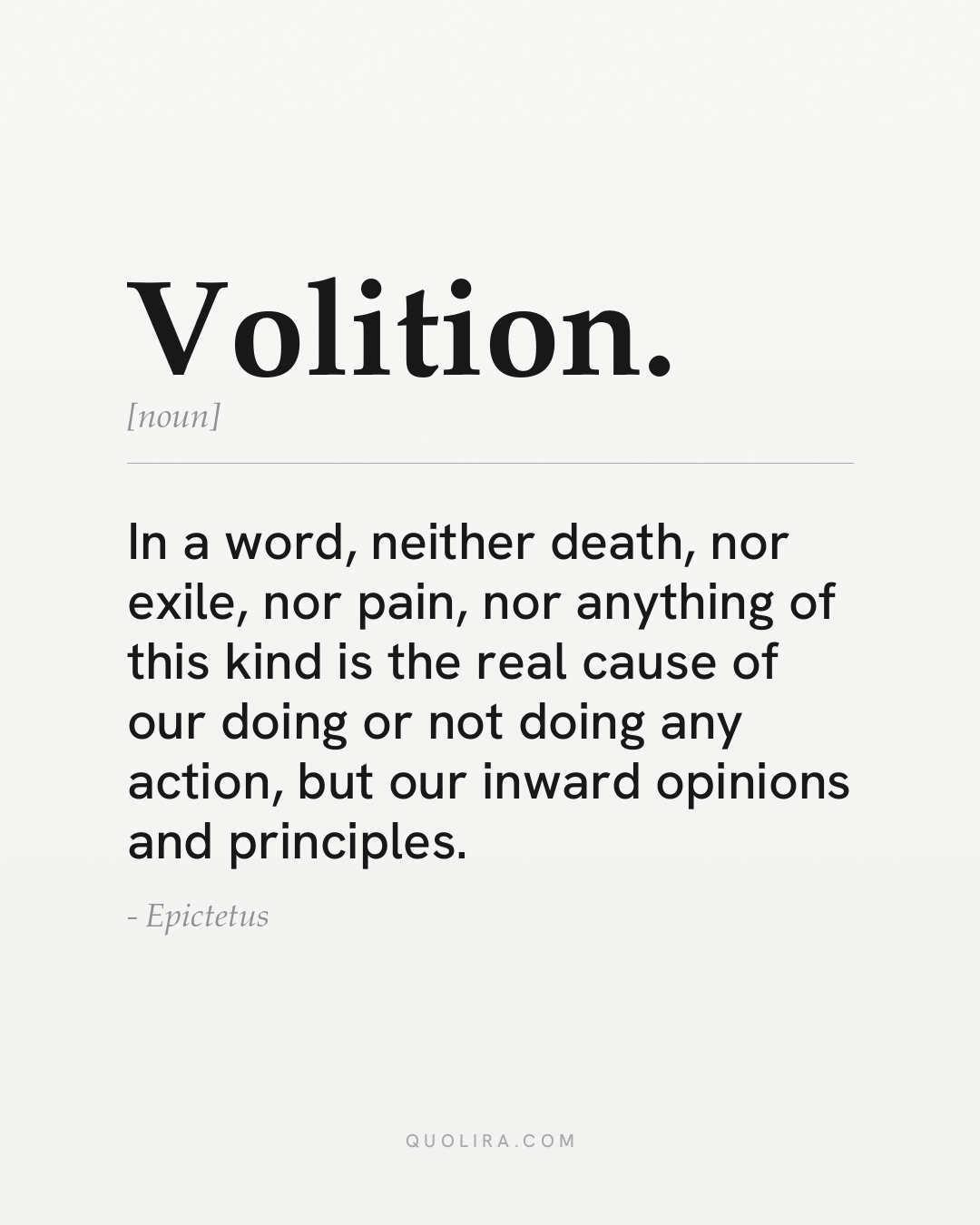
“In a word, neither death, nor exile, nor pain, nor anything of this kind is the real cause of our doing or not doing any action, but our inward opinions and principles.”
Epictetus · Discourses, Book I, chapter 11
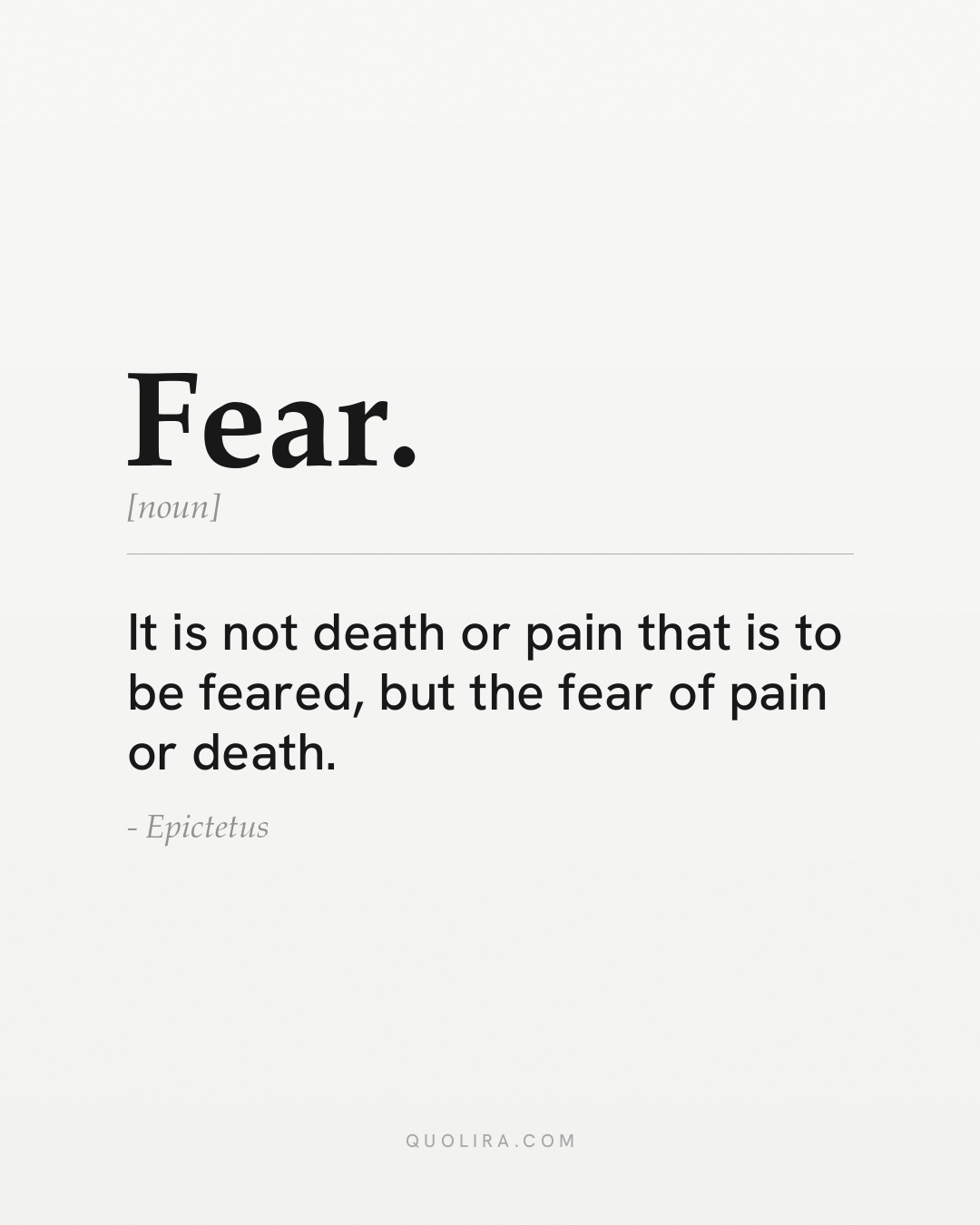
“It is not death or pain that is to be feared, but the fear of pain or death.”
Epictetus · Discourses, Book II, chapter 1
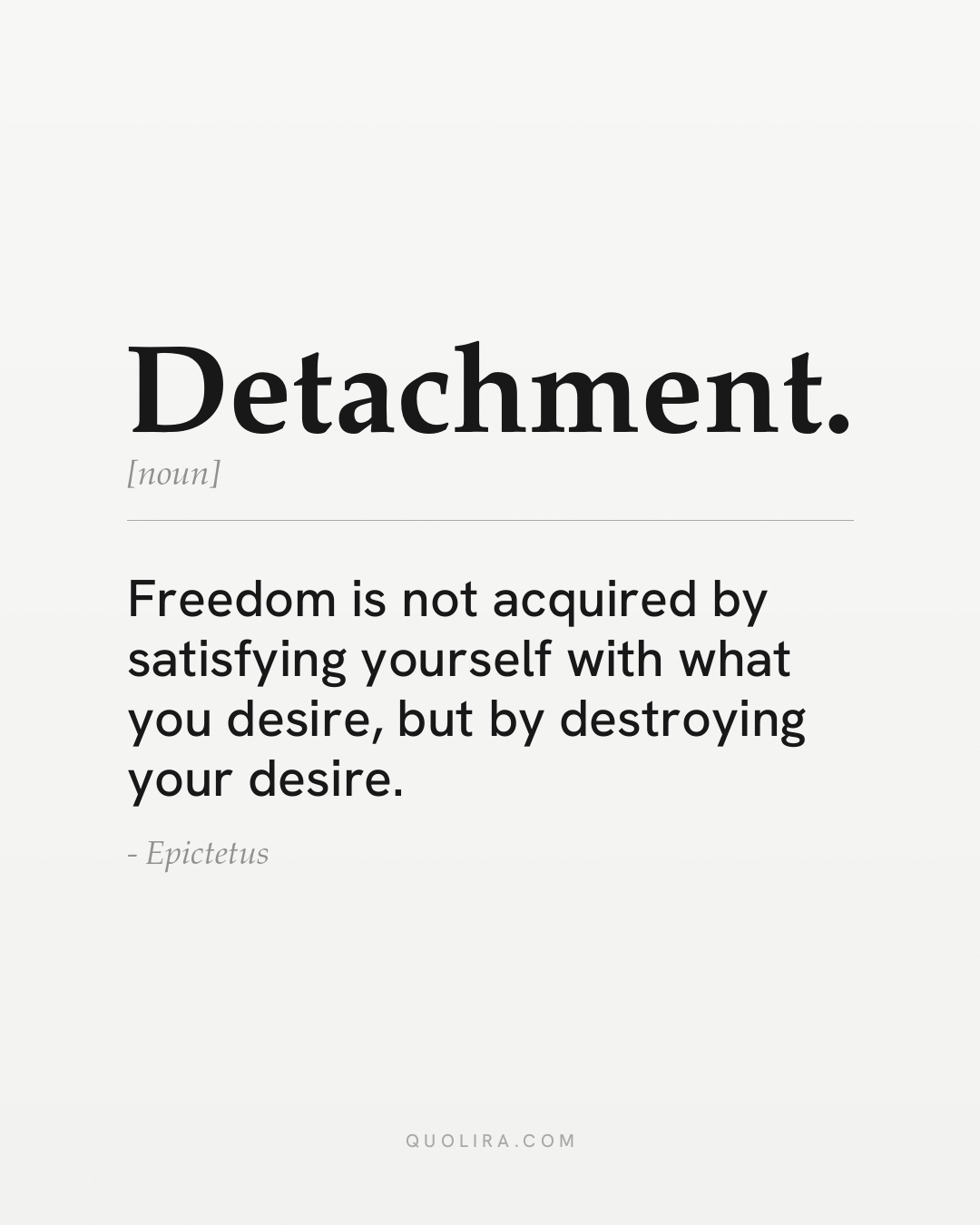
“Freedom is not acquired by satisfying yourself with what you desire, but by destroying your desire.”
Epictetus · Discourses, Book IV, chapter 1
“Know, first, who you are, and then adorn yourself accordingly.”
Epictetus · Discourses, Book III, chapter 1
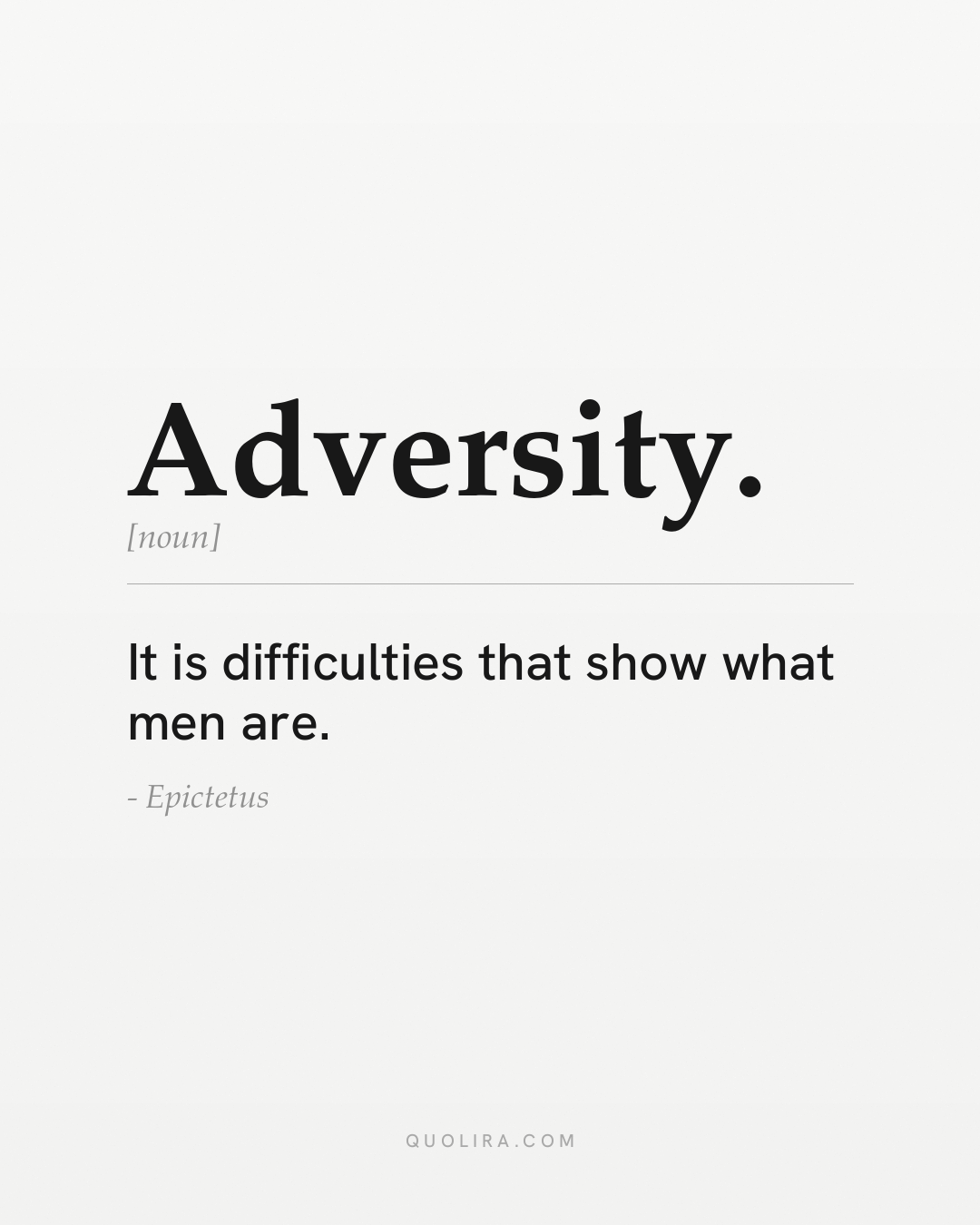
“It is difficulties that show what men are.”
Epictetus · Discourses, Book I, chapter 24
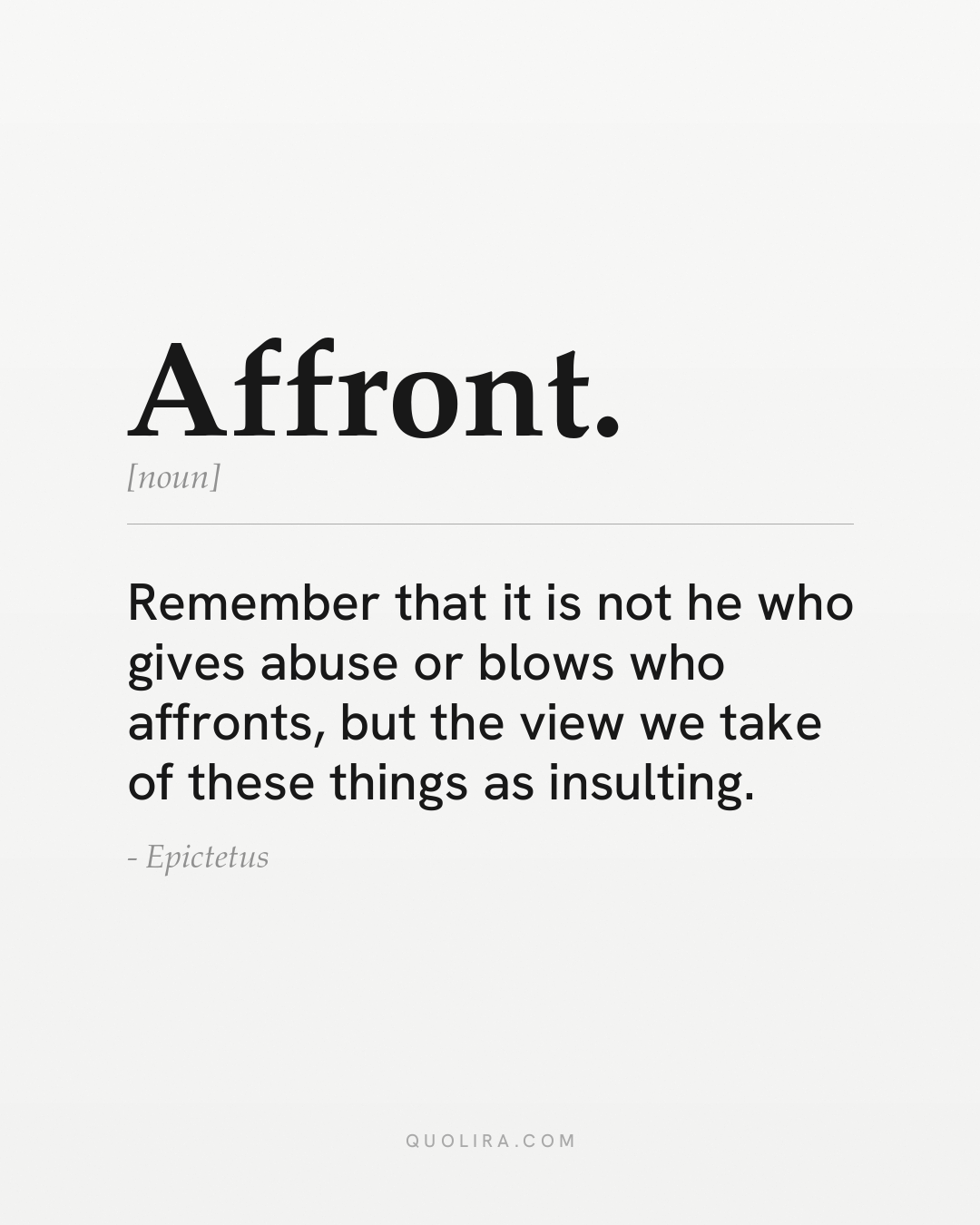
“Remember that it is not he who gives abuse or blows who affronts, but the view we take of these things as insulting.”
Epictetus · Enchiridion, section 20
“Some things are in our control and others not.”
Epictetus · Enchiridion, section 1
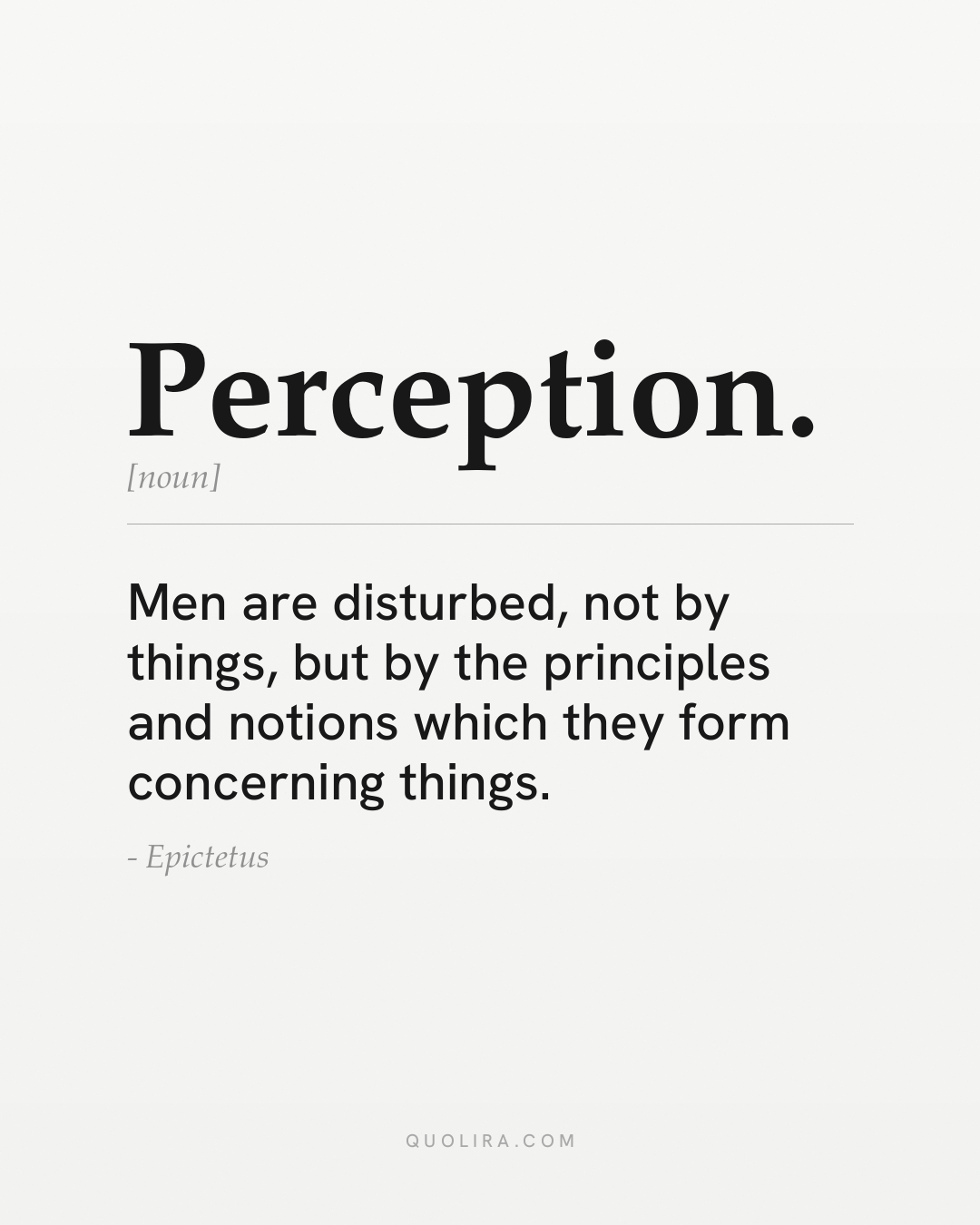
“Men are disturbed, not by things, but by the principles and notions which they form concerning things.”
Epictetus · Enchiridion, section 5
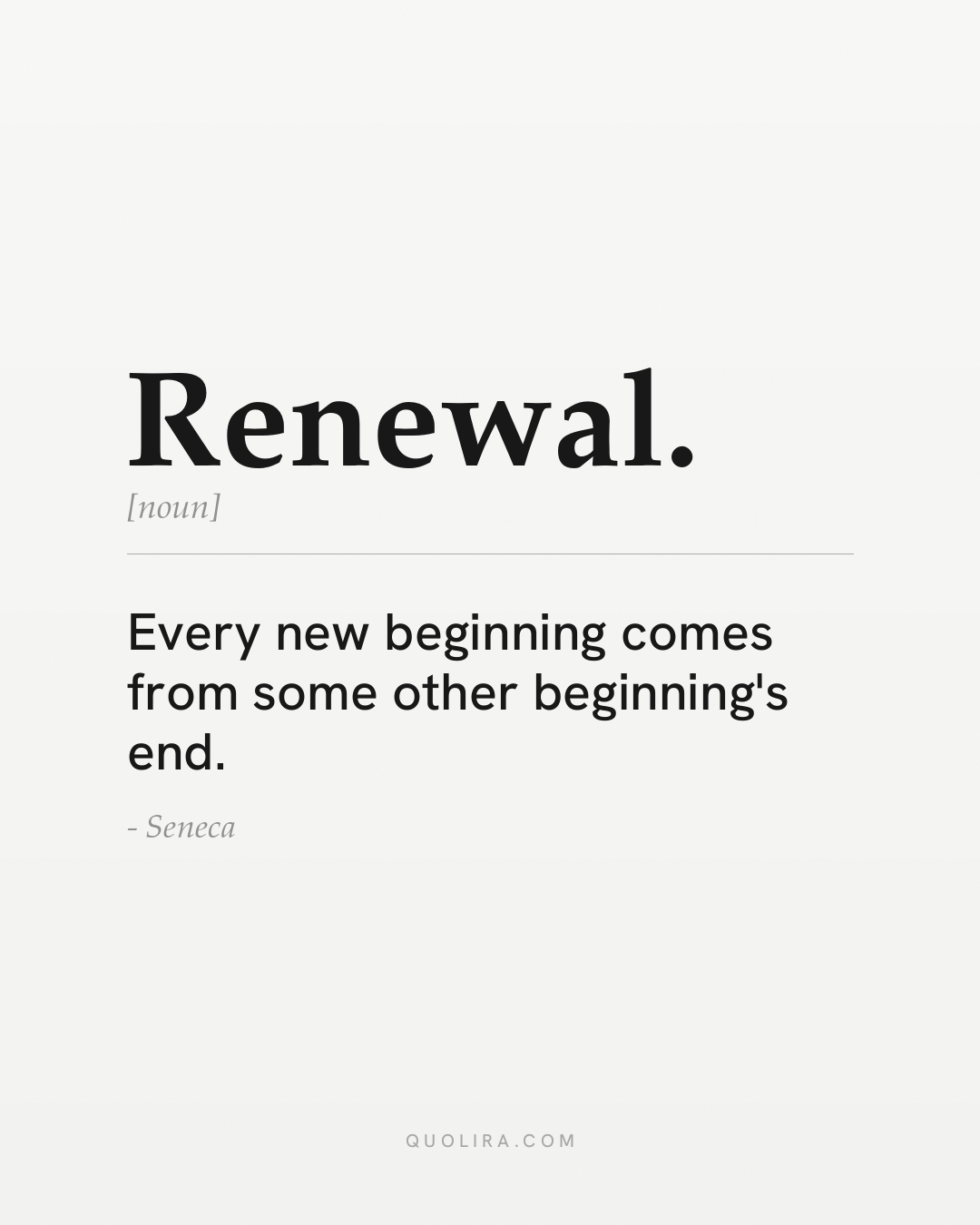
“Every new beginning comes from some other beginning's end.”
Seneca
“Dimidium facti, qui coepit, habet.”
Horace · Epistles, Book 1
“You have brains in your head. You have feet in your shoes. You can steer yourself any direction you choose.”
Dr. Seuss · Oh, the Places You'll Go!, 1990