25 Psychology of Money Quotes on Wealth, Control, and Staying in the Game
Morgan Housel's sharpest lines on why wealth is what you don't see, why behavior beats brains, and why survival matters more than being right.

The best The Psychology of Money quotes come from Morgan Housel's 2020 book, and the line readers remember most is “But the truth is that wealth is what you don't see.” Housel's central claim is that good results with money depend more on money behavior than on raw intelligence. He makes the case through a tech executive who tossed gold coins into the Pacific, a gas station attendant who became a philanthropist, and a German tank unit defeated by mice. The 25 quotes below are copied word for word from the book, grouped by theme and tagged by chapter so you can find each one again. Read them with your own bank statement open. Most of them land harder when you do.
The Most Famous The Psychology of Money Quotes
The premise of this book is that doing well with money has a little to do with how smart you are and a lot to do with how you behave.
Morgan Housel The Psychology of Money, Introduction: The Greatest Show On Earth

A genius who loses control of their emotions can be a financial disaster.
Morgan Housel The Psychology of Money, Introduction: The Greatest Show On Earth
Housel opens the book with a tech executive who threw gold coins into the Pacific for fun. His point is that brilliance can't protect you from your own impulses. Smart people are not immune to bad money moves.

But the truth is that wealth is what you don't see.
Morgan Housel The Psychology of Money, Chapter 9: Wealth is What You Don’t See
This is the line most readers remember, and it sits in the chapter that defines wealth. Rich shows up on the street, while wealth stays hidden in an account. I'd put this one on a sticky note.

The Psychology of Money Quotes on Wealth and Spending
The only way to be wealthy is to not spend the money that you do have.
Morgan Housel The Psychology of Money, Chapter 9: Wealth is What You Don’t See
Housel follows this with the observation that many people who say they want to be millionaires really want to spend a million dollars. That's the opposite of the goal. The sentence is blunt, and it's meant to be.
But wealth is hidden. It's income not spent.
Morgan Housel The Psychology of Money, Chapter 9: Wealth is What You Don’t See
Housel sets this against rich, which he treats as current income you can see. Wealth is the money you didn't spend, which makes it invisible to everyone else. Most of us only notice the visible kind.

Wealth is an option not yet taken to buy something later.
Morgan Housel The Psychology of Money, Chapter 9: Wealth is What You Don’t See
Think of unspent money as a choice you're holding for later. Housel's framing turns a savings account into a set of doors you haven't opened yet. That's a useful way to think about a paycheck you didn't spend.

It's not just the only way to accumulate wealth; it's the very definition of wealth.
Morgan Housel The Psychology of Money, Chapter 9: Wealth is What You Don’t See
Housel is making a definitional claim here, not just offering tactical advice. Saving is how wealth gets built, and it's also what wealth means. That's a stronger statement than most personal finance books make.
Wealth is the nice cars not purchased.
Morgan Housel The Psychology of Money, Chapter 9: Wealth is What You Don’t See
This line sits in the same chapter as the book's central idea, and it's the most concrete version of it. The unbought car is wealth, even though nobody will ever see it. That's hard to remember when you're standing in a dealership.

The Psychology of Money Quotes on Freedom and Control
Controlling your time is the highest dividend money pays.
Morgan Housel The Psychology of Money, Chapter 7: Freedom
In chapter 7, Housel draws on the people who have lived longest and learned most. Their lesson is that time, not stuff, is the real return on money. It's a good test for any big financial decision you're weighing.
The ability to do what you want, when you want, with who you want, for as long as you want, is priceless. It is the highest dividend money pays.
Morgan Housel The Psychology of Money, Chapter 7: Freedom
Housel builds this list of freedoms to show what money can really buy. Plenty of people chase income for the things it purchases, but the timing and company you choose count for more. Read it slowly and count how many items on your list are about time.
A small amount of wealth means the ability to take a few days off work when you're sick without breaking the bank.
Morgan Housel The Psychology of Money, Chapter 7: Freedom
Housel starts small on purpose. A few days of sick pay you can afford is the first rung of financial freedom. For many people, reaching that rung is the biggest win of the year.
People want to become wealthier to make them happier.
Morgan Housel The Psychology of Money, Chapter 7: Freedom
Housel opens chapter 7 with the assumption most of us share, that more money will make us happier. He then spends the chapter testing that idea, which is more honest than just repeating it. Happiness, it turns out, depends a lot on control.

The Psychology of Money Quotes on Risk and Optimism
He survived. Survival gave him longevity.
Morgan Housel The Psychology of Money, Chapter 5: Getting Wealthy vs. Staying Wealthy
Housel is describing Warren Buffett, who kept investing consistently from age 10 to at least 89. He argues that staying in the game lets compounding do its work. A single brilliant move was never the whole story.

Charlie, Warren, and Rick were equally skilled at getting wealthy. But Warren and Charlie had the added skill of staying wealthy.
Morgan Housel The Psychology of Money, Chapter 5: Getting Wealthy vs. Staying Wealthy
Housel tells the story of Rick Guerin, the third member of the Buffett and Munger investing group, who was forced to sell in the 1973 to 1974 downturn. Rick was just as capable. He simply didn't last.

Carolco's story is not worth telling because it's unique, but because it's common.
Morgan Housel The Psychology of Money, Chapter 6: Tails, You Win
Carolco was a film studio that went bankrupt in 1996. Housel uses it to show that catastrophic losses are a normal part of public markets, with about 4 in 10 public companies experiencing one over time. Failure is the rule more than the exception.
The idea that a few things account for most results is not just true for companies in your investment portfolio.
Morgan Housel The Psychology of Money, Chapter 6: Tails, You Win
Housel points out that the Russell 3000 has risen more than 73-fold since 1980, carried by a small share of standout companies. The same pattern shows up in your own behavior as an investor. A few decisions do most of the damage or the good.
The ability to do what you want, when you want, for as long as you want, has an infinite ROI.
Morgan Housel The Psychology of Money, Chapter 13: Room for Error
This line closes a passage about surviving long enough for your bets to pay off. Housel treats freedom as the return that keeps compounding. Few financial metrics can match that claim.
You can plan for every risk except the things that are too crazy to cross your mind.
Morgan Housel The Psychology of Money, Chapter 13: Room for Error
Housel tells the story of a German tank unit at Stalingrad where field mice chewed through the wiring insulation while the tanks sat idle. The lesson is that the risks you can't imagine tend to do the most damage. Leave room for them.
Optimism is a belief that the odds of a good outcome are in your favor over time, even when there will be setbacks along the way.
Morgan Housel The Psychology of Money, Chapter 17: The Seduction of Pessimism
Housel defines optimism as a bet on the odds, not a promise that everything will go well. Setbacks are expected in that definition. I think it's the most reasonable stance for most people, most of the time.

Real optimists don't believe that everything will be great. That's complacency.
Morgan Housel The Psychology of Money, Chapter 17: The Seduction of Pessimism
In chapter 17, Housel separates real optimism from cheerful naivety. Believing everything will be fine is how people stop preparing. Hope without preparation is a weak plan.
The Psychology of Money Quotes on Saving and Ego
Time is the most powerful force in investing. It makes little things grow big and big mistakes fade away.
Morgan Housel The Psychology of Money, Chapter 19: All Together Now
Housel's closing chapter repeats this as one of its core lessons. A longer horizon turns small gains into large ones and softens the sting of early errors. I'd bet on patience over cleverness every time.
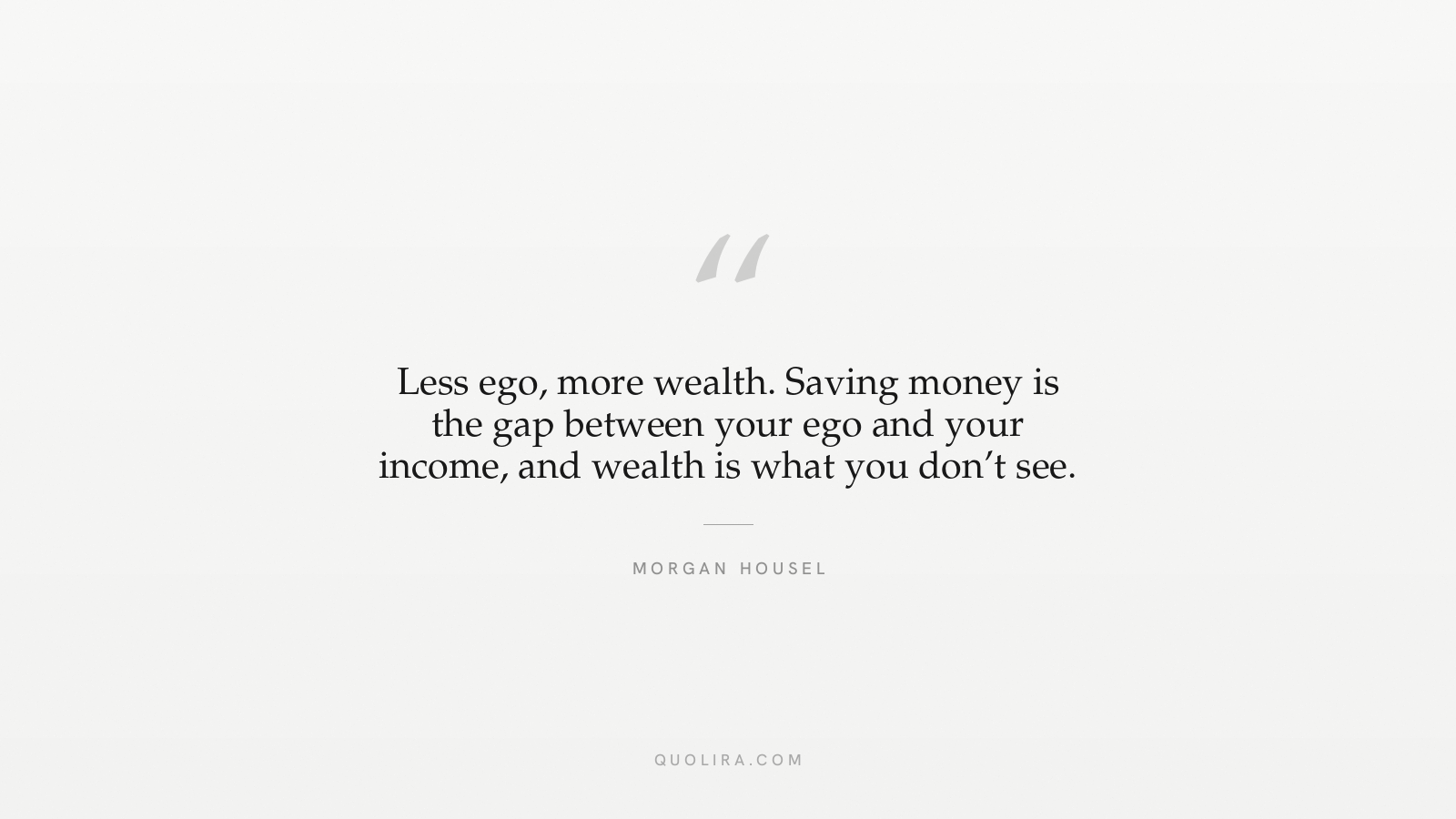
Less ego, more wealth. Saving money is the gap between your ego and your income, and wealth is what you don't see.
Morgan Housel The Psychology of Money, Chapter 19: All Together Now
This is Housel's summary of his argument, boiled down to a single sentence. Saving is the space left between what you could buy and what you actually buy. It's easy to ignore because nobody sees it.
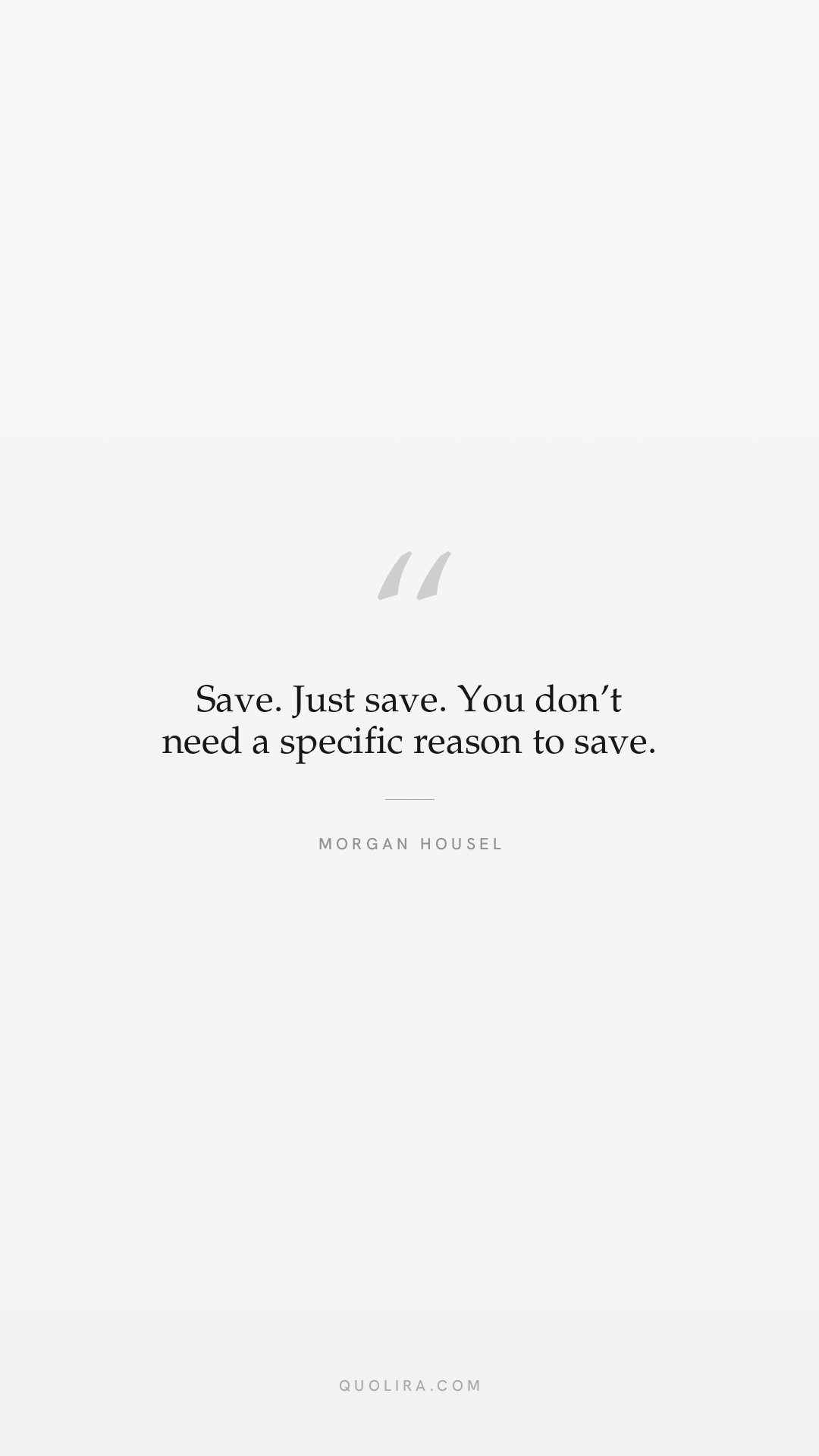
Save. Just save. You don't need a specific reason to save.
Morgan Housel The Psychology of Money, Chapter 19: All Together Now
Housel's advice for anyone waiting for a good reason to save is to stop waiting. Surprises arrive for everyone, so an unlabeled cushion covers the ones nobody predicted. Start now and figure out the purpose later.
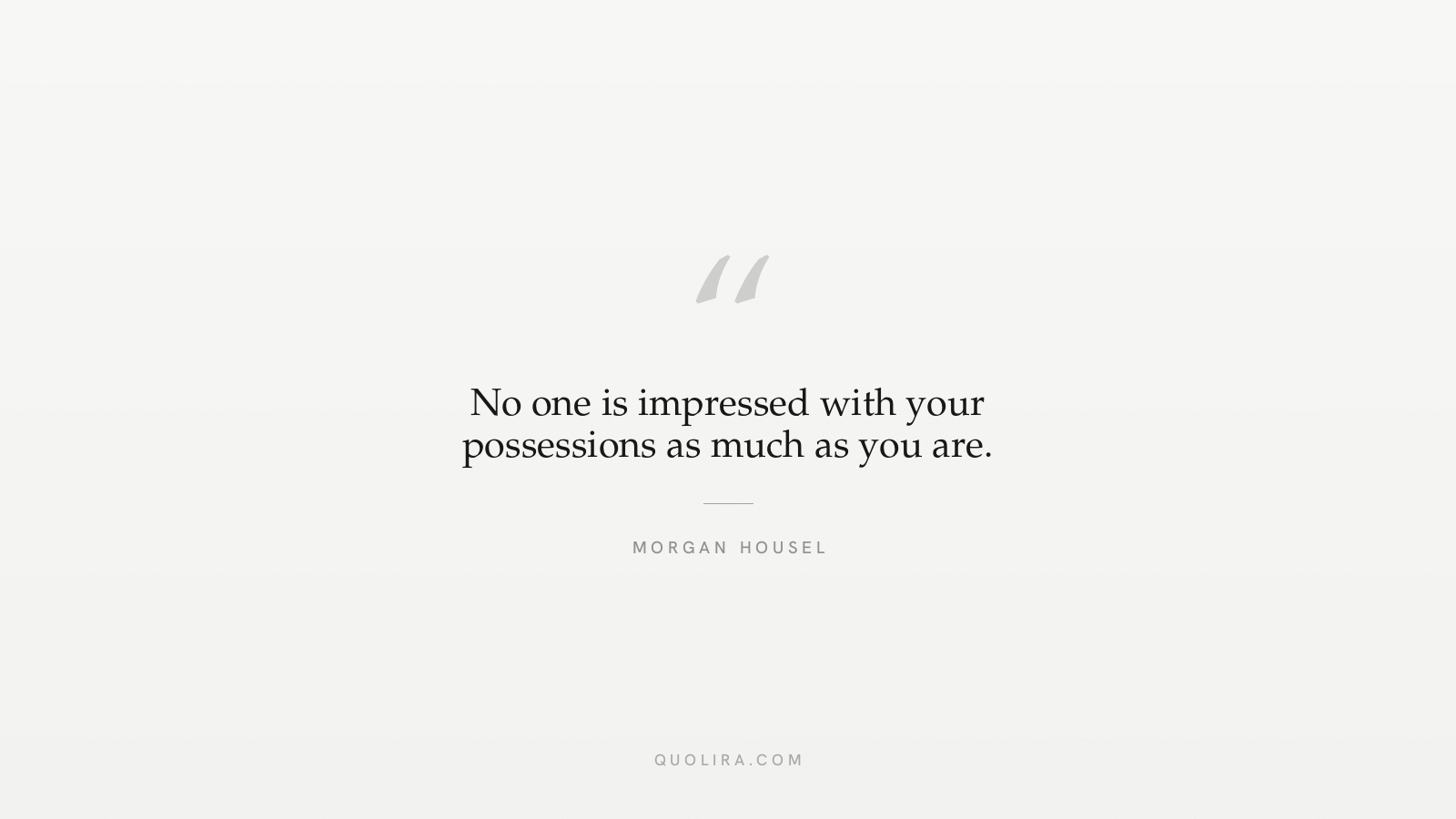
No one is impressed with your possessions as much as you are.
Morgan Housel The Psychology of Money, Chapter 19: All Together Now
Housel's chapter 19 point is that other people barely notice your stuff. He suggests kindness and humility will earn you more respect than horsepower and chrome. It's a cheap way to live, and I think he's right.
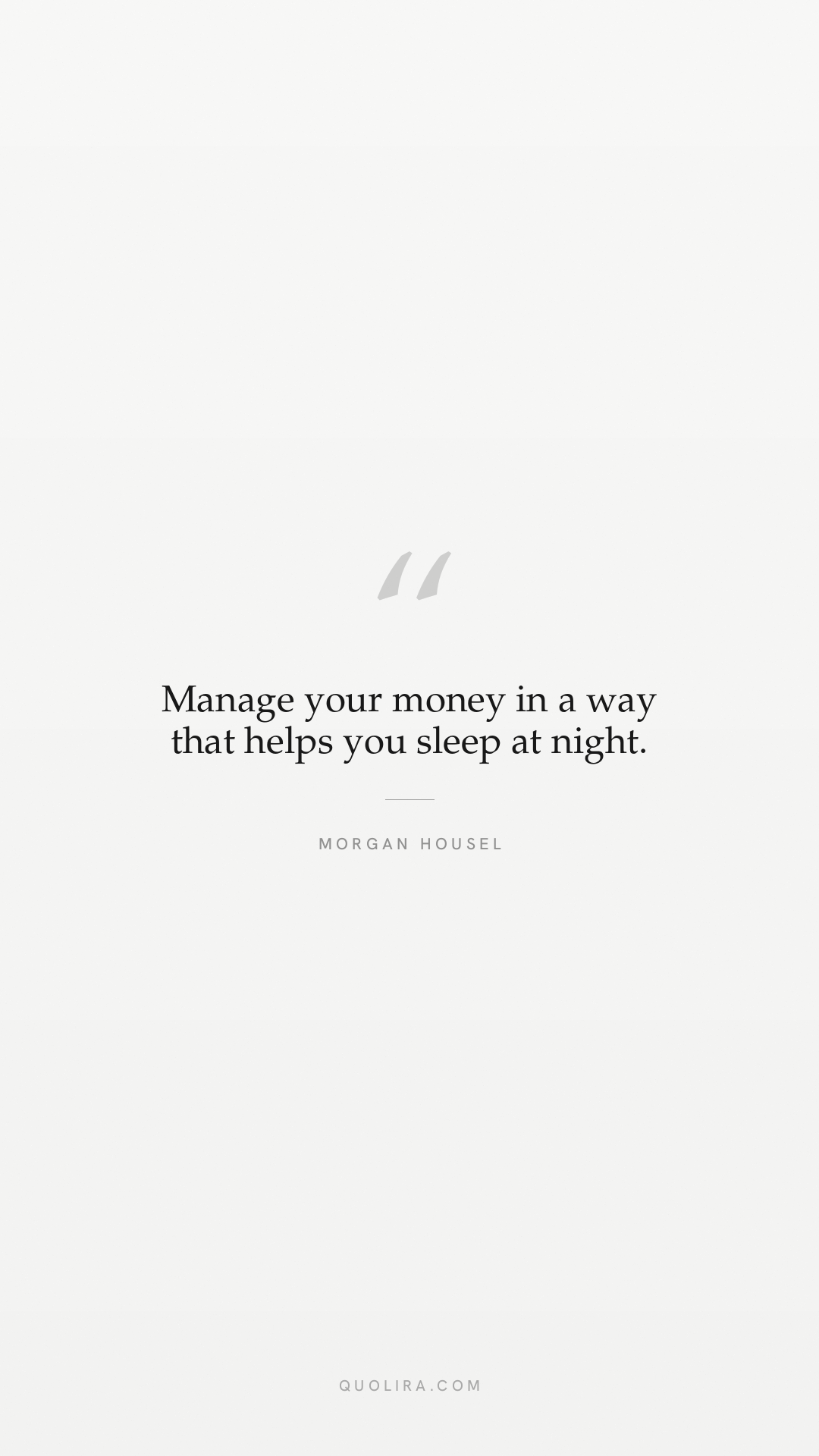
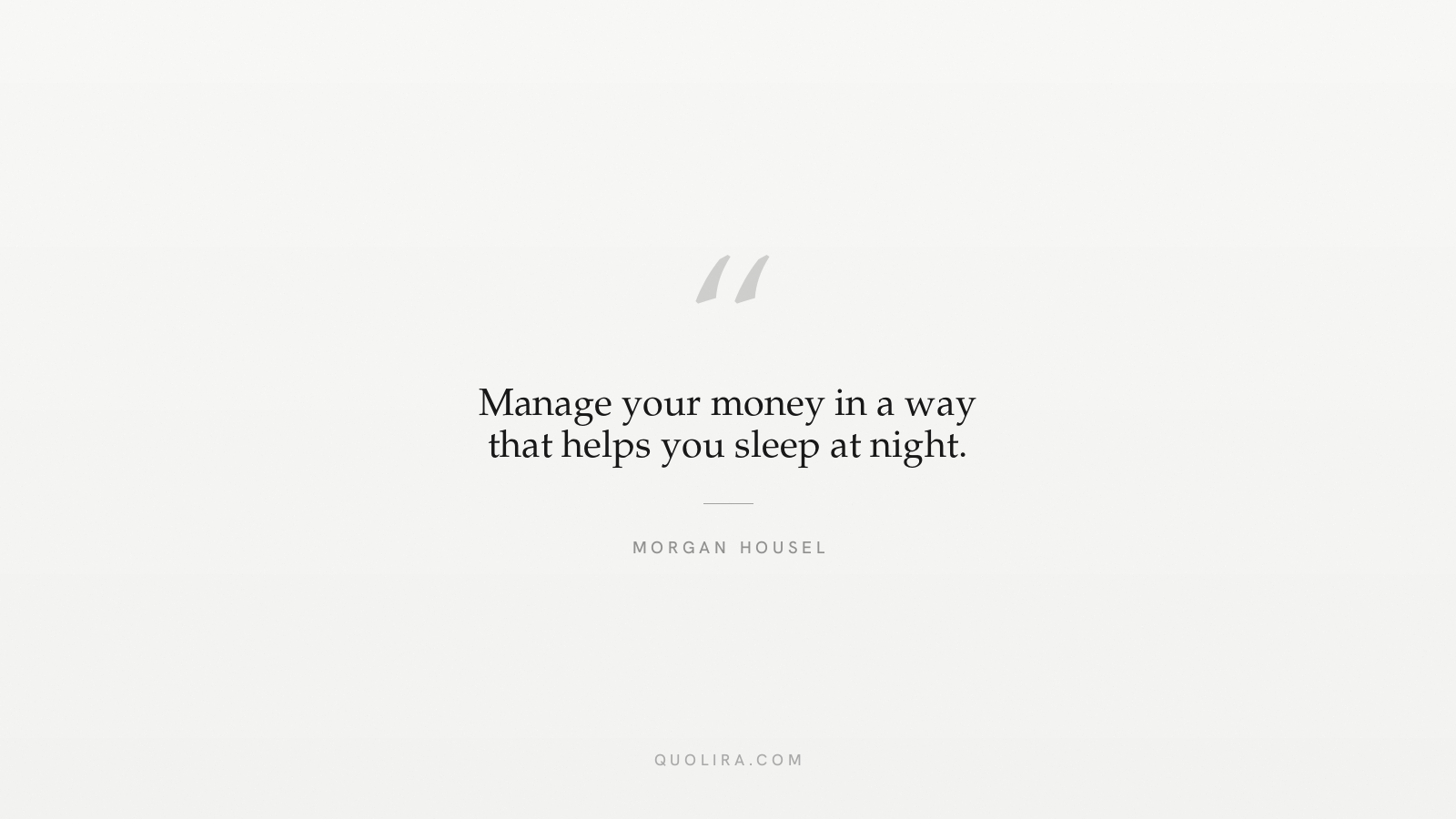
Manage your money in a way that helps you sleep at night.
Morgan Housel The Psychology of Money, Chapter 19: All Together Now
Housel refuses to name a single right return or savings rate. Some people sleep well with aggressive investments, others with conservative ones. Your peace of mind is the test that matters most.
Why The Psychology of Money matters
Morgan Housel published The Psychology of Money in 2020. The book examines how people think about money and how behavior and emotions influence financial decisions, and that premise runs through nearly every quote above.
The book works because it doesn't hand you a formula. Housel leans on short stories, specific people, and plain definitions, like the split between rich and wealthy in chapter 9. That's why the lines are easy to quote and hard to forget.
Read it as a behavior book rather than an investing manual. The lessons on room for error, saving, and control over your time apply whether your savings account holds a few hundred dollars or a few million.
What these quotes have in common
The same few ideas keep coming back. Wealth is money you haven't spent yet, and it stays invisible by design. "Wealth is the nice cars not purchased" makes the point with an image you can picture, while "Less ego, more wealth" compresses it into a rule you can remember.
Survival is the second thread. "He survived. Survival gave him longevity" describes Warren Buffett's decades of steady investing, and the Rick Guerin story shows what happens to someone who was just as smart but in a hurry. "Carolco's story is not worth telling because it's unique, but because it's common" pushes the same lesson from the other direction: losses are normal, so the goal is to stay standing through them.
The third thread is freedom. "Controlling your time is the highest dividend money pays" and the long list that starts "The ability to do what you want" treat money as a way to buy options and time. That idea connects straight to "has an infinite ROI" in chapter 13, where room for error becomes the thing that keeps you in the game long enough for compounding to work.
If the control-over-time idea hits home, The Money Paradox pairs well with it. For a sharper contrast on money and happiness, Elon Musk's money quotes make a useful counterpoint. The Epictetus quotes on fear and control line up closely with Housel's freedom chapter.
How to use these quotes
These lines work best when they interrupt a habit, not when they sit in a notebook. Pick the one that matches your next decision and read it before you act.
- Print "But the truth is that wealth is what you don't see" on a card and keep it in your wallet before a big purchase.
- Use the freedom quotes in a team talk about flexible schedules or remote work, since they frame money as time.
- Turn "Does this help me sleep at night?" into a journaling prompt and write about the last purchase you regretted.
- Pair the Carolco and Stalingrad mice stories in a personal finance class to show why plans fail on the risks you didn't imagine.
- Read the optimism definition aloud before a quarterly budget review to set a realistic tone.
- Caption a social post with the chapter name so readers can find the original book and check the context.
Common misunderstandings
People often read "wealth is what you don't see" as a call to hide money or feel guilty about spending. Housel's point is narrower. Spending is not wrong in itself. The point is that visible spending tells you very little about someone's actual financial position, so comparing yourself to what others display is a weak guide.
Another mistake is treating these quotes as a case against earning more. The book does not say income is useless. Rich, as Housel uses it, is still a real and useful condition. The trouble starts when income becomes the only scoreboard you check.
Some readers hear "Save. Just save" and assume it means never spending at all. A cushion with no specific target still needs a home, and spending that matches your values is part of a healthy plan. Saving without a purpose is a starting point, not a permanent rule.
The optimism quotes are also easy to misread as permission to ignore risk. Housel's definition explicitly includes setbacks, so a plan that assumes smooth progress is not optimistic in his sense. It is simply fragile.
Reading the quotes by chapter
Chapters 5 and 6 pair well together. Chapter 5 is about staying power, and chapter 6 explains why large losses are part of the landscape. Read them back to back and you get a picture of a long game where you expect to be knocked around and keep going anyway.
Chapters 13 and 17 both deal with margin. The tank story and the optimism definition ask you to plan for the unexpected and keep your expectations honest. A margin for error is not pessimism. It is what lets an optimistic plan survive a bad year.
Chapter 19 gathers the earlier threads. Its quotes about time, saving, and humility work as a summary for anyone who reads the book quickly and wants to remember the shape of the argument.
A simple way to test a decision
Take one quote and ask three questions. Does this purchase buy me time or freedom? Would I still want it if nobody could see it? Could I handle a setback without selling at the wrong moment? You don't need a spreadsheet to answer those questions honestly.
Write your answers down. Over a few months you'll notice patterns in your choices that a budget app may not show, such as the kinds of purchases you regret or the moments when you feel most tempted to act on fear.
Sources
- The Psychology of Money by Morgan Housel (2020)
- Wikipedia
Housel never offers a formula, and that is the point. Pick one quote, put it somewhere you'll see it before your next big purchase, and let it do the work.
Frequently asked questions
What is The Psychology of Money's most famous quote?
Who wrote The Psychology of Money?
What is the difference between rich and wealthy in The Psychology of Money?
Does The Psychology of Money only cover investing?
Keep reading

19 Animal Farm Quotes on Power, Propaganda, and Betrayal
Orwell's pigs start with a promise of equality and end up writing the rules themselves.

25 Eleanor Roosevelt Quotes on Courage and Living Well
Her most-shared lines on courage, curiosity, and peace, each one traced to a book, speech, or column she actually wrote.

































21 Lord Voldemort Best Harry Potter Quotes That Still Chill You
The most memorable lines from the Dark Lord, weighed for what they reveal about fear, power, and the man behind the mask.
This is Housel's thesis, stated in the introduction. He argues that money goes well when you manage your behavior, not when you're the smartest person in the room. Hard to argue with, and harder to practice.