“Time is the most powerful force in investing. It makes little things grow big and big mistakes fade away.”
Morgan Housel · The Psychology of Money, Chapter 19: All Together Now
 quolira
.com
Morgan Housel said it, in The Psychology of Money, Chapter 19: All Together Now.
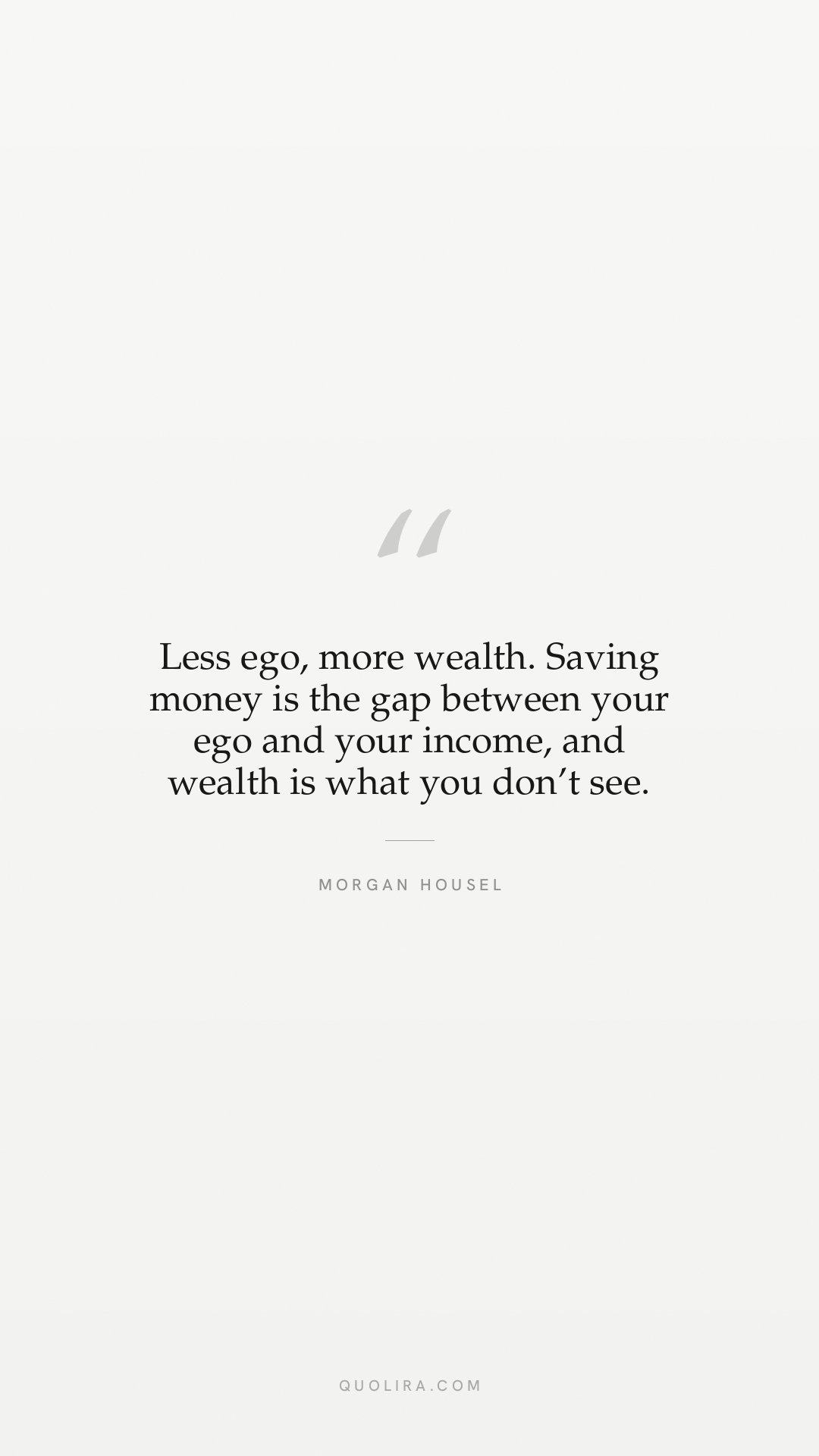
This is Housel's summary of his argument, boiled down to a single sentence. Saving is the space left between what you could buy and what you actually buy. It's easy to ignore because nobody sees it.
From the collection: 25 Psychology of Money Quotes on Wealth, Control, and Staying in the Game · More Morgan Housel quotes
Wealth comes from the gap between what you earn and what you spend, and it shows up as money you do not visibly display. Housel suggests that the less you feel the need to impress others, the more of your income stays available to grow. Restraint, not visible spending, is what builds lasting financial security.
This line is from The Psychology of Money, in the chapter the source lists as All Together Now. The phrasing is compact on purpose, linking ego to savings and treating wealth as something invisible. The book repeatedly contrasts the wealth people can see, such as cars and homes, with the wealth they hold quietly in savings and investments. This passage pulls that contrast into a short, memorable formula that readers can apply to everyday spending decisions.
Morgan Housel is an American writer who has built a reputation on clear, skeptical writing about money and behavior. He worked for several years at The Motley Fool, where his columns gained a wide following. The Psychology of Money, published in 2020, is his best-known book, and it collects brief essays about how emotion, history, and habit shape financial outcomes. His tone is modest and practical, which makes the book's lessons about restraint feel grounded rather than preachy.
“Time is the most powerful force in investing. It makes little things grow big and big mistakes fade away.”
Morgan Housel · The Psychology of Money, Chapter 19: All Together Now
“Real optimists don't believe that everything will be great. That's complacency.”
Morgan Housel · The Psychology of Money, Chapter 17: The Seduction of Pessimism
“Optimism is a belief that the odds of a good outcome are in your favor over time, even when there will be setbacks along the way.”
Morgan Housel · The Psychology of Money, Chapter 17: The Seduction of Pessimism
“You can plan for every risk except the things that are too crazy to cross your mind.”
Morgan Housel · The Psychology of Money, Chapter 13: Room for Error
“The ability to do what you want, when you want, for as long as you want, has an infinite ROI.”
Morgan Housel · The Psychology of Money, Chapter 13: Room for Error
“The idea that a few things account for most results is not just true for companies in your investment portfolio.”
Morgan Housel · The Psychology of Money, Chapter 6: Tails, You Win
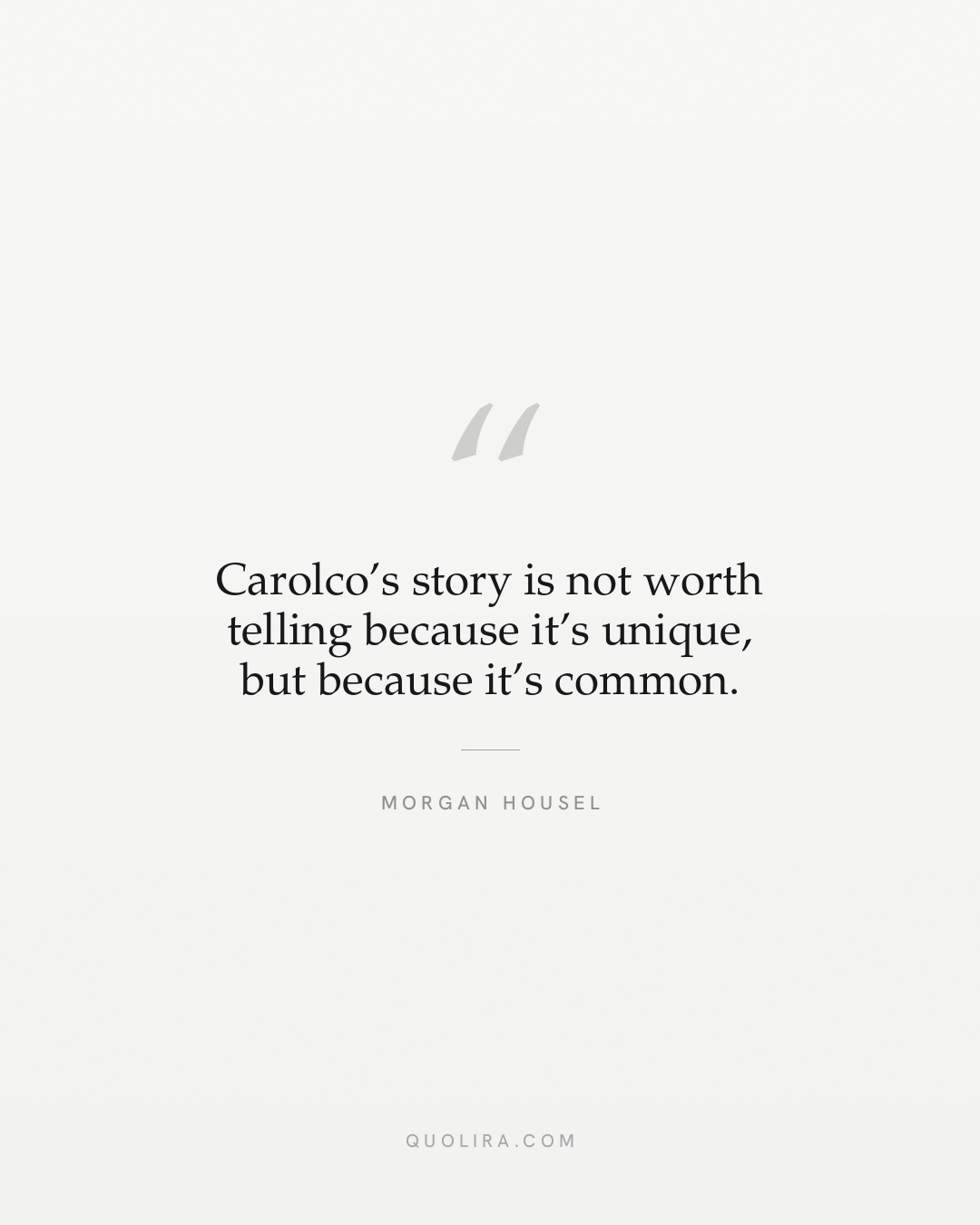
“Carolco's story is not worth telling because it's unique, but because it's common.”
Morgan Housel · The Psychology of Money, Chapter 6: Tails, You Win
“Charlie, Warren, and Rick were equally skilled at getting wealthy. But Warren and Charlie had the added skill of staying wealthy.”
Morgan Housel · The Psychology of Money, Chapter 5: Getting Wealthy vs. Staying Wealthy
“He survived. Survival gave him longevity.”
Morgan Housel · The Psychology of Money, Chapter 5: Getting Wealthy vs. Staying Wealthy
“People want to become wealthier to make them happier.”
Morgan Housel · The Psychology of Money, Chapter 7: Freedom
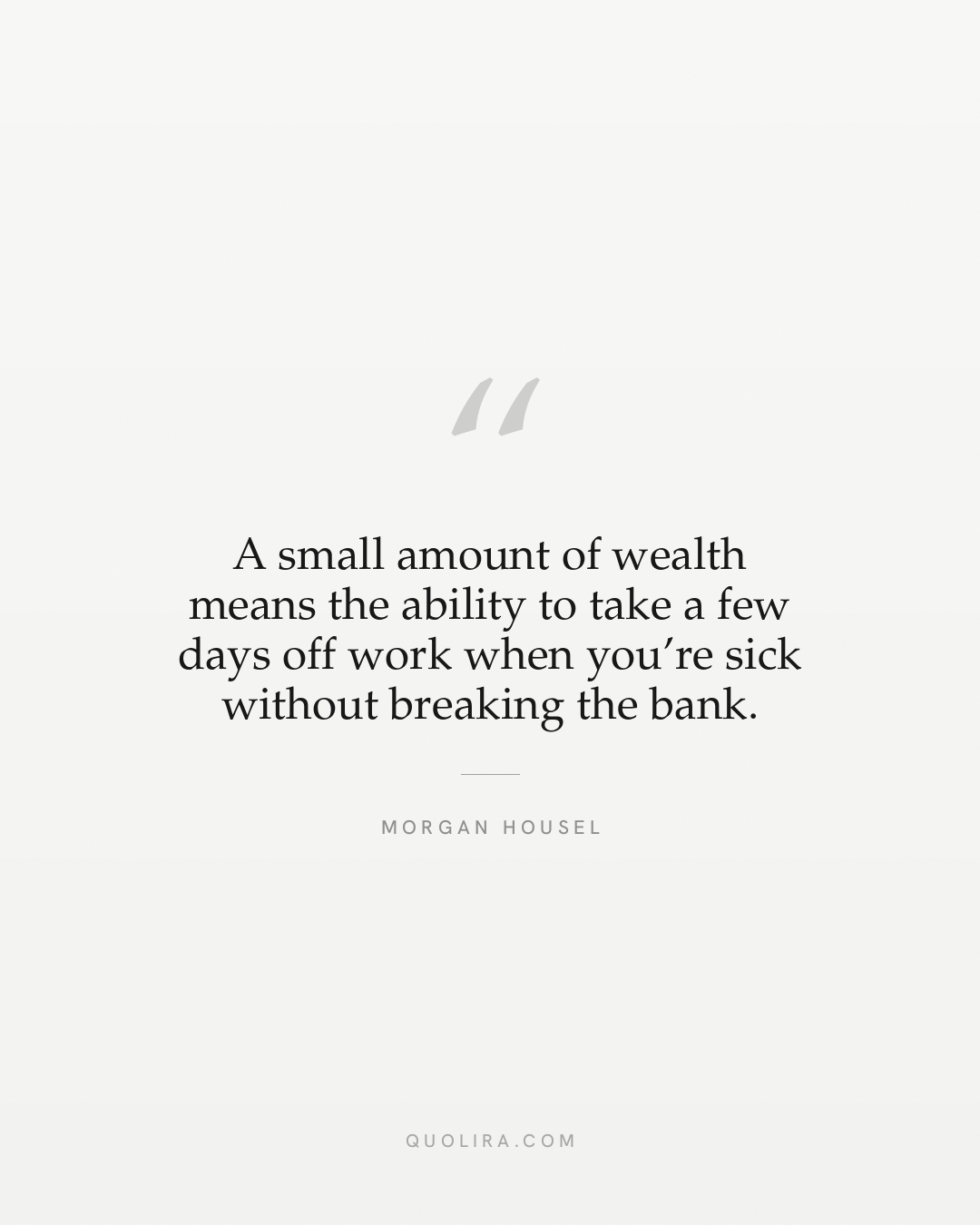
“A small amount of wealth means the ability to take a few days off work when you're sick without breaking the bank.”
Morgan Housel · The Psychology of Money, Chapter 7: Freedom
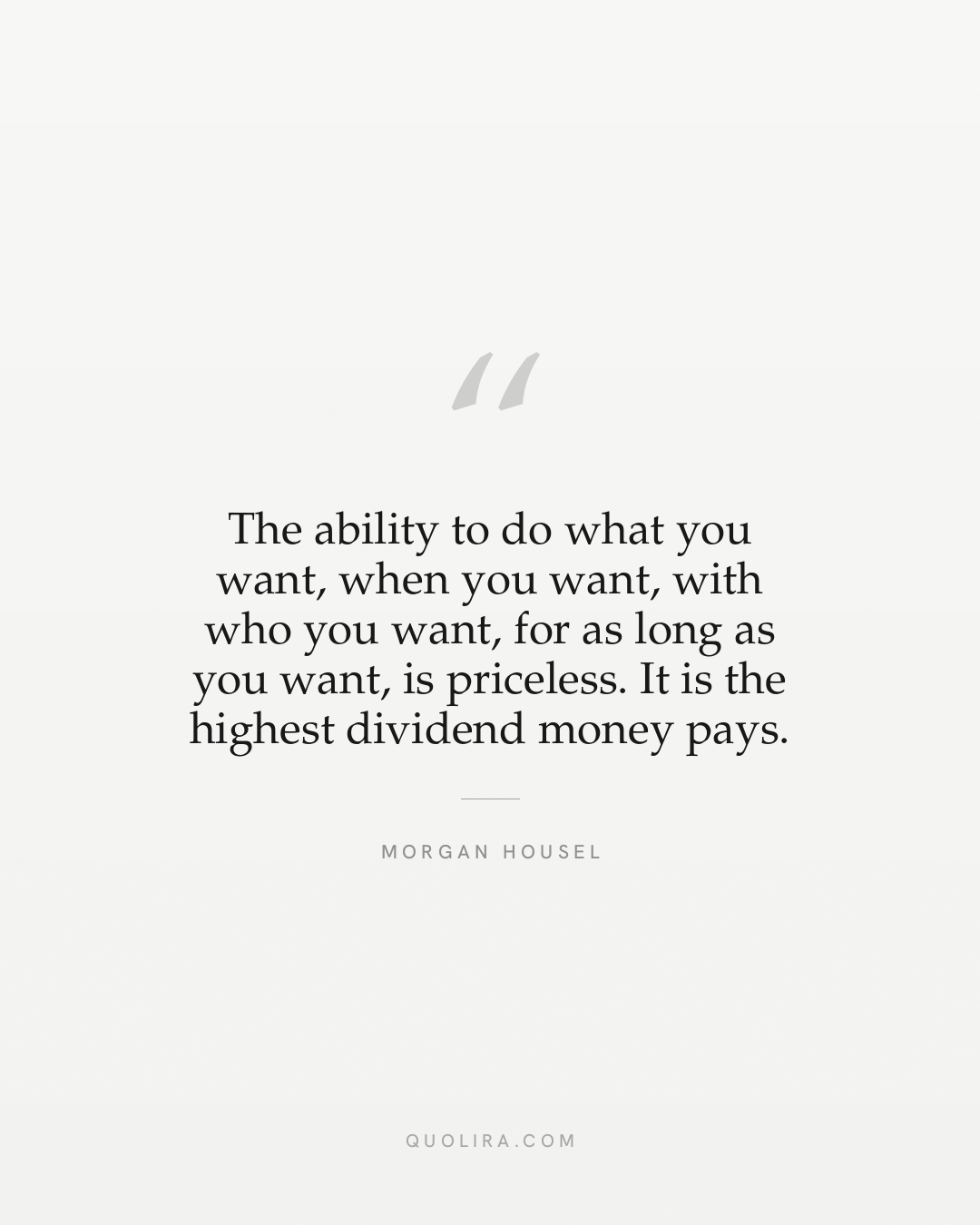
“The ability to do what you want, when you want, with who you want, for as long as you want, is priceless. It is the highest dividend money pays.”
Morgan Housel · The Psychology of Money, Chapter 7: Freedom