“If you know the enemy and know yourself, you need not fear the result of a hundred battles.”
Sun Tzu · The Art of War, Chapter III: Attack by Stratagem
 quolira
.com
Morgan Housel said it, in The Psychology of Money, Introduction: The Greatest Show On Earth.
This is Housel's thesis, stated in the introduction. He argues that money goes well when you manage your behavior, not when you're the smartest person in the room. Hard to argue with, and harder to practice.
From the collection: 25 Psychology of Money Quotes on Wealth, Control, and Staying in the Game · More Morgan Housel quotes
The quote says that financial success depends far more on habits and behavior than on raw intelligence. Many people assume that money outcomes come from technical knowledge or clever calculations, but the author argues that how a person acts with money over years usually matters more. Someone who saves steadily, avoids costly mistakes, and stays patient can outperform a more brilliant person who chases quick results.
This line appears in the introduction to The Psychology of Money, where the author sets up the book's central argument. Rather than offering formulas for investing or budgeting, the book focuses on the human side of finance, including emotion, ego, luck, and the way people react to gains and losses. The introduction prepares readers for a series of short essays that examine why sensible people often make poor financial choices.
Morgan Housel is an American writer who has spent much of his career covering personal finance and investing. He wrote for The Motley Fool before becoming known for longer essays on money and decision making. The Psychology of Money, published in 2020, drew wide readership for its plain language and its focus on behavior. He later became a partner at the Collaborative Fund, a venture investment firm, while continuing to write about the subject.
“If you know the enemy and know yourself, you need not fear the result of a hundred battles.”
Sun Tzu · The Art of War, Chapter III: Attack by Stratagem
“Although life is a matter of indifference, the use which you make of it is not a matter of indifference.”
Epictetus · Discourses, Book II, chapter 6
“Materials are indifferent, but the use which we make of them is not a matter of indifference.”
Epictetus · Discourses, Book II, chapter 5
“Were I a nightingale, I would act the part of a nightingale; were I a swan, the part of a swan.”
Epictetus · Discourses, Book I, chapter 16
“Show that you know this only, how you may never either fail to get what you desire or fall into what you avoid.”
Epictetus · Discourses, Book II, chapter 1
“Let whatever appears to be the best be to you an inviolable law.”
Epictetus · Enchiridion, sections 50-51
“Everything has two handles, the one by which it may be carried, the other by which it cannot.”
Epictetus · Enchiridion, section 43
“Don't you know that a good and excellent person does nothing for the sake of appearances, but only for the sake of having acted right?”
Epictetus · Discourses, Book III, chapter 24
“Reason is not measured by size or height, but by principle.”
Epictetus · Discourses, Book I, chapter 12
“No thing great is created suddenly, any more than a bunch of grapes or a fig.”
Epictetus · Discourses, Book I, chapter 15
“Practice yourself, for heaven's sake, in little things; and thence proceed to greater.”
Epictetus · Discourses, Book I, chapter 18
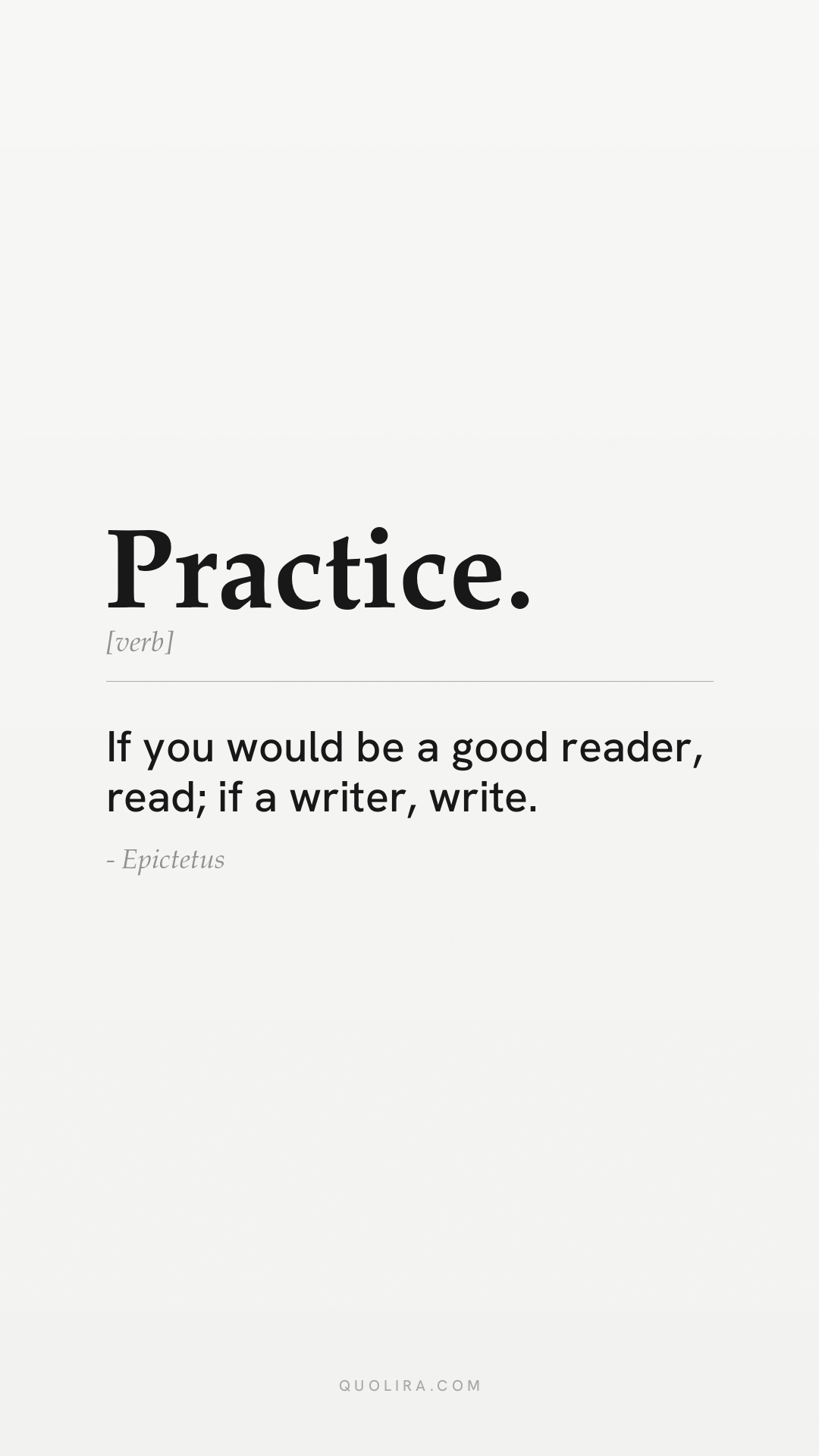
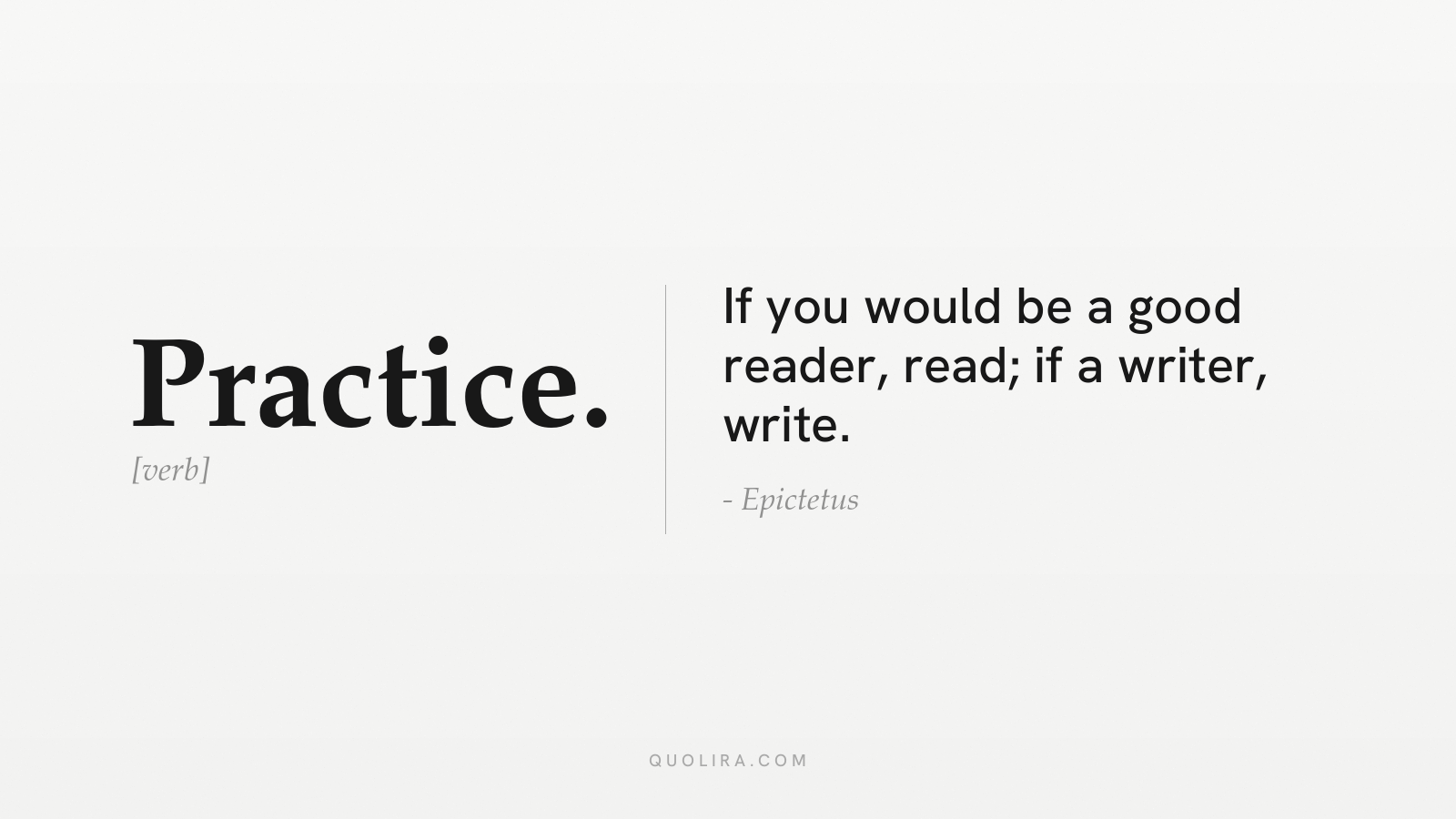
“If you would be a good reader, read; if a writer, write.”
Epictetus · Discourses, Book II, chapter 18