“Everything has two handles, the one by which it may be carried, the other by which it cannot.”
Epictetus · Enchiridion, section 43
 quolira
.com
Epictetus said it, in Enchiridion, sections 50-51.
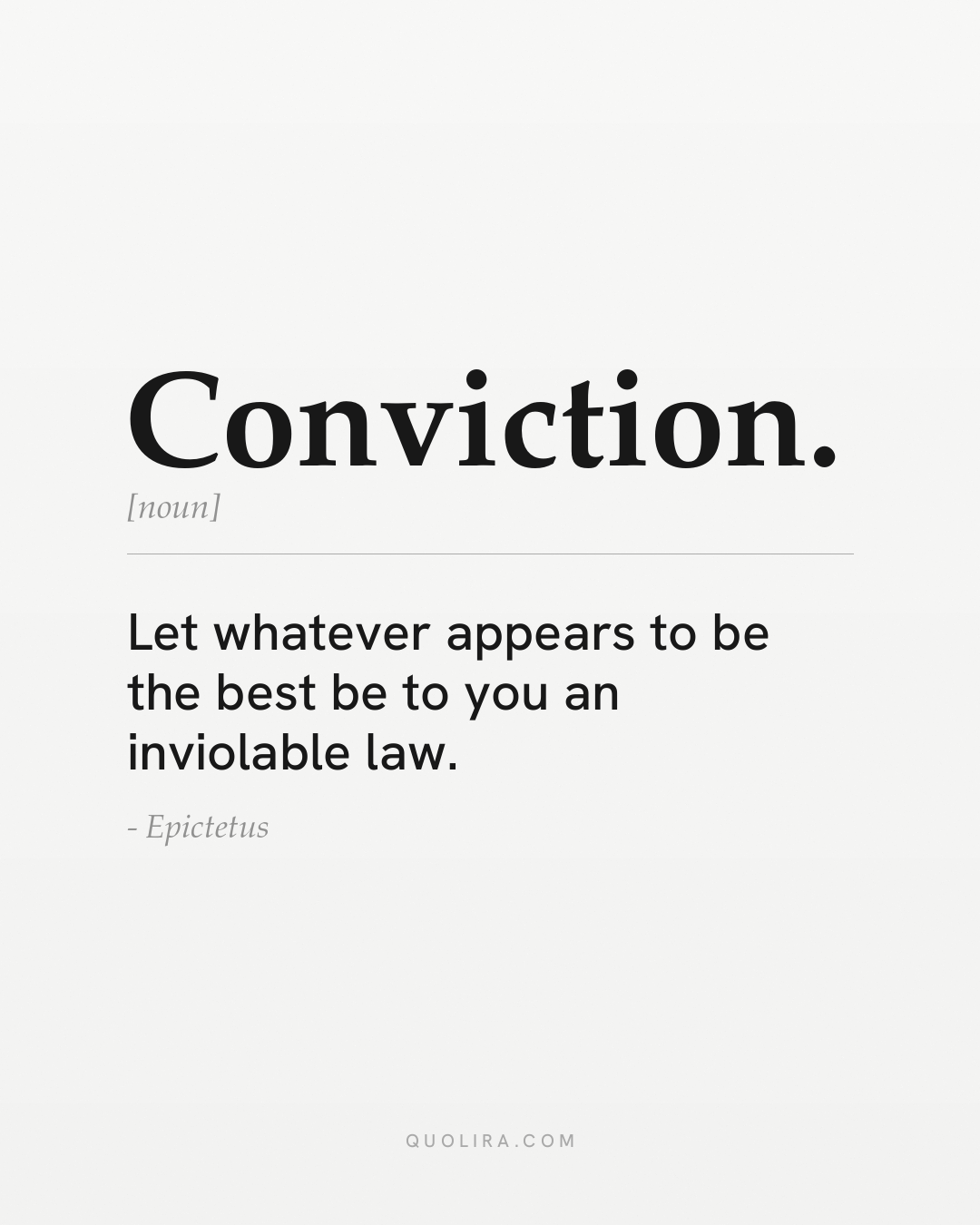
Epictetus urges students to treat their chosen principles as laws they will not break. It sounds rigid, but it ends the constant renegotiation with your own excuses. Write down your two or three non-negotiables and read them before a tough decision.
From the collection: 23 Best Epictetus Quotes on Fear, Freedom, and Control · More Epictetus quotes
The quote means that once you have judged what is truly best, you should treat that judgment as a rule you do not set aside under pressure. Epictetus is urging steadiness: a choice made by careful reasoning should guide conduct consistently, rather than shifting with fear, convenience, or the opinions of others. The idea is practical, not mystical. It asks that you examine what is good, then hold to it.
This line comes from the Enchiridion, a short handbook of practical guidance that Arrian, his student, compiled from Epictetus's teachings. The handbook is built from brief, numbered instructions meant to be memorized and applied in daily life. Its sections repeatedly separate what lies within our control, such as judgment and choice, from what does not, such as reputation, health, and outcomes. The lines near this passage describe how a person who has settled on the best course should keep to it and not be pulled off course by every passing impression.
Epictetus was a Stoic philosopher who lived in the late first and early second centuries CE. He was born into slavery, later gained his freedom, and taught philosophy in Rome before settling in Nicopolis in western Greece. He left no writings of his own. His lectures were recorded by Arrian, who preserved them in the Discourses, and Arrian also produced the Enchiridion. His teaching centers on the practice of distinguishing what we control from what we do not, and on living in accord with reason.
“Everything has two handles, the one by which it may be carried, the other by which it cannot.”
Epictetus · Enchiridion, section 43
“Don't you know that a good and excellent person does nothing for the sake of appearances, but only for the sake of having acted right?”
Epictetus · Discourses, Book III, chapter 24
“Reason is not measured by size or height, but by principle.”
Epictetus · Discourses, Book I, chapter 12
“No thing great is created suddenly, any more than a bunch of grapes or a fig.”
Epictetus · Discourses, Book I, chapter 15
“Practice yourself, for heaven's sake, in little things; and thence proceed to greater.”
Epictetus · Discourses, Book I, chapter 18
“If you would be a good reader, read; if a writer, write.”
Epictetus · Discourses, Book II, chapter 18
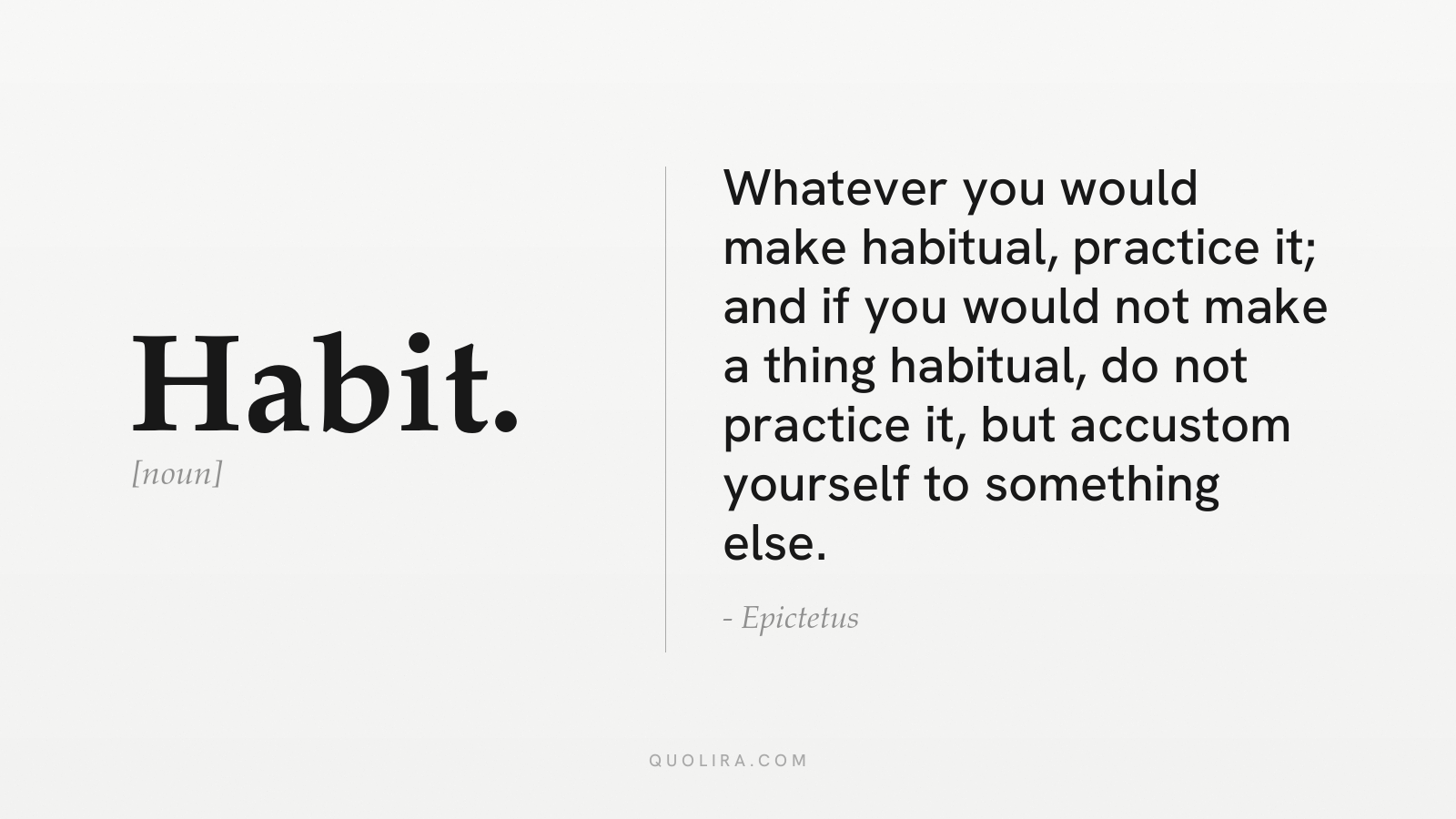
“Whatever you would make habitual, practice it; and if you would not make a thing habitual, do not practice it, but accustom yourself to something else.”
Epictetus · Discourses, Book II, chapter 18
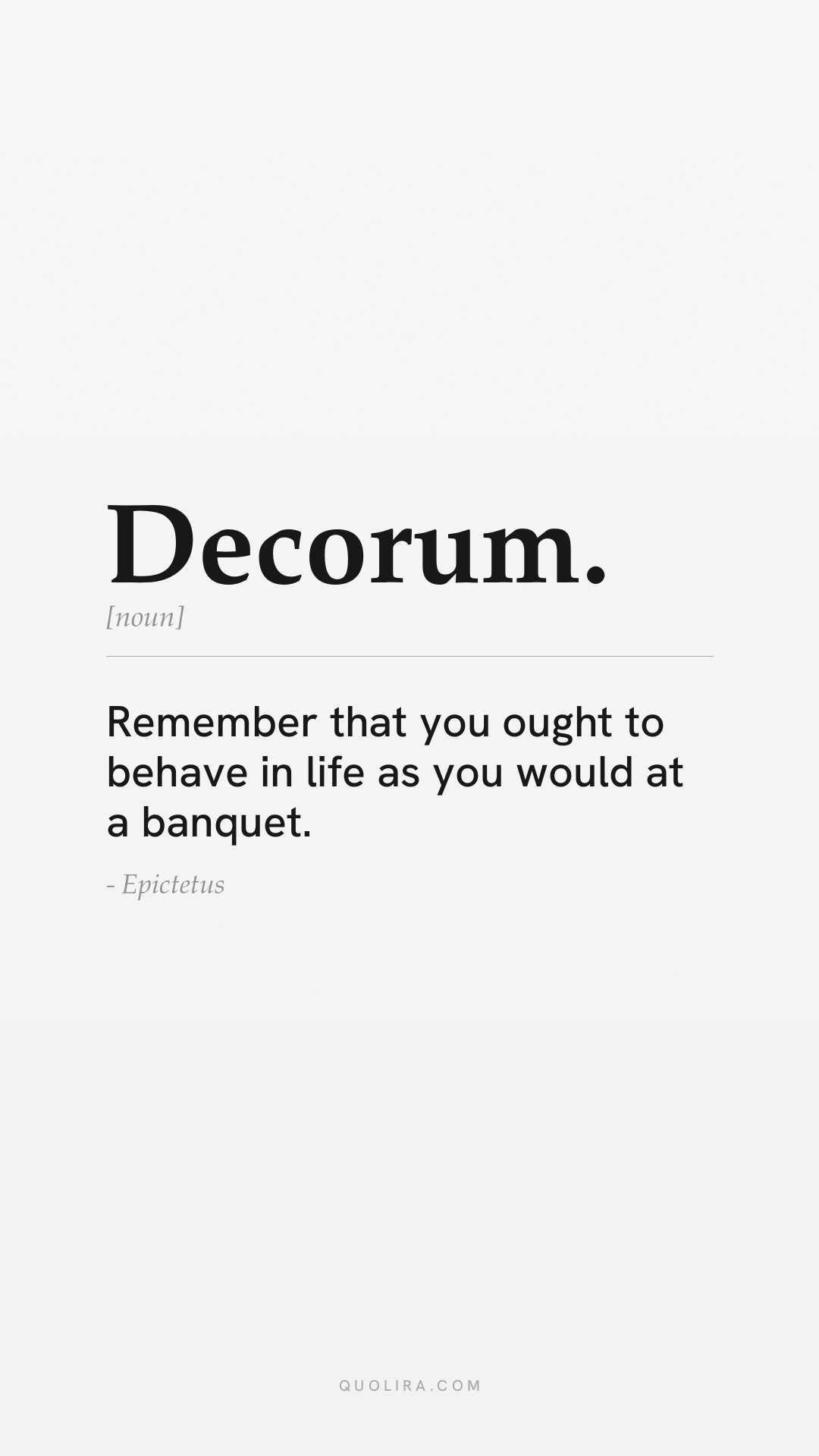
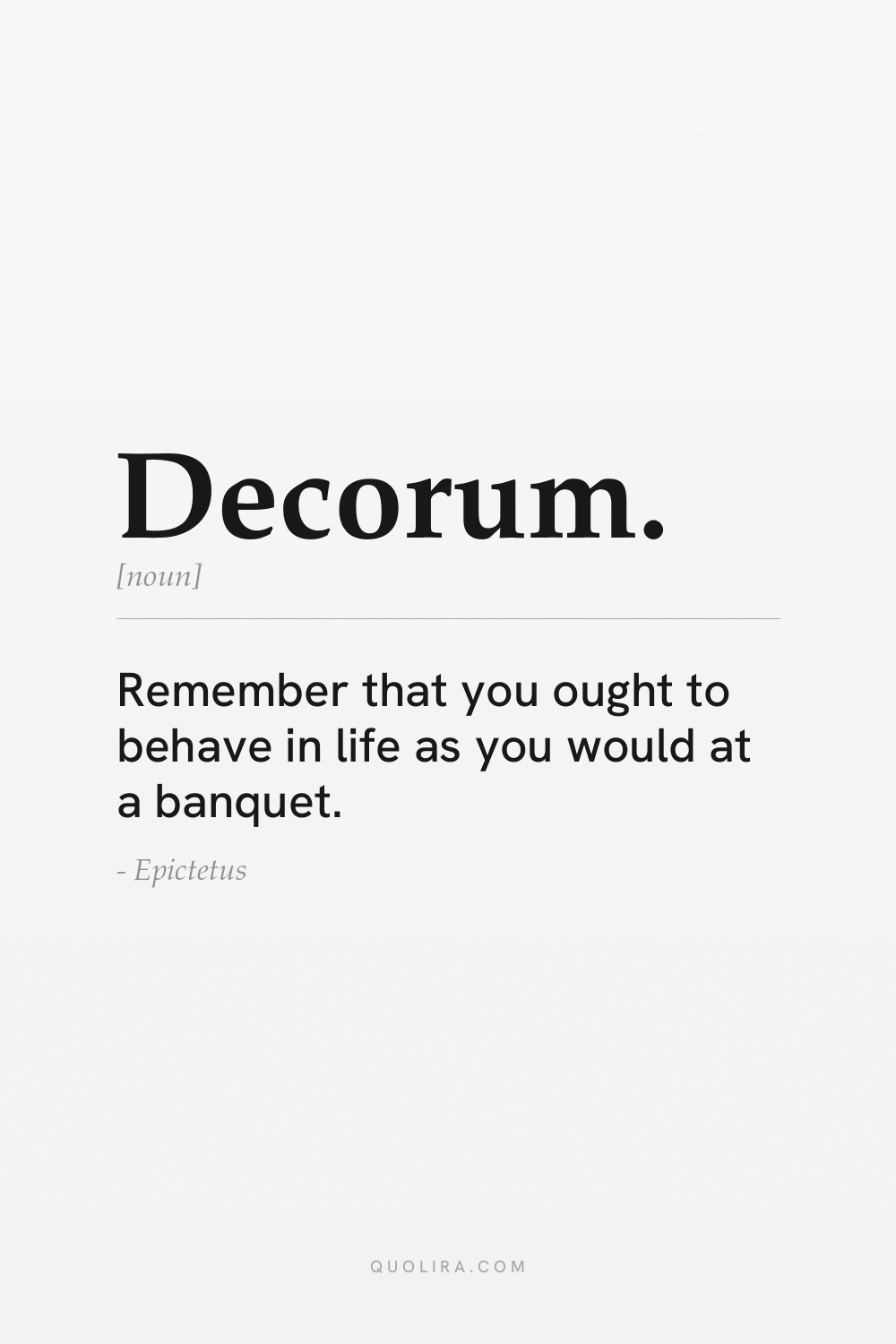
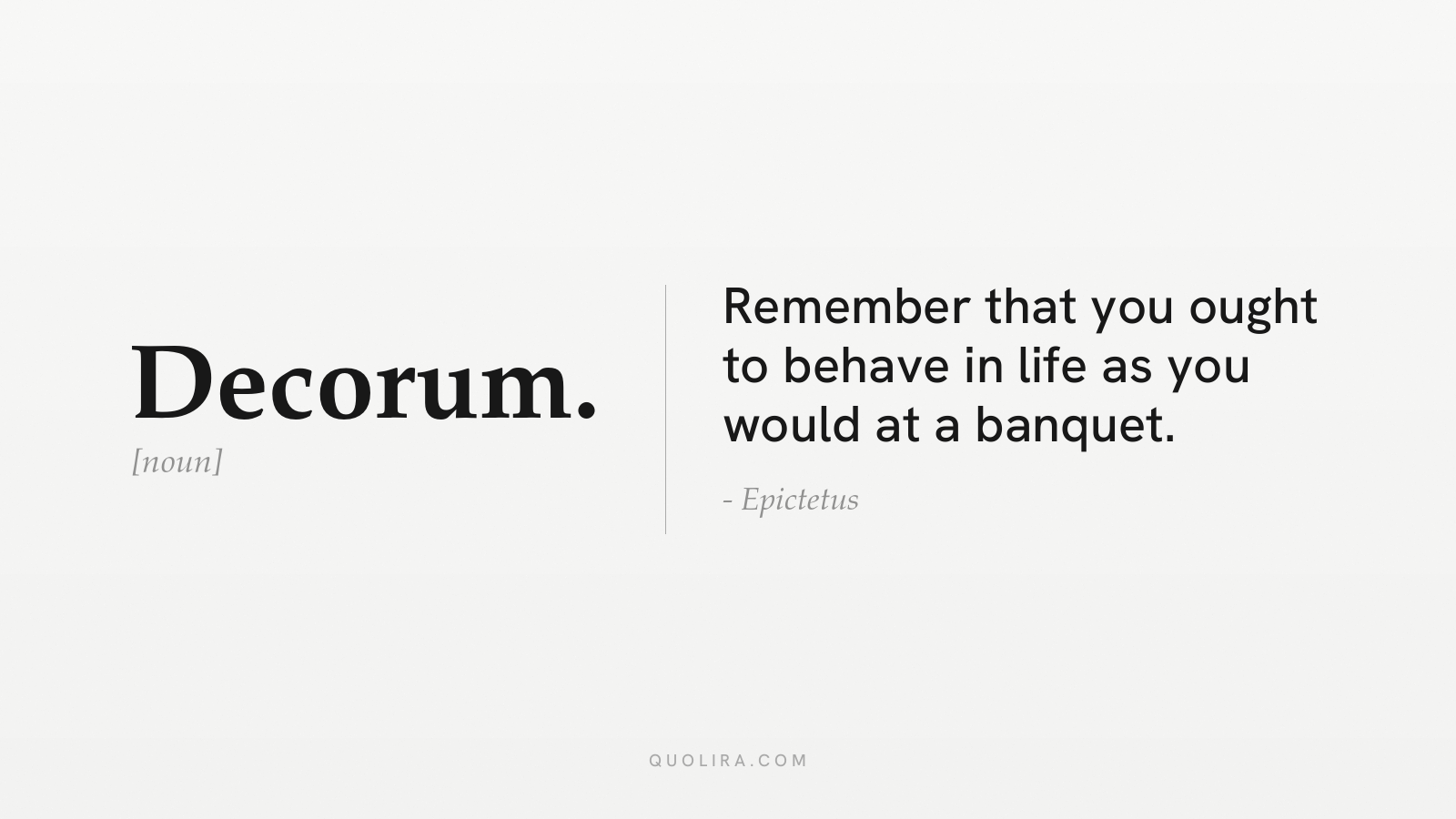
“Remember that you ought to behave in life as you would at a banquet.”
Epictetus · Enchiridion, section 15
“Show me someone who is ill and yet happy, in danger and yet happy, dying and yet happy, exiled and yet happy.”
Epictetus · Discourses, Book II, chapter 19
“Little is needed to ruin and upset everything, only a slight aberration from reason.”
Epictetus · Discourses, Book IV, chapter 3
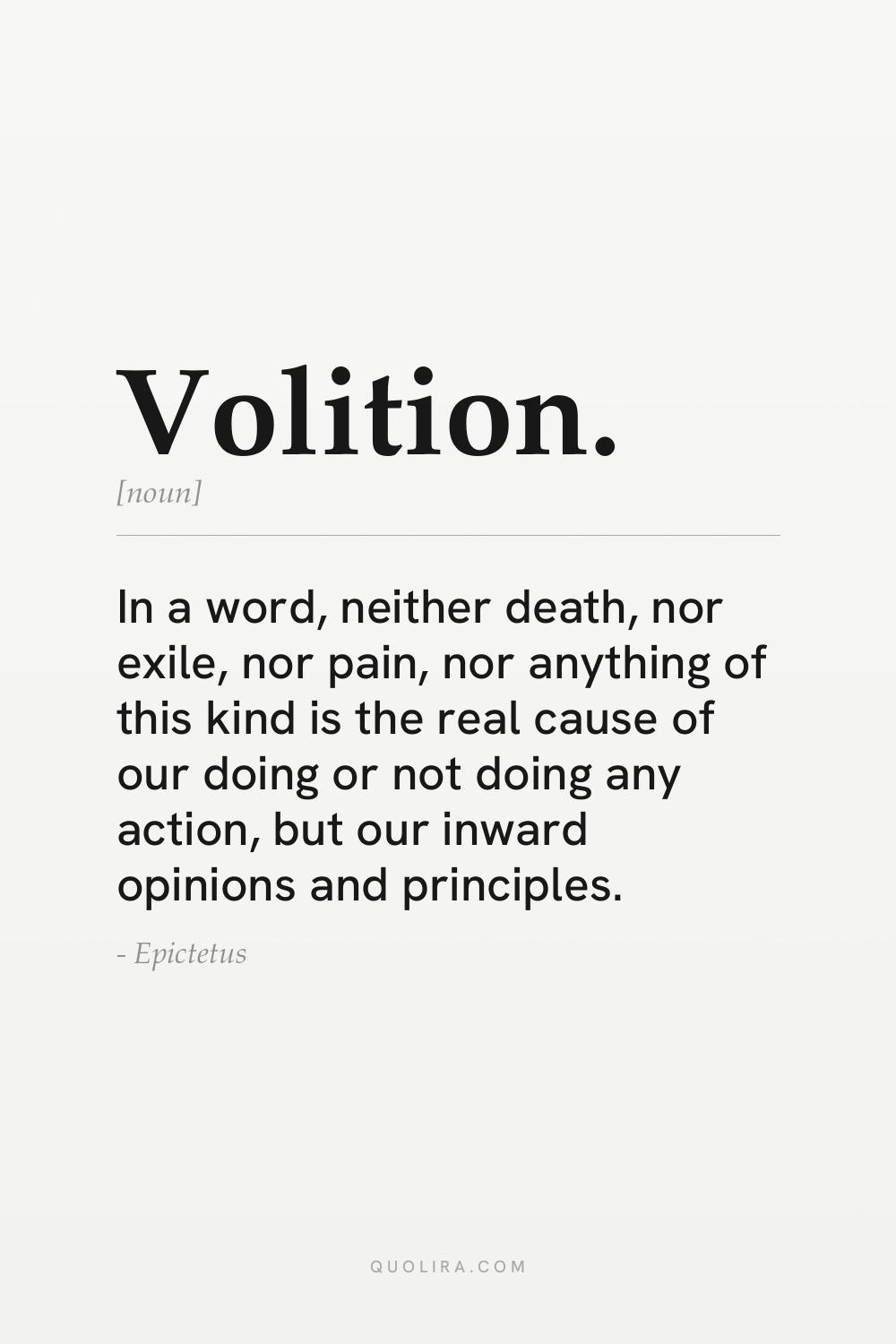
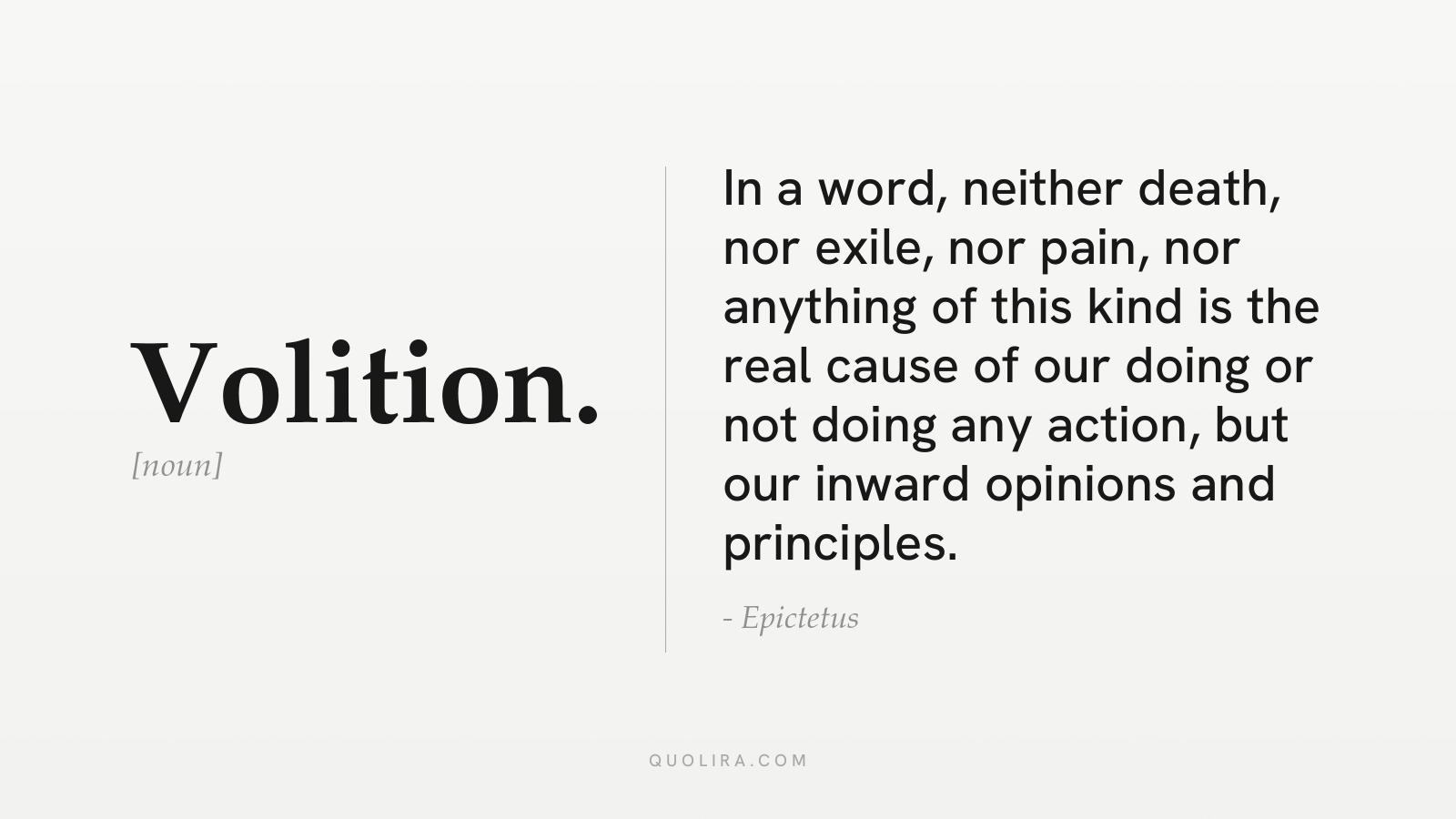
“In a word, neither death, nor exile, nor pain, nor anything of this kind is the real cause of our doing or not doing any action, but our inward opinions and principles.”
Epictetus · Discourses, Book I, chapter 11
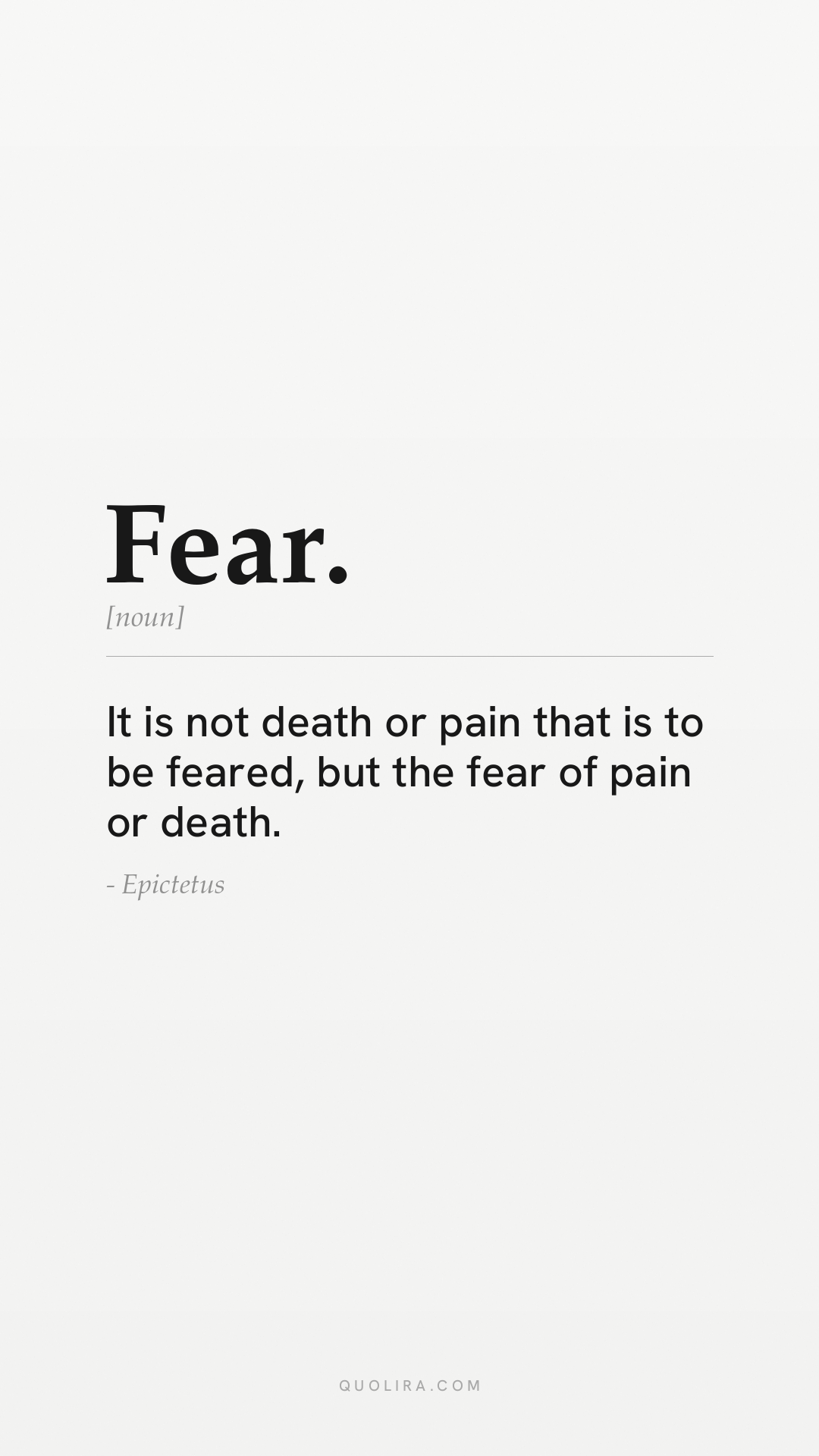
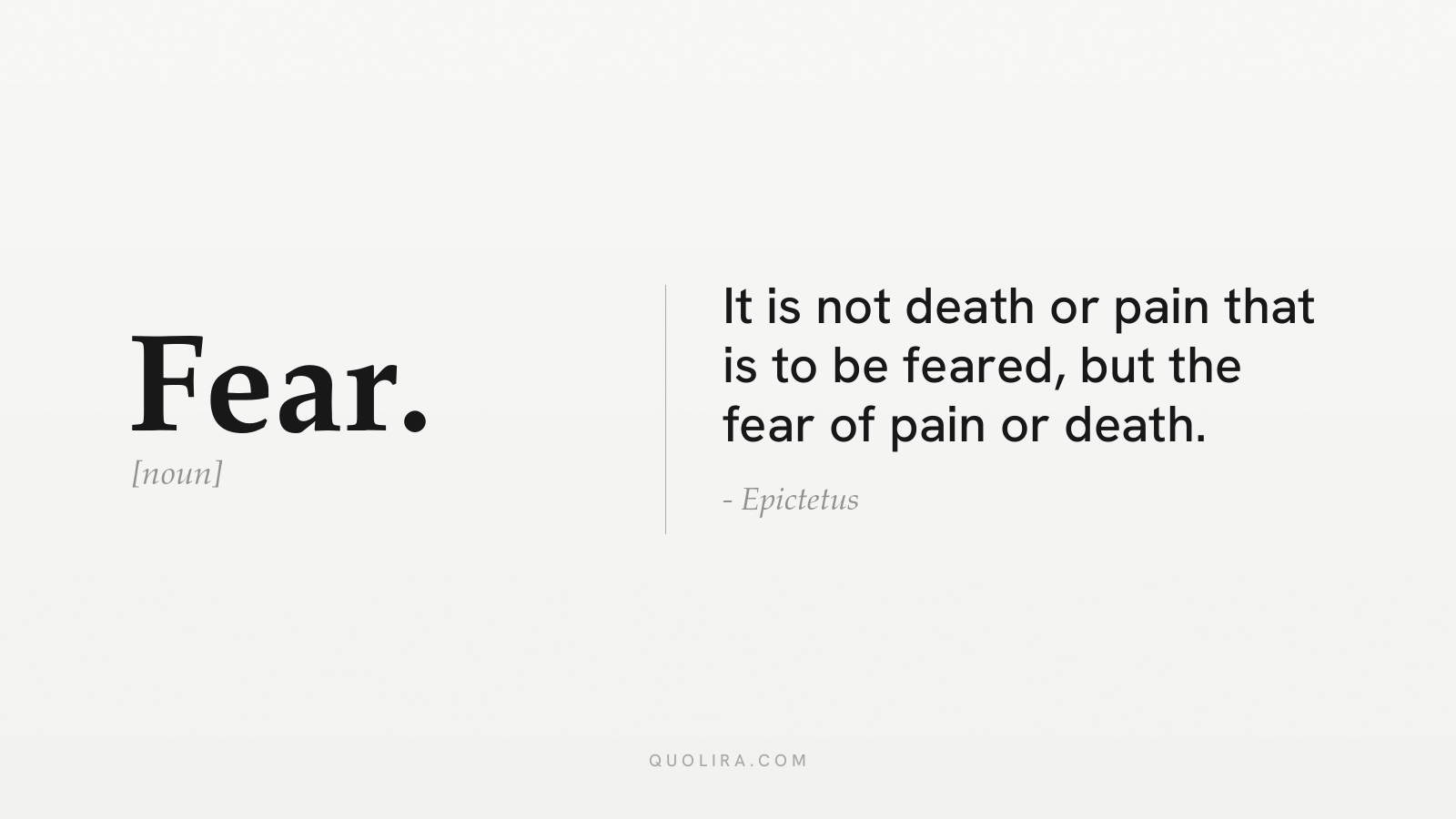
“It is not death or pain that is to be feared, but the fear of pain or death.”
Epictetus · Discourses, Book II, chapter 1