“Practice yourself, for heaven's sake, in little things; and thence proceed to greater.”
Epictetus · Discourses, Book I, chapter 18
 quolira
.com
Epictetus said it, in Discourses, Book I, chapter 15.
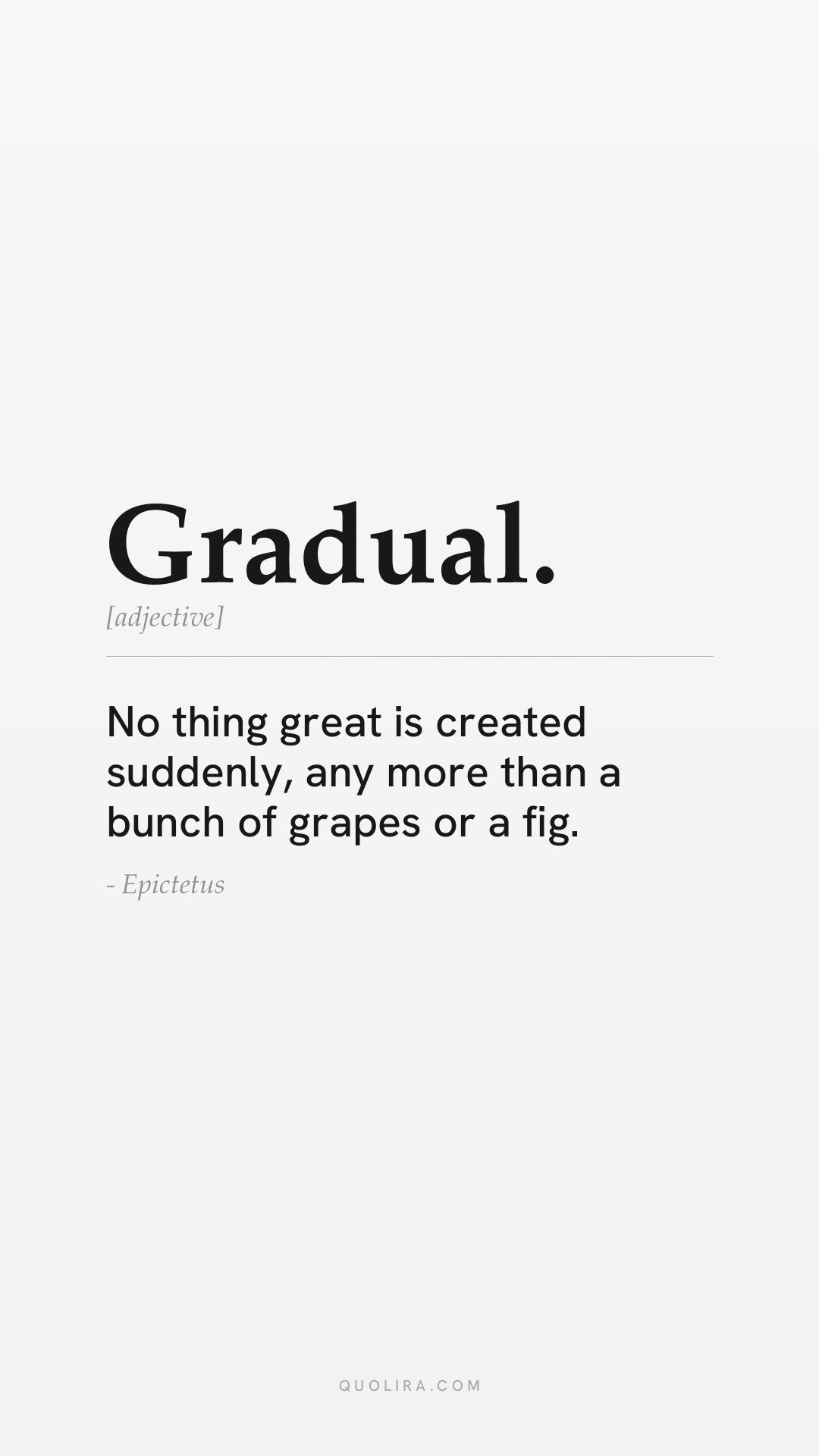
Epictetus uses the image of a fig: it blossoms first, then bears fruit, then ripens. Anything great needs time. If your goals feel slow, that is the normal pace of growth, not proof that you are failing.
From the collection: 23 Best Epictetus Quotes on Fear, Freedom, and Control · More Epictetus quotes
This quote means that anything of real value grows gradually, so significant achievements and lasting character should not be expected to appear all at once. Epictetus uses the image of a grape or a fig ripening over time to make the point. Patience and steady effort are presented as the natural pattern of growth.
The line comes from the Discourses, the lectures Epictetus delivered to students and that his pupil Arrian preserved in written form. In this passage he addresses students who want to become wise quickly and who may grow discouraged when progress is slow. By comparing their development to plants that take a season to mature, he reminds them that the process of becoming a better person follows a natural timetable that cannot be forced.
Epictetus was a Stoic philosopher who taught in the first and second centuries CE. He was born into slavery, later became free, and spent much of his life teaching, first in Rome and later at Nicopolis in Epirus. He left no writings of his own that survive. What we know of his thought comes mainly from the Discourses, which Arrian compiled from lectures, and from the Enchiridion, a short handbook of guidance drawn from the same teaching.
“Practice yourself, for heaven's sake, in little things; and thence proceed to greater.”
Epictetus · Discourses, Book I, chapter 18
“If you would be a good reader, read; if a writer, write.”
Epictetus · Discourses, Book II, chapter 18
“Whatever you would make habitual, practice it; and if you would not make a thing habitual, do not practice it, but accustom yourself to something else.”
Epictetus · Discourses, Book II, chapter 18
“Remember that you ought to behave in life as you would at a banquet.”
Epictetus · Enchiridion, section 15
“Show me someone who is ill and yet happy, in danger and yet happy, dying and yet happy, exiled and yet happy.”
Epictetus · Discourses, Book II, chapter 19
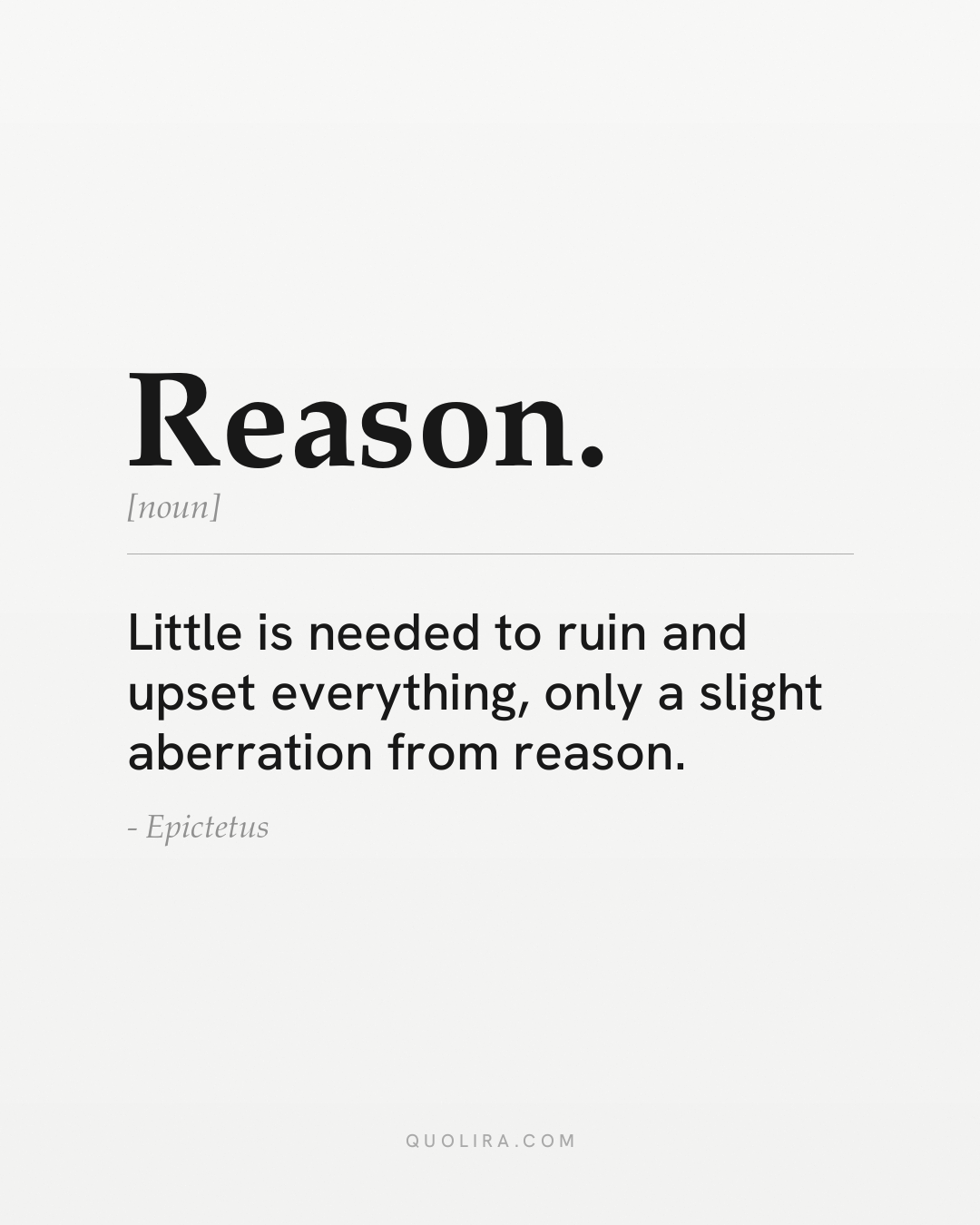
“Little is needed to ruin and upset everything, only a slight aberration from reason.”
Epictetus · Discourses, Book IV, chapter 3
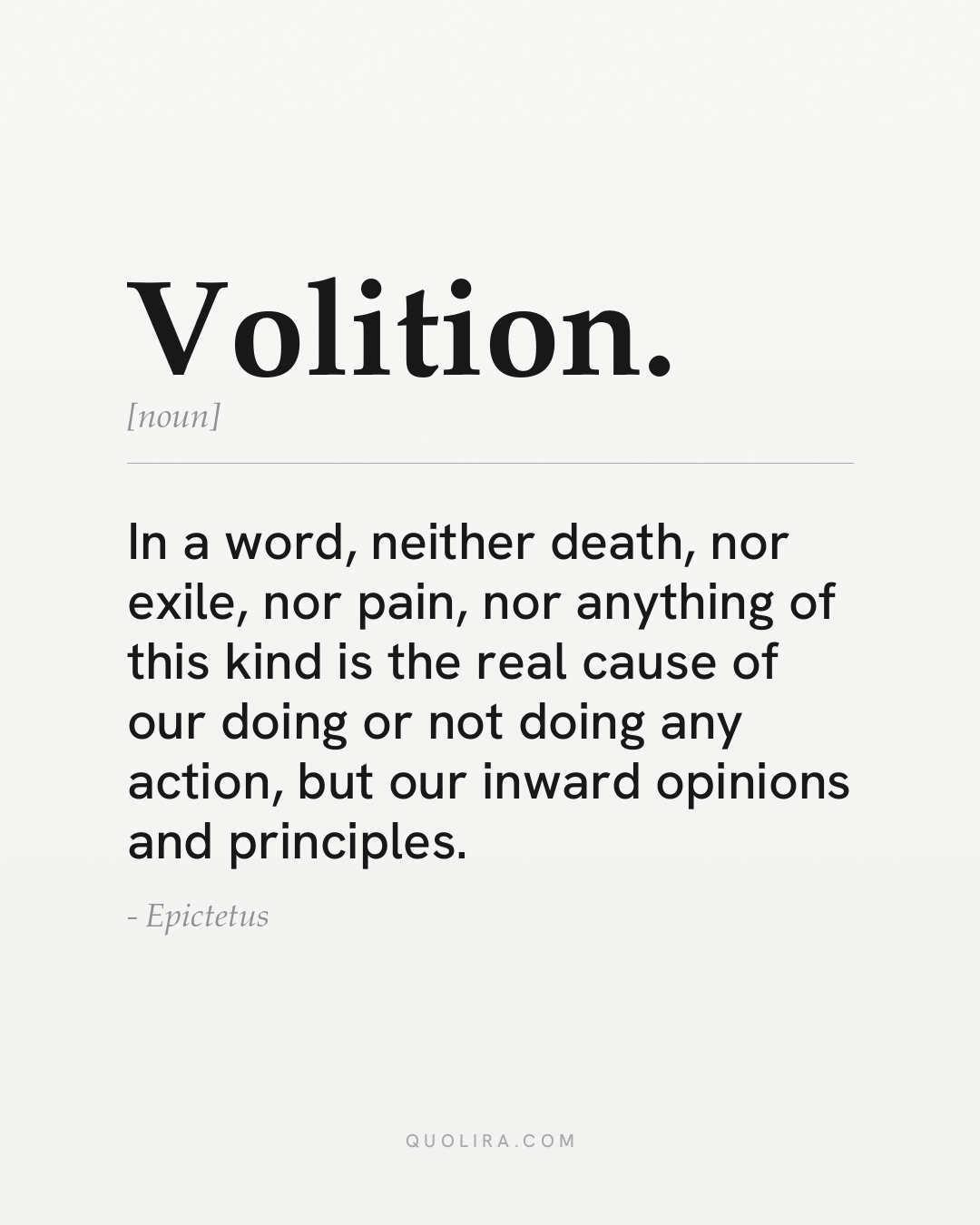
“In a word, neither death, nor exile, nor pain, nor anything of this kind is the real cause of our doing or not doing any action, but our inward opinions and principles.”
Epictetus · Discourses, Book I, chapter 11
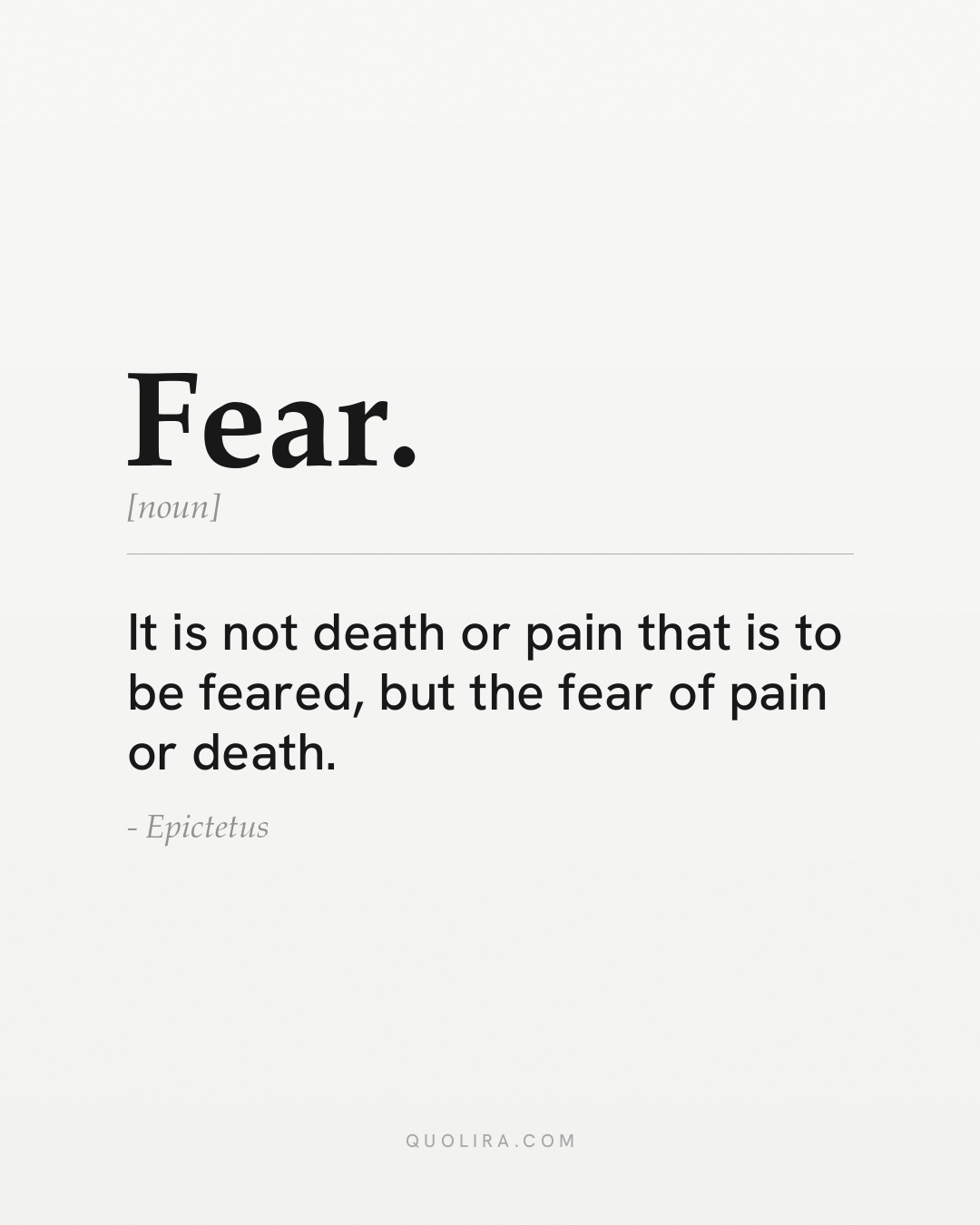
“It is not death or pain that is to be feared, but the fear of pain or death.”
Epictetus · Discourses, Book II, chapter 1
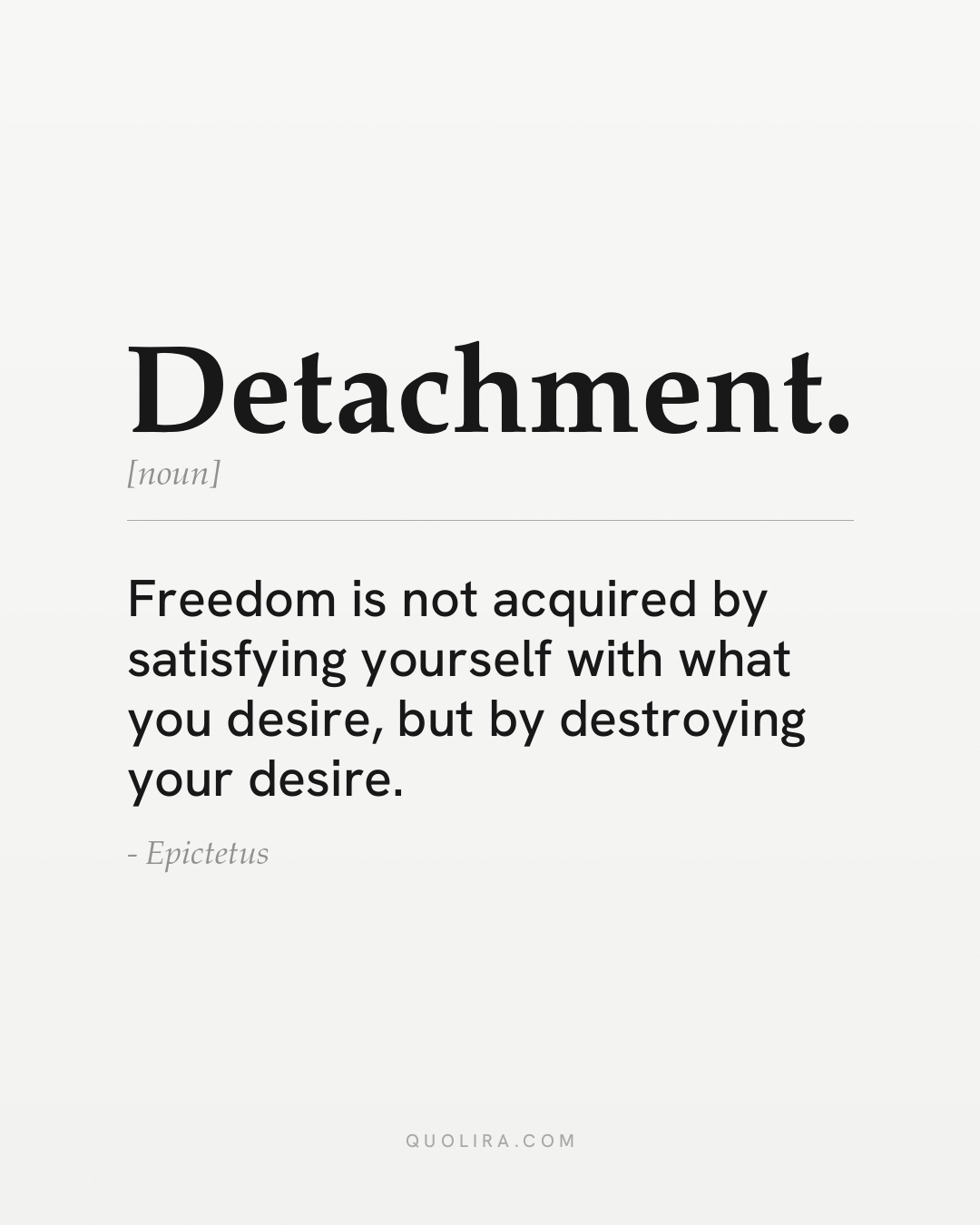
“Freedom is not acquired by satisfying yourself with what you desire, but by destroying your desire.”
Epictetus · Discourses, Book IV, chapter 1
“Know, first, who you are, and then adorn yourself accordingly.”
Epictetus · Discourses, Book III, chapter 1
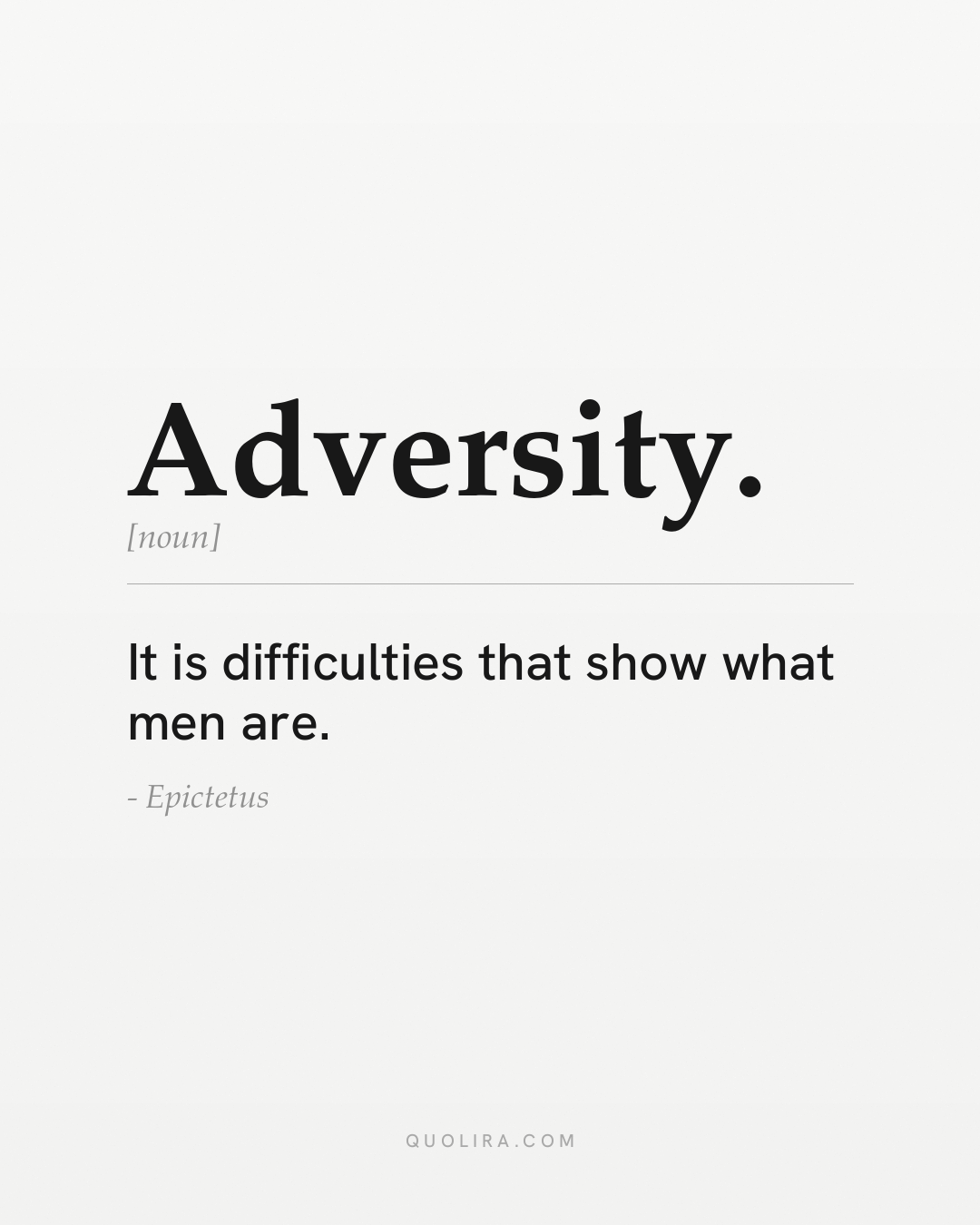
“It is difficulties that show what men are.”
Epictetus · Discourses, Book I, chapter 24
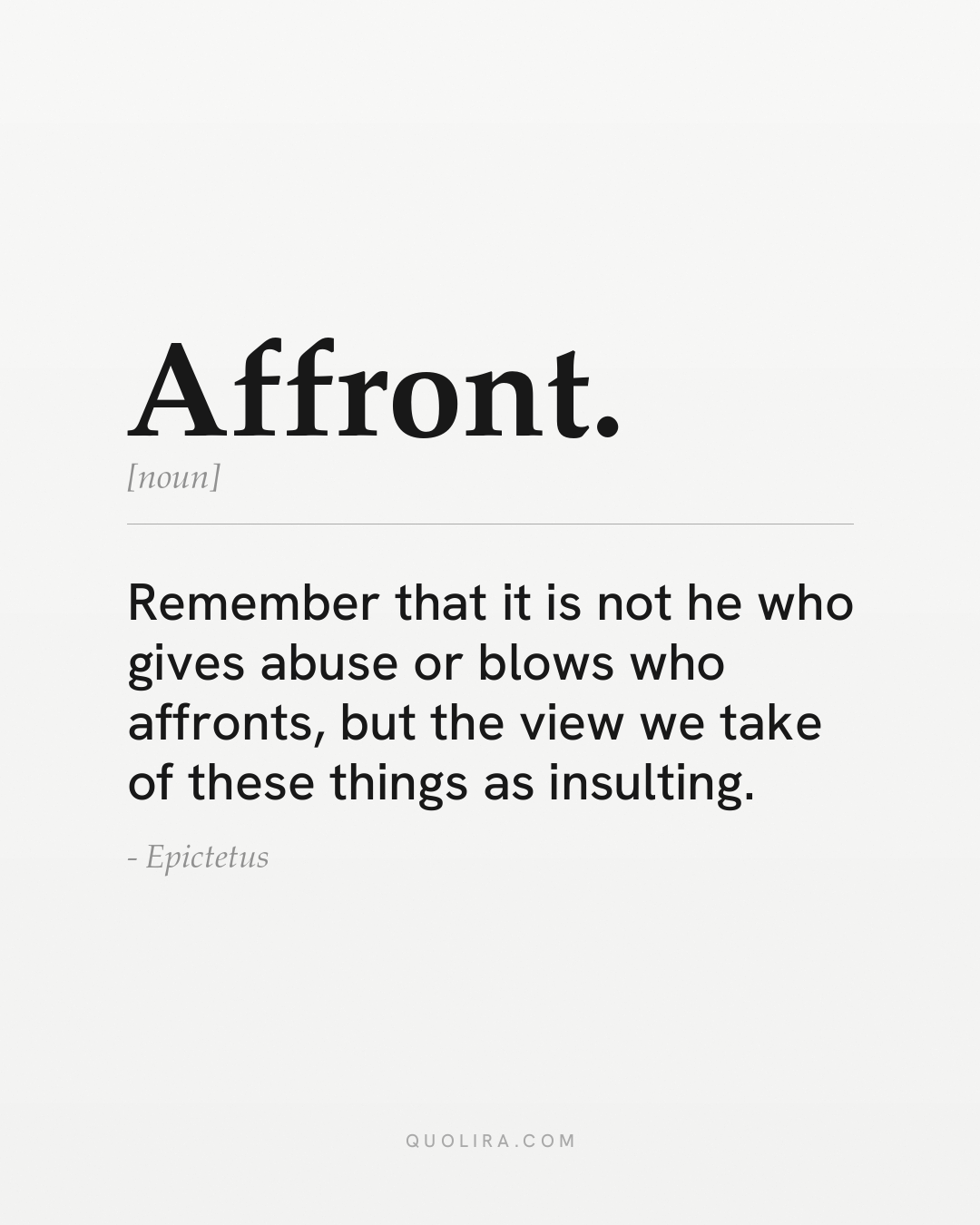
“Remember that it is not he who gives abuse or blows who affronts, but the view we take of these things as insulting.”
Epictetus · Enchiridion, section 20