“In a word, neither death, nor exile, nor pain, nor anything of this kind is the real cause of our doing or not doing any action, but our inward opinions and principles.”
Epictetus · Discourses, Book I, chapter 11
 quolira
.com
Epictetus said it, in Discourses, Book IV, chapter 3.
This line shows how fragile a good life can be. A small lapse in reason, repeated, can undo a lot. It is a reason to check small decisions, not only the big ones.
From the collection: 23 Best Epictetus Quotes on Fear, Freedom, and Control · More Epictetus quotes
Epictetus means that a slight departure from sound reasoning can throw an entire life or judgment into disorder. Small errors in thinking, when left uncorrected, can grow into serious failures of conduct. The remedy he implies is steady attention to reason in ordinary moments.
This line comes from Book IV of the Discourses, which Arrian compiled from his teacher's lectures. In this part of the work, Epictetus stresses that reason is the faculty that allows us to understand our impressions and respond well to them. He treats reason as a kind of measuring instrument, and warns that even a minor misreading can lead a person far from where they meant to go. The point is practical rather than abstract, aimed at students who wanted to live consistently.
Epictetus lived roughly from the late first century CE into the early second century. He was born in Hierapolis, in Phrygia, and spent his early life enslaved in Rome. After gaining his freedom he taught philosophy, and he eventually founded a school in Nicopolis in western Greece. He did not publish works of his own that have survived. The lectures and handbook associated with him come to us through Arrian, who recorded and organized his teaching.
“In a word, neither death, nor exile, nor pain, nor anything of this kind is the real cause of our doing or not doing any action, but our inward opinions and principles.”
Epictetus · Discourses, Book I, chapter 11
“It is not death or pain that is to be feared, but the fear of pain or death.”
Epictetus · Discourses, Book II, chapter 1
“Freedom is not acquired by satisfying yourself with what you desire, but by destroying your desire.”
Epictetus · Discourses, Book IV, chapter 1
“Know, first, who you are, and then adorn yourself accordingly.”
Epictetus · Discourses, Book III, chapter 1
“It is difficulties that show what men are.”
Epictetus · Discourses, Book I, chapter 24
“Remember that it is not he who gives abuse or blows who affronts, but the view we take of these things as insulting.”
Epictetus · Enchiridion, section 20
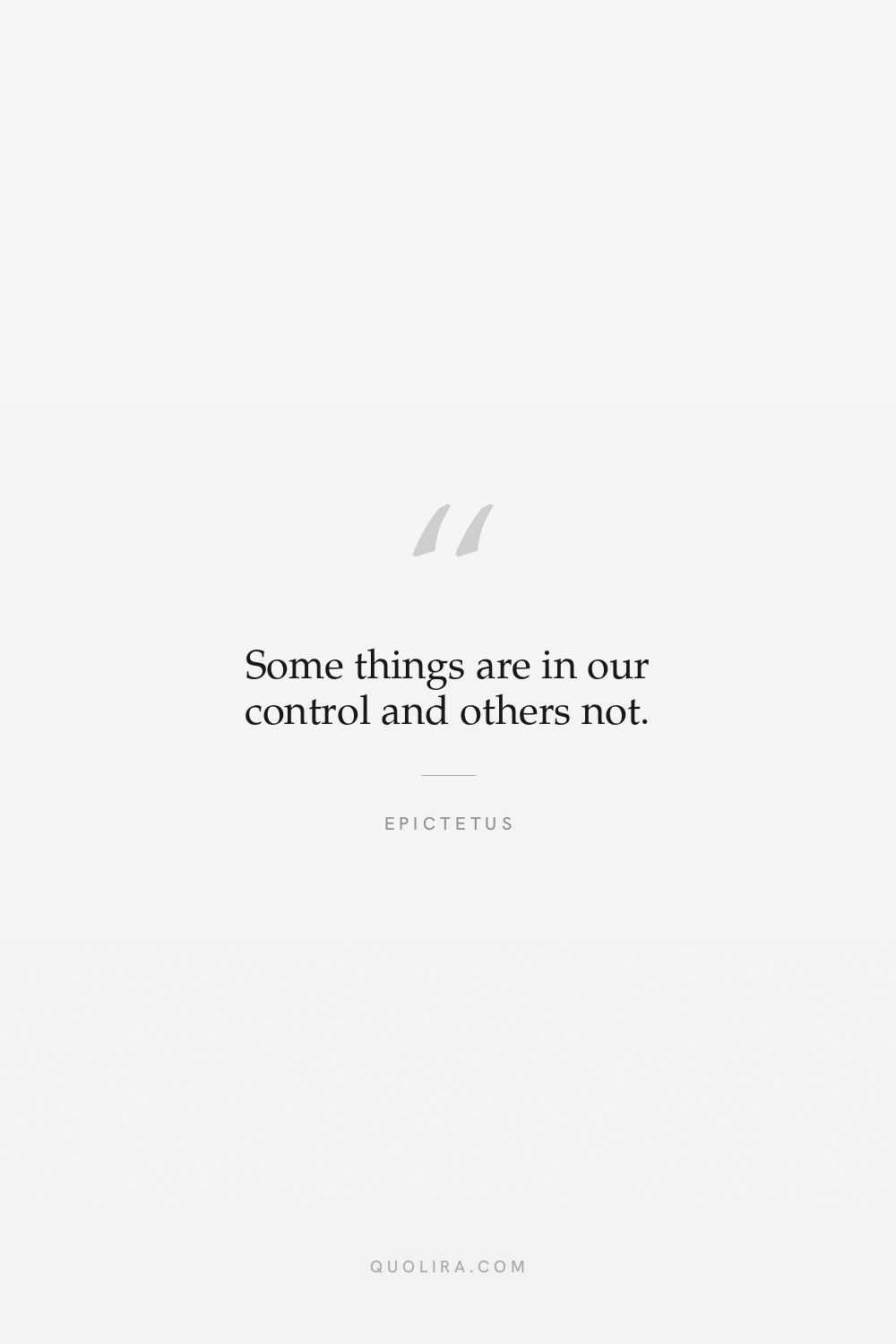
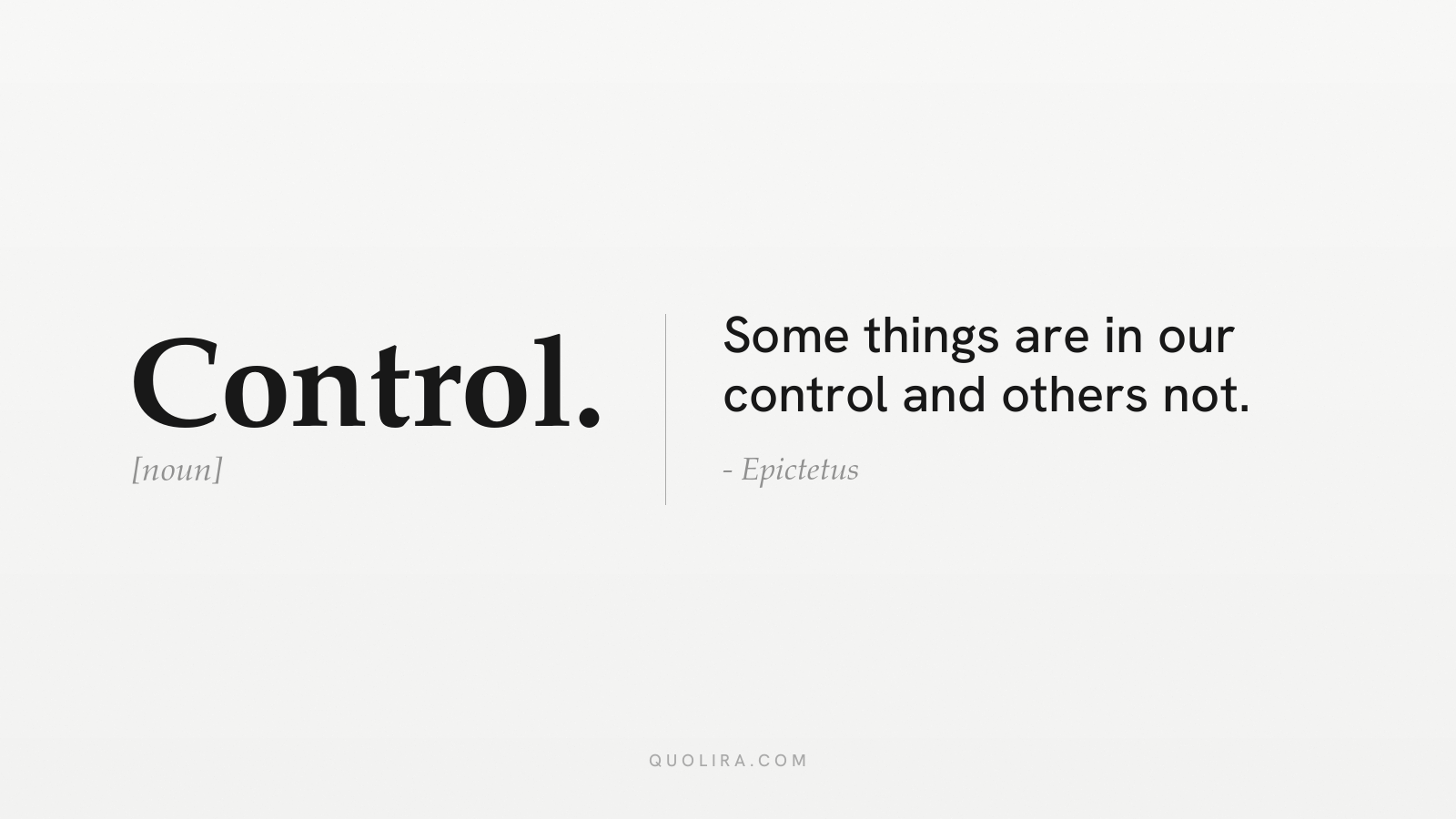
“Some things are in our control and others not.”
Epictetus · Enchiridion, section 1
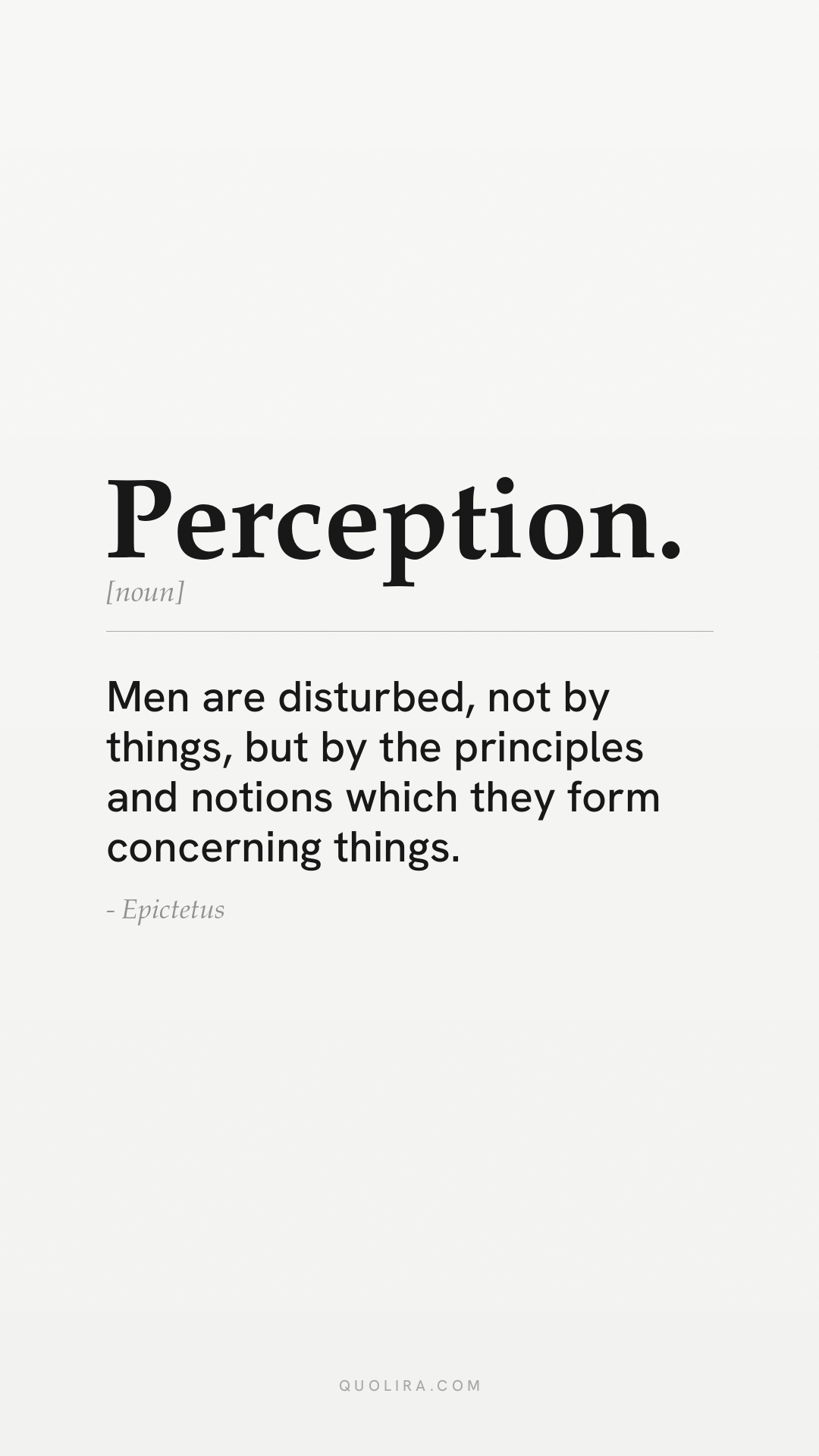
“Men are disturbed, not by things, but by the principles and notions which they form concerning things.”
Epictetus · Enchiridion, section 5
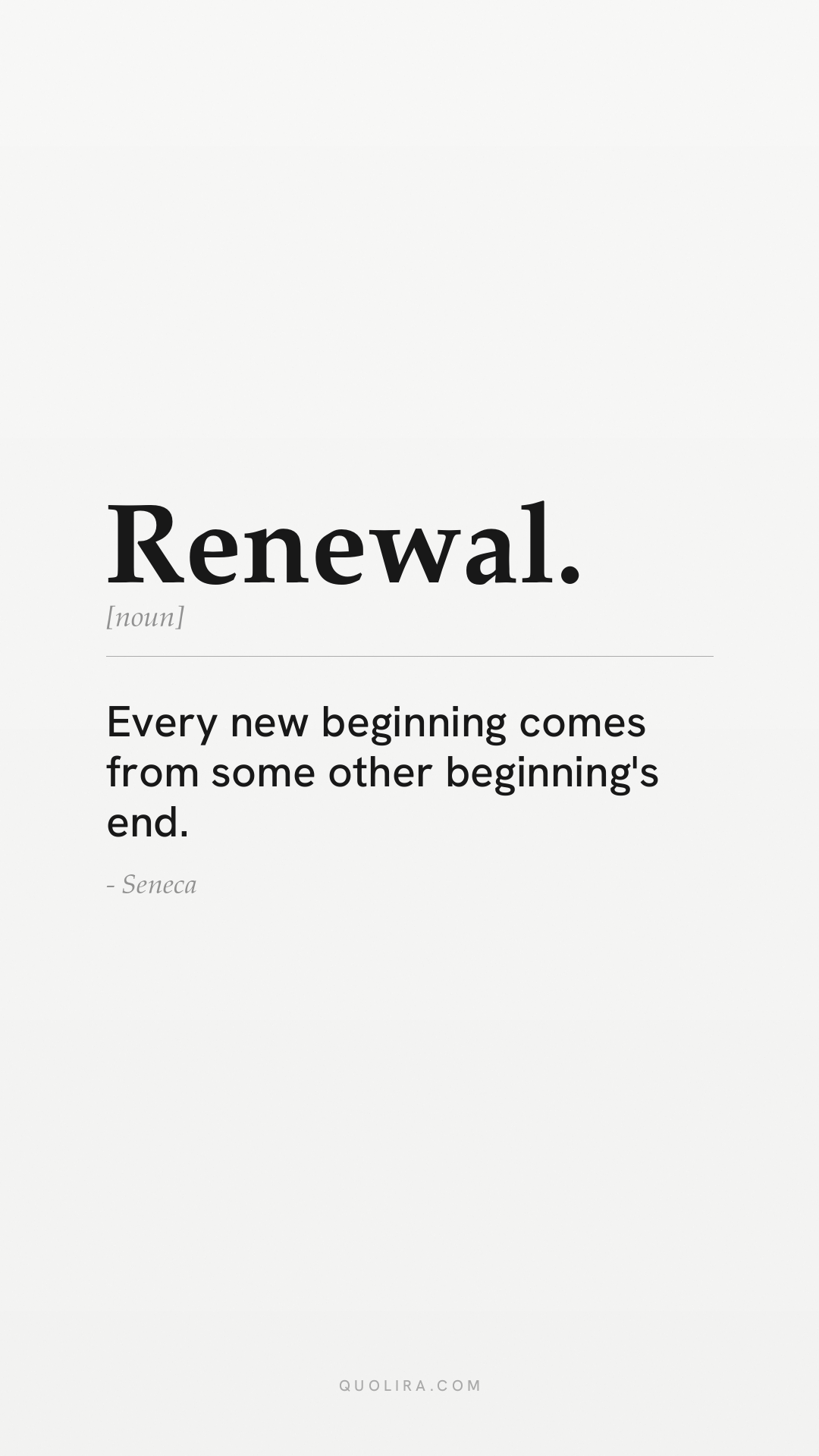
“Every new beginning comes from some other beginning's end.”
Seneca
“Dimidium facti, qui coepit, habet.”
Horace · Epistles, Book 1
“You have brains in your head. You have feet in your shoes. You can steer yourself any direction you choose.”
Dr. Seuss · Oh, the Places You'll Go!, 1990
“Today you are You, that is truer than true. There is no one alive who is Youer than You.”
Dr. Seuss · Happy Birthday to You!, 1959