“Don't you know that a good and excellent person does nothing for the sake of appearances, but only for the sake of having acted right?”
Epictetus · Discourses, Book III, chapter 24
 quolira
.com
Epictetus said it, in Enchiridion, section 43.
Epictetus says every event can be grasped by a handle that makes it bearable or one that makes it unbearable. His example is a brother who wrongs you. Choose the handle of kinship and the anger loosens. Hard situations usually have a second handle.
From the collection: 23 Best Epictetus Quotes on Fear, Freedom, and Control · More Epictetus quotes
This quote means that nearly any situation can be approached from more than one angle, and that choosing the most constructive angle helps us respond well. Epictetus compares a thing to a jug or vessel that offers a usable grip and an awkward one. When a difficulty arises, we can take hold of it in the way that keeps our judgment steady.
The line comes from the Enchiridion, a short handbook of guidance that Arrian compiled from the teachings of Epictetus. In the surrounding passage, Epictetus gives the example of a brother who has wronged us. We can grasp that event by the handle of injury, which leads to anger, or by the handle of our shared kinship, which leads to patience. The handbook uses this image to show how perception shapes our reactions to events we cannot control.
Epictetus was a Stoic philosopher who taught in the first and second centuries CE. Born into slavery, he later gained his freedom and became a respected teacher of philosophy. He taught in Rome and later at Nicopolis in Epirus. He wrote nothing that survives under his own hand. His teachings come to us through the Enchiridion and the Discourses, both of which preserve the practical wisdom he shared with his students.
“Don't you know that a good and excellent person does nothing for the sake of appearances, but only for the sake of having acted right?”
Epictetus · Discourses, Book III, chapter 24
“Reason is not measured by size or height, but by principle.”
Epictetus · Discourses, Book I, chapter 12
“No thing great is created suddenly, any more than a bunch of grapes or a fig.”
Epictetus · Discourses, Book I, chapter 15
“Practice yourself, for heaven's sake, in little things; and thence proceed to greater.”
Epictetus · Discourses, Book I, chapter 18
“If you would be a good reader, read; if a writer, write.”
Epictetus · Discourses, Book II, chapter 18
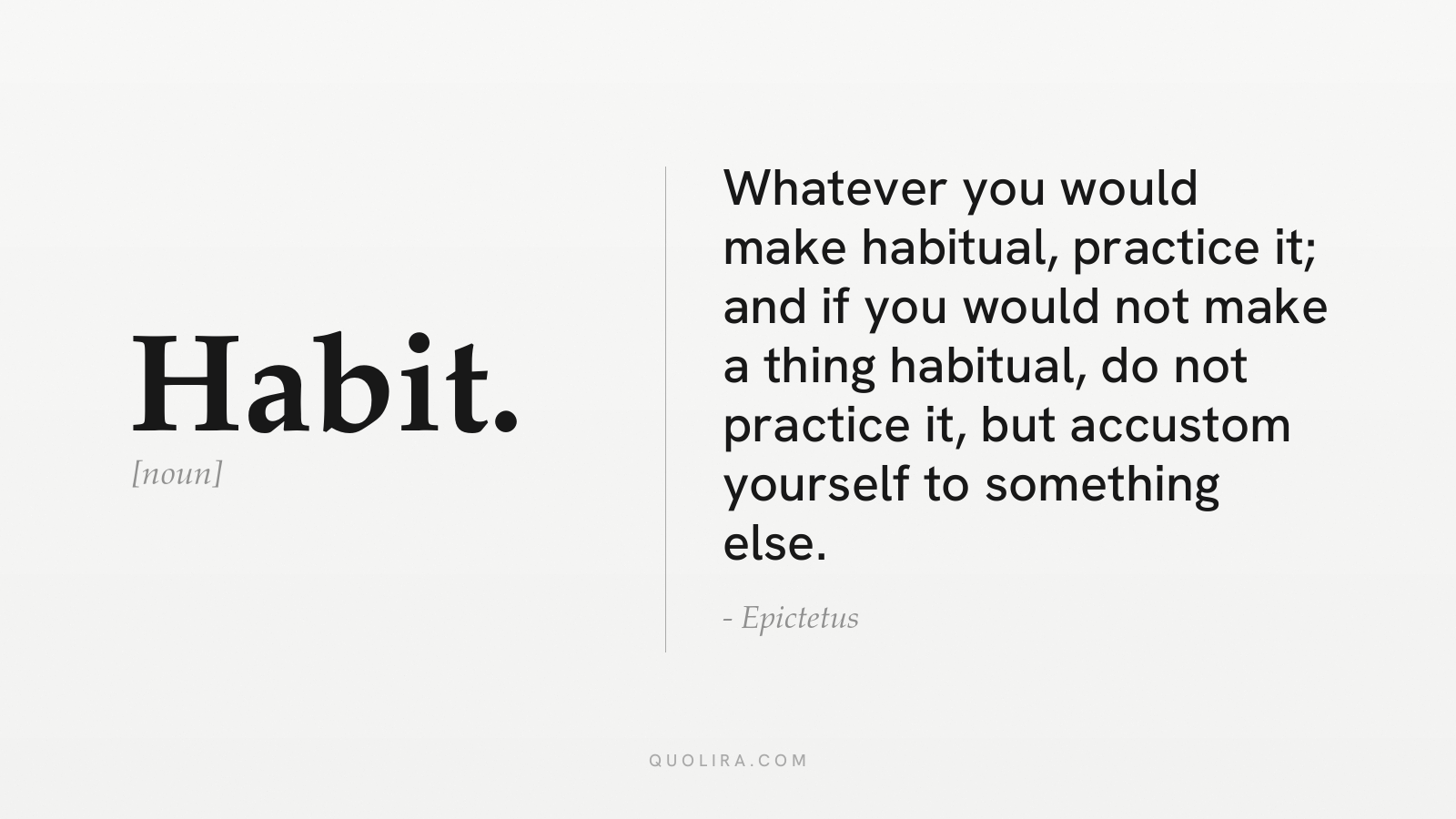
“Whatever you would make habitual, practice it; and if you would not make a thing habitual, do not practice it, but accustom yourself to something else.”
Epictetus · Discourses, Book II, chapter 18
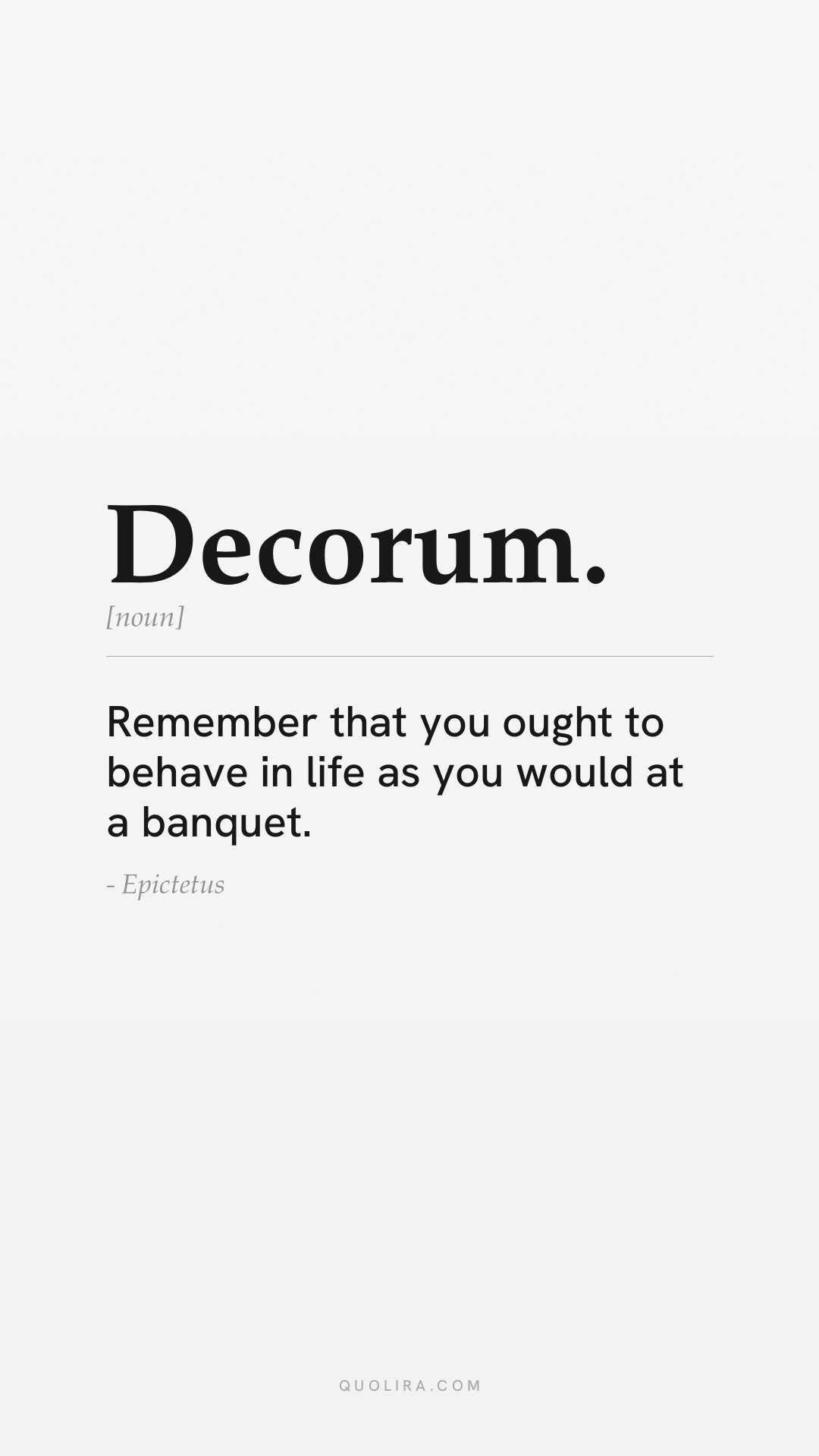
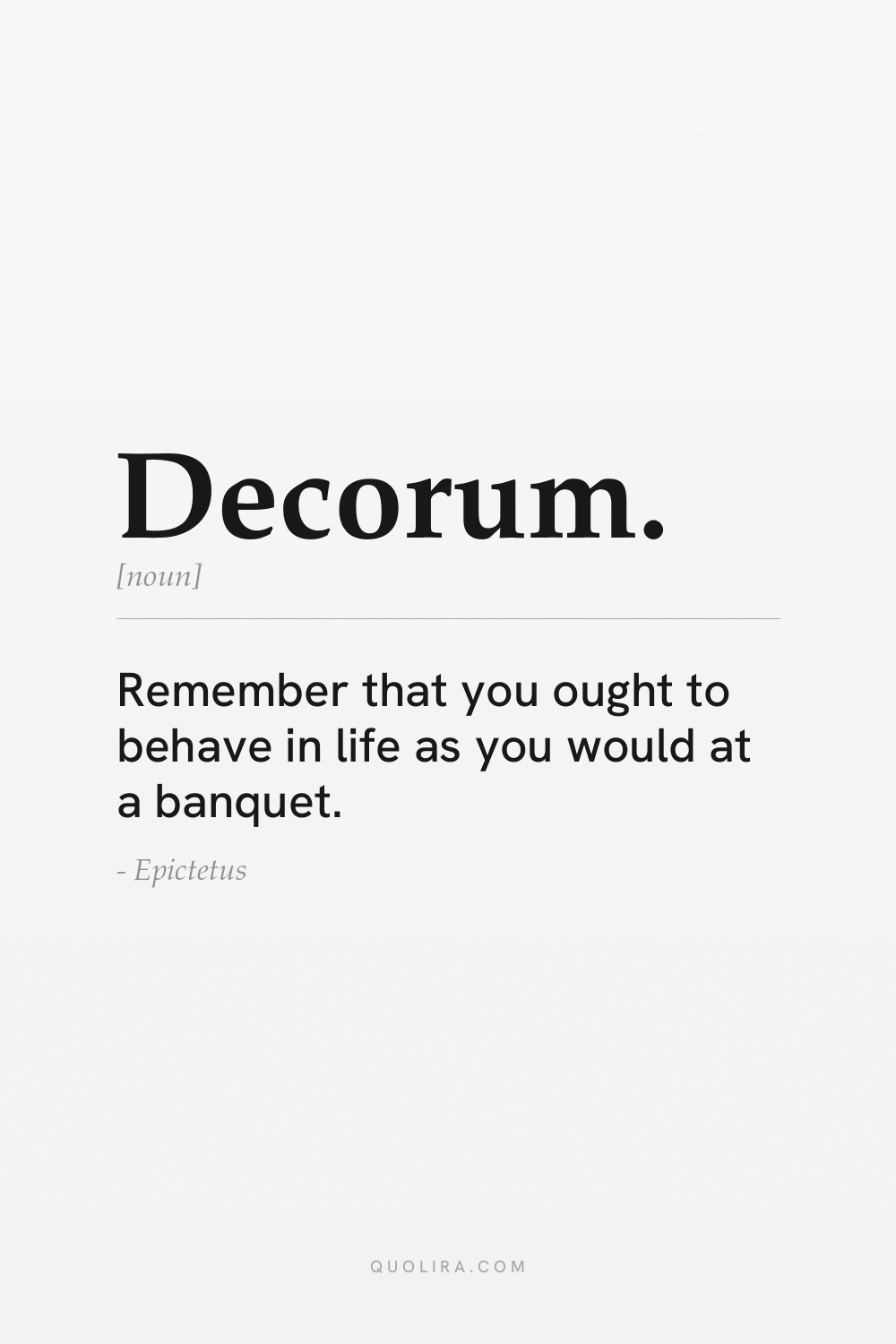
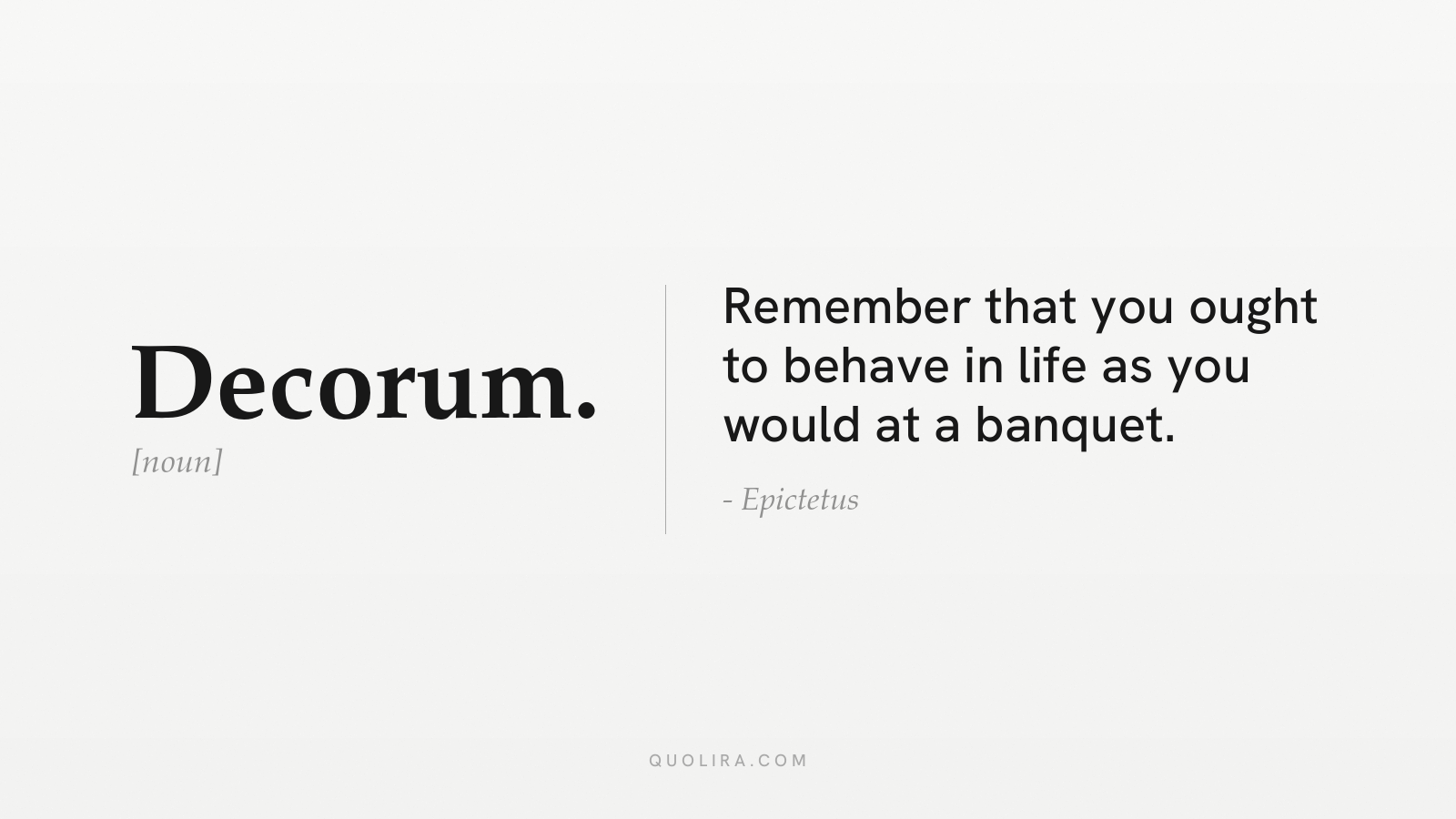
“Remember that you ought to behave in life as you would at a banquet.”
Epictetus · Enchiridion, section 15
“Show me someone who is ill and yet happy, in danger and yet happy, dying and yet happy, exiled and yet happy.”
Epictetus · Discourses, Book II, chapter 19
“Little is needed to ruin and upset everything, only a slight aberration from reason.”
Epictetus · Discourses, Book IV, chapter 3
“In a word, neither death, nor exile, nor pain, nor anything of this kind is the real cause of our doing or not doing any action, but our inward opinions and principles.”
Epictetus · Discourses, Book I, chapter 11
“It is not death or pain that is to be feared, but the fear of pain or death.”
Epictetus · Discourses, Book II, chapter 1
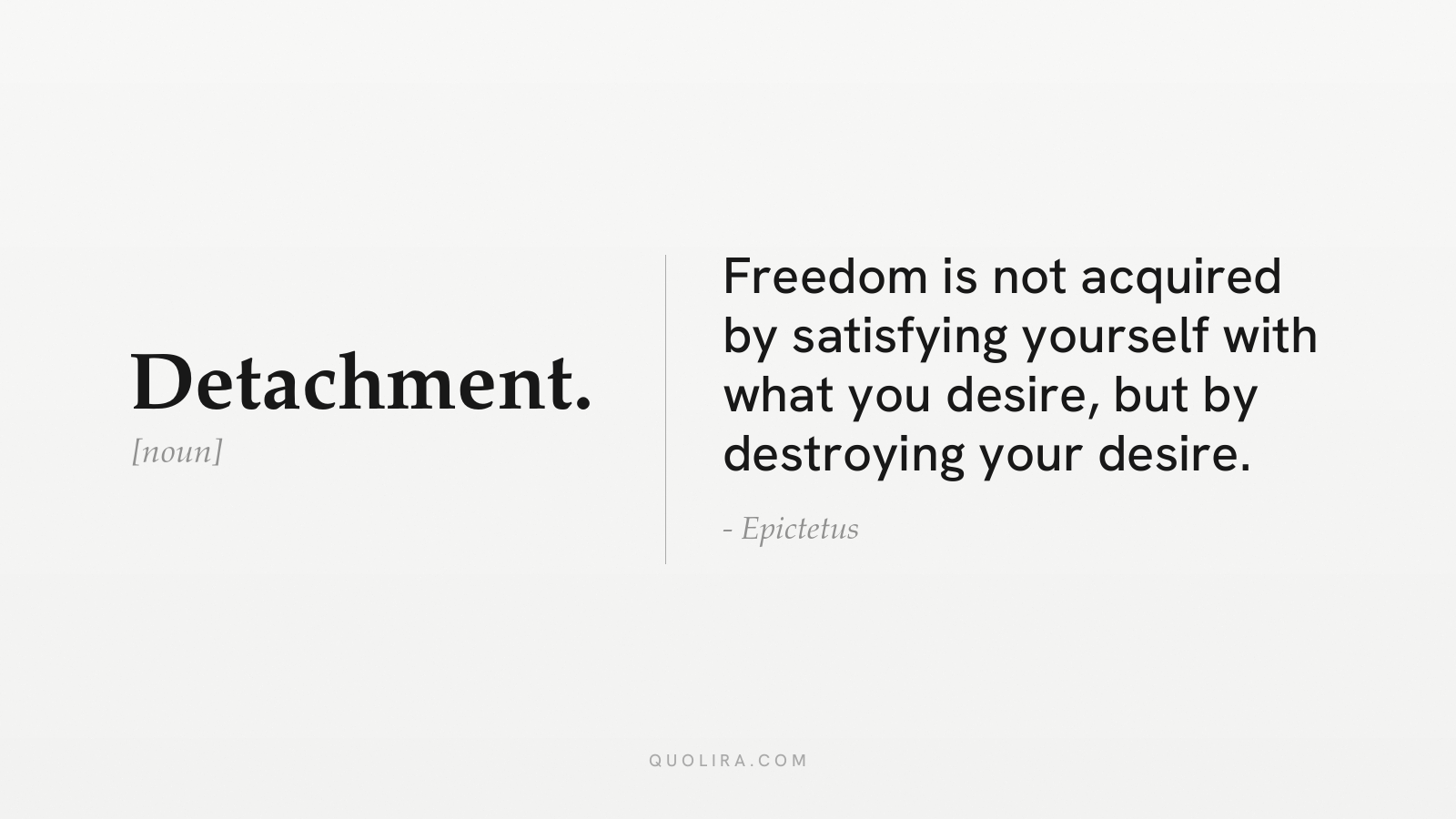
“Freedom is not acquired by satisfying yourself with what you desire, but by destroying your desire.”
Epictetus · Discourses, Book IV, chapter 1