“Let whatever appears to be the best be to you an inviolable law.”
Epictetus · Enchiridion, sections 50-51
 quolira
.com
Epictetus said it, in Discourses, Book II, chapter 1.
Here Epictetus reduces his whole ethic to one aim. The tricky part is that desire, in the Stoic sense, aims only at what you control. Everything else becomes a matter of indifference.
From the collection: 23 Best Epictetus Quotes on Fear, Freedom, and Control · More Epictetus quotes
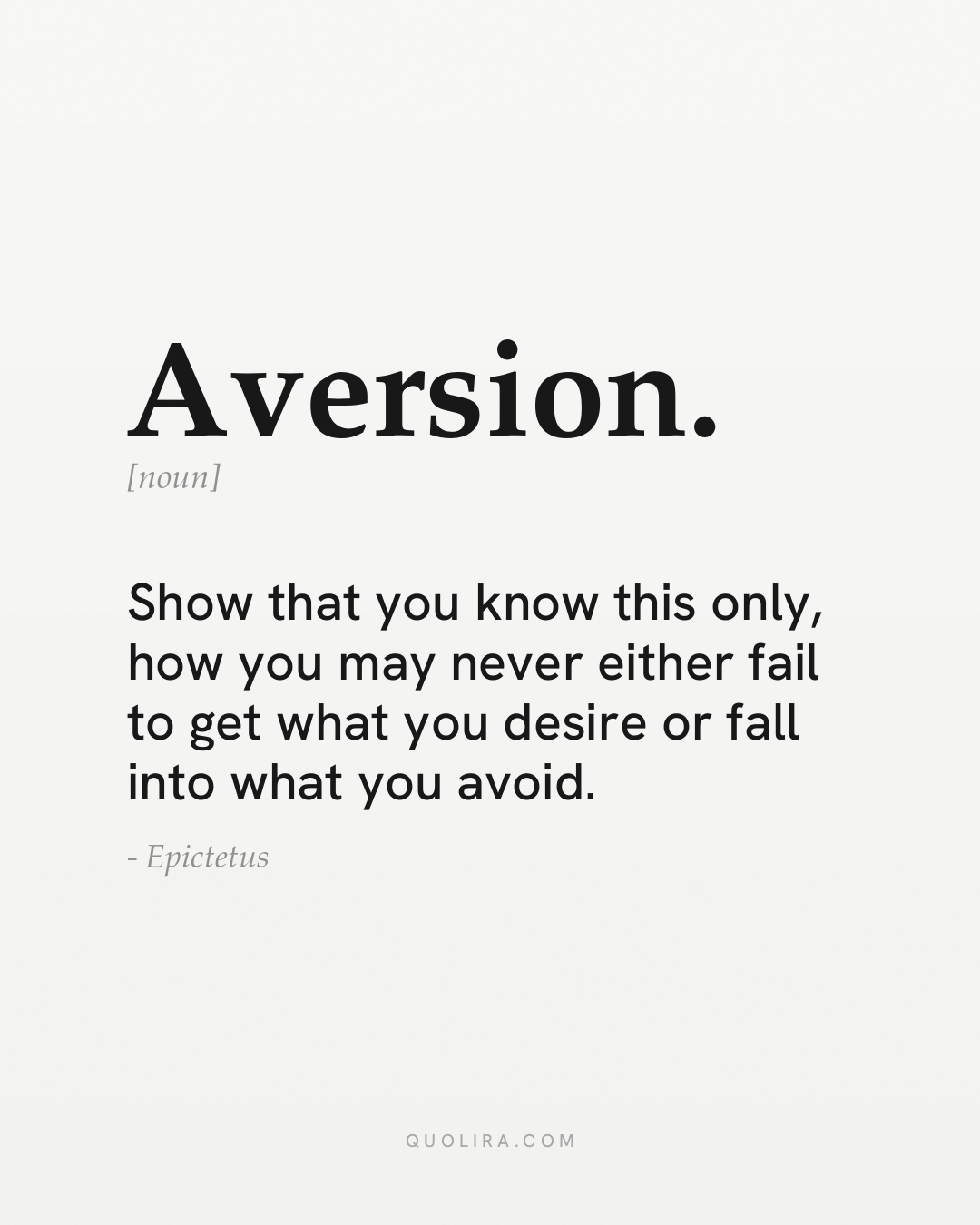
The quote means that a wise person's aim is to learn the one thing that keeps them from both disappointment in wanting and harm in avoiding. Epictetus is describing a kind of knowledge that frees a person from being ruled by desire and aversion. When you understand where your real good lies, you stop depending on whether external events give you what you crave or spare you what you dread.
This passage appears in the Discourses, the collection of lectures Arrian recorded from Epictetus's classroom teaching. Book II, chapter 1 belongs to a sequence of discussions about how a student should direct attention and effort. Epictetus repeatedly argues that desire and aversion should be aimed only at things within our power, namely our judgments and actions. The sentence presents this as the lesson a teacher wants the student to show, through conduct, that they have actually absorbed.
Epictetus was a Stoic philosopher who lived in the late first and early second centuries CE. He was born into slavery, was later freed, and taught philosophy in Rome before moving to Nicopolis in western Greece, where he founded a school. He wrote nothing himself that survives. His spoken teaching was recorded by his student Arrian, whose notes became the Discourses and the shorter Enchiridion. Central to his thought is the distinction between what depends on us and what does not, and the conviction that peace of mind comes from aligning our wants with that distinction.
“Let whatever appears to be the best be to you an inviolable law.”
Epictetus · Enchiridion, sections 50-51
“Everything has two handles, the one by which it may be carried, the other by which it cannot.”
Epictetus · Enchiridion, section 43
“Don't you know that a good and excellent person does nothing for the sake of appearances, but only for the sake of having acted right?”
Epictetus · Discourses, Book III, chapter 24
“Reason is not measured by size or height, but by principle.”
Epictetus · Discourses, Book I, chapter 12
“No thing great is created suddenly, any more than a bunch of grapes or a fig.”
Epictetus · Discourses, Book I, chapter 15
“Practice yourself, for heaven's sake, in little things; and thence proceed to greater.”
Epictetus · Discourses, Book I, chapter 18
“If you would be a good reader, read; if a writer, write.”
Epictetus · Discourses, Book II, chapter 18
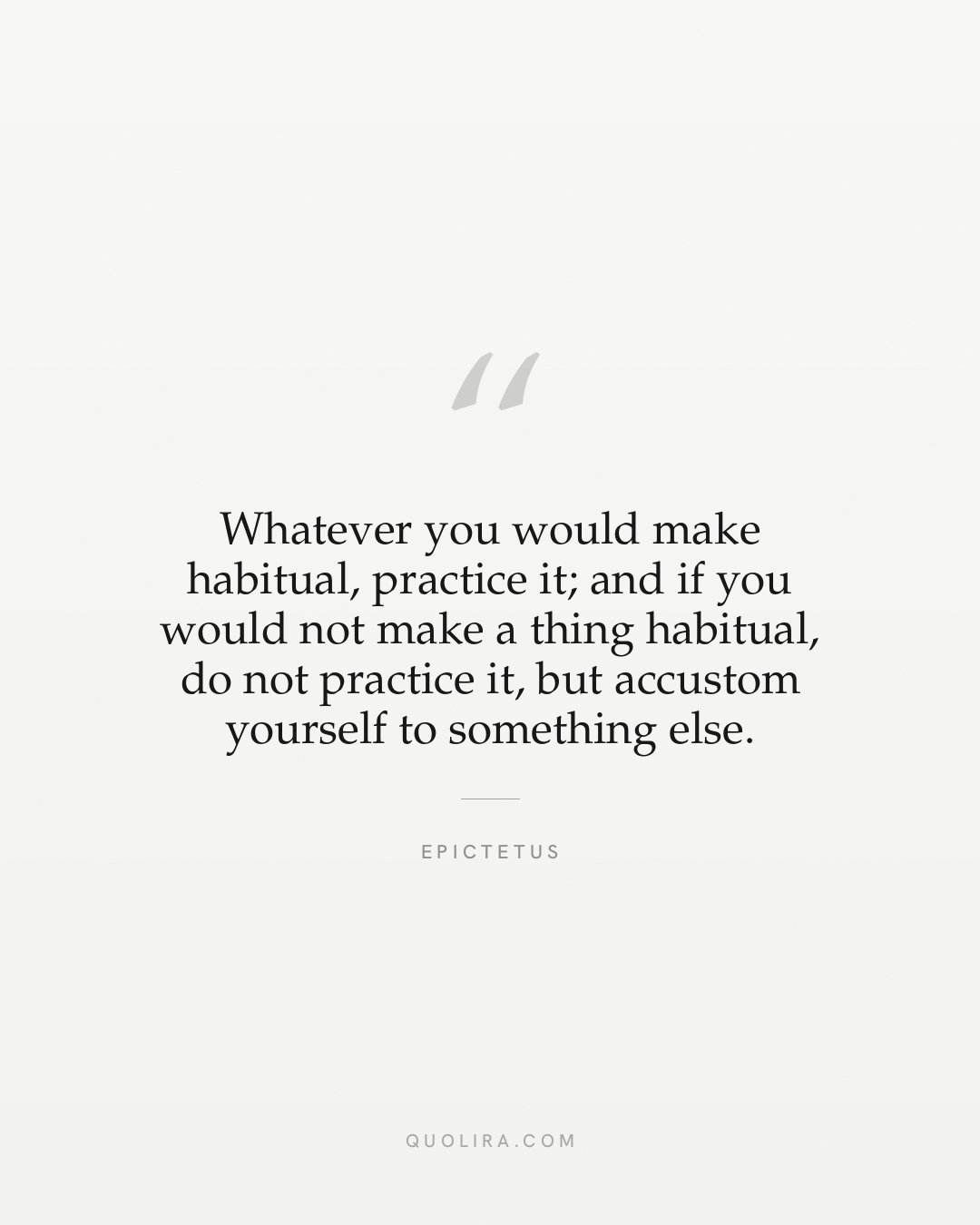
“Whatever you would make habitual, practice it; and if you would not make a thing habitual, do not practice it, but accustom yourself to something else.”
Epictetus · Discourses, Book II, chapter 18
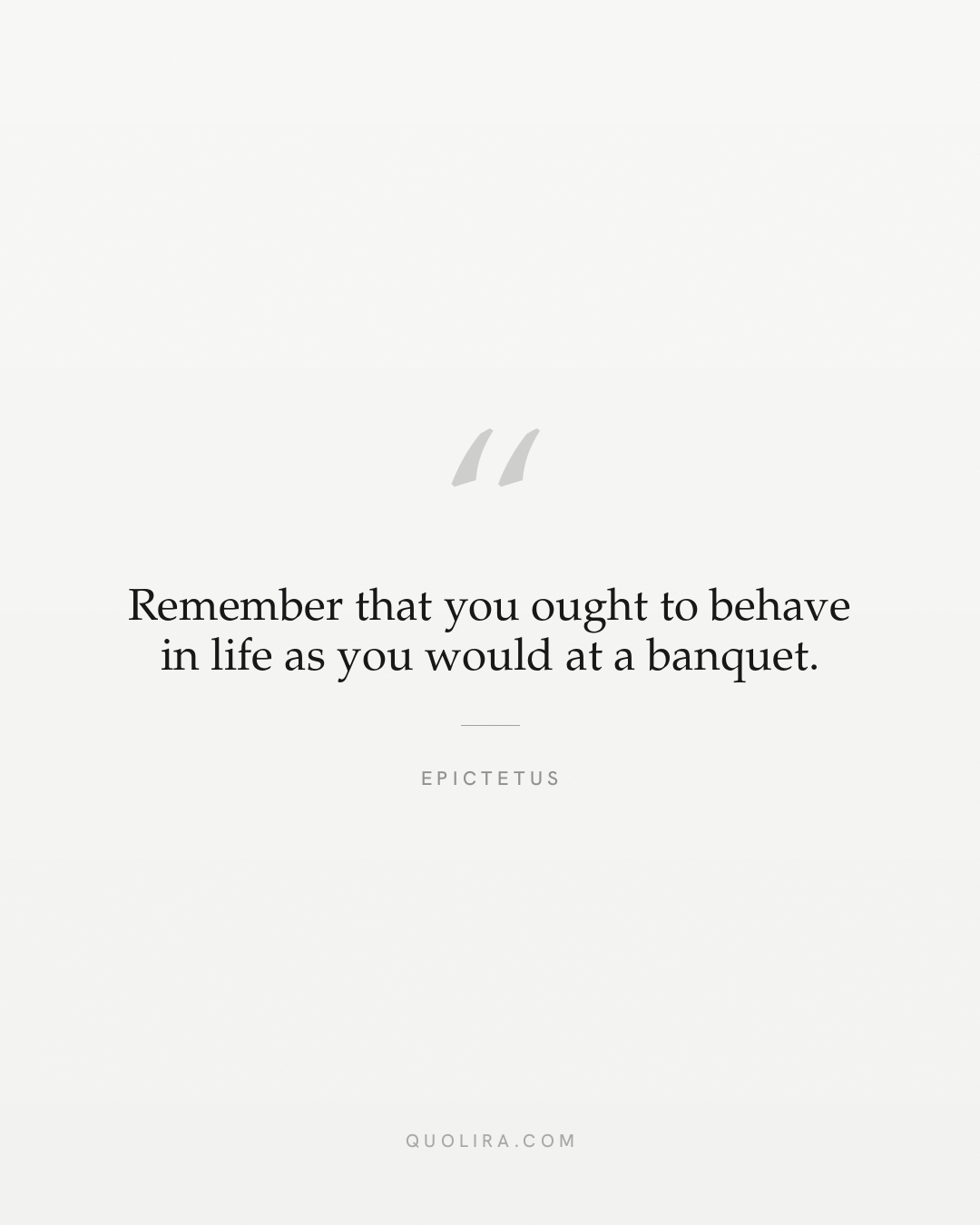
“Remember that you ought to behave in life as you would at a banquet.”
Epictetus · Enchiridion, section 15
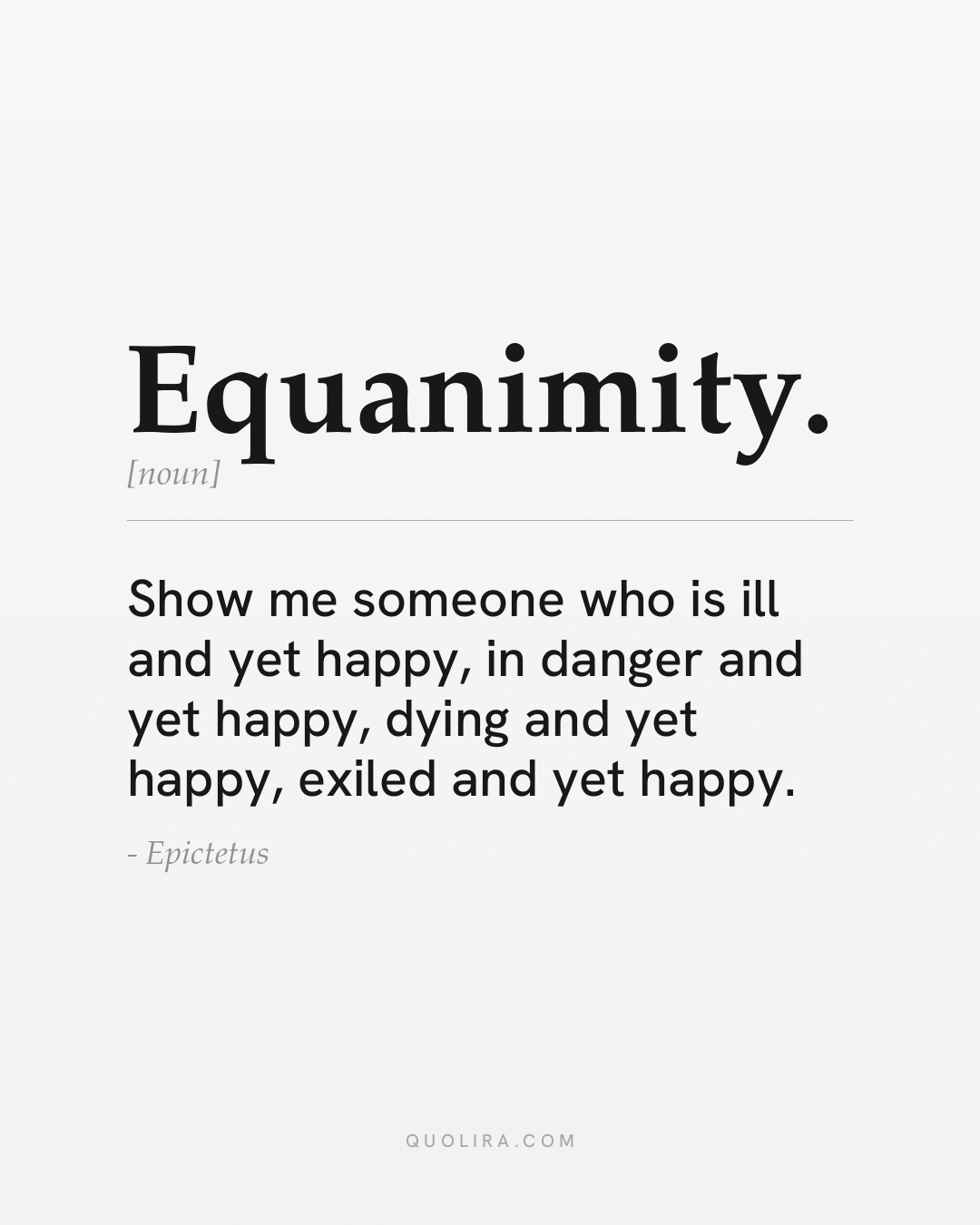
“Show me someone who is ill and yet happy, in danger and yet happy, dying and yet happy, exiled and yet happy.”
Epictetus · Discourses, Book II, chapter 19
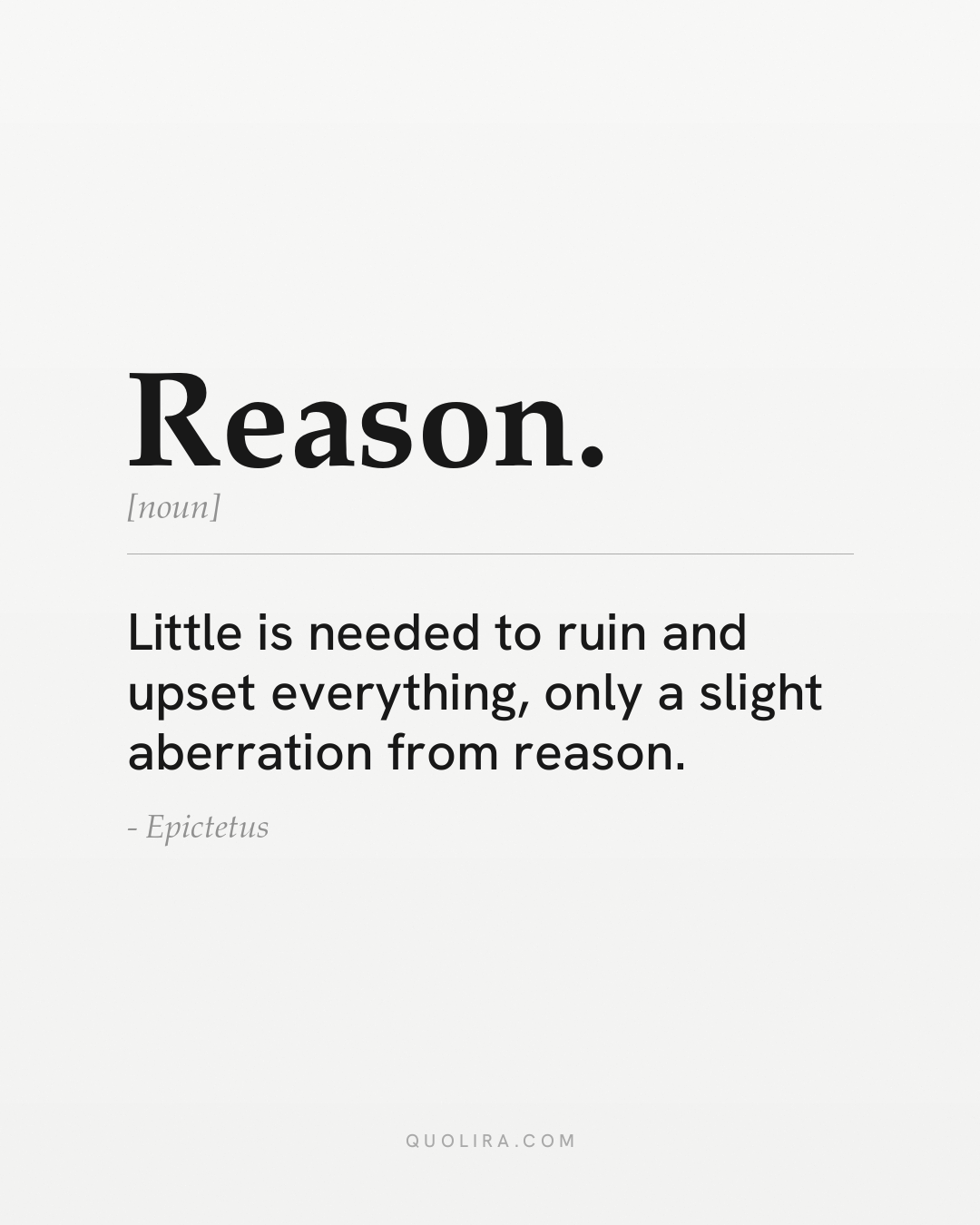
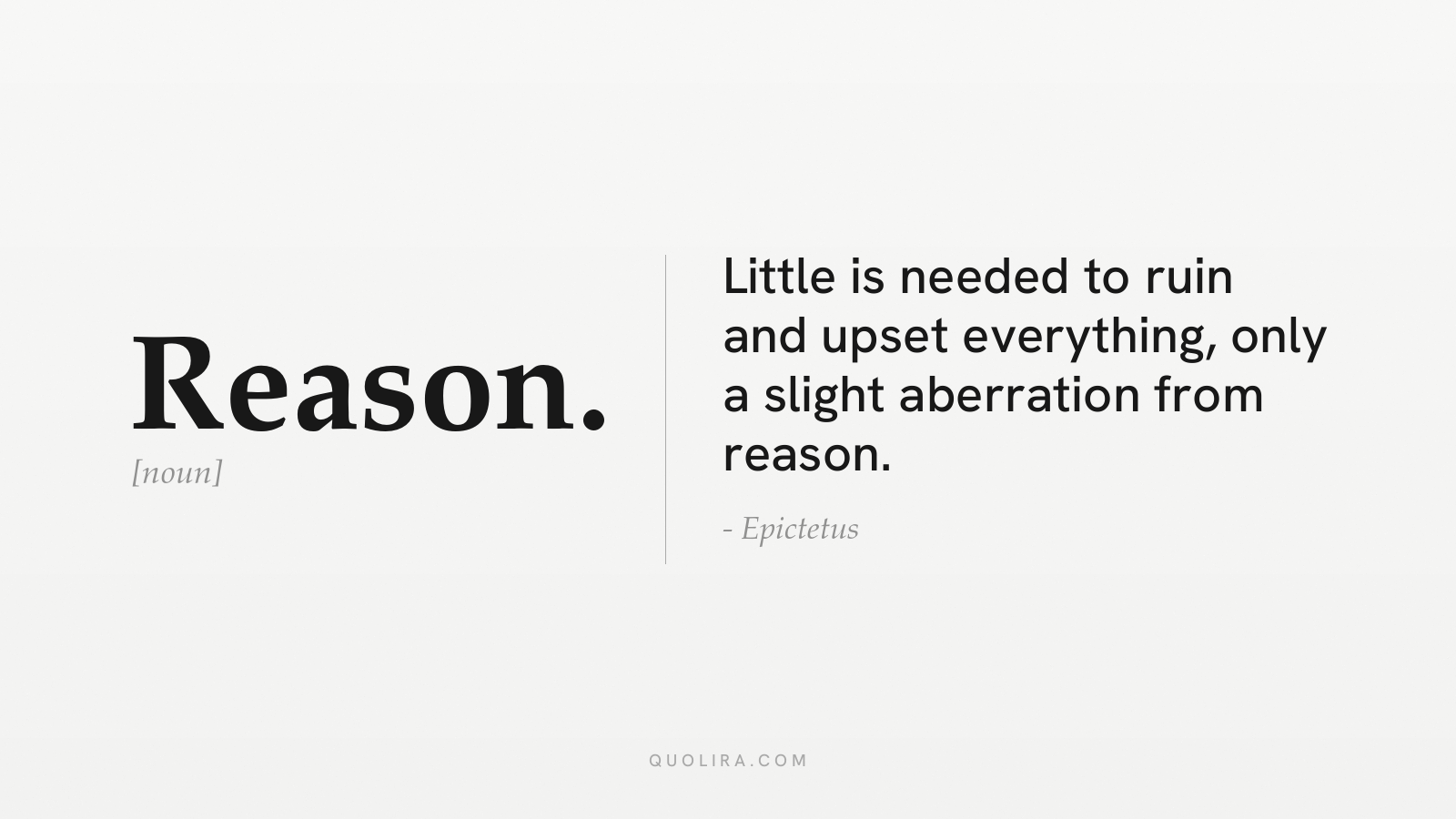
“Little is needed to ruin and upset everything, only a slight aberration from reason.”
Epictetus · Discourses, Book IV, chapter 3
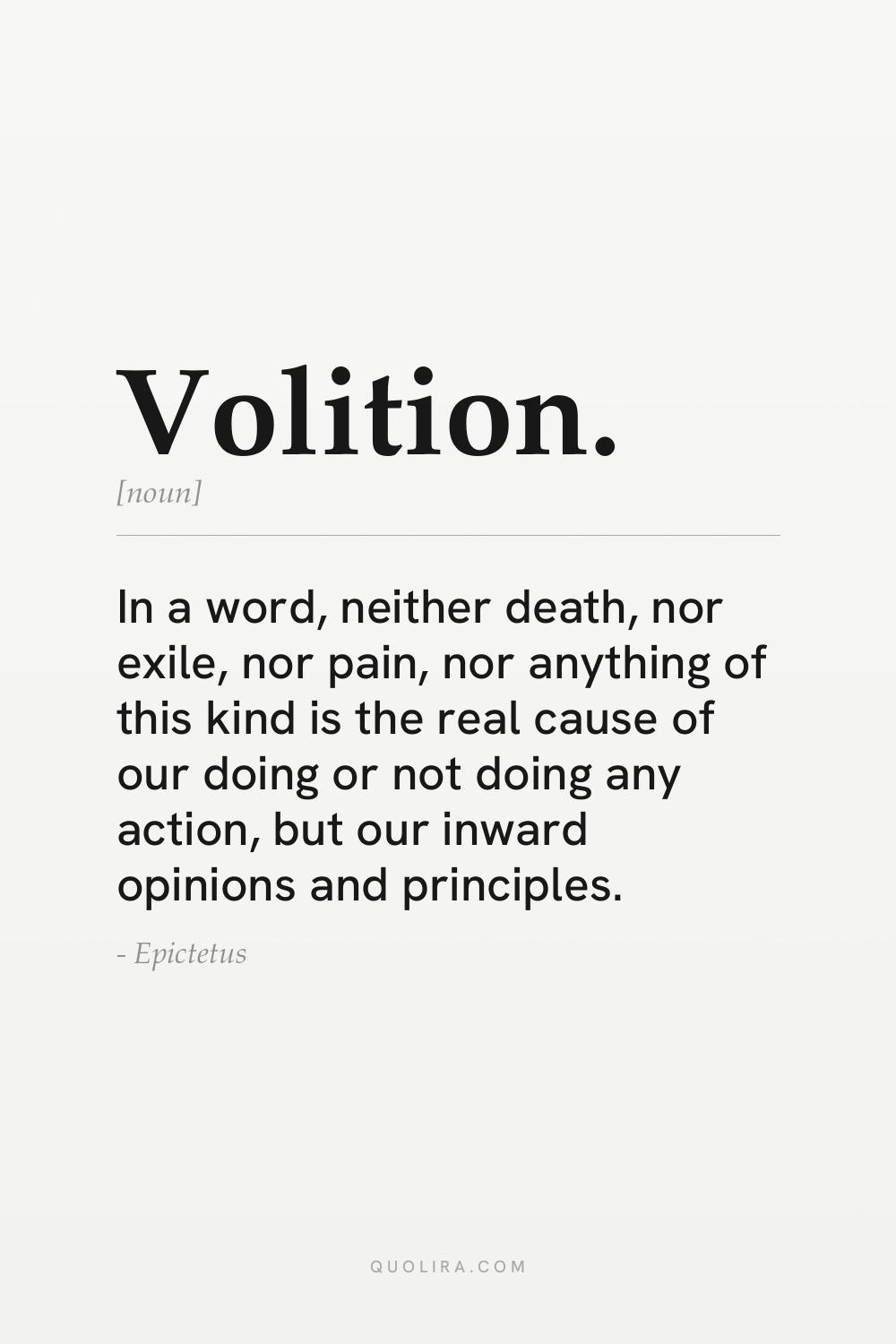
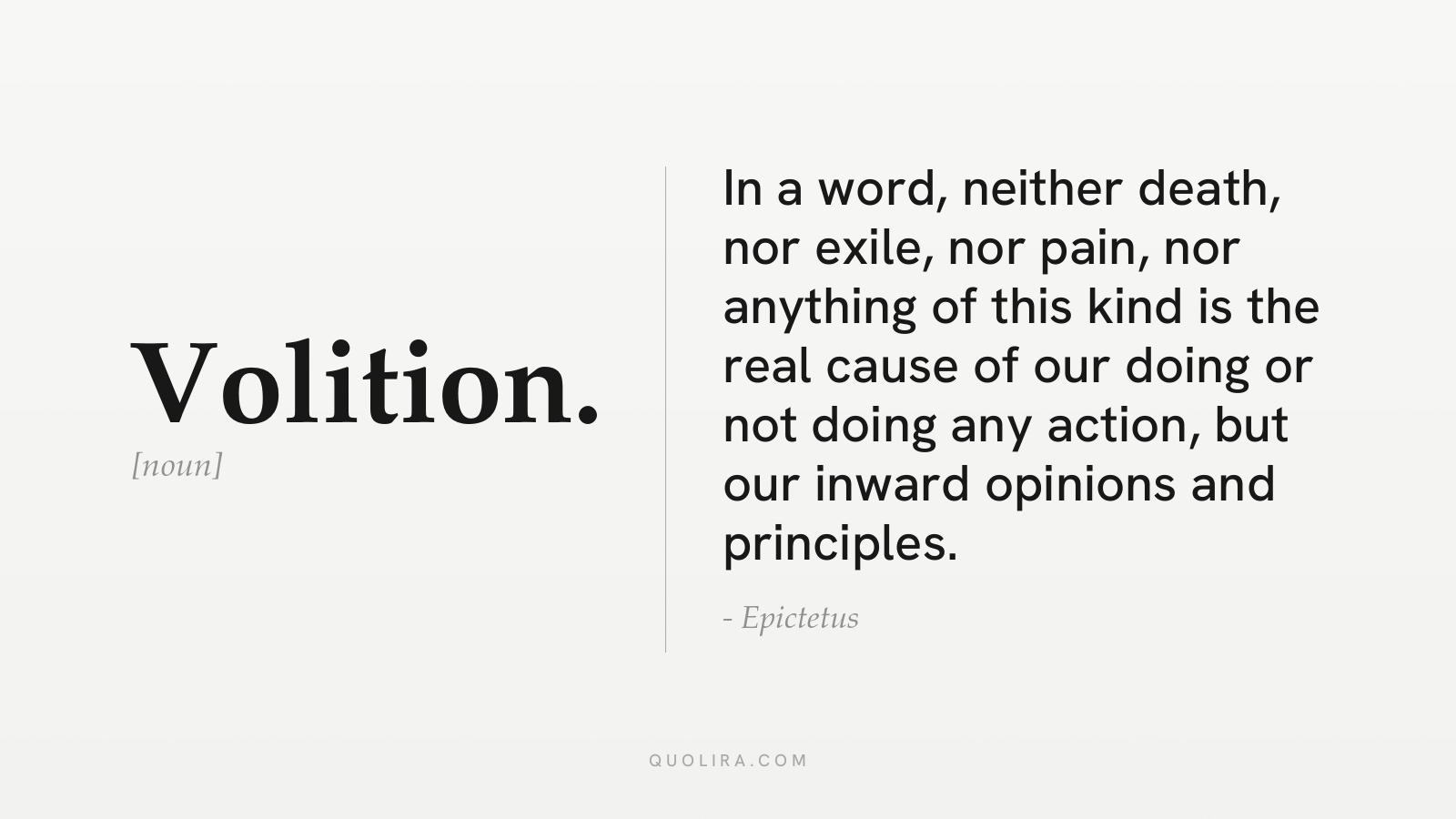
“In a word, neither death, nor exile, nor pain, nor anything of this kind is the real cause of our doing or not doing any action, but our inward opinions and principles.”
Epictetus · Discourses, Book I, chapter 11