Kintsugi - The Gold in the Cracks
What a 500-year-old Japanese repair method teaches us about carrying our damage with dignity.
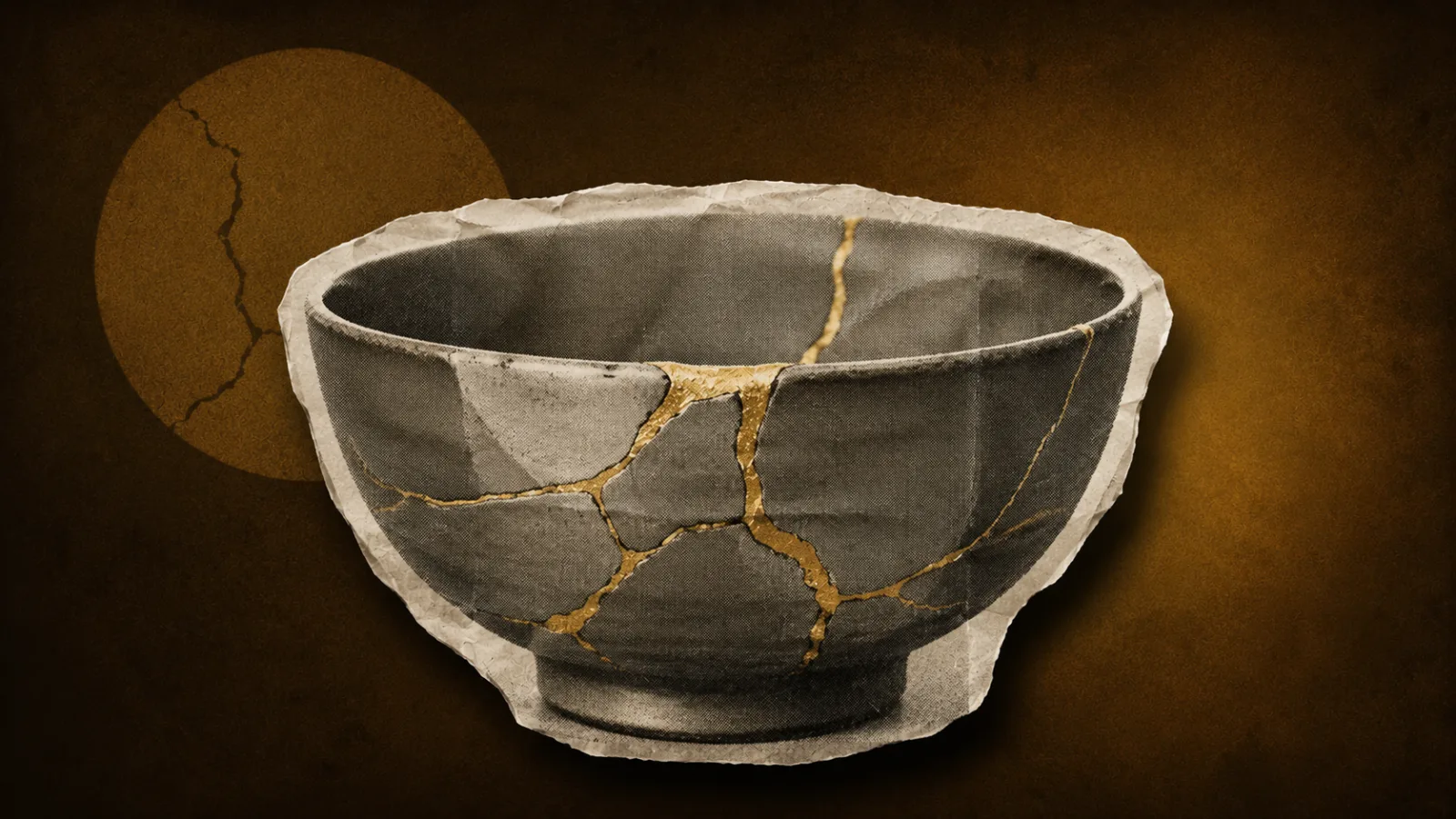
Kintsugi, the Japanese art of repairing broken pottery with gold, starts from a single, stubborn idea: the break is part of the object's story. A cracked bowl repaired this way doesn't hide what happened to it. It wears the damage as gilded scars, which makes it more interesting than it ever was whole. There's something in that worth sitting with, especially if you've spent any time trying to sand down your own rough edges.
The break is part of the object's story. Making it invisible doesn't heal it. It just makes you carry it alone.
What kintsugi actually is
Somewhere around the late 1400s in Japan, a broken tea bowl came back from repair with its cracks filled in gold. The story goes that a shogun sent a damaged bowl to China for fixing and received it back held together with crude metal staples. His craftsmen tried something else: they used urushi lacquer mixed with gold dust to seal the breaks, making them visible on purpose.
The result looked better than the original. And that apparently surprised nobody in a culture already oriented toward wabi-sabi, the idea that things worn, aged, and imperfect carry more meaning than things pristine.
Kintsugi (the word means roughly "golden joinery") became a practice. A philosophy, eventually. A whole way of deciding what to do with something after it breaks.
The repair is the point
Kintsugi: The Japanese Art of Repairing with Gold
Most repair work tries to disappear. You fill the scratch, paint over the chip, hide the seam. The goal is to return the object to a state where nobody can tell anything happened.
Kintsugi does the opposite. It takes the break and makes it the most visible thing about the object. The gold lines don't blend in. They announce themselves. This bowl was shattered here, and here, and here. Then it was put back together. Here's the proof.
There's no pretending. The object carries its full history.
"The wound is the place where the Light enters you." (Rumi, 13th-century Persian poet)
That idea, that the damage is where something gets in, maps cleanly onto what kintsugi is doing physically. The cracks aren't sealed away. They're opened up, filled with something precious, and shown.
Kintsugi Repair Kit
What this has to do with you
It's easy to read kintsugi as a metaphor and leave it at that. But the practice pushes harder than most metaphors do.
A kintsugi bowl is worth more after repair than before the break. That's not a comforting story someone made up. That's what collectors actually believe, and what the market actually reflects. The repaired bowl is rarer. More specific. It has a particular history that an unbroken bowl doesn't have.
Apply that logic to a person and it gets uncomfortable fast. We spend a lot of energy trying to get back to some earlier, unbroken version of ourselves. Before the loss. Before the failure. Before the thing we can't talk about at dinner.
But that version is gone. And honestly, the repaired version is more interesting.
Wabi-Sabi for Artists, Designers, Poets and Philosophers by Leonard Koren
Kintsugi gold repair as a daily practice
You don't need a kiln or a lacquer set to use this idea. The practice is really about how you narrate your own damage.
Do you treat your history as something to explain away, or as something that made you more specifically yourself? There's a version of you that hides the cracks, keeps the conversation surface-level, presents the unbroken face. It's exhausting. And it produces a generic result: a person with no visible seams who somehow feels hollow.
The gold-filled version is harder to look at, and harder to forget.
The 500-year-old insight is simple: the break happened. Hiding it costs you something. Filling it with gold costs you something too, but what you get back is real.
Some things are worth more after they've been broken. The repair is the evidence that they were worth saving.
Your cracks aren't a liability. They're the record of everything you've survived. Let them show.
Frequently asked questions
What is kintsugi and where does it come from?
What does kintsugi mean as a philosophy?
How is kintsugi related to wabi-sabi?
Can you practice kintsugi at home?
Keep reading
25 Deep, Meaningful Quotes That Make You Stop and Think
Words from history's sharpest minds that cut straight to what matters.
17 Sad Quotes That Sit With You Long After You Read Them
Words that don't try to fix the ache, just name it honestly.
There are no right decisions
Every decision you make reshapes what comes next, and that's the whole point.