“The whole future lies in uncertainty: live immediately.”
Seneca · On the Shortness of Life
 quolira
.com
quolira
quolira.com
Seneca is making a precise and useful distinction here. There is suffering that arrives when difficulty actually strikes, and then there is the suffering a person inflicts on themselves by dreading what may never come. His point is that anticipatory anxiety is its own burden, one added on top of any real trouble rather than being part of it. Worrying in advance does not prepare you; it simply means you suffer twice, or more, for something that may not happen at all.
This observation comes from Seneca's Letters to Lucilius, the extensive collection of philosophical letters he wrote late in his life. Throughout the letters he addresses the habits of mind that cause unnecessary pain, and the fear of future misfortune is one he returns to repeatedly. The Stoics were deeply interested in distinguishing between what is in our control and what is not, and anticipatory suffering falls squarely into the category of something self-generated and therefore within our power to reduce.
Seneca the Younger was one of the most prominent Roman Stoic philosophers of the first century. Alongside his philosophical writing he was a playwright and a political figure who served in Nero's court. His Letters to Lucilius are especially admired because they read as genuine, personal reflections rather than formal treatises. He wrote with urgency and warmth, and his advice on managing anxiety and fear feels remarkably direct and relevant to modern readers.
“The whole future lies in uncertainty: live immediately.”
Seneca · On the Shortness of Life
“A gem cannot be polished without friction, nor a man perfected without trials.”
Seneca · Attributed, moral essays
“No man was ever wise by chance.”
Seneca · Letters to Lucilius, Letter 76
“As long as you live, keep learning how to live.”
Seneca · On the Shortness of Life
“It is a great thing to know the season for speech and the season for silence.”
Seneca · Moral essays
“We suffer more often in imagination than in reality.”
Seneca · Letters to Lucilius
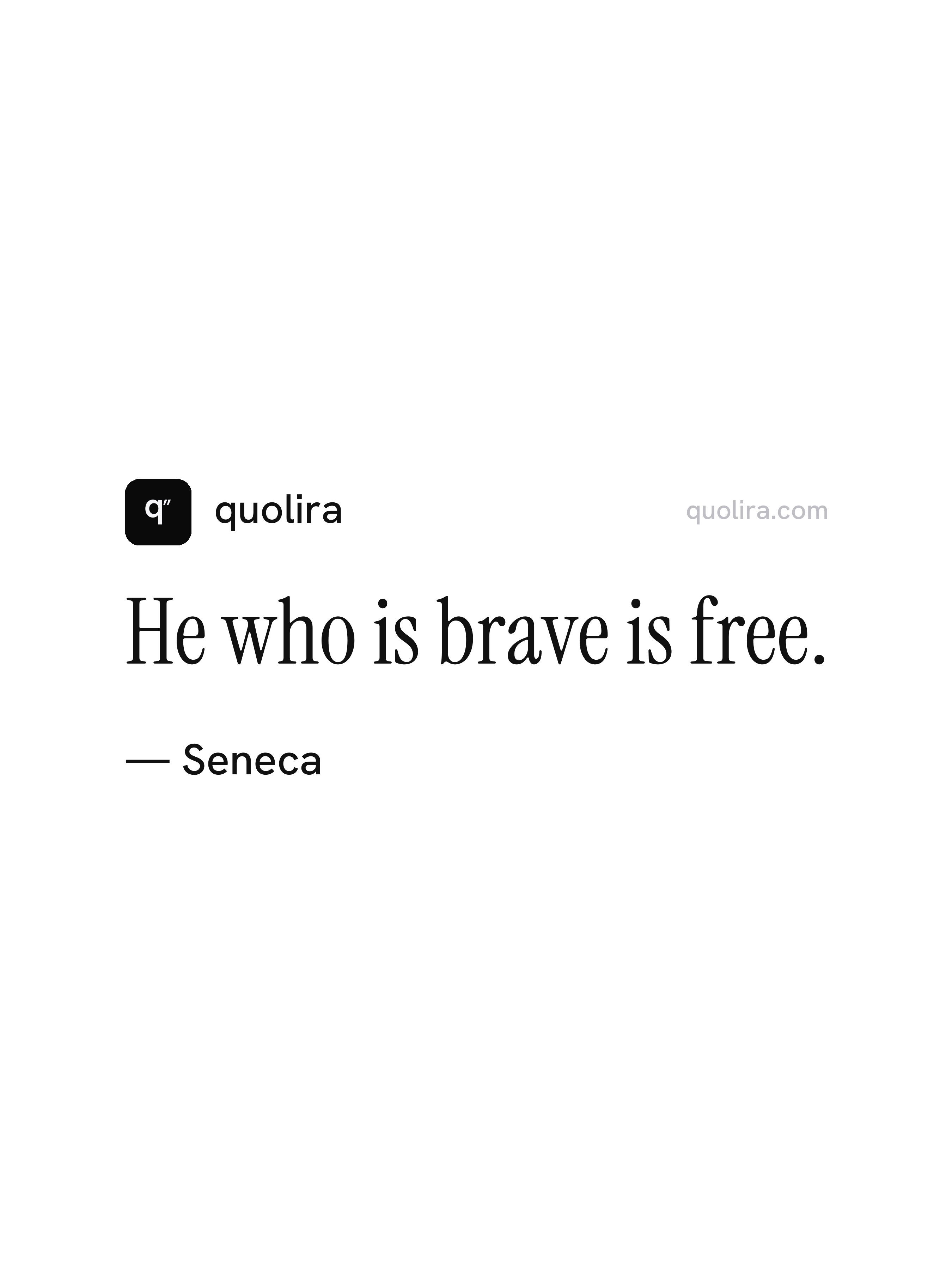
“He who is brave is free.”
Seneca · Letters to Lucilius
“Retire into yourself as much as you can. Associate with those who will make a better man of you.”
Seneca · Letters to Lucilius, Letter 7
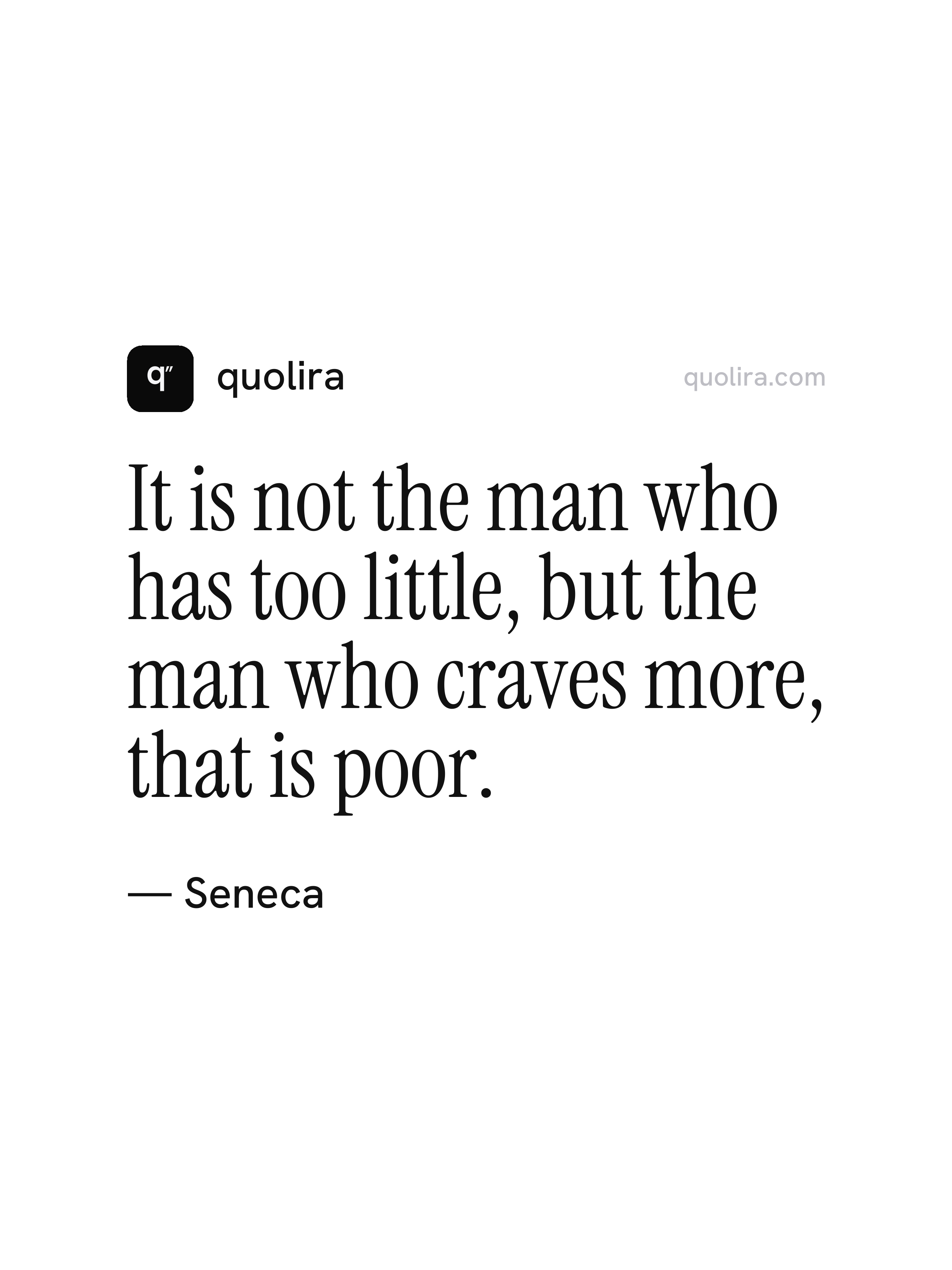
“It is not the man who has too little, but the man who craves more, that is poor.”
Seneca · Letters to Lucilius, Letter 2
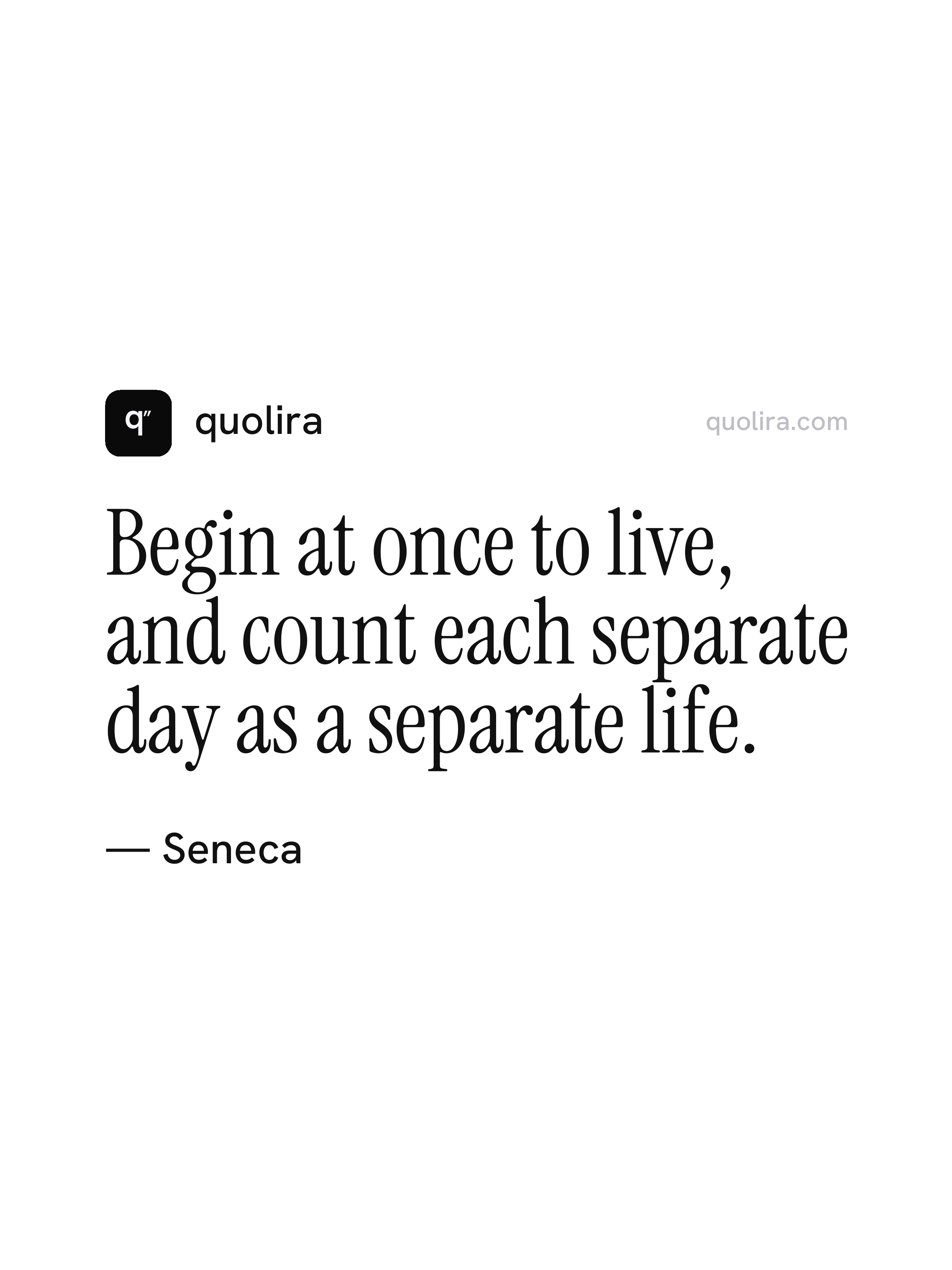
“Begin at once to live, and count each separate day as a separate life.”
Seneca · Letters to Lucilius
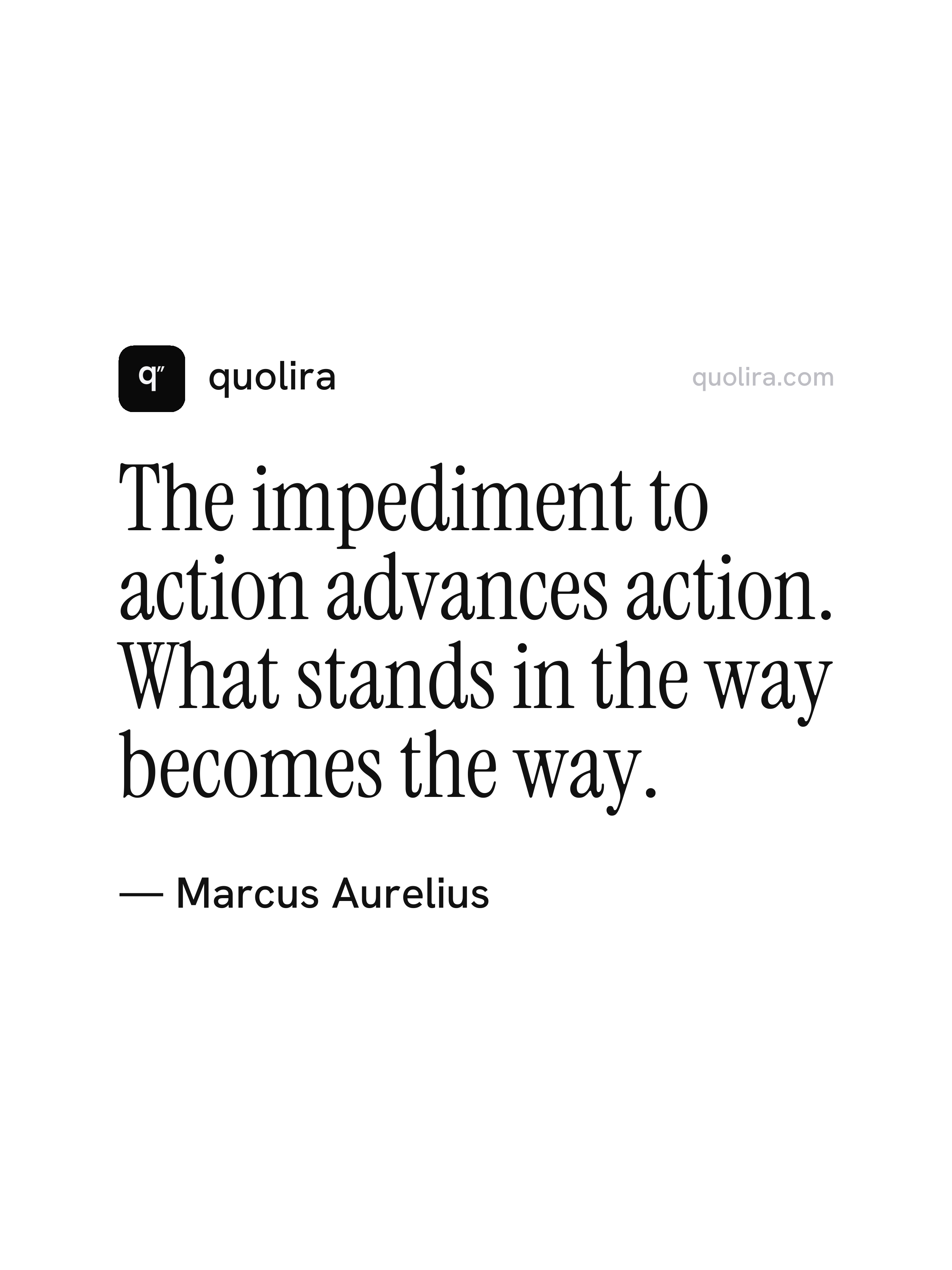
“The impediment to action advances action. What stands in the way becomes the way.”
Marcus Aurelius · Meditations
“He who fears death will never do anything worthy of a man who is alive.”
Seneca · Letters to Lucilius