16 Independence Day Quotes That Make You Feel the Weight of Freedom
Words from the people who fought for it, led it, and lived inside its promise.
The best independence day quotes don't just celebrate a date on the calendar. They sit with what freedom actually costs and what it demands of the people who inherit it. From Thomas Jefferson drafting the Declaration in 1776 to Frederick Douglass asking hard questions about who that freedom included, these quotes carry real weight. Read them slowly. Some of them still sting.
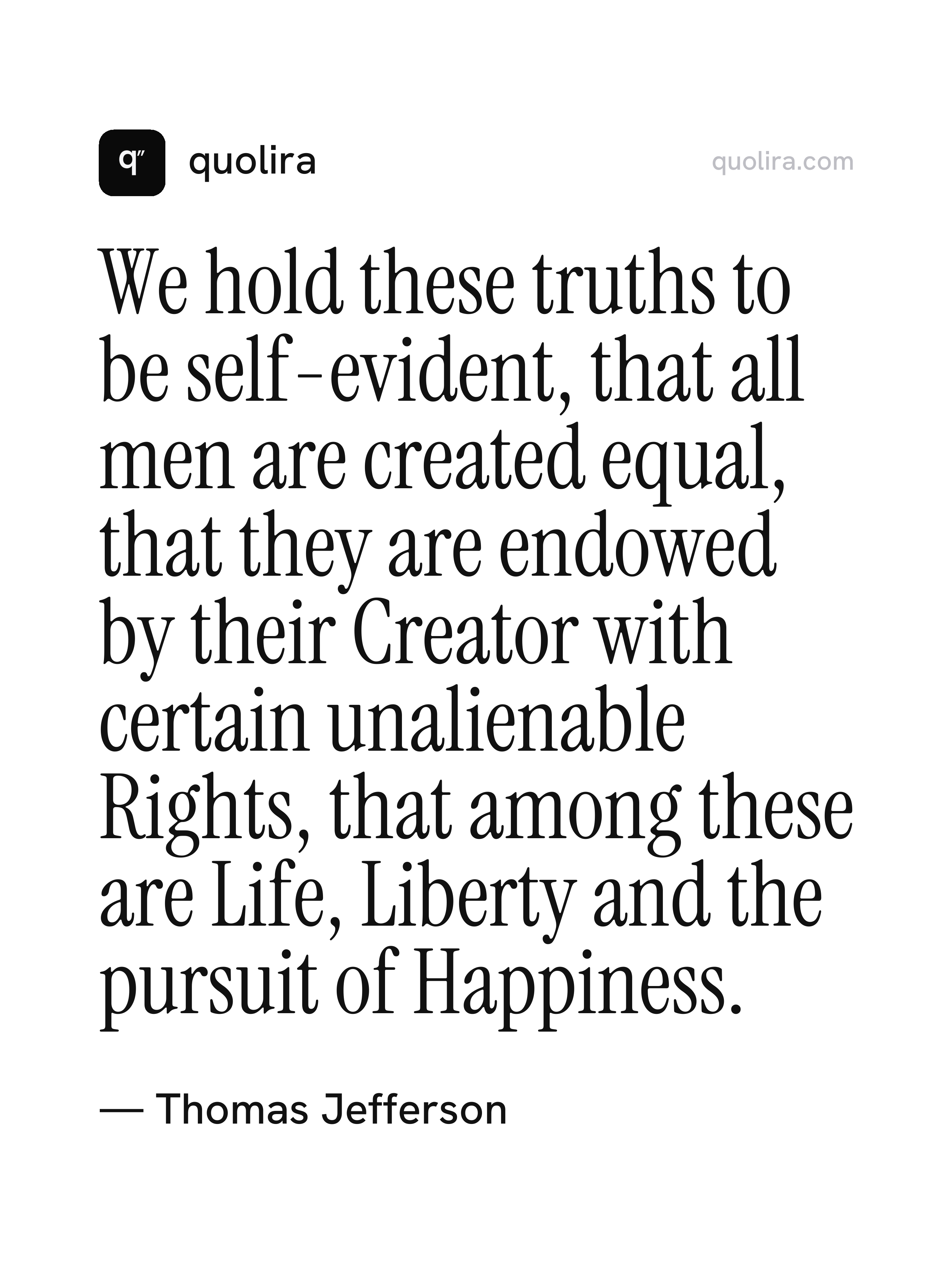
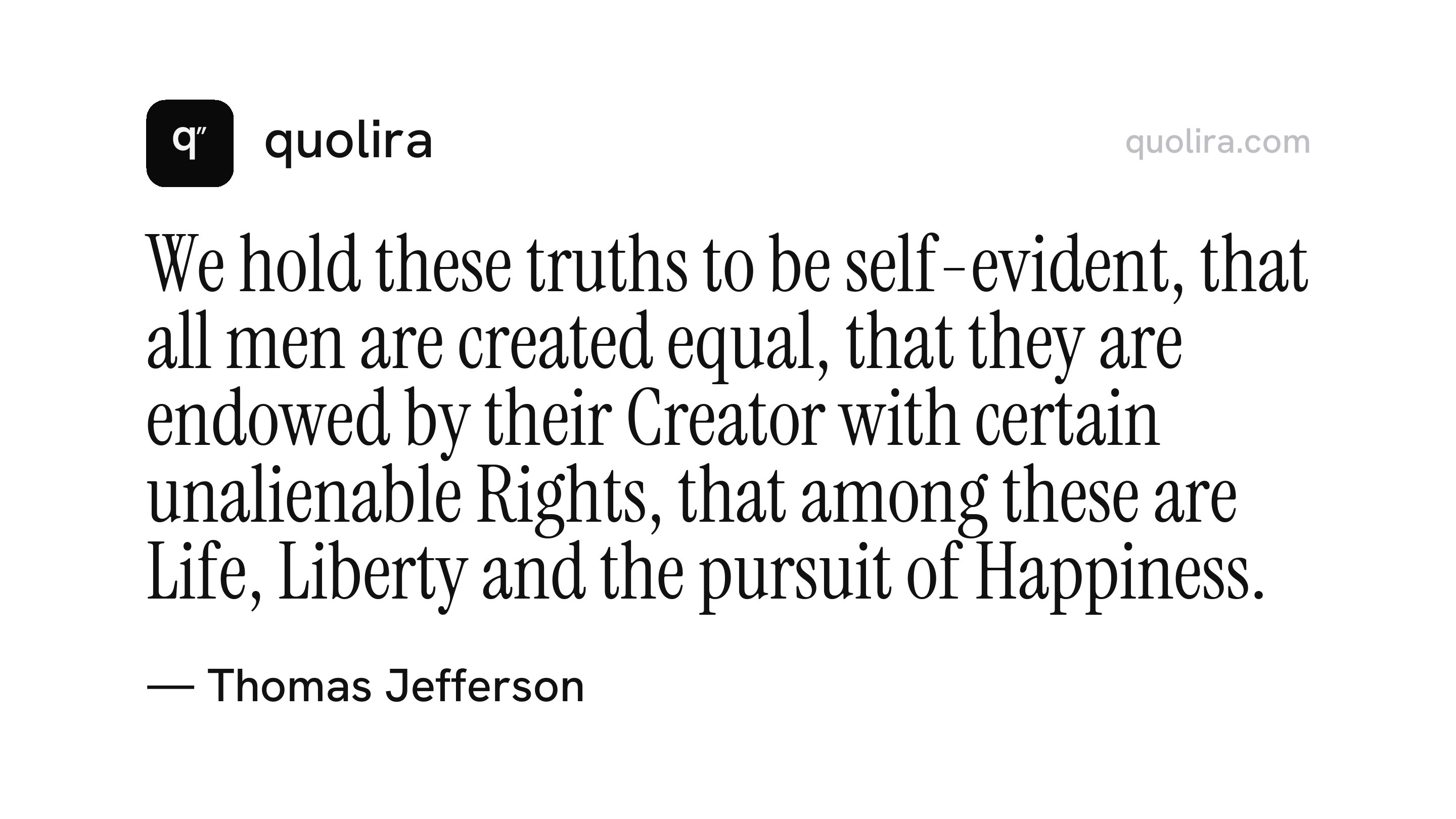
We hold these truths to be self-evident, that all men are created equal, that they are endowed by their Creator with certain unalienable Rights, that among these are Life, Liberty and the pursuit of Happiness.
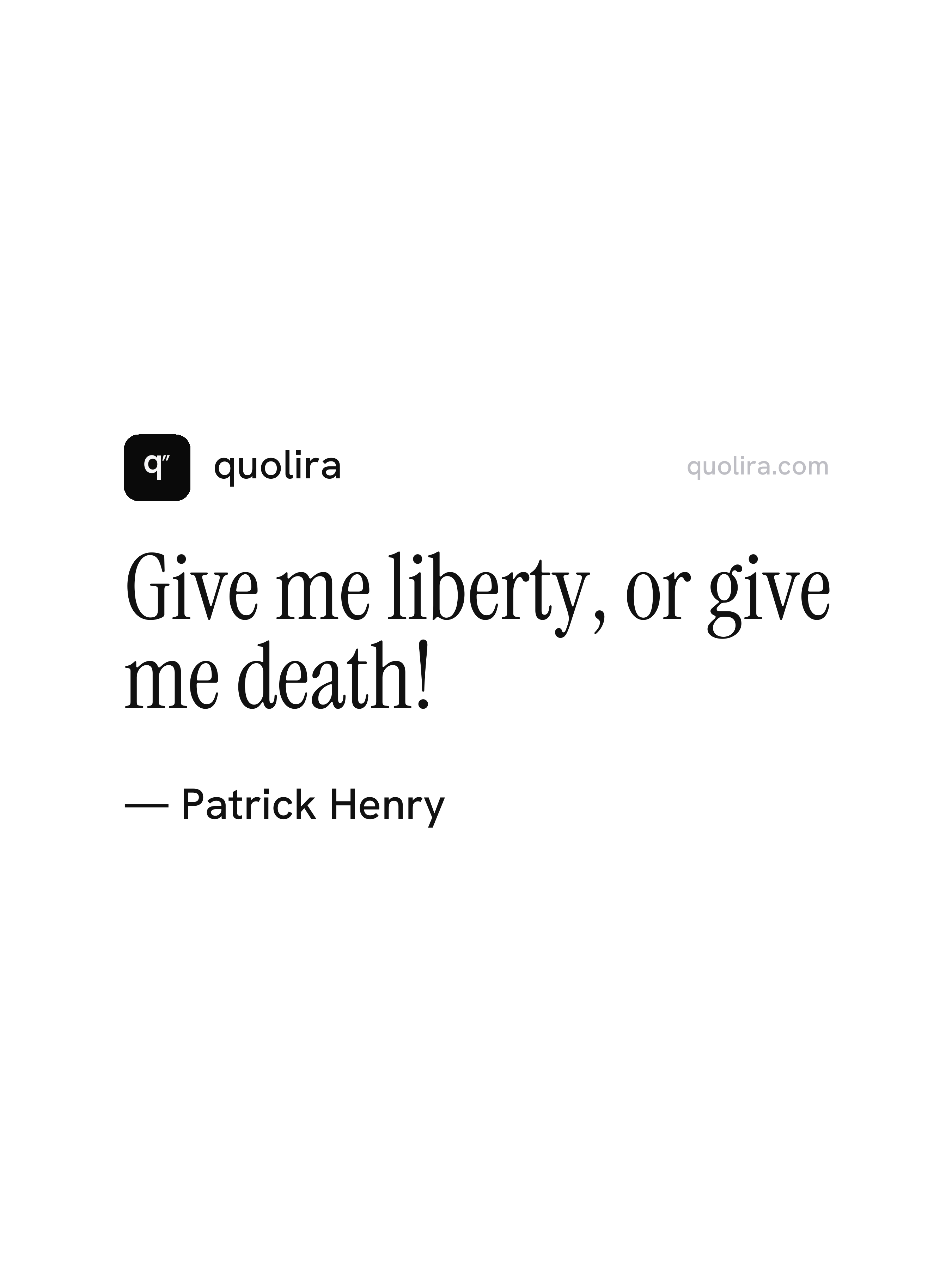
Give me liberty, or give me death!
Patrick Henry Speech to the Virginia Convention, March 23, 1775
Henry said this roughly 14 months before the Declaration was signed, while independence was still an idea rather than a fact. The urgency was real. So was the risk.
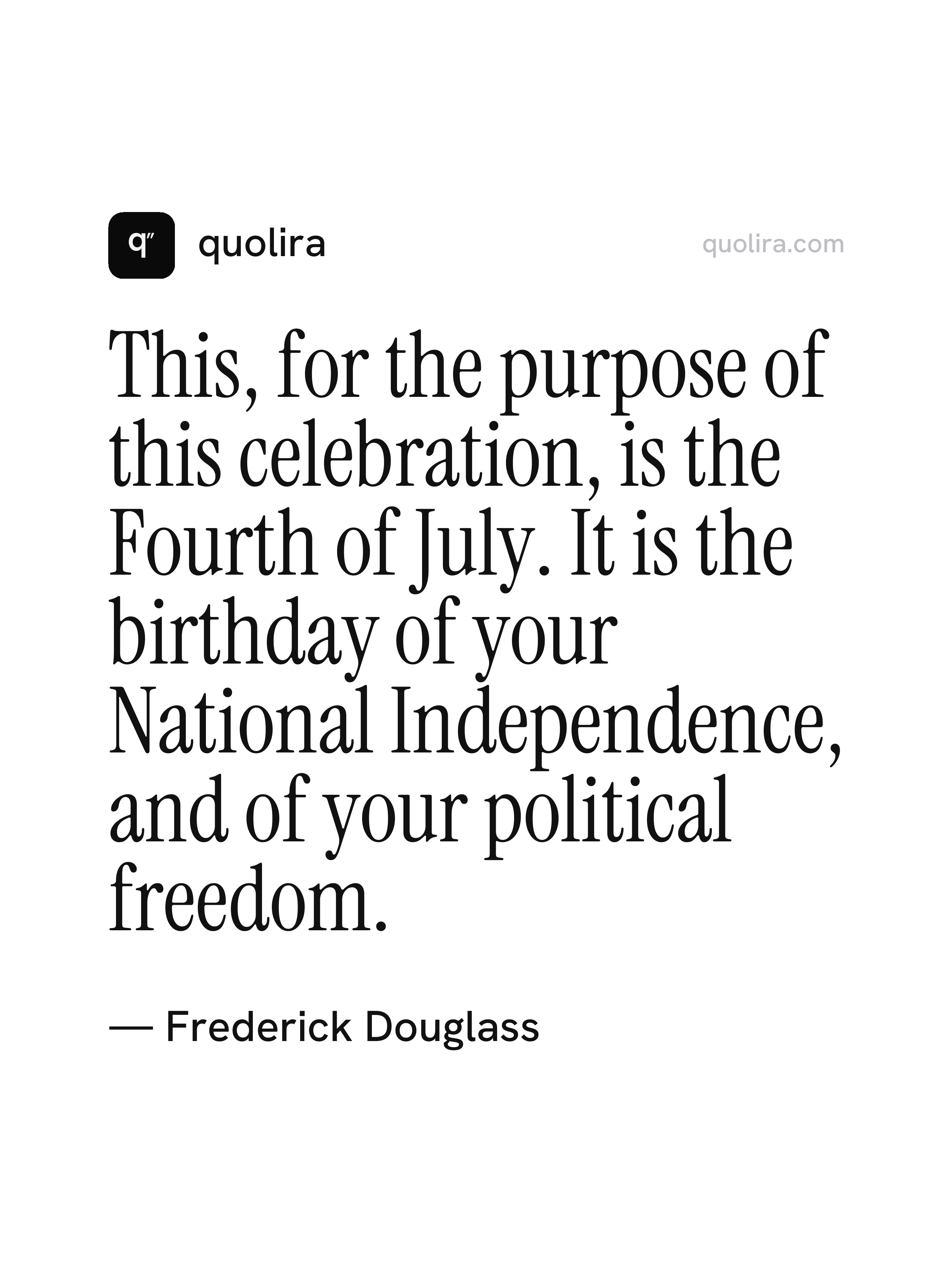
This, for the purpose of this celebration, is the Fourth of July. It is the birthday of your National Independence, and of your political freedom.
Frederick Douglass What to the Slave Is the Fourth of July?, July 5, 1852
Douglass delivered this speech one day after the Fourth, and that choice of date was intentional. He was speaking to an America that had not yet made good on its own founding documents.
Four score and seven years ago our fathers brought forth on this continent, a new nation, conceived in Liberty, and dedicated to the proposition that all men are created equal.
Abraham Lincoln Gettysburg Address, November 19, 1863
Lincoln opened with arithmetic: 87 years back to 1776. He was reminding a fractured nation at Gettysburg that the Civil War was a test of whether that original founding could survive.
Narrative of the Life of Frederick Douglass
Those who deny freedom to others deserve it not for themselves.
Abraham Lincoln Letter to Henry L. Pierce, April 6, 1859
Lincoln wrote this in a private letter, not a speech. The simplicity of it is what gives it force. He meant every word literally.
The advancement and diffusion of knowledge is the only guardian of true liberty.
James Madison Letter to George Thompson, June 30, 1825
Madison helped write the Constitution and spent a great deal of his life thinking about what could destroy it. His answer, consistently, was ignorance.
Freedom is never more than one generation away from extinction. We didn't pass it to our children in the bloodstream. It must be fought for, protected, and handed on for them to do the same.
Ronald Reagan Address to the Annual Meeting of the Phoenix Chamber of Commerce, March 30, 1961
Reagan repeated versions of this line across decades of political life. It is one of his most enduring observations, and it carries a quiet anxiety that his more celebratory speeches sometimes missed.
America was not built on fear. America was built on courage, on imagination, and an unbeatable determination to do the job at hand.
Harry S. Truman Special Message to the Congress on the State of the Union, January 8, 1947
Truman said this two years after the end of World War II, when the country was deciding what kind of nation it wanted to be next. The answer he gave was practical and direct, which was very much him.
The Declaration of Independence and the Constitution of the United States
We must be free not because we claim freedom, but because we practice it.
William Faulkner Essay "On Fear: Deep South in Labor," Harper's Magazine, June 1956
Faulkner wrote this in the middle of the civil rights era, and it reads as both a challenge and a confession. Claiming something is the easy part.
In the truest sense, freedom cannot be bestowed; it must be achieved.
Franklin D. Roosevelt Speech on the Seventy-Fourth Anniversary of the Emancipation Proclamation, September 22, 1936
Roosevelt gave this speech during the Great Depression, when the meaning of freedom was being tested in economic terms as much as political ones. He understood the difference between being told you are free and actually being free.
For what avail the plough or sail, or land or life, if freedom fail?
Ralph Waldo Emerson "Boston," poem, 1830s
Emerson strips every other ambition down to zero without freedom underneath it. Everything else, the crops, the trade, the land itself, is conditional.
My God! How little do my countrymen know what precious blessings they are in possession of, and which no other people on earth enjoy!
Thomas Jefferson Letter to James Monroe, June 17, 1785
Jefferson wrote this from Paris, watching European society up close. Distance from home has a way of clarifying what home actually is.
Team of Rivals: The Political Genius of Abraham Lincoln by Doris Kearns Goodwin
Liberty means responsibility. That is why most men dread it.
George Bernard Shaw Maxims for Revolutionists, 1903
Shaw wrote this with his usual compressed irony. It is funny until you sit with it, and then it is just true.
I prefer liberty with danger to peace with slavery.
Jean-Jacques Rousseau The Social Contract, 1762
Rousseau published this 14 years before the Declaration of Independence, and the American founders read him. The preference he names here is exactly what the Revolution eventually wagered everything on.
The cost of liberty is less than the price of repression.
W.E.B. Du Bois John Brown, 1909
Du Bois wrote this biography of abolitionist John Brown and used it to argue that America was still paying, in blood and moral damage, for choosing repression over freedom. The arithmetic, he insisted, never worked out in favor of oppression.
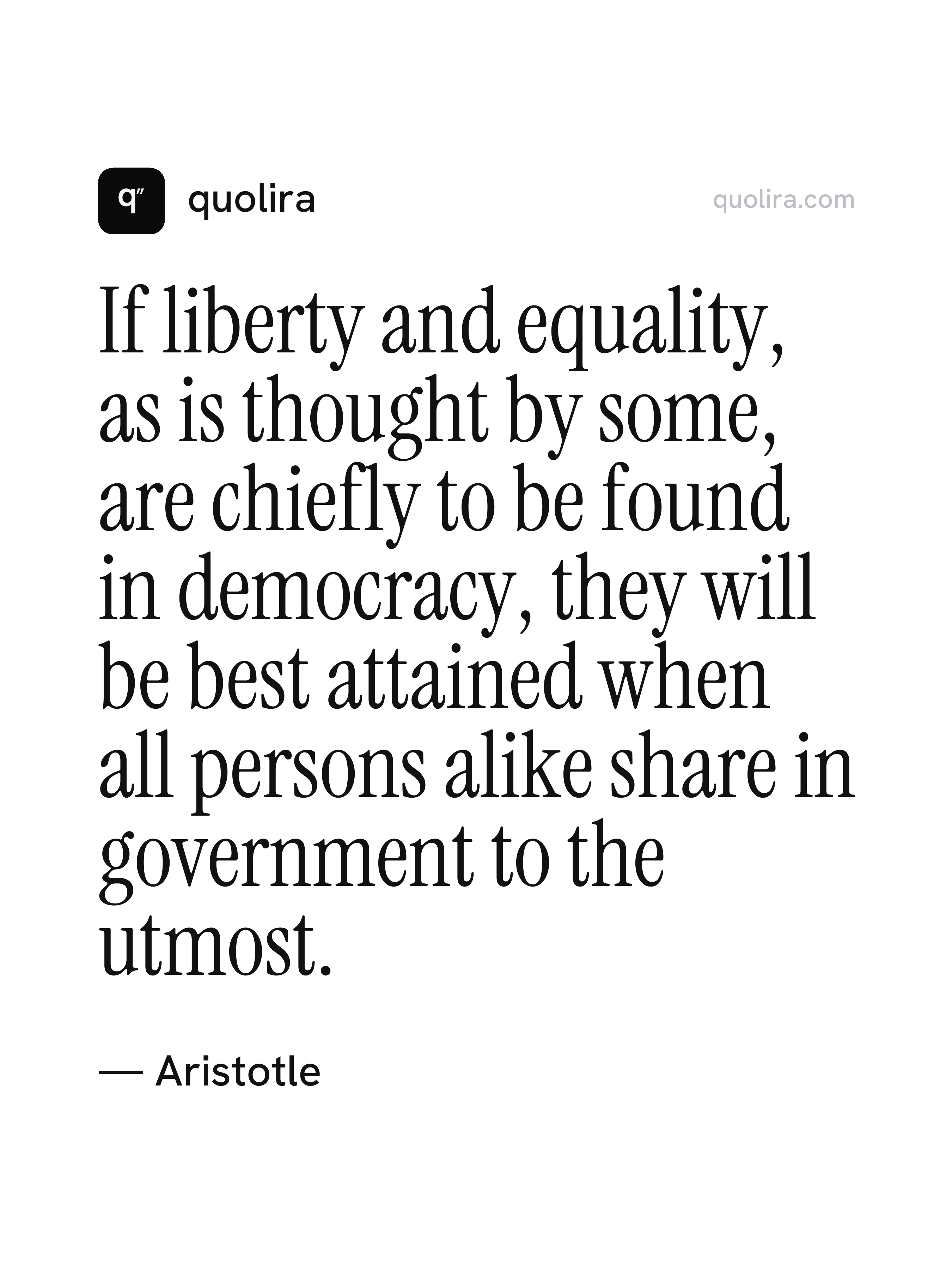
If liberty and equality, as is thought by some, are chiefly to be found in democracy, they will be best attained when all persons alike share in government to the utmost.
Aristotle Politics, Book VI, c. 350 BC
Aristotle said this more than two thousand years before the American founding, which is a good reminder that the ideas in the Declaration did not come from nowhere. The founders were reading ancient sources as much as they were inventing new ones.
Freedom is easier to celebrate than to earn. These 16 quotes span centuries and perspectives, and every one of them points to the same truth: liberty is a living thing, not a monument.
Frequently asked questions
What is the most famous independence day quote?
What did Frederick Douglass say about Independence Day?
Are there short independence day quotes good for sharing?
Who said 'the price of liberty is eternal vigilance'?
Keep reading
21 Lord Voldemort Best Harry Potter Quotes That Still Chill You
The most memorable lines from the Dark Lord, weighed for what they reveal about fear, power, and the man behind the mask.
14 Satchel Paige Quotes on Aging, Motion, and Not Looking Back
The pitcher who kept throwing into his fifties left behind lines about time that still land.


16 Alice in Wonderland Quotes That Still Make You Stop and Think
The strange logic of Wonderland has a way of feeling truer than the real world.
Jefferson put the entire American experiment into one sentence. It has been the country's most quoted promise and, depending on the era, its most uncomfortable accusation.