“We must be free not because we claim freedom, but because we practice it.”
William Faulkner · Essay "On Fear: Deep South in Labor," Harper's Magazine, June 1956
 quolira
.com
quolira
quolira.com
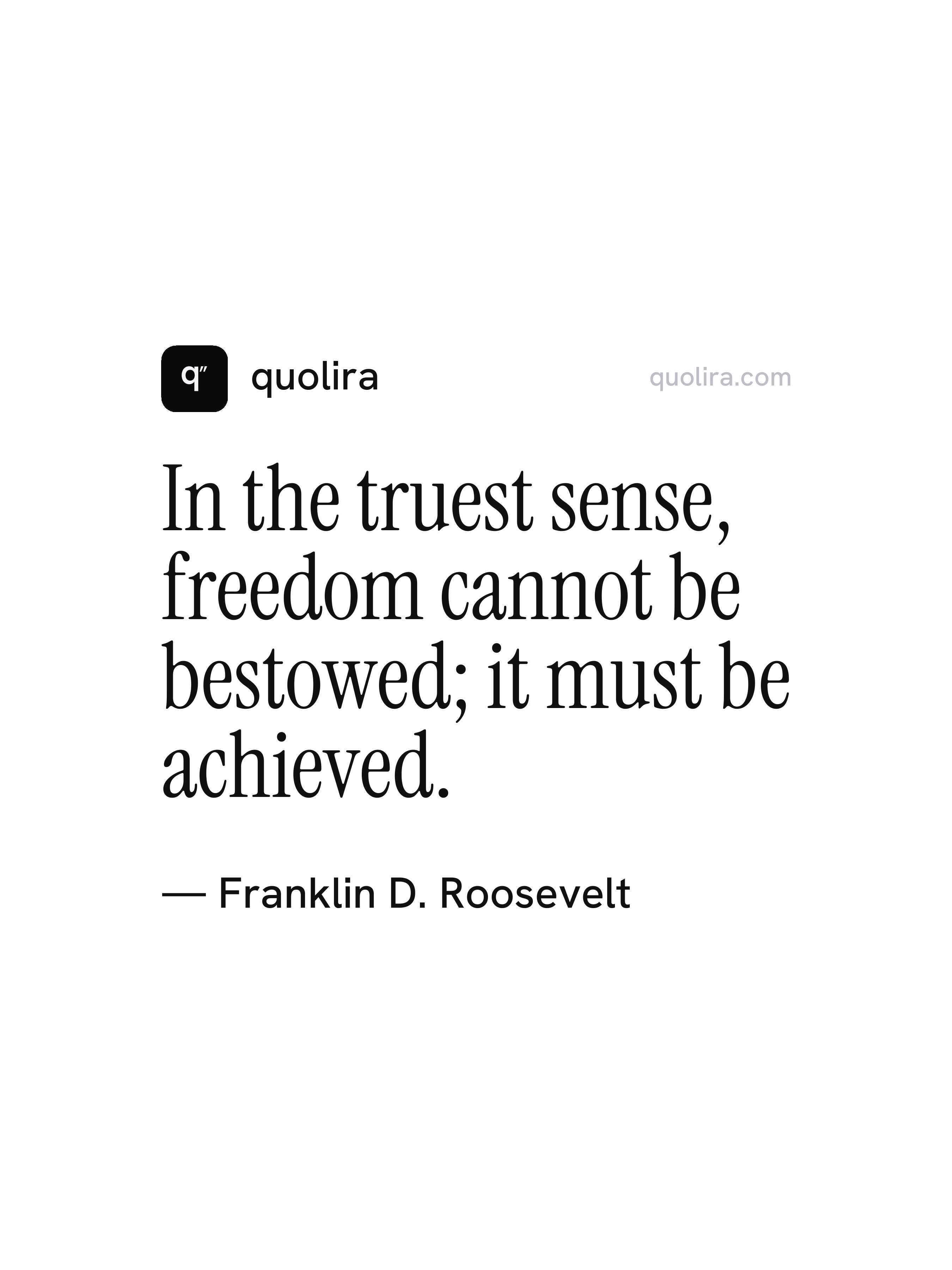
Roosevelt's point is that no one can hand freedom to another person as a gift and have it mean something lasting. True liberty has to be earned through effort, struggle, and self-determination. A freedom that is simply granted from above remains fragile and incomplete, while a freedom that is won and defended from within becomes something that people genuinely possess and will protect.
Roosevelt spoke these words in September 1936 at an event marking the seventy-fourth anniversary of the Emancipation Proclamation, Lincoln's executive order that began the legal process of ending slavery in the United States. The occasion gave Roosevelt a meaningful platform to speak about the nature of liberty and its relationship to equality. His remarks were shaped by the political climate of the New Deal era, in which questions of economic justice and civil rights were deeply intertwined. The speech connected the unfinished work of emancipation to the broader struggles of his own time.
Franklin D. Roosevelt was the thirty-second President of the United States, serving from 1933 until his death in 1945, making him the longest-serving president in American history. He led the country through the Great Depression and the majority of World War Two. Roosevelt's presidency was defined by an expansive use of federal power, most visibly through the New Deal programs that reshaped American economic and social policy. He was a skilled communicator who used speeches and radio addresses to speak directly to the public during times of deep national uncertainty.
“We must be free not because we claim freedom, but because we practice it.”
William Faulkner · Essay "On Fear: Deep South in Labor," Harper's Magazine, June 1956
“America was not built on fear. America was built on courage, on imagination, and an unbeatable determination to do the job at hand.”
Harry S. Truman · Special Message to the Congress on the State of the Union, January 8, 1947
“Freedom is never more than one generation away from extinction. We didn't pass it to our children in the bloodstream. It must be fought for, protected, and handed on for them to do the same.”
Ronald Reagan · Address to the Annual Meeting of the Phoenix Chamber of Commerce, March 30, 1961
“The advancement and diffusion of knowledge is the only guardian of true liberty.”
James Madison · Letter to George Thompson, June 30, 1825
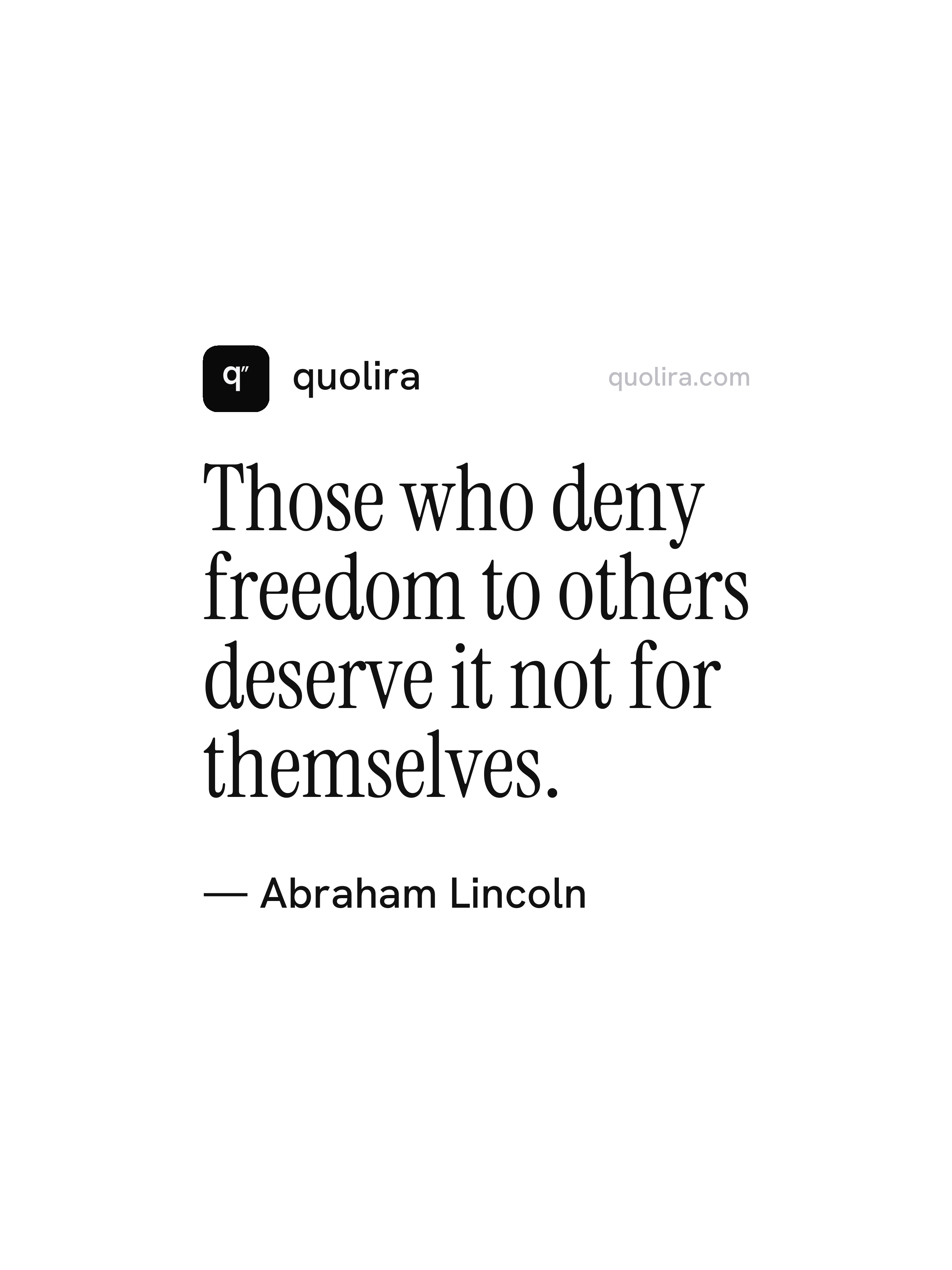
“Those who deny freedom to others deserve it not for themselves.”
Abraham Lincoln · Letter to Henry L. Pierce, April 6, 1859
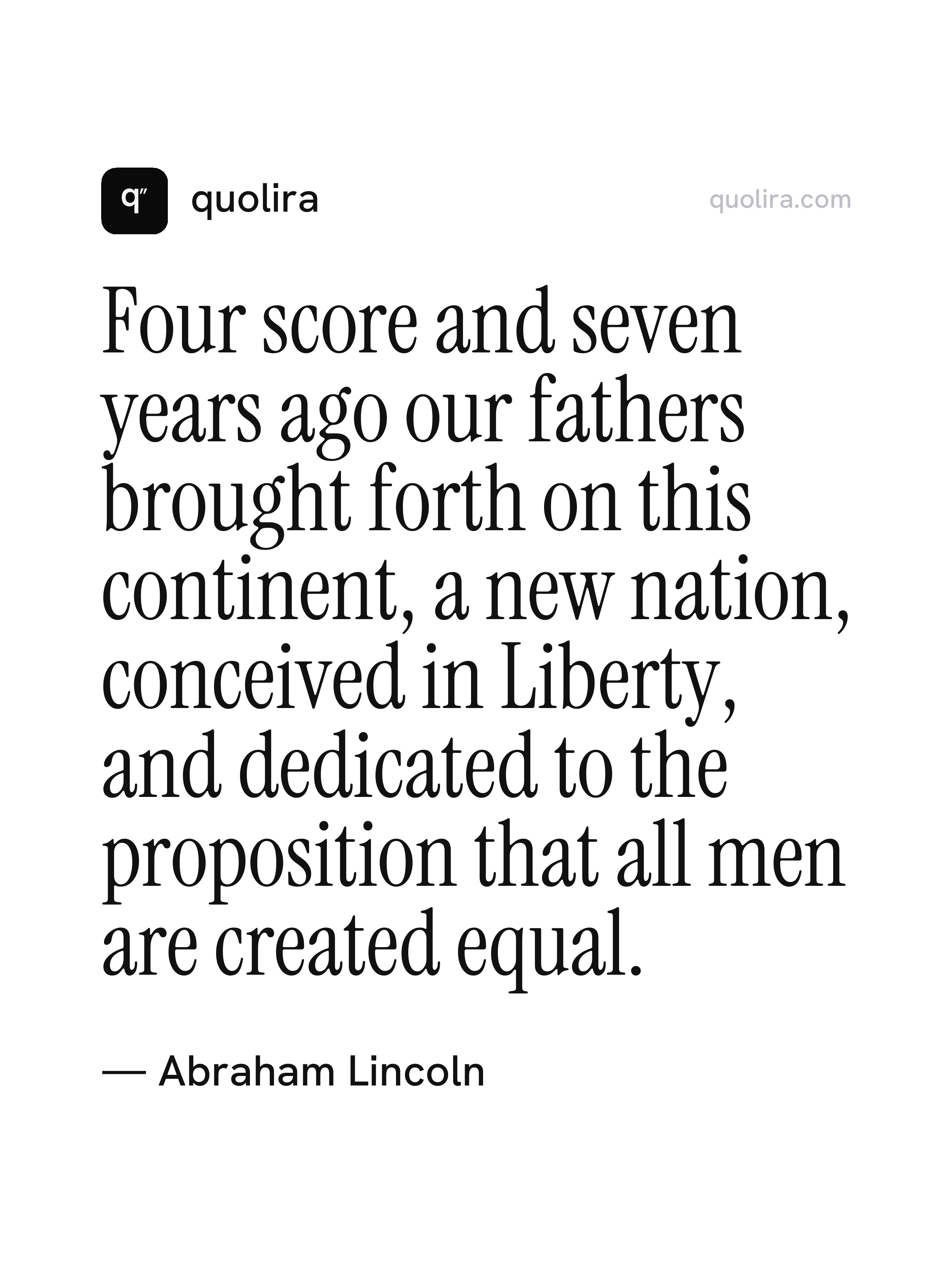
“Four score and seven years ago our fathers brought forth on this continent, a new nation, conceived in Liberty, and dedicated to the proposition that all men are created equal.”
Abraham Lincoln · Gettysburg Address, November 19, 1863
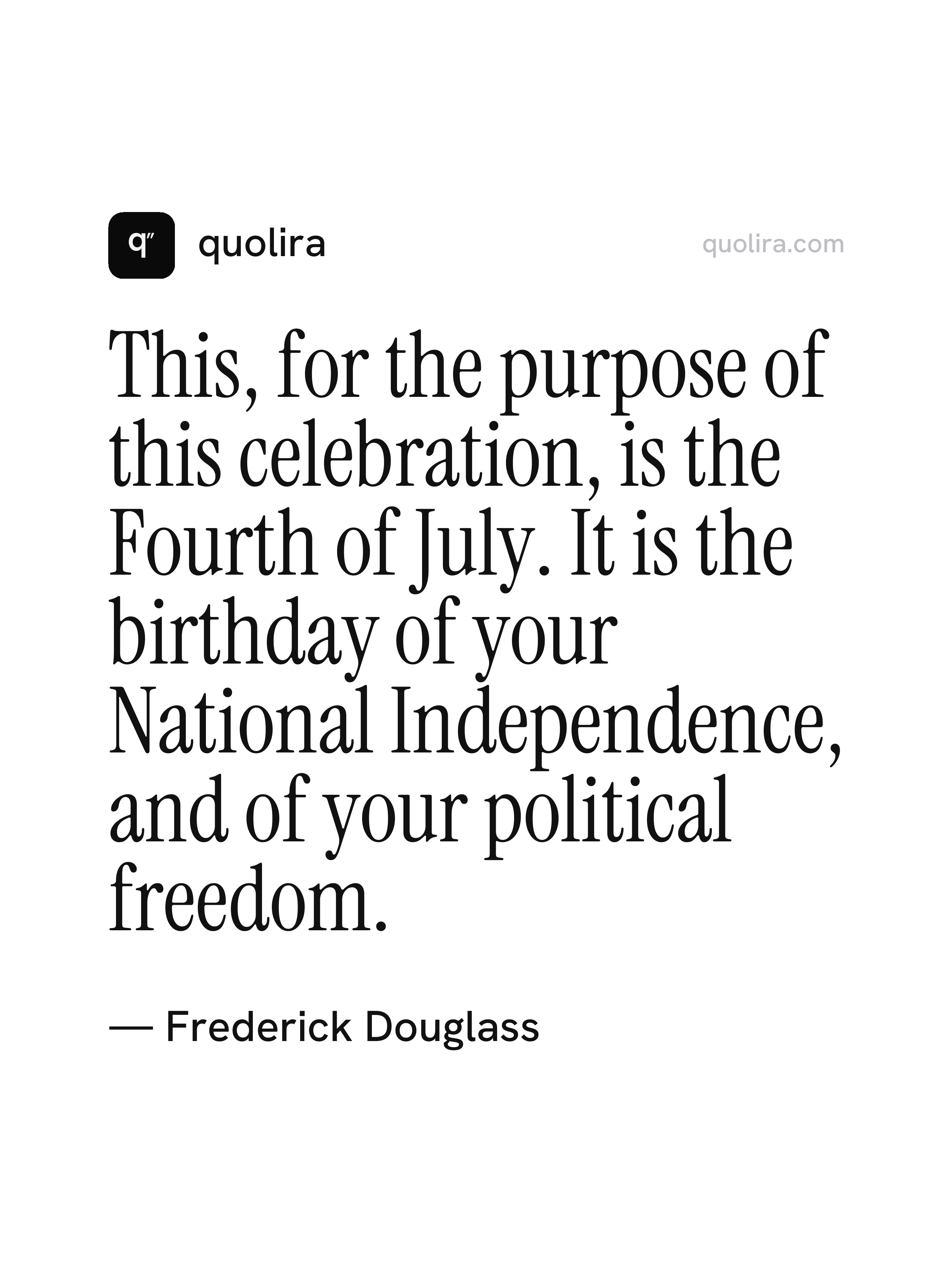
“This, for the purpose of this celebration, is the Fourth of July. It is the birthday of your National Independence, and of your political freedom.”
Frederick Douglass · What to the Slave Is the Fourth of July?, July 5, 1852
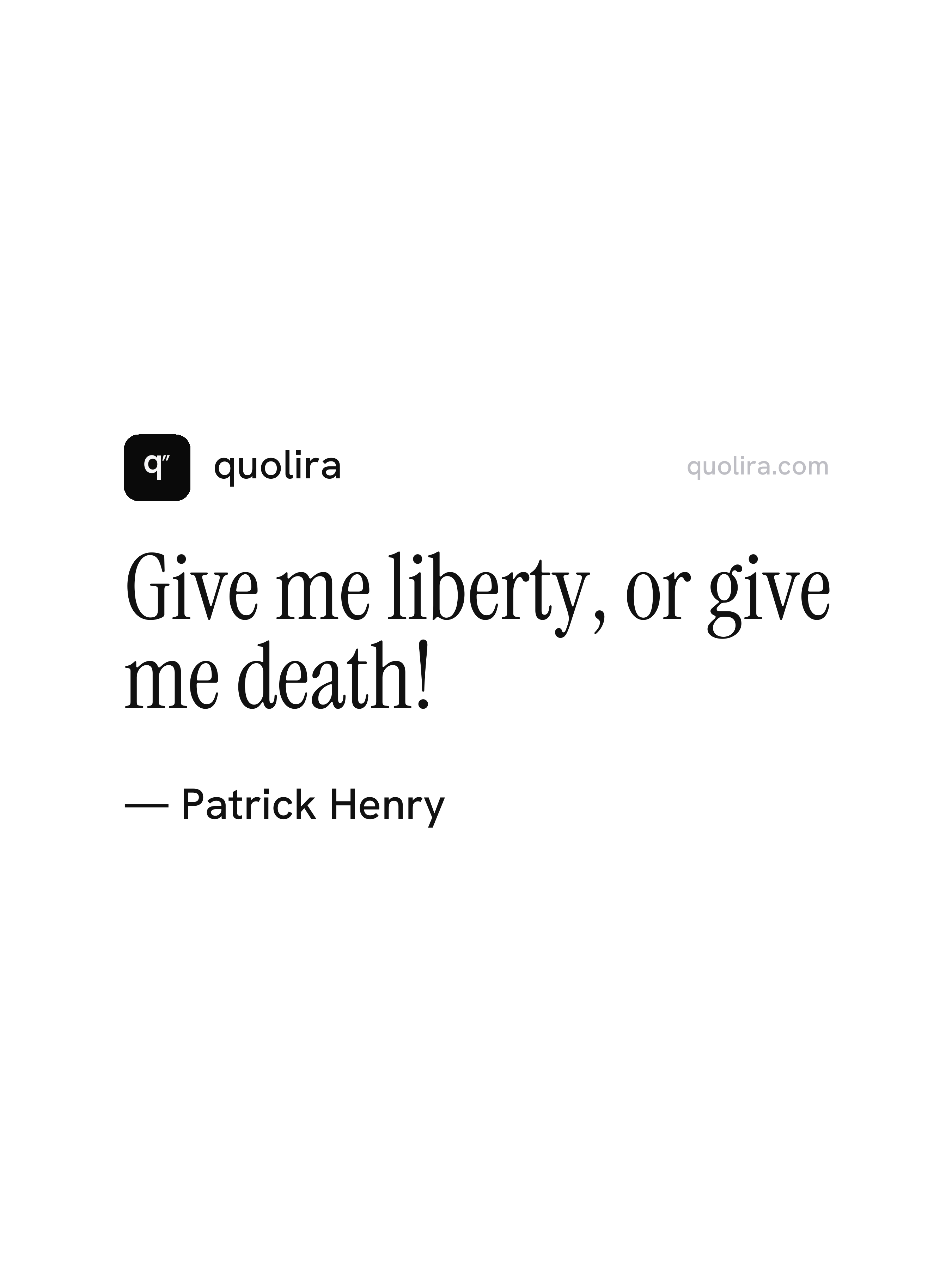
“Give me liberty, or give me death!”
Patrick Henry · Speech to the Virginia Convention, March 23, 1775
“We hold these truths to be self-evident, that all men are created equal, that they are endowed by their Creator with certain unalienable Rights, that among these are Life, Liberty and the pursuit of Happiness.”
Thomas Jefferson · Declaration of Independence, 1776
“When you know a thing, to hold that you know it; and when you do not know a thing, to allow that you do not know it: this is knowledge.”
Confucius · Analects, 2.17
“The man who learns but does not think is lost. The man who thinks but does not learn is in great danger.”
Confucius · Analects, 2.15
“Dying of shyness doesn't require a dramatic event. It just requires enough mornings where you decided today wasn't the day to come out.”
Original