Meaning
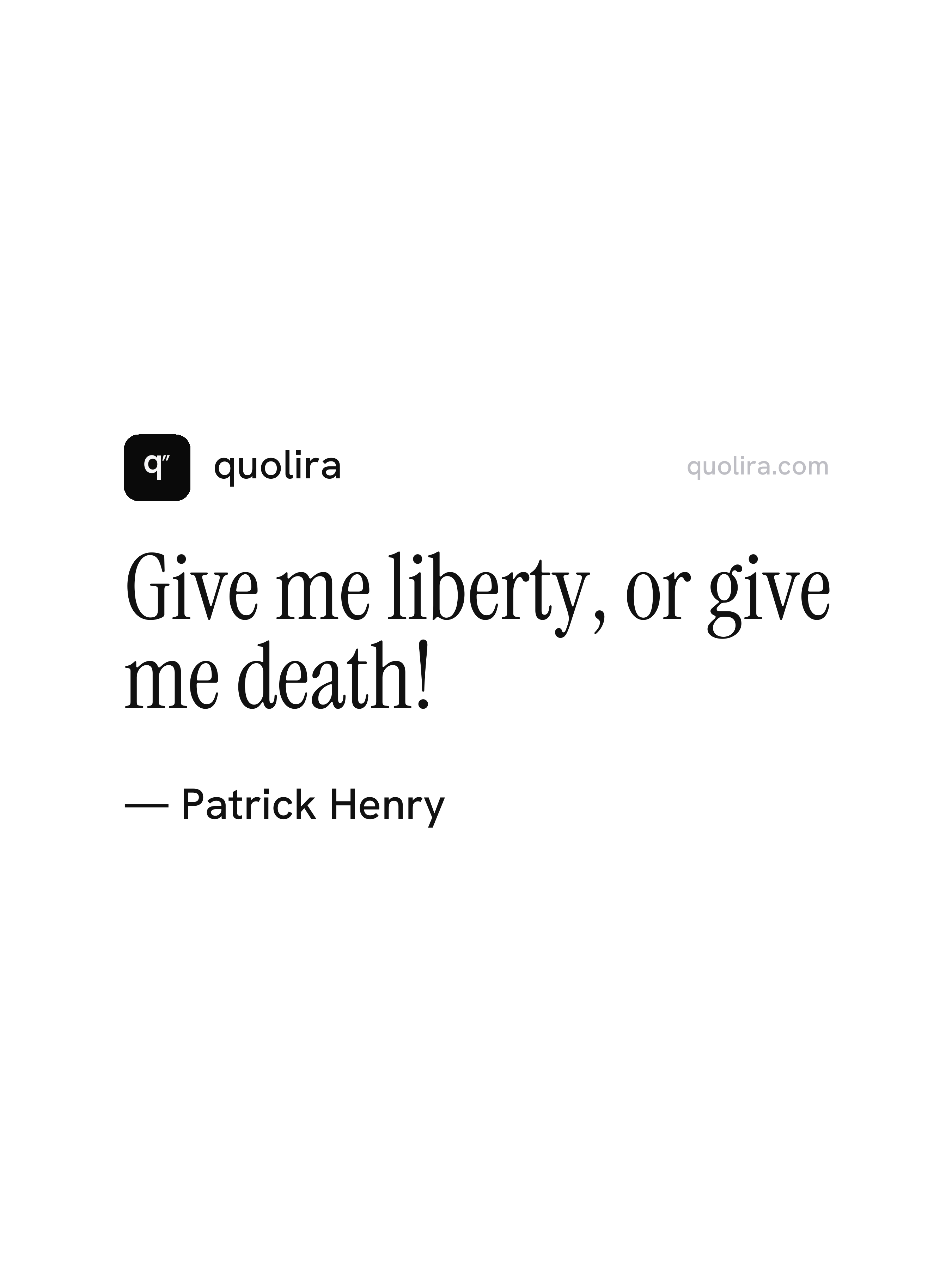
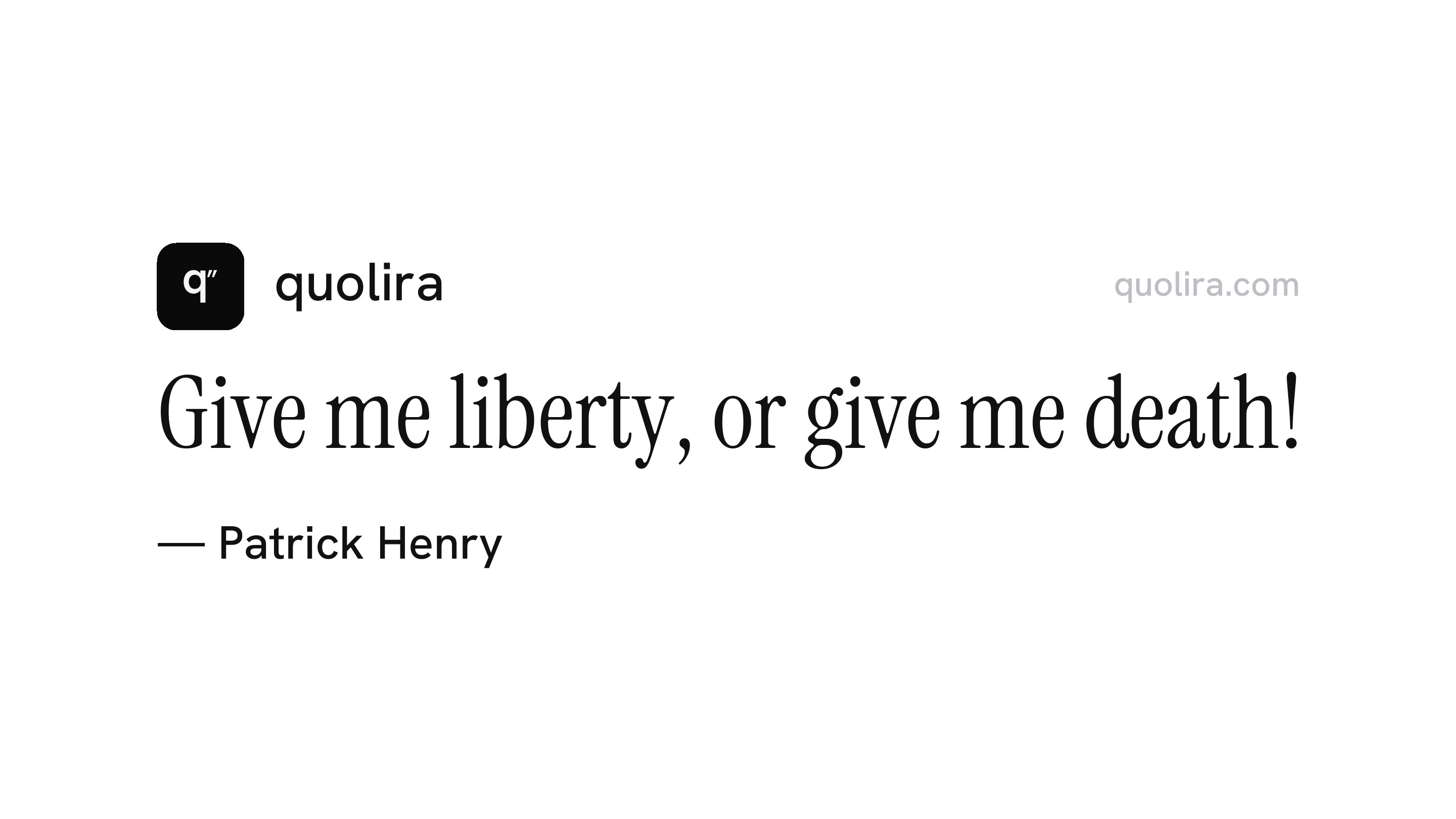
This short, electrifying sentence frames the struggle for political freedom as a matter of life and death, leaving no middle ground. Henry is saying that a life lived under tyranny is not truly a life worth living, and that the only choices available to a free person are genuine liberty or the ultimate sacrifice. The all-or-nothing framing was deliberate: he wanted to shake his listeners out of caution and into decisive action.
Context
Henry delivered this line at the end of a speech to the Virginia Convention in March 1775, just weeks before the first shots of the American Revolutionary War were fired at Lexington and Concord. He was arguing that armed conflict with Britain was not only inevitable but necessary, and he pushed back against delegates who favored continued negotiation. The speech, reconstructed from notes and recollections years after the fact, has become one of the most celebrated acts of American political oratory.
About the author
Patrick Henry was a Virginia lawyer and politician who became one of the most influential voices for American independence. He was known throughout the colonies as a fiery and gifted public speaker, and he served multiple terms as Governor of Virginia. Henry was a committed advocate for individual liberties and later pushed strongly for the inclusion of a Bill of Rights in the federal Constitution. His rhetorical legacy endures as a symbol of the passionate spirit that drove the revolutionary generation.