“Fall seven times, get up eight.”
Japanese Proverb · Nana korobi ya oki, Edo period Japan
 quolira
.com
quolira
quolira.com
This proverb makes its point through a vivid image: a frog living at the bottom of a well can only see the small circle of sky directly above it, and so it mistakes that limited view for the whole of reality. The sea, vast and unknowable from that position, represents everything the frog cannot even imagine. The saying is a gentle but pointed reminder that our perspective is always shaped by the boundaries of our own experience, and that mistaking a partial view for a complete one is a very human tendency worth guarding against.
The saying originates in classical Chinese literature and philosophy before becoming deeply embedded in Japanese proverbial tradition. A version of the idea appears in early Taoist texts, where it is used to illustrate the limits of a narrow or parochial mind when confronted with something genuinely vast. Over centuries it passed into the Japanese cultural vocabulary, where it continues to be used in everyday speech to describe someone whose knowledge or ambition has been confined by circumstance, habit, or a reluctance to look beyond familiar surroundings.
Like most proverbs, this one belongs to a shared tradition rather than a traceable individual author. It reflects a strain of philosophical thinking common to both Chinese and Japanese classical thought, one that prizes humility about the limits of personal knowledge and encourages openness to what lies beyond one's immediate experience. Its durability across centuries and cultures suggests it touches something universally recognizable in human nature.
“Fall seven times, get up eight.”
Japanese Proverb · Nana korobi ya oki, Edo period Japan
“The will to live is not the will to live at any cost; it is the will to live this life.”
Nassim Taleb · Paraphrased from Stoic philosophy
“A blazing fire makes flame and brightness out of everything that is thrown into it.”
Marcus Aurelius · Meditations
“Lose money once with real skin in the game and you'll understand risk better than a hundred free articles could teach you.”
Original
“The lesson you pay for is the one you actually keep.”
Original
“Better is a poor and wise youth than an old and foolish king who no longer knows how to take advice.”
Ecclesiastes 4:13 · Book of Ecclesiastes, Hebrew Bible
“Gray hair is a crown of glory; it is gained in a righteous life.”
Proverbs 16:31 · Book of Proverbs, Hebrew Bible
“The unlived life is always better because it never has to survive contact with living.”
Original
“Some things are worth more after they've been broken. The repair is the evidence that they were worth saving.”
Original
“The break is part of the object's story. Making it invisible doesn't heal it. It just makes you carry it alone.”
Original
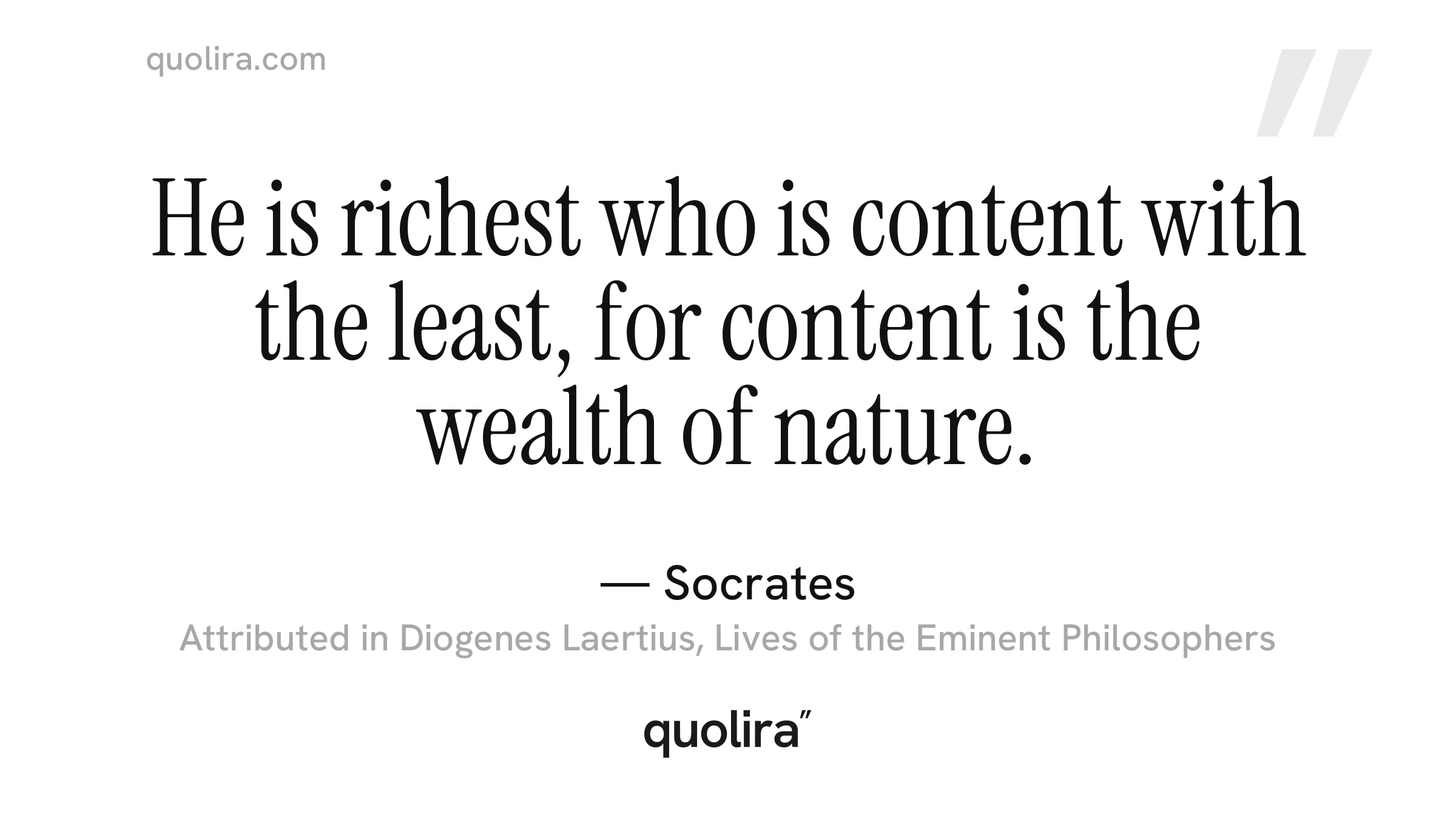
“He is richest who is content with the least, for content is the wealth of nature.”
Socrates · Attributed in Diogenes Laertius, Lives of the Eminent Philosophers
“Nature does not hurry, yet everything is accomplished.”
Lao Tzu · Tao Te Ching