“Do not be anxious about tomorrow, for tomorrow will be anxious for itself. Sufficient for the day is its own trouble.”
Matthew 6:34 · The Bible, English Standard Version
 quolira
.com
quolira
quolira.com
This line points to a paradox at the heart of how the natural world operates. Things grow, seasons turn, rivers carve canyons, and none of it happens through urgency or force. The observation invites people to consider whether their own striving and rushing actually produces better results, or whether a steadier, more patient approach might accomplish just as much with far less friction. It is a quiet argument for trusting process over panic.
The Tao Te Ching is a short but deeply influential Chinese philosophical text traditionally attributed to the sage Lao Tzu. It is one of the founding works of Taoism and is among the most translated books in the world. Central to its teaching is the concept of wu wei, often rendered as non-action or effortless action, the idea that working in harmony with the natural order produces better outcomes than forcing things through sheer will. This particular sentiment fits squarely within that framework, using nature itself as the supreme model of how to move through the world.
Lao Tzu is the legendary figure credited with writing the Tao Te Ching, and his name is often translated as "Old Master" or "Old Teacher." Historians debate whether he was a single historical person or a composite figure, and very little about his life can be confirmed with certainty. The text attributed to him is thought to date from around the fourth to sixth centuries BCE. Regardless of the questions around his biography, his ideas have shaped Chinese philosophy, art, medicine, and governance for well over two thousand years.
“Do not be anxious about tomorrow, for tomorrow will be anxious for itself. Sufficient for the day is its own trouble.”
Matthew 6:34 · The Bible, English Standard Version
“The present moment is the only moment available to us, and it is the door to all moments.”
Thich Nhat Hanh · The Miracle of Mindfulness, 1975
“Keep close to nature's heart and break clear away, once in a while, and climb a mountain or spend a week in the woods.”
John Muir · John of the Mountains, 1938
“Happiness is not a station you arrive at, but a manner of traveling.”
Margaret Lee Runbeck · Time for Each Other, 1944
“I never worked a day in my life without selling something. And I always delivered more than I promised.”
Joseph Addison
“Come to me, all you who are weary and burdened, and I will give you rest.”
Matthew 11:28 · The Bible, New International Version
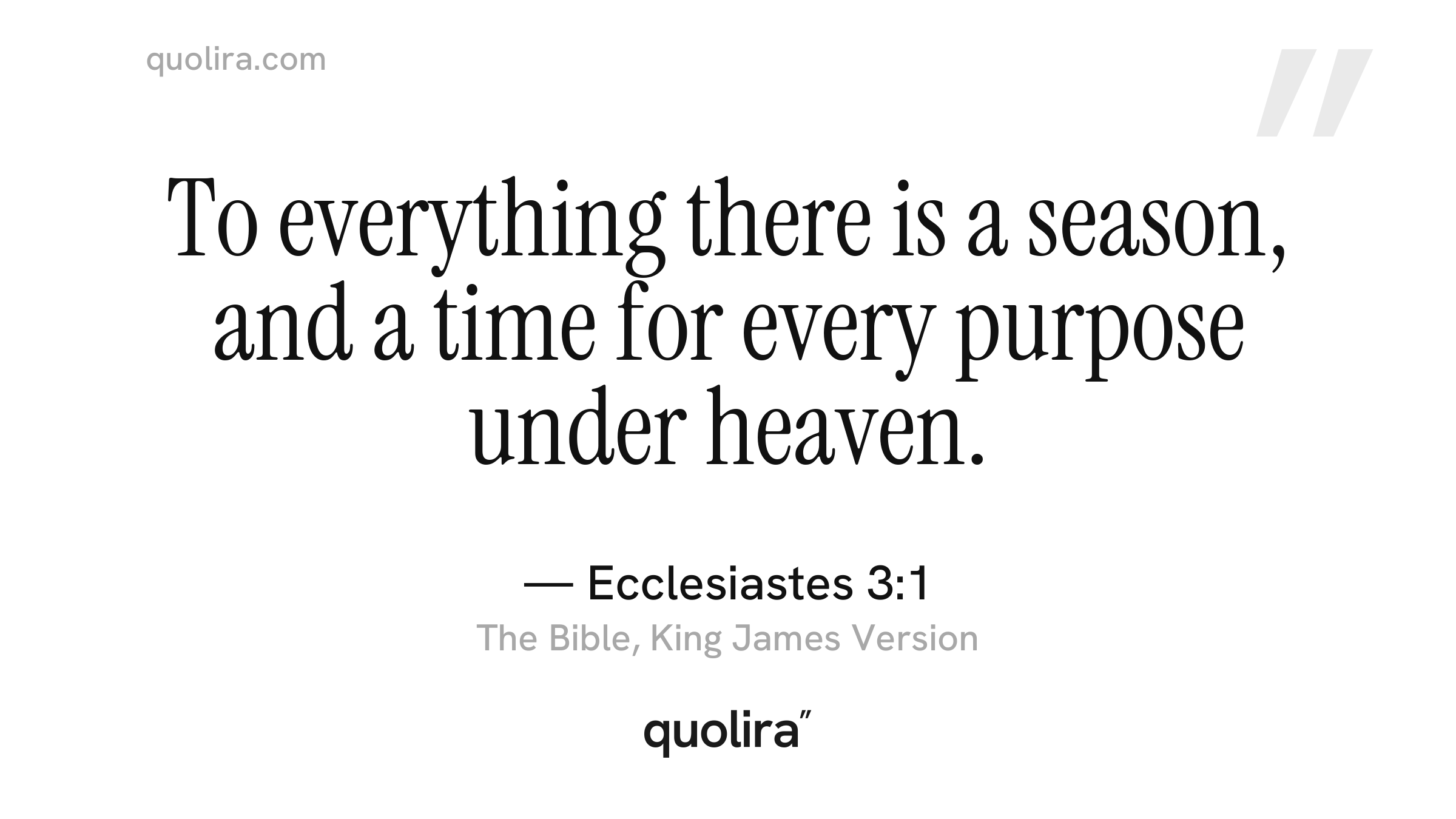
“To everything there is a season, and a time for every purpose under heaven.”
Ecclesiastes 3:1 · The Bible, King James Version
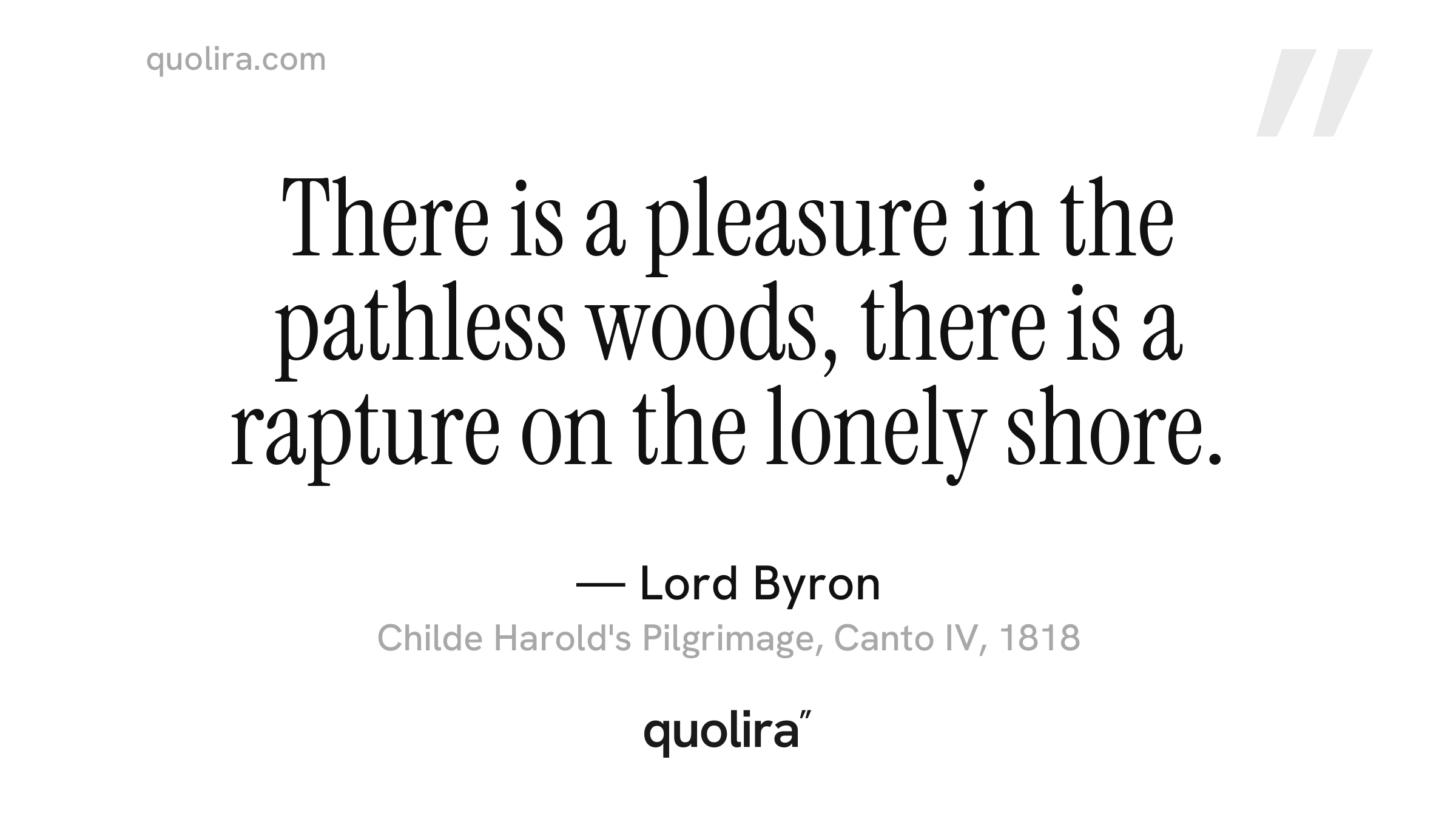
“There is a pleasure in the pathless woods, there is a rapture on the lonely shore.”
Lord Byron · Childe Harold's Pilgrimage, Canto IV, 1818
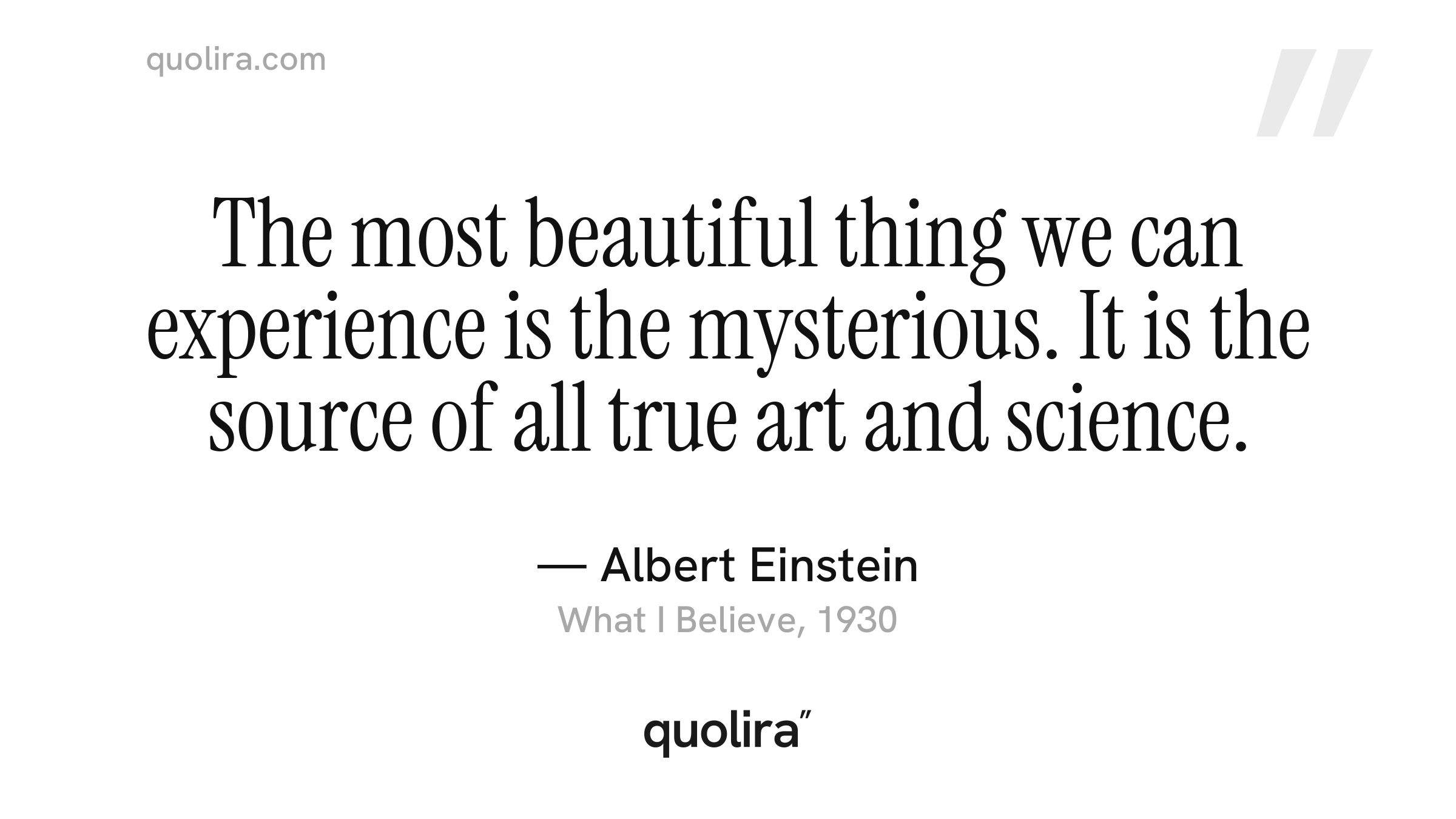
“The most beautiful thing we can experience is the mysterious. It is the source of all true art and science.”
Albert Einstein · What I Believe, 1930
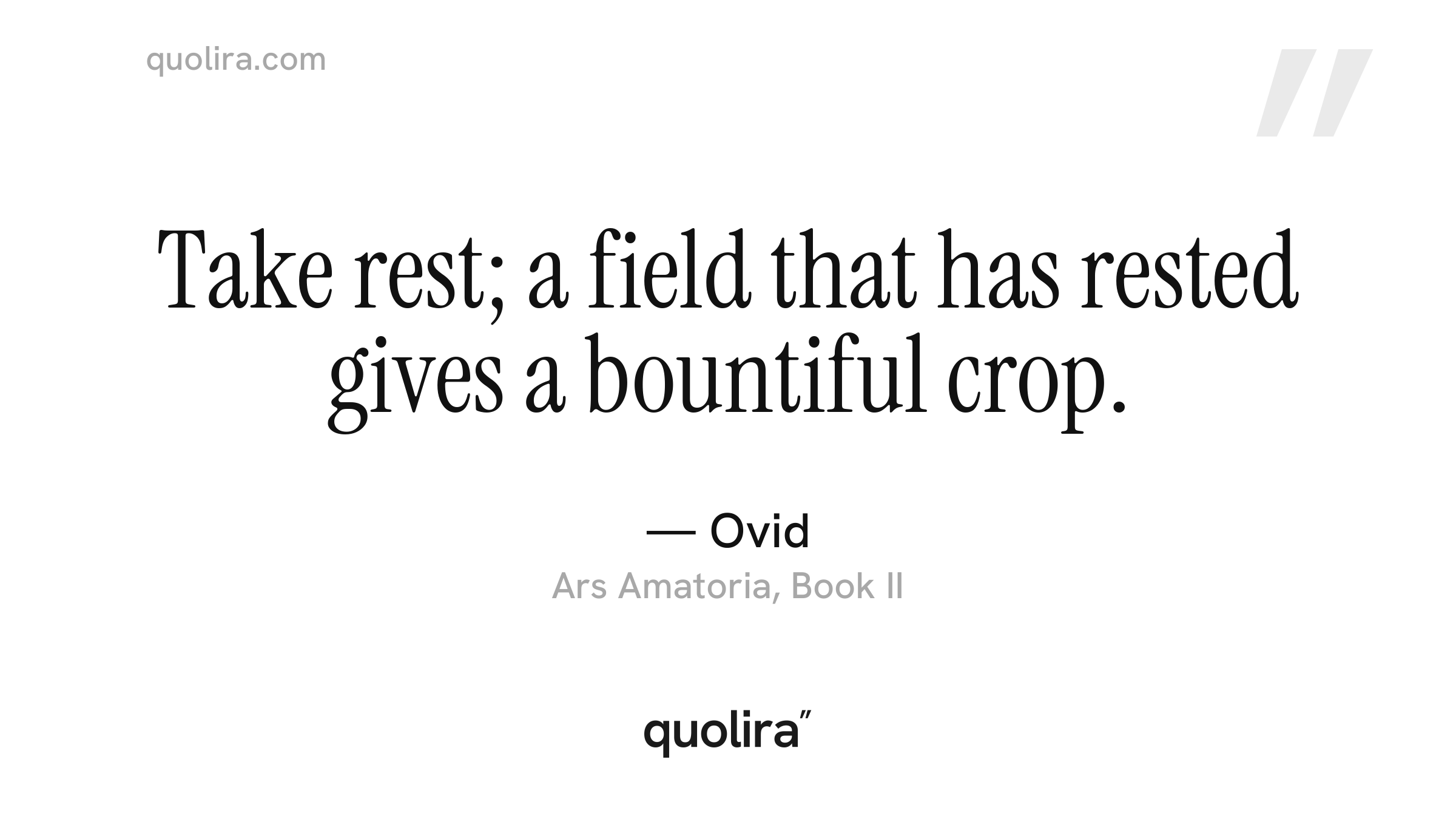
“Take rest; a field that has rested gives a bountiful crop.”
Ovid · Ars Amatoria, Book II
“Finish each day and be done with it. You have done what you could. Some blunders and absurdities no doubt crept in; forget them as soon as you can.”
Ralph Waldo Emerson · Letter to his daughter, 1865
“One must maintain a little bit of summer, even in the middle of winter.”
Henry David Thoreau · Journal