“Sunday clears away the rust of the whole week.”
Joseph Addison · The Spectator, 1711
 quolira
.com
quolira
quolira.com
Thoreau is encouraging a deliberate act of inner preservation. Summer here stands for warmth, vitality, and a sense of openness to the world, qualities that the cold and darkness of winter can quietly erode. His point is that these qualities are not simply granted by the season; they must be consciously tended and held onto, kept alive within a person even when the outer world offers little encouragement toward them.
Thoreau kept a detailed journal throughout much of his adult life, and it became one of his richest works, a place where he worked through observations about nature, solitude, and the inner life with great care. Passages like this one reflect a theme that runs throughout his writing: that the natural world and the inner world mirror each other, and that attentiveness to one deepens understanding of the other. The journal was less a polished literary product than a living record of thought.
Henry David Thoreau was an American writer, naturalist, and philosopher who lived from 1817 to 1862. He is best known for Walden, an account of the two years he spent living simply near Walden Pond in Massachusetts, and for his essay on civil disobedience, which went on to influence social movements far beyond his own time. Throughout his life he wrote with close attention to the natural world and to the question of how a person might live with genuine purpose and integrity.
“Sunday clears away the rust of the whole week.”
Joseph Addison · The Spectator, 1711
“Rest is not idleness, and to lie sometimes on the grass under trees on a summer's day, listening to the murmur of the water, or watching the clouds float across the sky, is by no means a waste of time.”
John Lubbock · The Use of Life, 1894
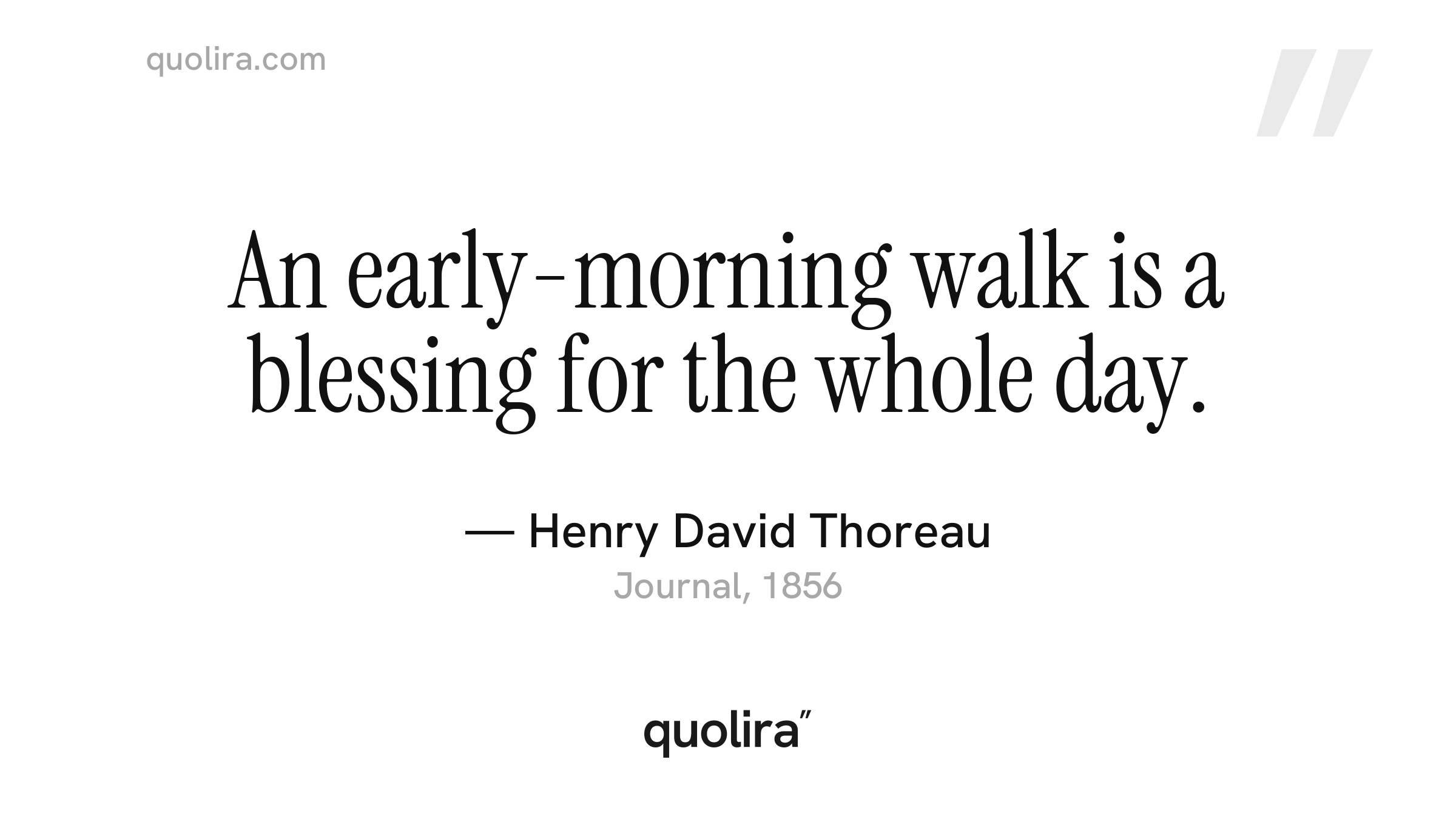
“An early-morning walk is a blessing for the whole day.”
Henry David Thoreau · Journal, 1856
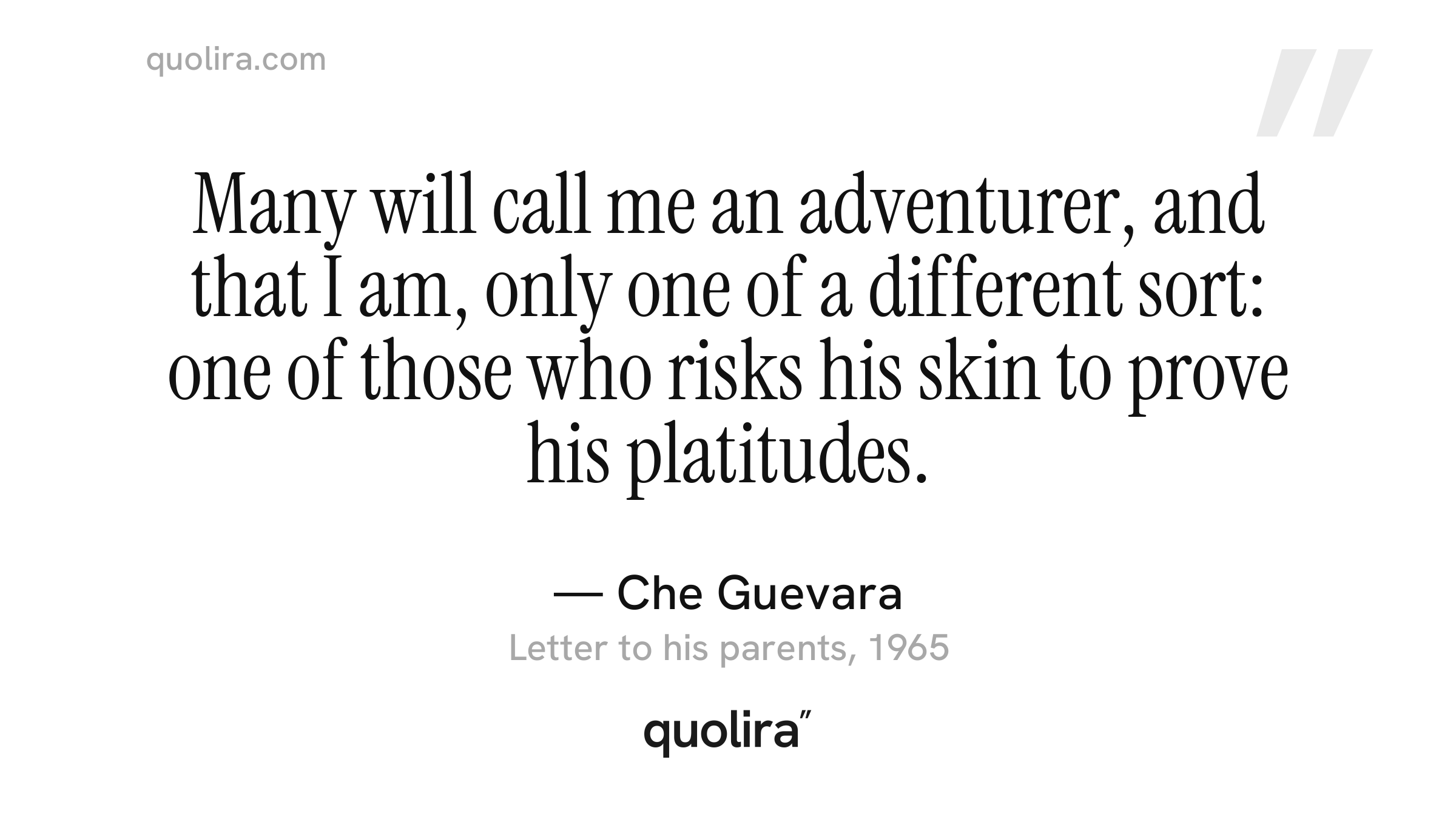
“Many will call me an adventurer, and that I am, only one of a different sort: one of those who risks his skin to prove his platitudes.”
Che Guevara · Letter to his parents, 1965
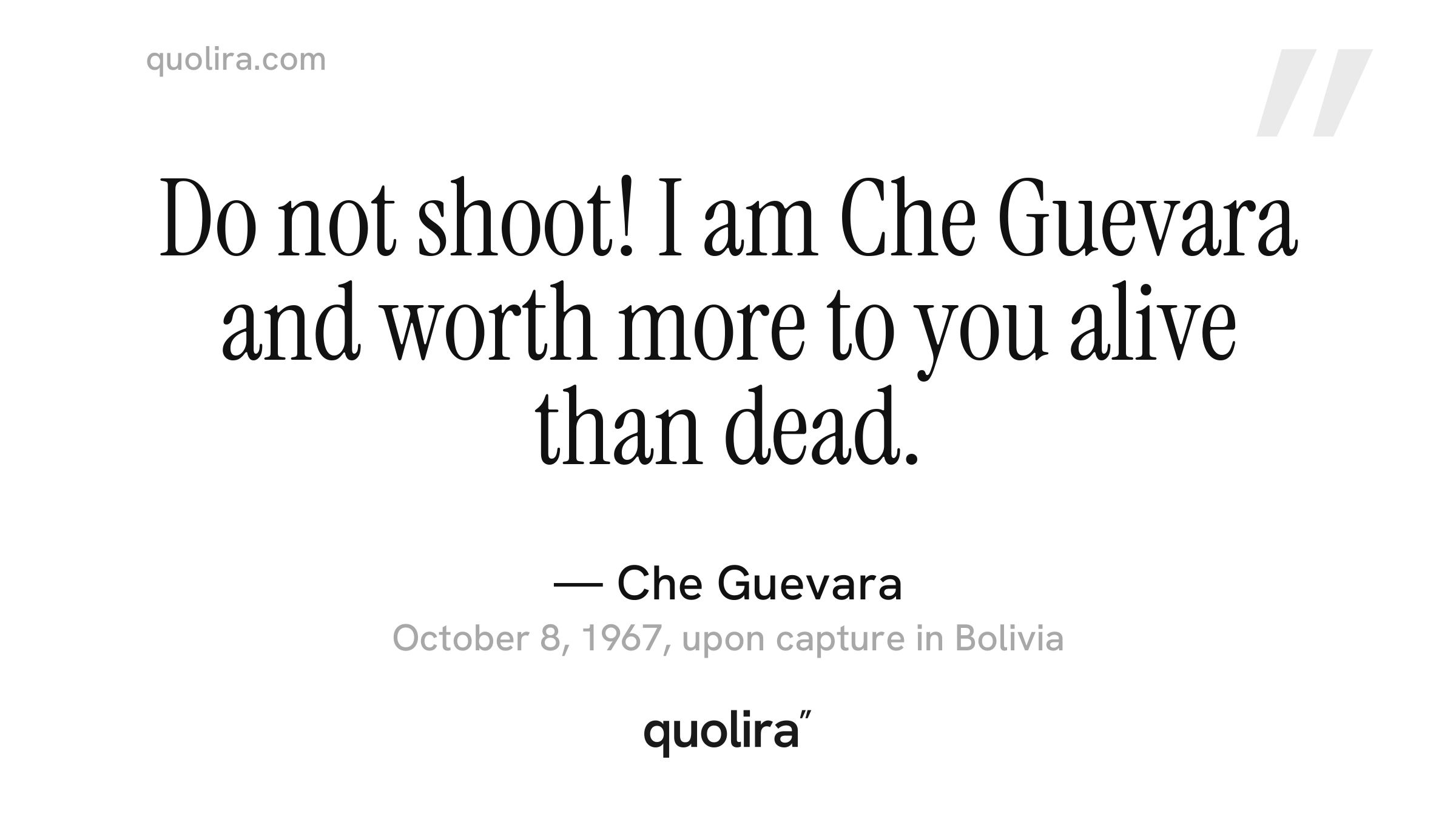
“Do not shoot! I am Che Guevara and worth more to you alive than dead.”
Che Guevara · October 8, 1967, upon capture in Bolivia
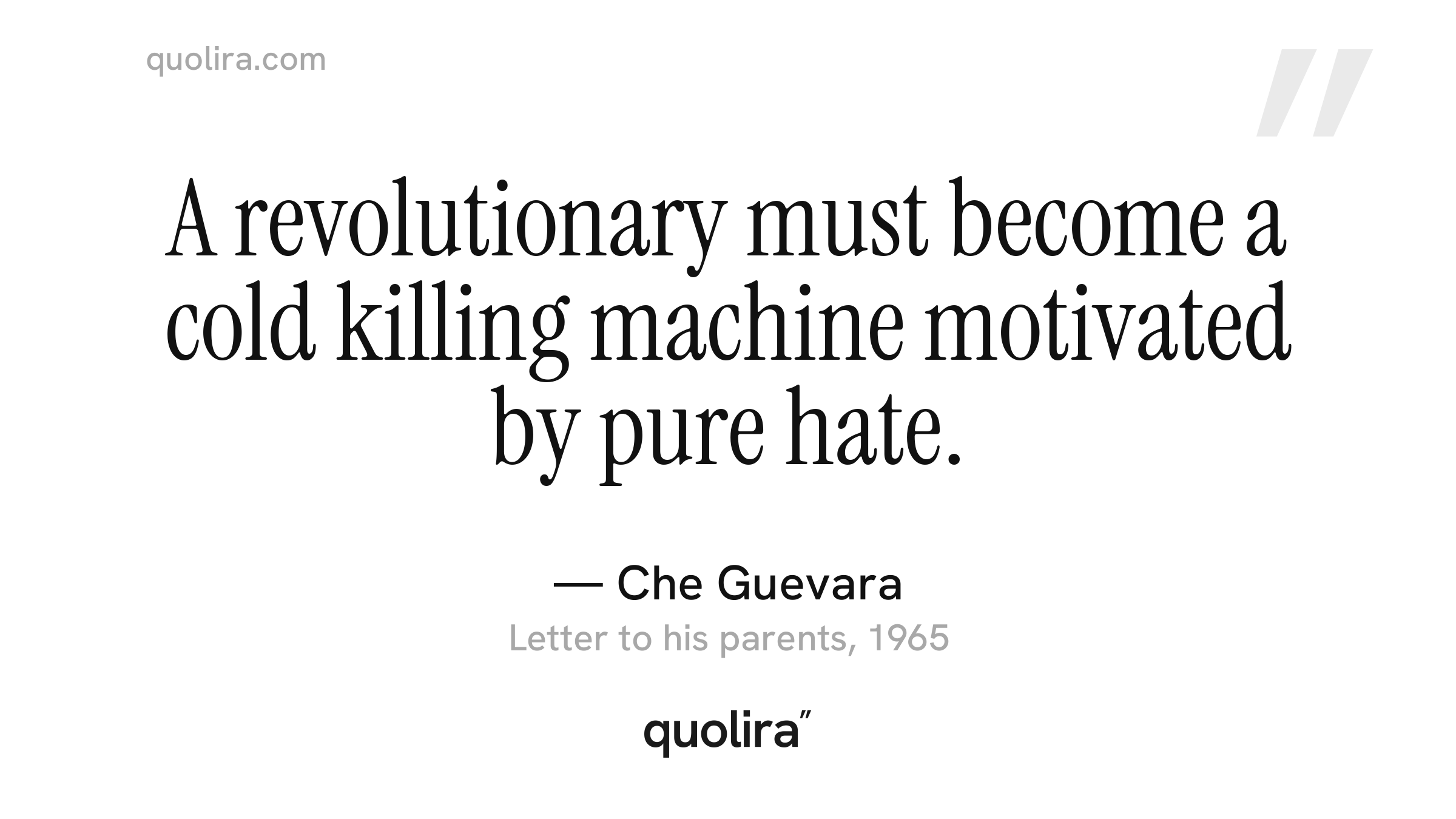
“A revolutionary must become a cold killing machine motivated by pure hate.”
Che Guevara · Letter to his parents, 1965
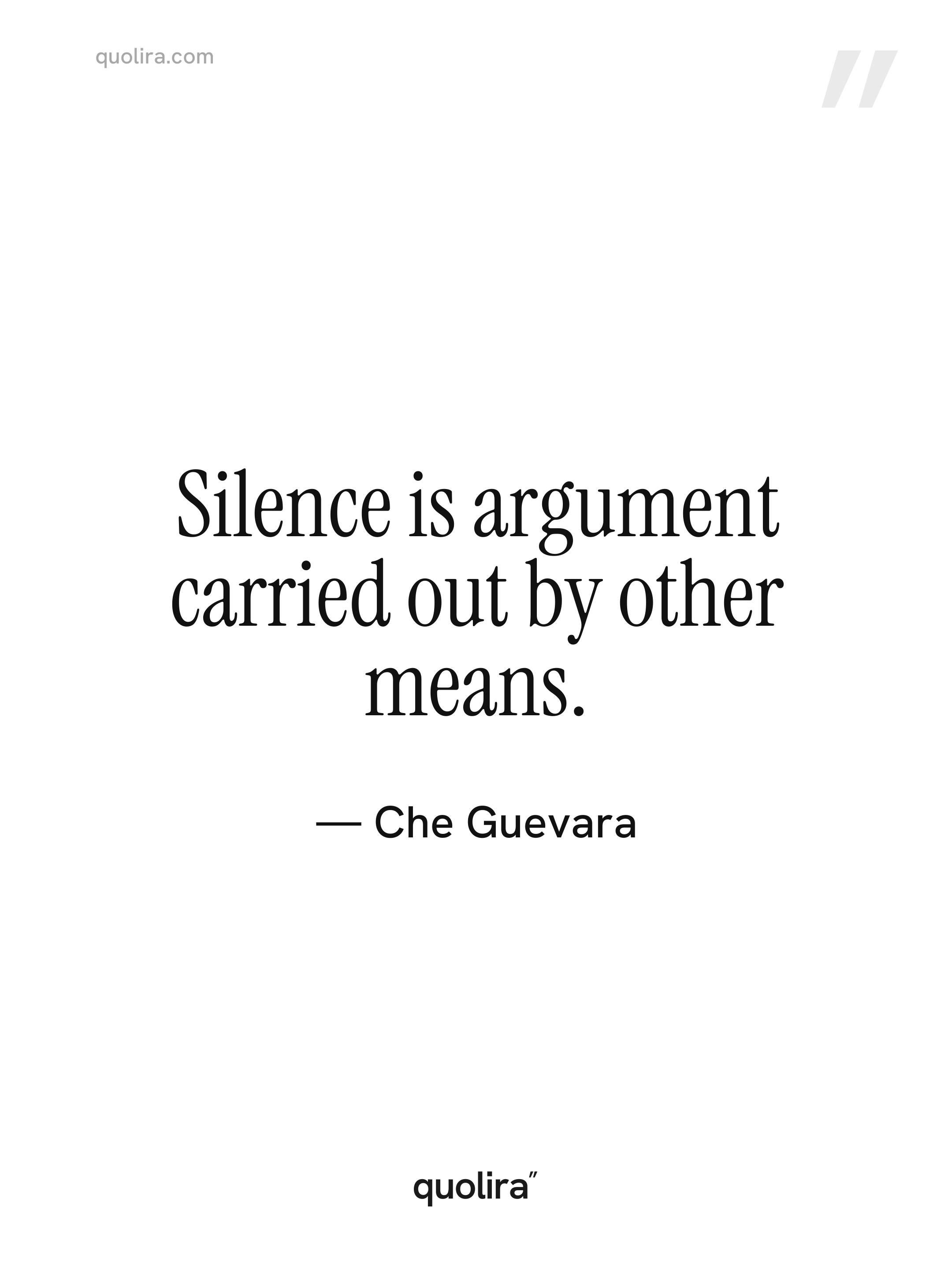
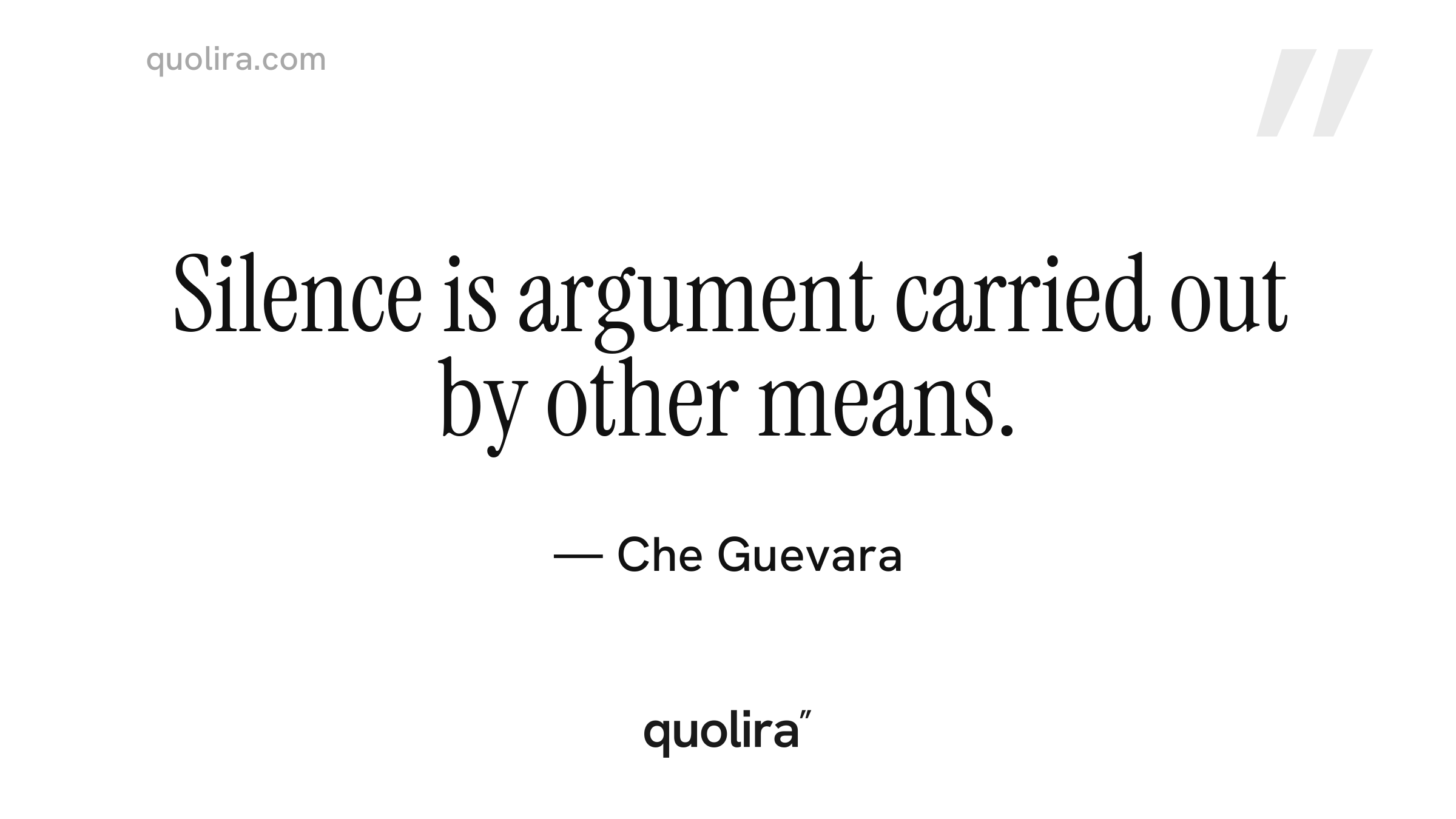
“Silence is argument carried out by other means.”
Che Guevara
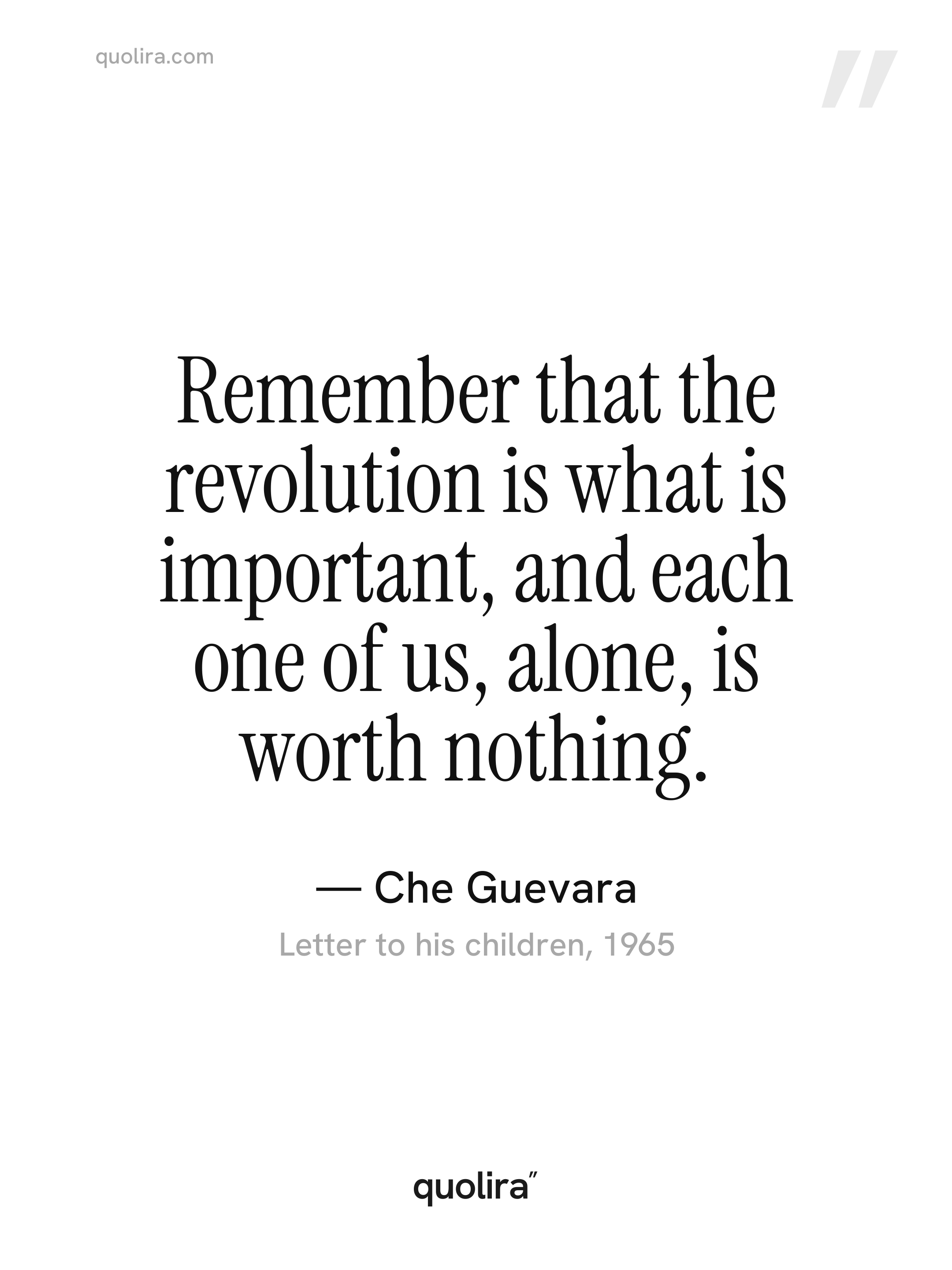
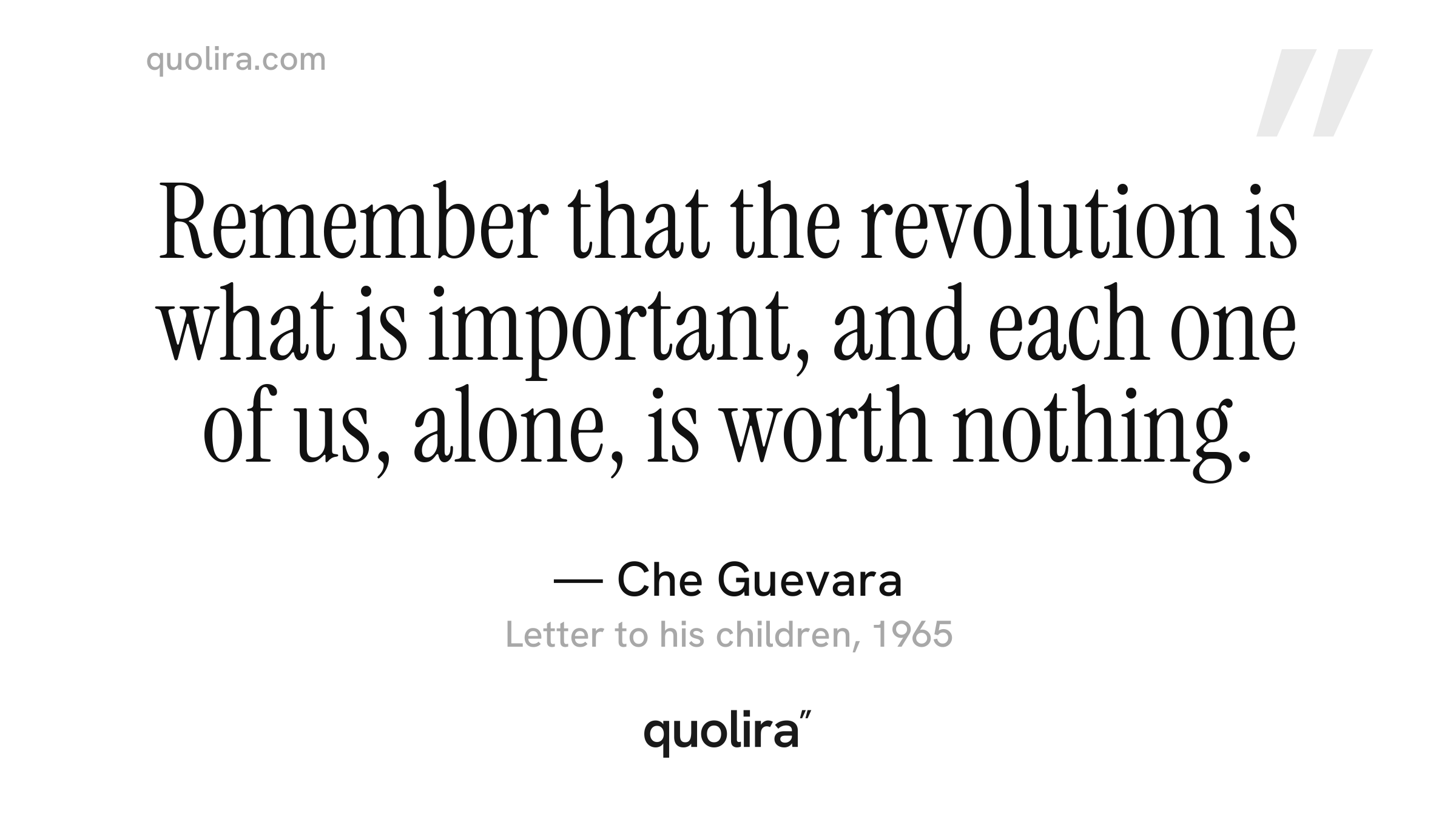
“Remember that the revolution is what is important, and each one of us, alone, is worth nothing.”
Che Guevara · Letter to his children, 1965
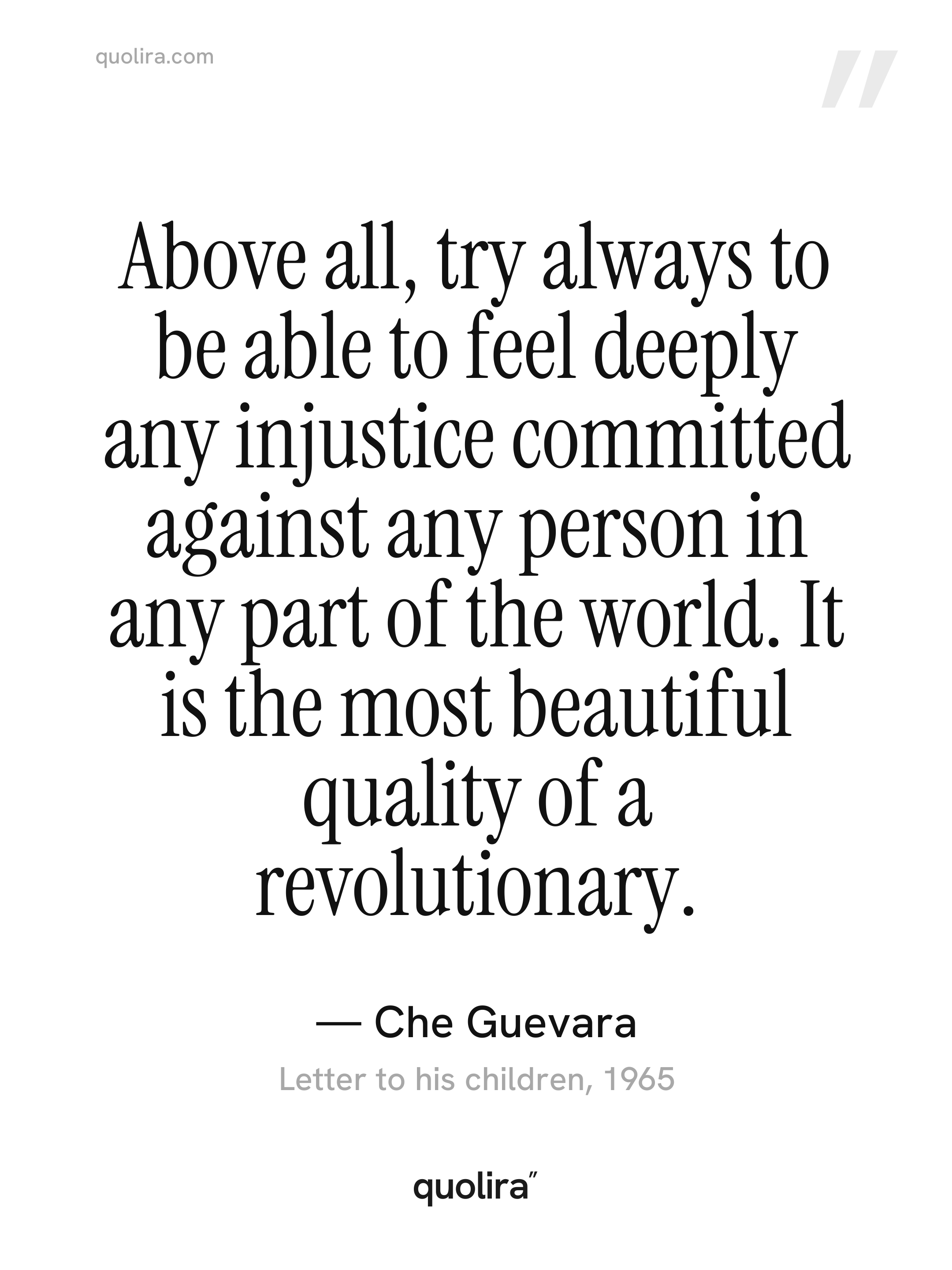
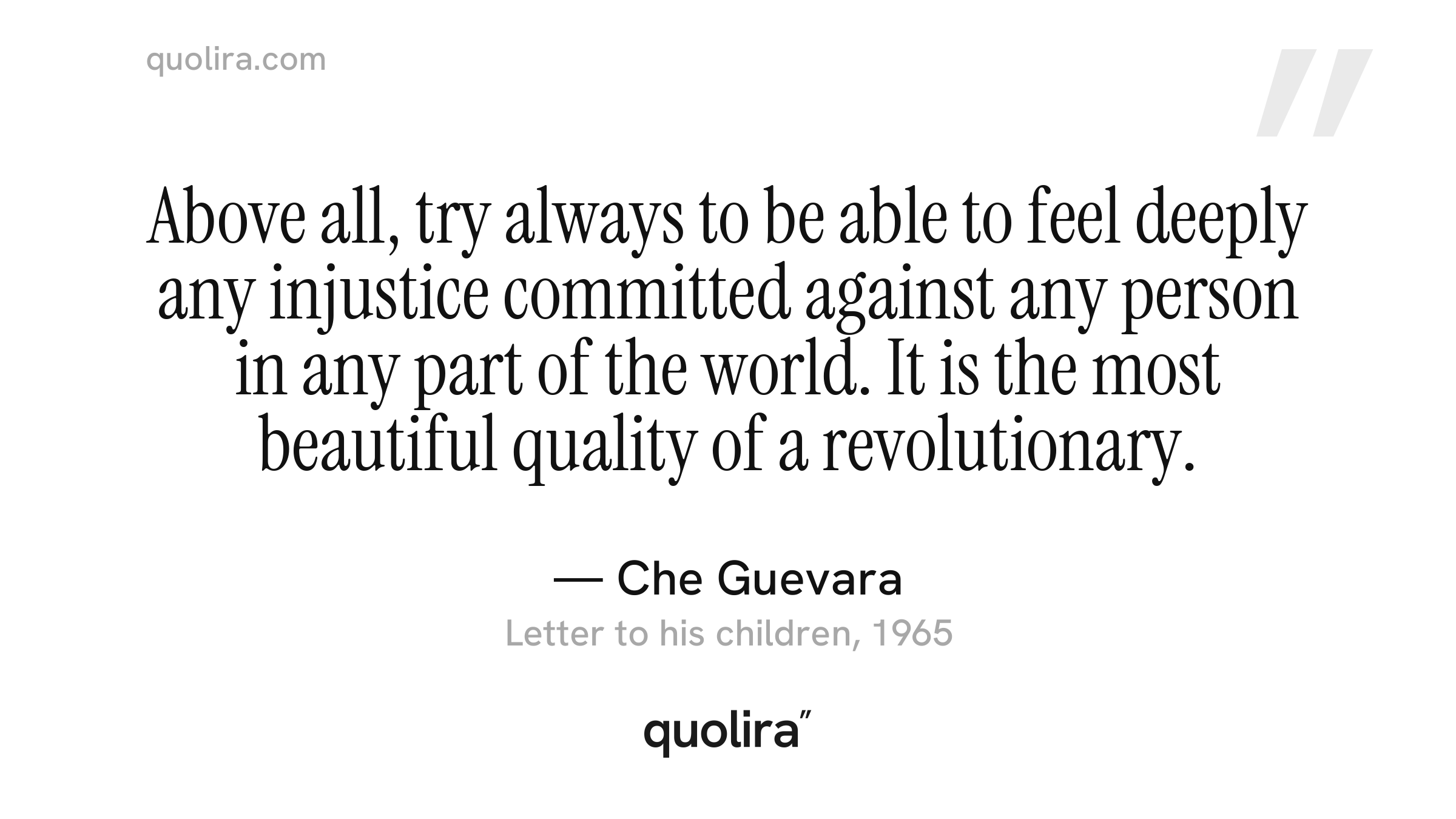
“Above all, try always to be able to feel deeply any injustice committed against any person in any part of the world. It is the most beautiful quality of a revolutionary.”
Che Guevara · Letter to his children, 1965
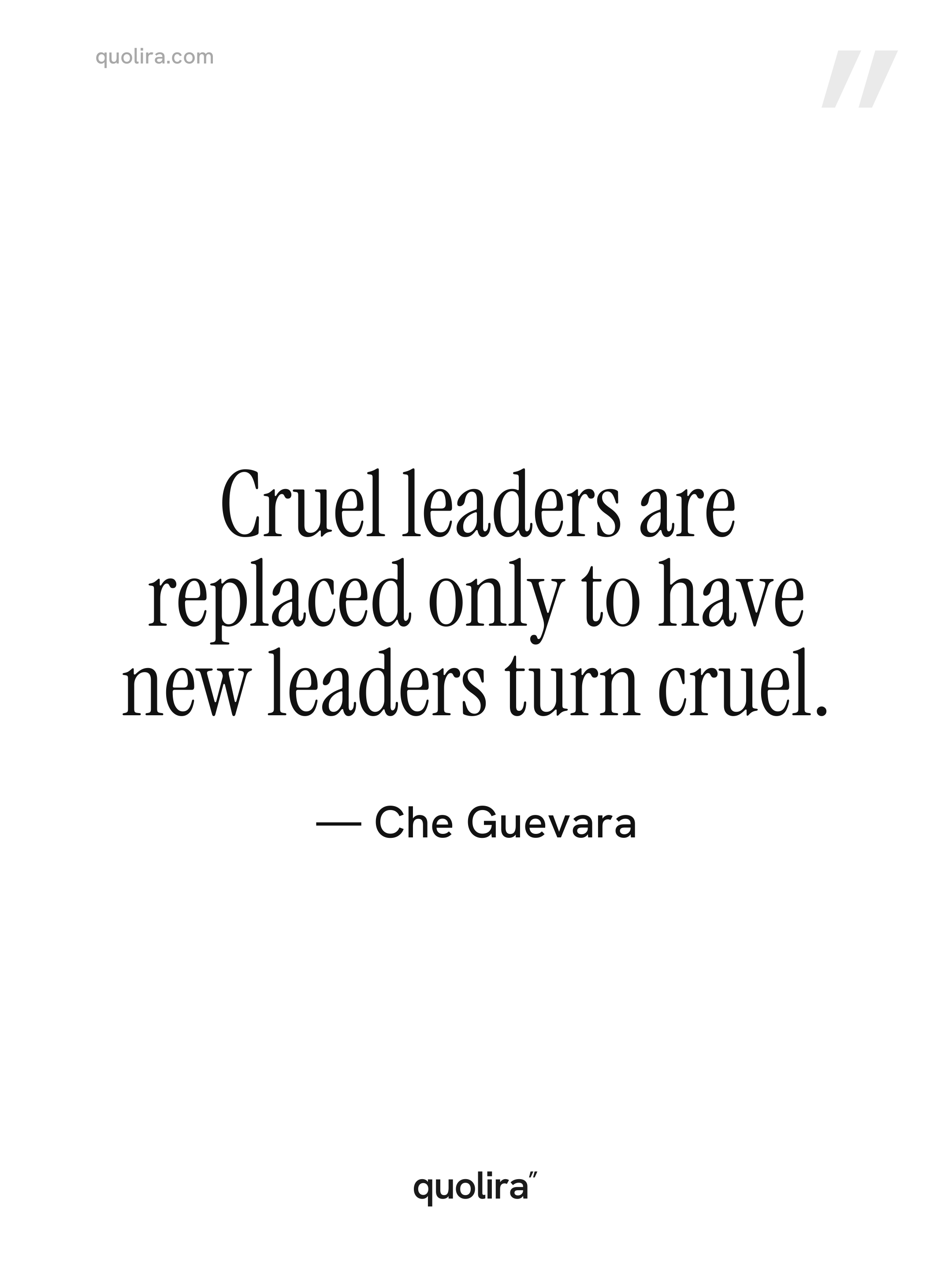
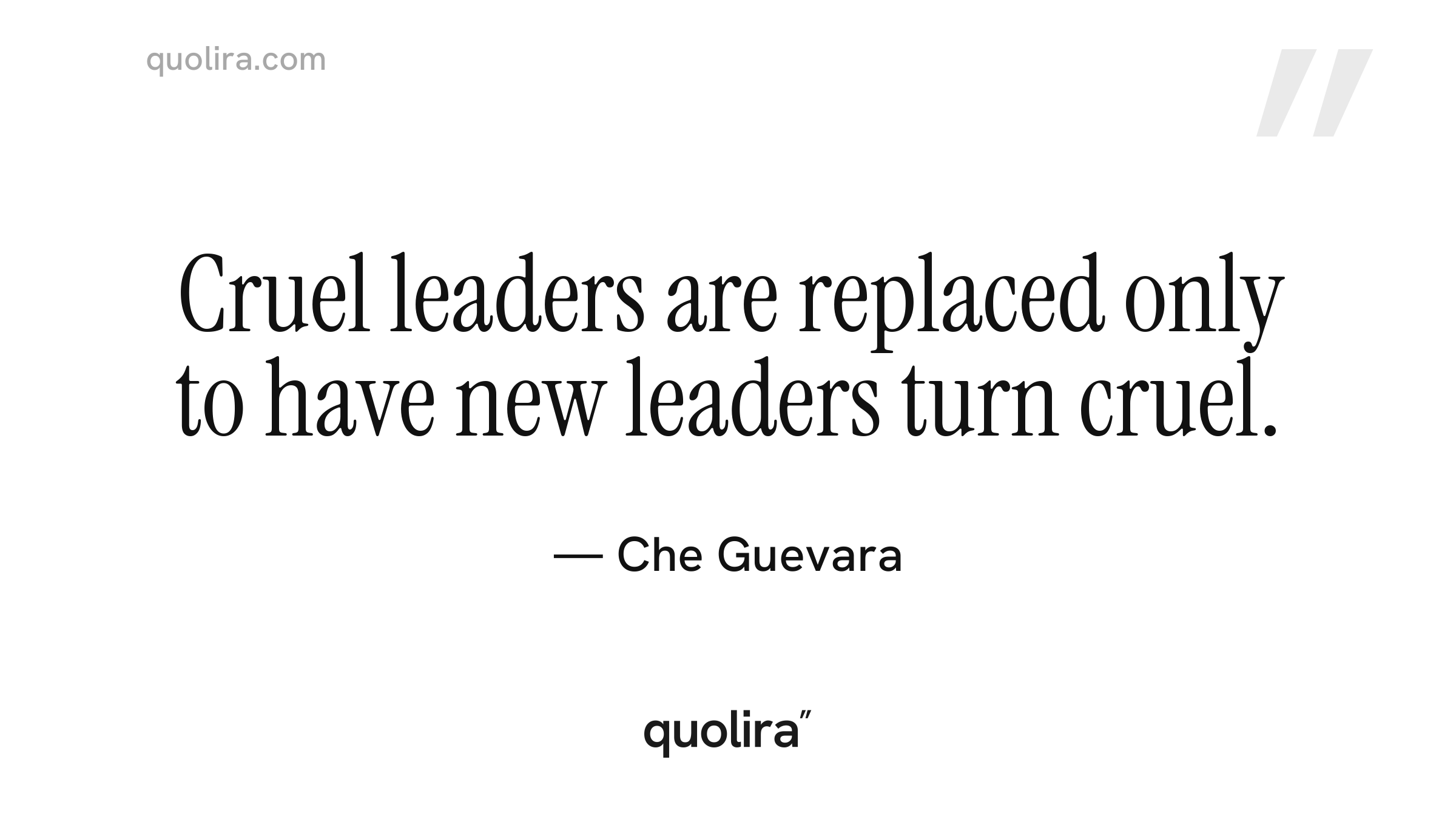
“Cruel leaders are replaced only to have new leaders turn cruel.”
Che Guevara
“I don't care if I fall as long as someone else picks up my gun and keeps on shooting.”
Che Guevara
“We must carry the war into every corner the enemy happens to carry it: to his home, to his centers of entertainment; a total war.”
Che Guevara · Message to the Tricontinental, 1967