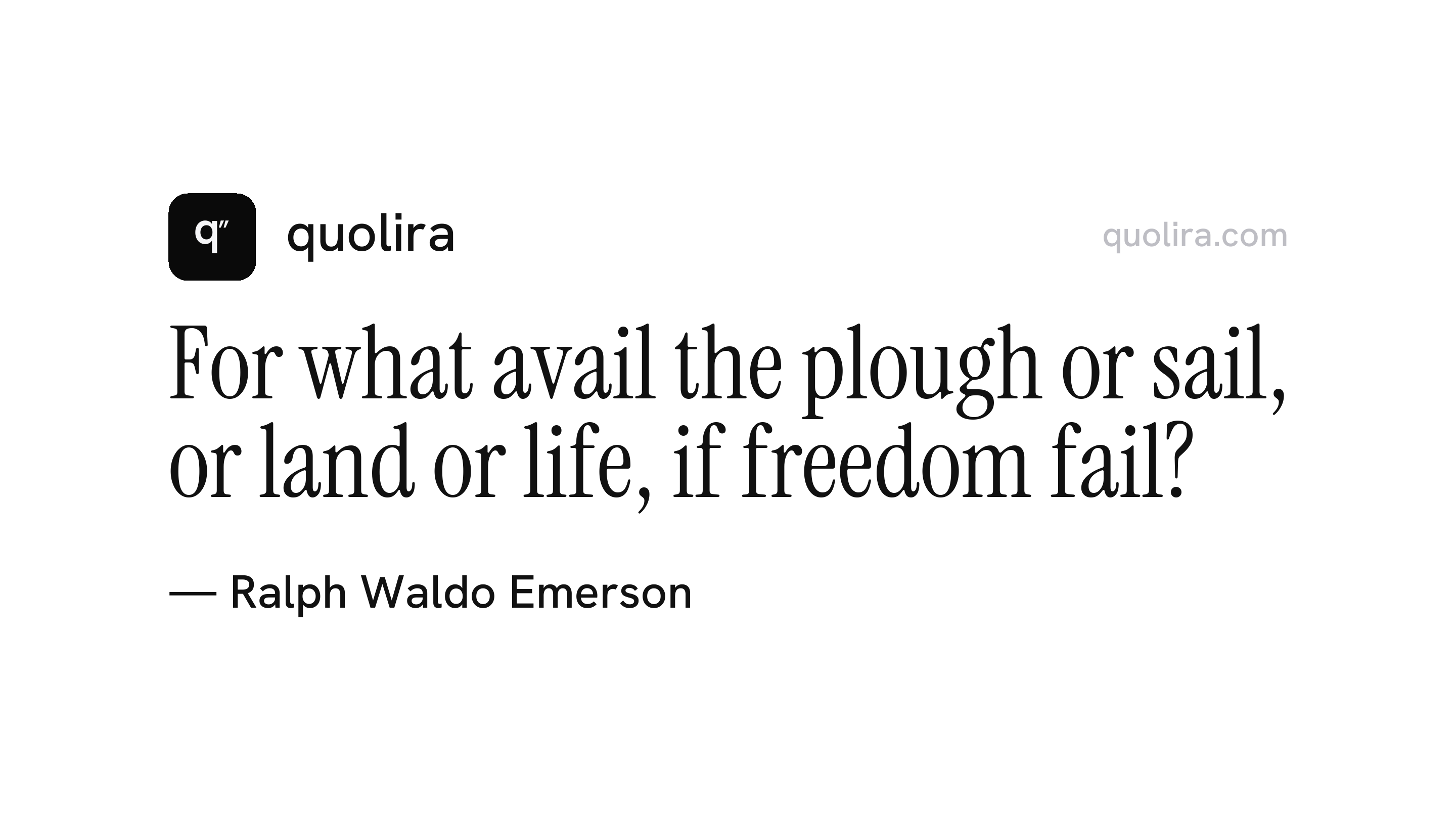
“For what avail the plough or sail, or land or life, if freedom fail?”
Ralph Waldo Emerson · "Boston," poem, 1830s
 quolira
.com
quolira
quolira.com
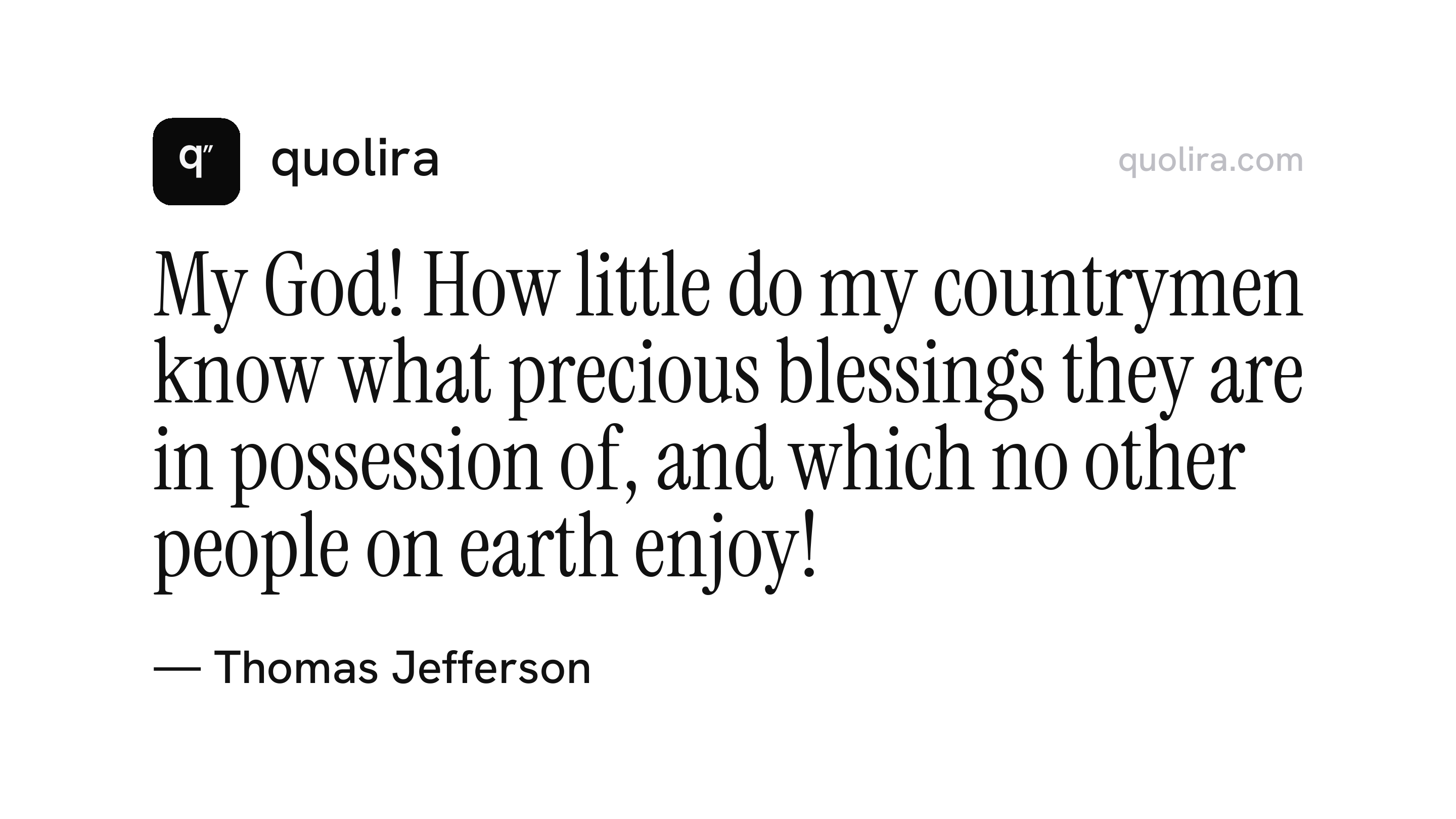
Jefferson is expressing a mixture of gratitude and frustration in this line. Writing from abroad, he is struck by how many of his fellow Americans seem unaware of how unusual and valuable their political situation actually is. The exclamation carries genuine feeling: he has seen enough of other societies to recognize that the liberties Americans enjoyed at the time were not common in the wider world, and he worries that people at home take them for granted.
Jefferson wrote this in a private letter to James Monroe in June 1785, during a period when Jefferson was living in France as the American minister to that country. The experience of observing European governments, social hierarchies, and the condition of ordinary people gave Jefferson a sharper appreciation for what the American experiment represented. The letter was personal correspondence rather than a public statement, which gives the remark its candid, unguarded quality. Jefferson was reflecting on the contrast between what he observed in Europe and the political freedoms that Americans, at least a portion of them, then possessed.
Thomas Jefferson was the third President of the United States, serving from 1801 to 1809, and is best known as the principal author of the Declaration of Independence. He was a planter, architect, philosopher, and public servant whose writings on liberty and government shaped American political thought profoundly. Jefferson's legacy is complex, as he wrote movingly about universal freedom while himself enslaving hundreds of people throughout his life. Historians continue to grapple with the contradictions between his ideals and his actions, even as his influence on American ideas remains central.
“For what avail the plough or sail, or land or life, if freedom fail?”
Ralph Waldo Emerson · "Boston," poem, 1830s
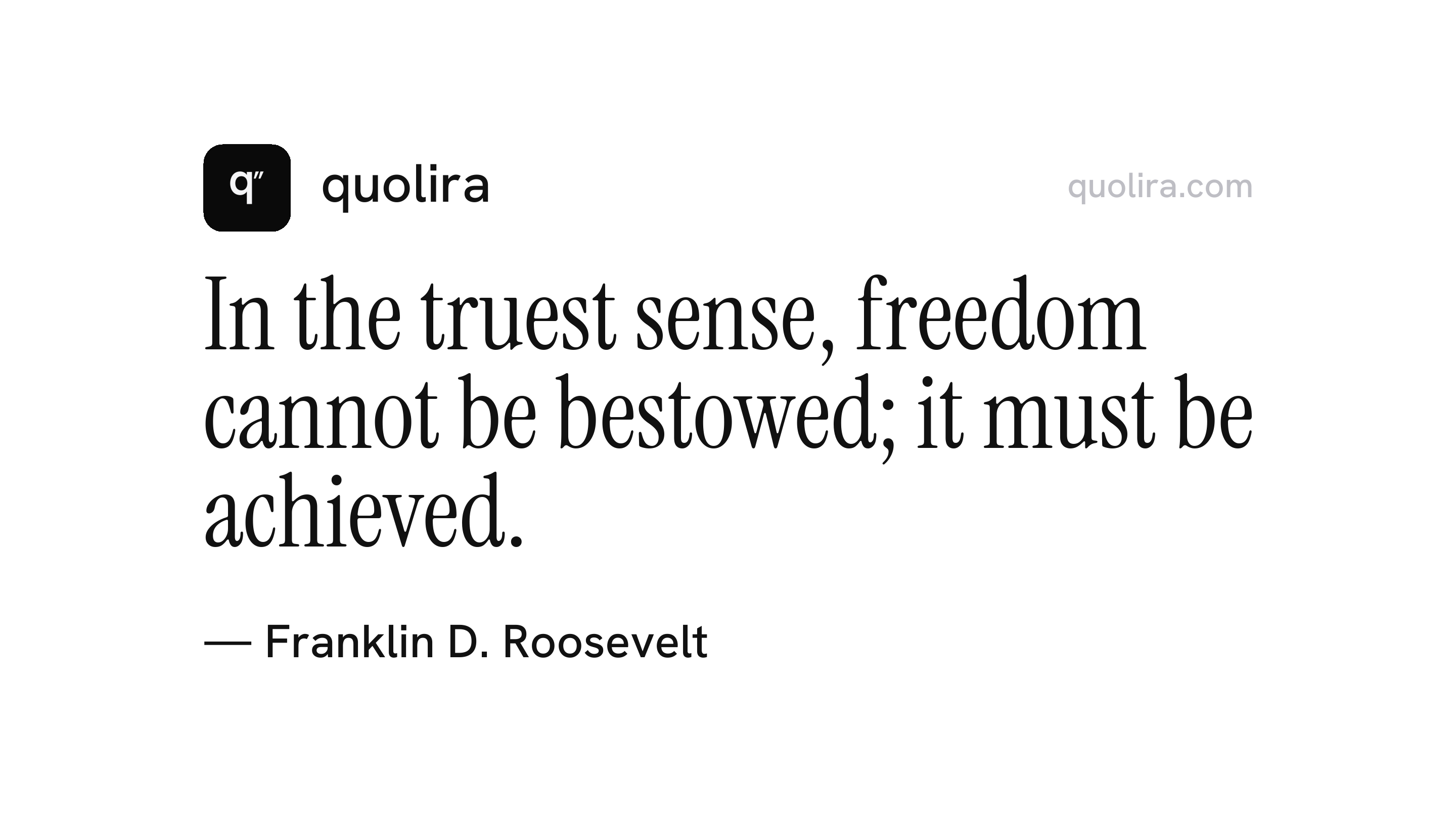
“In the truest sense, freedom cannot be bestowed; it must be achieved.”
Franklin D. Roosevelt · Speech on the Seventy-Fourth Anniversary of the Emancipation Proclamation, September 22, 1936
“We must be free not because we claim freedom, but because we practice it.”
William Faulkner · Essay "On Fear: Deep South in Labor," Harper's Magazine, June 1956
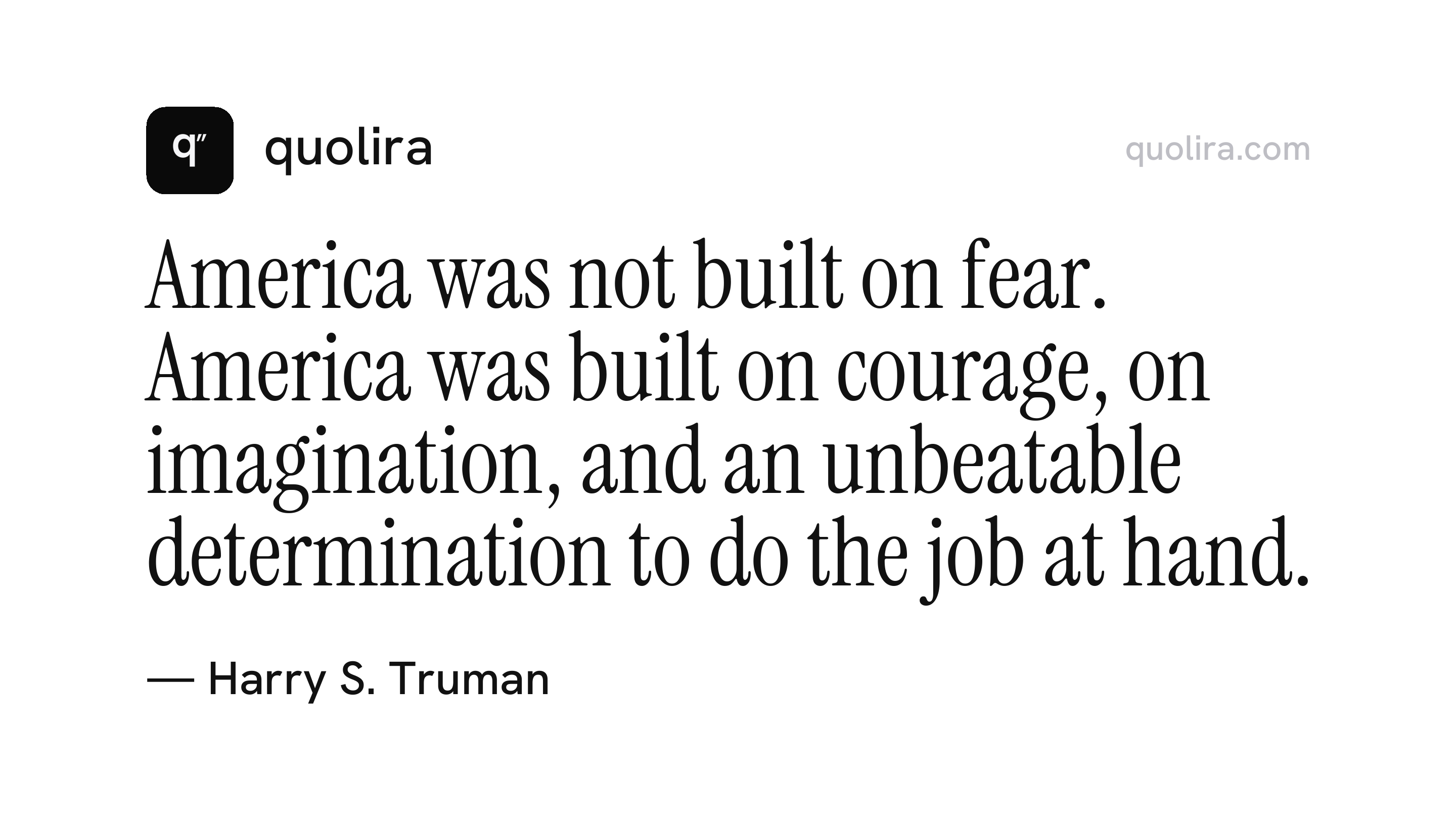
“America was not built on fear. America was built on courage, on imagination, and an unbeatable determination to do the job at hand.”
Harry S. Truman · Special Message to the Congress on the State of the Union, January 8, 1947
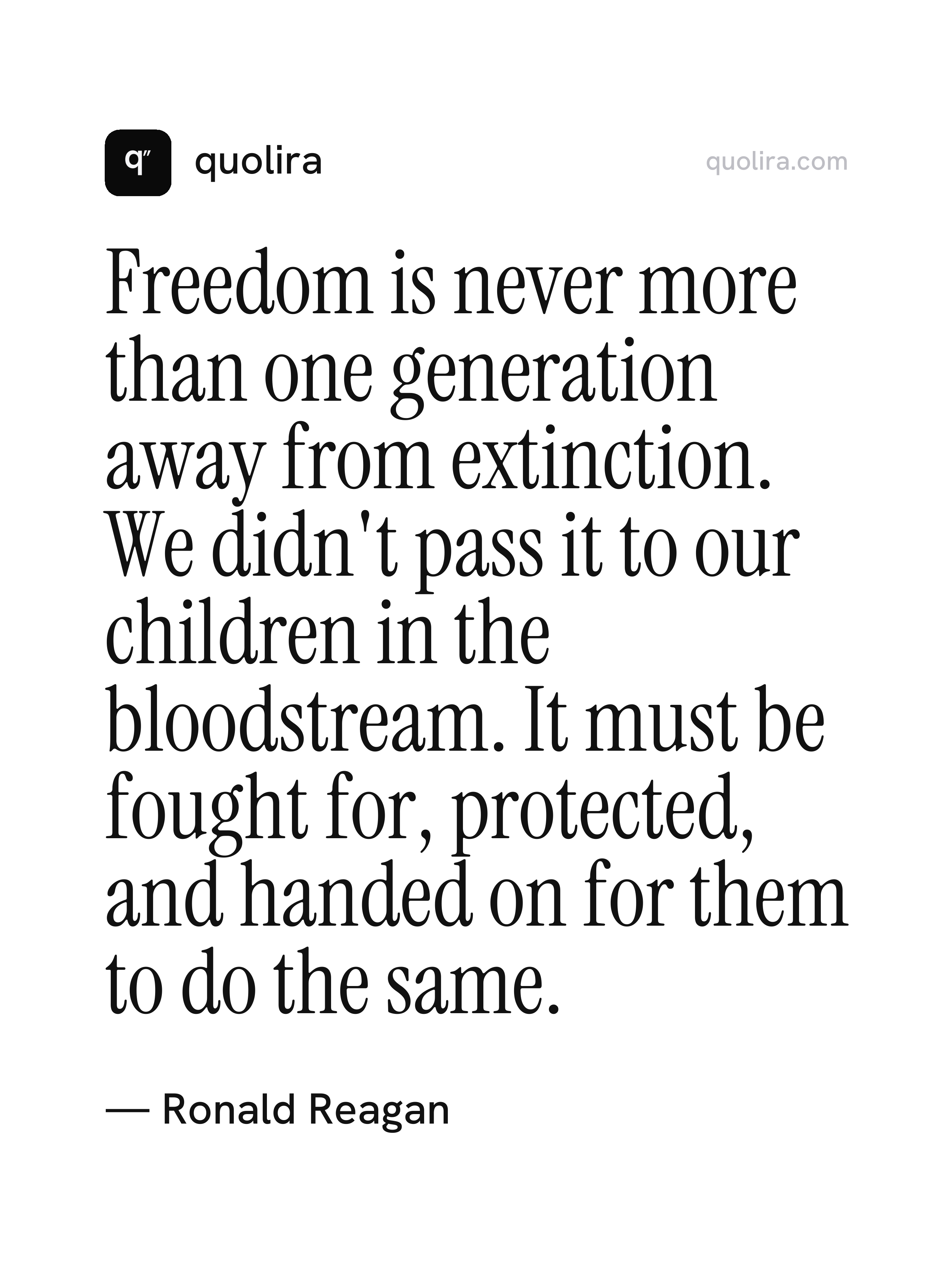
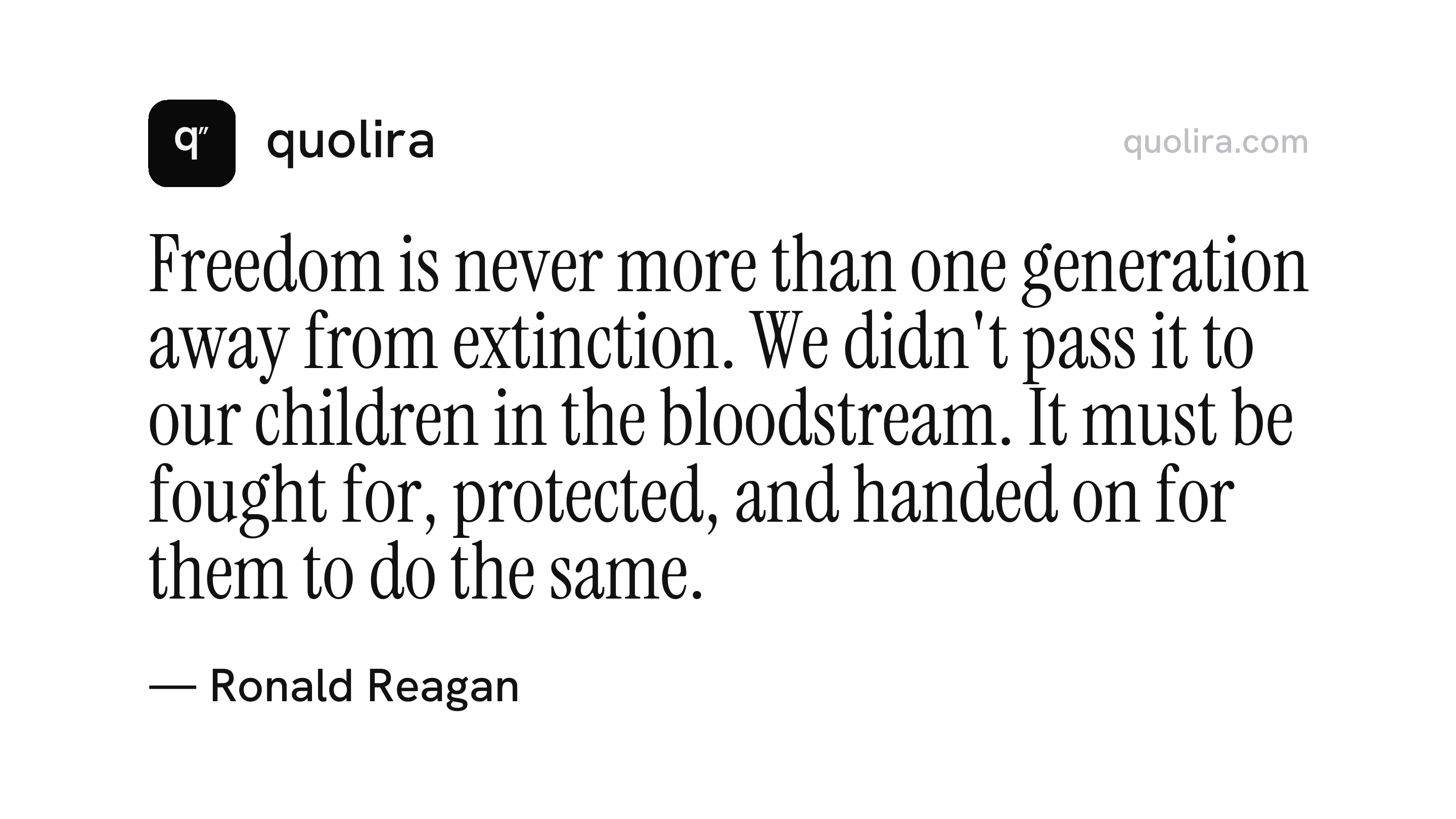
“Freedom is never more than one generation away from extinction. We didn't pass it to our children in the bloodstream. It must be fought for, protected, and handed on for them to do the same.”
Ronald Reagan · Address to the Annual Meeting of the Phoenix Chamber of Commerce, March 30, 1961
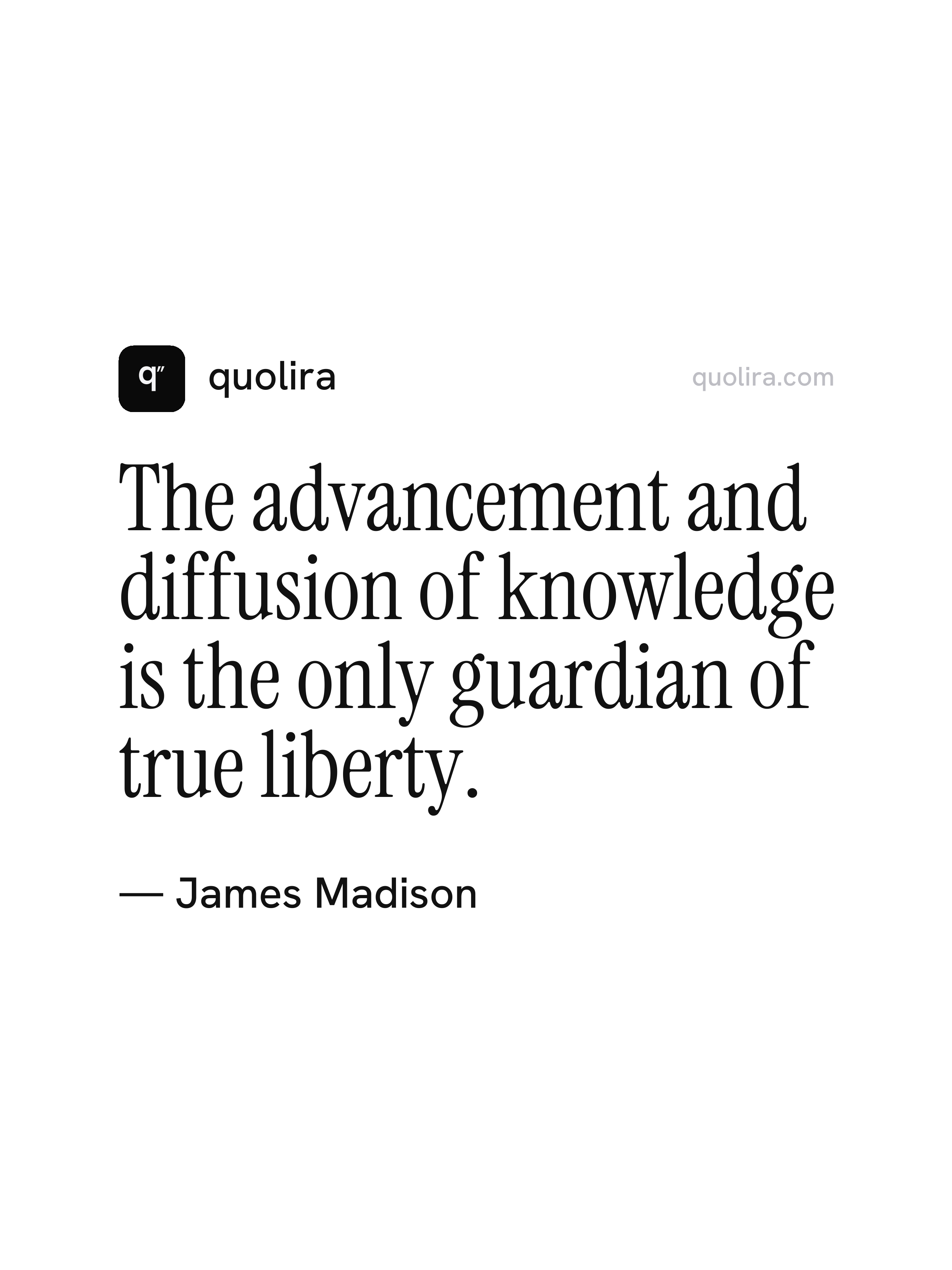
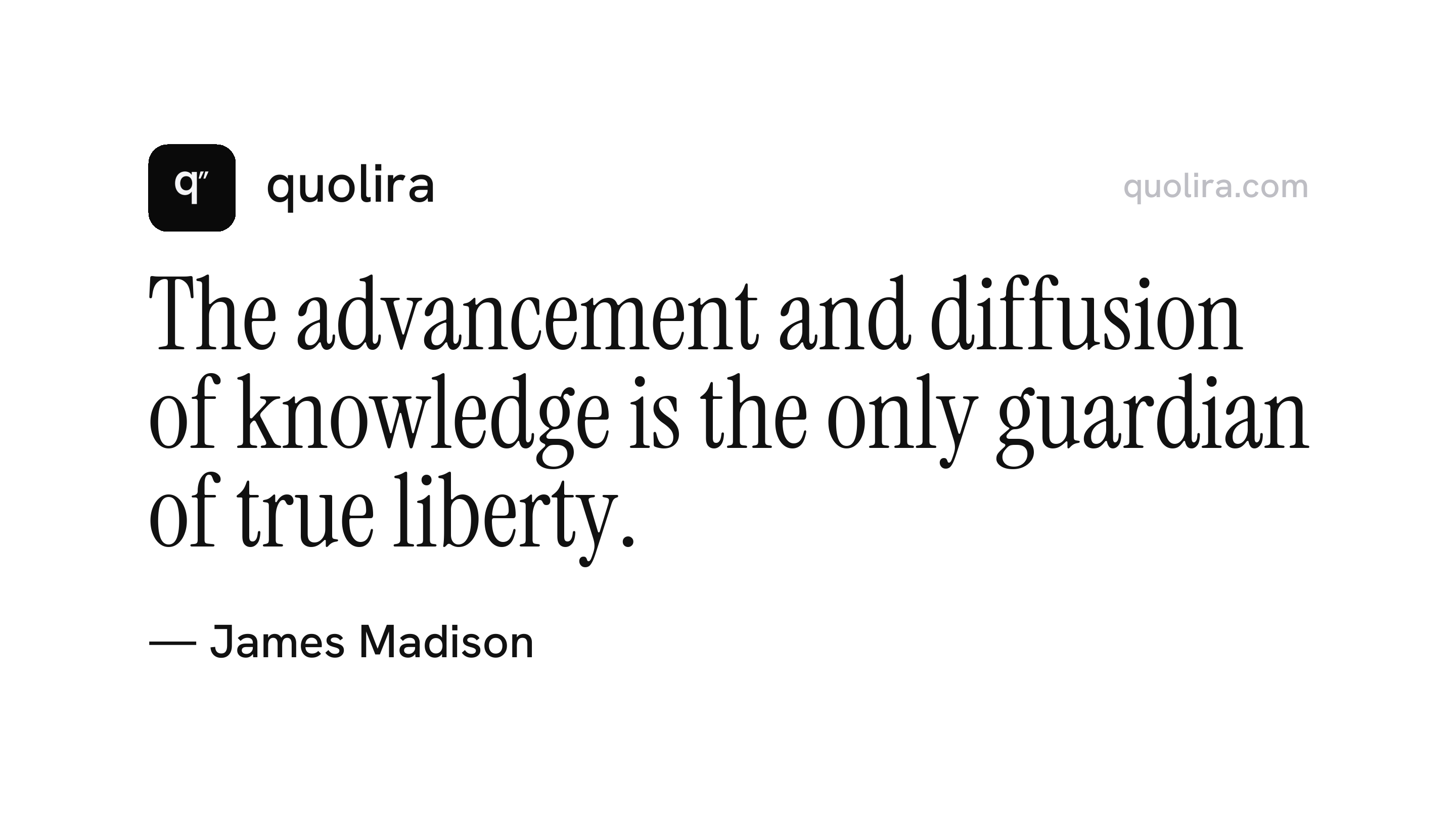
“The advancement and diffusion of knowledge is the only guardian of true liberty.”
James Madison · Letter to George Thompson, June 30, 1825
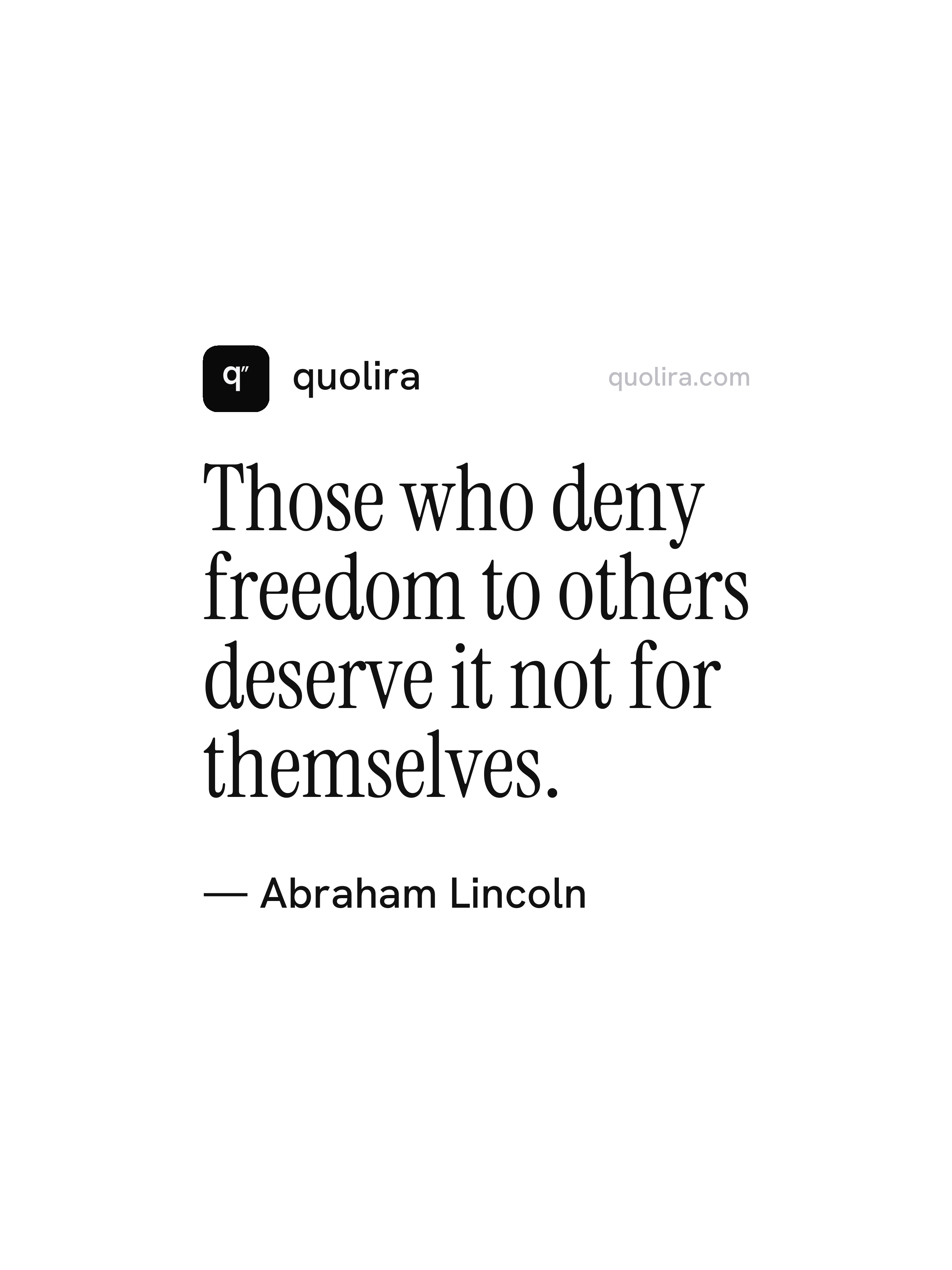
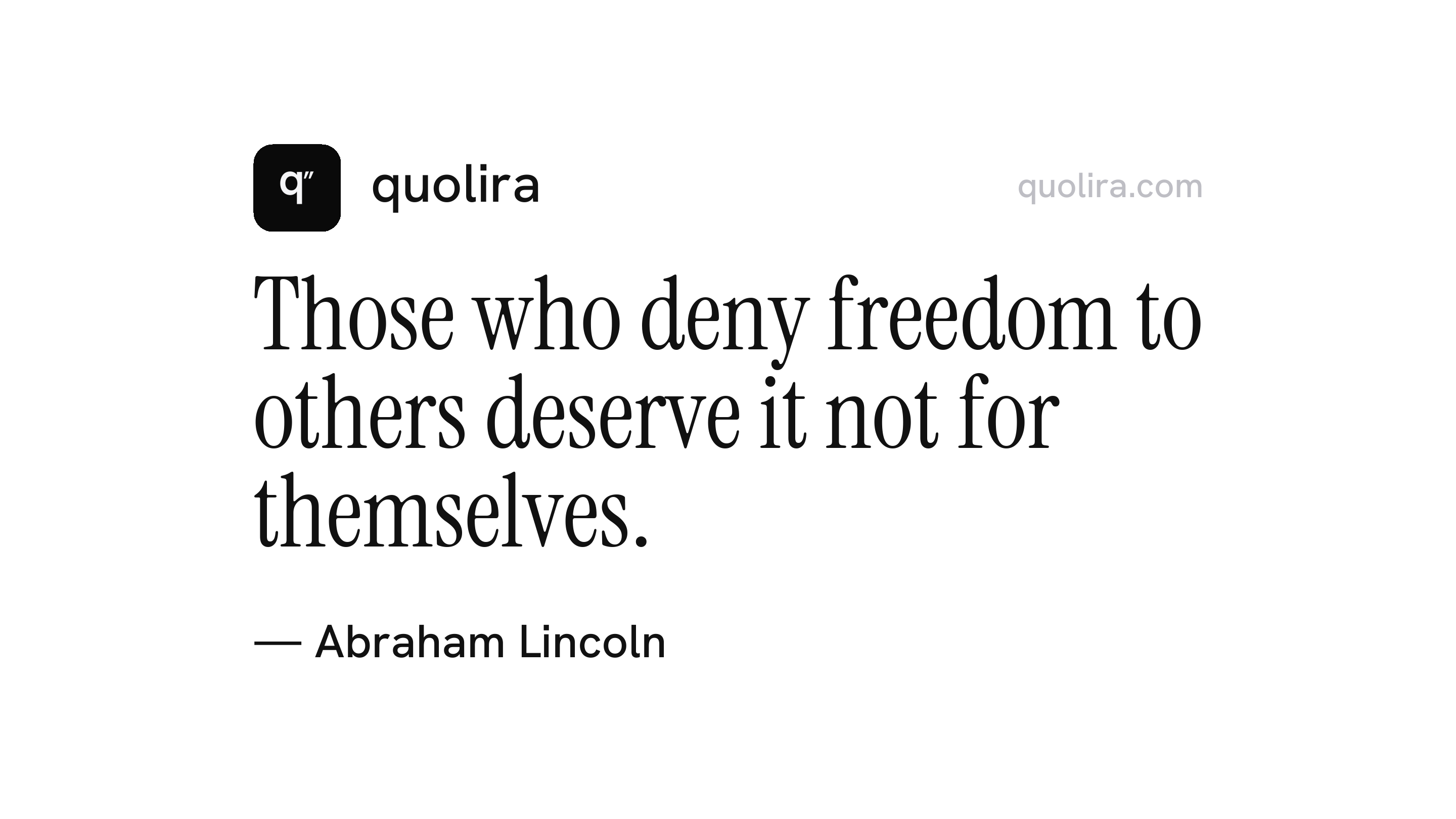
“Those who deny freedom to others deserve it not for themselves.”
Abraham Lincoln · Letter to Henry L. Pierce, April 6, 1859
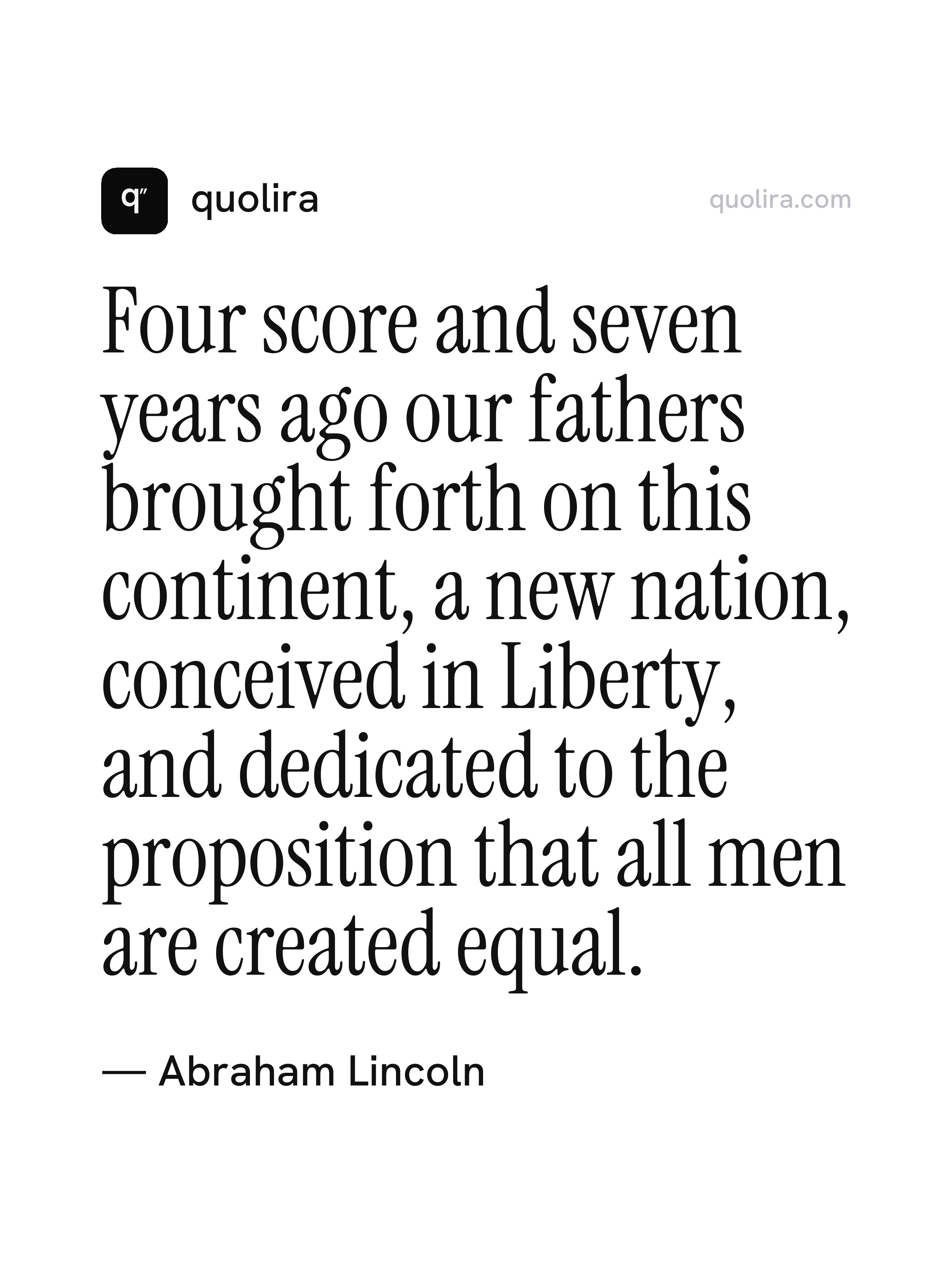
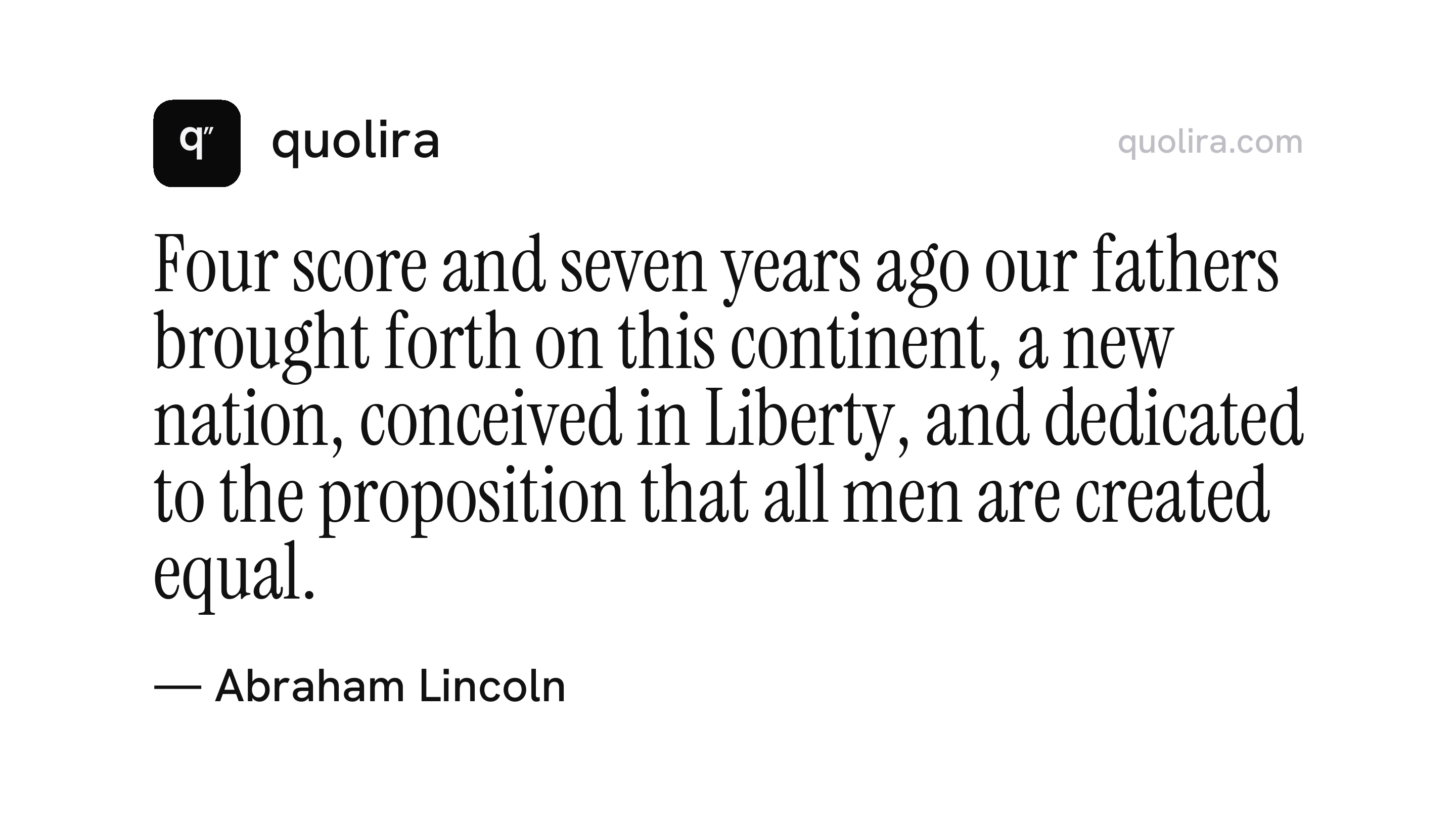
“Four score and seven years ago our fathers brought forth on this continent, a new nation, conceived in Liberty, and dedicated to the proposition that all men are created equal.”
Abraham Lincoln · Gettysburg Address, November 19, 1863
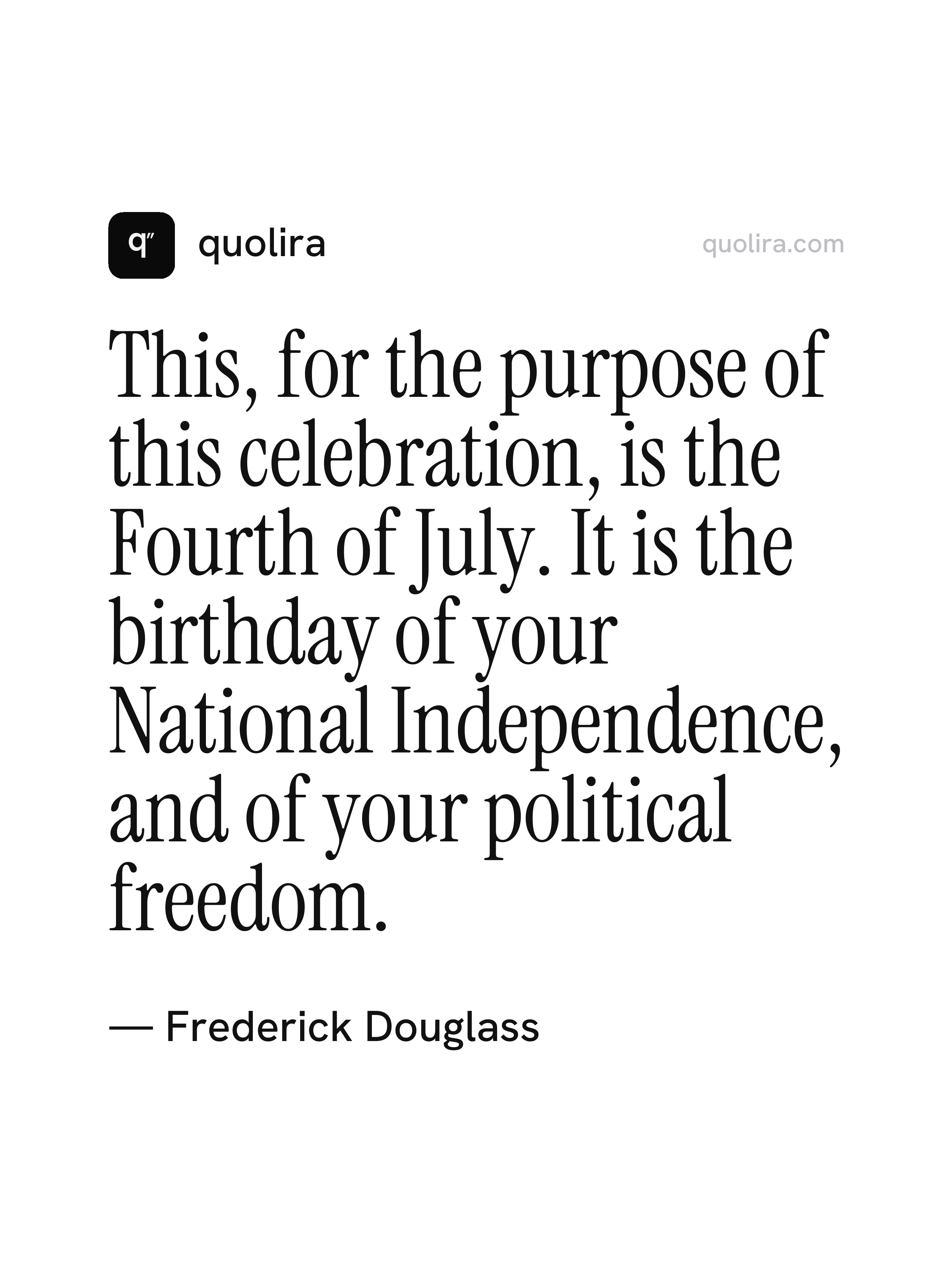
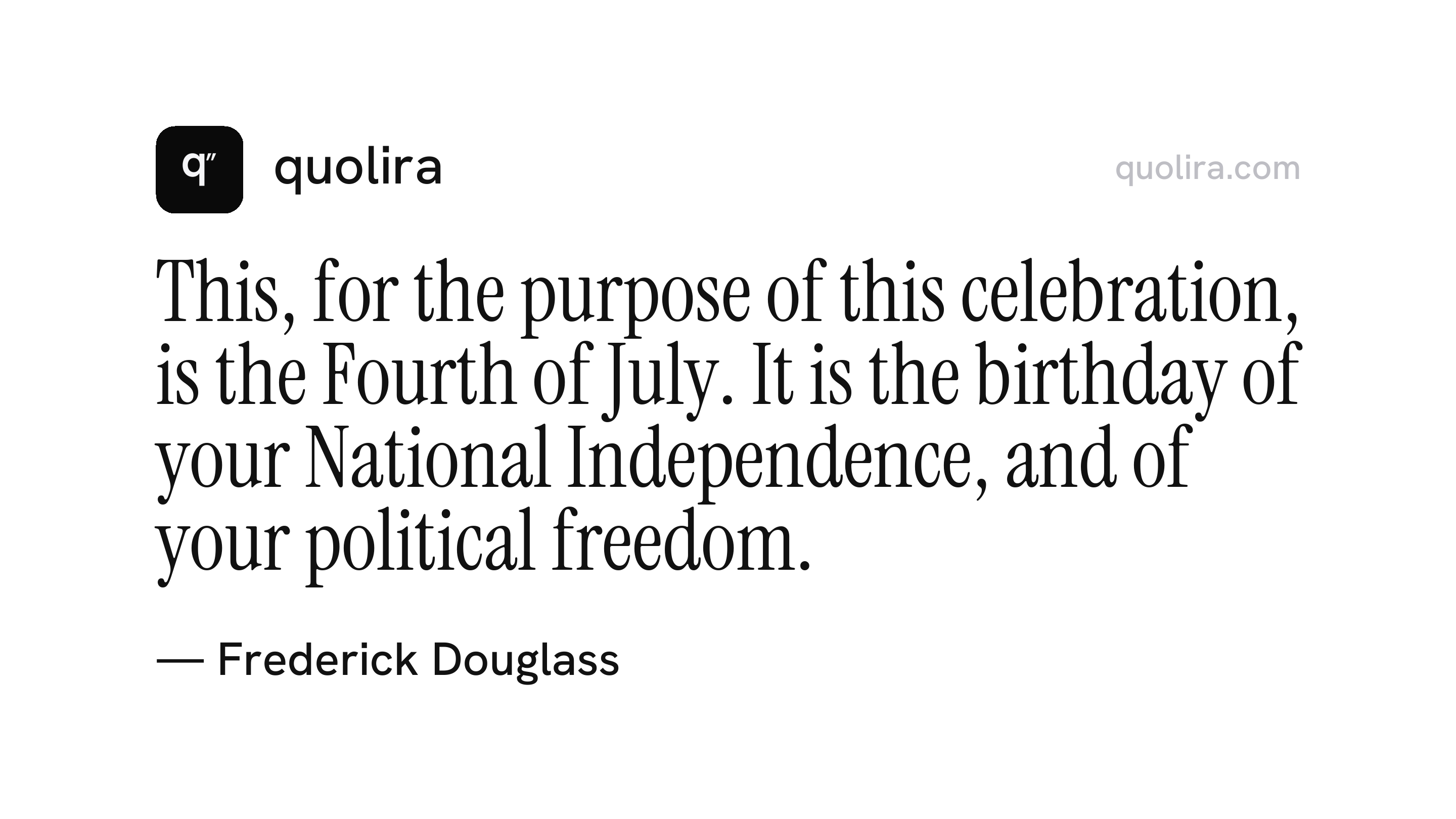
“This, for the purpose of this celebration, is the Fourth of July. It is the birthday of your National Independence, and of your political freedom.”
Frederick Douglass · What to the Slave Is the Fourth of July?, July 5, 1852
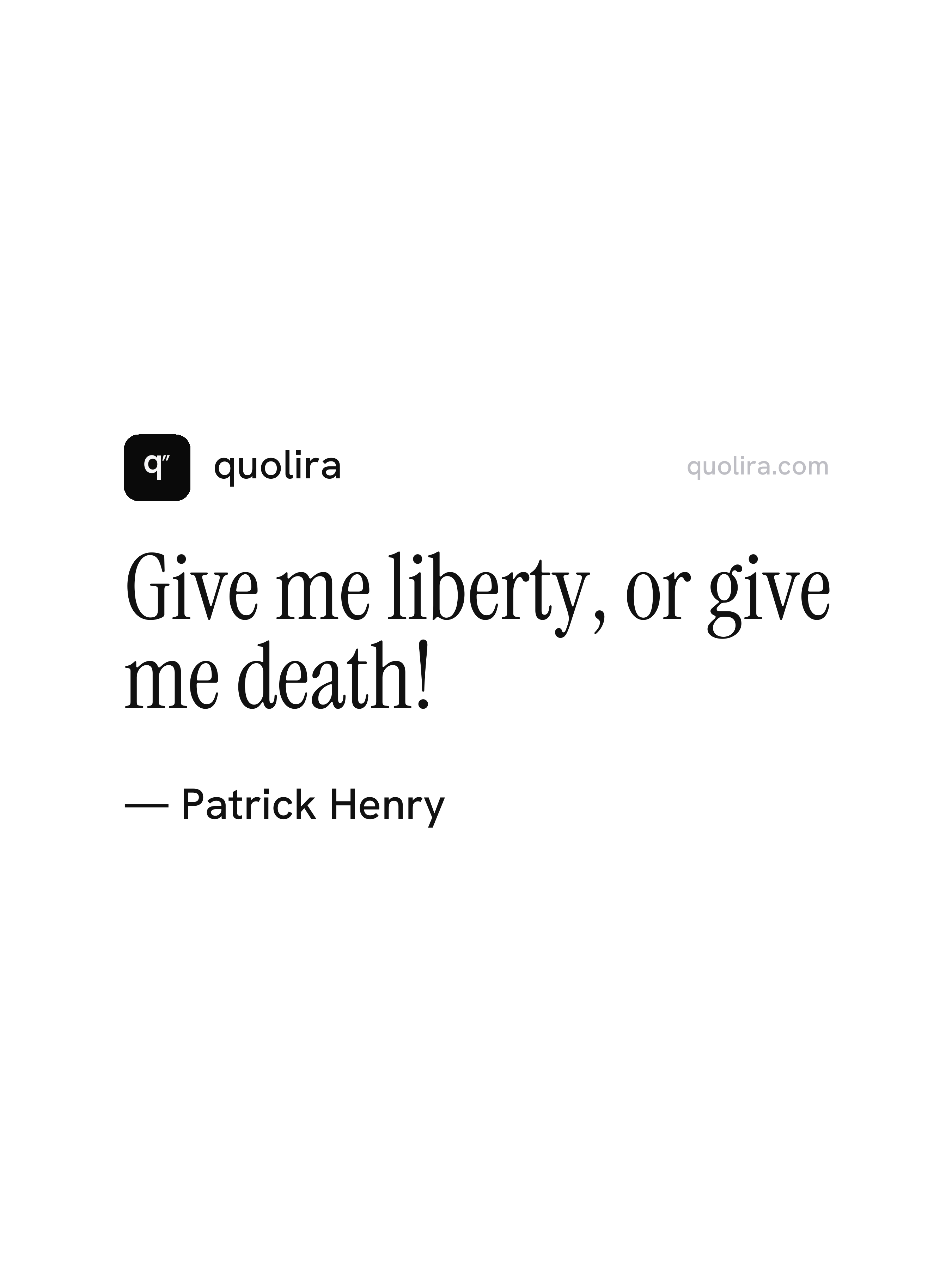
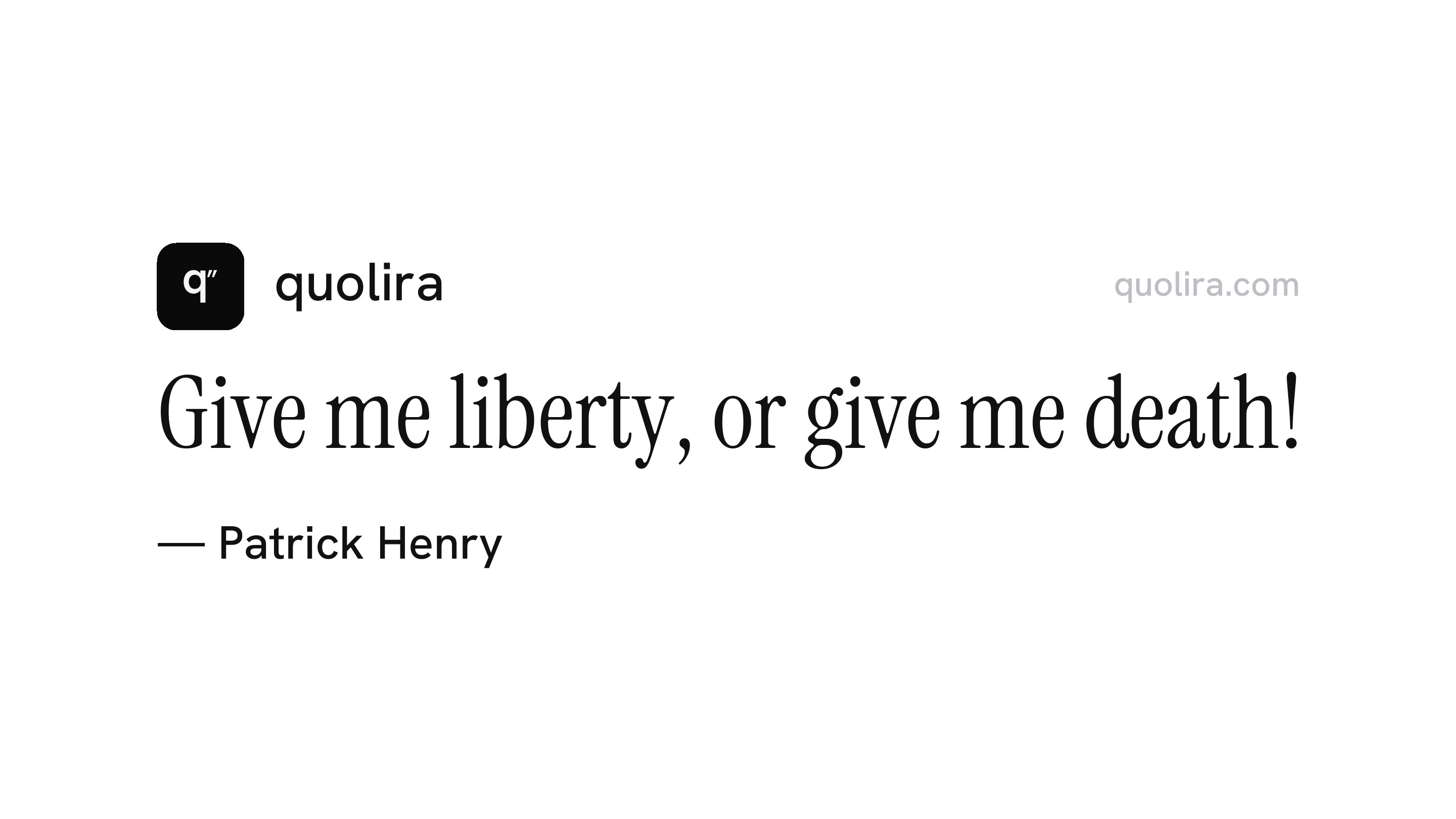
“Give me liberty, or give me death!”
Patrick Henry · Speech to the Virginia Convention, March 23, 1775
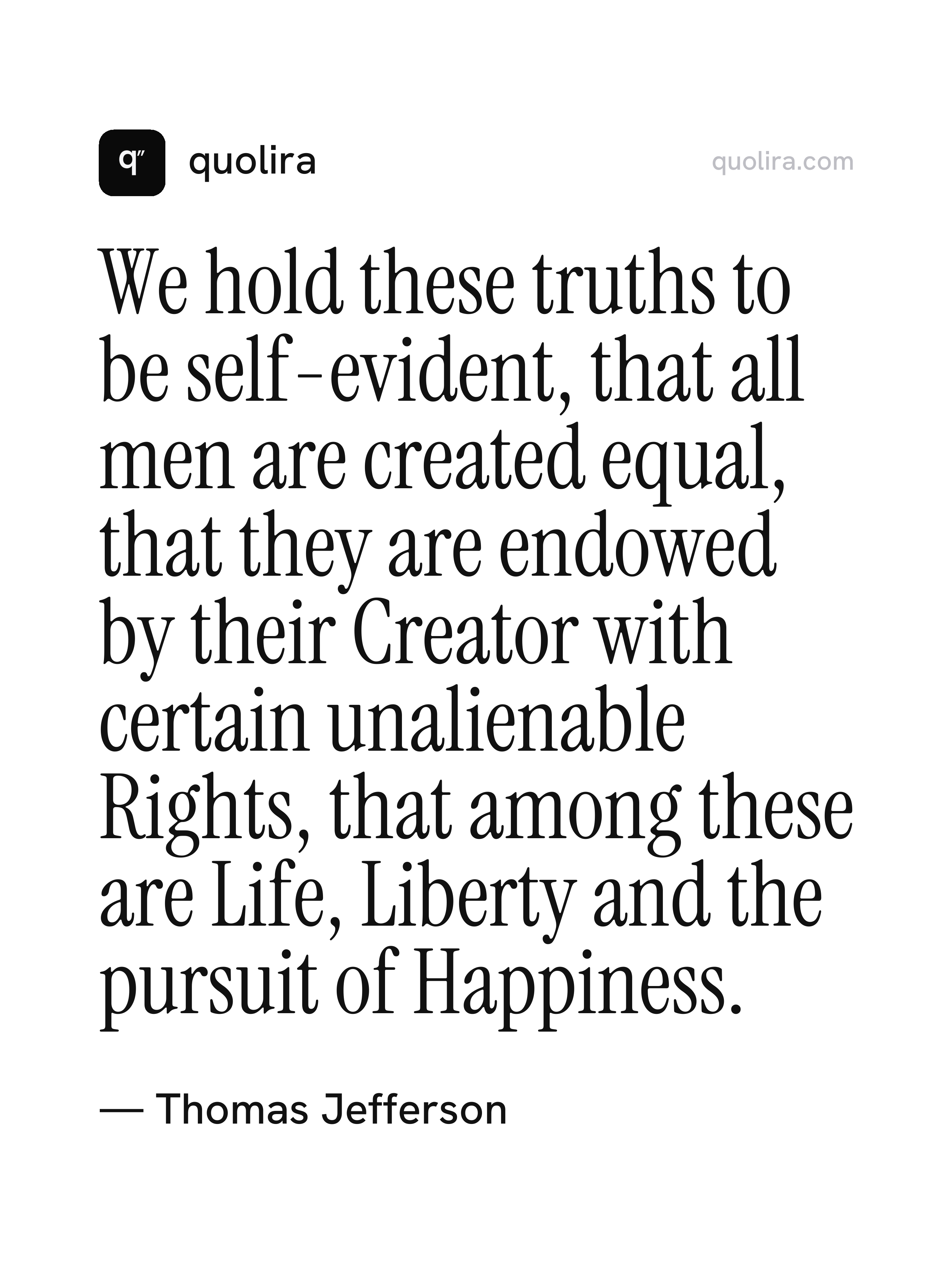
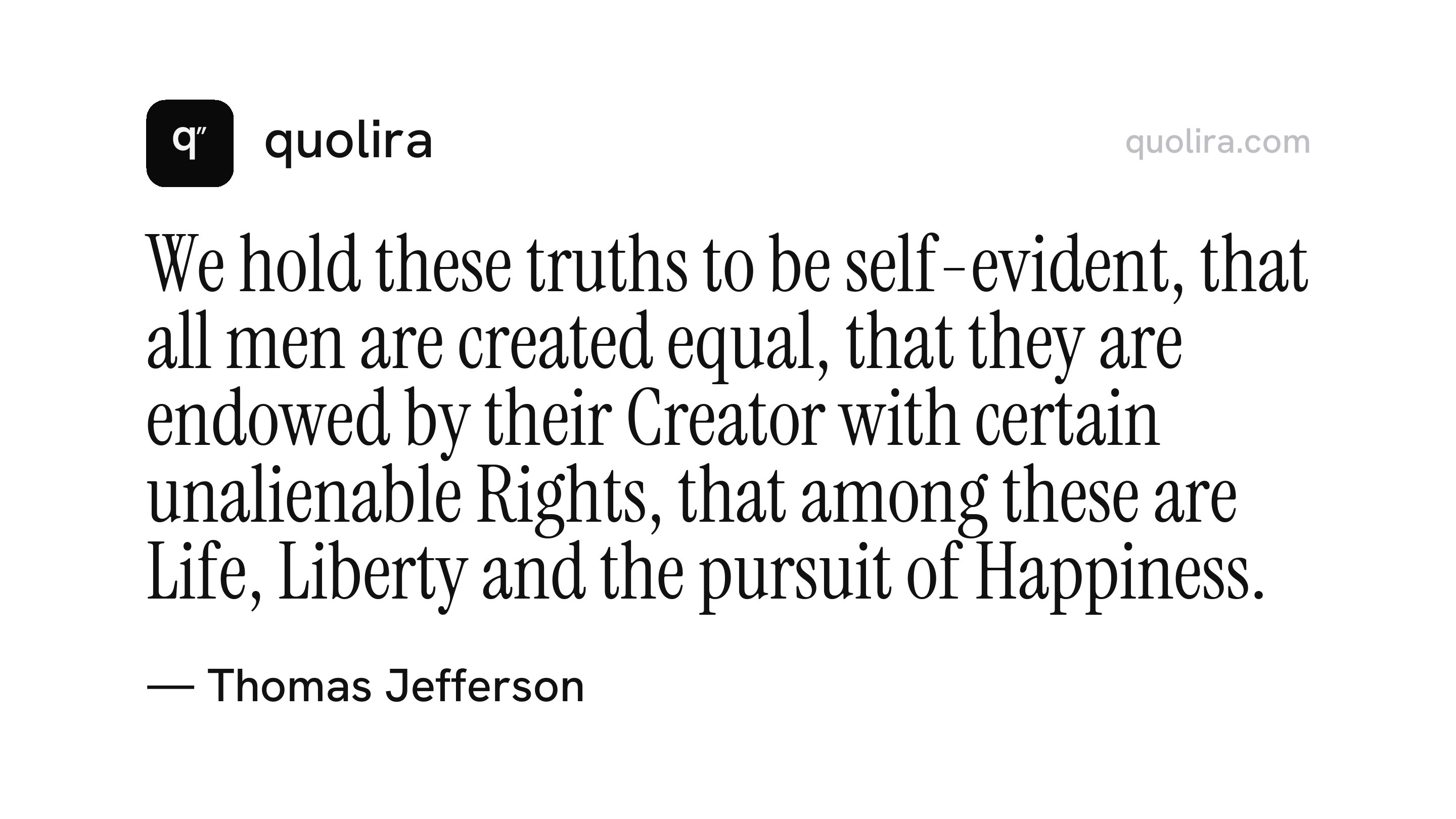
“We hold these truths to be self-evident, that all men are created equal, that they are endowed by their Creator with certain unalienable Rights, that among these are Life, Liberty and the pursuit of Happiness.”
Thomas Jefferson · Declaration of Independence, 1776
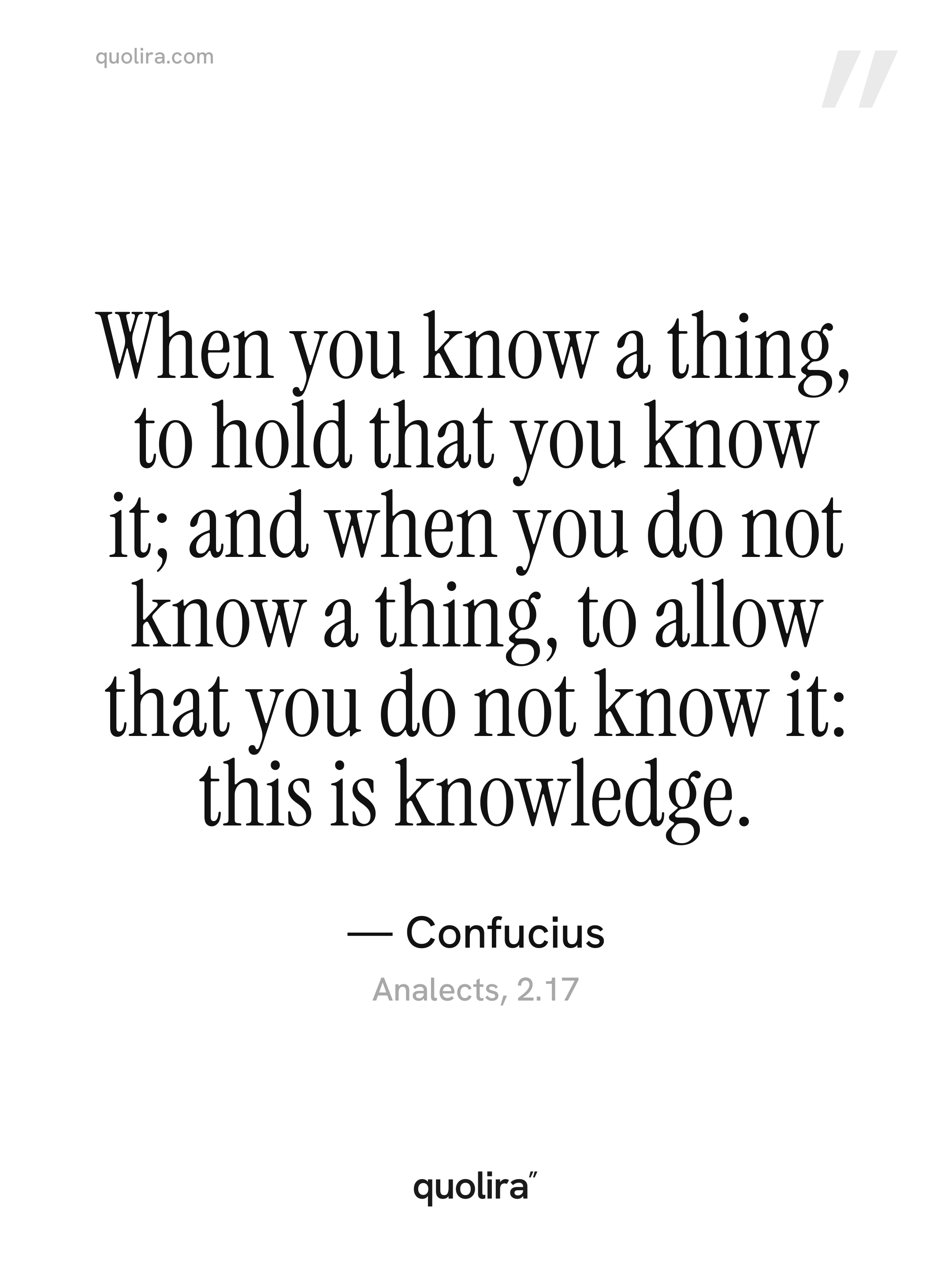
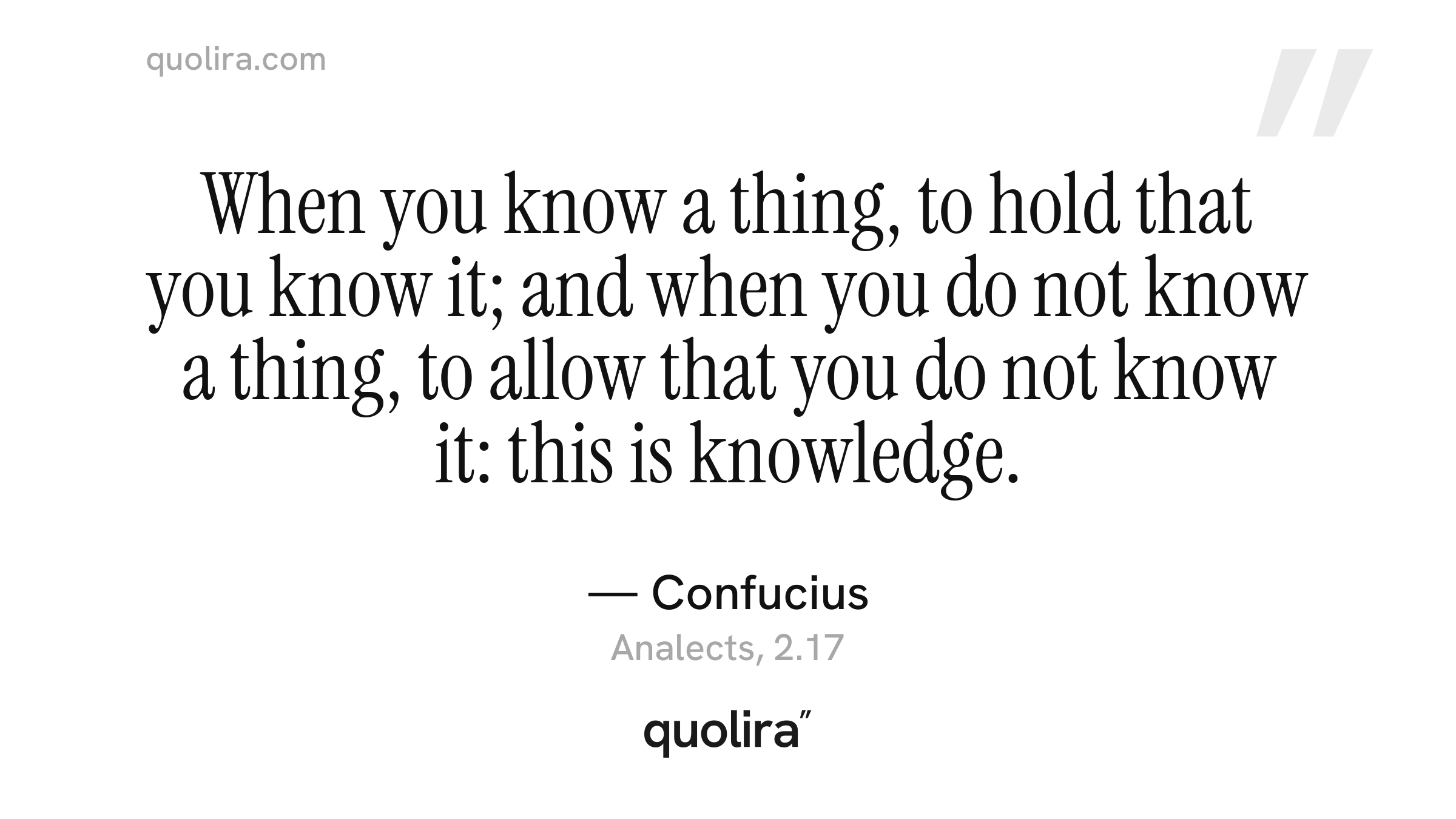
“When you know a thing, to hold that you know it; and when you do not know a thing, to allow that you do not know it: this is knowledge.”
Confucius · Analects, 2.17