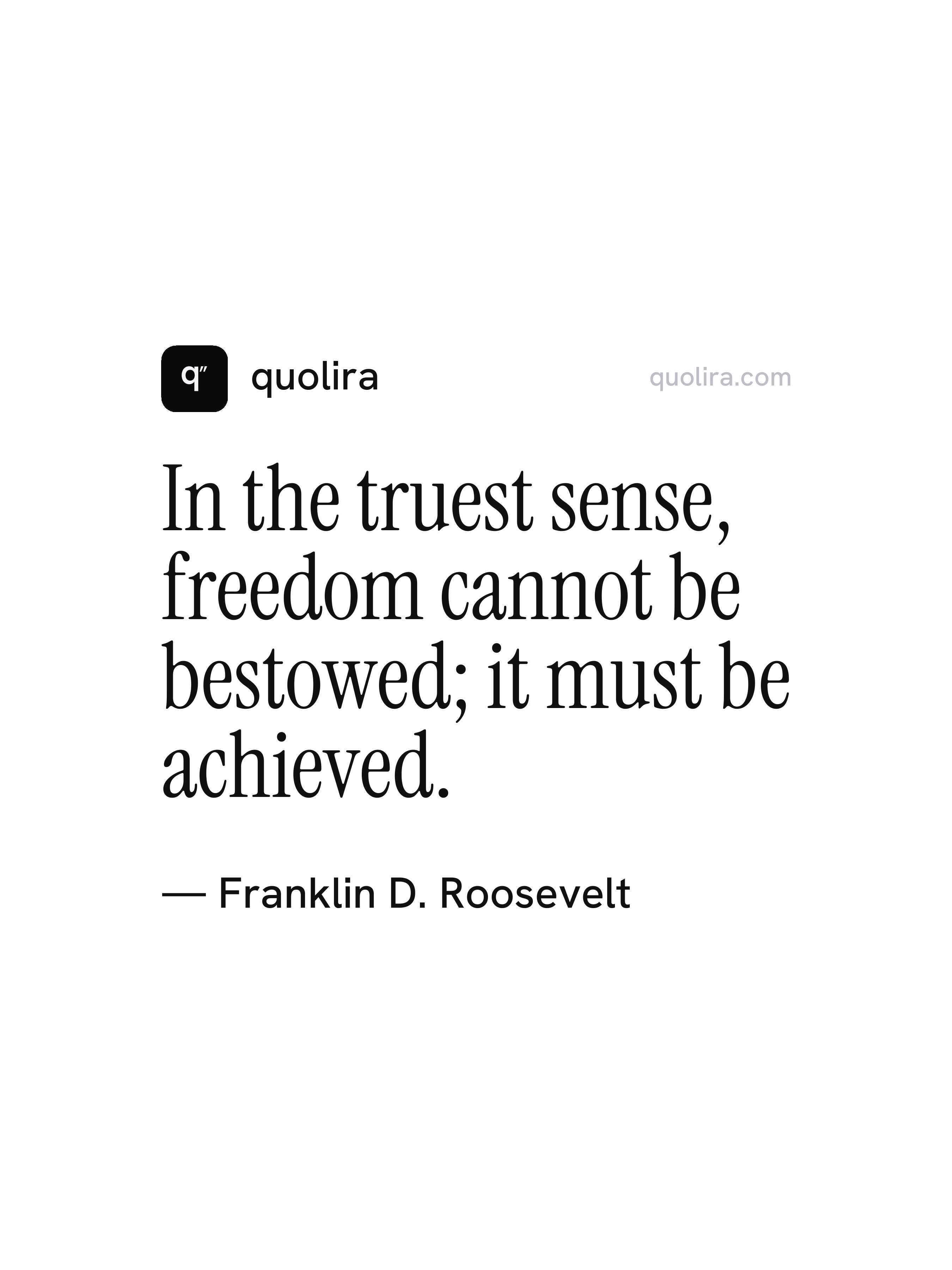
“In the truest sense, freedom cannot be bestowed; it must be achieved.”
Franklin D. Roosevelt · Speech on the Seventy-Fourth Anniversary of the Emancipation Proclamation, September 22, 1936
 quolira
.com
quolira
quolira.com
Emerson is asking a pointed question about the purpose of material prosperity and ordinary life. The plough, the sail, land, and life itself represent everything that people labor to build and protect. His argument is that none of it carries real value if the freedom that makes those things meaningful is lost. Without liberty as its foundation, all other achievement becomes hollow.
This couplet comes from a poem about Boston, written by Emerson in the 1830s, a period when he was becoming a central figure in American intellectual life. The poem celebrates the city's revolutionary heritage and the spirit of independence that defined its history. The 1830s were a time of significant tension in the United States over questions of slavery, states' rights, and the meaning of the founding ideals, and Emerson's poetry of this period often engaged with those larger themes even when addressing local subjects. The compressed, memorable form of the couplet gave the idea a force that longer prose could not.
Ralph Waldo Emerson was an American essayist, poet, and philosopher based in Concord, Massachusetts, who became one of the leading voices of the Transcendentalist movement in the nineteenth century. He believed deeply in individual self-reliance, the life of the mind, and the moral responsibility of the citizen. His essays and lectures influenced generations of American thinkers and writers, and his work continues to be read as a foundation of American intellectual culture. He was also an outspoken critic of slavery later in his life.
“In the truest sense, freedom cannot be bestowed; it must be achieved.”
Franklin D. Roosevelt · Speech on the Seventy-Fourth Anniversary of the Emancipation Proclamation, September 22, 1936
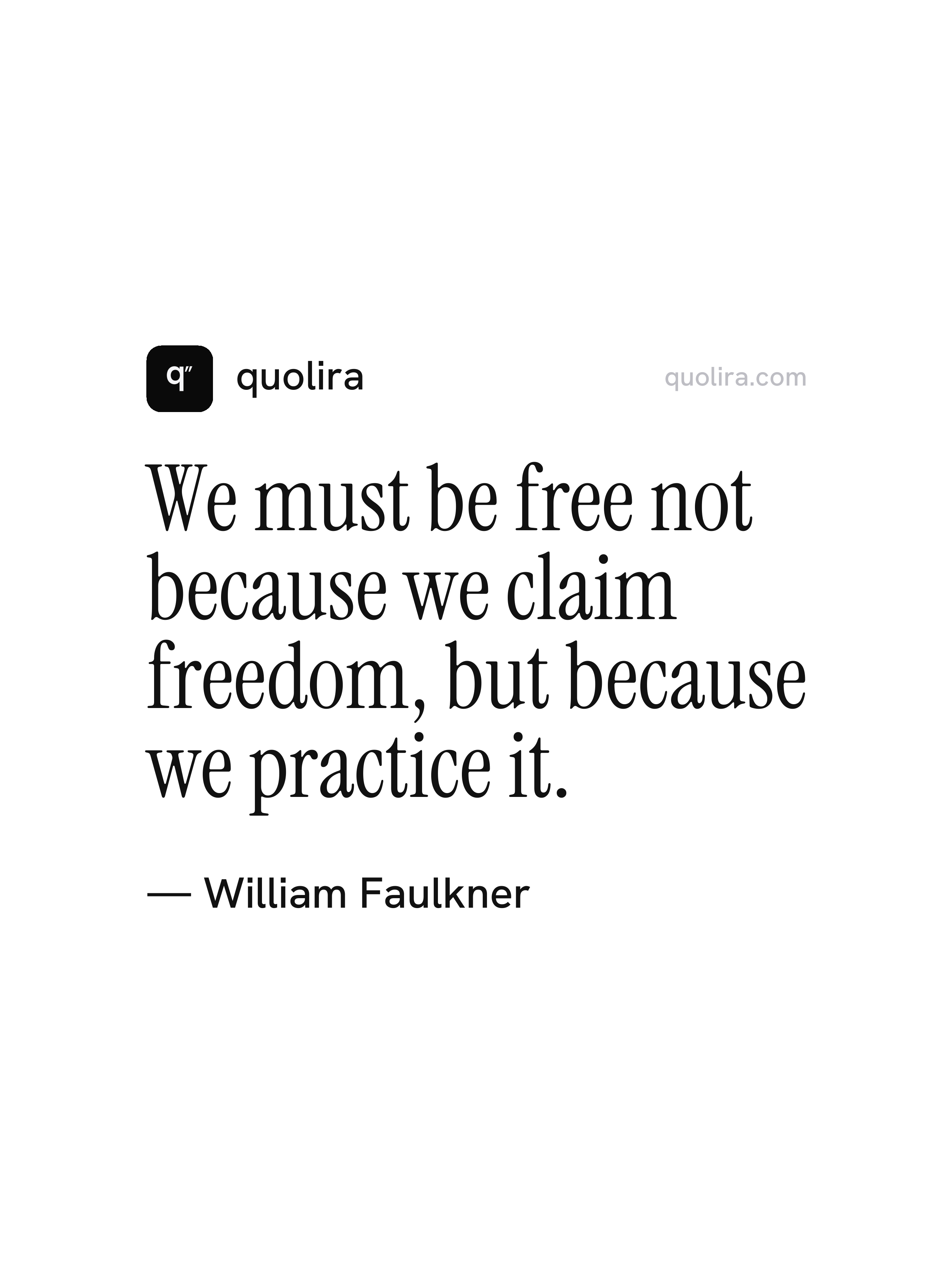
“We must be free not because we claim freedom, but because we practice it.”
William Faulkner · Essay "On Fear: Deep South in Labor," Harper's Magazine, June 1956
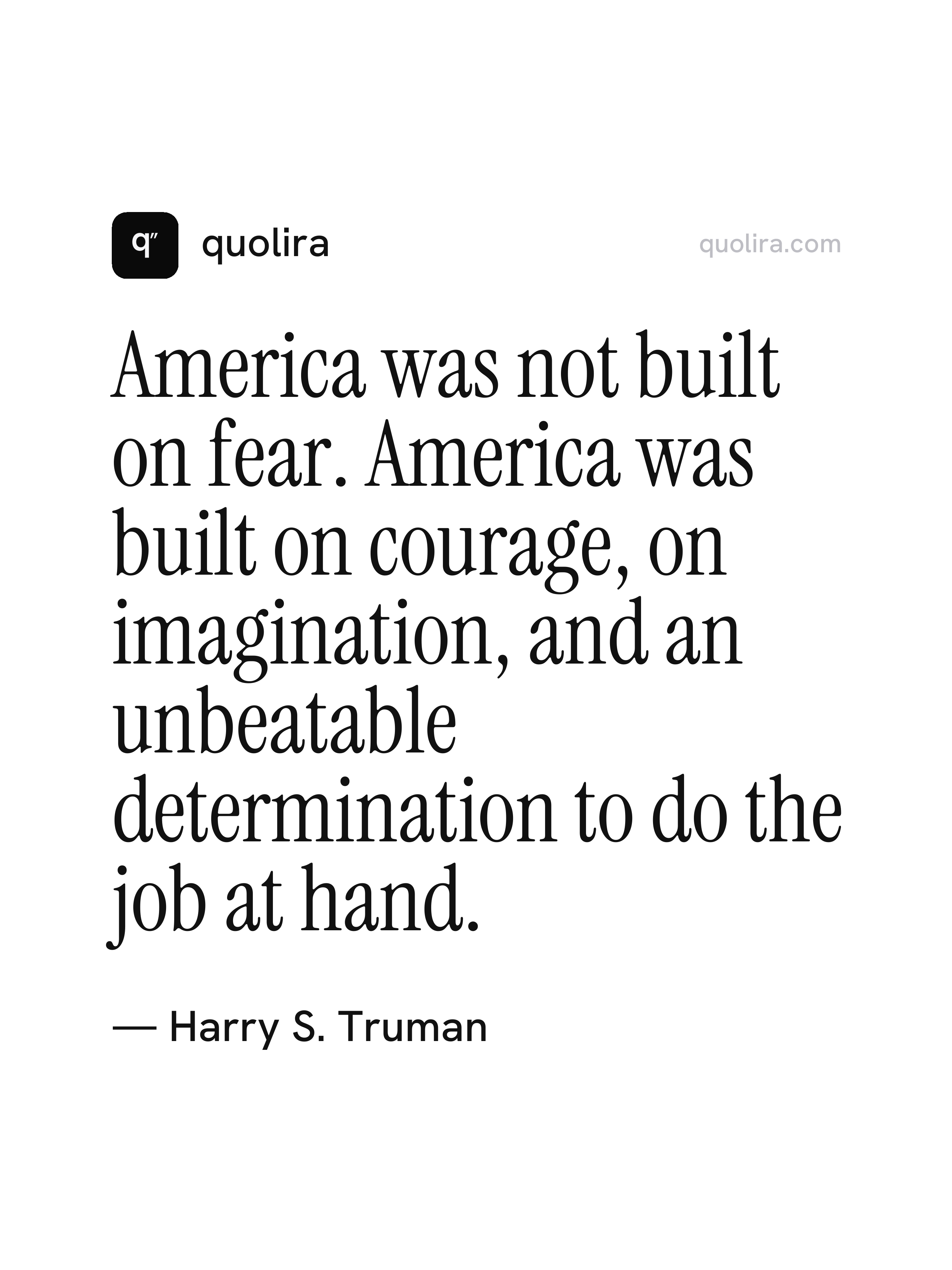
“America was not built on fear. America was built on courage, on imagination, and an unbeatable determination to do the job at hand.”
Harry S. Truman · Special Message to the Congress on the State of the Union, January 8, 1947
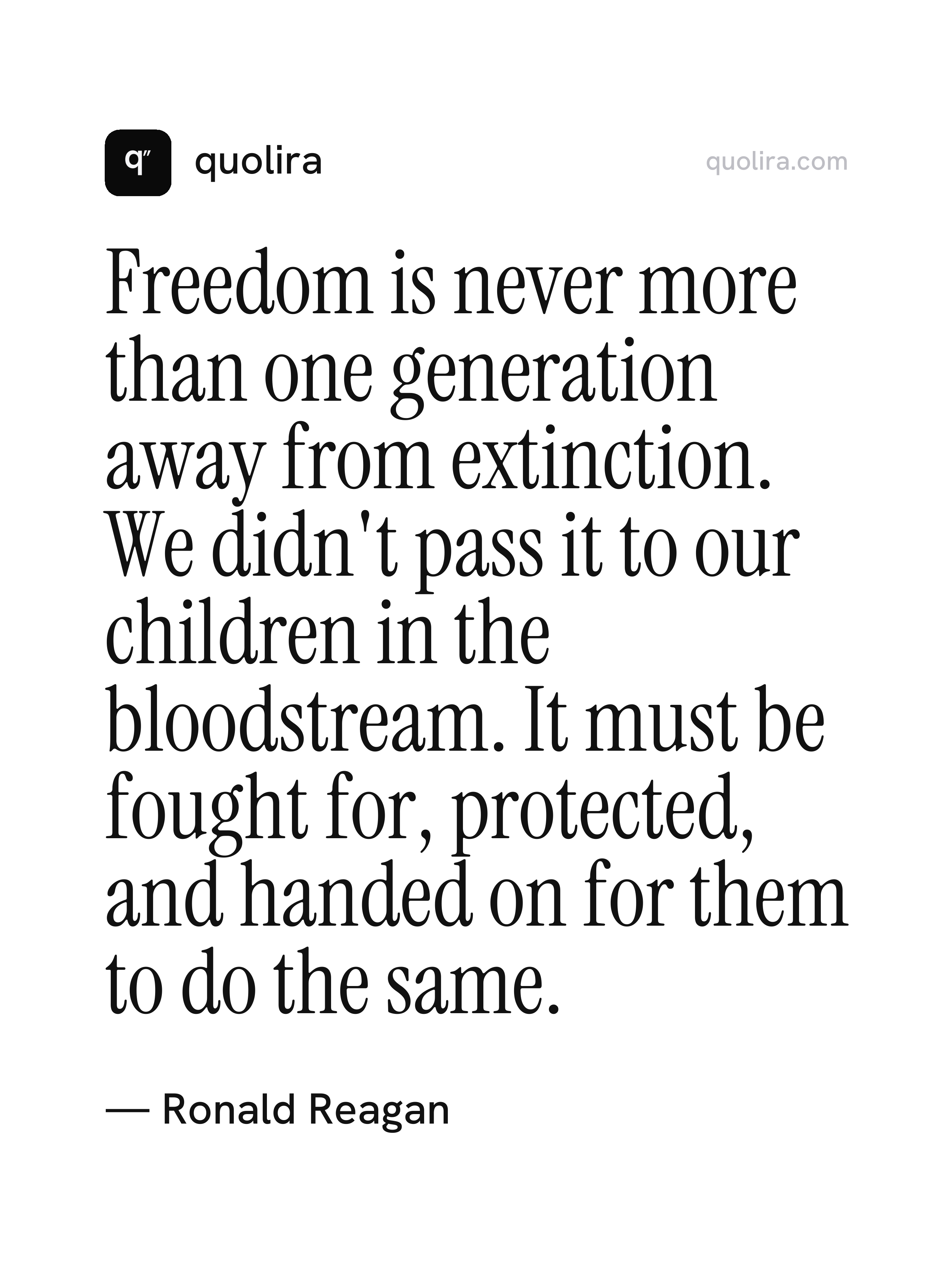
“Freedom is never more than one generation away from extinction. We didn't pass it to our children in the bloodstream. It must be fought for, protected, and handed on for them to do the same.”
Ronald Reagan · Address to the Annual Meeting of the Phoenix Chamber of Commerce, March 30, 1961
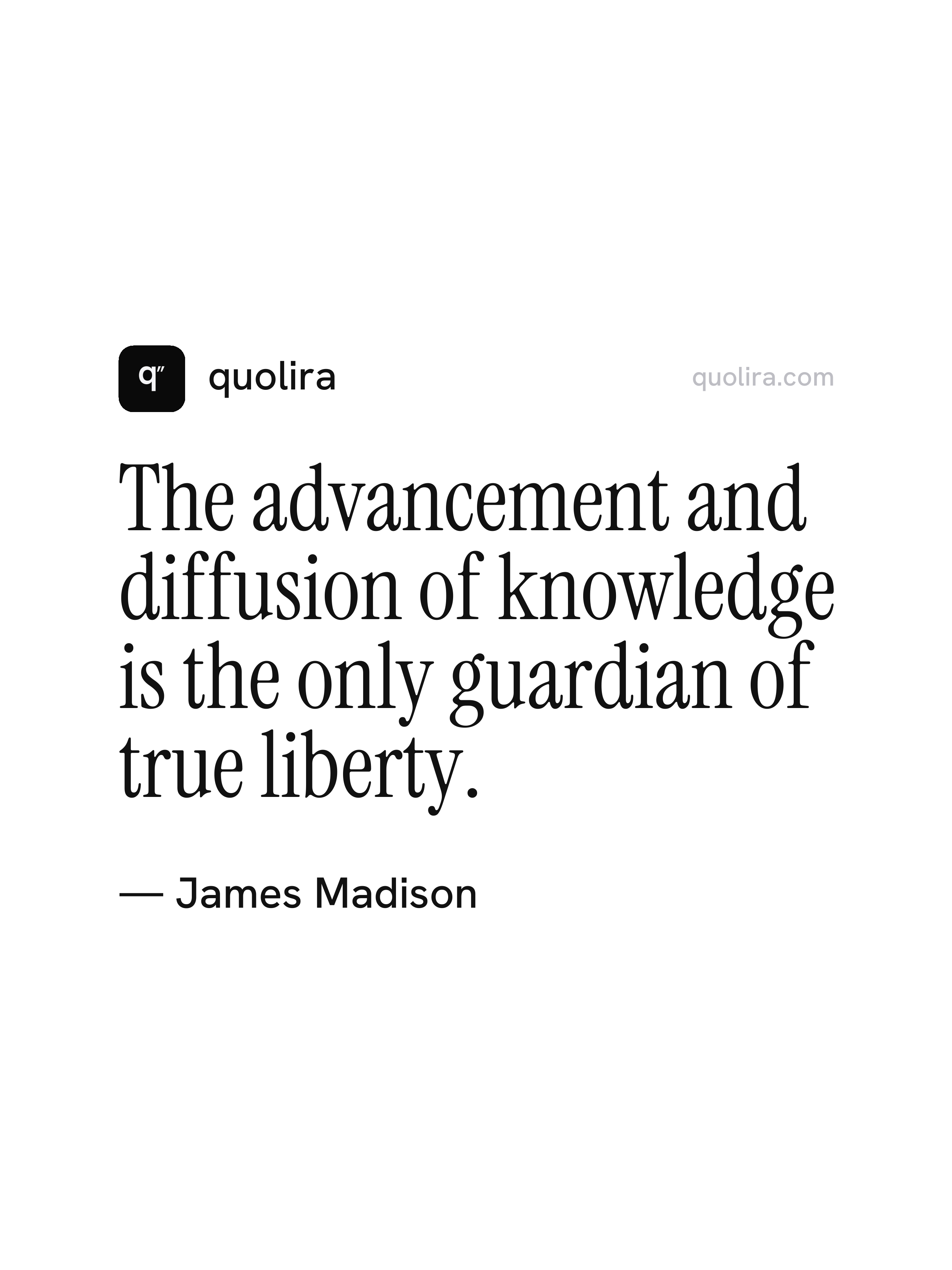
“The advancement and diffusion of knowledge is the only guardian of true liberty.”
James Madison · Letter to George Thompson, June 30, 1825
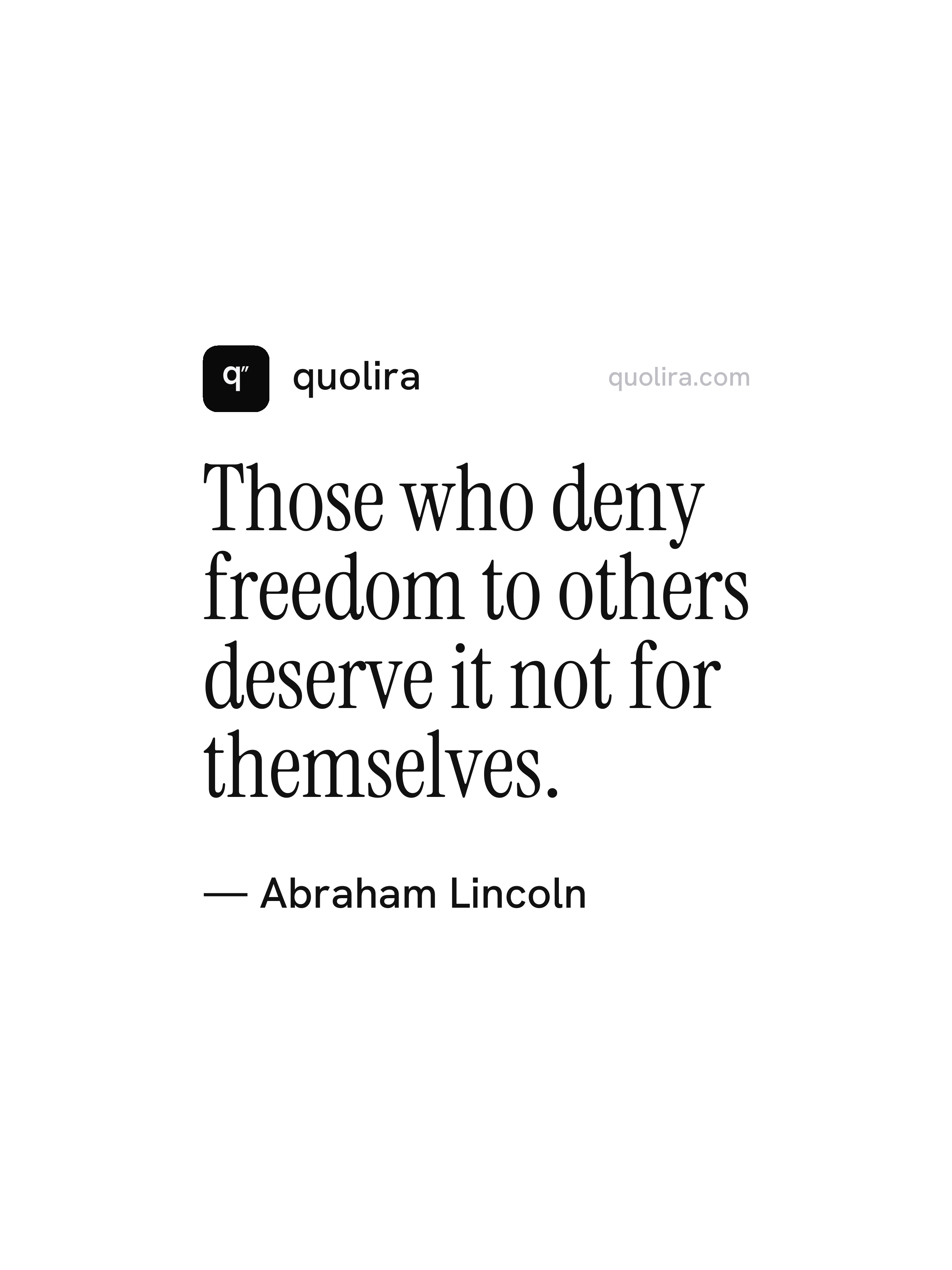
“Those who deny freedom to others deserve it not for themselves.”
Abraham Lincoln · Letter to Henry L. Pierce, April 6, 1859
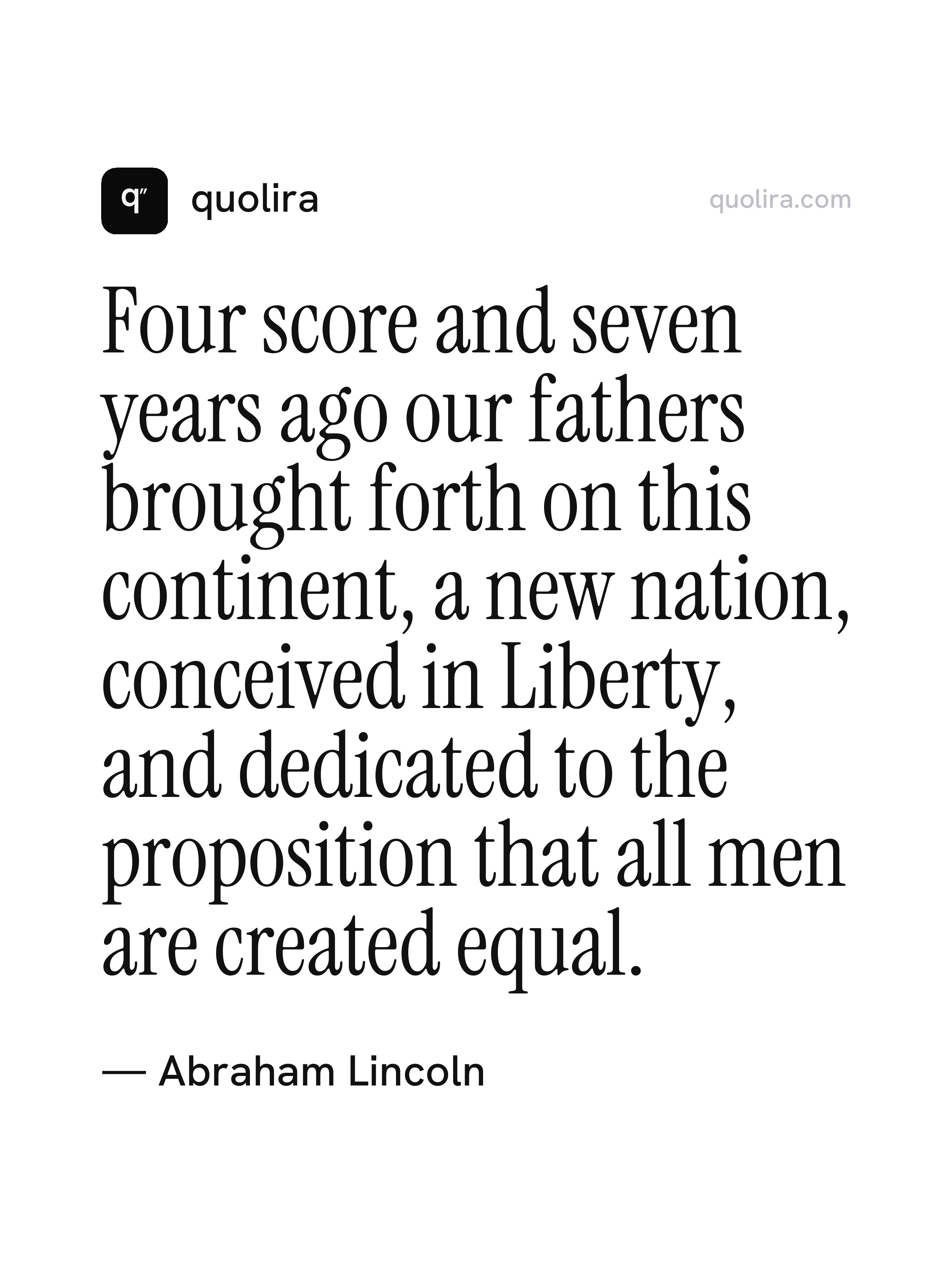
“Four score and seven years ago our fathers brought forth on this continent, a new nation, conceived in Liberty, and dedicated to the proposition that all men are created equal.”
Abraham Lincoln · Gettysburg Address, November 19, 1863
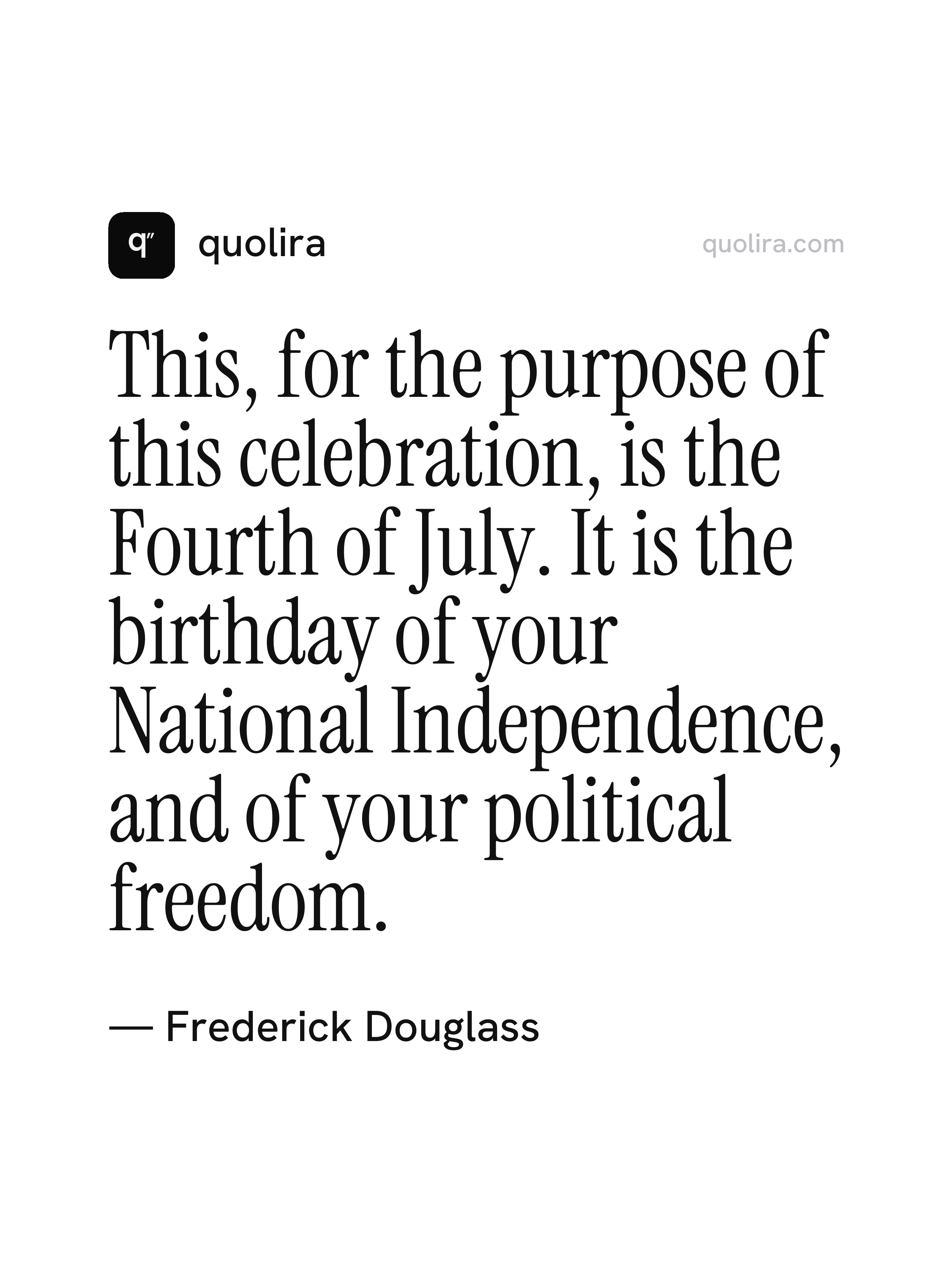
“This, for the purpose of this celebration, is the Fourth of July. It is the birthday of your National Independence, and of your political freedom.”
Frederick Douglass · What to the Slave Is the Fourth of July?, July 5, 1852
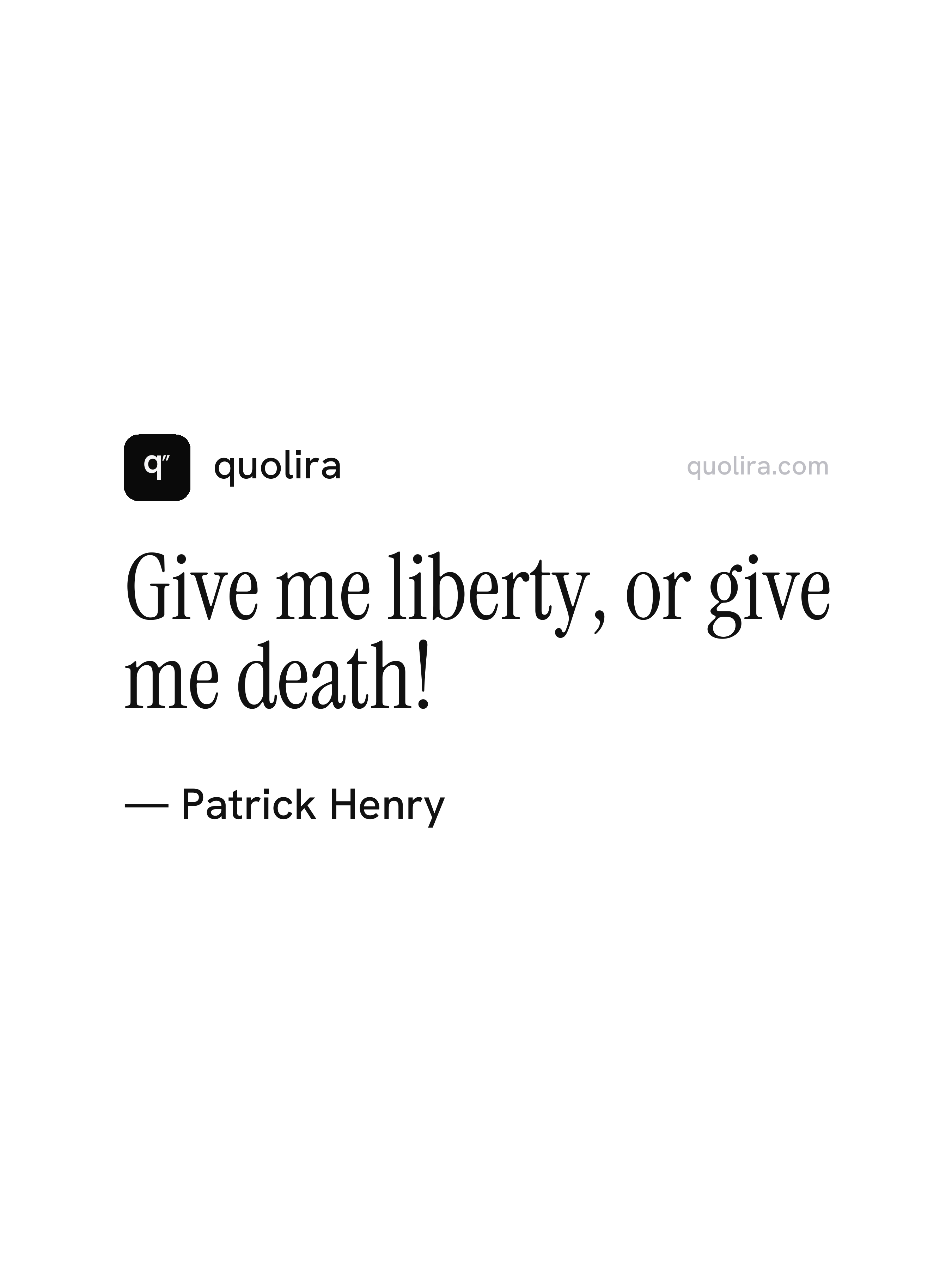
“Give me liberty, or give me death!”
Patrick Henry · Speech to the Virginia Convention, March 23, 1775
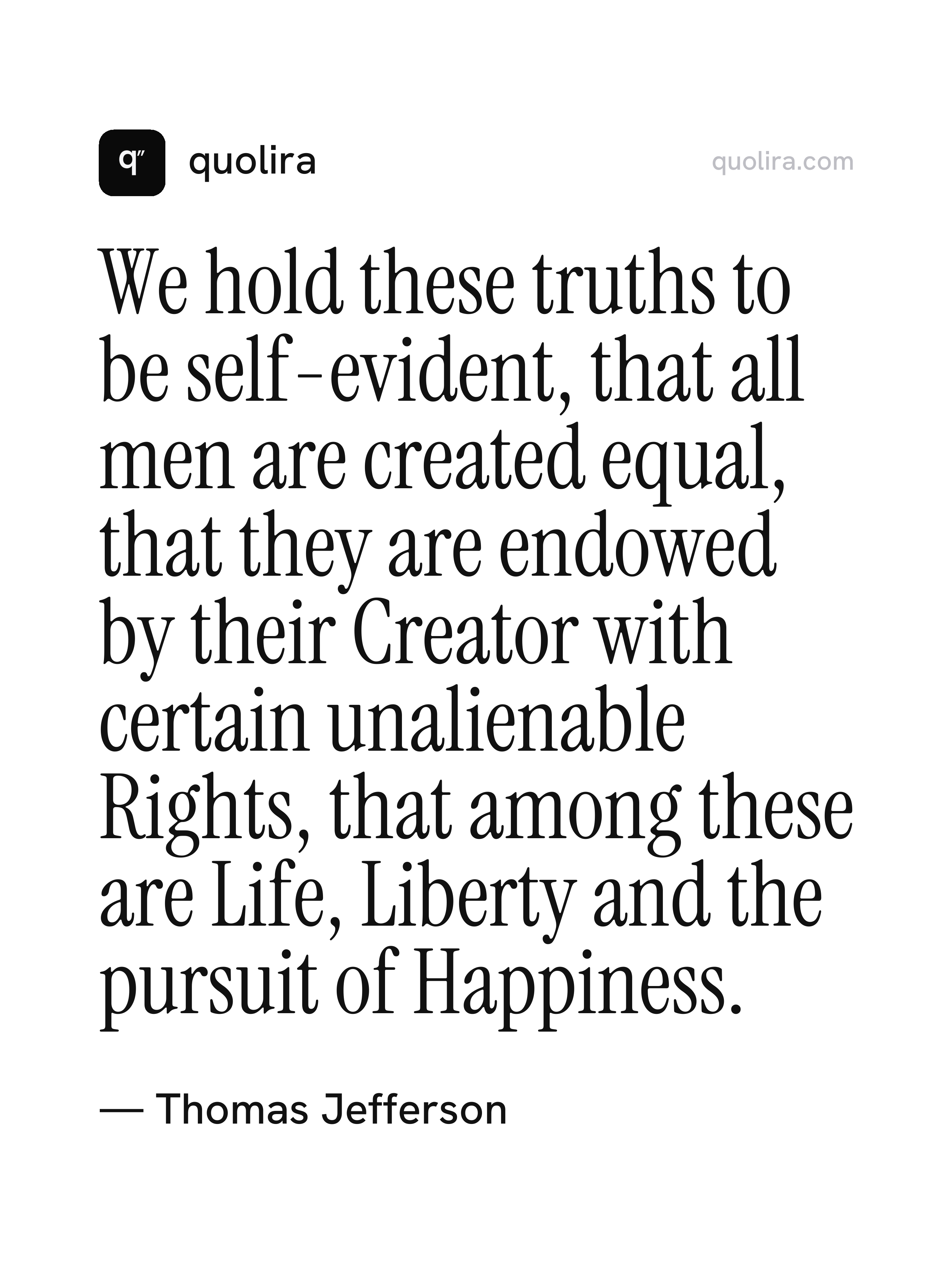
“We hold these truths to be self-evident, that all men are created equal, that they are endowed by their Creator with certain unalienable Rights, that among these are Life, Liberty and the pursuit of Happiness.”
Thomas Jefferson · Declaration of Independence, 1776
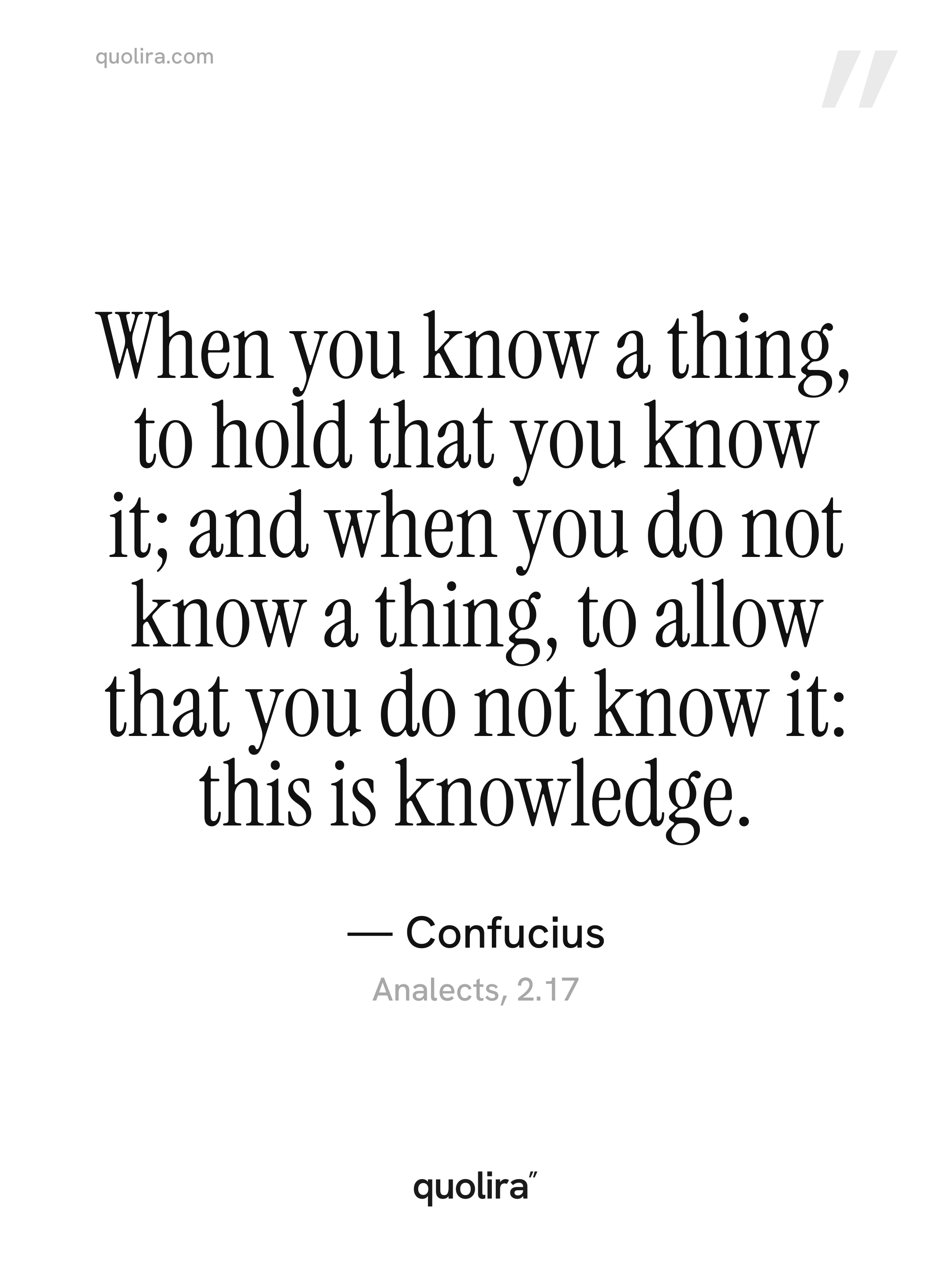
“When you know a thing, to hold that you know it; and when you do not know a thing, to allow that you do not know it: this is knowledge.”
Confucius · Analects, 2.17
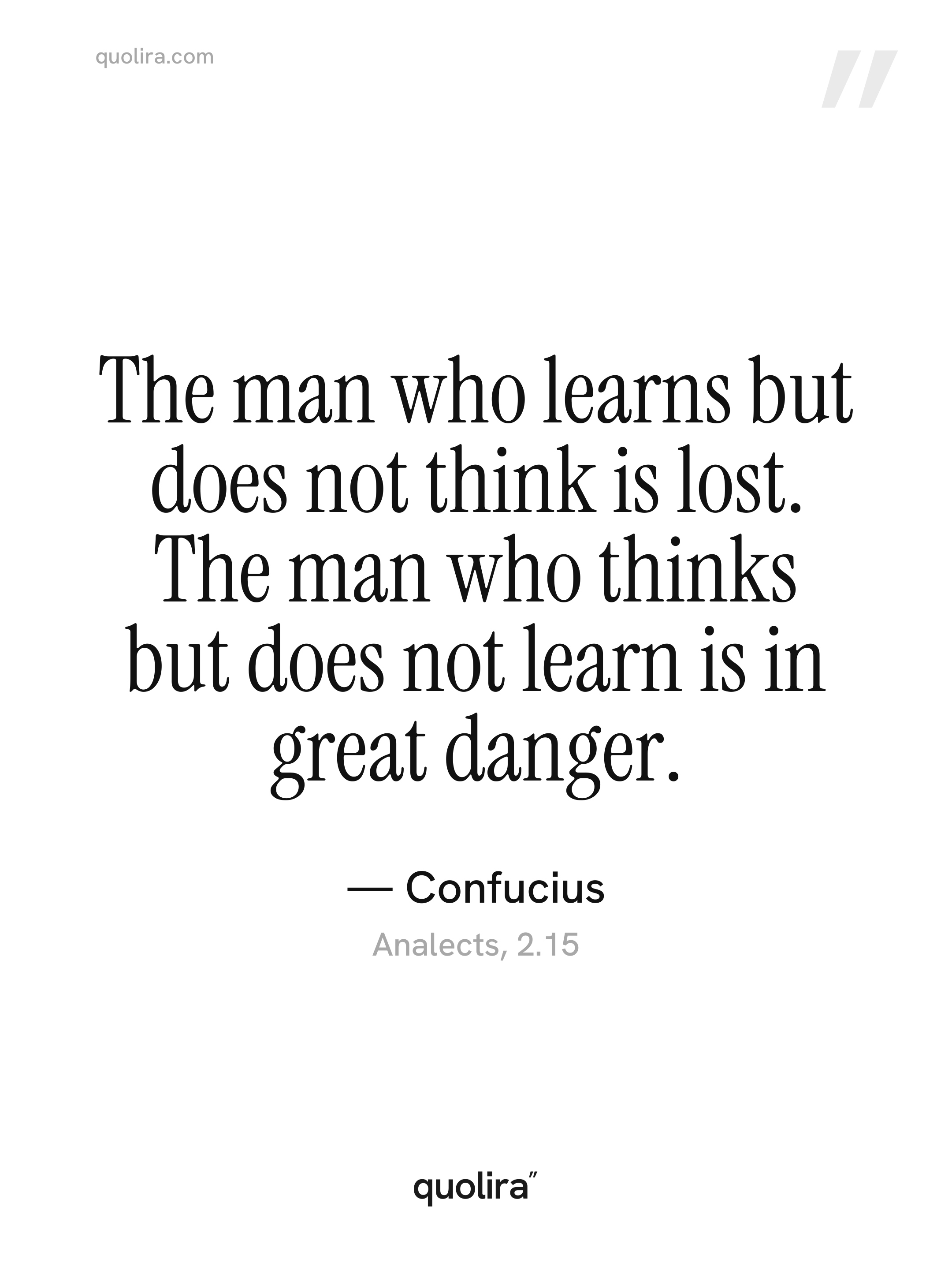
“The man who learns but does not think is lost. The man who thinks but does not learn is in great danger.”
Confucius · Analects, 2.15