7 Winnie the Pooh Quotes That Still Hit Hard as an Adult
A. A. Milne packed more quiet wisdom into a tubby little bear than most philosophers manage in a lifetime.

Winnie the Pooh quotes have a strange way of landing differently once you've actually lived a little. What reads as childhood comfort on the page turns out, on reflection, to be genuinely sharp thinking about love, friendship, and loss. Milne wrote the Pooh books in 1926 and 1928, supposedly for his son Christopher Robin, but the best lines feel less like bedtime stories and more like gentle life philosophy slipped past your defenses. These 7 quotes are the ones people come back to.
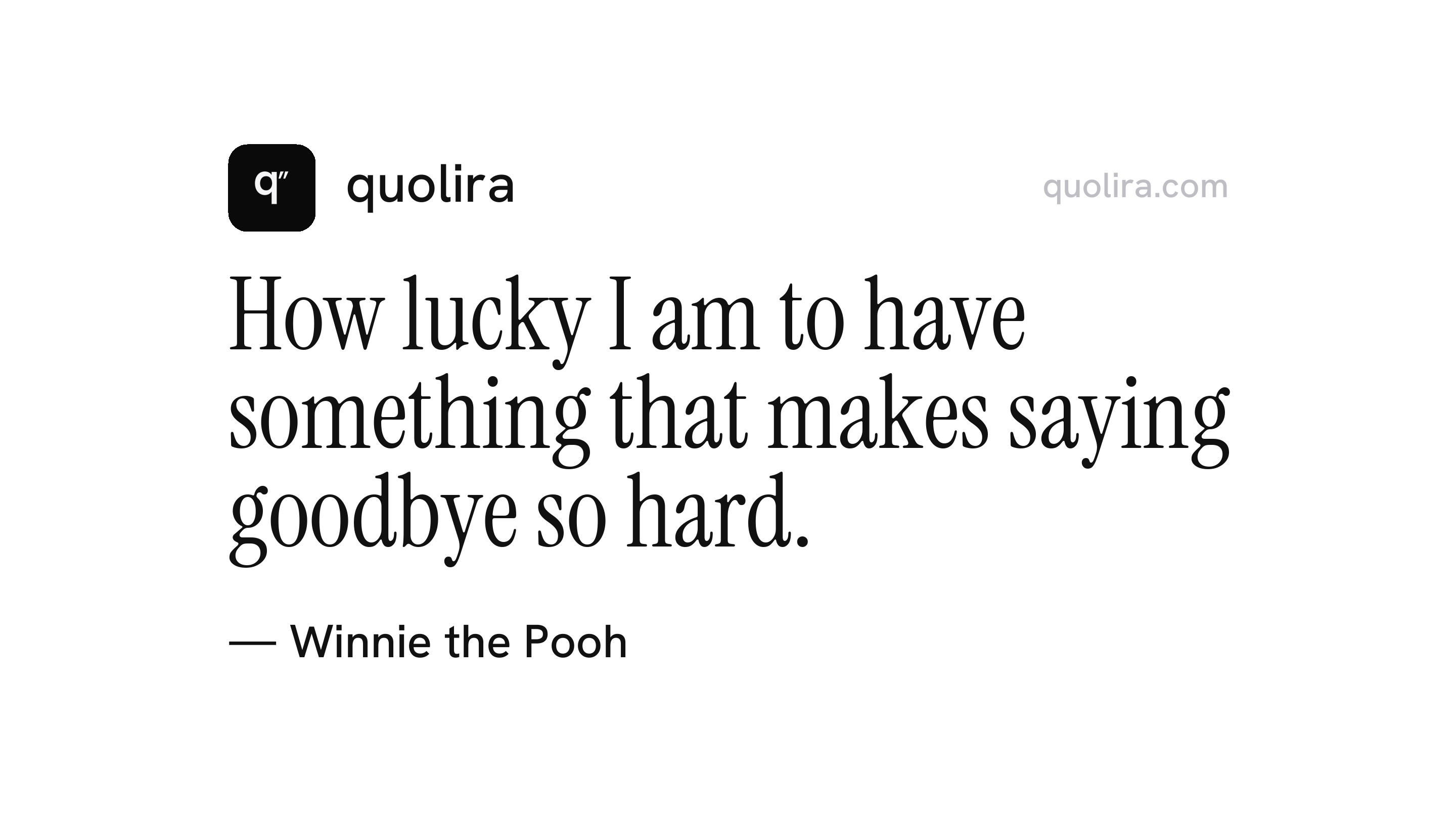
How lucky I am to have something that makes saying goodbye so hard.
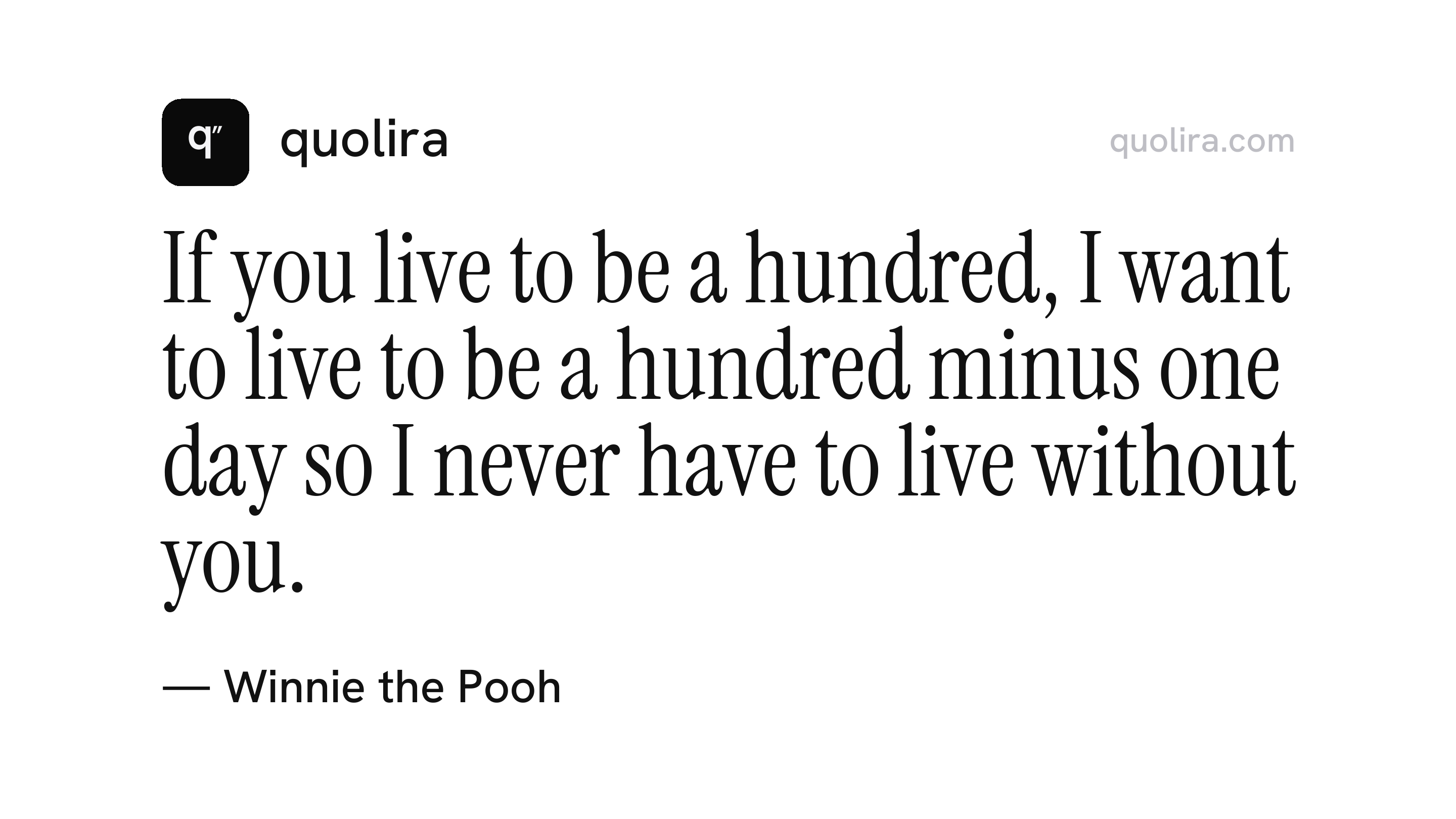
If you live to be a hundred, I want to live to be a hundred minus one day so I never have to live without you.
Winnie the Pooh The House at Pooh Corner, A. A. Milne, 1928
The math is simple and the feeling behind it is enormous. It's one of those lines that sounds like a child said it but actually describes exactly what loving someone feels like.
Winnie-the-Pooh by A. A. Milne (original 1926 edition, illustrated by E. H. Shepard)
We didn't realize we were making memories, we just knew we were having fun.
Winnie the Pooh The House at Pooh Corner, A. A. Milne, 1928
There's a quiet melancholy here about how presence works. You only recognize the value of a moment once it's already gone, and Milne understood that better than most.
A day without a friend is like a pot without a single drop of honey left inside.
Winnie the Pooh Winnie-the-Pooh, A. A. Milne, 1926
Pooh uses honey as his measure for almost everything good, so this is about as high a compliment as he can give. The comparison is funny and completely sincere at the same time.
The House at Pooh Corner by A. A. Milne
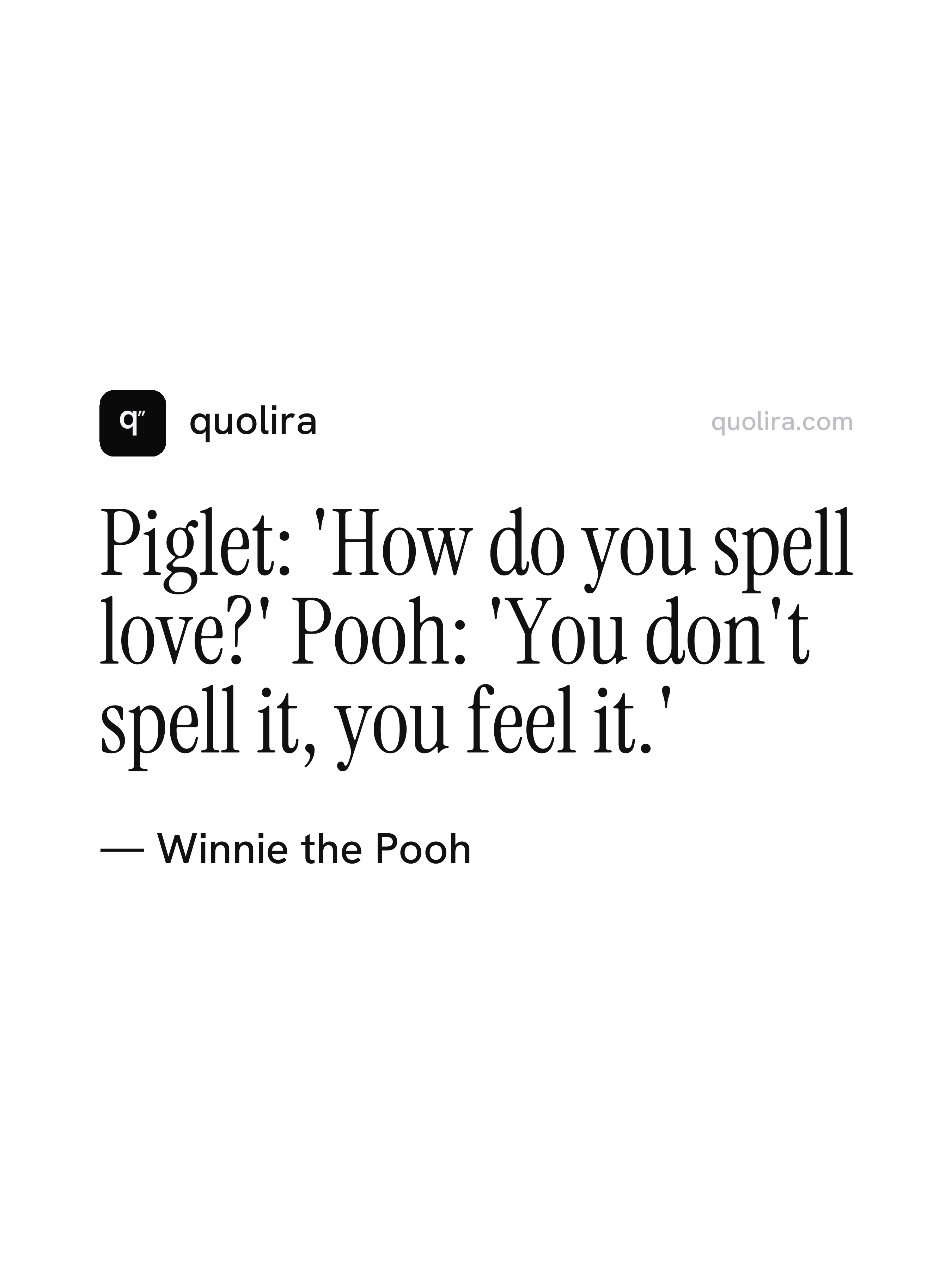
Piglet: 'How do you spell love?' Pooh: 'You don't spell it, you feel it.'
Winnie the Pooh The House at Pooh Corner, A. A. Milne, 1928
Two lines, but the exchange does something that takes most poets a stanza to attempt. It's also a small reminder that Piglet asks the questions and Pooh, somehow, always has the answer.
The Pooh Sketchbook by E. H. Shepard
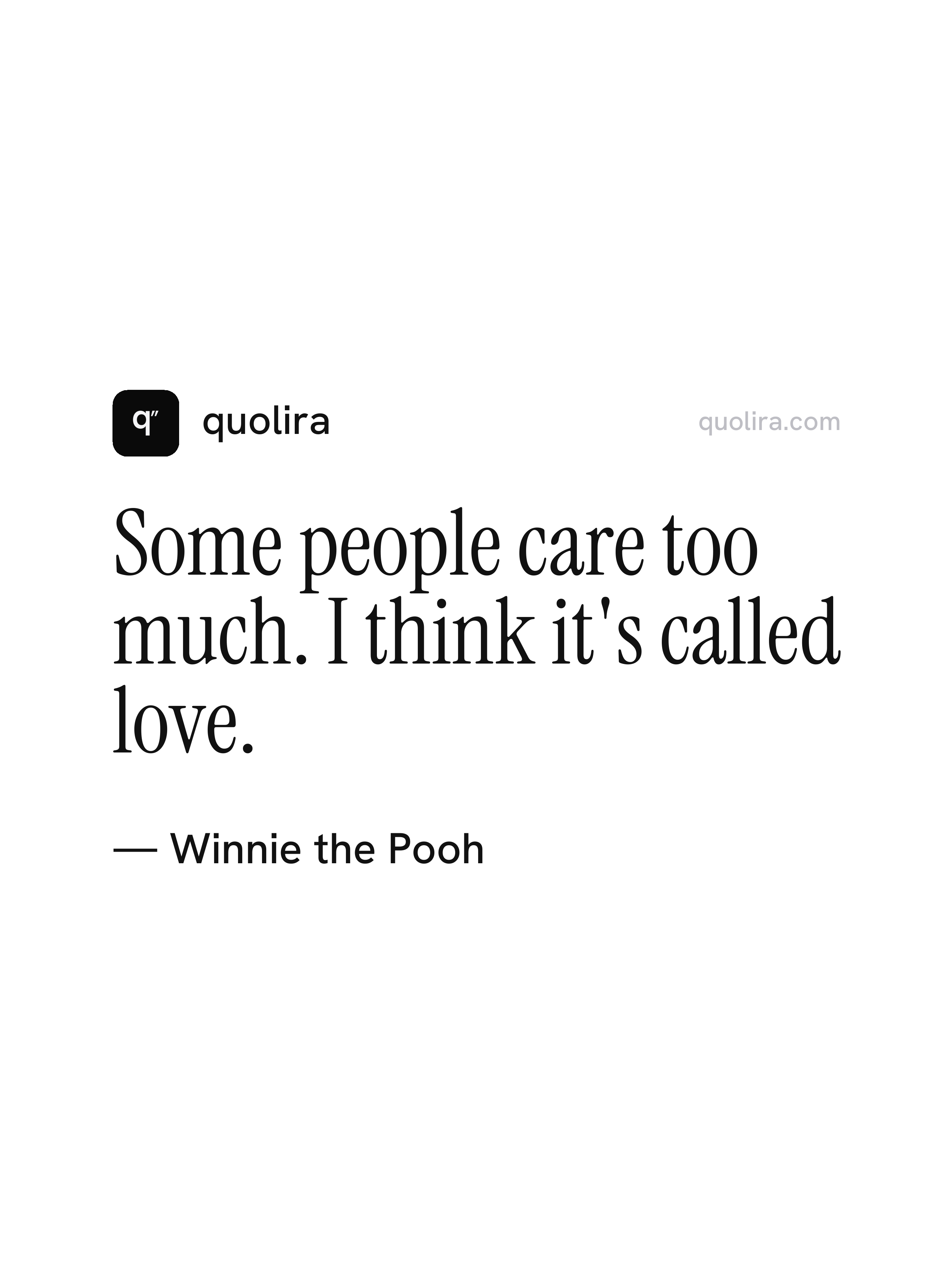
Some people care too much. I think it's called love.
Winnie the Pooh The House at Pooh Corner, A. A. Milne, 1928
Pooh frames love as a kind of excess, which is actually pretty accurate. The gentle uncertainty in 'I think it's called' makes it feel honest rather than sentimental.
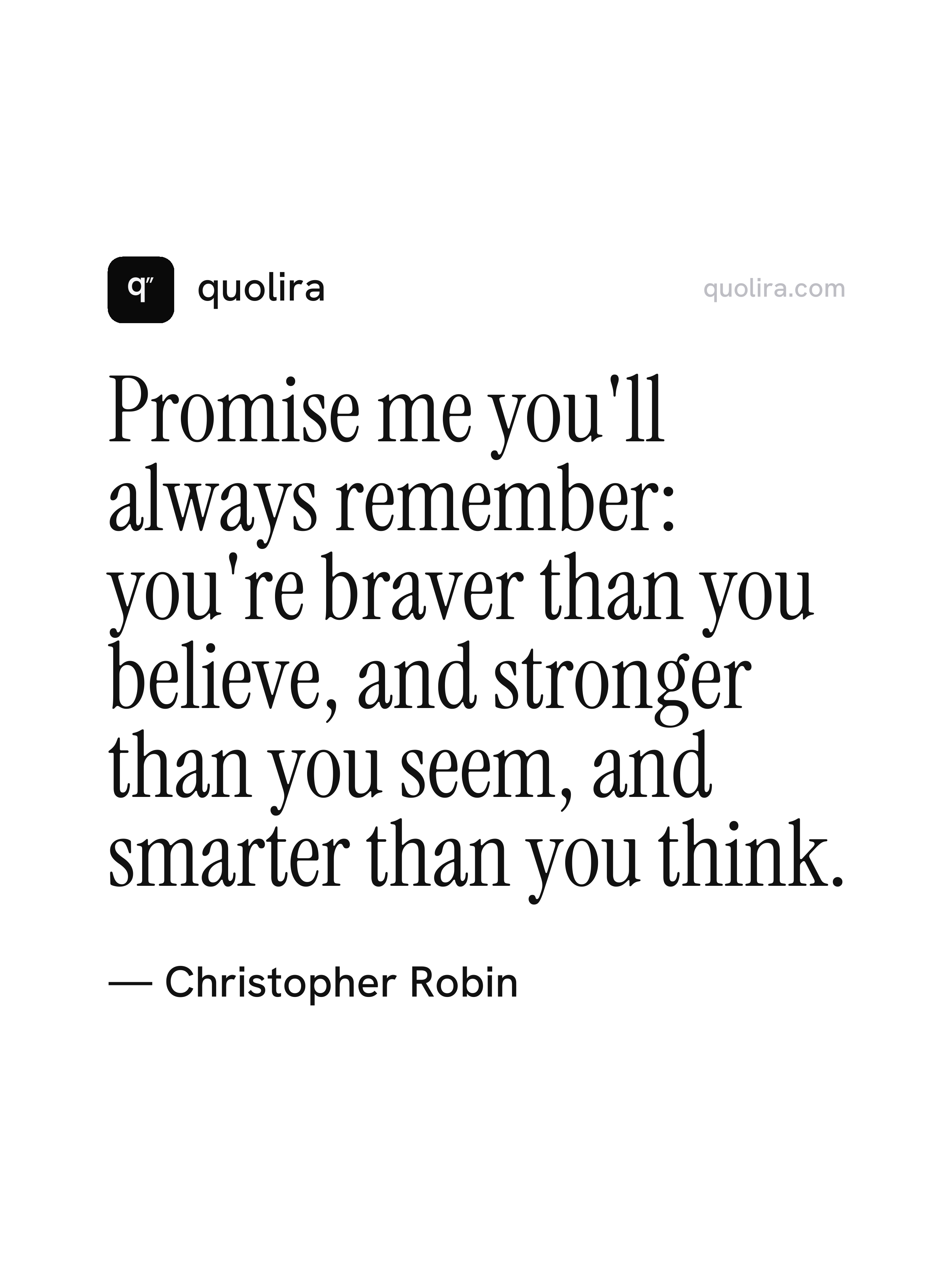
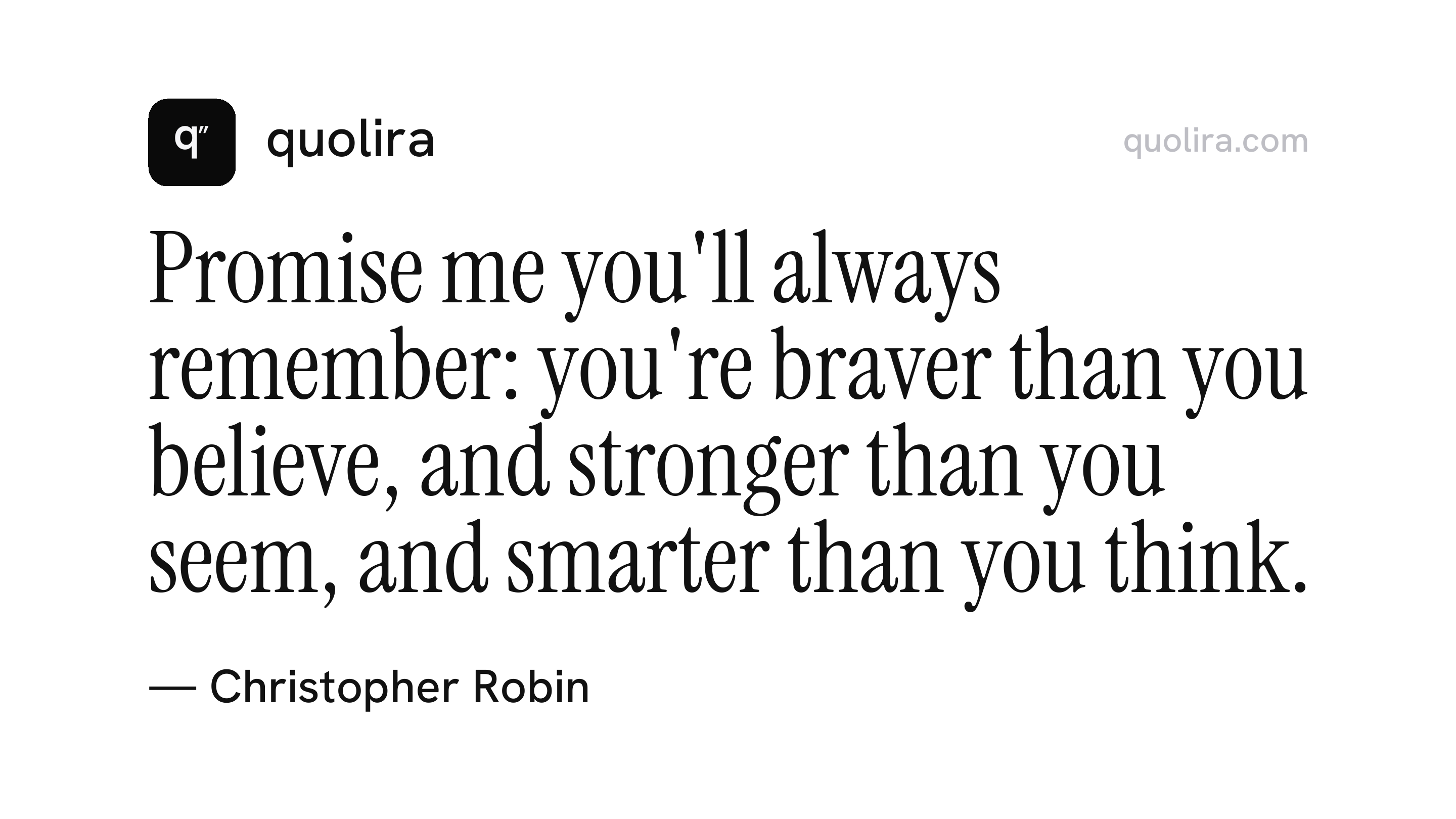
Promise me you'll always remember: you're braver than you believe, and stronger than you seem, and smarter than you think.
Christopher Robin The House at Pooh Corner, A. A. Milne, 1928
Christopher Robin says this to Pooh as a goodbye, and it lands harder knowing that Milne was processing his own son growing up and moving on. It's the kind of thing you want someone to have told you.
Milne wrote from a place of real tenderness, and Pooh carries that forward on every page. If a bear of very little brain can figure out what matters, there's hope for the rest of us.
Frequently asked questions
Who wrote the Winnie the Pooh quotes?
Are Winnie the Pooh quotes actually deep or just sentimental?
Which Winnie the Pooh quote is most famous?
Did Disney change the Winnie the Pooh quotes?
Keep reading
21 Lord Voldemort Best Harry Potter Quotes That Still Chill You
The most memorable lines from the Dark Lord, weighed for what they reveal about fear, power, and the man behind the mask.
14 Satchel Paige Quotes on Aging, Motion, and Not Looking Back
The pitcher who kept throwing into his fifties left behind lines about time that still land.
16 Alice in Wonderland Quotes That Still Make You Stop and Think
The strange logic of Wonderland has a way of feeling truer than the real world.
This one reframes grief as evidence of good fortune, which is a genuinely hard thing to sit with. Milne wrote it for the final chapter, where Christopher Robin says goodbye to Pooh, and the weight of that context is real.