“The cost of liberty is less than the price of repression.”
W.E.B. Du Bois · John Brown, 1909
 quolira
.com
quolira
quolira.com
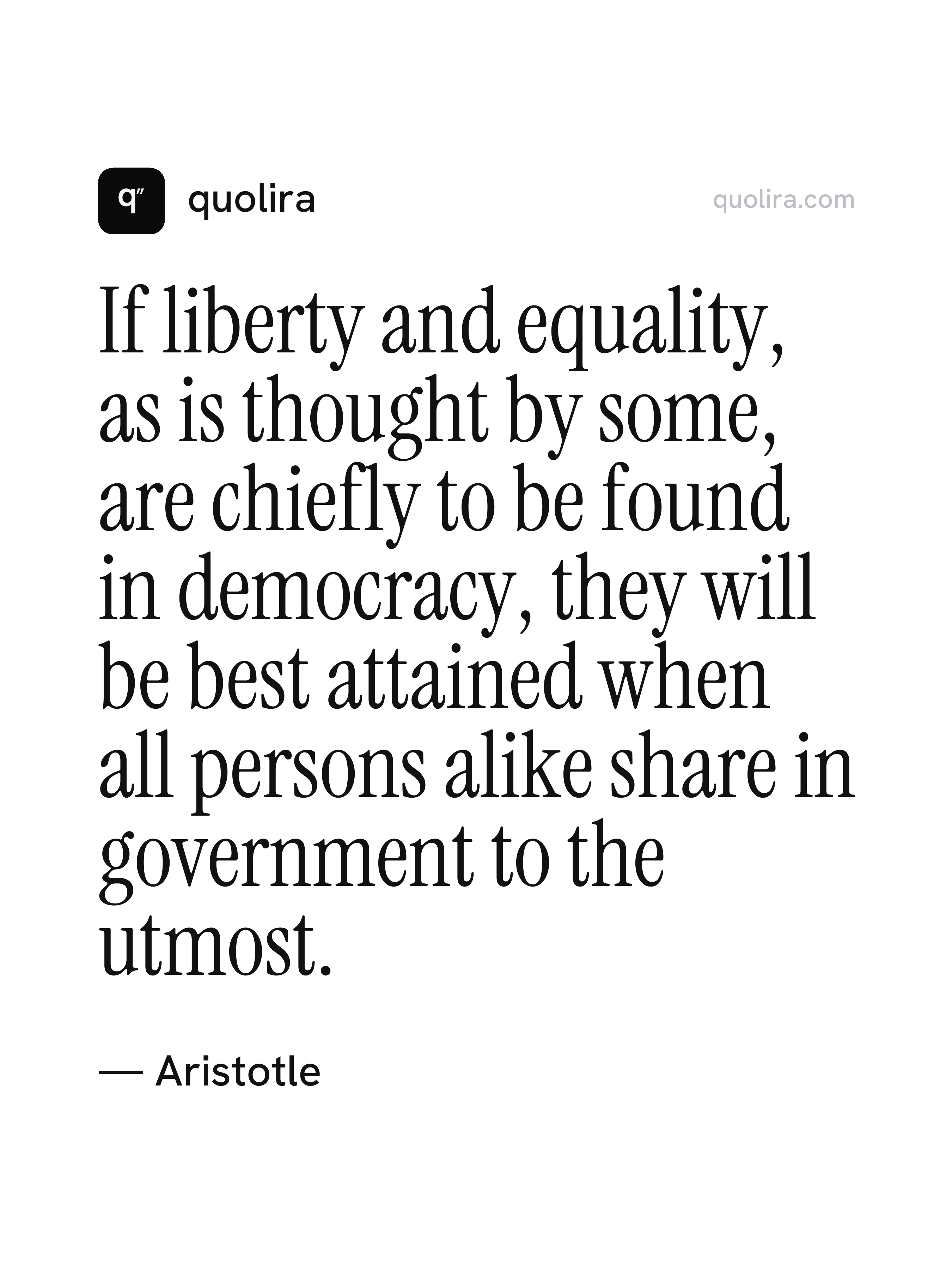
Aristotle is articulating a foundational idea about democratic government: that liberty and equality are most fully realized when political power is genuinely shared among all citizens rather than concentrated in the hands of a few. Participation in government is not just a privilege in this view; it is the mechanism through which a society actually becomes free and equal in practice.
This observation comes from the Politics, Aristotle's extended inquiry into the nature of the city-state and the various forms of government available to human communities. Written around 350 BC, the work examines democracy alongside oligarchy, monarchy, and other systems, weighing their strengths and weaknesses. Aristotle was not an uncritical admirer of democracy, but in passages like this one he acknowledges that broad political participation is the most direct path to the values democratic societies claim to prize.
Aristotle was an ancient Greek philosopher who studied under Plato and went on to become one of the most influential thinkers in the history of Western philosophy. His interests ranged across logic, biology, ethics, rhetoric, and political theory, and he approached each subject with systematic rigor. He founded his own school in Athens, known as the Lyceum. His writings shaped European intellectual life for well over a thousand years, and his political and ethical ideas remain active subjects of discussion in philosophy and political theory today.
“The cost of liberty is less than the price of repression.”
W.E.B. Du Bois · John Brown, 1909
“I prefer liberty with danger to peace with slavery.”
Jean-Jacques Rousseau · The Social Contract, 1762
“Liberty means responsibility. That is why most men dread it.”
George Bernard Shaw · Maxims for Revolutionists, 1903
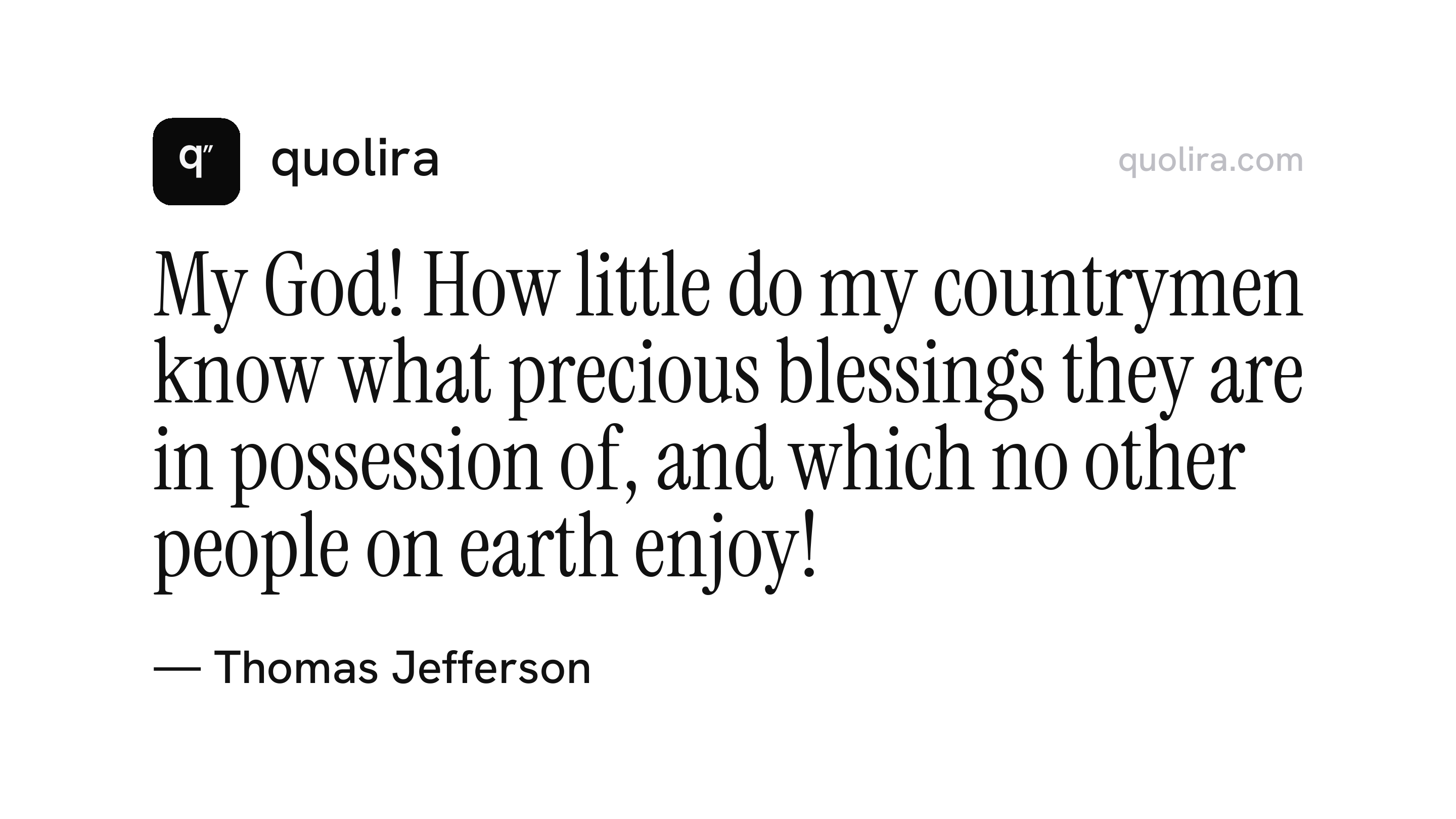
“My God! How little do my countrymen know what precious blessings they are in possession of, and which no other people on earth enjoy!”
Thomas Jefferson · Letter to James Monroe, June 17, 1785
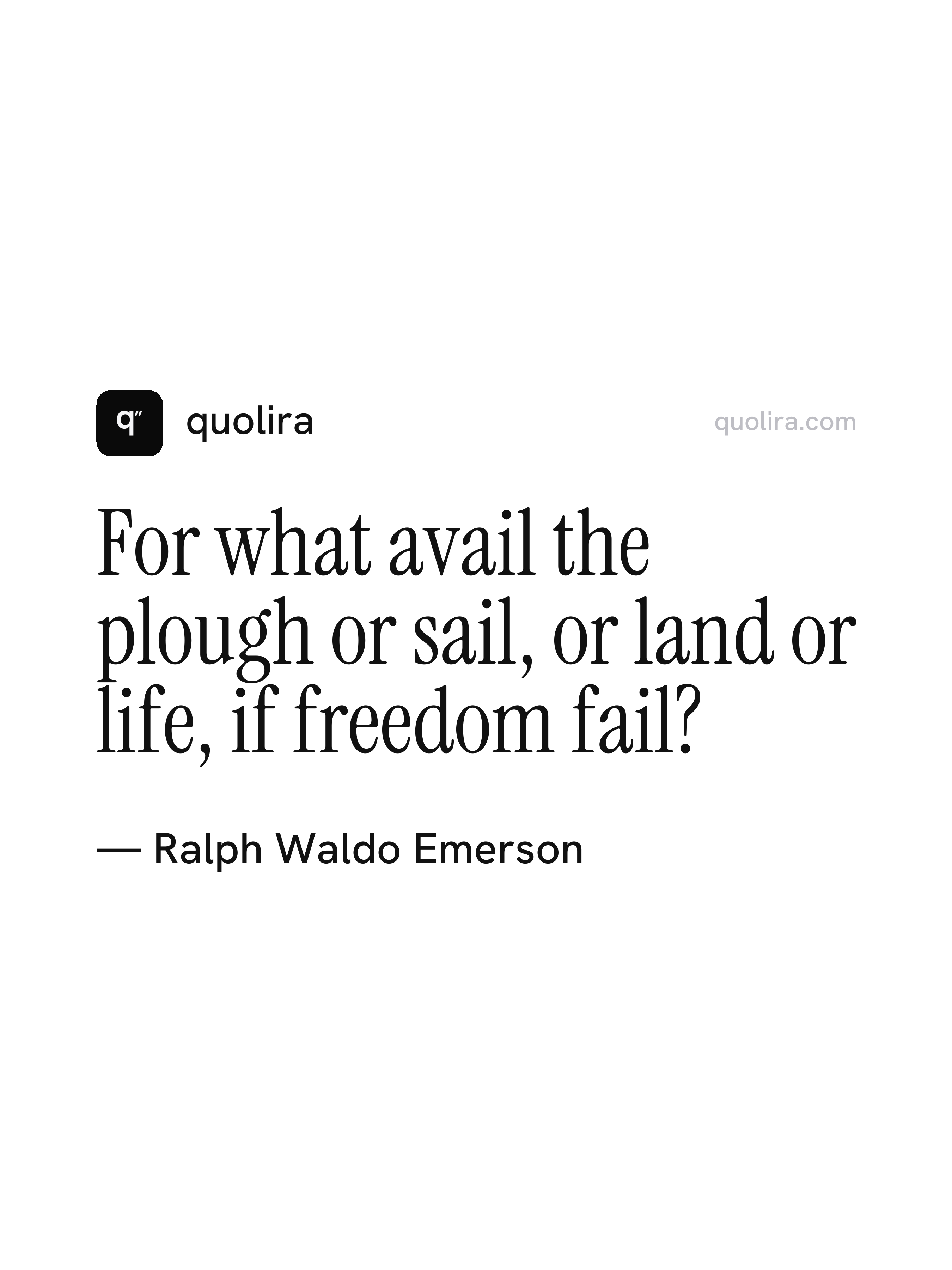
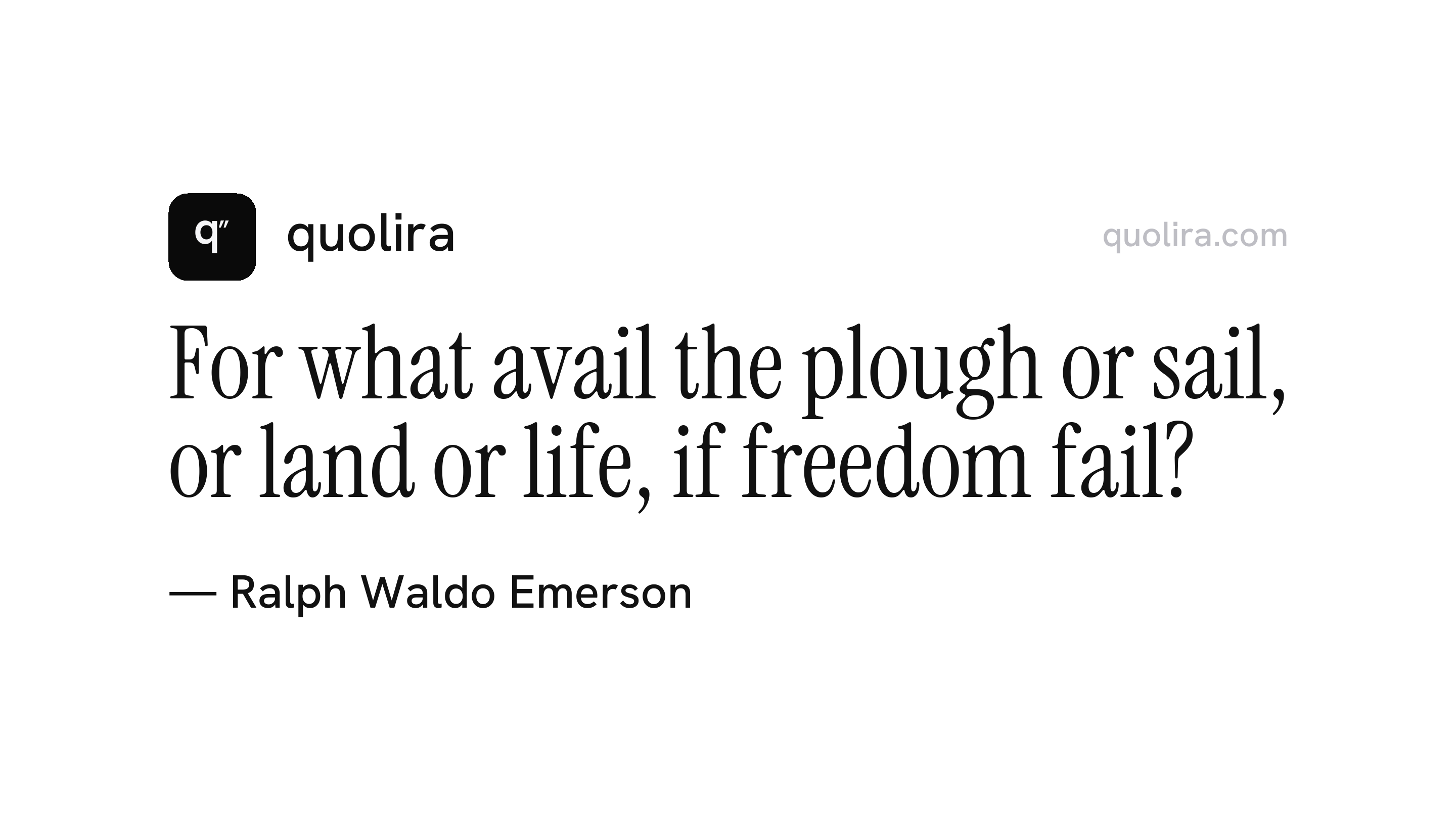
“For what avail the plough or sail, or land or life, if freedom fail?”
Ralph Waldo Emerson · "Boston," poem, 1830s
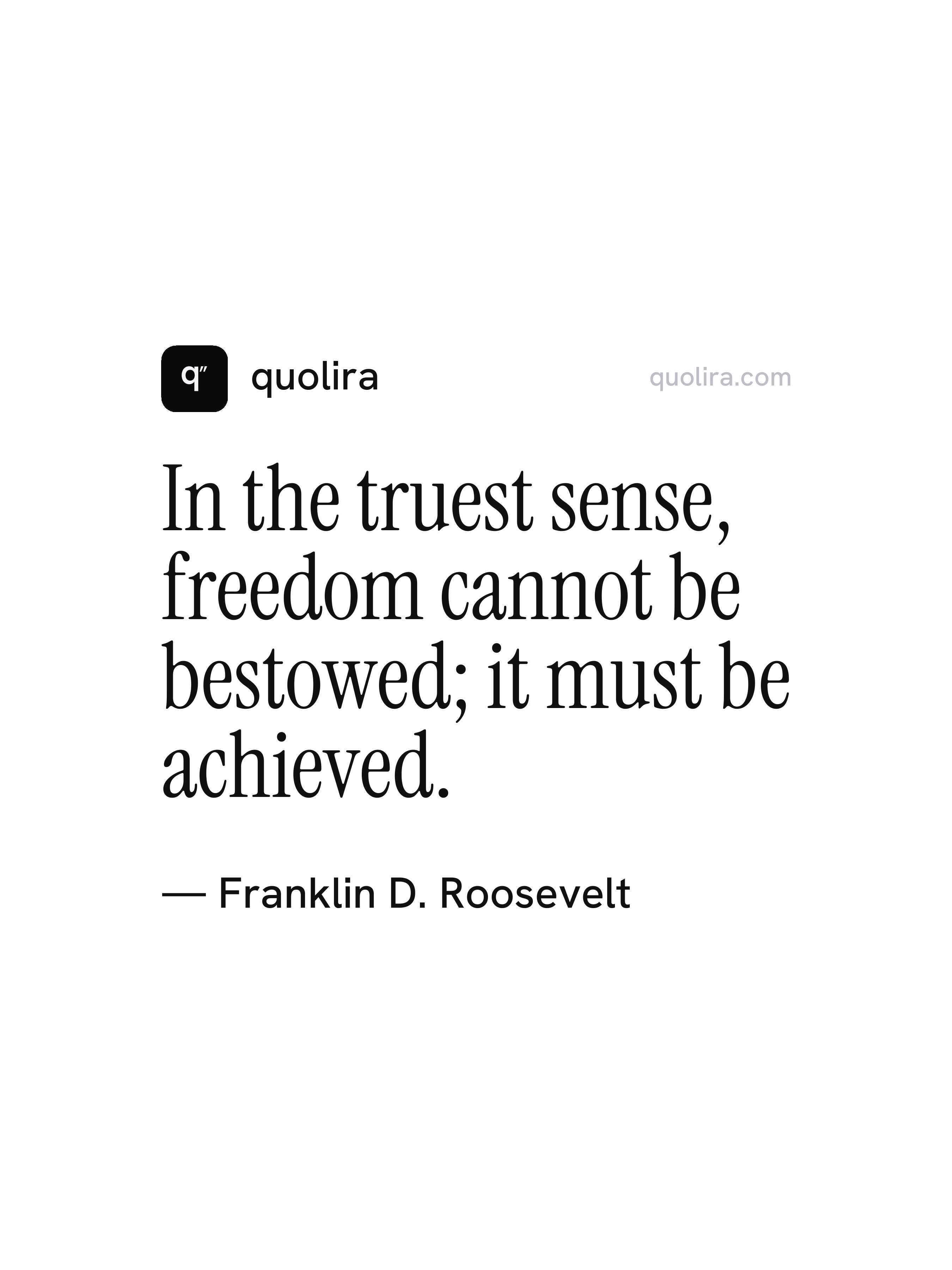
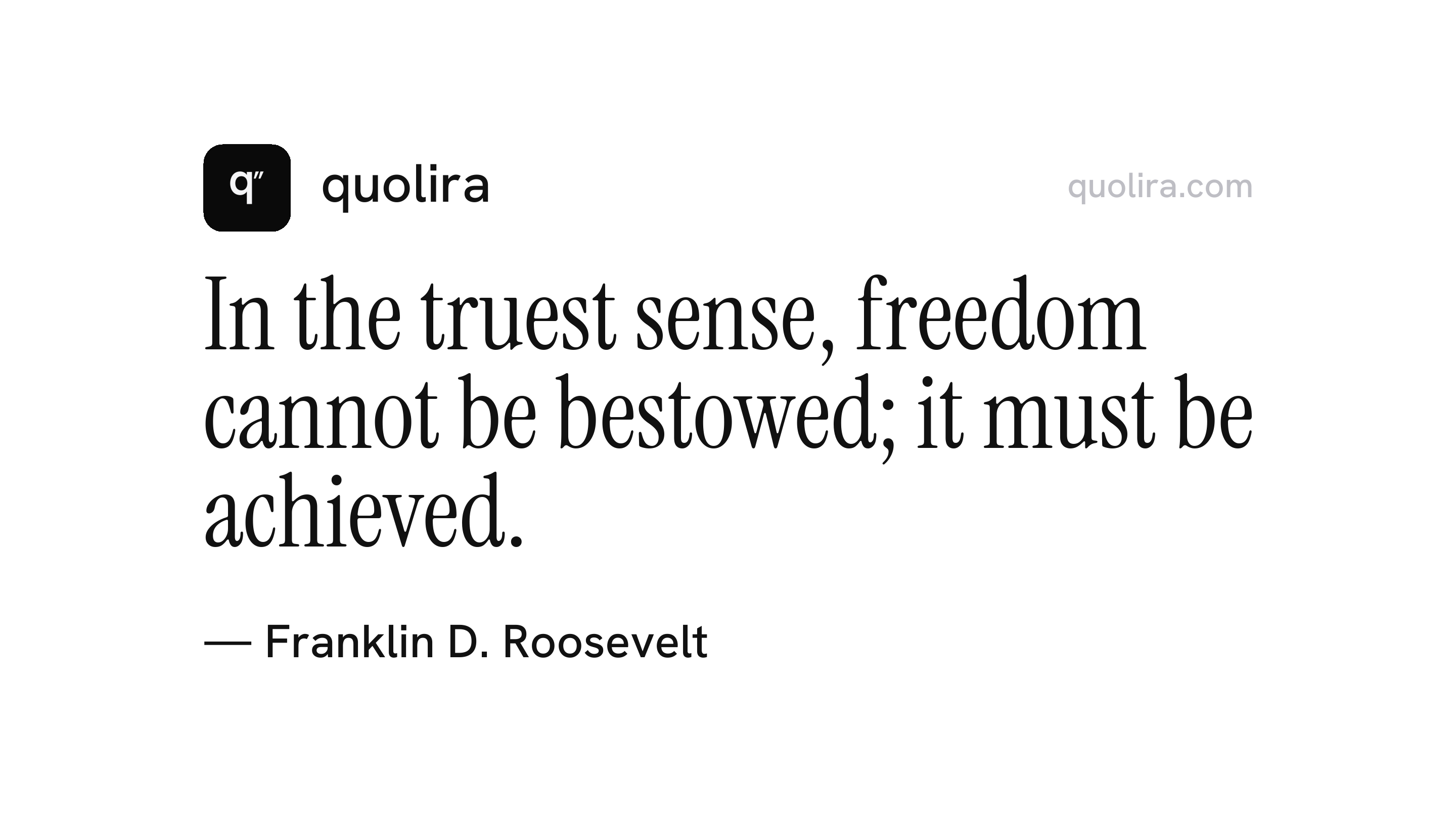
“In the truest sense, freedom cannot be bestowed; it must be achieved.”
Franklin D. Roosevelt · Speech on the Seventy-Fourth Anniversary of the Emancipation Proclamation, September 22, 1936
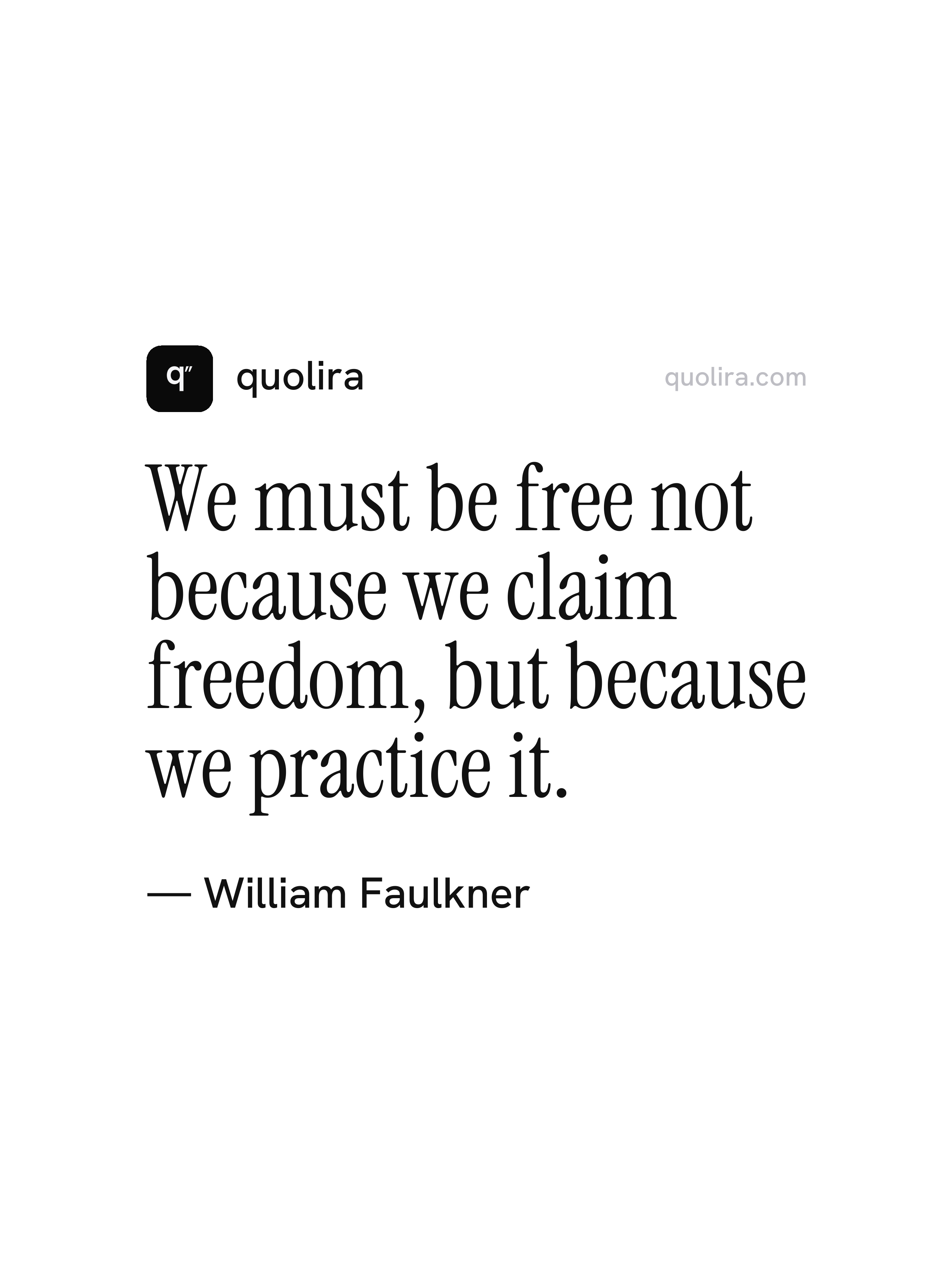
“We must be free not because we claim freedom, but because we practice it.”
William Faulkner · Essay "On Fear: Deep South in Labor," Harper's Magazine, June 1956
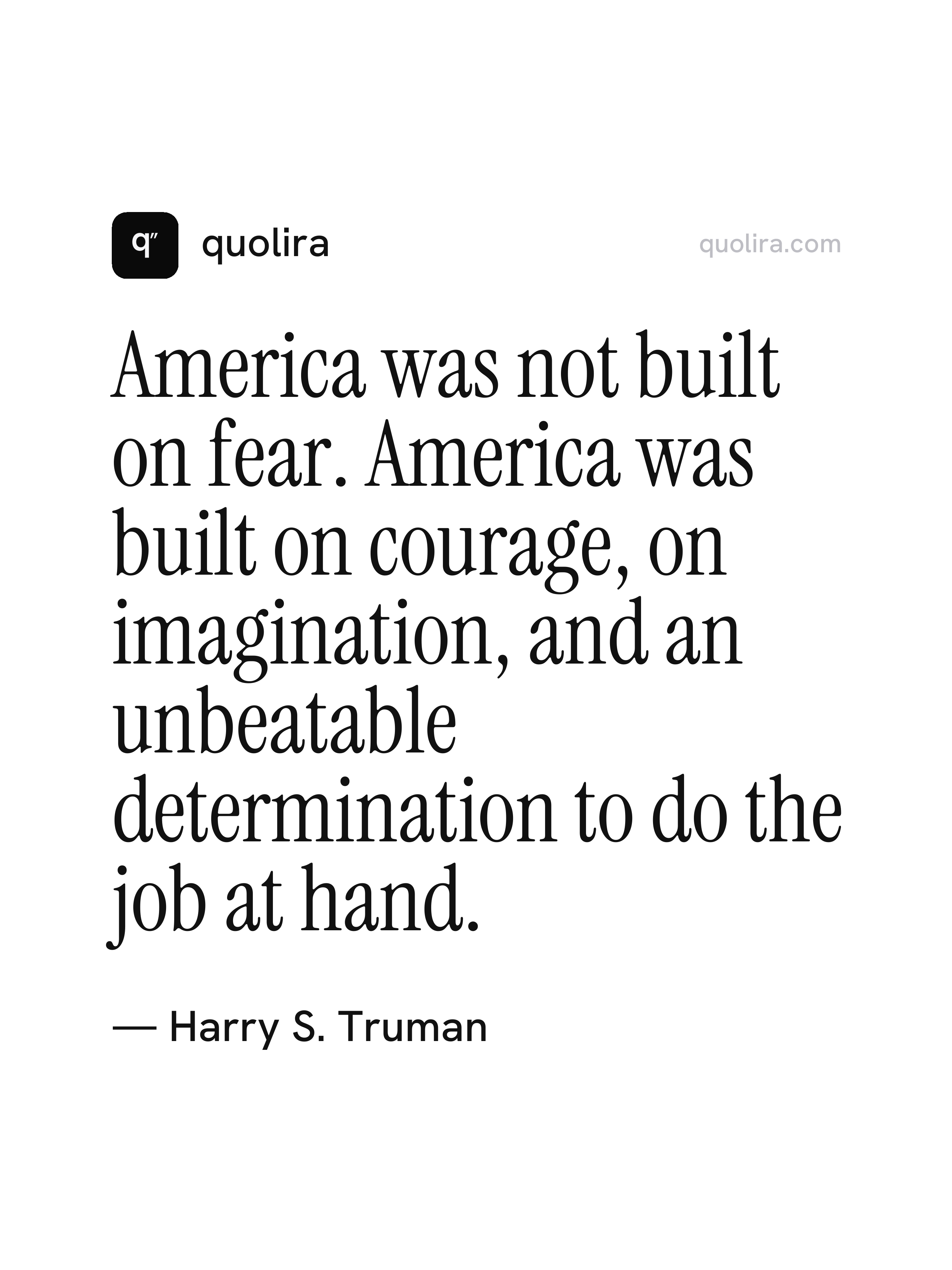
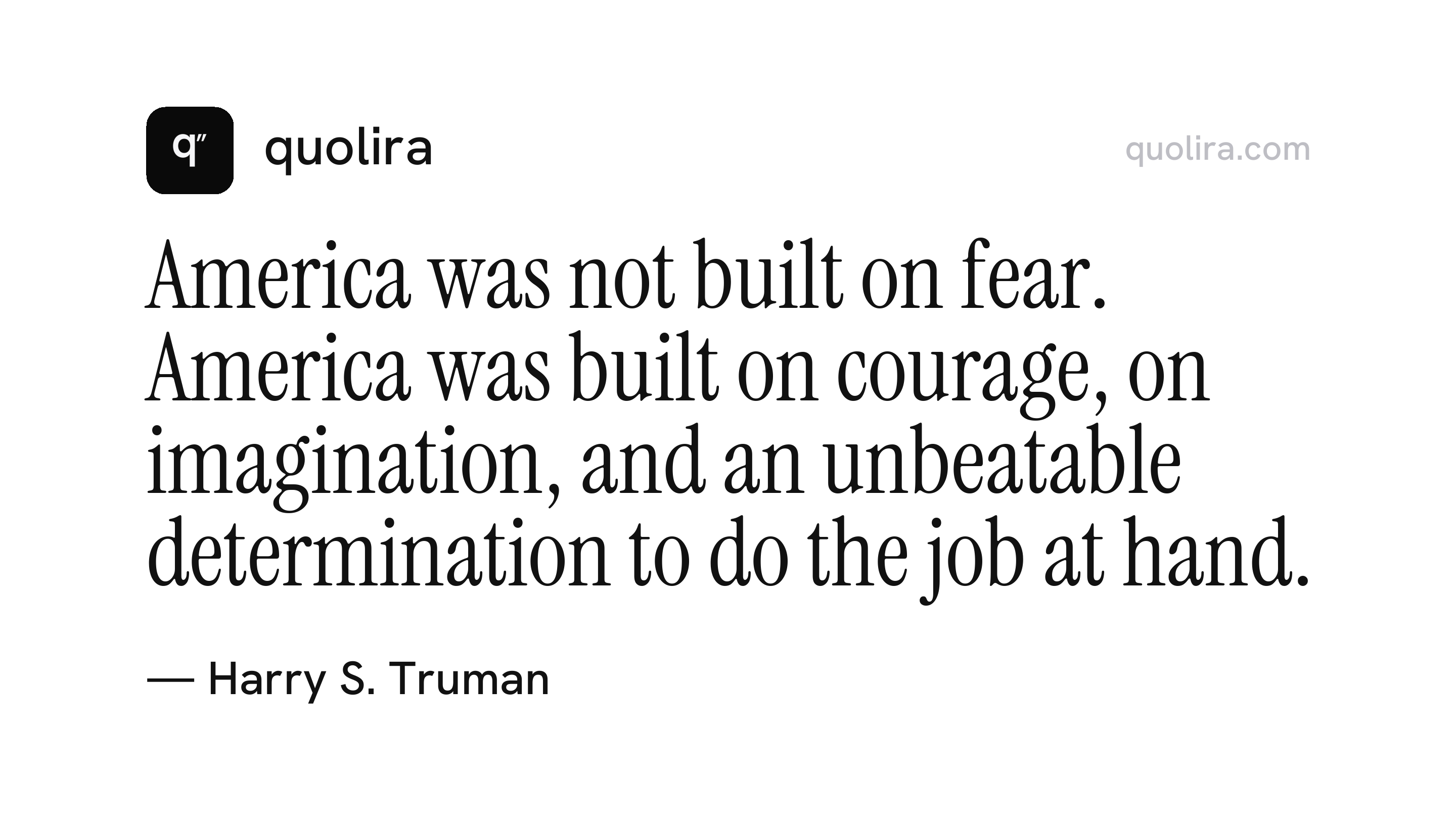
“America was not built on fear. America was built on courage, on imagination, and an unbeatable determination to do the job at hand.”
Harry S. Truman · Special Message to the Congress on the State of the Union, January 8, 1947
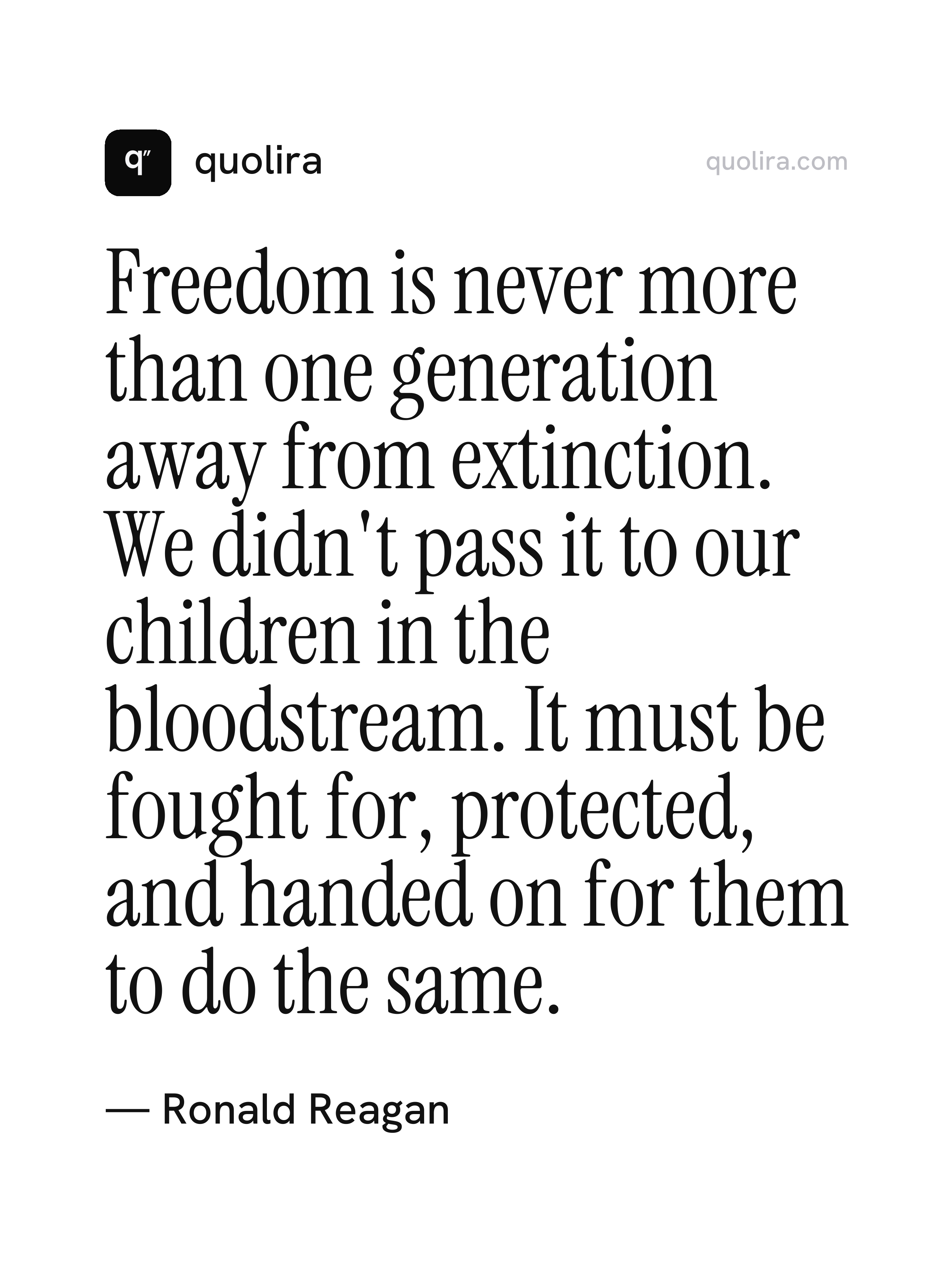
“Freedom is never more than one generation away from extinction. We didn't pass it to our children in the bloodstream. It must be fought for, protected, and handed on for them to do the same.”
Ronald Reagan · Address to the Annual Meeting of the Phoenix Chamber of Commerce, March 30, 1961
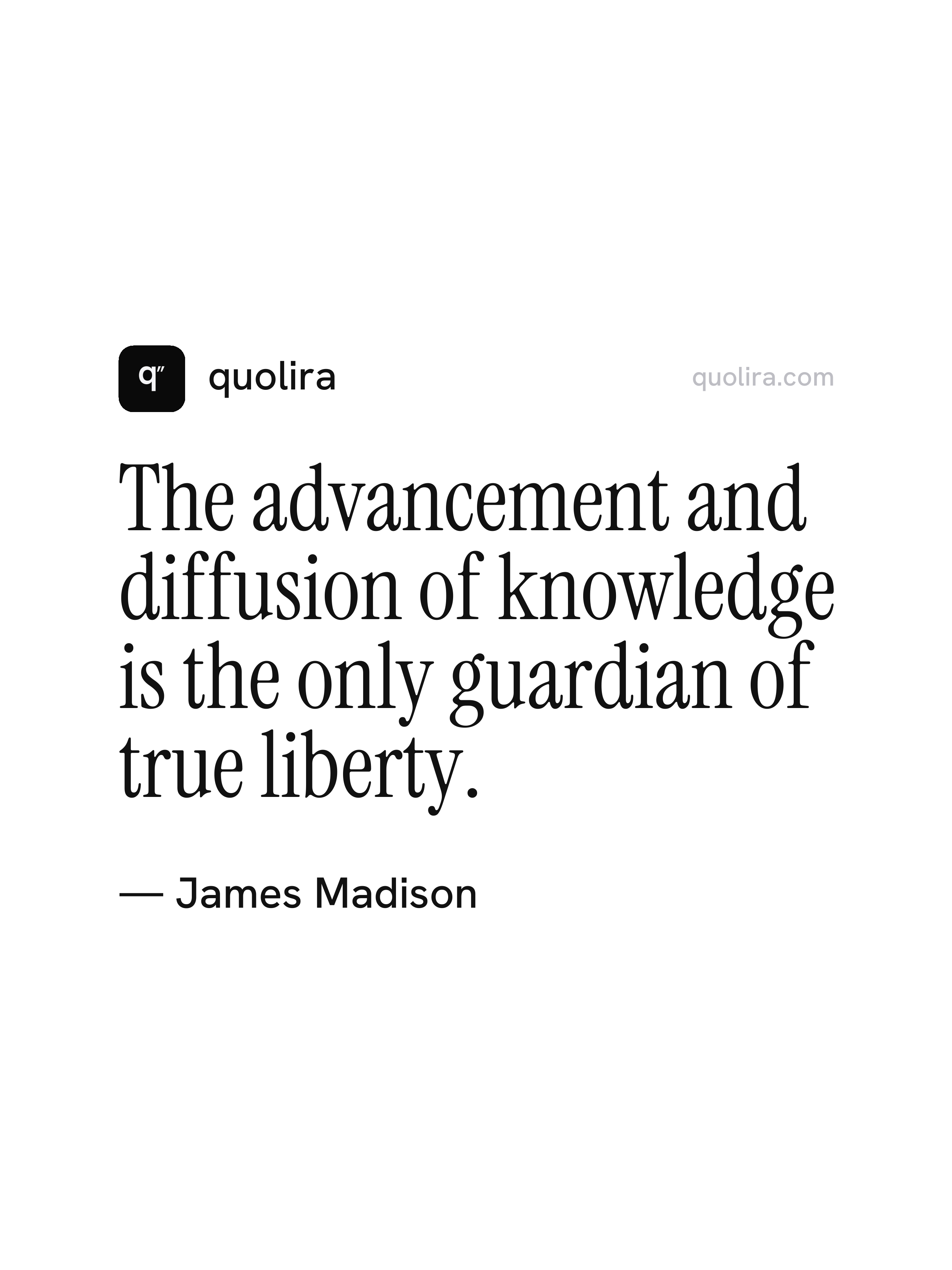
“The advancement and diffusion of knowledge is the only guardian of true liberty.”
James Madison · Letter to George Thompson, June 30, 1825
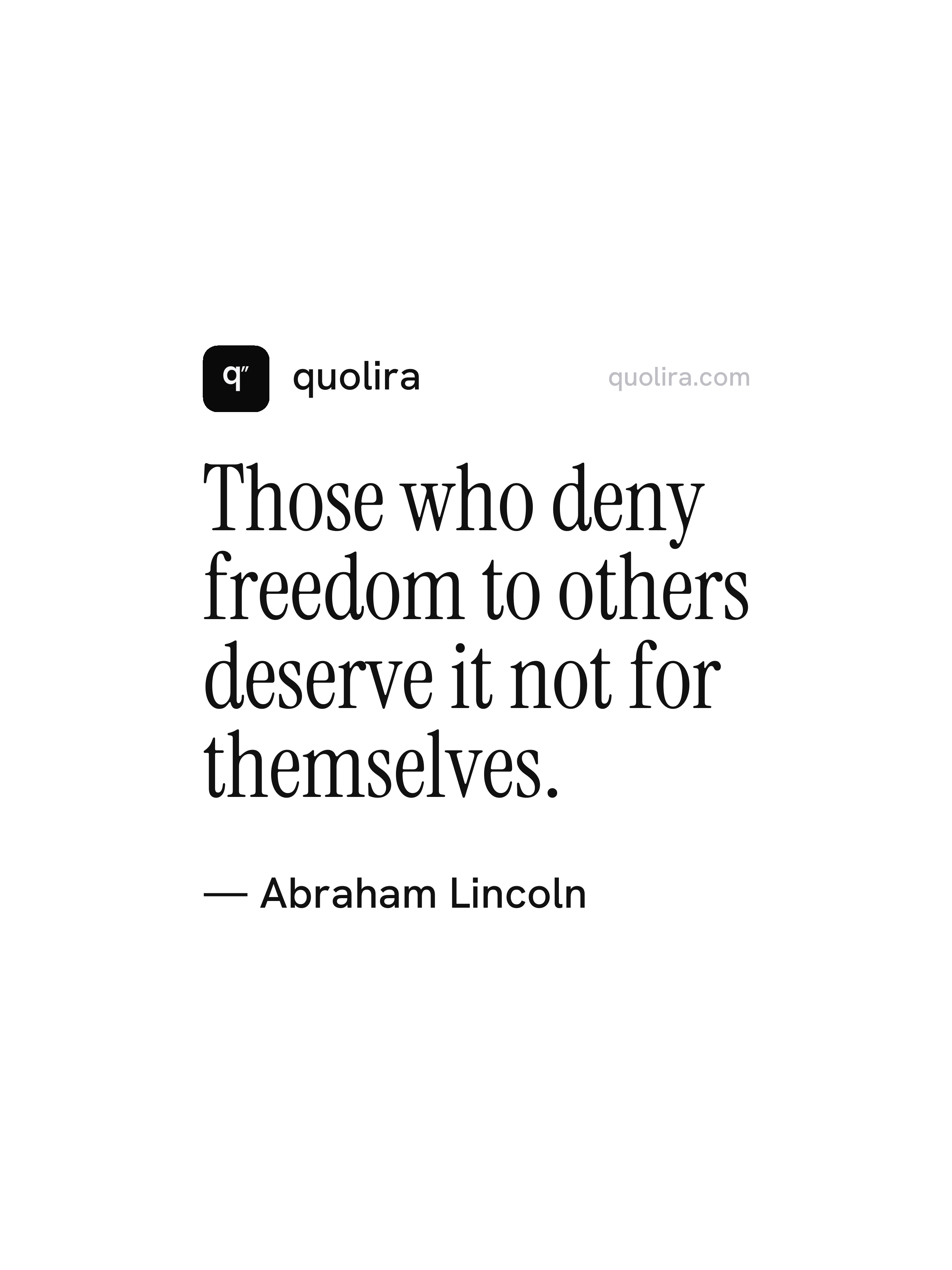
“Those who deny freedom to others deserve it not for themselves.”
Abraham Lincoln · Letter to Henry L. Pierce, April 6, 1859
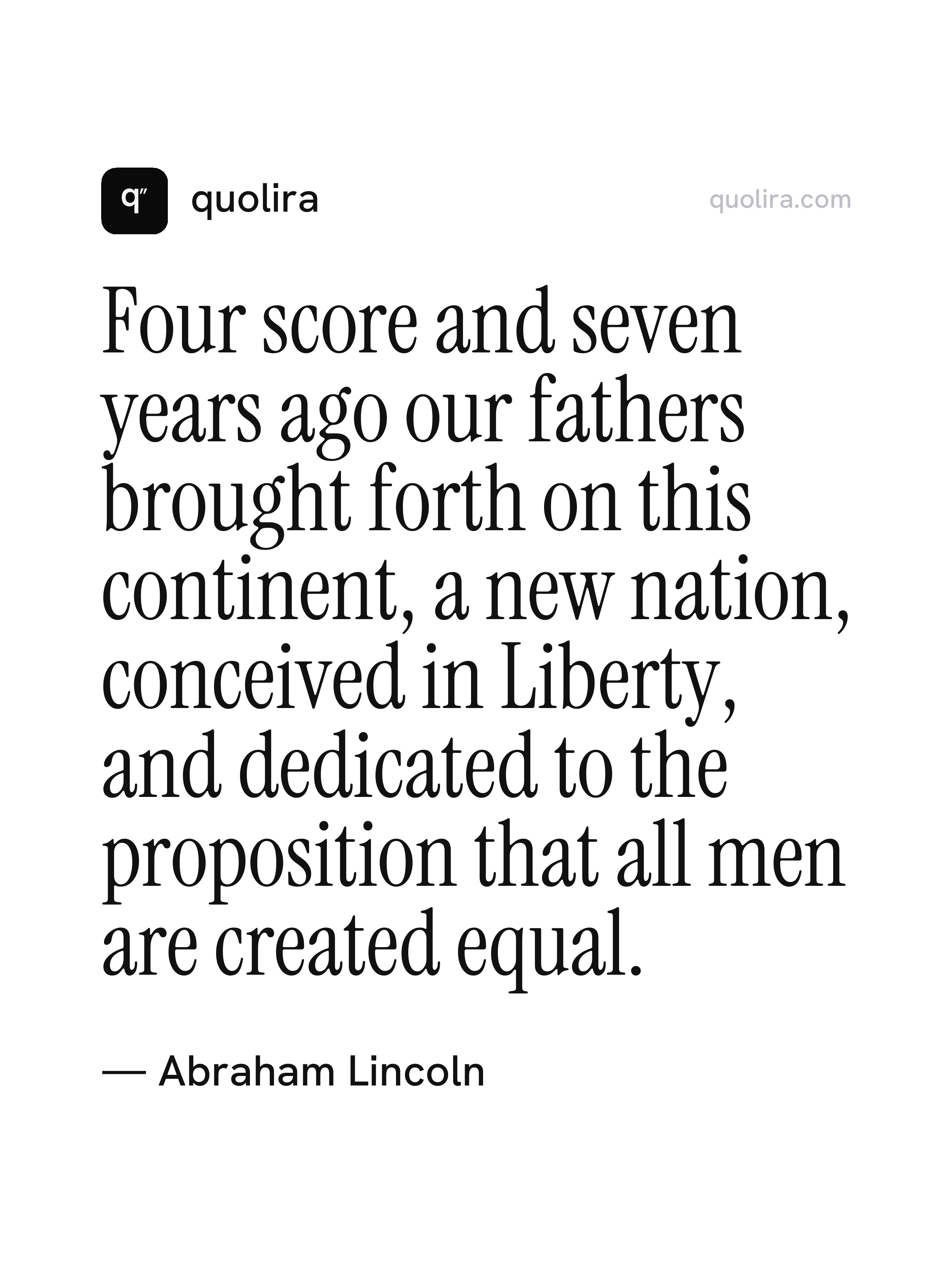
“Four score and seven years ago our fathers brought forth on this continent, a new nation, conceived in Liberty, and dedicated to the proposition that all men are created equal.”
Abraham Lincoln · Gettysburg Address, November 19, 1863