“Liberty means responsibility. That is why most men dread it.”
George Bernard Shaw · Maxims for Revolutionists, 1903
 quolira
.com
quolira
quolira.com
Rousseau is drawing a stark contrast between two ways of living: one that is safe but controlled, and one that is free but uncertain. His preference is clear and unapologetic. He is saying that a life without genuine freedom is not truly a life worth having, even if that freedom comes bundled with risk and hardship.
This sentiment is consistent with the central arguments Rousseau developed in his political writings of the eighteenth century. The Social Contract, published in 1762, examined how individuals could live together in society without surrendering the essential freedom that defines their humanity. Rousseau wrote during a period of growing intellectual challenge to absolute monarchy and aristocratic privilege, and his ideas became important touchstones for later revolutionary movements in Europe and the Americas.
Jean-Jacques Rousseau was a Genevan philosopher and writer whose work had an enormous influence on Enlightenment thought and on subsequent political philosophy. He explored questions of human nature, inequality, education, and the relationship between the individual and society. His writing was often passionate and personal, and he was a genuinely controversial figure during his lifetime. Rousseau's ideas about the corrupting effects of civilization and the importance of natural freedom have continued to spark debate among philosophers, political theorists, and general readers for more than two and a half centuries.
“Liberty means responsibility. That is why most men dread it.”
George Bernard Shaw · Maxims for Revolutionists, 1903
“My God! How little do my countrymen know what precious blessings they are in possession of, and which no other people on earth enjoy!”
Thomas Jefferson · Letter to James Monroe, June 17, 1785
“For what avail the plough or sail, or land or life, if freedom fail?”
Ralph Waldo Emerson · "Boston," poem, 1830s
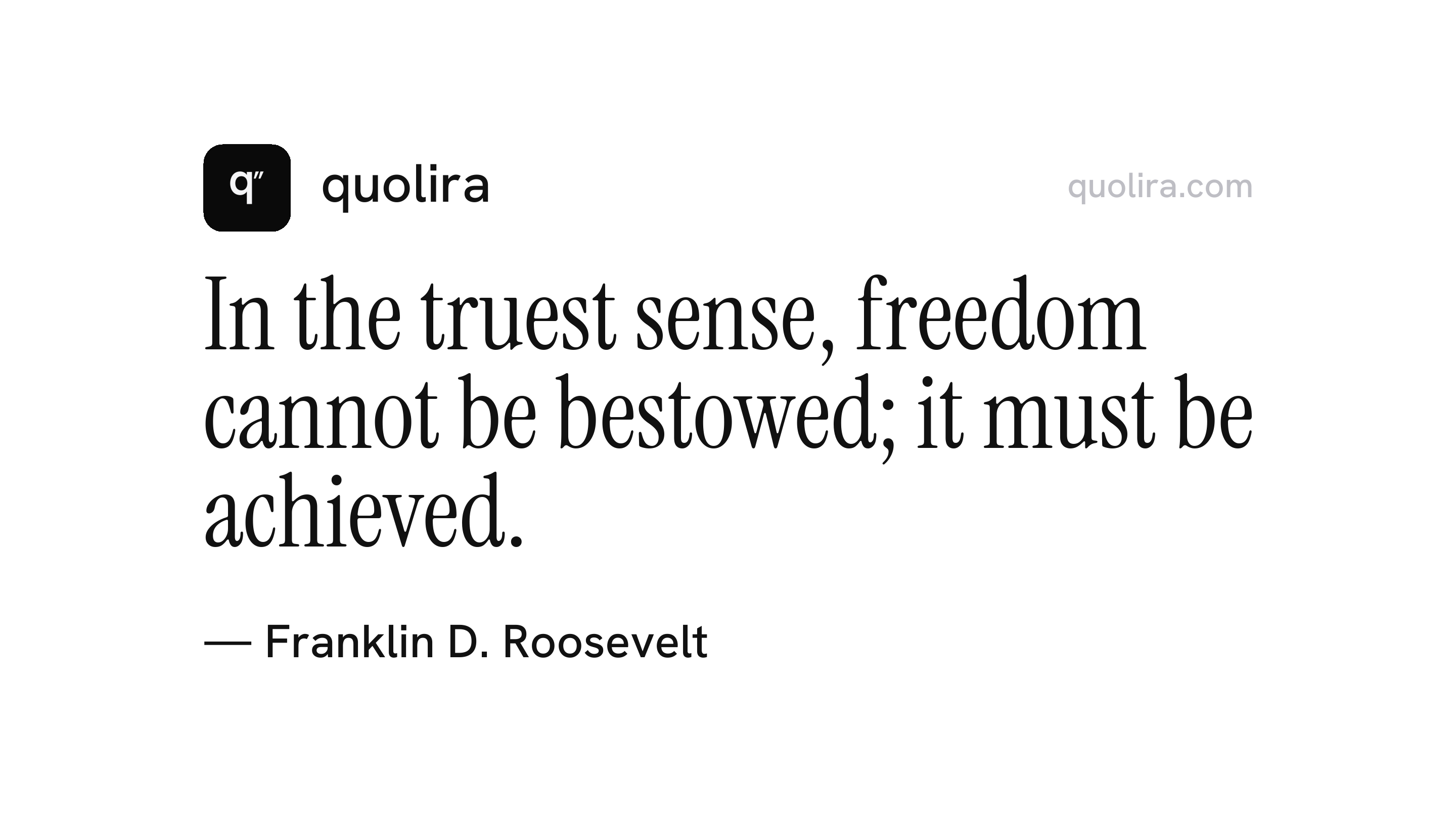
“In the truest sense, freedom cannot be bestowed; it must be achieved.”
Franklin D. Roosevelt · Speech on the Seventy-Fourth Anniversary of the Emancipation Proclamation, September 22, 1936
“We must be free not because we claim freedom, but because we practice it.”
William Faulkner · Essay "On Fear: Deep South in Labor," Harper's Magazine, June 1956
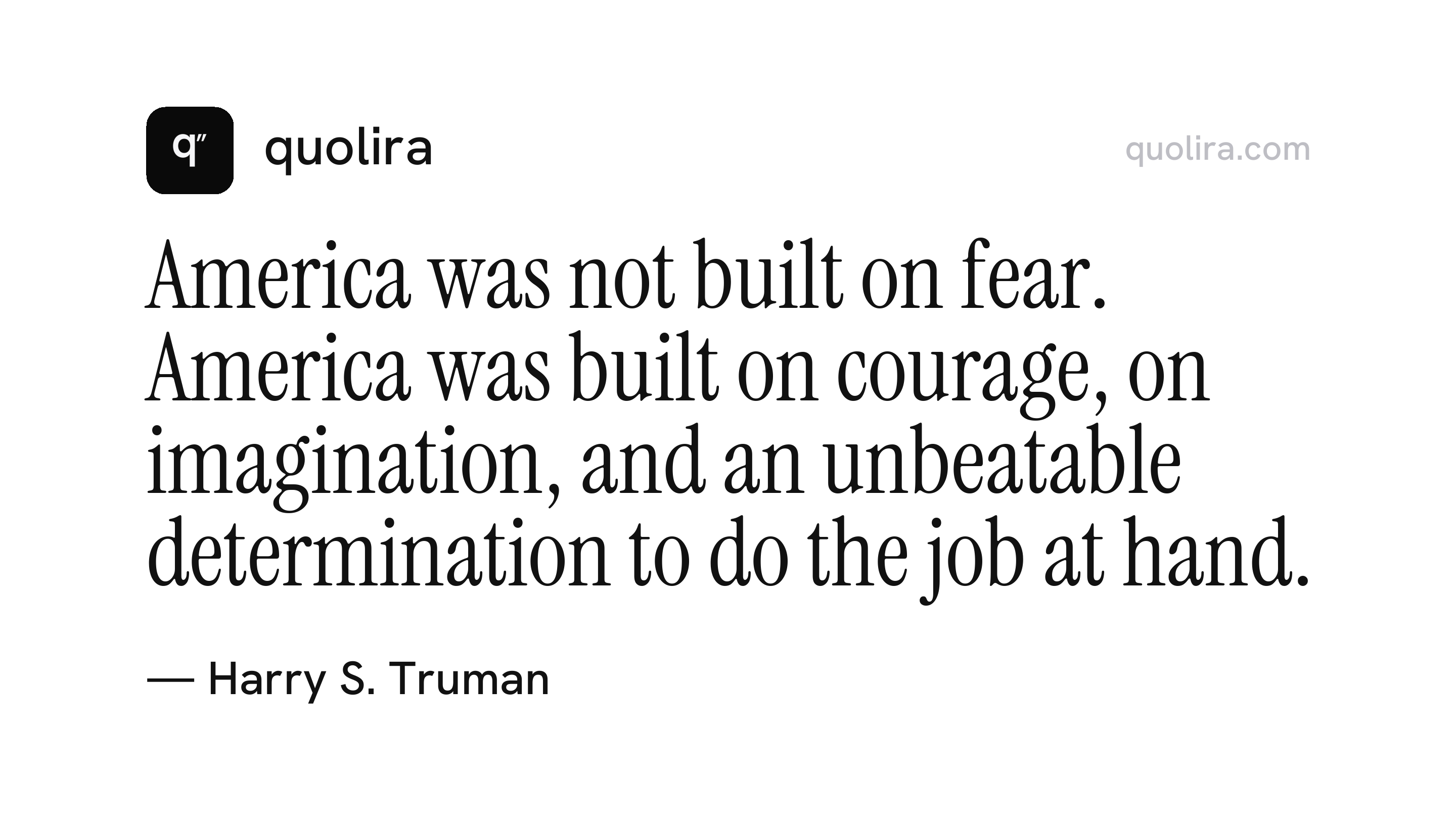
“America was not built on fear. America was built on courage, on imagination, and an unbeatable determination to do the job at hand.”
Harry S. Truman · Special Message to the Congress on the State of the Union, January 8, 1947
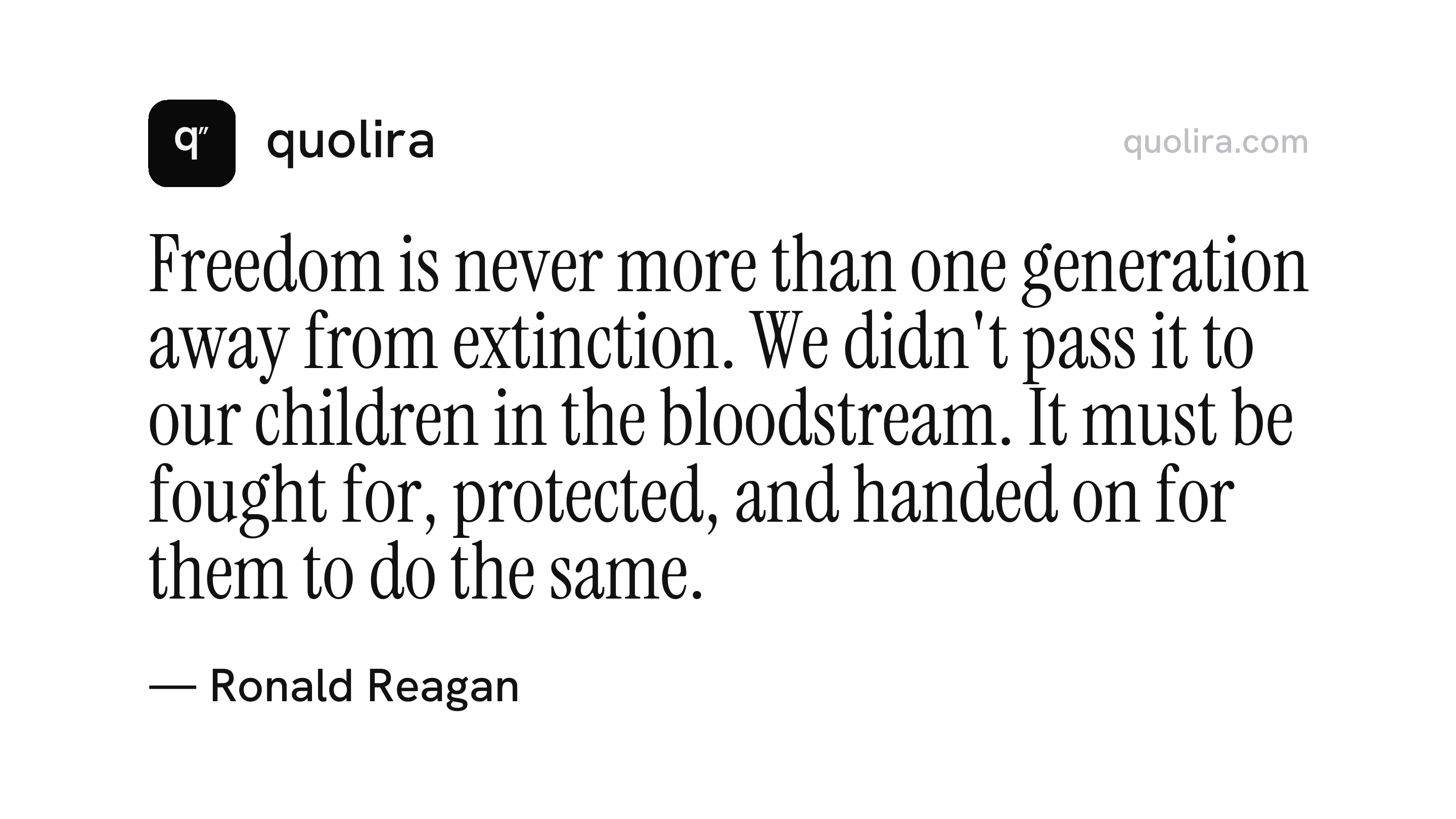
“Freedom is never more than one generation away from extinction. We didn't pass it to our children in the bloodstream. It must be fought for, protected, and handed on for them to do the same.”
Ronald Reagan · Address to the Annual Meeting of the Phoenix Chamber of Commerce, March 30, 1961
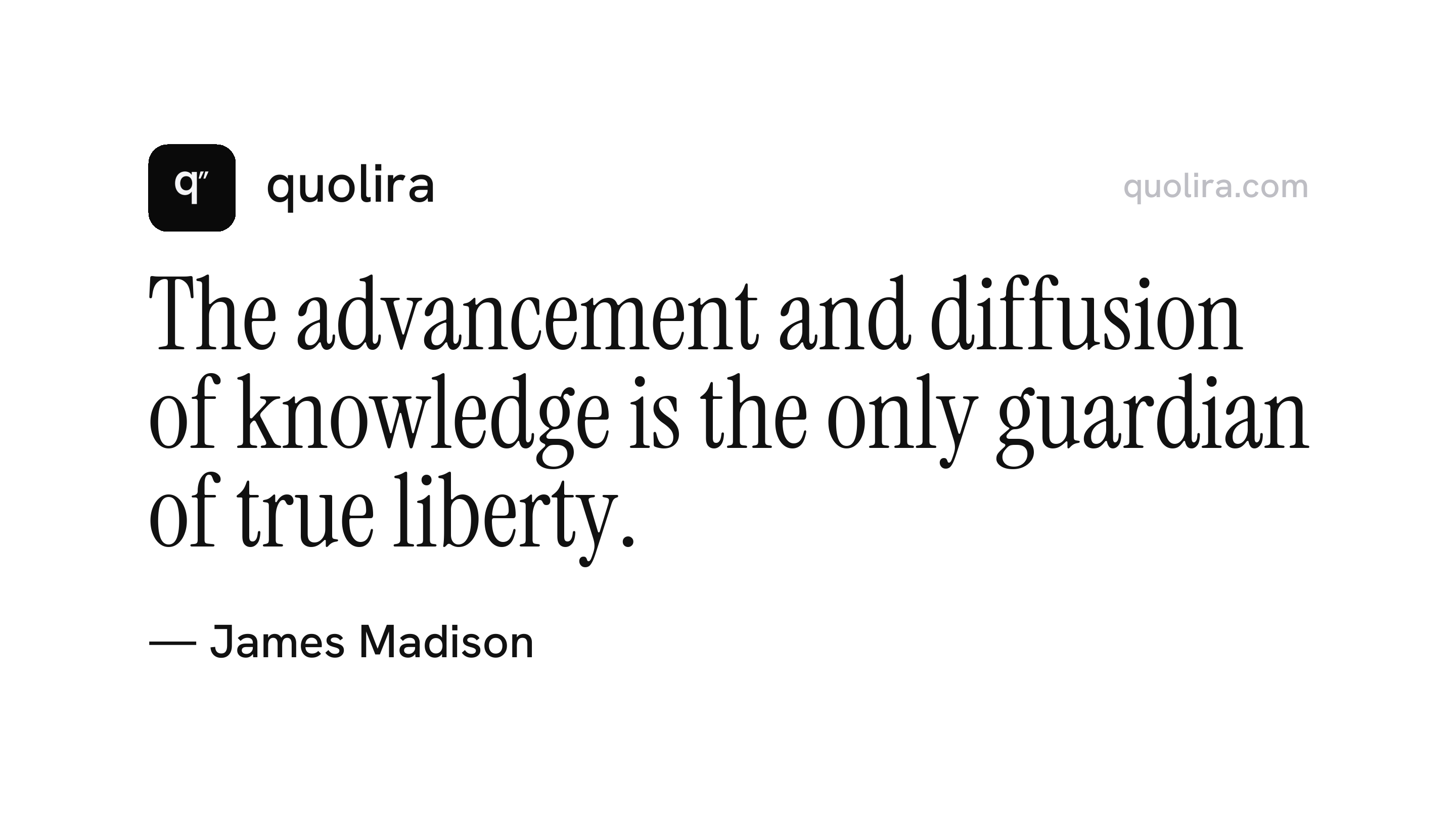
“The advancement and diffusion of knowledge is the only guardian of true liberty.”
James Madison · Letter to George Thompson, June 30, 1825
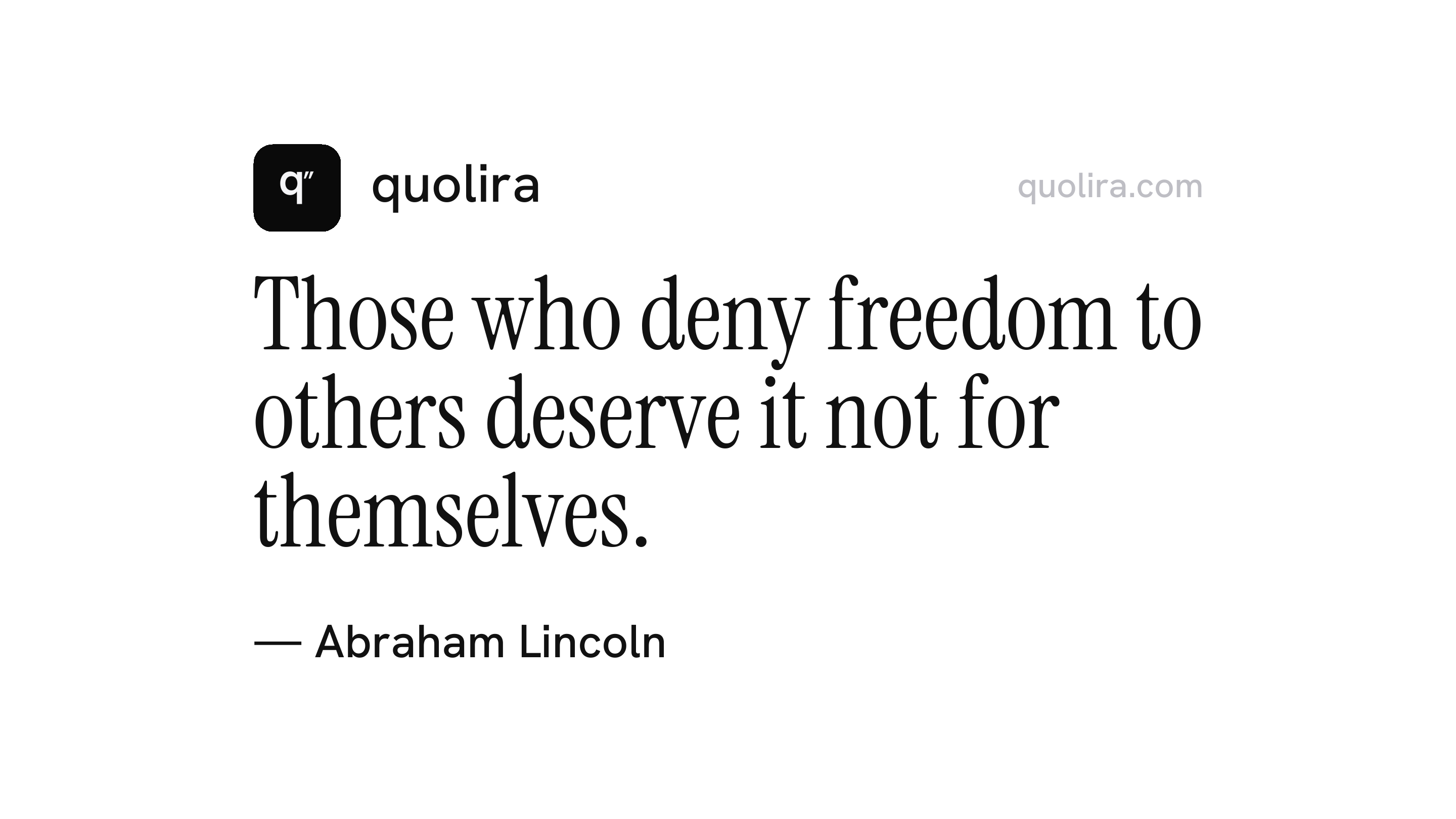
“Those who deny freedom to others deserve it not for themselves.”
Abraham Lincoln · Letter to Henry L. Pierce, April 6, 1859
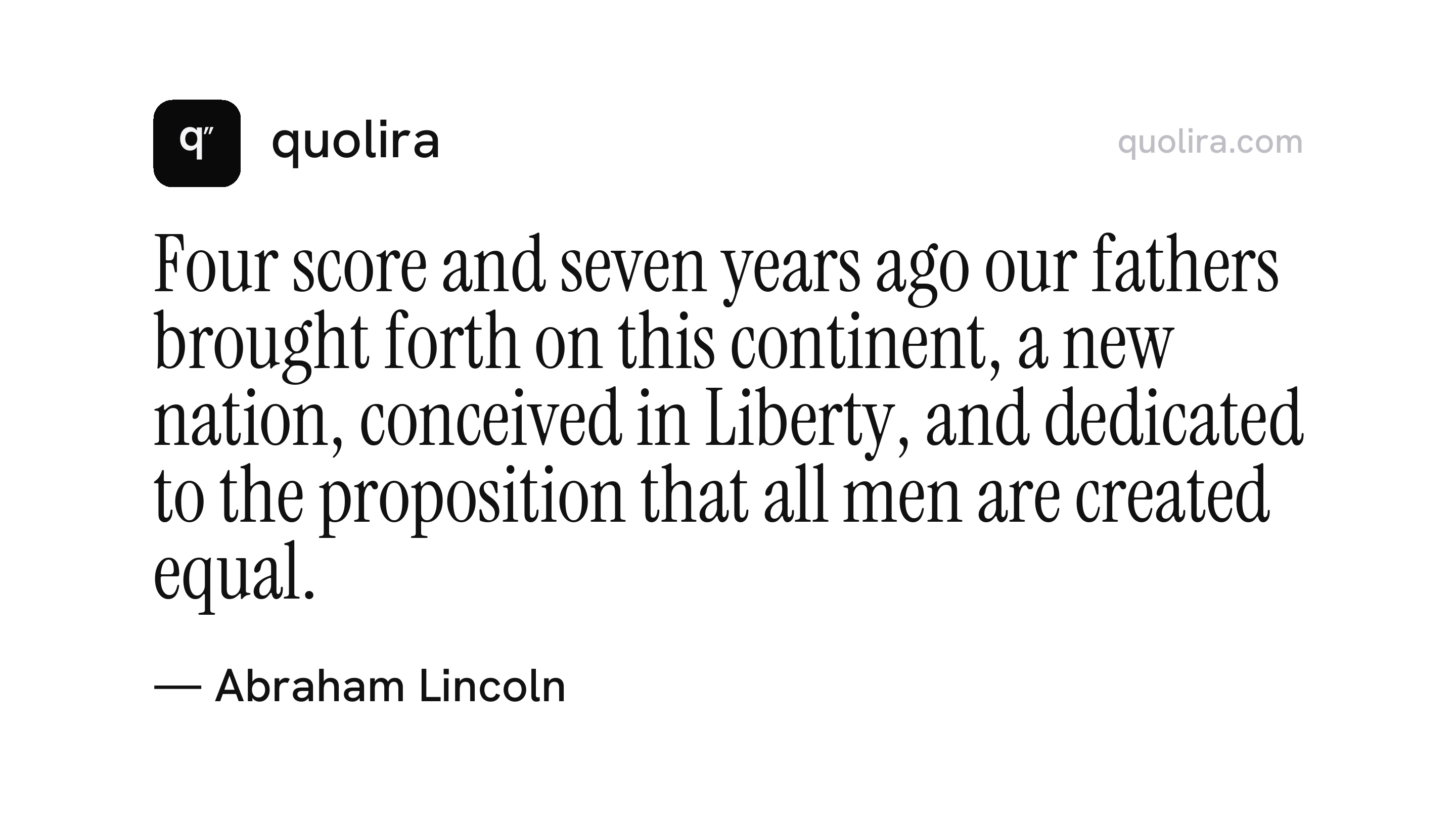
“Four score and seven years ago our fathers brought forth on this continent, a new nation, conceived in Liberty, and dedicated to the proposition that all men are created equal.”
Abraham Lincoln · Gettysburg Address, November 19, 1863
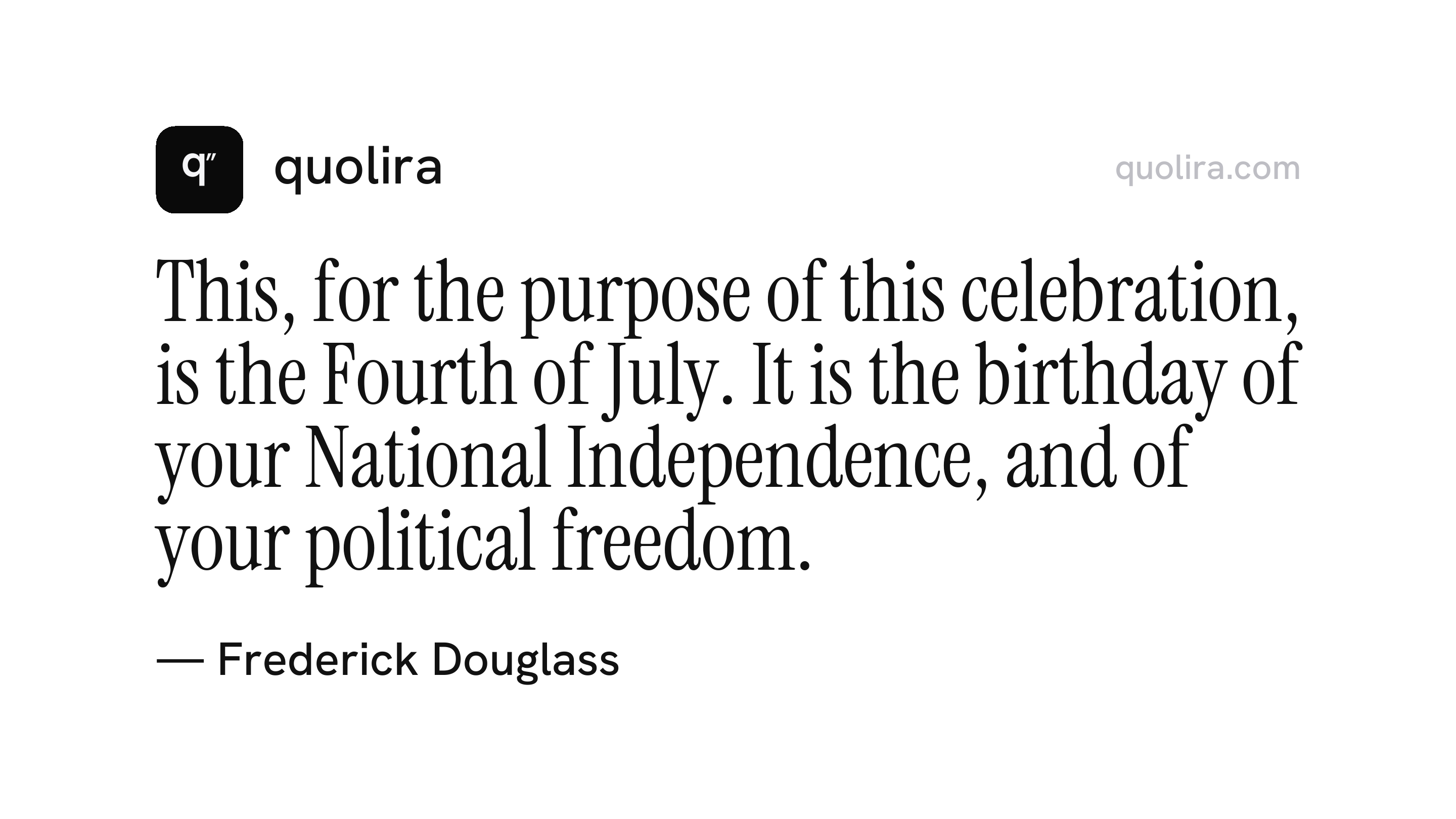
“This, for the purpose of this celebration, is the Fourth of July. It is the birthday of your National Independence, and of your political freedom.”
Frederick Douglass · What to the Slave Is the Fourth of July?, July 5, 1852
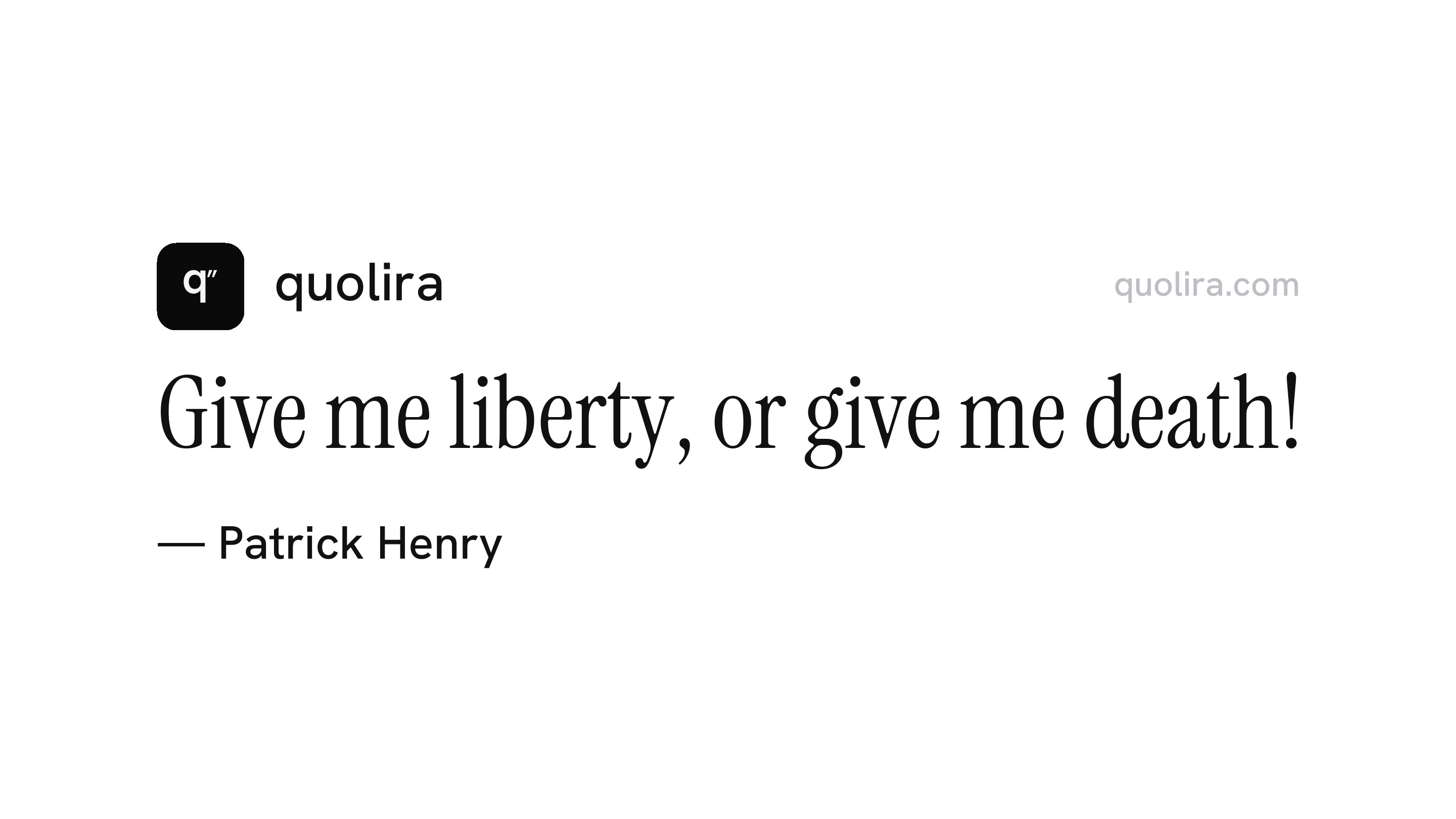
“Give me liberty, or give me death!”
Patrick Henry · Speech to the Virginia Convention, March 23, 1775