“It is not the man who has too little, but the man who craves more, that is poor.”
Seneca · Letters to Lucilius, Letter 2
 quolira
.com
quolira
quolira.com
Seneca is offering two related pieces of advice in a single breath. The first is to practice a kind of inward withdrawal, spending time with your own thoughts rather than constantly seeking external stimulation or company. The second is that when you do choose company, choose it deliberately. The people around you shape your habits, your standards, and your expectations without you always noticing. Seeking out those who challenge you to be better is one of the most effective and underused tools for self-improvement.
This comes from Letter 7 of the Letters to Lucilius, in which Seneca warns his friend about the corrupting influence of crowds and casual association. He observed that time spent in large gatherings tends to lower a person's standards rather than raise them, because the pull of the group is usually toward comfort and conformity rather than excellence. The letter is not a call to hermit-like isolation but a practical recommendation: guard your attention and your social circle as carefully as you guard any other valuable resource.
Lucius Annaeus Seneca, known as Seneca the Younger, was a Roman Stoic philosopher, dramatist, and statesman of the first century of the common era. He held considerable political influence as a tutor and advisor to Emperor Nero. His Letters to Lucilius, written near the end of his life, are among the most accessible and enduring works of ancient philosophy, blending personal reflection with moral instruction.
“It is not the man who has too little, but the man who craves more, that is poor.”
Seneca · Letters to Lucilius, Letter 2
“Begin at once to live, and count each separate day as a separate life.”
Seneca · Letters to Lucilius
“The impediment to action advances action. What stands in the way becomes the way.”
Marcus Aurelius · Meditations
“He who fears death will never do anything worthy of a man who is alive.”
Seneca · Letters to Lucilius
“Let each thing you would do, say, or intend, be like that of a dying person.”
Marcus Aurelius · Meditations
“Seek not that the things which happen should happen as you wish; but wish the things which happen to be as they are, and you will have a tranquil flow of life.”
Epictetus · Enchiridion
“Bear in mind that everything that exists is already fraying at the edges.”
Marcus Aurelius · Meditations
“Everything that happens is either endurable or not. If it's endurable, then endure it. Stop complaining.”
Marcus Aurelius · Meditations
“The willing are led by fate, the reluctant dragged.”
Seneca · Letters to Lucilius
“A blazing fire makes flame and brightness out of everything that is thrown into it.”
Marcus Aurelius · Meditations
“Accept the things to which fate binds you, and love the people with whom fate brings you together, but do so with all your heart.”
Marcus Aurelius · Meditations
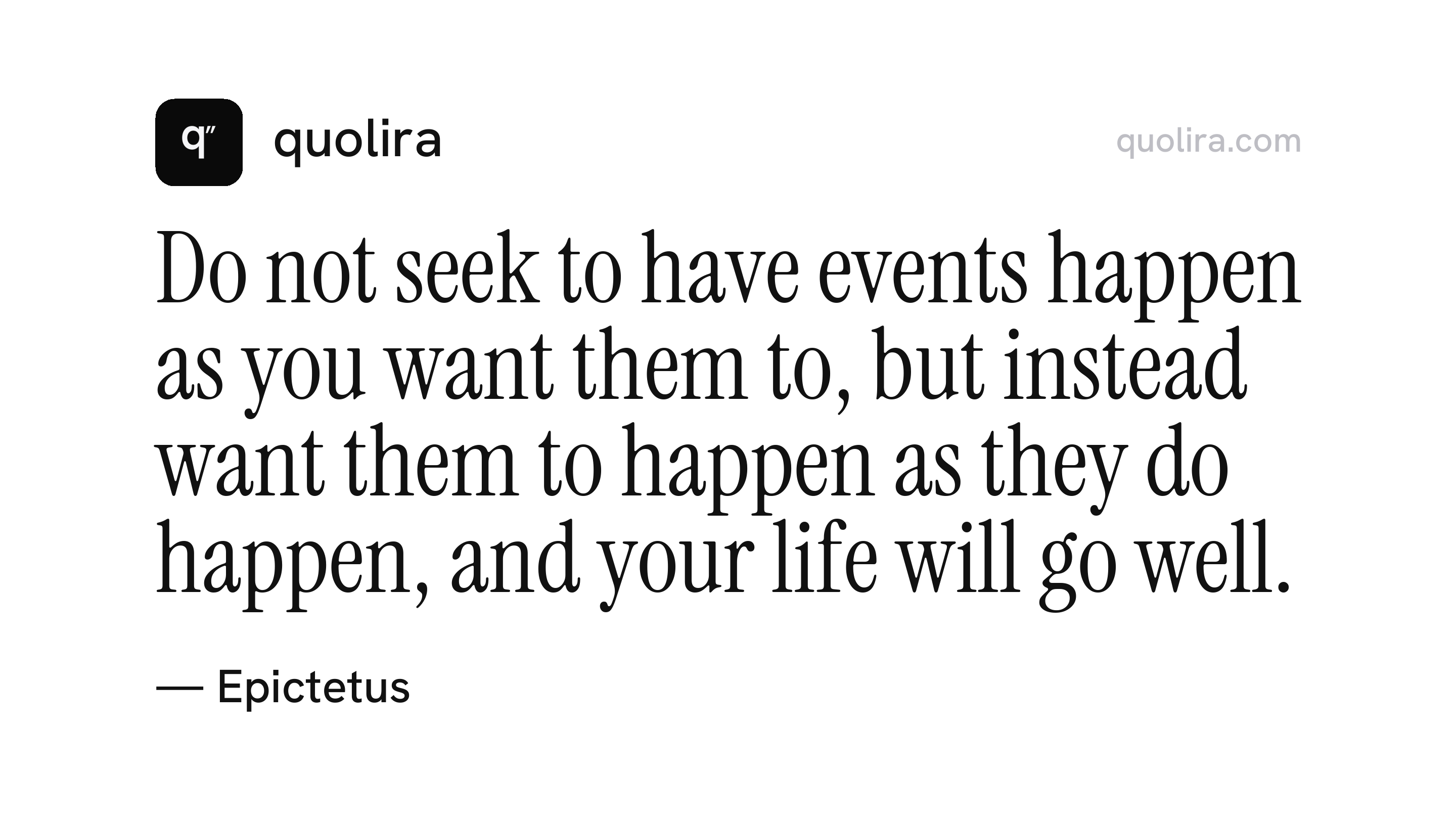
“Do not seek to have events happen as you want them to, but instead want them to happen as they do happen, and your life will go well.”
Epictetus · Enchiridion