“The willing are led by fate, the reluctant dragged.”
Seneca · Letters to Lucilius
 quolira
.com
quolira
quolira.com
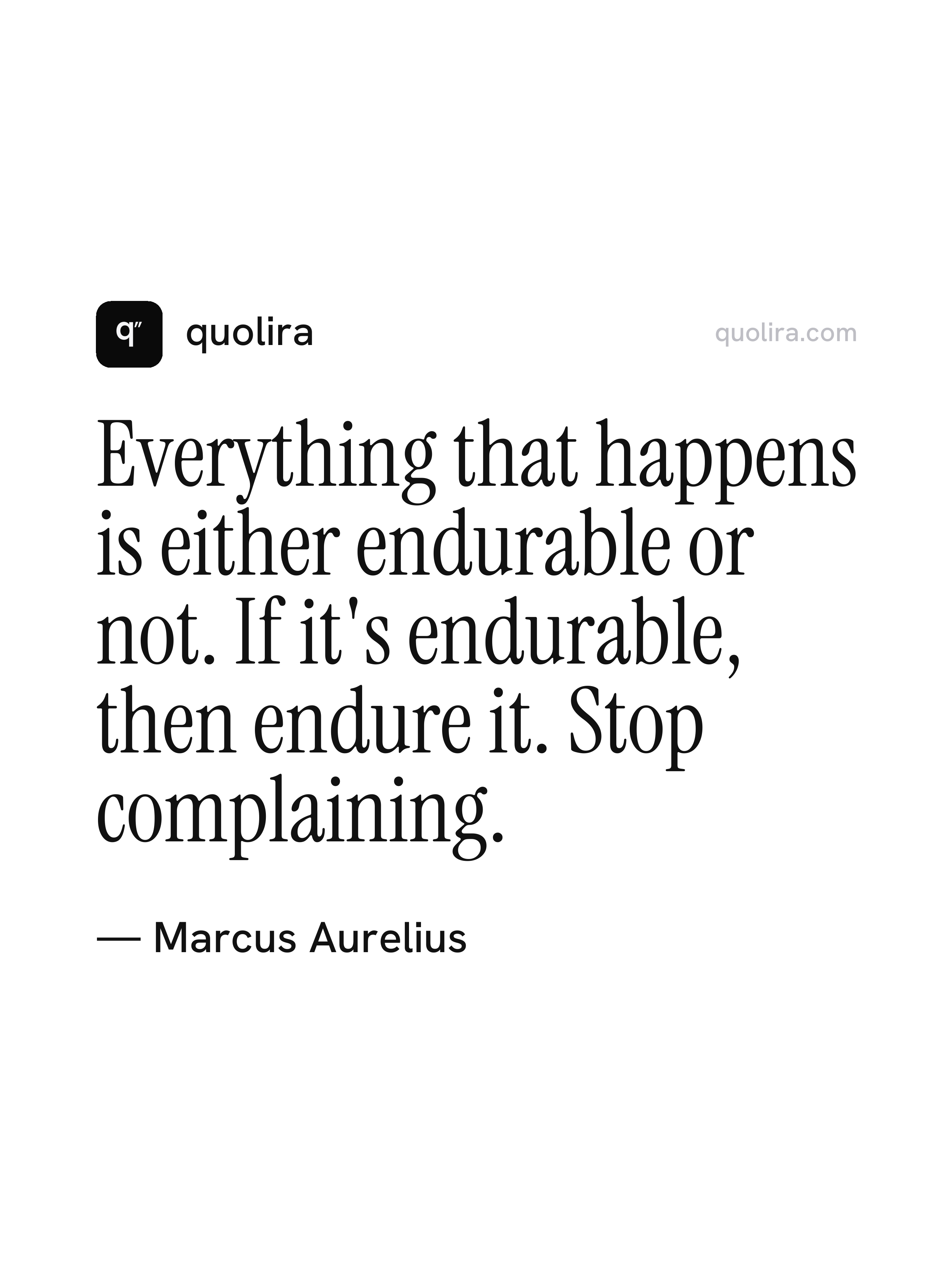
This passage cuts straight to a practical truth about suffering: every difficulty we face falls into one of two categories. Either we can bear it, in which case we should bear it without excess complaint, or it is genuinely unbearable, in which case it will end us and complaint becomes equally pointless. The logic is almost mathematical, and that is precisely its power. It strips away the drama we layer on top of hardship and asks us to respond with clear-eyed action rather than self-pity.
Marcus Aurelius wrote the Meditations as a private philosophical journal, never intended for publication. He composed these reflections while serving as Roman emperor, often during military campaigns, when the pressures on him were immense. The work is deeply influenced by Stoic philosophy, which taught that we suffer most not from events themselves but from the judgments we attach to them. This particular passage is a compact expression of that Stoic discipline: reframe the situation, identify what is actually within your power, and act accordingly.
Marcus Aurelius ruled the Roman Empire during the second century CE and is remembered as one of the few rulers in history who earnestly tried to live by philosophical principles rather than simply hold power. He studied Stoicism from an early age and continued to wrestle with its demands throughout his life. His private writings, collected as the Meditations, remain one of the most widely read works of ancient philosophy.
“The willing are led by fate, the reluctant dragged.”
Seneca · Letters to Lucilius
“A blazing fire makes flame and brightness out of everything that is thrown into it.”
Marcus Aurelius · Meditations
“Accept the things to which fate binds you, and love the people with whom fate brings you together, but do so with all your heart.”
Marcus Aurelius · Meditations
“Do not seek to have events happen as you want them to, but instead want them to happen as they do happen, and your life will go well.”
Epictetus · Enchiridion
“I want to learn more and more to see as beautiful what is necessary in things; then I shall be one of those who make things beautiful. Amor fati: let that be my love henceforth!”
Friedrich Nietzsche · The Gay Science, 1882
“My formula for greatness in a human being is amor fati: that one wants nothing to be different, not forward, not backward, not in all eternity.”
Friedrich Nietzsche · Ecce Homo, 1888
“Louis, I think this is the beginning of a beautiful friendship.”
Rick Blaine · Casablanca, 1942
“You talkin' to me?”
Travis Bickle · Taxi Driver, 1976
“You come to me and you say Don Corleone, give me justice. But you don't ask with respect.”
Vito Corleone · The Godfather, 1972
“Revenge is a dish best served cold.”
Vito Corleone · The Godfather, attributed in the film's world
“Just when I thought I was out, they pull me back in.”
Michael Corleone · The Godfather Part III, 1990
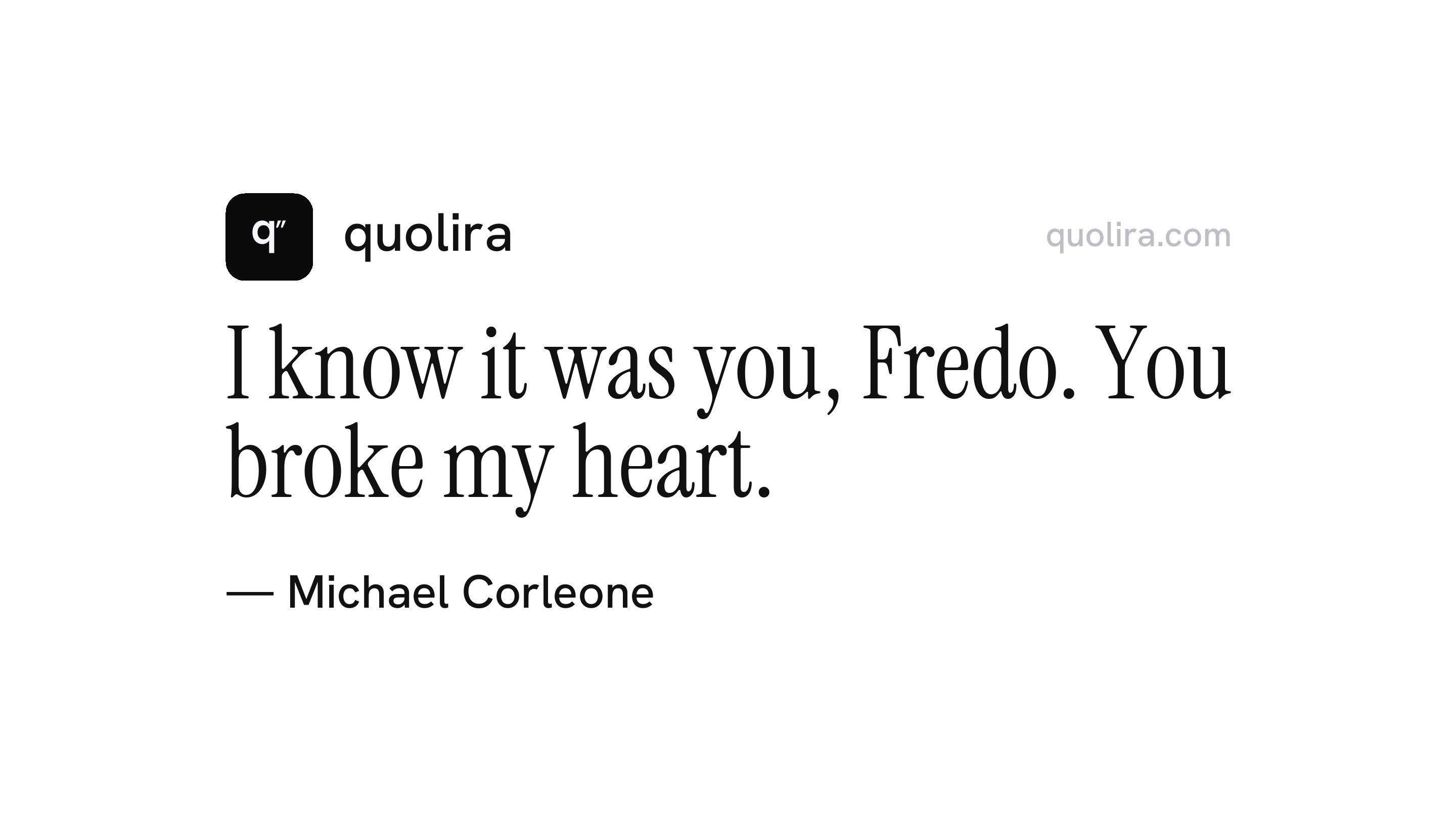
“I know it was you, Fredo. You broke my heart.”
Michael Corleone · The Godfather Part II, 1974