“Bear in mind that everything that exists is already fraying at the edges.”
Marcus Aurelius · Meditations
 quolira
.com
quolira
quolira.com
Epictetus is drawing a precise distinction between two very different postures toward life. One spends energy trying to force the world to match personal wishes and meets constant frustration. The other adjusts wishes to match what is actually happening and finds a steady, untroubled existence as a result. This is not passivity but a deliberate redirection of effort: away from what cannot be controlled and toward the inner response that always can be.
The Enchiridion, sometimes called the Handbook, is a compact summary of Epictetus's teachings compiled by his student Arrian. It opens with what may be the single most important distinction in Stoic philosophy: some things are up to us, and some things are not. This quote develops that idea further, applying it to the texture of daily experience. Epictetus returned to this theme repeatedly because he saw the failure to accept circumstances as the root of most human unhappiness, not the circumstances themselves.
Epictetus was a Greek Stoic philosopher who lived during the first and second centuries CE. He was born into slavery and spent part of his life as a slave in Rome before eventually gaining his freedom. He went on to establish a school of philosophy and became one of the most influential teachers in the Stoic tradition. He wrote nothing himself; his ideas survive through the notes taken by Arrian, who attended his lectures. His background gave his teachings on freedom, acceptance, and the limits of external power a particular weight and authenticity that readers have recognized across many centuries.
“Bear in mind that everything that exists is already fraying at the edges.”
Marcus Aurelius · Meditations
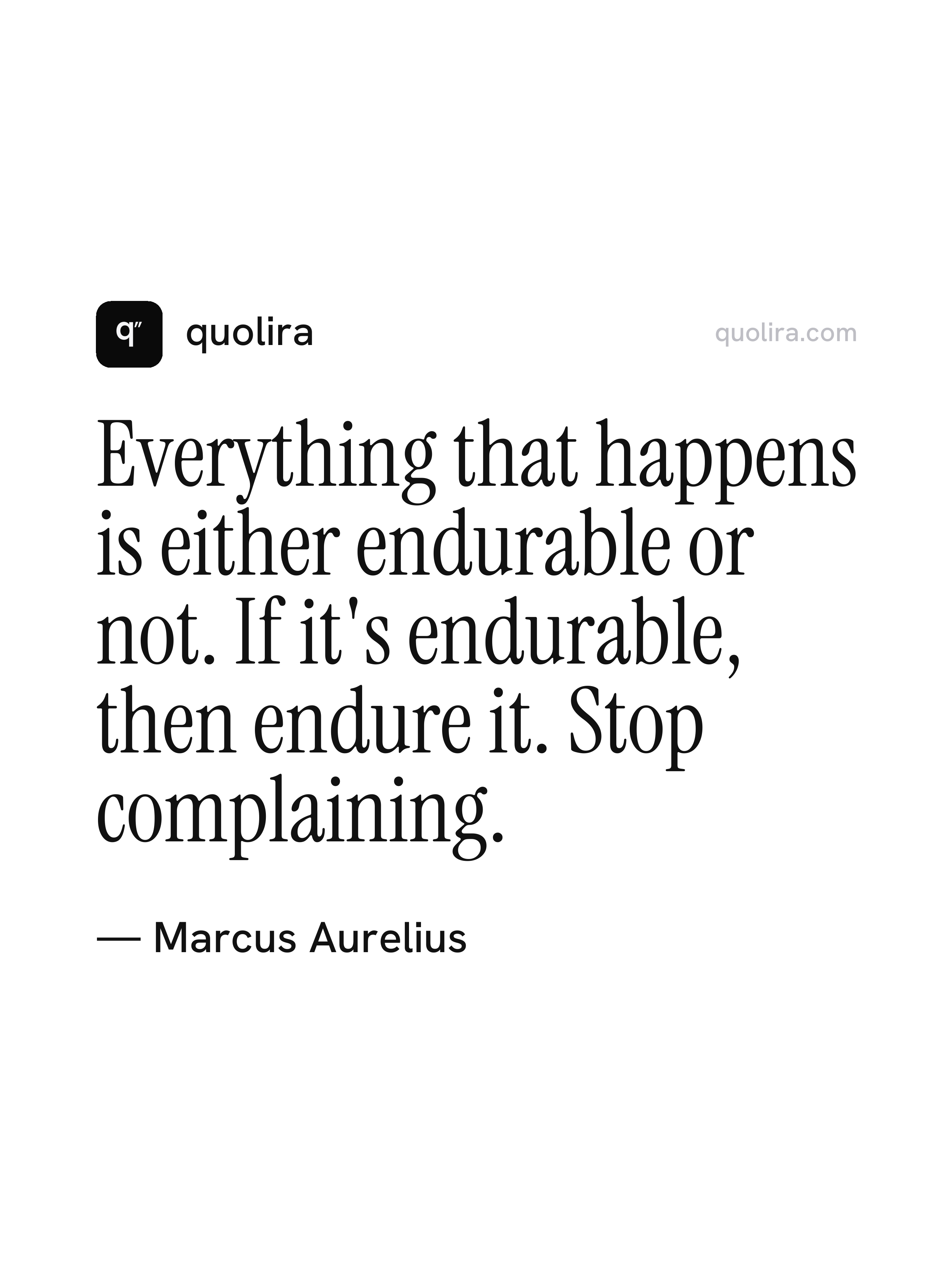
“Everything that happens is either endurable or not. If it's endurable, then endure it. Stop complaining.”
Marcus Aurelius · Meditations
“The willing are led by fate, the reluctant dragged.”
Seneca · Letters to Lucilius
“A blazing fire makes flame and brightness out of everything that is thrown into it.”
Marcus Aurelius · Meditations
“Accept the things to which fate binds you, and love the people with whom fate brings you together, but do so with all your heart.”
Marcus Aurelius · Meditations
“Do not seek to have events happen as you want them to, but instead want them to happen as they do happen, and your life will go well.”
Epictetus · Enchiridion
“I want to learn more and more to see as beautiful what is necessary in things; then I shall be one of those who make things beautiful. Amor fati: let that be my love henceforth!”
Friedrich Nietzsche · The Gay Science, 1882
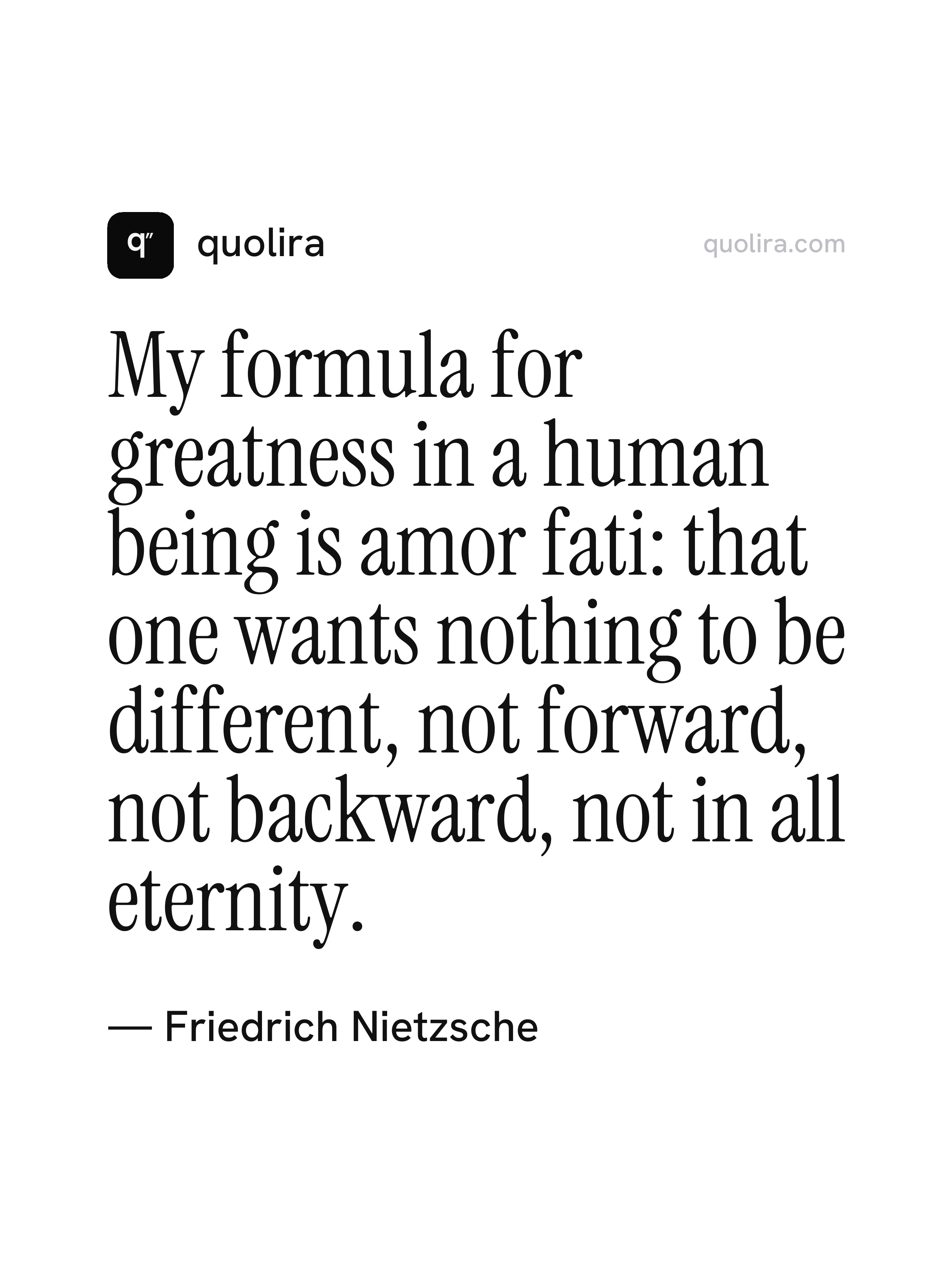
“My formula for greatness in a human being is amor fati: that one wants nothing to be different, not forward, not backward, not in all eternity.”
Friedrich Nietzsche · Ecce Homo, 1888
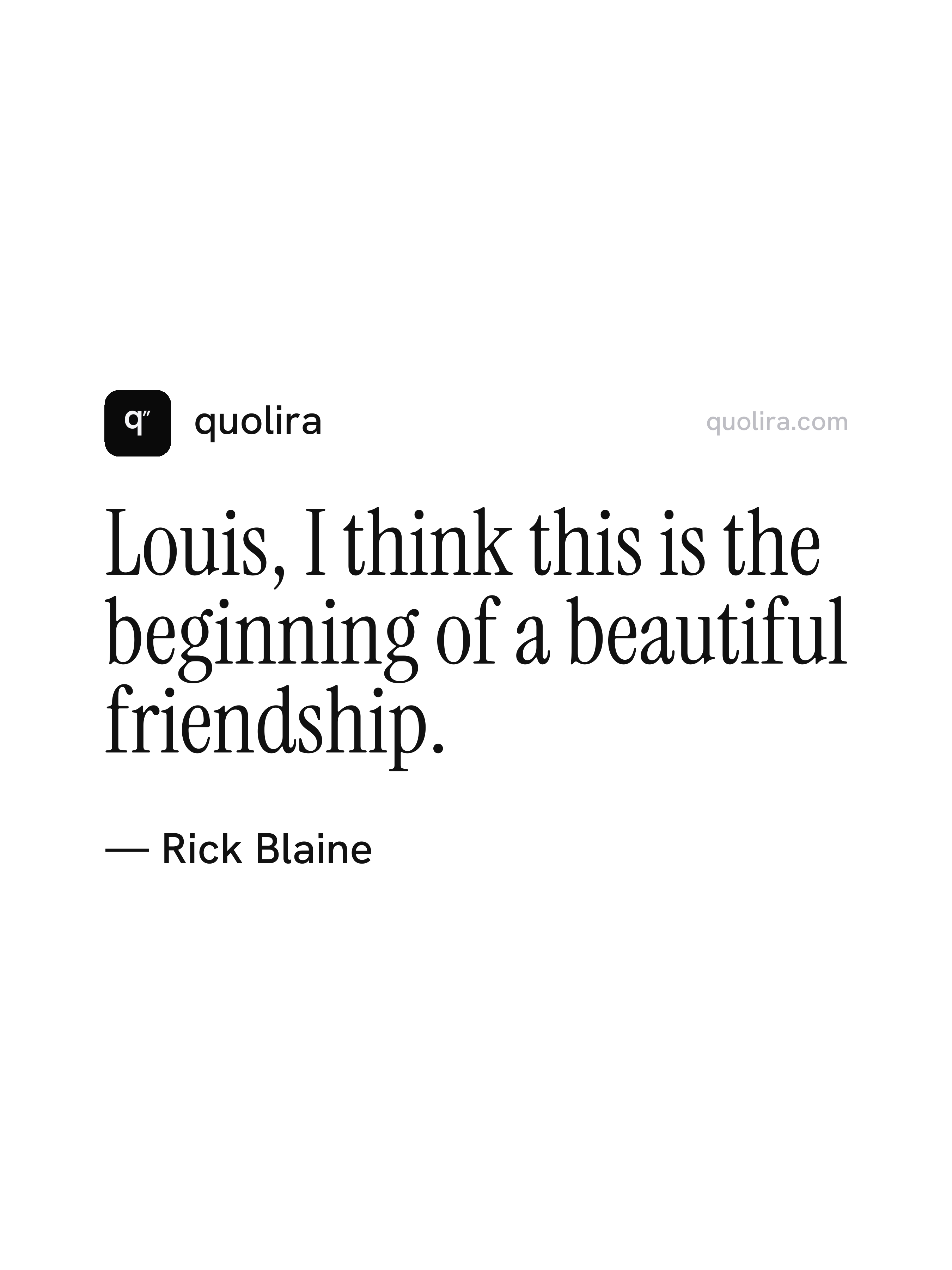
“Louis, I think this is the beginning of a beautiful friendship.”
Rick Blaine · Casablanca, 1942
“You talkin' to me?”
Travis Bickle · Taxi Driver, 1976
“You come to me and you say Don Corleone, give me justice. But you don't ask with respect.”
Vito Corleone · The Godfather, 1972
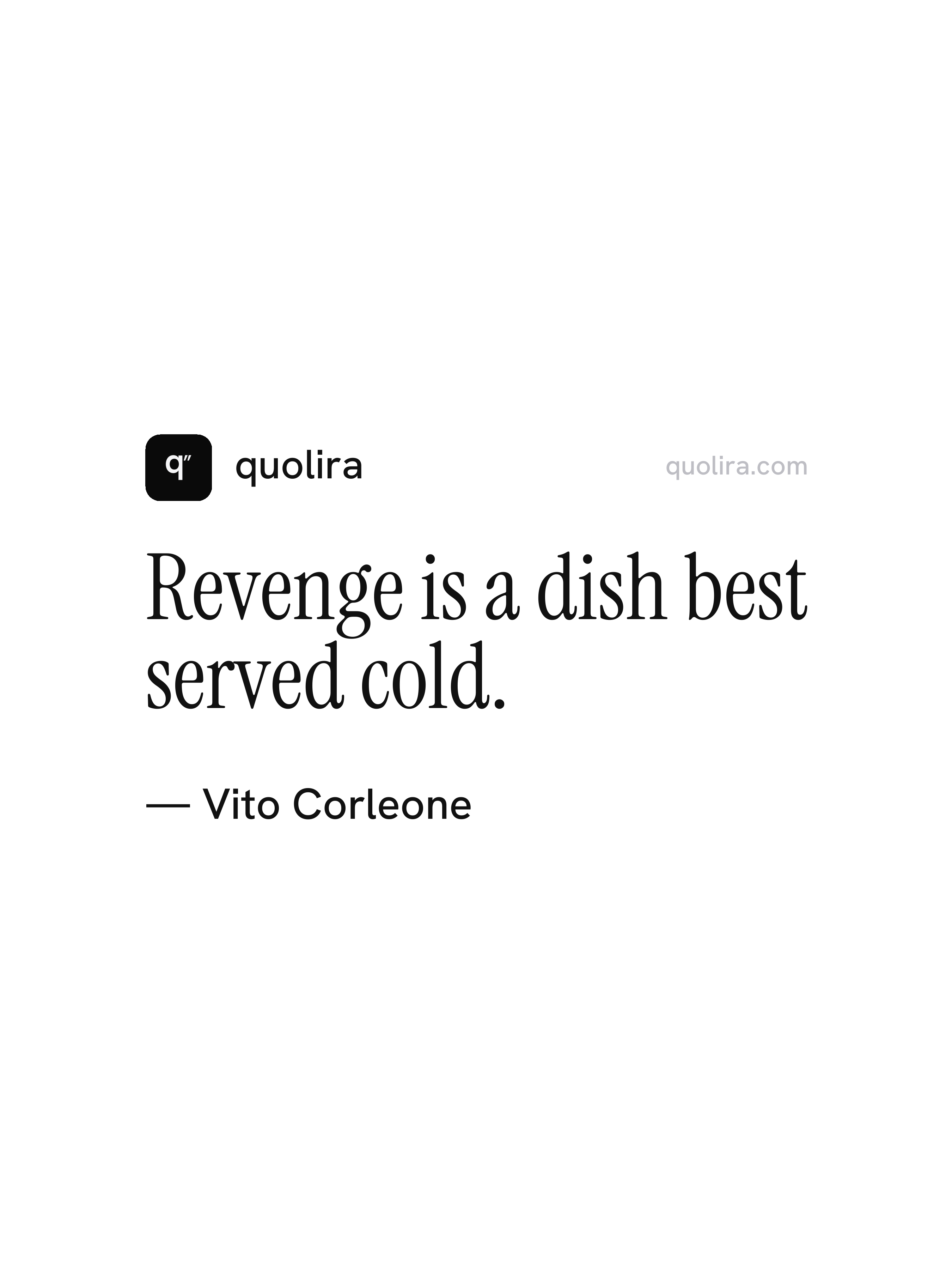
“Revenge is a dish best served cold.”
Vito Corleone · The Godfather, attributed in the film's world