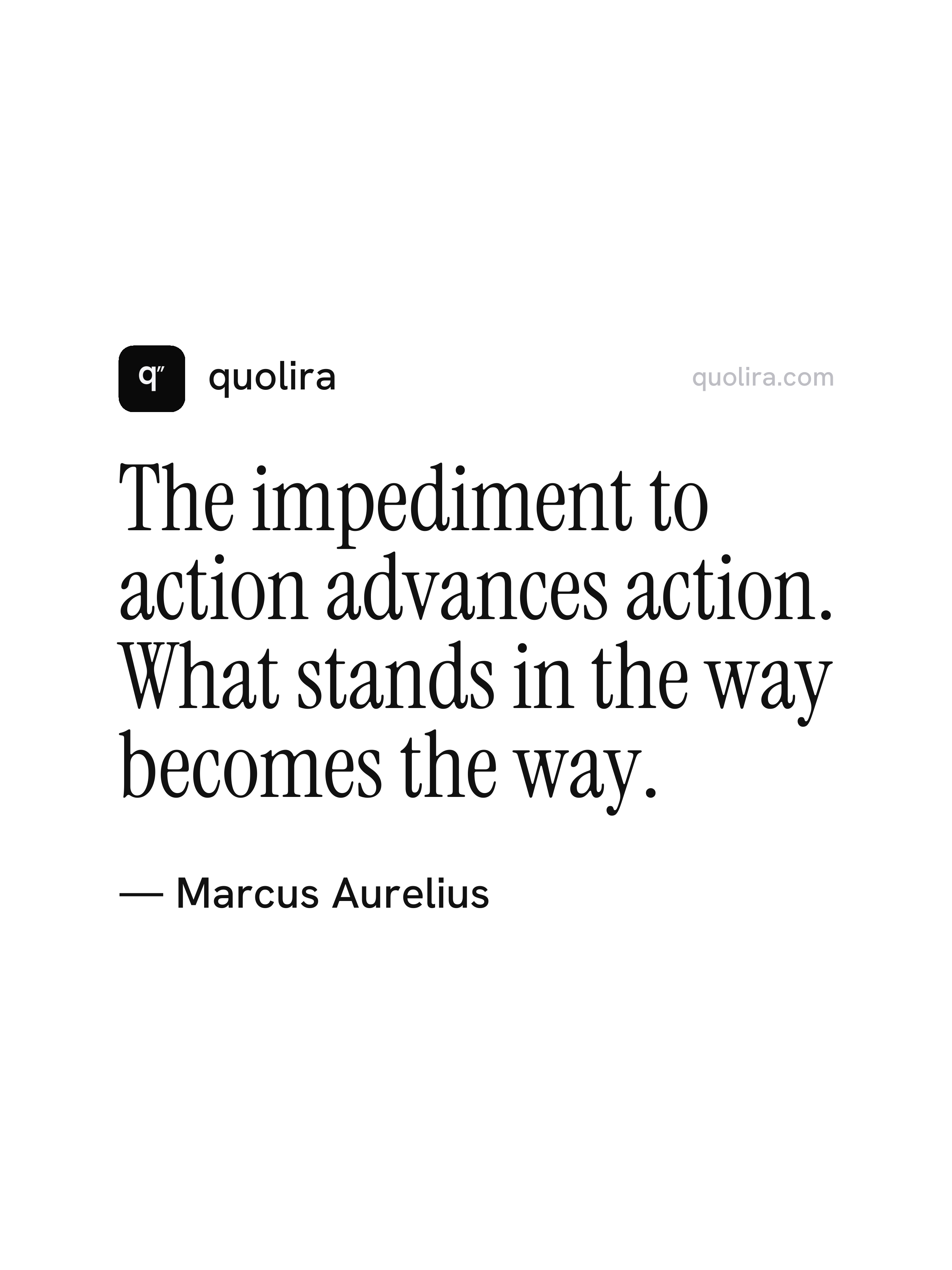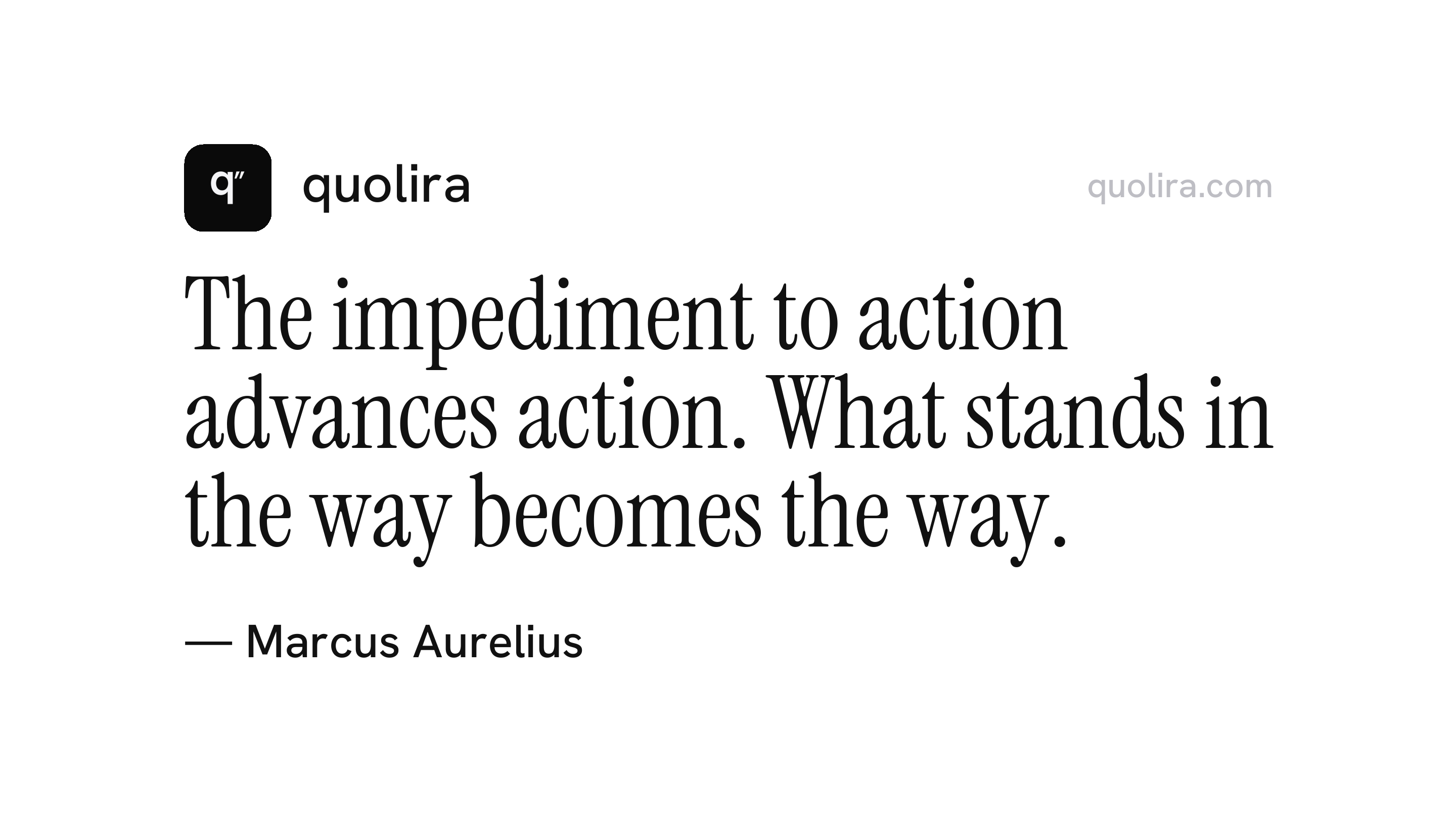
“The impediment to action advances action. What stands in the way becomes the way.”
Marcus Aurelius · Meditations
 quolira
.com
quolira
quolira.com
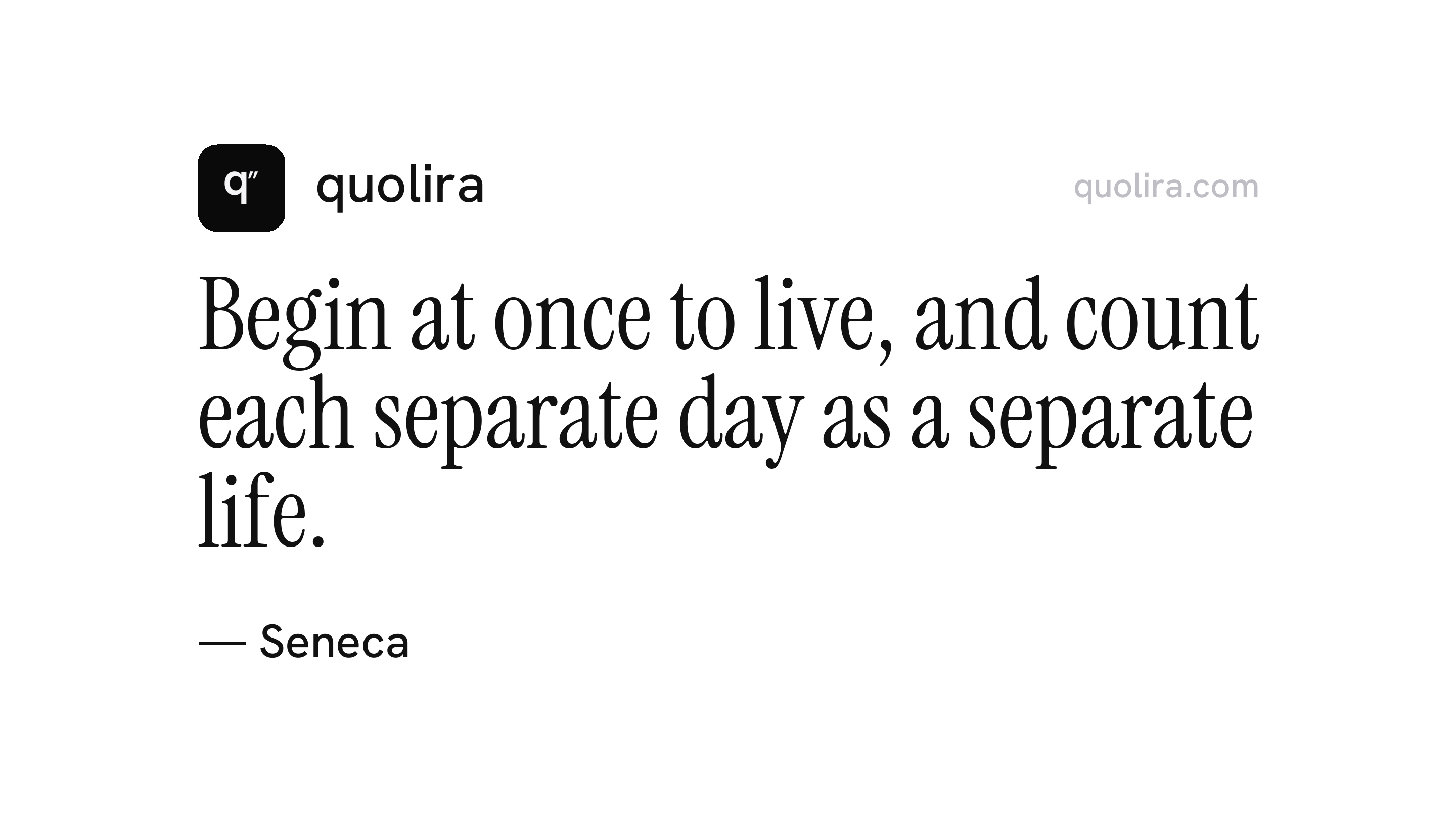
Seneca is urging his reader not to defer living until some future moment when conditions feel right. Each day, he suggests, deserves to be approached as if it were a complete life in itself, with full attention and full commitment. This reframing does two things at once. It creates a sense of urgency that fights procrastination and passivity. It also creates a kind of lightness, because a single day is a manageable thing. You are not asked to fix your entire life at once, only to inhabit today as well as you possibly can.
This line comes from the Letters to Lucilius, a collection of philosophical letters Seneca wrote to his friend in his later years. A recurring theme throughout the letters is the urgency of time. Seneca was acutely aware that most people let their days slip by half-lived, postponing genuine engagement until tomorrow or some later season of life. He wrote frequently about time as the most precious and most wasted of all resources. This particular formulation, treating each day as its own complete life, is one of his most memorable attempts to make that urgency vivid and actionable.
Lucius Annaeus Seneca, known as Seneca the Younger, was a Roman Stoic philosopher, playwright, and statesman who lived during the first century of the common era. He served in the imperial court and was a central figure in the intellectual life of his time. His writings, including the Letters to Lucilius, continue to be read widely as guides to purposeful and reflective living.
“The impediment to action advances action. What stands in the way becomes the way.”
Marcus Aurelius · Meditations
“He who fears death will never do anything worthy of a man who is alive.”
Seneca · Letters to Lucilius
“Let each thing you would do, say, or intend, be like that of a dying person.”
Marcus Aurelius · Meditations
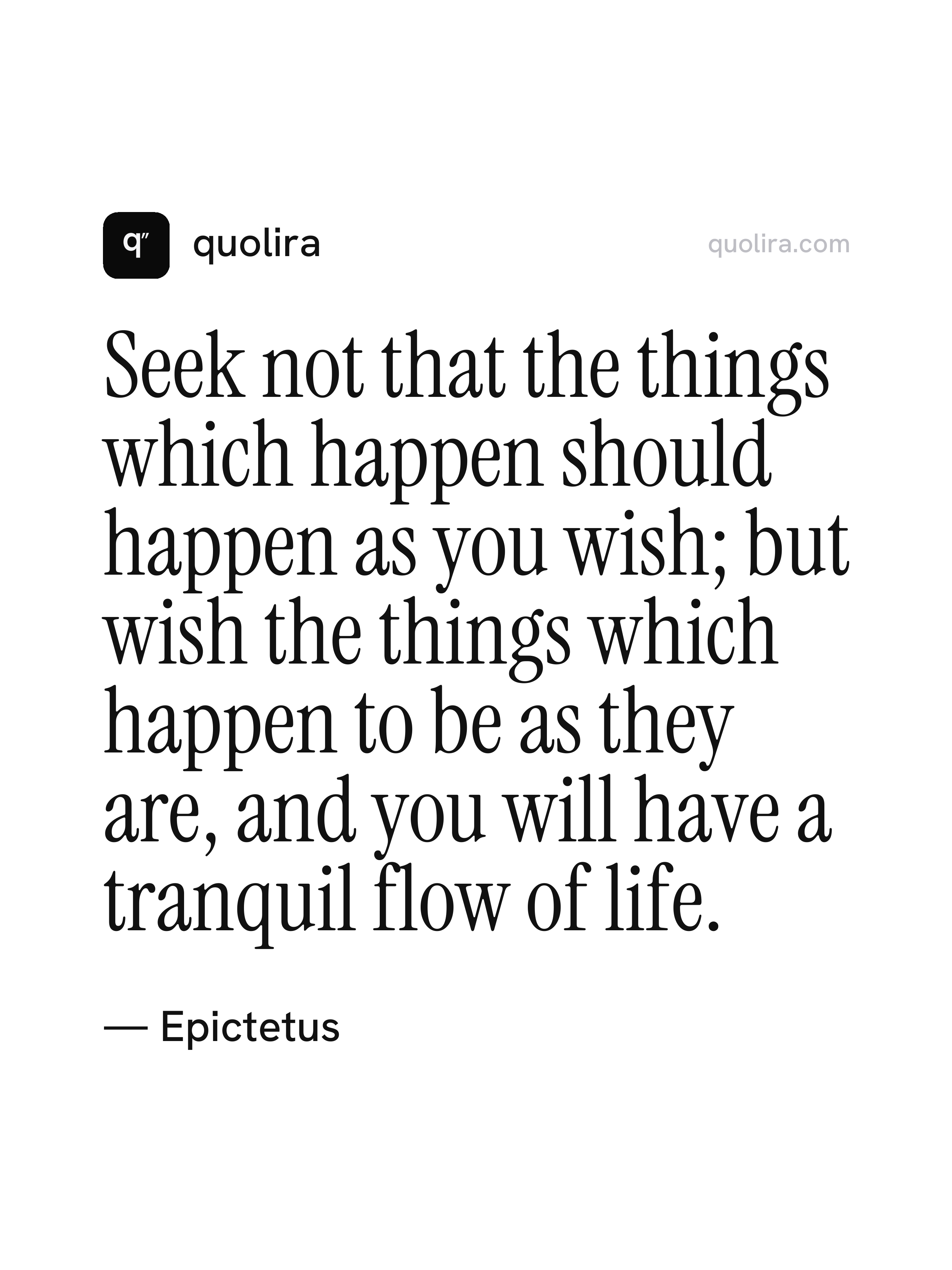
“Seek not that the things which happen should happen as you wish; but wish the things which happen to be as they are, and you will have a tranquil flow of life.”
Epictetus · Enchiridion
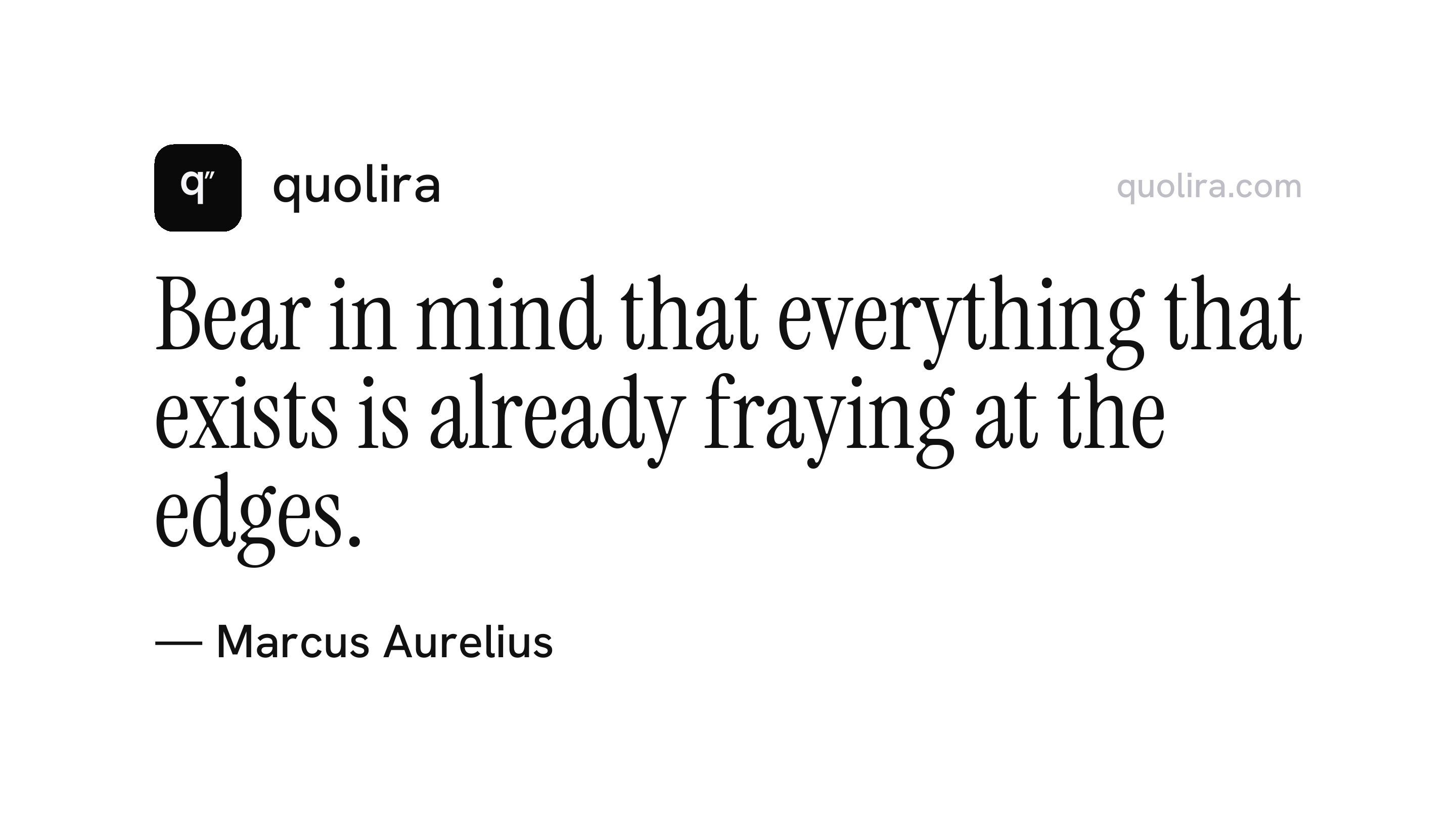
“Bear in mind that everything that exists is already fraying at the edges.”
Marcus Aurelius · Meditations
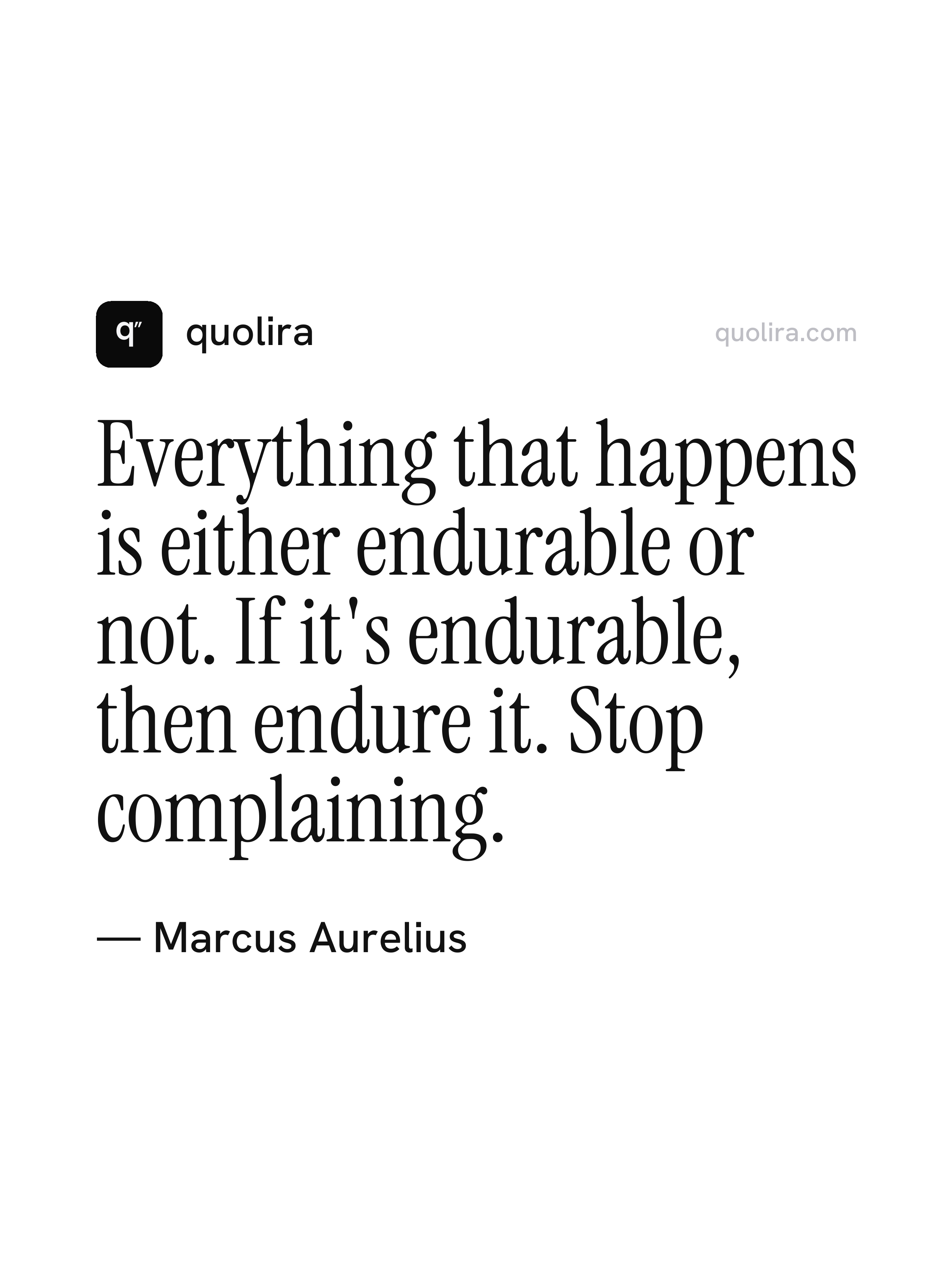
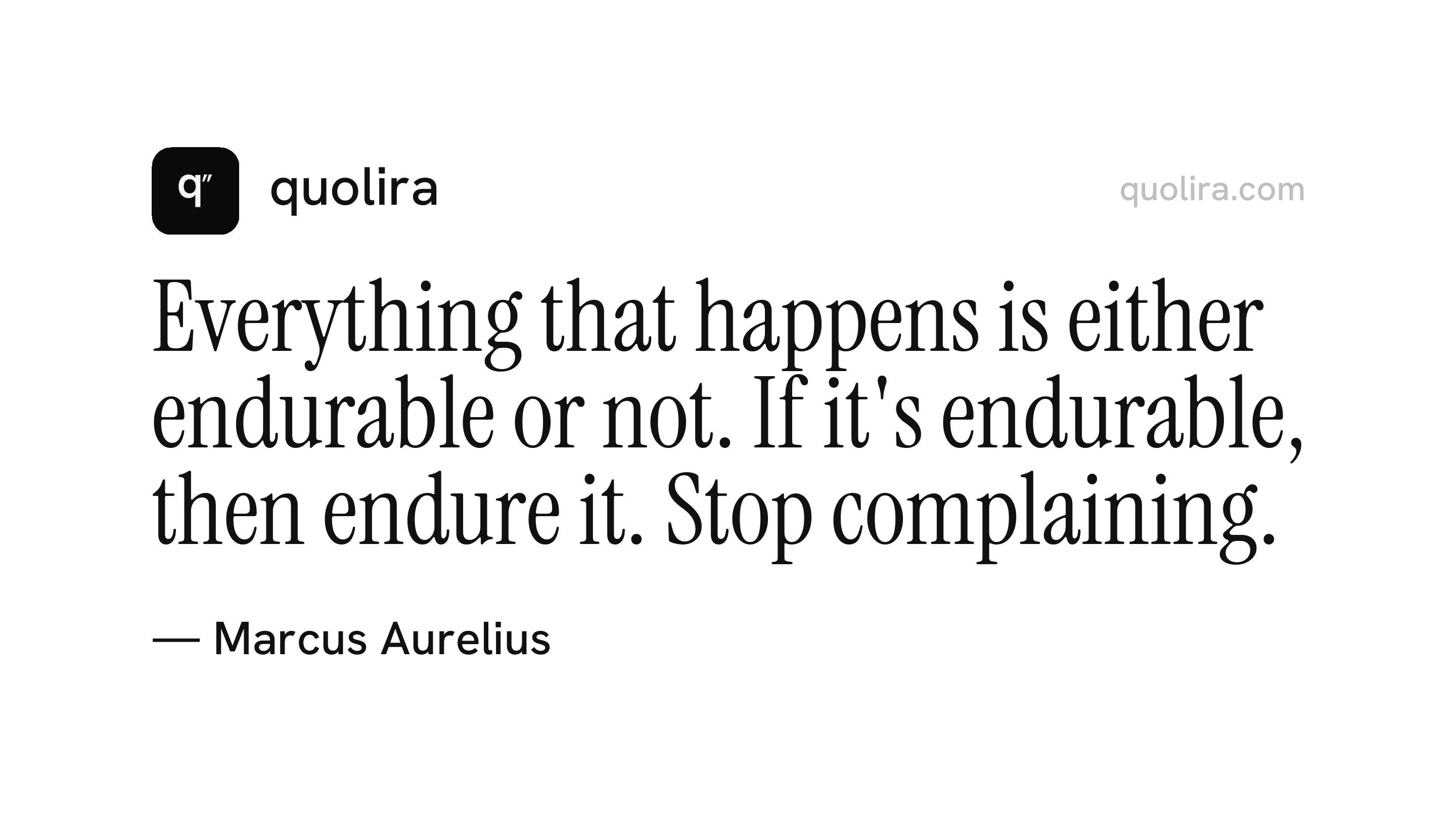
“Everything that happens is either endurable or not. If it's endurable, then endure it. Stop complaining.”
Marcus Aurelius · Meditations
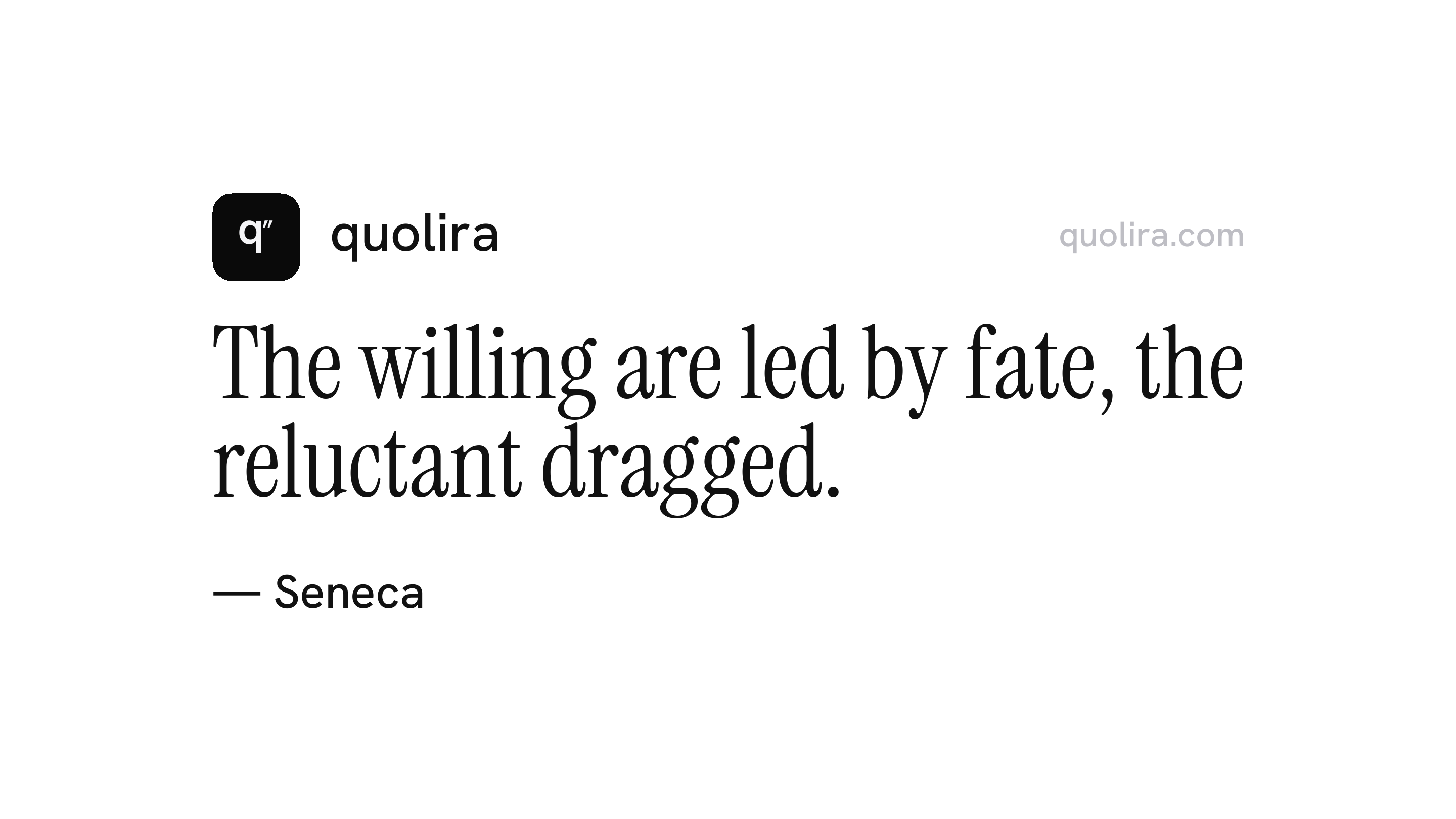
“The willing are led by fate, the reluctant dragged.”
Seneca · Letters to Lucilius
“A blazing fire makes flame and brightness out of everything that is thrown into it.”
Marcus Aurelius · Meditations
“Accept the things to which fate binds you, and love the people with whom fate brings you together, but do so with all your heart.”
Marcus Aurelius · Meditations
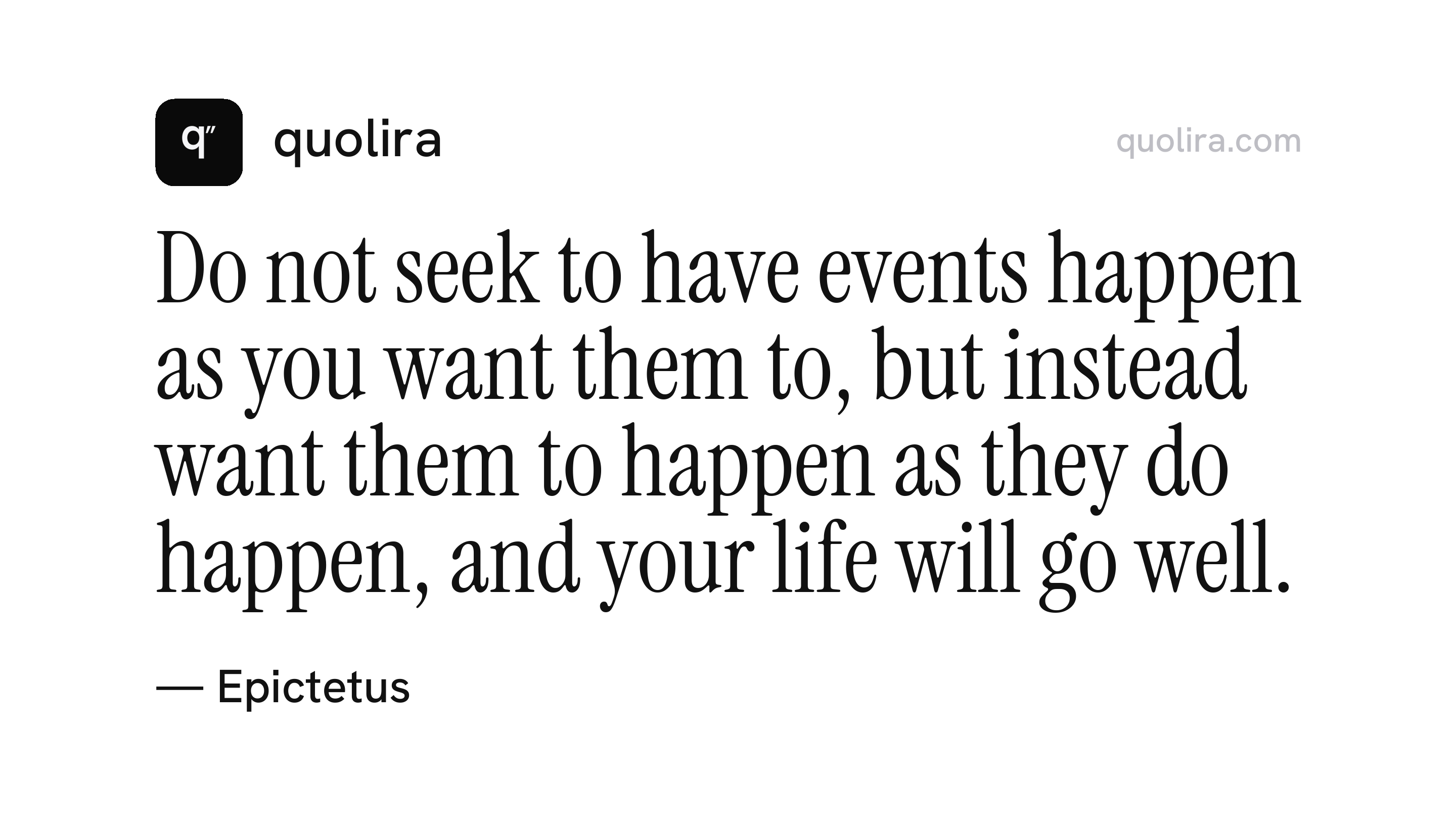
“Do not seek to have events happen as you want them to, but instead want them to happen as they do happen, and your life will go well.”
Epictetus · Enchiridion
“I want to learn more and more to see as beautiful what is necessary in things; then I shall be one of those who make things beautiful. Amor fati: let that be my love henceforth!”
Friedrich Nietzsche · The Gay Science, 1882
“My formula for greatness in a human being is amor fati: that one wants nothing to be different, not forward, not backward, not in all eternity.”
Friedrich Nietzsche · Ecce Homo, 1888