25 Quotes About Loneliness and Being Alone That Still Sting
Real lines from poets, philosophers and novelists on the ache of being alone, and the quiet that sometimes follows it.
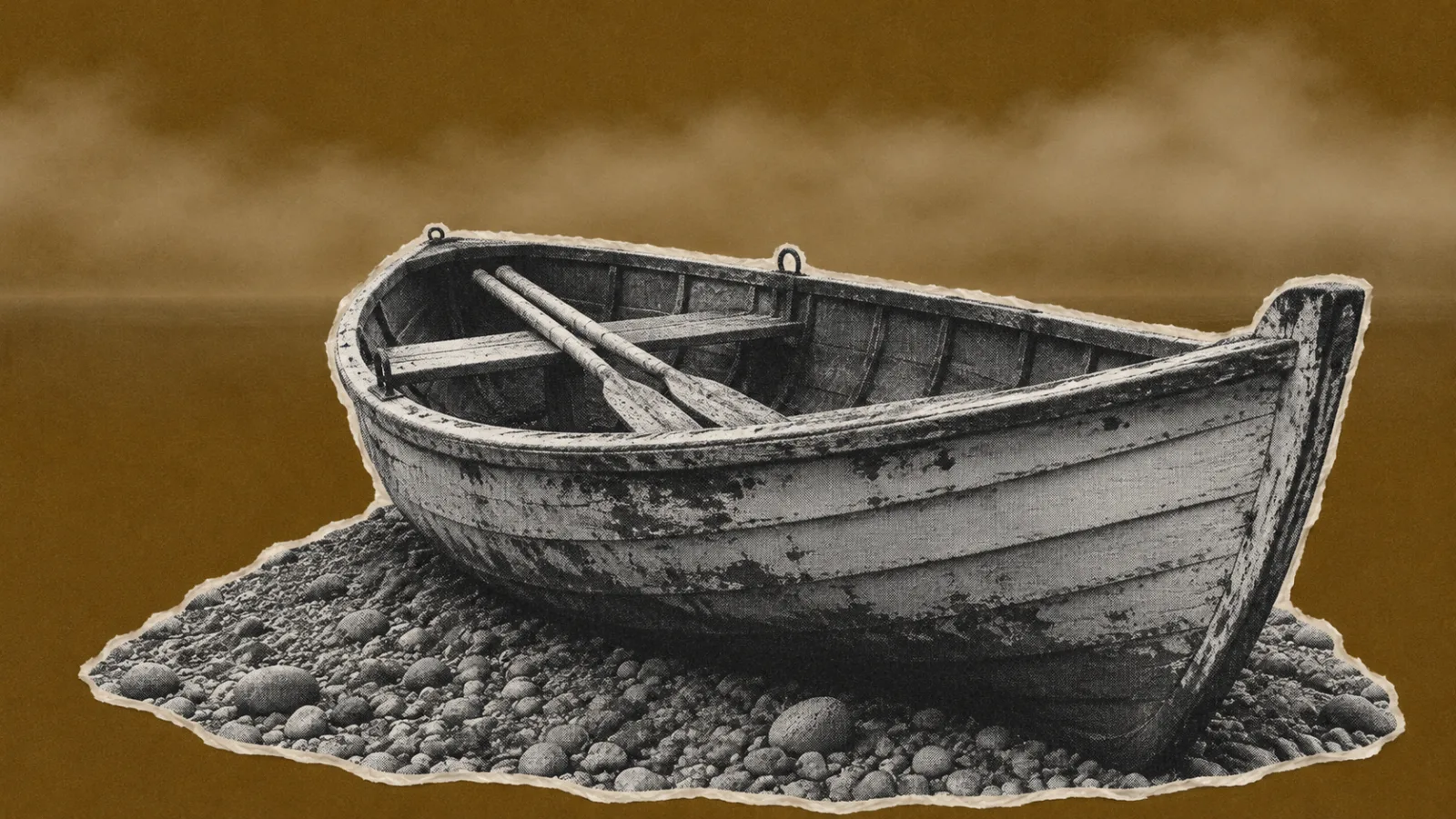
Quotes about loneliness work best when they come from people who lived inside the feeling and bothered to describe it. This list of 25 draws on poets, philosophers, novelists and essayists, from Samuel Taylor Coleridge's 1798 ballad to Paul Tillich's 1963 book. Some of these lines treat being alone as a wound, and others treat it as a room you can furnish yourself. Most fall somewhere in between, and I think that middle ground is where the honest stuff lives. Each quote comes with its source so you can check it, and the reflections stay short so the words do the heavy lifting. If you want to go deeper into solitude, start with the Thoreau and Tillich lines.
The Most Famous Quotes About Loneliness
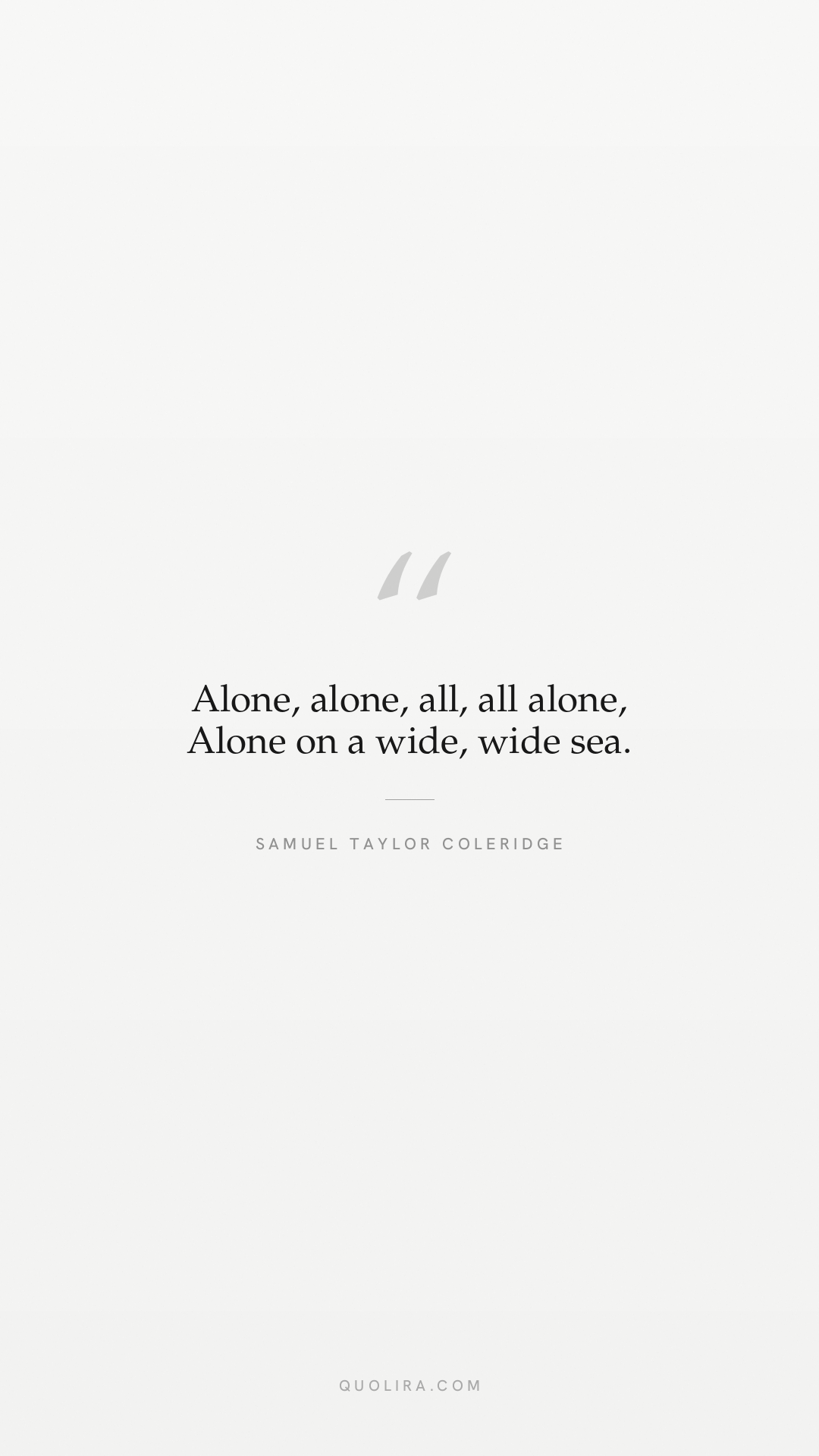
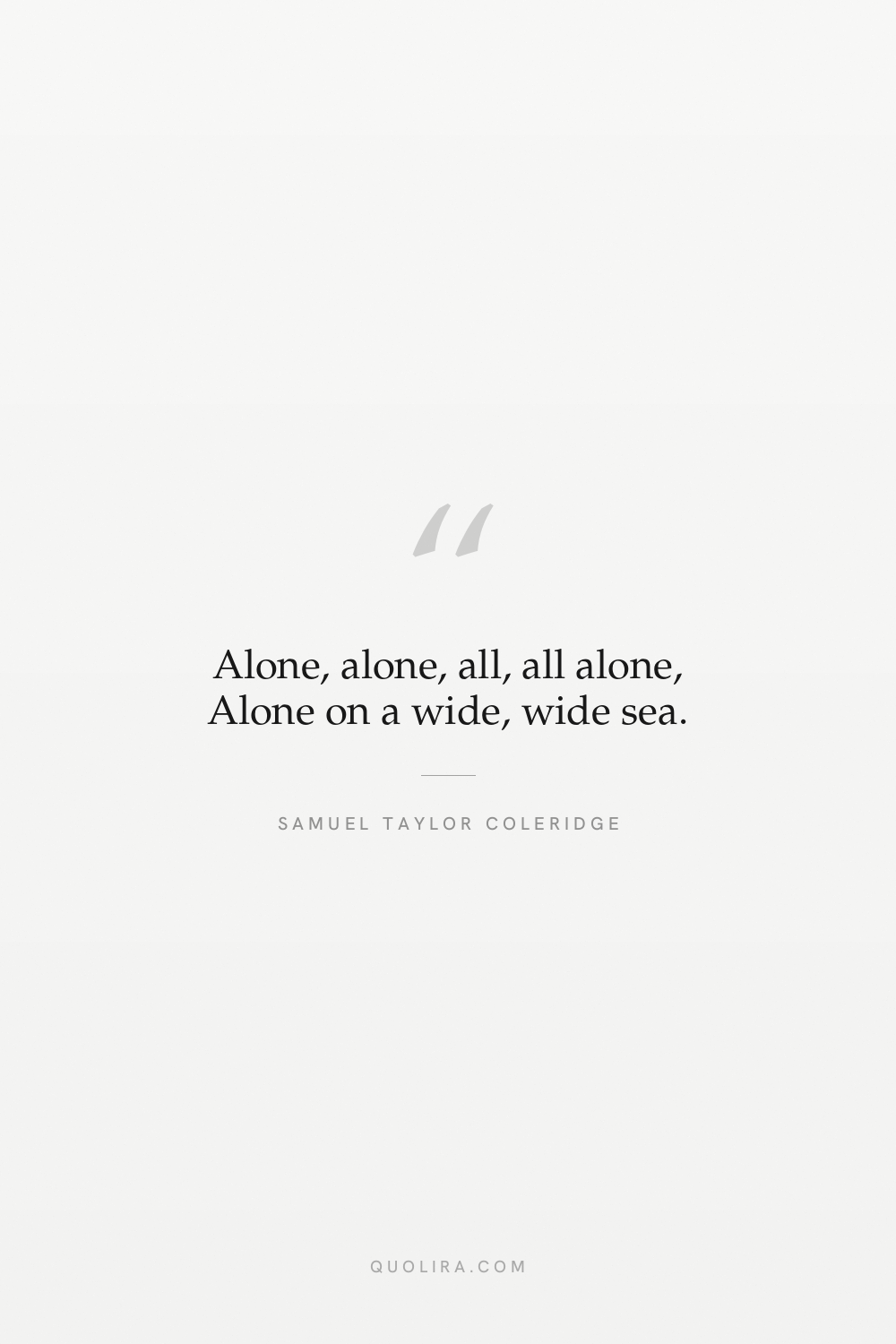
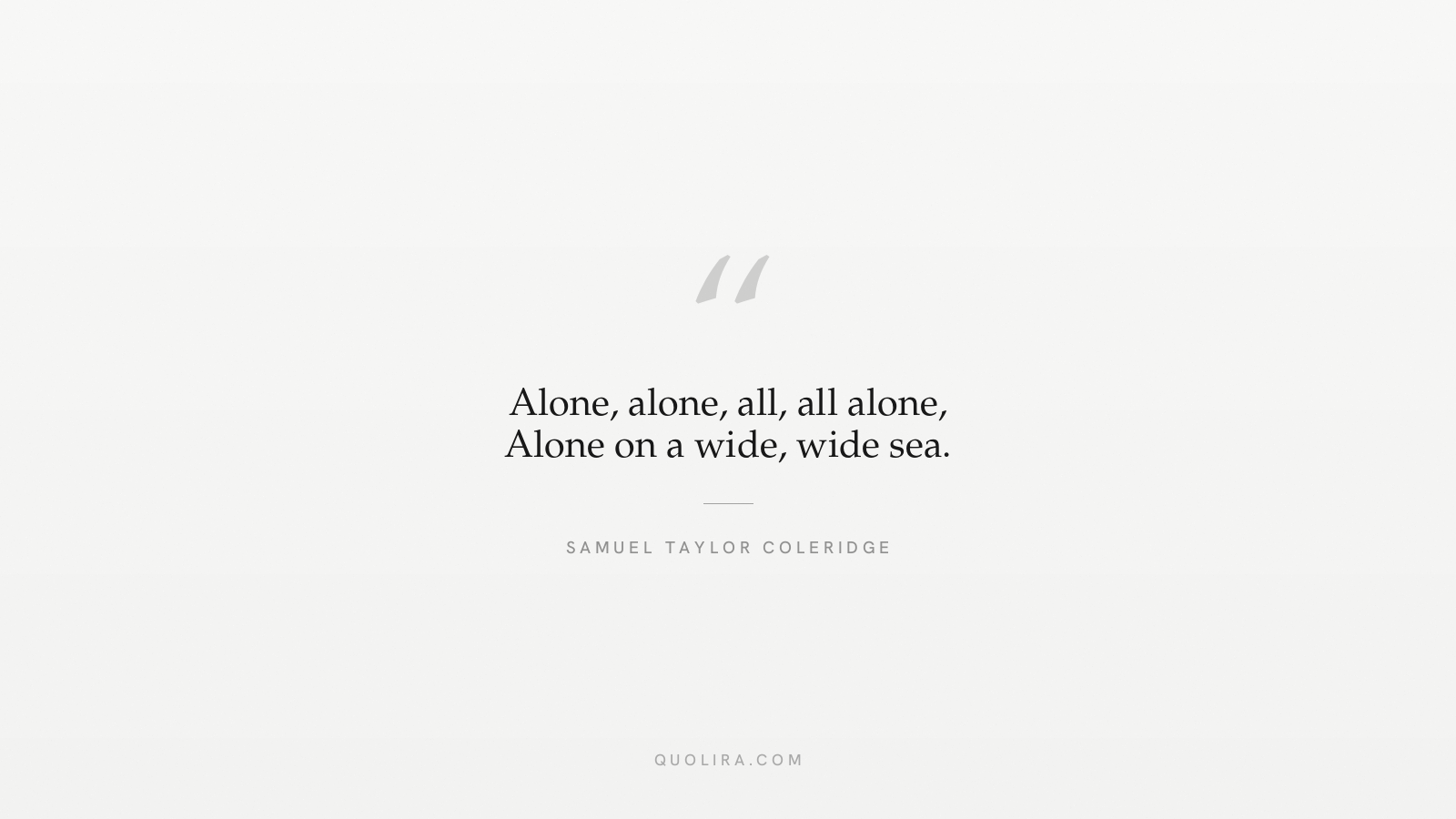
Alone, alone, all, all alone, Alone on a wide, wide sea.
Samuel Taylor Coleridge The Rime of the Ancient Mariner, 1798
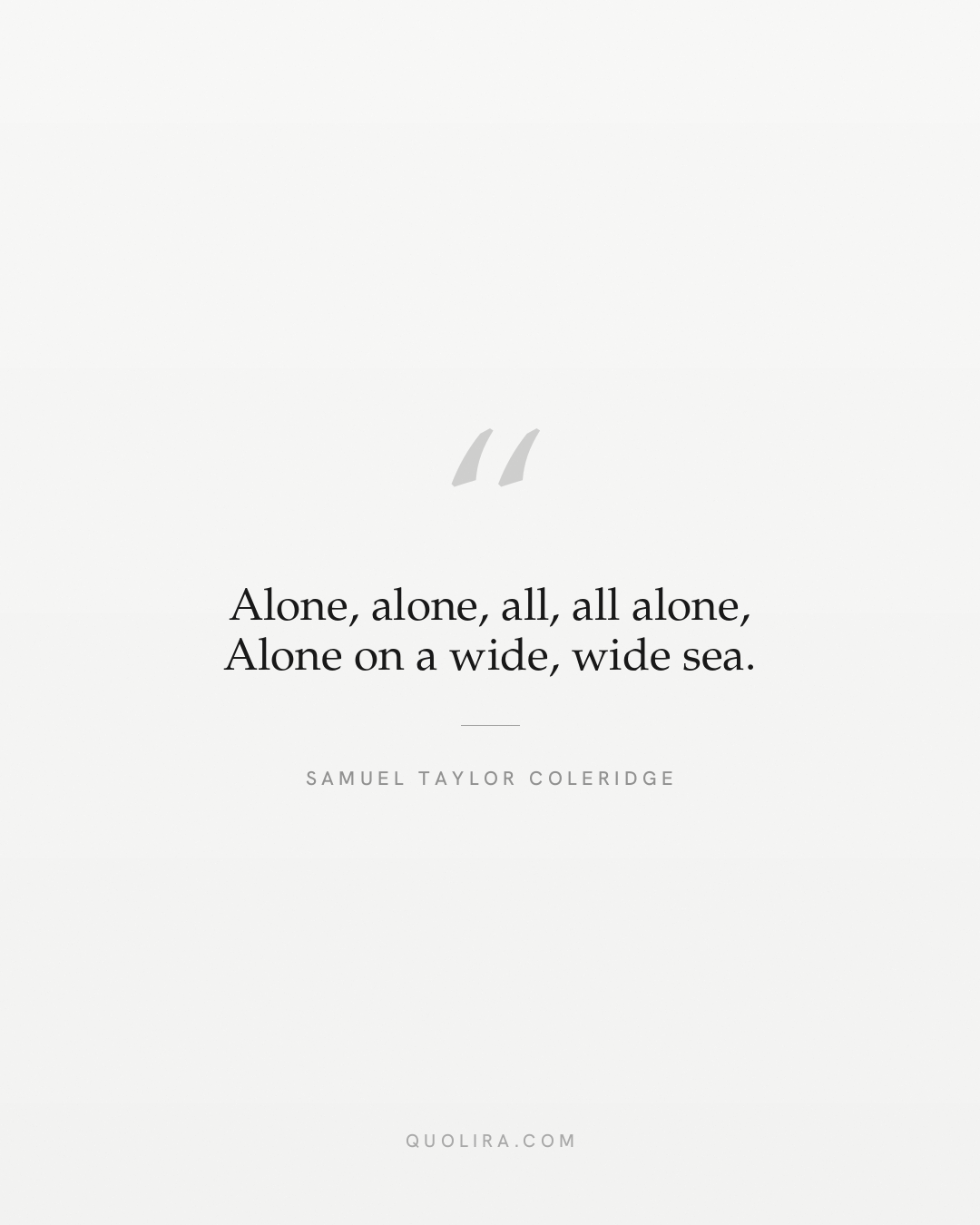
So lonely 'twas that God himself Scarce seemed there to be.
Samuel Taylor Coleridge The Rime of the Ancient Mariner, 1798
In the same poem, the Mariner feels so cut off that even God seems absent. Coleridge turns isolation into a spiritual problem, not only a social one. Anyone who has felt lonely late at night knows that drop, the sense that nobody, not even the sky, is listening.
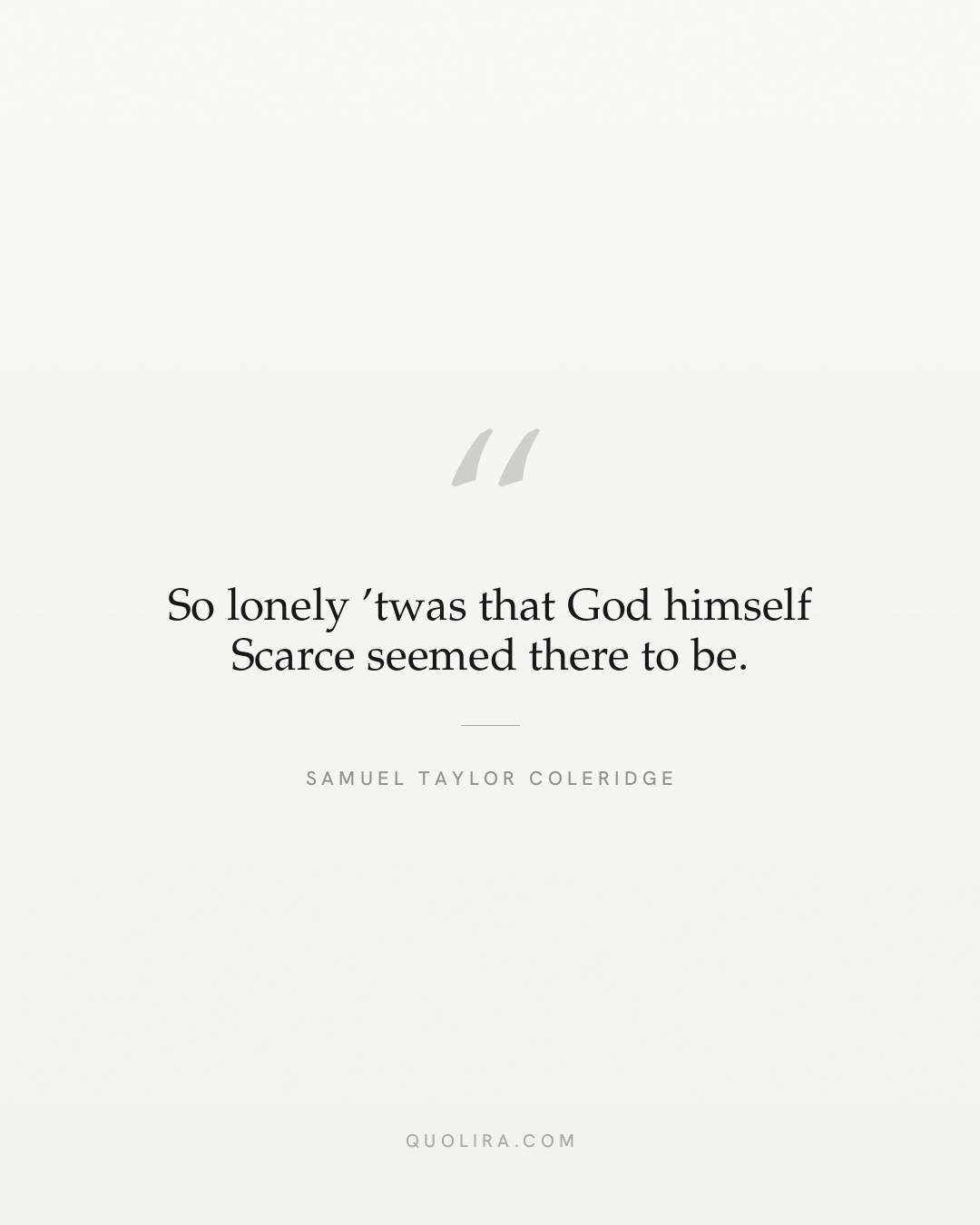
I love to be alone. I never found the companion that was so companionable as solitude.
Henry David Thoreau Walden, 1854
Thoreau wrote this from a cabin he built himself near Concord, Massachusetts, where he lived for about two years. He offers it as a preference and a discovery. Plenty of people find they like their own company far more than they expected.
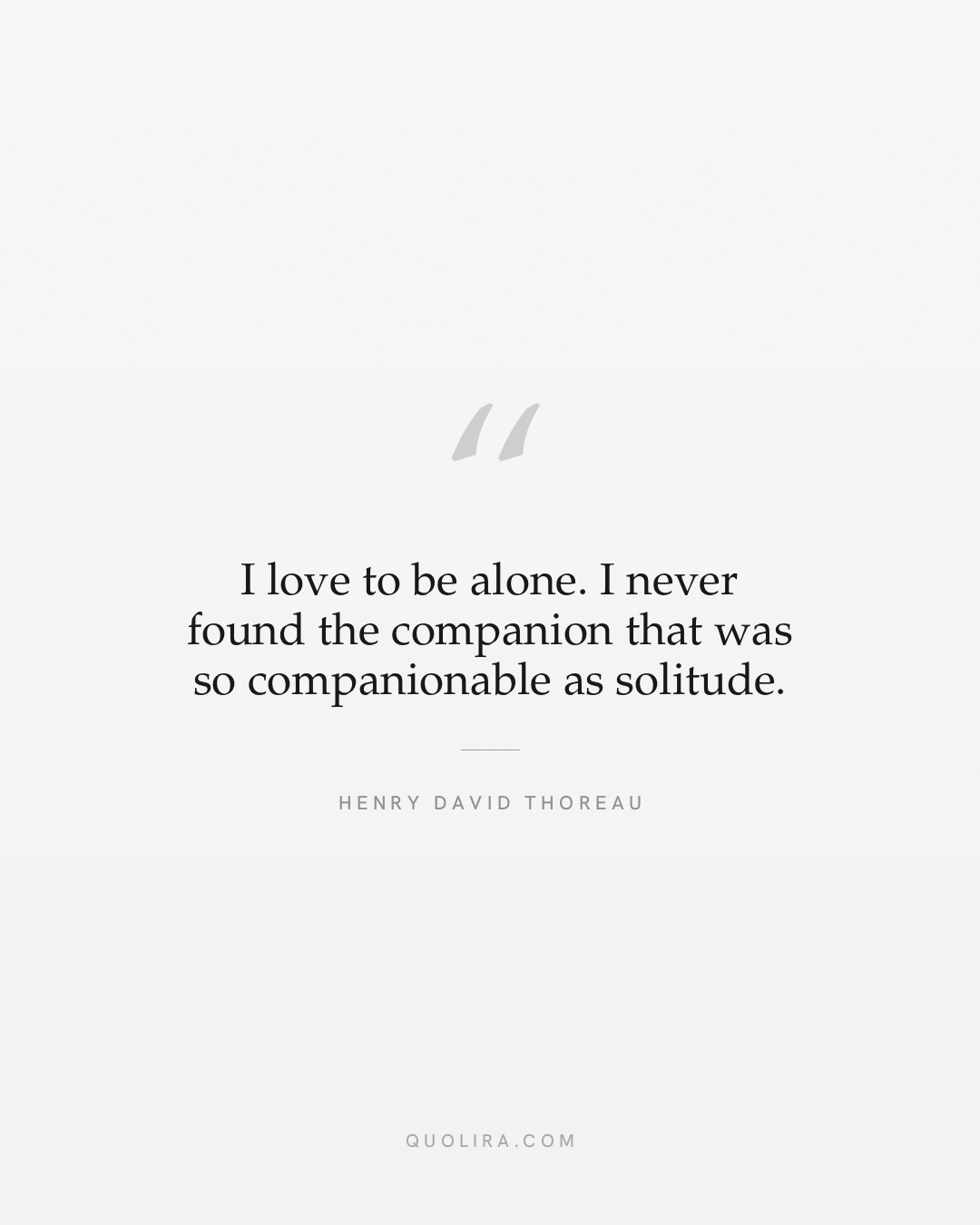
We are for the most part more lonely when we go abroad among men than when we stay in our chambers.
Henry David Thoreau Walden, 1854
This is the sharpest reversal on the list: a crowded room can feel lonelier than an empty one. Thoreau was writing about Cambridge students and farmers, and the point still lands. If you have ever sat through a party feeling invisible, you already know it.

Quotes About Loneliness From Poets and Writers
Loneliness is the poverty of the self; solitude is the richness of the self.
May Sarton Mrs. Stevens Hears the Mermaids Singing, 1965
Sarton draws a clean line between two things people often confuse. Loneliness is what you feel when there is little inside you to keep you company. Solitude is what you get when you have enough of yourself to spend time alone.
Our language has wisely sensed the two sides of being alone. It has created the word loneliness to express the pain of being alone. And it has created the word solitude to express the glory of being alone.
Paul Tillich The Eternal Now, 1963
Tillich points out that English gives us two words for one state, and the difference is whether the aloneness hurts or feeds you. That helps the next time you call an evening lonely when it was actually peaceful. The word you pick shapes how the night goes.
Solitude is non-communication, the absence of others, the presence of a self sufficient to itself.
Ursula K. Le Guin Solitude, Fantasy & Science Fiction, 1994
Le Guin's definition is cool and precise, almost like a lab note. For her, solitude is a condition: a self that does not need anyone else to make it whole. It's a useful test for whether your time alone is restoring you or just keeping you apart.
Our life is a sentence of perpetual solitary confinement.
Aldous Huxley Sermons in Cats, Vanity Fair, 1930
Huxley's essay argues that no words can fully carry a thought or feeling from one person to another. The line is bleak on purpose, and it's the kind of sentence you end up arguing with at two in the morning. Read it as an alarm, then call someone anyway.
I live in that solitude which is painful in youth, but delicious in the years of maturity.
Albert Einstein Self-Portrait, 1936
Einstein wrote this in his late fifties, looking back at a solitude he had found hard as a young man. I think the idea that loneliness changes its taste with age is worth trusting, though plenty of people feel the sting at 22. Both can be true at once.
This is to be alone; this, this is solitude!
Lord Byron Childe Harold's Pilgrimage, Canto II, 1812
Byron's speaker stands in a wild place and feels a thrill at being alone there. He made solitude look glamorous, and he knew it. The same silence can feel like freedom on one day and like a sentence on the next.
In solitude, when we are least alone.
Lord Byron Childe Harold's Pilgrimage, Canto III, 1816
Byron flips the usual meaning in just five words. The moments we feel most alone may be the moments we are most open to ourselves. It's a little too neat, but it's the kind of line people write on sticky notes.
I was never less alone than when by myself.
Edward Gibbon Memoirs of My Life and Writings
The historian of the Roman Empire said this about his hours of study. For Gibbon, books were company, and the past felt more crowded than the parlor. Good reading can keep you company when the room is empty.
Quotes About Being Alone and Solitude
Whosoever is delighted in solitude, is either a wild beast or a god.
Francis Bacon Essays, Of Friendship, 1612
Bacon borrows the idea from Aristotle, who argued that people are social by nature. The line is harsher than most readers expect, and it gets quoted as a dig at introverts. Read it as a challenge about how much we need each other.
A man can be himself only so long as he is alone; and if he does not love solitude, he will not love freedom.
Arthur Schopenhauer Counsels and Maxims
The German philosopher ties solitude to freedom, which is a bolder claim than it sounds. Constraint, he argues, follows you into every room of society. It's a stern test for anyone who hides in a crowd to avoid their own thoughts.
Solitude is the profoundest fact of the human condition.
Octavio Paz The Labyrinth of Solitude, 1950
The Mexican poet argues that every person eventually finds themselves alone, and that this sits at the core of being human. He adds that people are the only creatures who know it and the only ones who seek someone else. That combination makes the line hard to shake.
For solitude sometimes is best society, And short retirement urges sweet return.
John Milton Paradise Lost, Book IX, 1667
Adam says this to Eve as a gentle case for a short break from each other. Milton saw that time apart can make the return sweeter. Couples and roommates both know the truth of it, even if they hate admitting it.
Why should we faint and fear to live alone, Since all alone, so Heaven has willed, we die.
Keble wrote these lines as devotional poems for the church calendar. His point is blunt: death is a solitary passage, so the fear of living alone is a rehearsal for something we all face. Some readers find that bleak, and others find it steadying.
When you have shut your doors, and darkened your room, remember never to say that you are alone.
The Stoic teacher told students that a closed room still holds a mind, a conscience and a sense of duty. Stoics treated solitude as training ground. Use the line as a prompt to check your inner voice before you give in to self-pity.
Converse with men makes sharp the glittering wit, But God to man doth speak in solitude.
John Stuart Blackie Highland Solitude, sonnet
The Scottish scholar sets the bright chatter of company against the quiet where God speaks. He sees conversation as sharpening and silence as deepening. Use it when you need to explain why you want an evening off from people.
A man is born alone and dies alone.
The ancient strategist uses this line to argue that you carry your own consequences. It is blunt and a little grim, but it is a sturdy kind of comfort. Read it before a hard decision, when you need to remember who has to live with the result.

Quotes About Loneliness and Inner Strength
To the lonely themselves it wears a mask. The most miserable outcast hugs some memory or some illusion.
Joseph Conrad Under Western Eyes, 1911
Conrad's narrator says real loneliness hides behind a costume even the lonely person can't see through. A calm face tells you little about how full someone's life is. People mask it best when they need help most.

We are rarely proud when we are alone.
Voltaire Philosophical Dictionary, 1764
Voltaire's observation is wry: pride needs an audience. Alone, we drop the performance and see ourselves more honestly. It's short enough to remember in the middle of an argument.

Satan had his companions, fellow devils, to admire and encourage him, but I am solitary and abhorred.
Mary Shelley Frankenstein, 1818
The creature in Shelley's novel makes this comparison while pleading with Victor for a companion. Here loneliness comes from rejection, and every refusal makes it heavier. It's a reminder that being alone is shaped by how others treat you.
Adam and Lilith in the Alphabet of Sirach.
Nikola Tesla Quoted in Nikola Tesla's Life & Work by István G. Kocsis, 2015
Tesla argued that a mind works best in seclusion, away from the noise of other people's opinions. He said it as an inventor, which makes it sound like a working rule. Try one quiet hour this week and see whether your ideas get sharper.

Why quotes about loneliness and being alone matter
Loneliness is one of the few feelings almost everyone has had, and writers have circled it for centuries. Samuel Taylor Coleridge's stranded sailor drifts on an empty sea in The Rime of the Ancient Mariner (1798), while Henry David Thoreau lived for about two years in a cabin at Walden Pond and wrote about the company he found there. Both are still quoted because readers recognize their own late nights in the lines.
Solitude is an older subject. Aristotle argued that anyone who needs no one is either a beast or a god, and Francis Bacon repeated the idea in his 1612 essay "Of Friendship." Epictetus told his students that a closed room still holds a mind worth attending to. The Wikiquote page for "Alone" gathers lines like these from many centuries and many countries, which is why the list can feel so varied.
I think people save these lines for a simple reason. A good quote names a feeling you could not describe yourself, and that small relief matters on a bad night.
What these quotes have in common
The first shared idea is the split between loneliness and solitude. Paul Tillich made the split plain in The Eternal Now (1963): English has one word for the pain of being alone and another for its glory. May Sarton says much the same thing when she calls loneliness the poverty of the self and solitude its richness. Together they suggest the difference lives inside you, not in the room.
The second idea is that crowds can make things worse. Thoreau's line about being more lonely among men than in his chambers still stings, and Joseph Conrad goes further, saying loneliness wears a mask even to the person feeling it. You can test Thoreau's claim at your next dull party. If you want the teenage version of the same ache, 7 Perks of Being a Wallflower quotes that still hit hard covers that angle well.
The third idea is that aloneness can work as company when you choose it. Edward Gibbon wrote that he was never less alone than when by himself, and Nikola Tesla insisted that ideas are born when a person is left alone. Octavio Paz goes further and treats solitude as the core of being human:
"Solitude is the profoundest fact of the human condition." Octavio Paz, The Labyrinth of Solitude (1950)
The lines you trust most admit the hurt and still leave a door open.
How to use these quotes
Pick the line that matches your week, not the one that sounds wisest. A quote about loneliness can comfort you on a bad night and challenge you on a good one. Try a few of these uses:
- Caption a photo of an empty bench with Sarton's line about the poverty and richness of the self.
- Write Coleridge's "Alone, alone" on an index card and slip it into a care package for a friend who just moved away.
- Open a journal page with Epictetus's line about shut doors, then write down who you are actually talking to in your head.
- Use Tillich's two-word contrast to open a small group discussion on loneliness versus solitude.
- Put Tesla's "be alone" line on the wall of a home office during a deep-work block.
- Read Bacon's "wild beast or a god" line aloud in a talk about friendship, then ask the room which half they would rather be.
For the harder side of missing someone, 22 quotes about grief and missing someone who has died pairs well with this list. Emerson's writing on self-reliance also fits the solitude lines, and you can browse it in 25 Ralph Waldo Emerson quotes on self-reliance, nature, and living boldly.
Common misunderstandings
People often read solitude as a sign that something is wrong with them. That reading is not always fair. Plenty of people need more time alone than their friends do, and these quotes do not ask you to apologize for it.
Another mistake is treating every line as advice. Bacon's line about beasts and gods is a provocation, not a diagnosis. Use it to start a conversation, not to label a friend who skips parties.
A third mistake is chasing the feeling a quote describes. Coleridge's Mariner is alone after a disaster that wipes out his crew. Most nights are quieter than that, and a quiet evening is not a tragedy.
Making the lines work for you
Start with one quote for a week. Read it in the morning, then notice when the feeling it names shows up. Write one sentence about what you were doing at the time. After a few days you will know whether the line helps you name the feeling or makes the feeling louder.
Pair a hard line with a gentle one. Sarton's poverty and richness line sits well next to Epictetus's shut-door line, because one names the ache and the other points to what is still there. If a quote leaves you flat, set it aside and try another.
If you share these lines with someone who is struggling, keep the message short. Send the quote, add a sentence about why it reminded you of them, and ask a real question. A line of poetry can open a door, but the person still has to walk through it.
Where the quotes come from
Many of these lines come from poems, sermons, letters and essays that were never meant to be pulled out and pinned to a wall. Context matters. Coleridge's ballad is a story about guilt and penance. Thoreau's Walden is a record of a life he chose, and it includes plenty of practical detail about beans and rent. Reading the surrounding page often changes the meaning of one sentence.
Check the source before you share. Wikiquote is a good starting point, and the book itself is better. When a line's origin is unclear, say so and keep the citation honest.
Sources
Pick one line tonight and read it twice. If it stings, you're in good company, and if it comforts you, keep it somewhere you'll find it again.
Frequently asked questions
What is the most famous quote about loneliness?
Did Henry David Thoreau really say he never found a companion as companionable as solitude?
What is the difference between loneliness and solitude?
Did Albert Einstein write about loving solitude?
How can I use quotes about being alone in a speech or card?
Keep reading

16 Quotes About Regret and the Things We Wish We Had Done
A short list of the lines people keep returning to when they look back and wish they had moved sooner.
The Mountain Is You: Why Your Biggest Obstacle Lives Inside Your Pattern
Brianna Wiest's argument that your own repeated pattern is the real obstacle, and how to stop blaming outside circumstances.









Ichigo Ichie Meaning: The Japanese Idea That Every Meeting Happens Once
A tea ceremony phrase that asks you to notice the people in front of you while they are still there.
The Ancient Mariner says this after his crew has died and he is stranded on a becalmed ocean with no one to answer him. The repetition makes the empty sea feel real. Most of us know the moment when the silence around us seems bigger than the room.