“We are rarely proud when we are alone.”
Voltaire · Philosophical Dictionary, 1764
 quolira
.com
Mary Shelley said it, in Frankenstein, 1818.
The creature in Shelley's novel makes this comparison while pleading with Victor for a companion. Here loneliness comes from rejection, and every refusal makes it heavier. It's a reminder that being alone is shaped by how others treat you.
From the collection: 25 Quotes About Loneliness and Being Alone That Still Sting · More Mary Shelley quotes
This quote means that the creature feels uniquely cut off, because unlike Satan, who at least had fellow fallen beings to admire and encourage him, he has no companions and is shunned by everyone. The sentence captures a deep ache of rejection and abandonment.
The line appears in Frankenstein, published in 1818, in the creature's own account of his experiences. He compares his condition with the fallen angel in Milton's Paradise Lost, noting that Satan was surrounded by others who shared his fate. The comparison sharpens his sense that he is an outcast with no peer, and it drives the emotional logic of his demand for a companion.
Mary Shelley was an English novelist, essayist, and biographer. She wrote Frankenstein when she was about twenty and published it in 1818. She was the daughter of the writers Mary Wollstonecraft and William Godwin and the wife of the poet Percy Bysshe Shelley. Her novel is often read as an early work of science fiction and as a meditation on responsibility, loneliness, and the consequences of creation.
“We are rarely proud when we are alone.”
Voltaire · Philosophical Dictionary, 1764
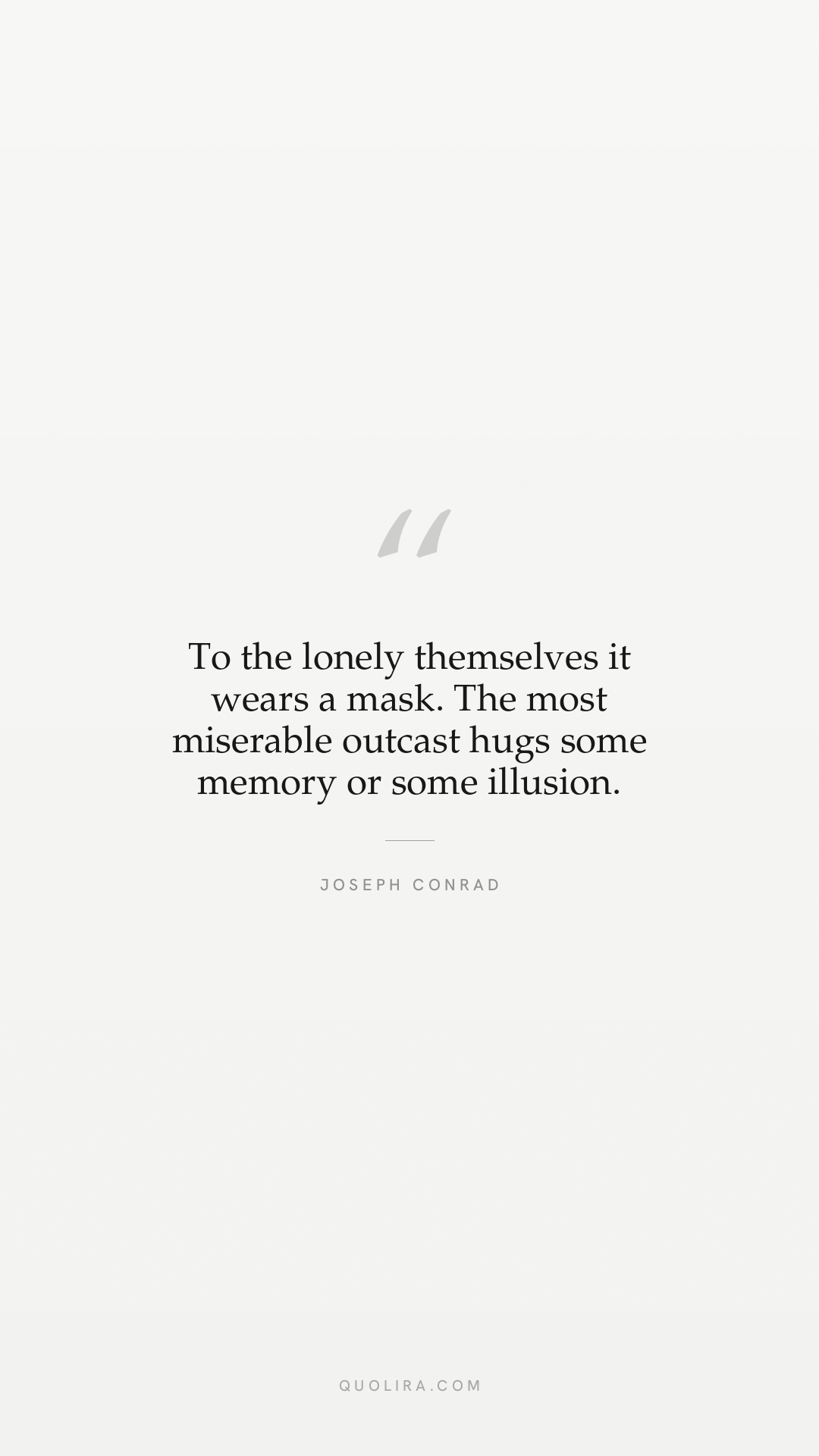
“To the lonely themselves it wears a mask. The most miserable outcast hugs some memory or some illusion.”
Joseph Conrad · Under Western Eyes, 1911
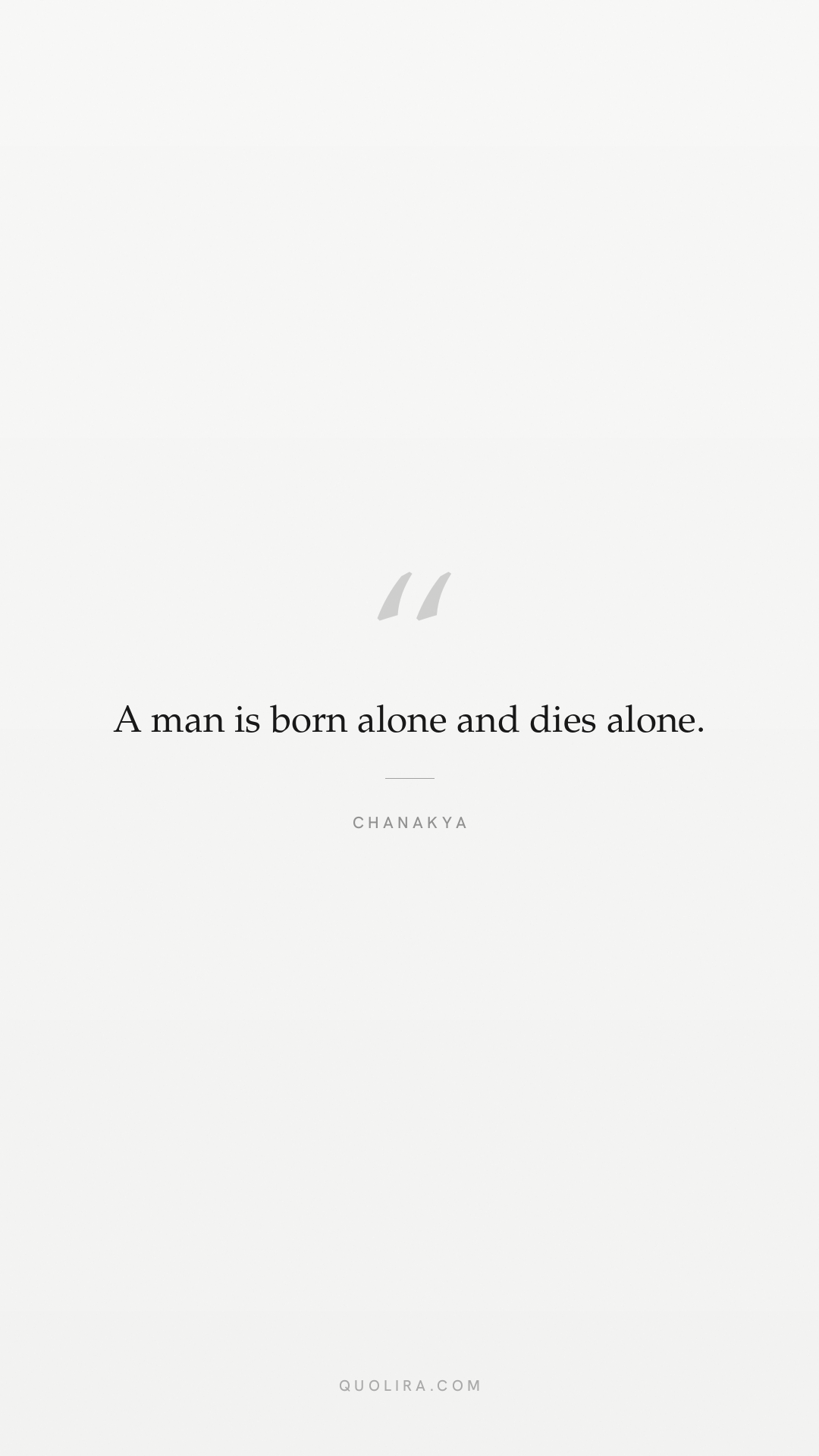
“A man is born alone and dies alone.”
Chanakya · Chanakya Niti
“Converse with men makes sharp the glittering wit, But God to man doth speak in solitude.”
John Stuart Blackie · Highland Solitude, sonnet
“When you have shut your doors, and darkened your room, remember never to say that you are alone.”
Epictetus · Discourses, Book I
“Why should we faint and fear to live alone, Since all alone, so Heaven has willed, we die.”
John Keble · The Christian Year
“For solitude sometimes is best society, And short retirement urges sweet return.”
John Milton · Paradise Lost, Book IX, 1667
“Solitude is the profoundest fact of the human condition.”
Octavio Paz · The Labyrinth of Solitude, 1950
“A man can be himself only so long as he is alone; and if he does not love solitude, he will not love freedom.”
Arthur Schopenhauer · Counsels and Maxims
“Whosoever is delighted in solitude, is either a wild beast or a god.”
Francis Bacon · Essays, Of Friendship, 1612
“I was never less alone than when by myself.”
Edward Gibbon · Memoirs of My Life and Writings
“In solitude, when we are least alone.”
Lord Byron · Childe Harold's Pilgrimage, Canto III, 1816