“For solitude sometimes is best society, And short retirement urges sweet return.”
John Milton · Paradise Lost, Book IX, 1667
 quolira
.com
John Keble said it, in The Christian Year.
Keble wrote these lines as devotional poems for the church calendar. His point is blunt: death is a solitary passage, so the fear of living alone is a rehearsal for something we all face. Some readers find that bleak, and others find it steadying.
From the collection: 25 Quotes About Loneliness and Being Alone That Still Sting · More John Keble quotes
Keble's couplet means that everyone dies alone, so there is little sense in fearing solitude while living. The lines suggest that this final solitude is ordered by God, which makes it something to trust rather than dread. The comfort depends on seeing loneliness as part of a larger providence.
The lines come from The Christian Year, a collection of devotional poems arranged around the Sundays, feasts and seasons of the church calendar. The book was first published in 1827 and was widely read in England and beyond. Its verses are meditations meant for private reading and for worship, and this passage uses the solitude of death to encourage calm trust rather than anxiety.
John Keble (1792-1866) was an English clergyman, poet and Oxford academic. He was associated with the Oxford Movement, a nineteenth-century effort to renew Anglican devotion and emphasize its roots in earlier Christian tradition. His poetry was valued for its simple, meditative tone, and these lines reflect the quiet consolation that marked his religious verse.
“For solitude sometimes is best society, And short retirement urges sweet return.”
John Milton · Paradise Lost, Book IX, 1667
“Solitude is the profoundest fact of the human condition.”
Octavio Paz · The Labyrinth of Solitude, 1950
“A man can be himself only so long as he is alone; and if he does not love solitude, he will not love freedom.”
Arthur Schopenhauer · Counsels and Maxims
“Whosoever is delighted in solitude, is either a wild beast or a god.”
Francis Bacon · Essays, Of Friendship, 1612
“I was never less alone than when by myself.”
Edward Gibbon · Memoirs of My Life and Writings
“In solitude, when we are least alone.”
Lord Byron · Childe Harold's Pilgrimage, Canto III, 1816
“This is to be alone; this, this is solitude!”
Lord Byron · Childe Harold's Pilgrimage, Canto II, 1812
“I live in that solitude which is painful in youth, but delicious in the years of maturity.”
Albert Einstein · Self-Portrait, 1936
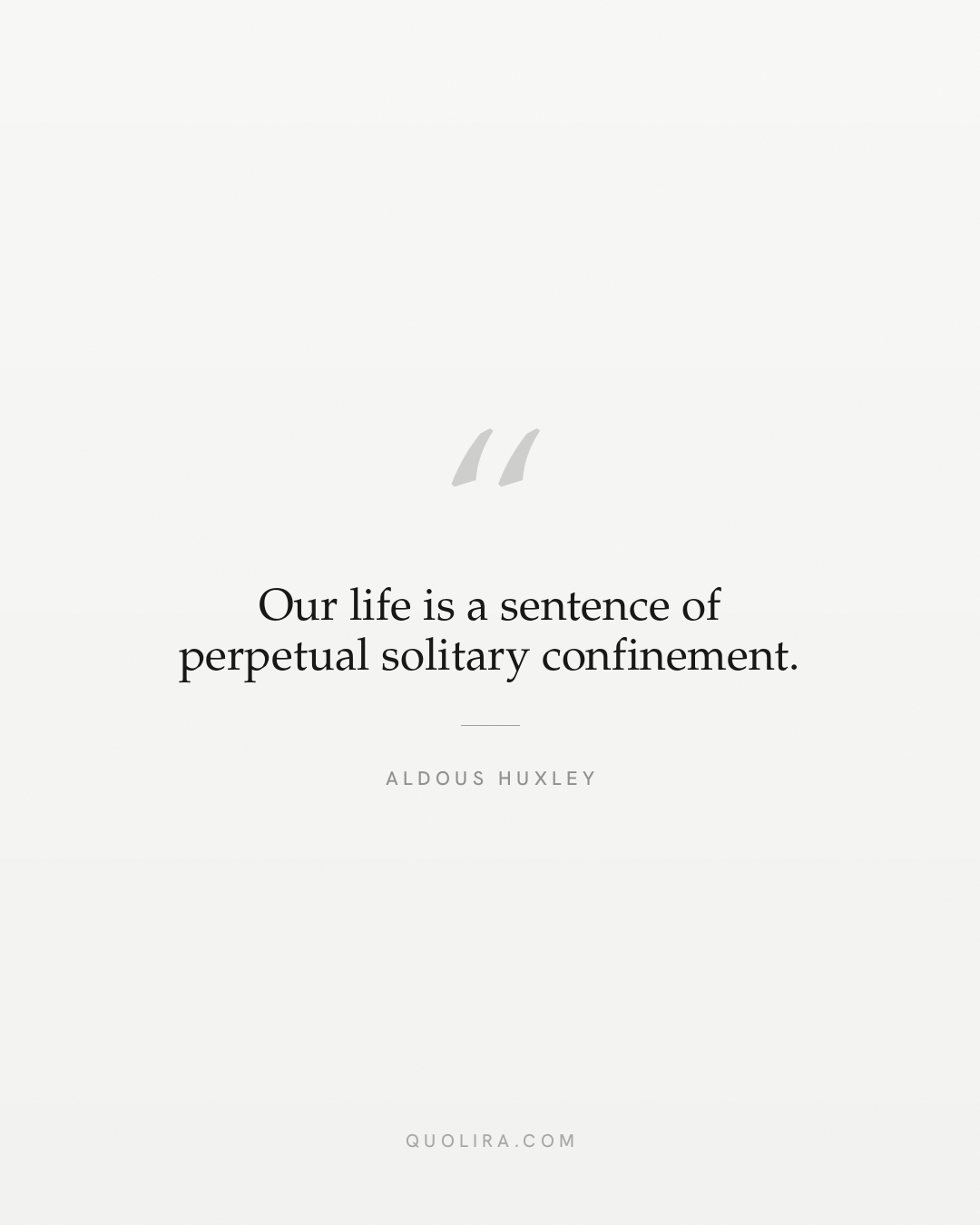
“Our life is a sentence of perpetual solitary confinement.”
Aldous Huxley · Sermons in Cats, Vanity Fair, 1930
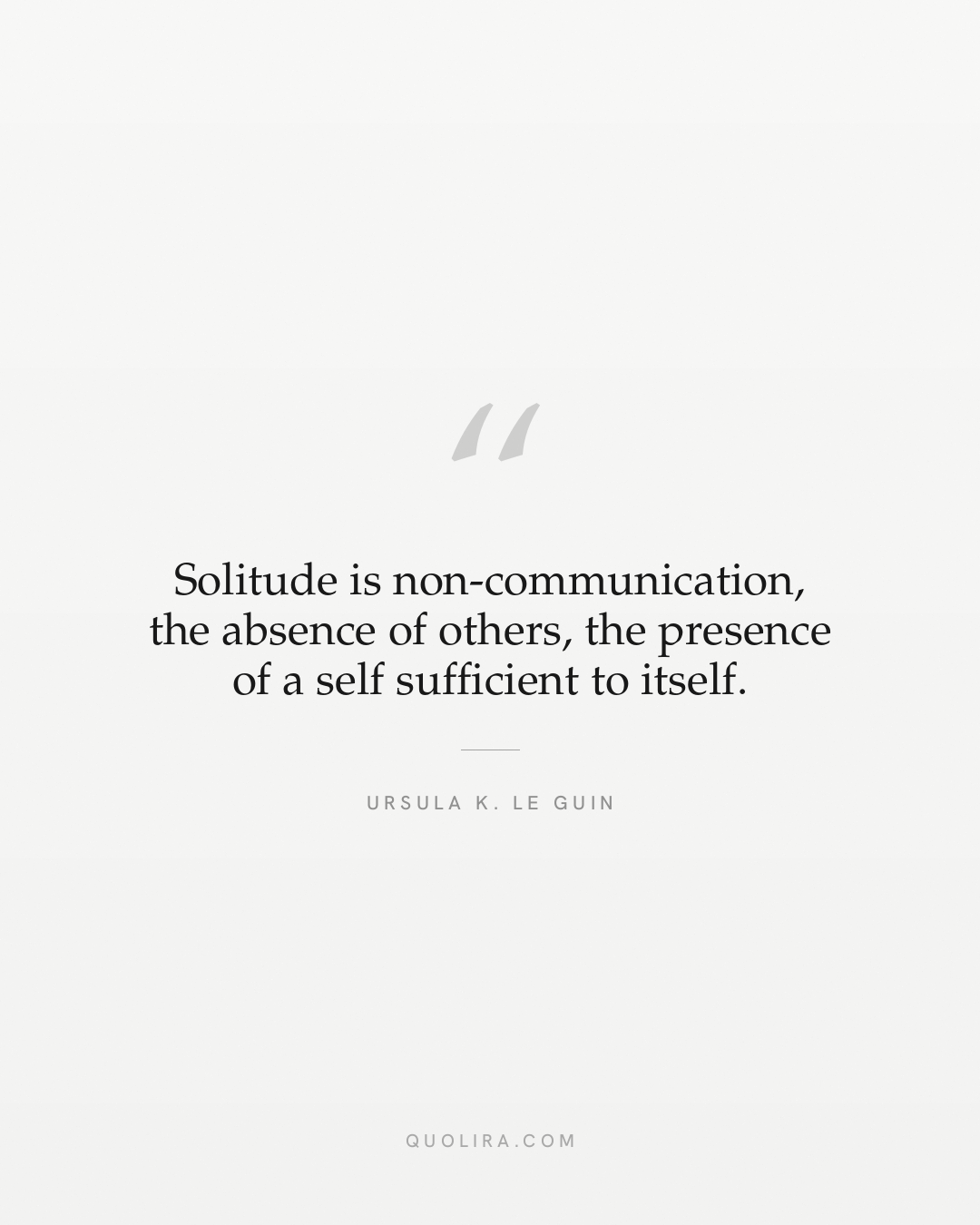
“Solitude is non-communication, the absence of others, the presence of a self sufficient to itself.”
Ursula K. Le Guin · Solitude, Fantasy & Science Fiction, 1994
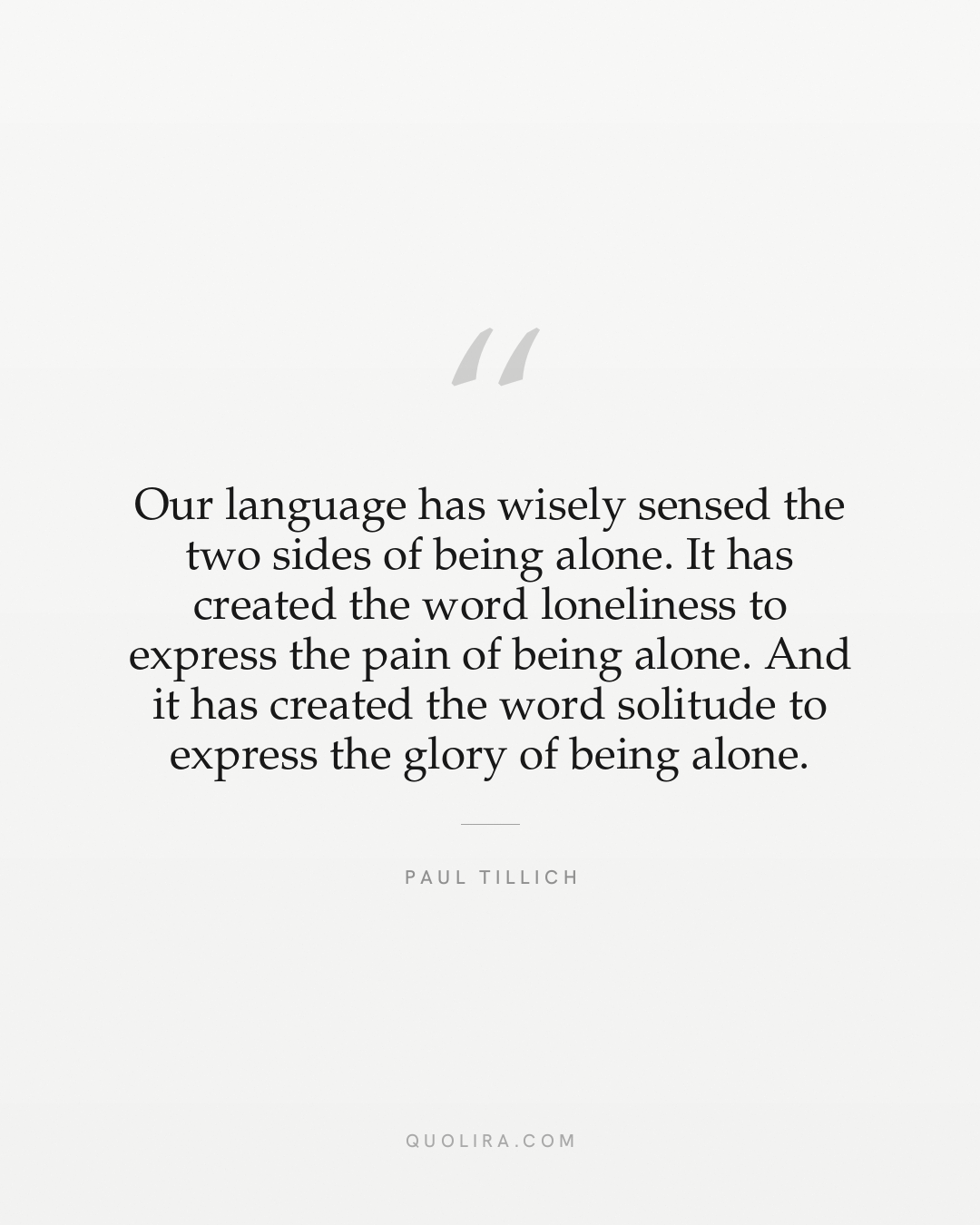
“Our language has wisely sensed the two sides of being alone. It has created the word loneliness to express the pain of being alone. And it has created the word solitude to express the glory of being alone.”
Paul Tillich · The Eternal Now, 1963
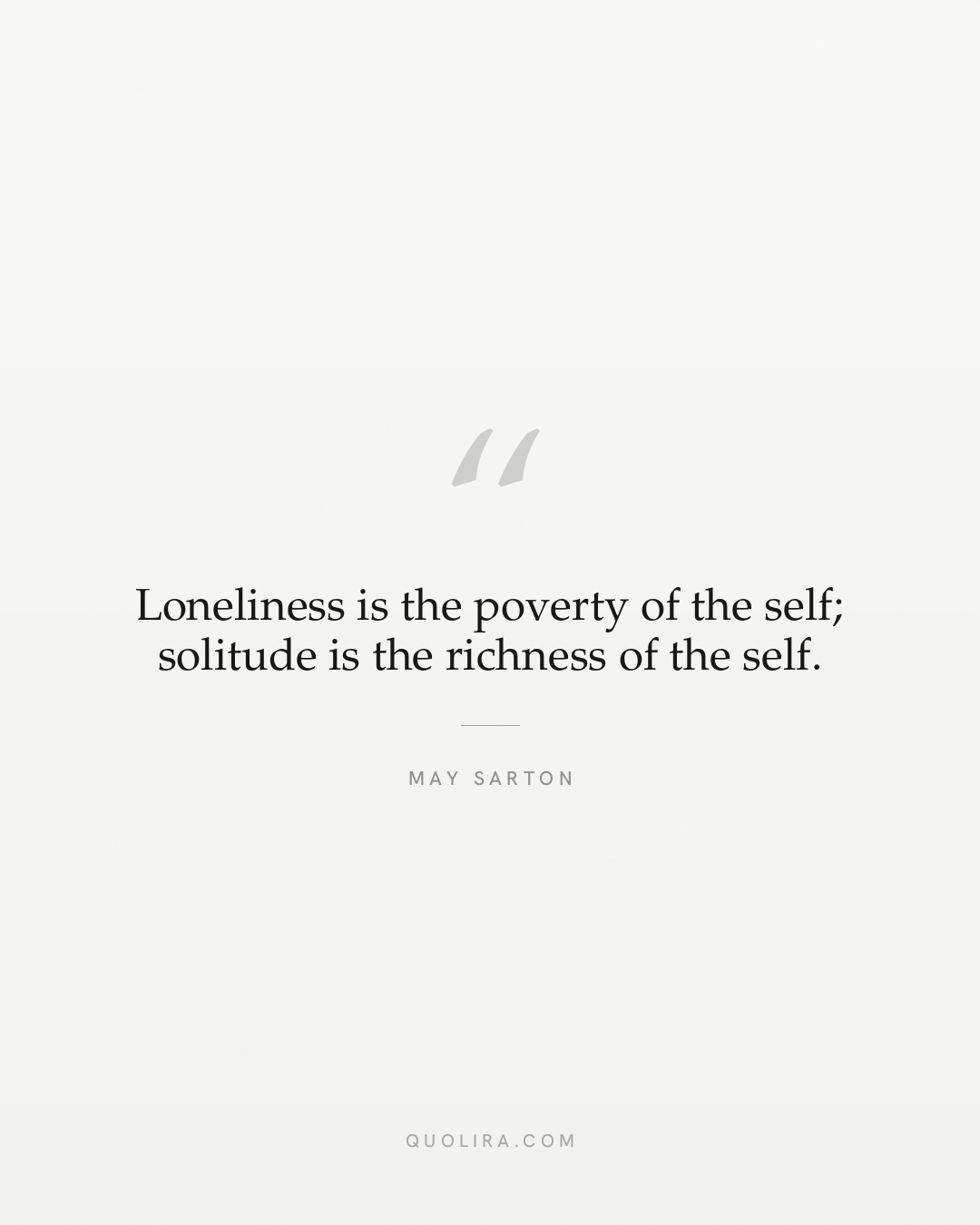
“Loneliness is the poverty of the self; solitude is the richness of the self.”
May Sarton · Mrs. Stevens Hears the Mermaids Singing, 1965