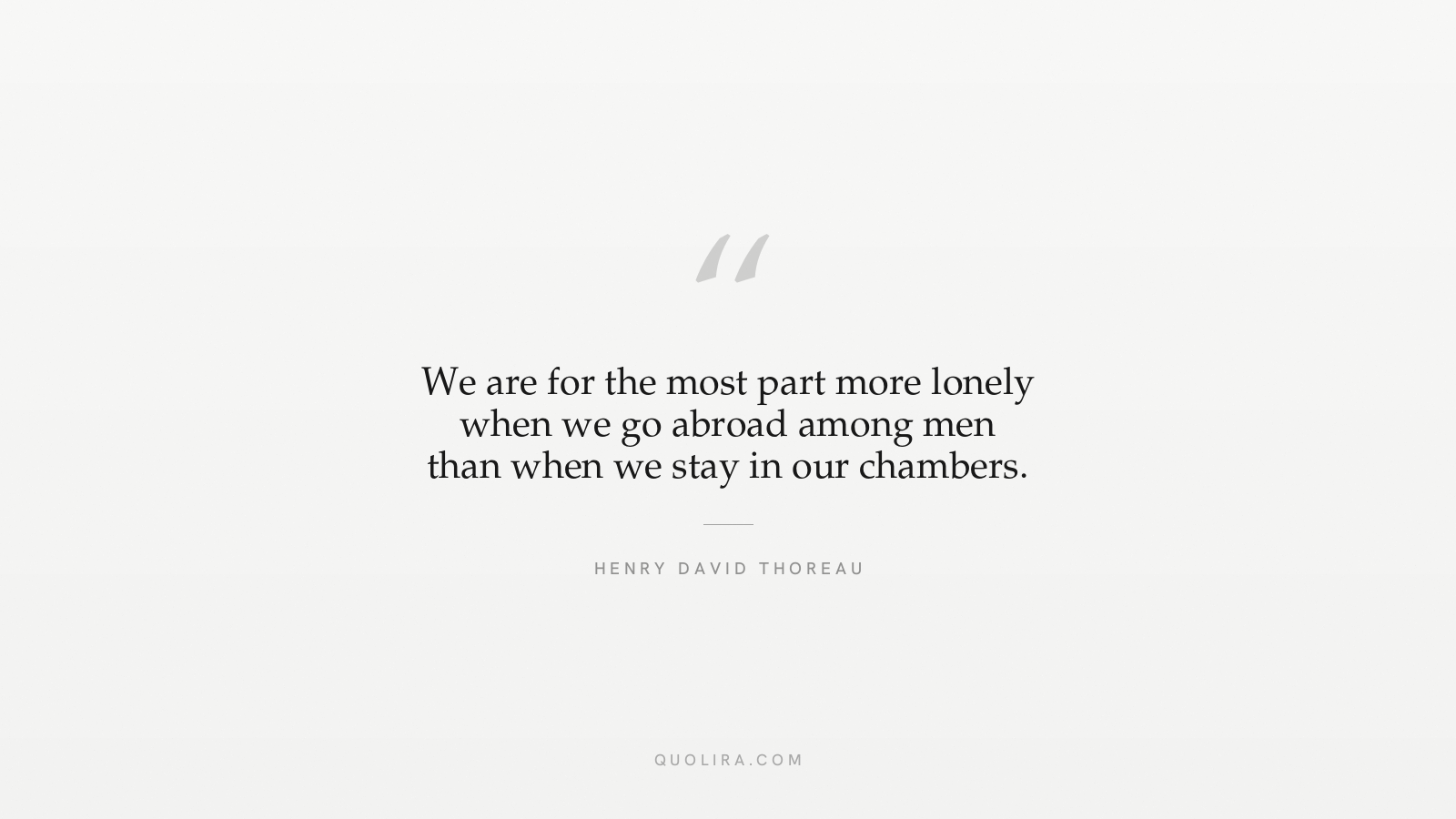
“We are for the most part more lonely when we go abroad among men than when we stay in our chambers.”
Henry David Thoreau · Walden, 1854
 quolira
.com
May Sarton said it, in Mrs. Stevens Hears the Mermaids Singing, 1965.
Sarton draws a clean line between two things people often confuse. Loneliness is what you feel when there is little inside you to keep you company. Solitude is what you get when you have enough of yourself to spend time alone.
From the collection: 25 Quotes About Loneliness and Being Alone That Still Sting · More May Sarton quotes
The quote means that loneliness is an empty feeling of lacking an inner life, while solitude is a full and nourishing state in which a person is comfortable with their own mind. The same condition of being alone can become either painful or rewarding depending on how a person relates to themselves.
This line is attributed to Mrs. Stevens Hears the Mermaids Singing, a 1965 work by May Sarton. The book is often described as a novel built from the voice of its title character, and the line reflects a theme that runs through Sarton's writing about self-reliance and creative life. The contrast between poverty and richness gives the idea a direct, almost aphoristic shape. Readers have carried the sentence into discussions of solitude, creativity, and emotional health, sometimes without the surrounding passage in front of them.
May Sarton (1912 to 1995) was a Belgian-born American poet, novelist, and diarist. She moved to the United States as a young woman and built a long career writing poetry, fiction, and journals, many of which explore solitude, aging, and the creative life. She lived for much of her later life in a house in Nelson, New Hampshire, and later in Maine, places that appear often in her reflective books. Her journals in particular have made her a lasting voice for readers interested in quiet, self-examined living.
“We are for the most part more lonely when we go abroad among men than when we stay in our chambers.”
Henry David Thoreau · Walden, 1854
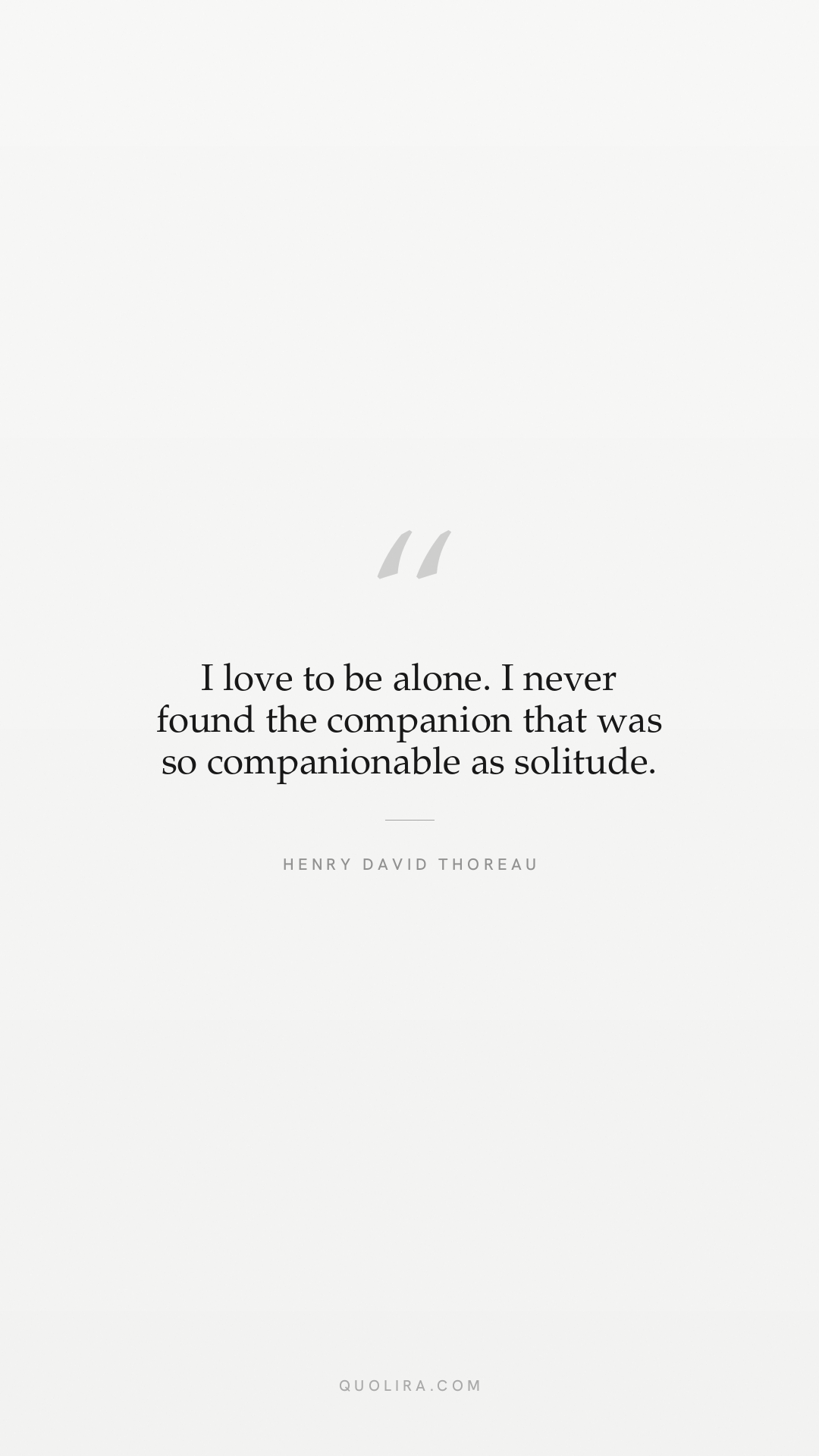
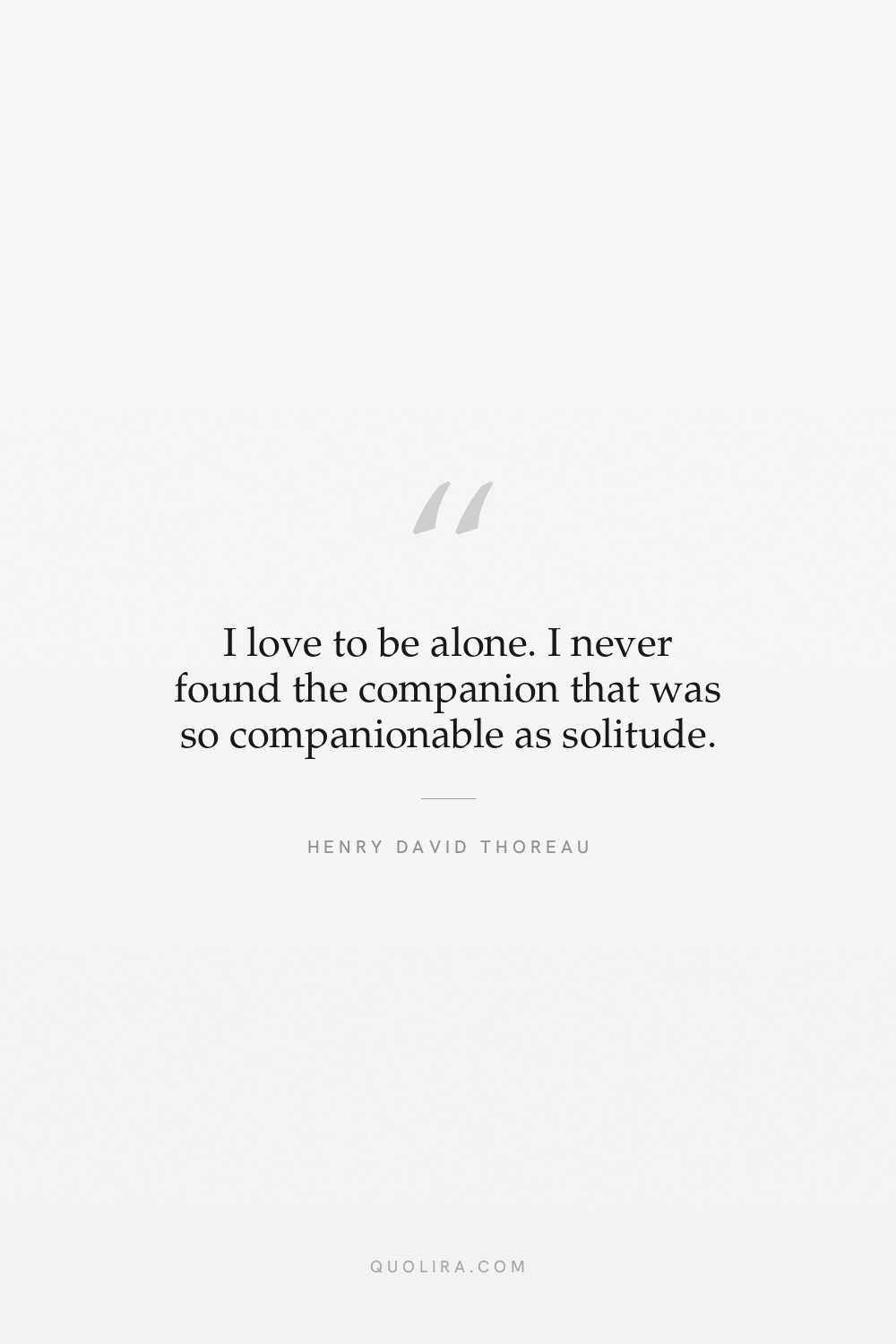
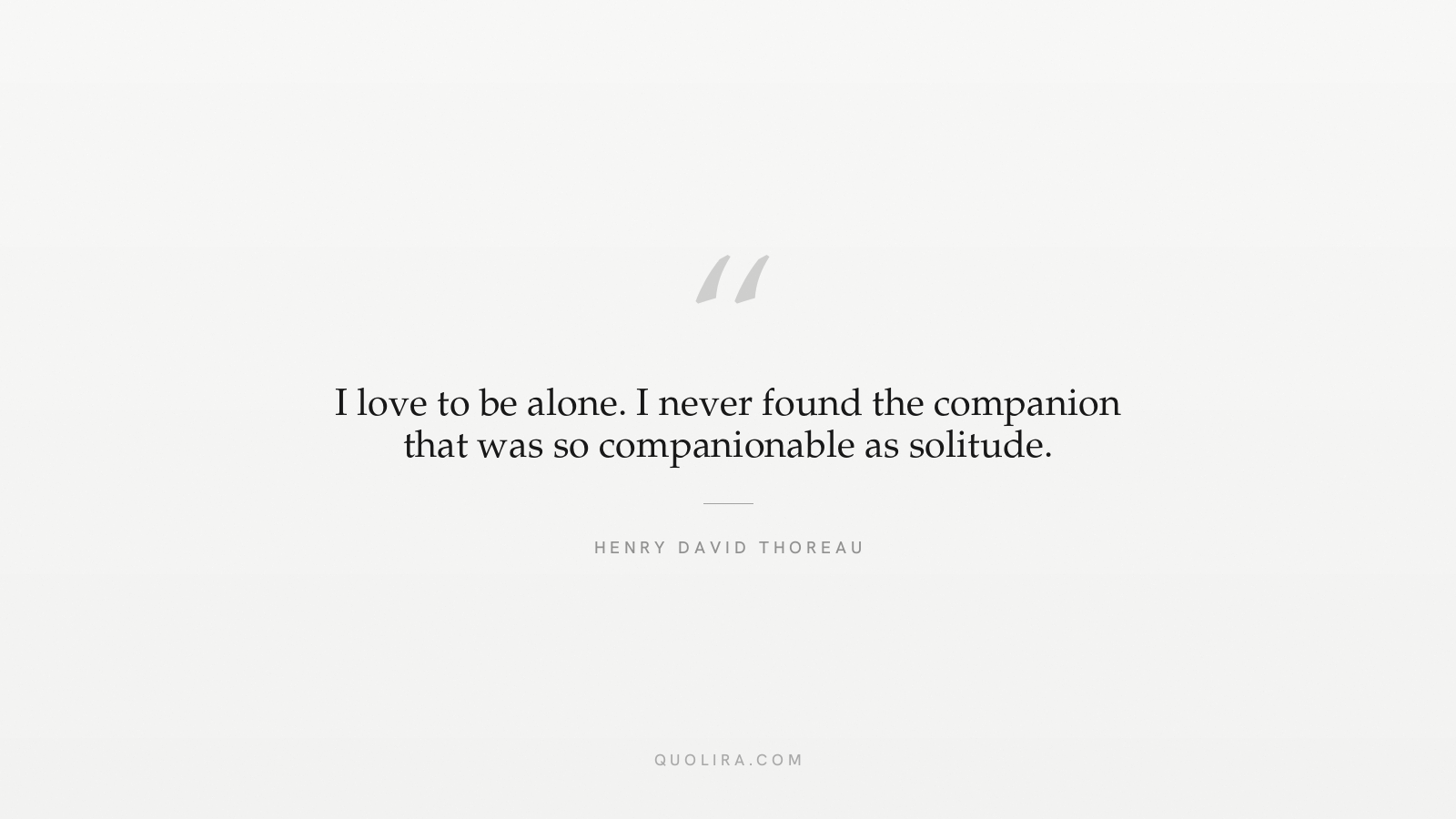
“I love to be alone. I never found the companion that was so companionable as solitude.”
Henry David Thoreau · Walden, 1854
“So lonely 'twas that God himself Scarce seemed there to be.”
Samuel Taylor Coleridge · The Rime of the Ancient Mariner, 1798
“Alone, alone, all, all alone, Alone on a wide, wide sea.”
Samuel Taylor Coleridge · The Rime of the Ancient Mariner, 1798
“Most days, we'd rather be wrong with the crowd than be right by ourselves.”
James Clear · Atomic Habits, Chapter 9: The Role of Family and Friends in Shaping Your Habits
“Pain is an effective teacher.”
James Clear · Atomic Habits, Chapter 17: How an Accountability Partner Can Change Everything
“What is immediately rewarded is repeated. What is immediately punished is avoided.”
James Clear · Atomic Habits, Chapter 15: The Cardinal Rule of Behavior Change
“Positive emotions cultivate habits. Negative emotions destroy them.”
James Clear · Atomic Habits, Chapter 15: The Cardinal Rule of Behavior Change
“A habit is a behavior that has been repeated enough times to become automatic.”
James Clear · Atomic Habits, Chapter 3: How to Build Better Habits in 4 Simple Steps
“The ultimate purpose of habits is to solve the problems of life with as little energy and effort as possible.”
James Clear · Atomic Habits, Chapter 3: How to Build Better Habits in 4 Simple Steps
“Every goal is doomed to fail if it goes against the grain of human nature.”
James Clear · Atomic Habits, Chapter 3: How to Build Better Habits in 4 Simple Steps
“Redesign your life so the actions that matter most are also the actions that are easiest to do.”
James Clear · Atomic Habits, Chapter 12: The Law of Least Effort