18 Winter Hope Quotes for Hard Days That Still Shine
Twenty lines from poets, playwrights, and Scripture for the short, gray days when hope needs a little help.

Winter hope quotes are the lines people save when the days are short, the sky stays gray, and the heating bill keeps climbing. The best ones were written by people who had their own hard seasons, from Emily Dickinson's small bird to Vaclav Havel's careful definition of hope. This list gathers 18 of them, each with its source and a short note on how it lands on a cold morning. You will find a few Bible verses, a couple of nineteenth-century poets, and a Czech playwright who spent years in prison and still wrote about hope with a straight face. Some readers want winter encouragement that sounds like a friend, and others want hope quotes they can say out loud before a difficult meeting. Pick whichever you need today, and keep the rest for the next gray week.
Famous Winter Hope Quotes for Hard Days
Hope is the thing with feathers / That perches in the soul.

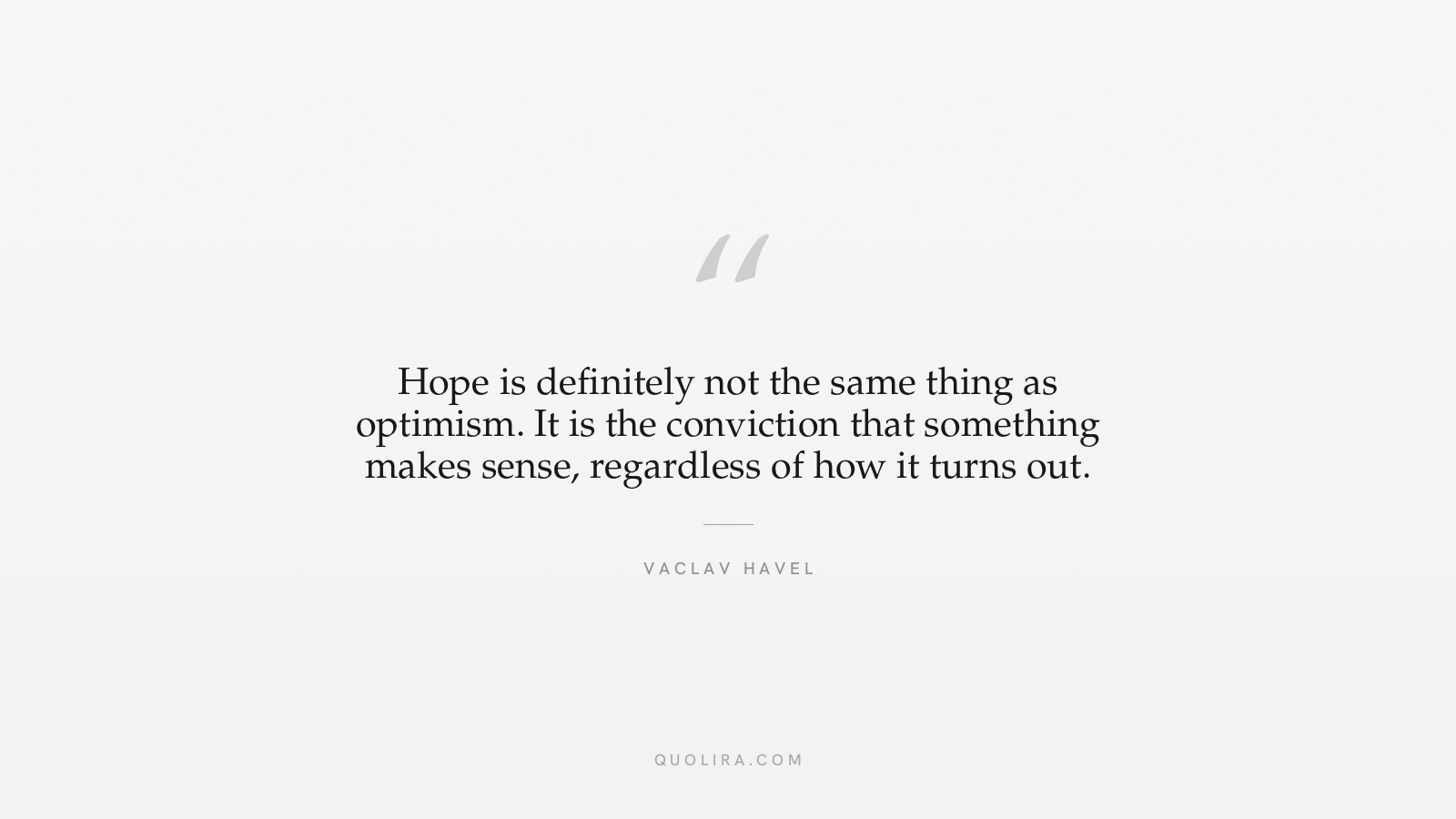
Hope is definitely not the same thing as optimism. It is the conviction that something makes sense, regardless of how it turns out.
Vaclav Havel Disturbing the Peace (1986)
Havel knew prison from the inside, and he separates hope from optimism. That distinction helps when the forecast looks bad, because you can keep hoping without predicting how things will turn out.

Darkness cannot drive out darkness; only light can do that.
Martin Luther King Jr. Strength to Love (1963)
King made this point in a book of sermons, and it works as a practical rule for dark months. You fight the gloom with small lights: a porch lamp, a phone call to a friend, a walk before breakfast.
It was the spring of hope, it was the winter of despair.
Charles Dickens A Tale of Two Cities (1859), Book 1, Chapter 1
Dickens opens his novel with this pairing of seasons, setting hope and despair side by side. It is a handy line for any day when both feelings seem to be in the room at once.
Scripture on Hope for Long Winter Nights
Weeping may endure for a night, but joy cometh in the morning.
King James Bible Psalm 30:5 (KJV)
The psalm names the night and then promises the morning, which is the exact rhythm of a hard winter. Readers often return to this verse during long stretches of bad news or sleepless hours.

They are new every morning: great is thy faithfulness.
King James Bible Lamentations 3:23 (KJV)
Lamentations is a book of grief traditionally linked to the fall of Jerusalem, which gives this line real weight. Mercy arrives fresh with each sunrise, and that is a habit you can practice at the kitchen sink.

Now faith is the substance of things hoped for, the evidence of things not seen.
King James Bible Hebrews 11:1 (KJV)
Hebrews 11 is a chapter about faith, and this verse is the one most people quote. Here faith is trust in what you cannot see yet, like roots working under frozen soil.

And hope maketh not ashamed.
King James Bible Romans 5:5 (KJV)
Paul wrote this to the Romans in the middle of the first century. It describes a hope that holds up under pressure, which matters when the February appointment falls through for the third time.

But they that wait upon the LORD shall renew their strength; they shall mount up with wings as eagles; they shall run, and not be weary; and they shall walk, and not faint.
King James Bible Isaiah 40:31 (KJV)
Isaiah wrote this as comfort for a people far from home. The verse treats waiting as active work, which is a useful reframe for a season that mostly asks you to sit still.

For I know the thoughts that I think toward you, saith the LORD, thoughts of peace, and not of evil, to give you an expected end.
King James Bible Jeremiah 29:11 (KJV)
Jeremiah sent this message to exiles in Babylon, not to a comfortable crowd. It promises peace and a future, which is easy to forget in January when every plan seems stuck on hold.

They that sow in tears shall reap in joy.
King James Bible Psalm 126:5 (KJV)
Psalm 126 is a song of return, sung by people who had come back from captivity. A farmer who sows knows the harvest comes later, and winter is the sowing season for most of us.

Quiet Courage for Cold, Dark Mornings
All shall be well, and all shall be well, and all manner of thing shall be well.
Julian of Norwich Revelations of Divine Love (c. 1395)
Julian was an English anchoress who recorded her visions in the late 1300s. The repetition is deliberate, and it gives you a phrase that can carry weight through every bad week of the season.

Hope springs eternal in the human breast.
Alexander Pope An Essay on Man, Epistle I (1733)
People often mistake this line for scripture because it sounds like one. It is an eighteenth-century poet reminding readers that hope has always needed words, and it still fits a January kitchen table.

God is our refuge and strength, a very present help in trouble.
King James Bible Psalm 46:1 (KJV)
This verse sits in a psalm about a shaking world with a steady refuge at its center. It admits trouble exists and still points you toward shelter.

I had fainted, unless I had believed to see the goodness of the LORD in the land of the living.
King James Bible Psalm 27:13 (KJV)
David admits here that he nearly gave up before he trusted again. The phrase land of the living reminds you that winter is a season, not the whole story.

Which hope we have as an anchor of the soul, both sure and stedfast.
King James Bible Hebrews 6:19 (KJV)
The letter to the Hebrews uses a ship's anchor as its image for hope. An anchor holds the boat steady while the wind keeps blowing, which is exactly the job hope has in a long January.
Hope That Outlasts the Hardest Winter Season
Why art thou cast down, O my soul? and why art thou disquieted in me? hope thou in God.
King James Bible Psalm 42:5 (KJV), trimmed
The psalmist talks to his own soul here, asking why it has sunk and telling it to hope in God. Talking yourself into hope is an oddly practical move on a gray Tuesday.
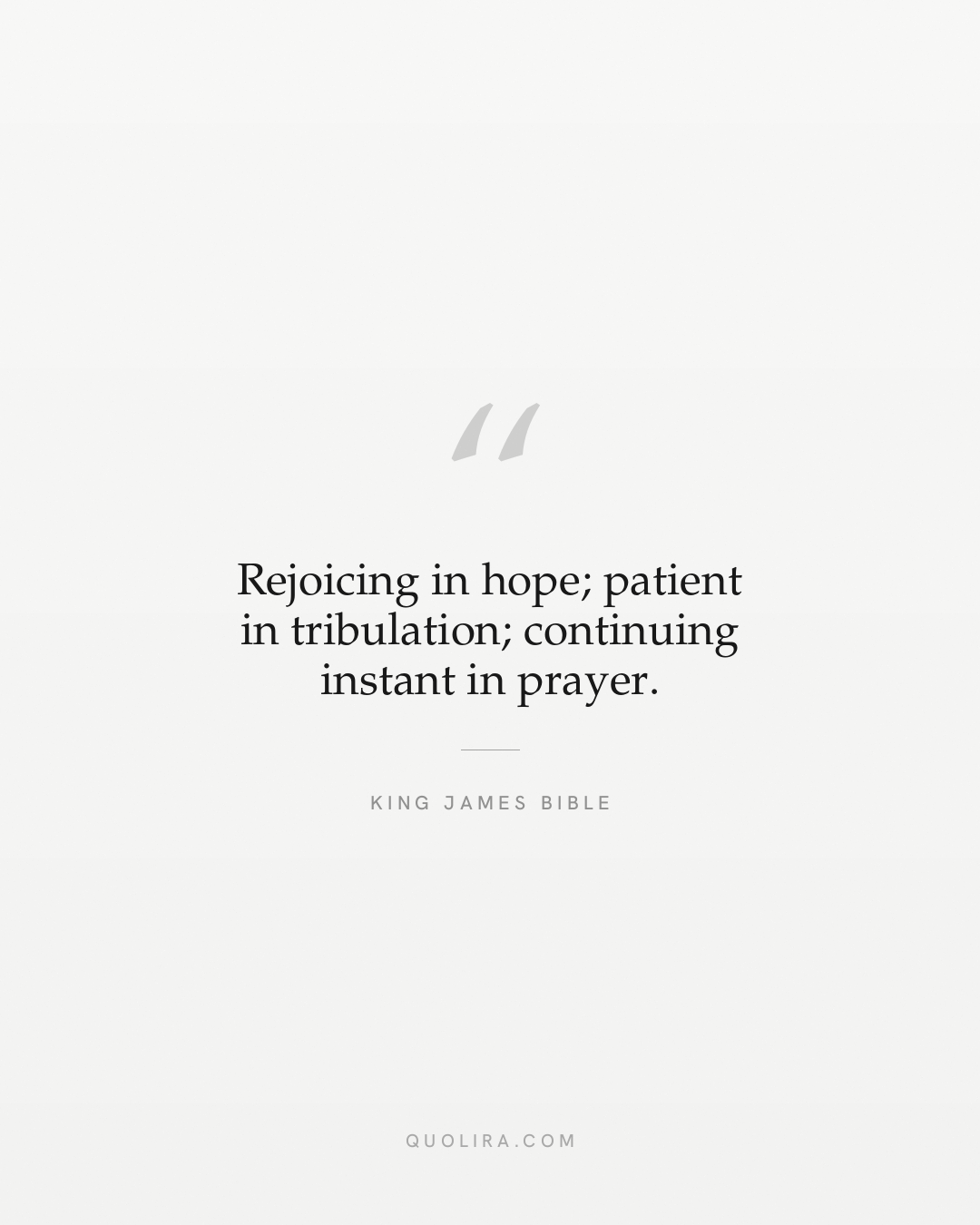
Rejoicing in hope; patient in tribulation; continuing instant in prayer.
King James Bible Romans 12:12 (KJV)
Paul packs three instructions into one line: rejoice, be patient, keep praying. In a long winter, patience is the hardest of the three, and the verse says so plainly.
Why Winter Hope Quotes Matter
Winter is the season when people go looking for words. The days are short, the commute happens in the dark, and the calendar can feel stuck. That is why hope quotes from the 1800s and older Scripture still get read: they were written by people who knew bad seasons firsthand.
Emily Dickinson lived much of her life in her family home in Amherst, Massachusetts, and wrote the bird poem from that quiet world. Vaclav Havel spent years in prison for his writing, and he still chose to write about hope in plain language. Those are the kinds of voices that hold up in February.
The quotes on this list are also short enough to carry. A single line on an index card does more on a gray morning than a long article you will not finish.
What these quotes have in common
Three ideas repeat across this list. The first is light in the dark. King's line about darkness and light, Camus's invincible summer, and Julian's insistence that all shall be well all point to a warmth that does not depend on the weather. Dickinson's bird does the same work from a different angle, perching in the soul whether or not anyone notices.
The second idea is waiting treated as work. Isaiah 40:31 says the people who wait will renew their strength, and Psalm 126:5 describes sowing in tears before reaping in joy. Jeremiah's promise of a future is written to exiles who had no say in their schedule. Winter is the sowing season for most of us, even if nothing visible is happening yet.
The third idea is hope as a choice you make on purpose. Psalm 42:5 has the writer talking to his own soul and telling it to hope. Romans 12:12 asks for rejoicing, patience, and prayer in one breath. Havel makes the same argument in modern terms: hope is a conviction, not a forecast. You can keep it even when the news is bad.
How to use these quotes
The best use is the simplest one. Pick the line that makes your chest loosen a little, and put it where you will see it before the day gets loud. Rotate the rest when you need a different angle.
- Write Camus's line on a sticky note and stick it to the bathroom mirror for the first week of January.
- Use Shelley's question as a caption under a photo of the first snowdrops or crocuses you spot in spring.
- Read Psalm 30:5 aloud at a bedside, a hospice visit, or a difficult family dinner.
- Teach Dickinson's poem in a classroom and ask students what the bird stands for in their own lives.
- Start a winter journal with Julian of Norwich's "all shall be well" on the first page, then write one small thing that went right each day.
If winter has you wanting something cozy alongside the hope, try 16 Cozy Winter Quotes for the First Cold Weeks of December. For a steadier push on hard workdays, 21 Motivational Quotes for Work to Steady You on a Hard Day pairs well with the Romans 12:12 line. For a broader look at ordinary days, 16 Positive Life Quotes That Shift How You See Ordinary Days keeps the mood going.
Choosing a quote for the week
Start with the feeling, not the topic. If you feel stuck, Isaiah 40:31 treats waiting as a kind of strength. If you feel alone in the dark, King's light line gives you something to do with your hands. If you feel worn out from trying, Romans 12:12 offers three small instructions you can follow today.
Pick one quote for the week and stay with it. Repetition helps. A line you read every morning for seven days will sound different by day five, often in a way you did not expect.
Use the shorter quotes on busy days. The Camus line fits in a text message to a friend. The Dickinson poem takes a minute to read and gives you an image to carry into a meeting.
Match the length of the quote to the length of your pause. A coffee break suits one line. A slow Sunday suits a whole psalm, read twice.
Common misunderstandings
Many readers expect a hope quote to lift their mood right away. When it does not, they decide the quote failed. Havel's point is different. He separates hope from optimism, so a person can keep hoping while feeling tired, sad, or unsure. The quote is working even when the feeling has not caught up.
Another mistake is treating every hope line as a promise about outcomes. Julian's "all shall be well" speaks to how the larger story ends. It does not forecast your next Tuesday, and it does not promise the layoff or the diagnosis will go a certain way. Read it as a steady frame, the way you would check a compass.
A third mistake is quoting cheerful lines at people who are grieving. A bright line can land badly at a funeral or a hospital bed. Psalm 30:5 works better in those rooms because it names the night before it names the morning. Let the other person set the pace.
Finally, check the source before you print a line on a card. Pope's "Hope springs eternal" is often credited to scripture, and some quote sites list it that way. Keeping the attribution right is a small courtesy to the writer and to anyone who reads closely.
Making the words stick
Copy the quote by hand once. Writing slows you down, and the slowing is part of the effect. A handwritten line on the fridge tends to get read more often than a printed one.
Say the line aloud once before a hard conversation. This is not magic. It gives your voice a steady start, and that steadiness often carries into the first few sentences.
Notice the image inside each quote. Dickinson gives you a bird, Camus gives you a summer you carry, and Hebrews 6:19 gives you an anchor. Pick the image that feels true and spend a minute with it before the day starts.
When the gray week drags on, come back to the same few lines. A small set of quotes you know well will serve you better than a long list you skim once.
Sources
Choose one line from this list and make it the first thing you read before the first cold walk of the day. Hope is rarely loud in January, but it is usually close.
Frequently asked questions
What is the most famous winter hope quote?
Where does "If winter comes, can spring be far behind?" come from?
Did Alexander Pope write "Hope springs eternal"?
Which Bible verses are about hope in winter?
How can I use winter hope quotes in everyday life?
Keep reading
15 Vatpornima Quotes That Honor Devotion and Quiet Strength
Reflections on faith, marriage, and the patience that holds a family together on Vat Purnima.















10 Muharram Quotes That Carry the Weight of Karbala
Words on sacrifice, grief, and standing firm when standing is the hardest thing to do.
Dickinson wrote this around 1861, but it was not published until 1891, after her death. Picture hope as a small bird that stays put through the coldest weeks, which is exactly what you need on a February morning.