“All shall be well, and all shall be well, and all manner of thing shall be well.”
Julian of Norwich · Revelations of Divine Love (c. 1395)
 quolira
.com
Alexander Pope said it, in An Essay on Man, Epistle I (1733).
People often mistake this line for scripture because it sounds like one. It is an eighteenth-century poet reminding readers that hope has always needed words, and it still fits a January kitchen table.
From the collection: 18 Winter Hope Quotes for Hard Days That Still Shine · More Alexander Pope quotes
This line means that people have a deep, persistent tendency to keep expecting better things, even when their circumstances give them little reason to. Pope presents hope as a natural and nearly unbreakable part of human nature, something that continues to renew itself across a lifetime of disappointment.
The line comes from An Essay on Man, the first epistle of which was published in 1733. Pope wrote the poem in heroic couplets as a philosophical work meant to explain the order of the universe and humanity's place within it. In this passage he describes human nature as a mix of strength and weakness, and he notes that hope keeps people moving forward even when they are never fully content. The image of hope as something that springs up again and again fits the poem's larger argument that people are restless creatures who still find reasons to keep going.
Alexander Pope (1688 to 1744) was an English poet who became one of the most celebrated writers of the early eighteenth century. He was known for his polished heroic couplets and for satire, including The Rape of the Lock and The Dunciad. He also produced widely read translations of Homer. His work shaped the poetic style of his era, and his balanced, memorable lines are still frequently quoted today.
“All shall be well, and all shall be well, and all manner of thing shall be well.”
Julian of Norwich · Revelations of Divine Love (c. 1395)
“They that sow in tears shall reap in joy.”
King James Bible · Psalm 126:5 (KJV)
“For I know the thoughts that I think toward you, saith the LORD, thoughts of peace, and not of evil, to give you an expected end.”
King James Bible · Jeremiah 29:11 (KJV)
“But they that wait upon the LORD shall renew their strength; they shall mount up with wings as eagles; they shall run, and not be weary; and they shall walk, and not faint.”
King James Bible · Isaiah 40:31 (KJV)
“And hope maketh not ashamed.”
King James Bible · Romans 5:5 (KJV)
“Now faith is the substance of things hoped for, the evidence of things not seen.”
King James Bible · Hebrews 11:1 (KJV)
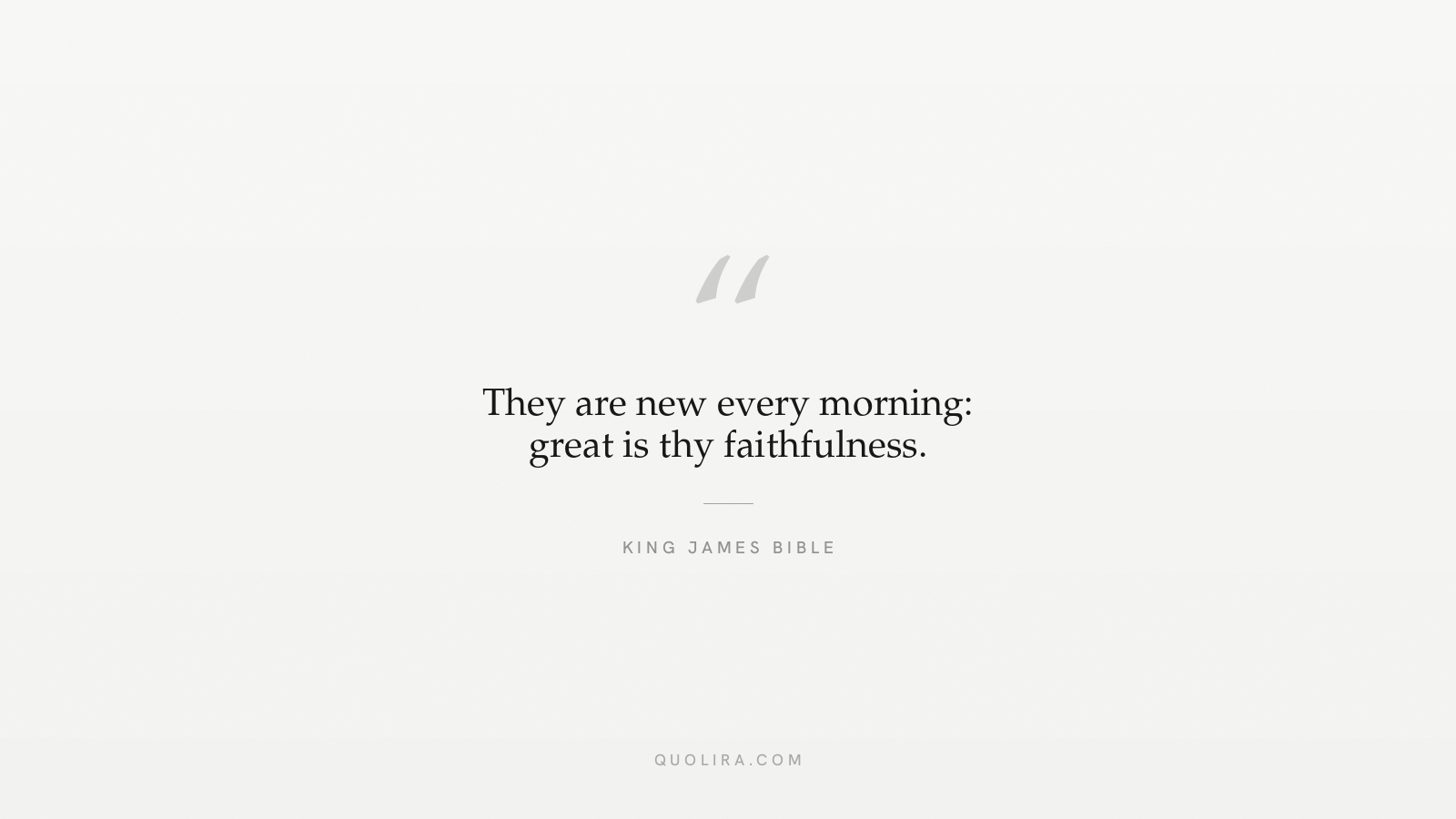
“They are new every morning: great is thy faithfulness.”
King James Bible · Lamentations 3:23 (KJV)
“Weeping may endure for a night, but joy cometh in the morning.”
King James Bible · Psalm 30:5 (KJV)
“It was the spring of hope, it was the winter of despair.”
Charles Dickens · A Tale of Two Cities (1859), Book 1, Chapter 1
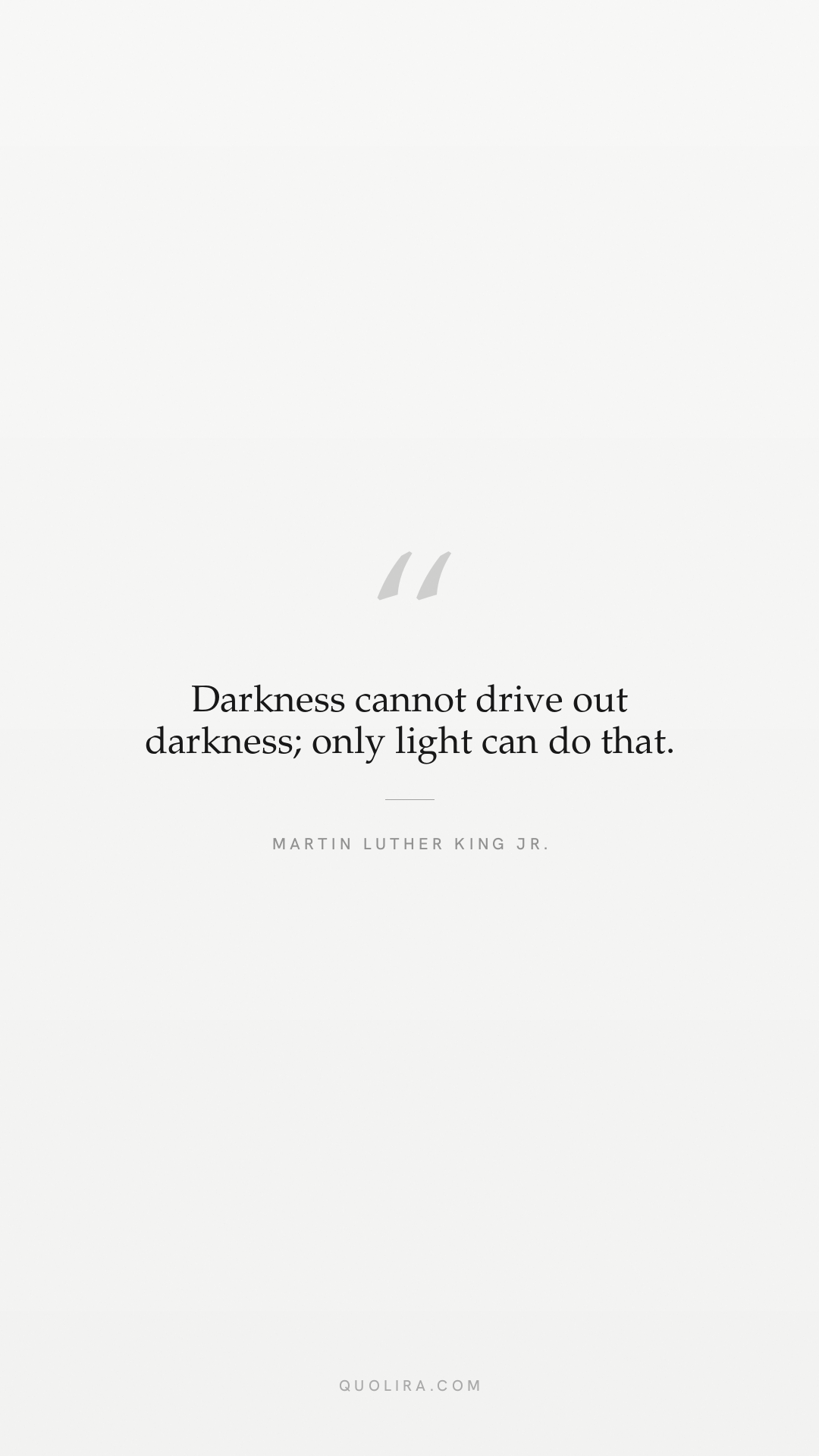
“Darkness cannot drive out darkness; only light can do that.”
Martin Luther King Jr. · Strength to Love (1963)
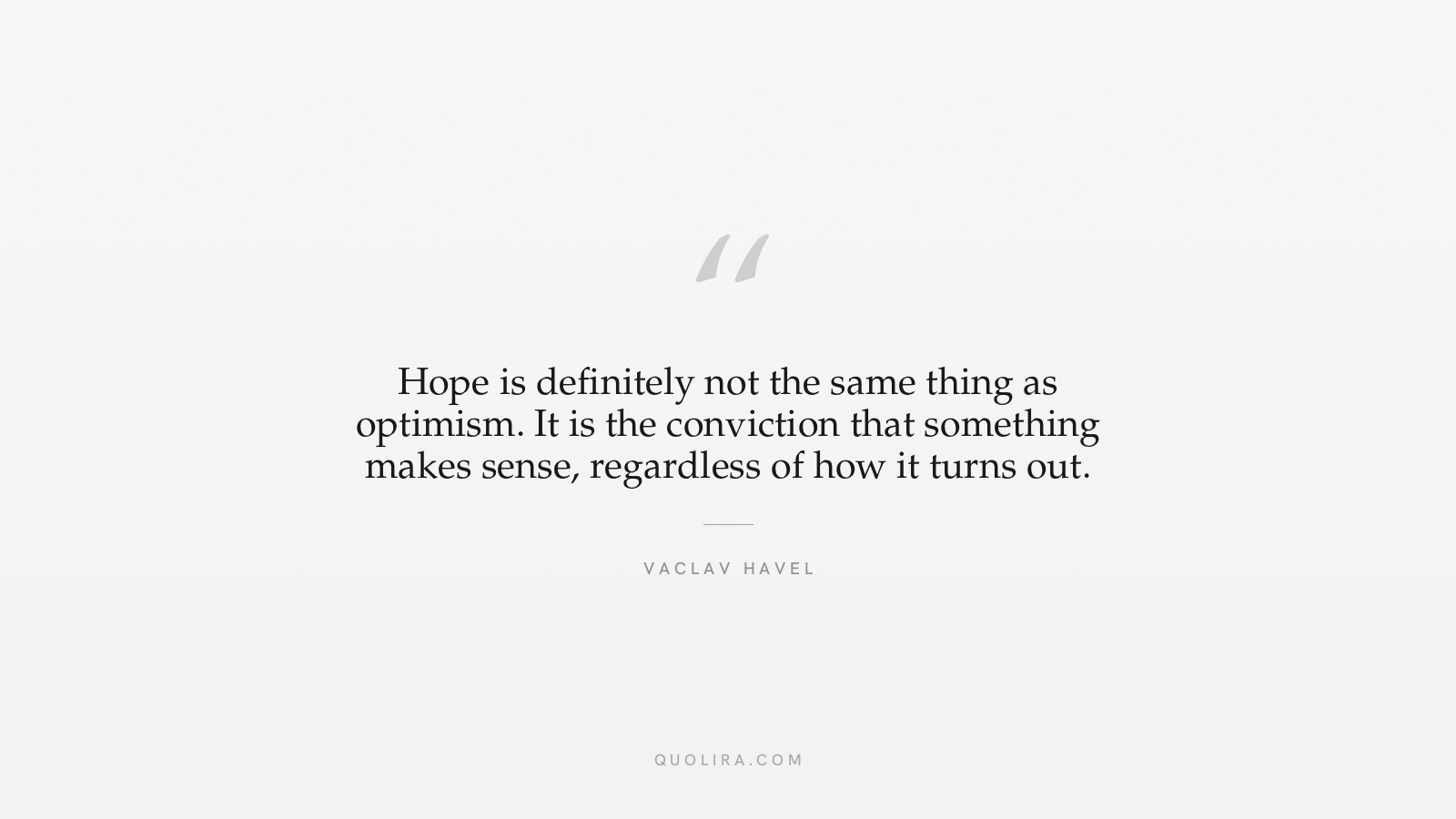
“Hope is definitely not the same thing as optimism. It is the conviction that something makes sense, regardless of how it turns out.”
Vaclav Havel · Disturbing the Peace (1986)
“Hope is the thing with feathers / That perches in the soul.”
Emily Dickinson · Poem written around 1861, published 1891