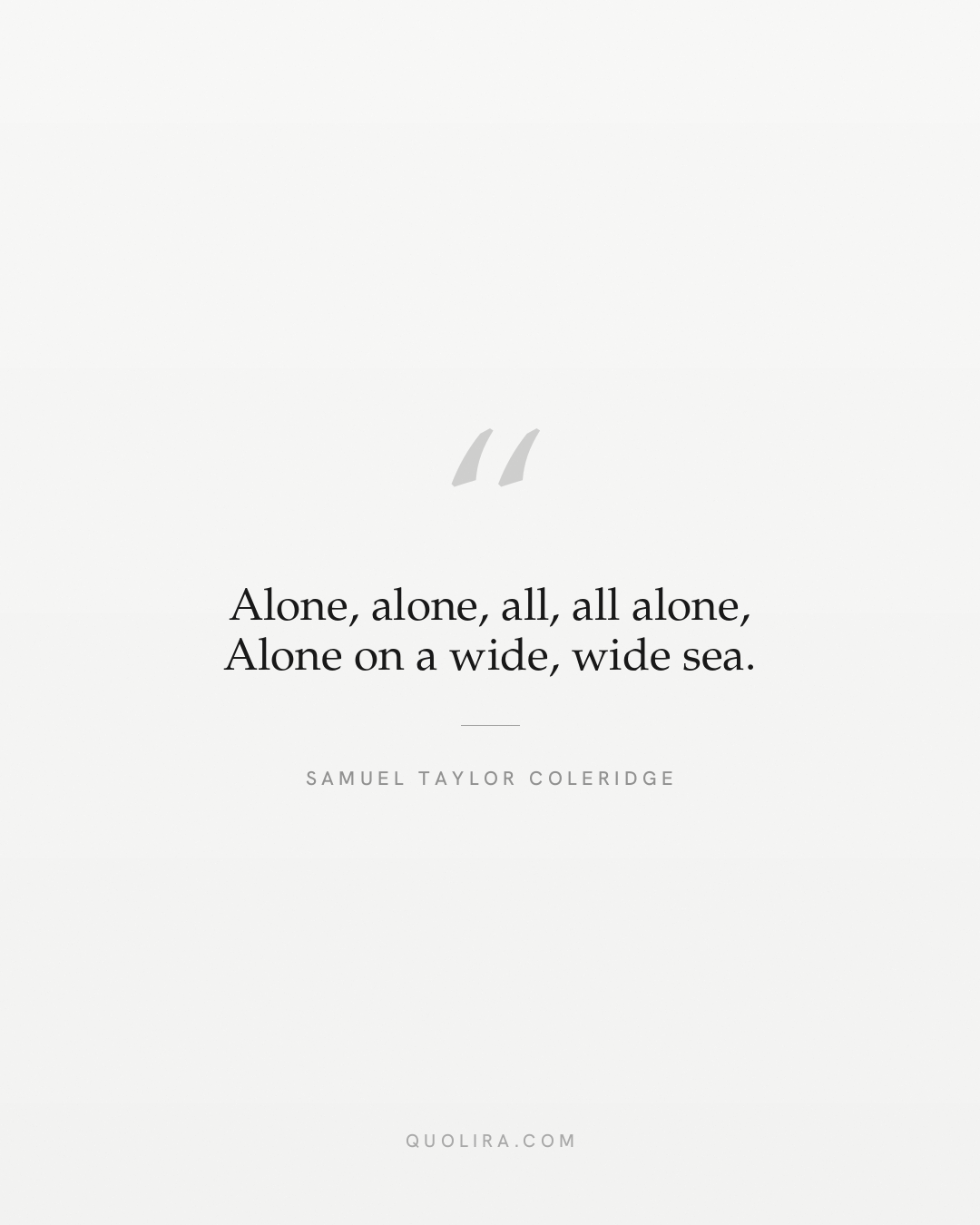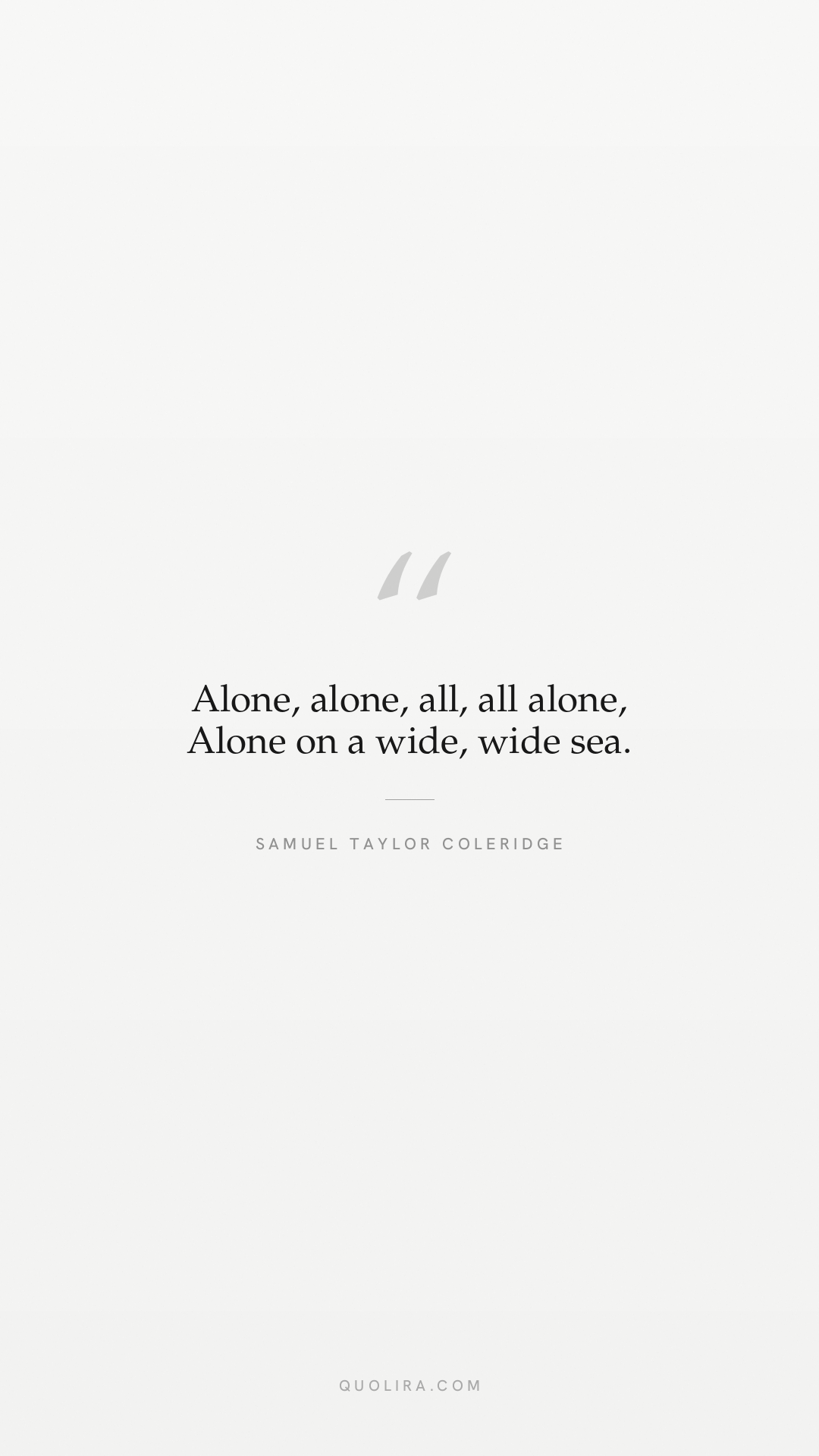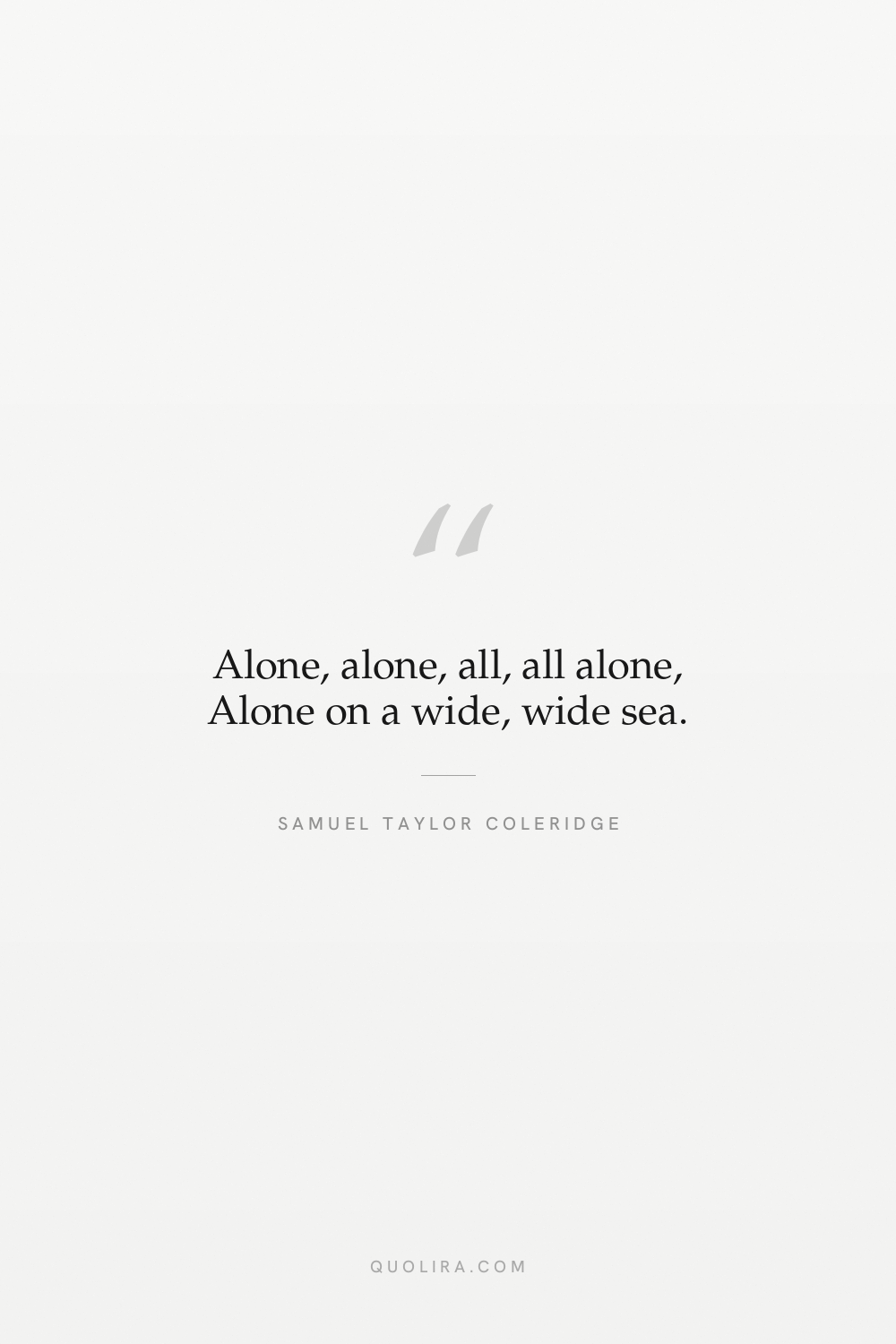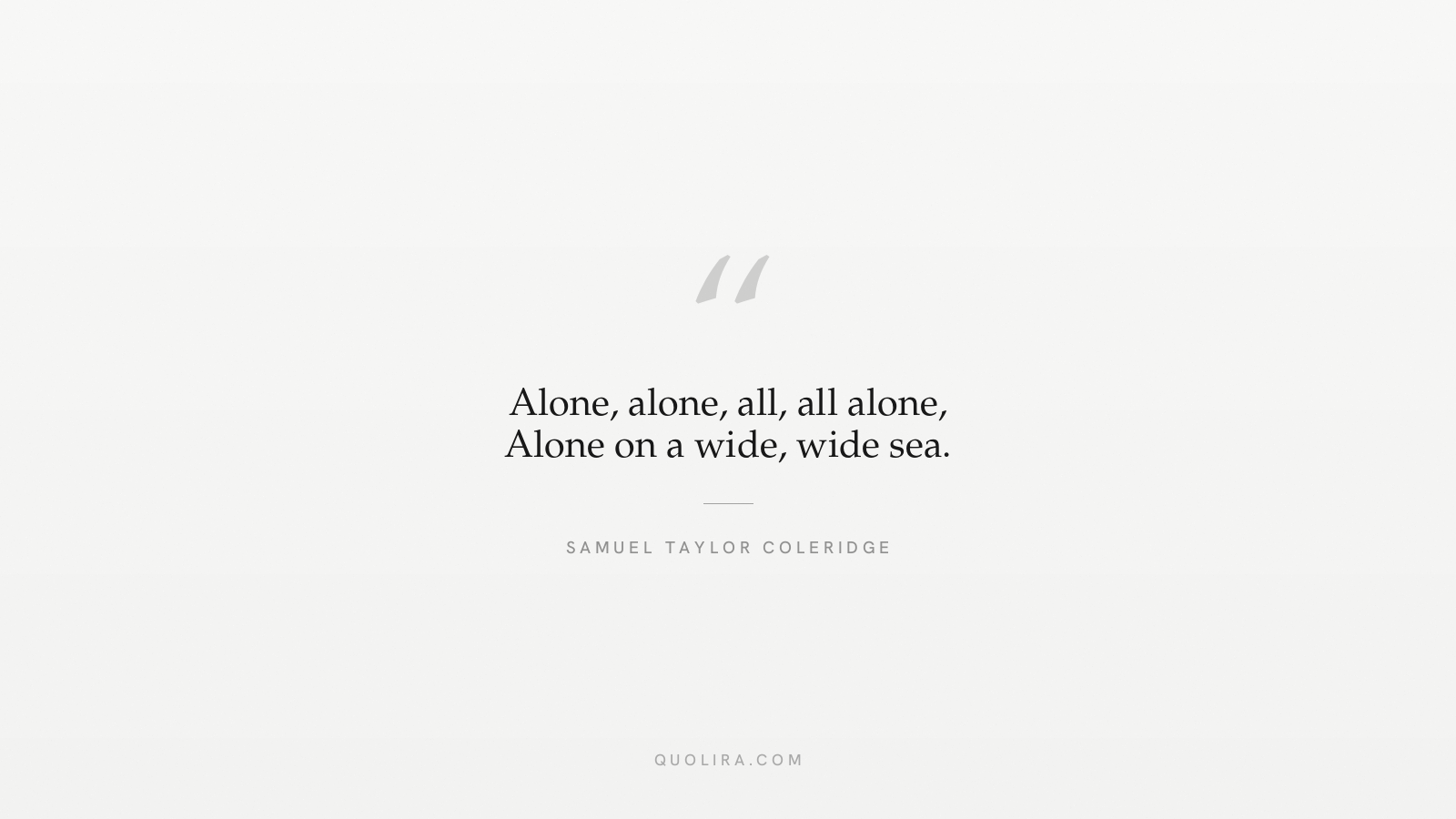
“Alone, alone, all, all alone, Alone on a wide, wide sea.”
Samuel Taylor Coleridge · The Rime of the Ancient Mariner, 1798
 quolira
.com
Samuel Taylor Coleridge said it, in The Rime of the Ancient Mariner, 1798.
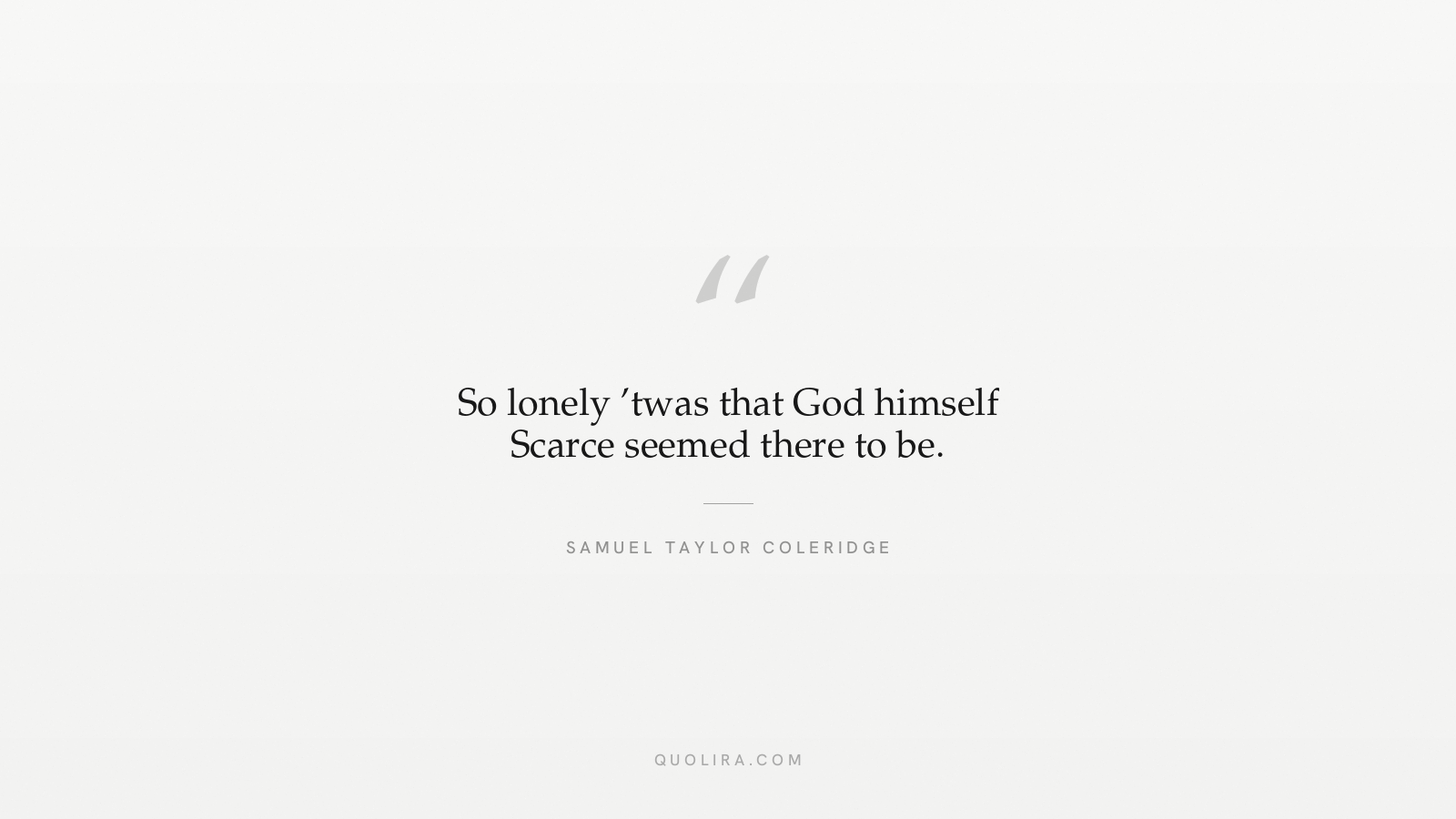
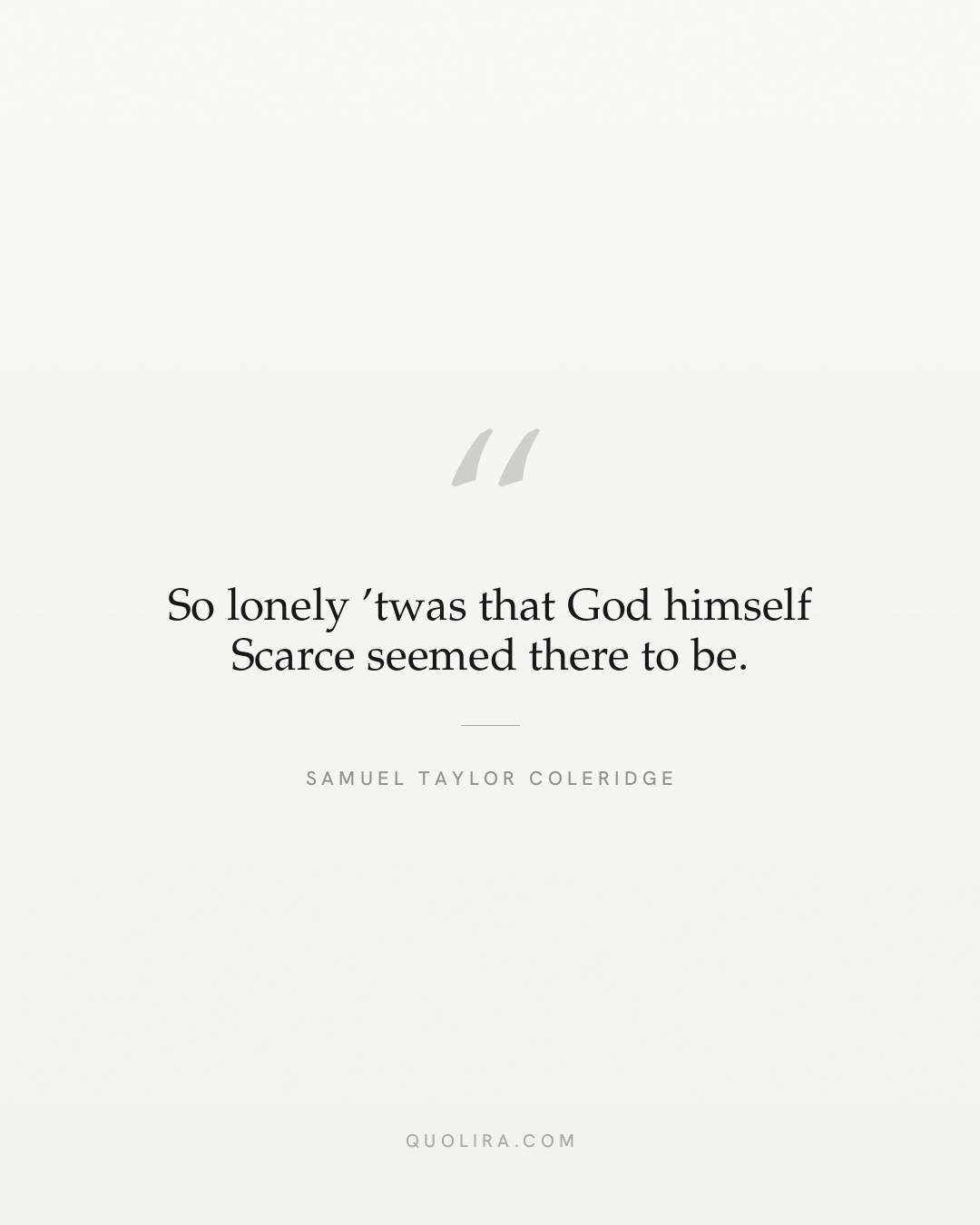
In the same poem, the Mariner feels so cut off that even God seems absent. Coleridge turns isolation into a spiritual problem, not only a social one. Anyone who has felt lonely late at night knows that drop, the sense that nobody, not even the sky, is listening.
From the collection: 25 Quotes About Loneliness and Being Alone That Still Sting · More Samuel Taylor Coleridge quotes
The line means that the loneliness was so complete that it seemed as though God Himself was barely present. The speaker feels abandoned not only by people but by any sense of divine company.
These lines also come from The Rime of the Ancient Mariner, Samuel Taylor Coleridge's 1798 ballad published in Lyrical Ballads. After the mariner's crew has died, he is left drifting on a silent sea under a sky that offers no relief. The poem moves between physical hardship and spiritual anguish, and this couplet marks a low point where the mariner's sense of being watched over falls away. Coleridge uses a plain, compressed ballad structure, so the feeling of emptiness arrives quickly and stays with the reader.
Samuel Taylor Coleridge (1772 to 1834) was an English Romantic poet, critic, and thinker whose work often explored the boundary between the natural and the supernatural. He collaborated with William Wordsworth on Lyrical Ballads, and his later prose, including Biographia Literaria from 1817, influenced how readers understood imagination and poetic form. Coleridge also wrote lyrical poems such as Kubla Khan and Christabel, which share the dreamlike tone of his famous ballad. His life was marked by poor health and a long struggle with opium use, and those experiences often surface in his preoccupation with isolation and spiritual distress.
“Alone, alone, all, all alone, Alone on a wide, wide sea.”
Samuel Taylor Coleridge · The Rime of the Ancient Mariner, 1798
“Most days, we'd rather be wrong with the crowd than be right by ourselves.”
James Clear · Atomic Habits, Chapter 9: The Role of Family and Friends in Shaping Your Habits
“Pain is an effective teacher.”
James Clear · Atomic Habits, Chapter 17: How an Accountability Partner Can Change Everything
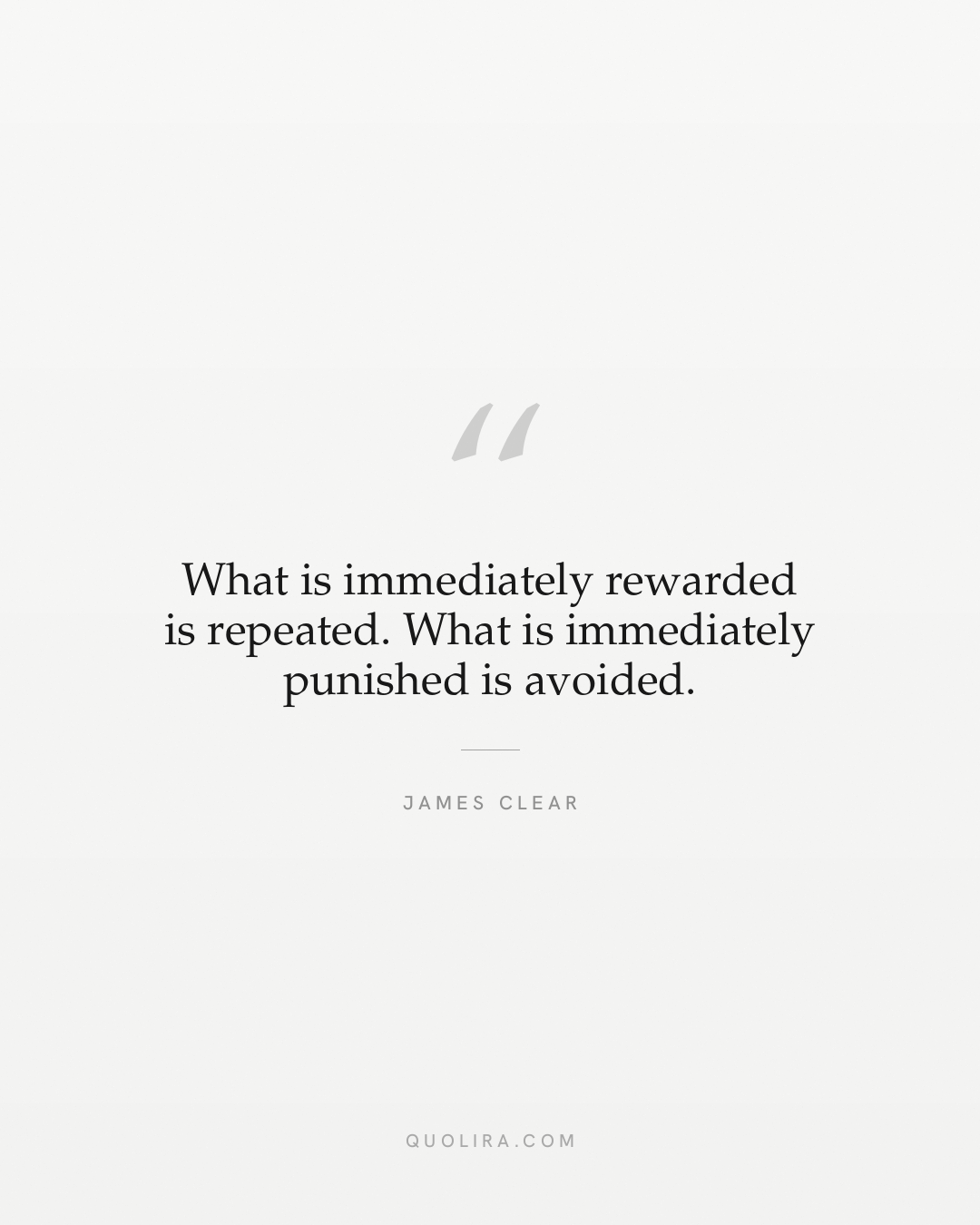
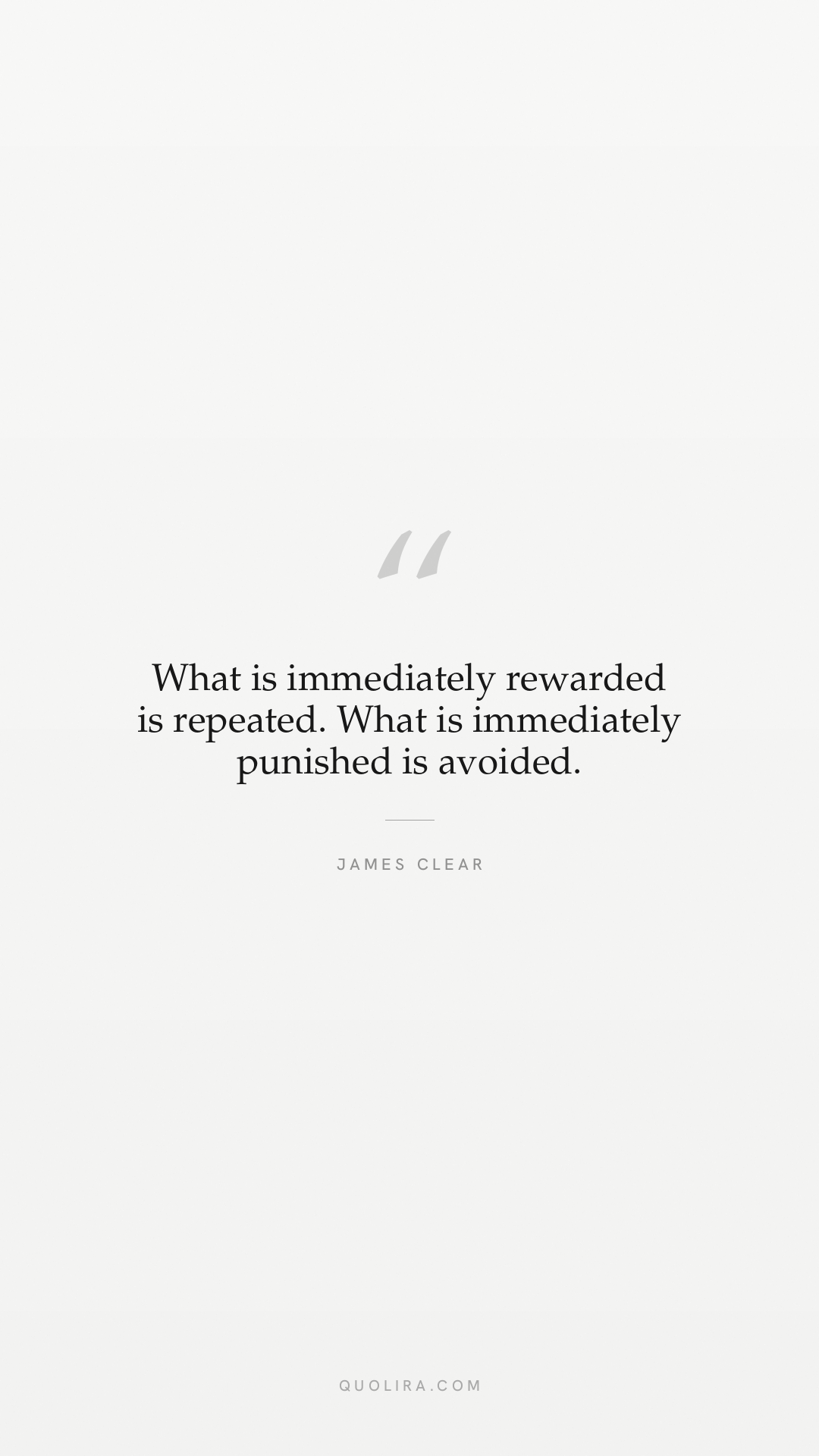
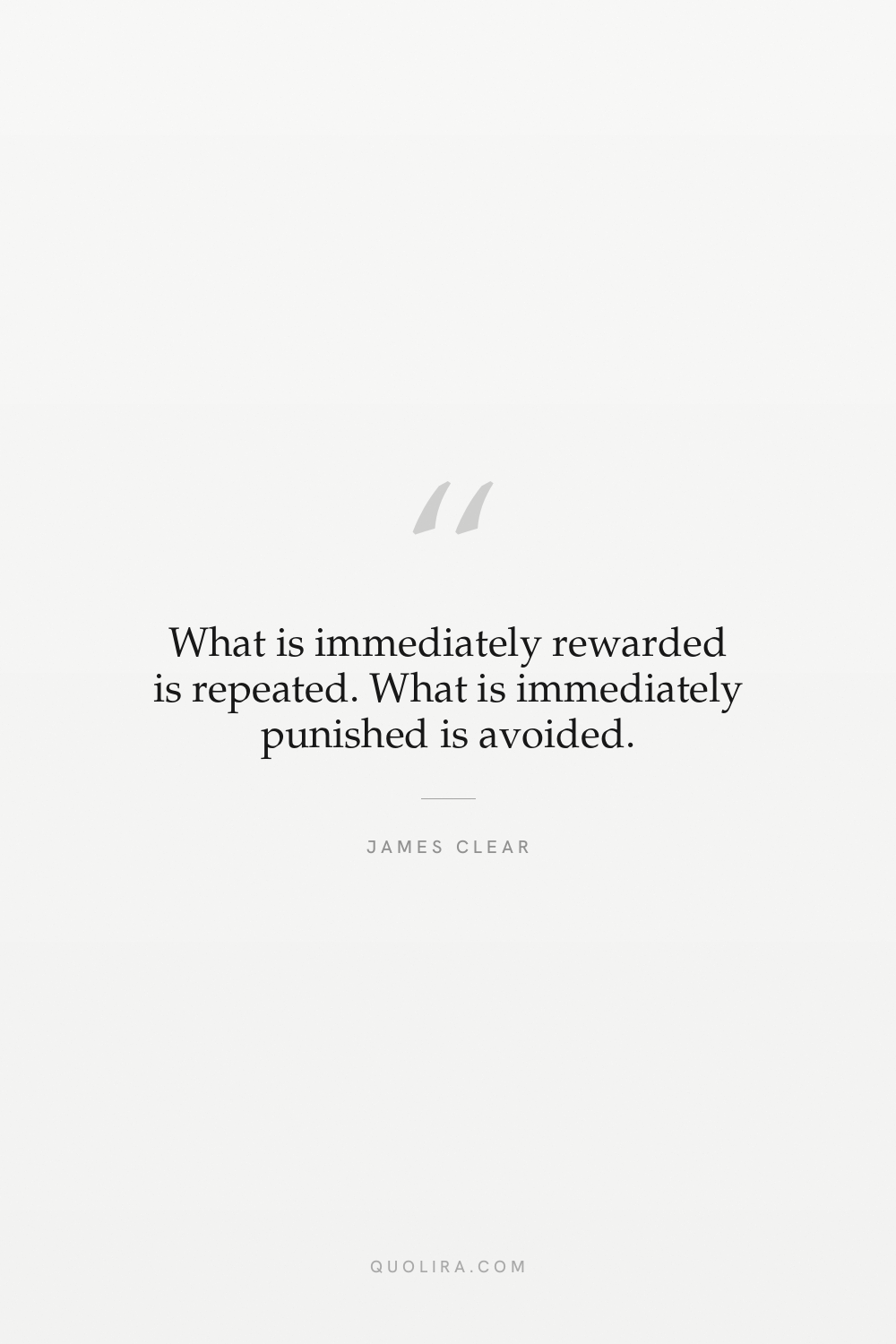
“What is immediately rewarded is repeated. What is immediately punished is avoided.”
James Clear · Atomic Habits, Chapter 15: The Cardinal Rule of Behavior Change
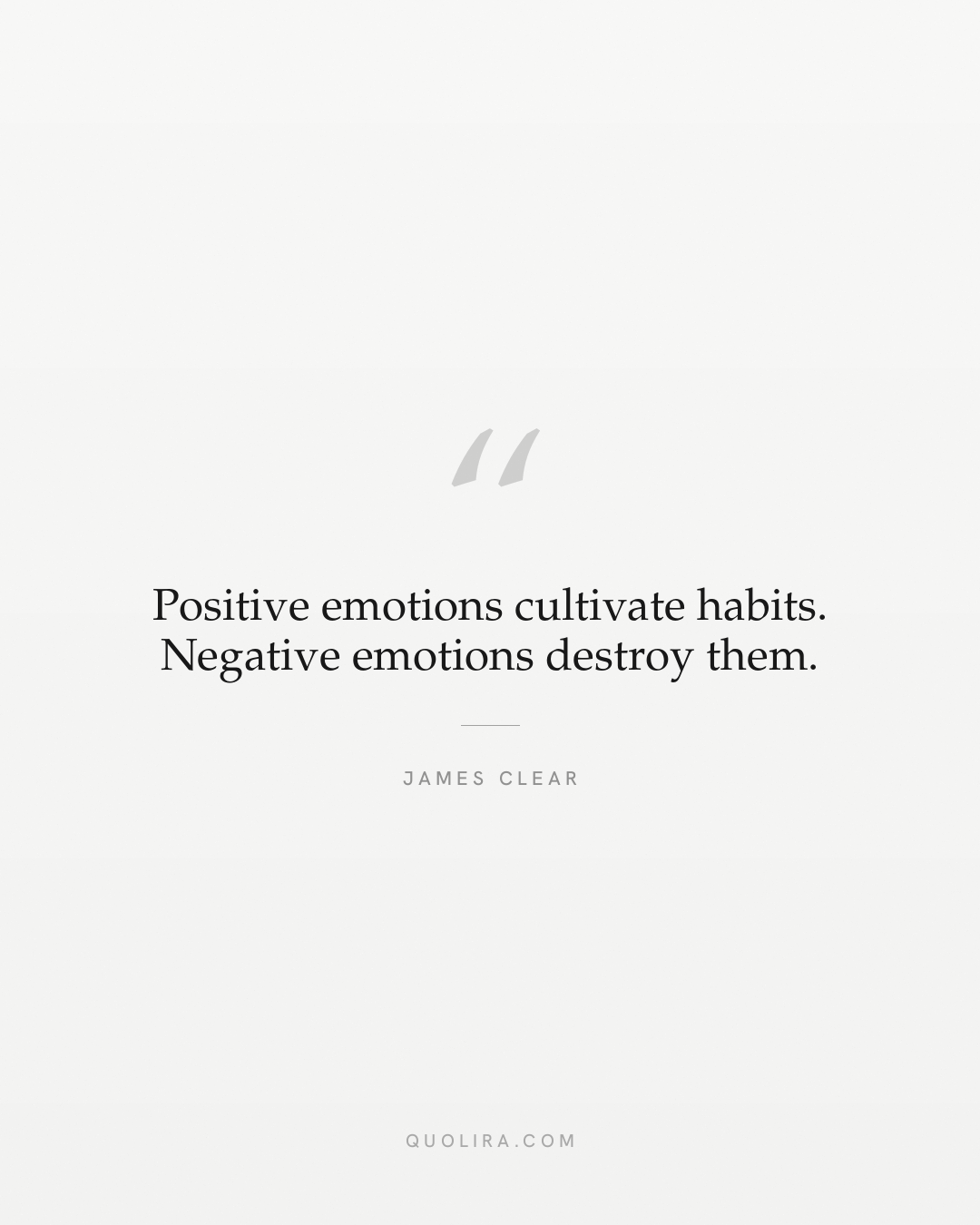
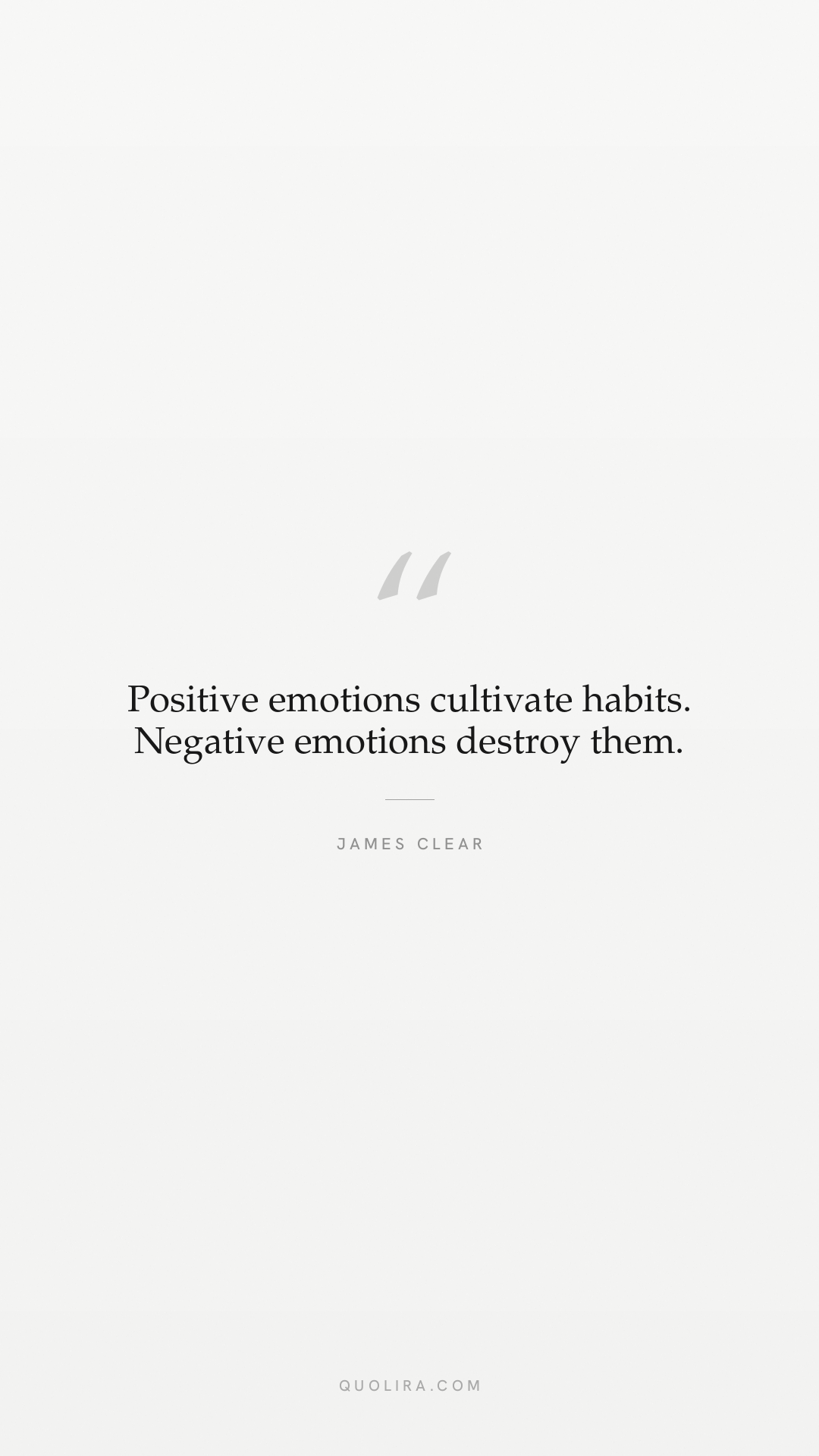
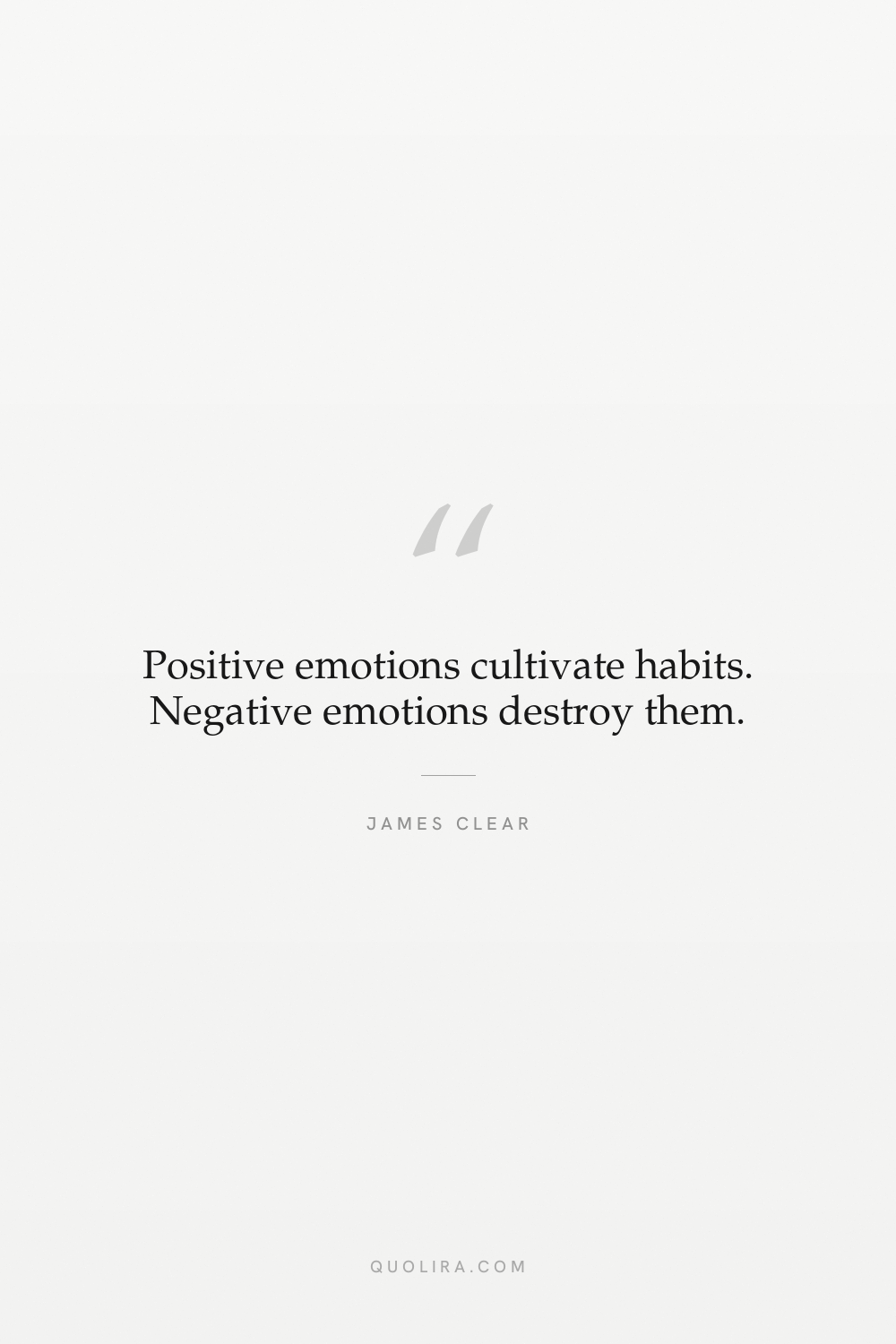
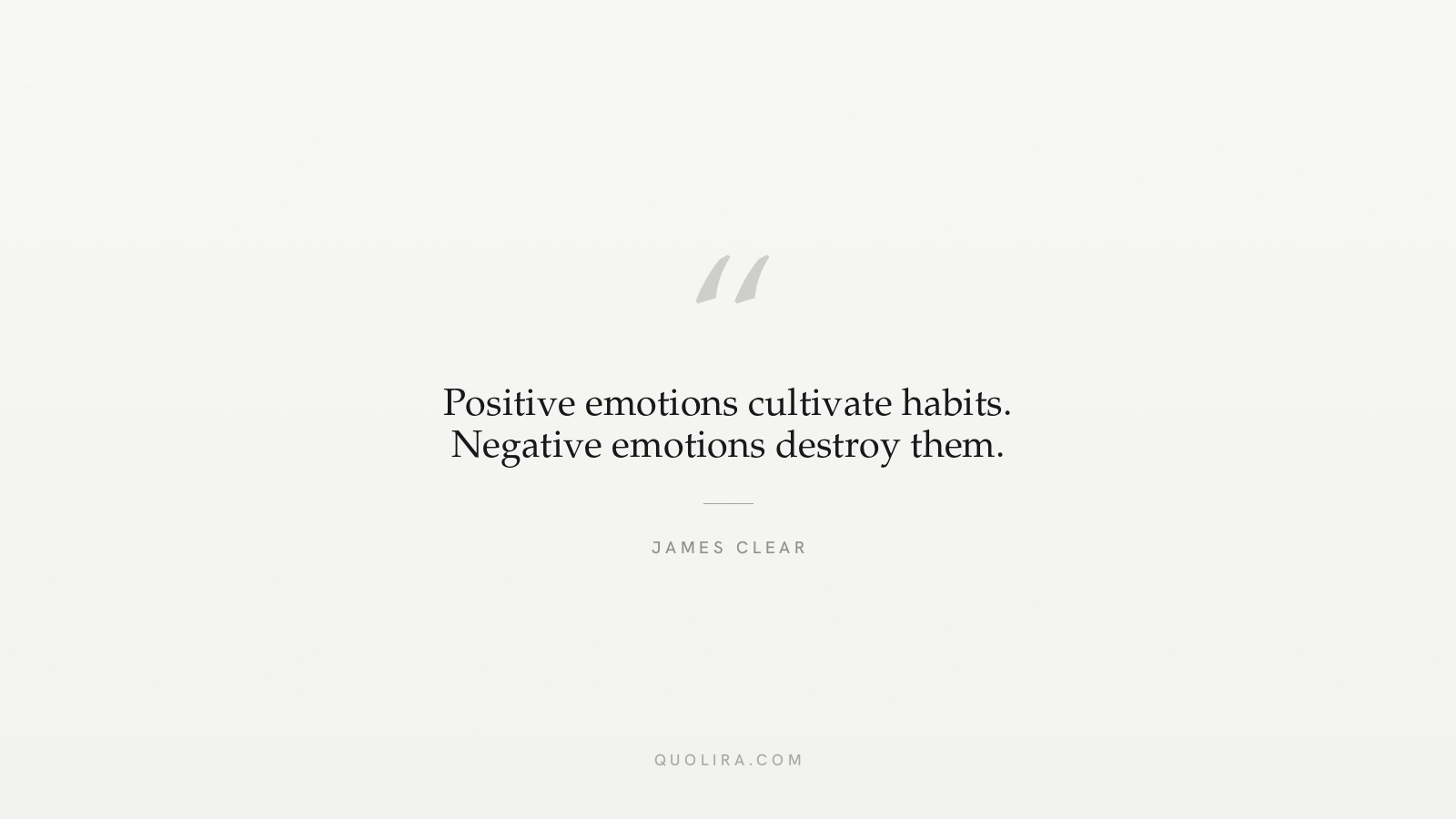
“Positive emotions cultivate habits. Negative emotions destroy them.”
James Clear · Atomic Habits, Chapter 15: The Cardinal Rule of Behavior Change
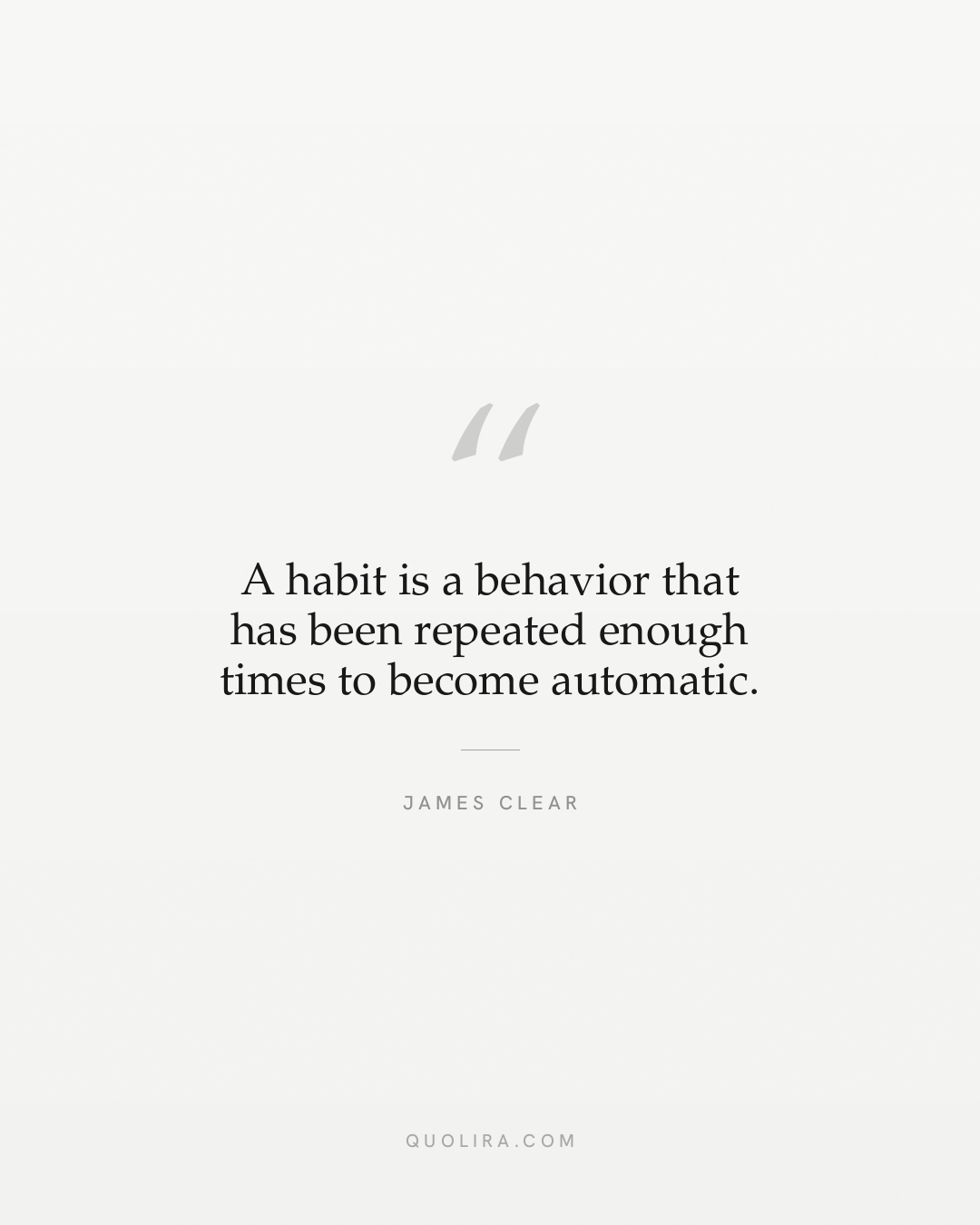
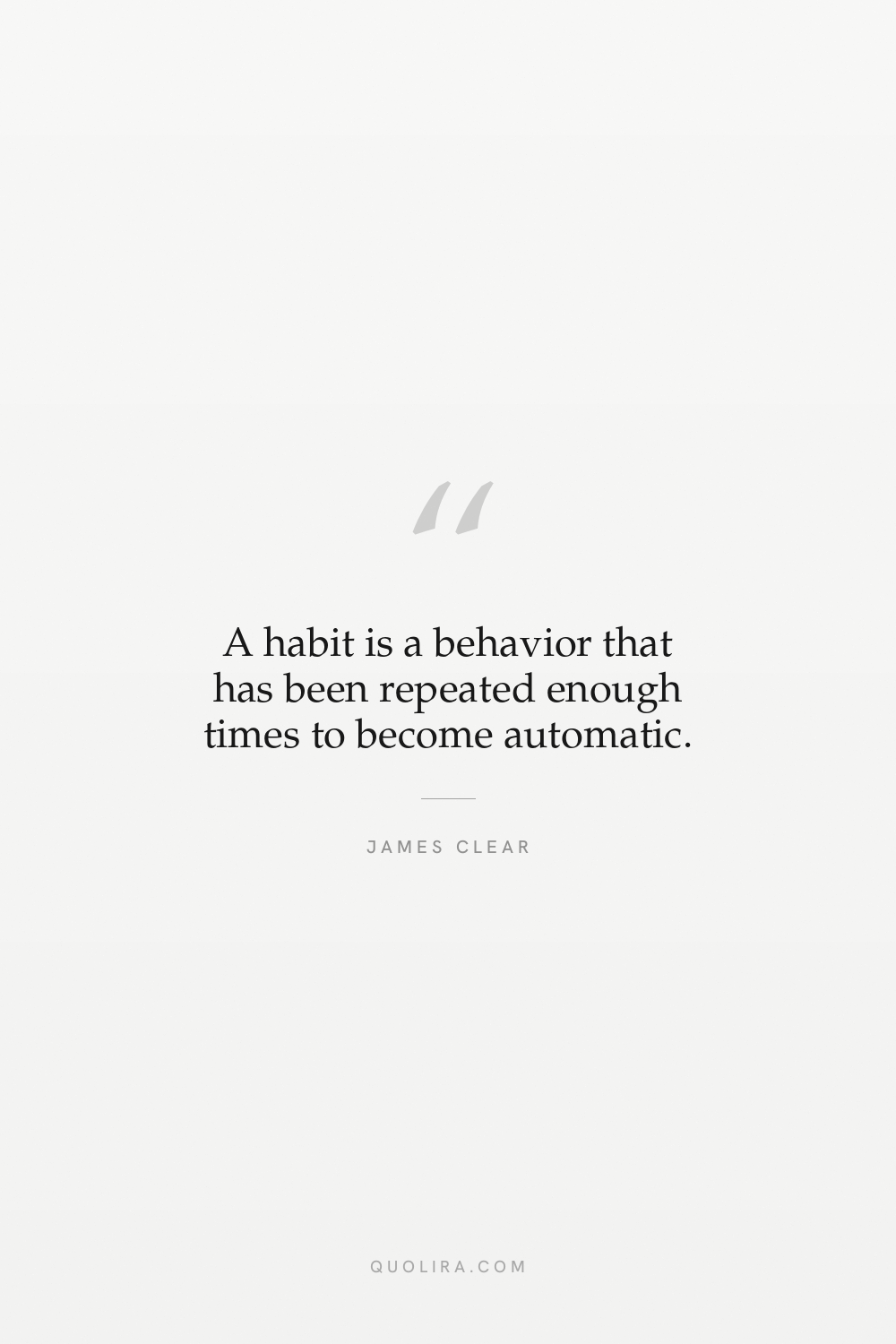
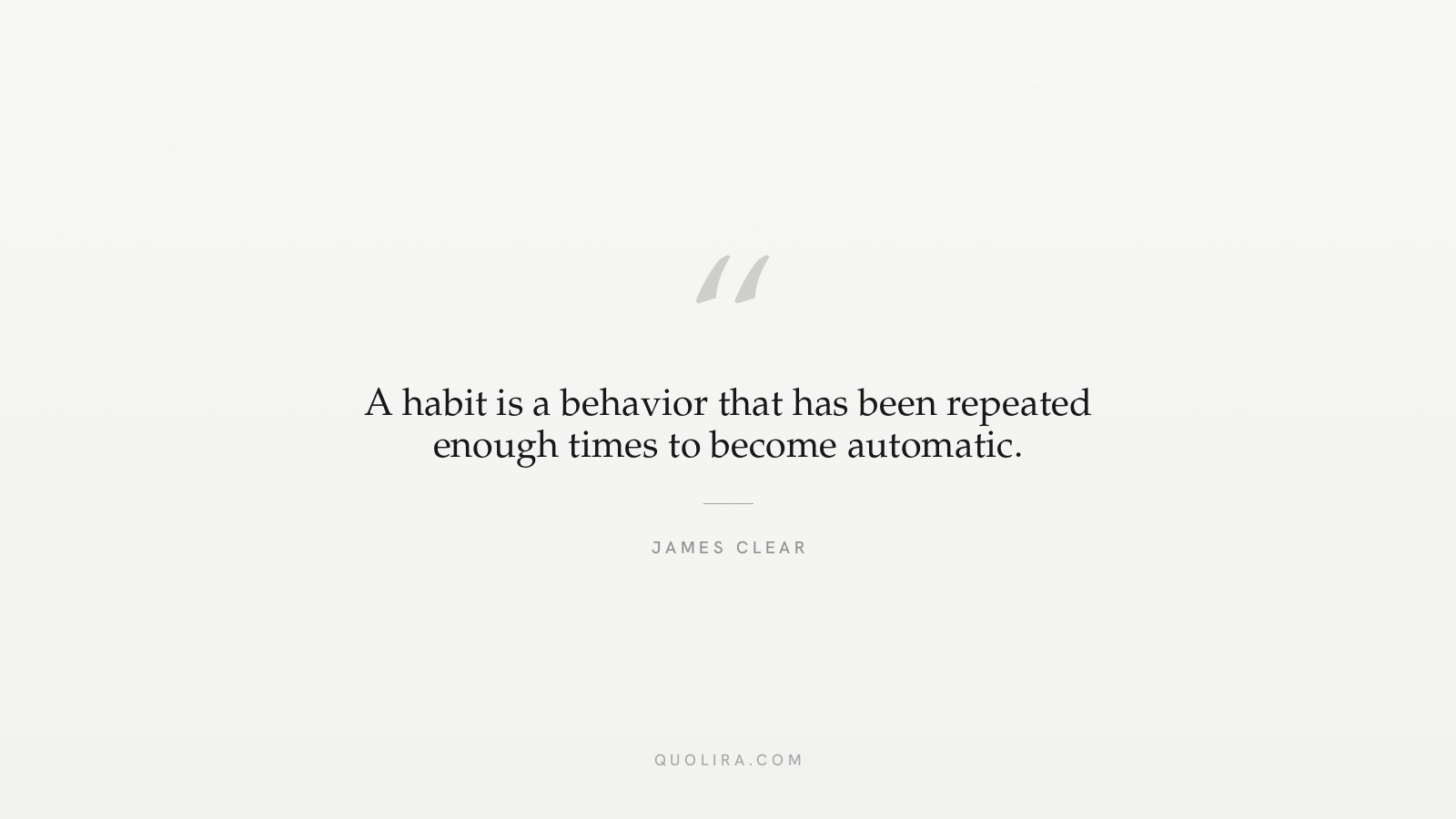
“A habit is a behavior that has been repeated enough times to become automatic.”
James Clear · Atomic Habits, Chapter 3: How to Build Better Habits in 4 Simple Steps
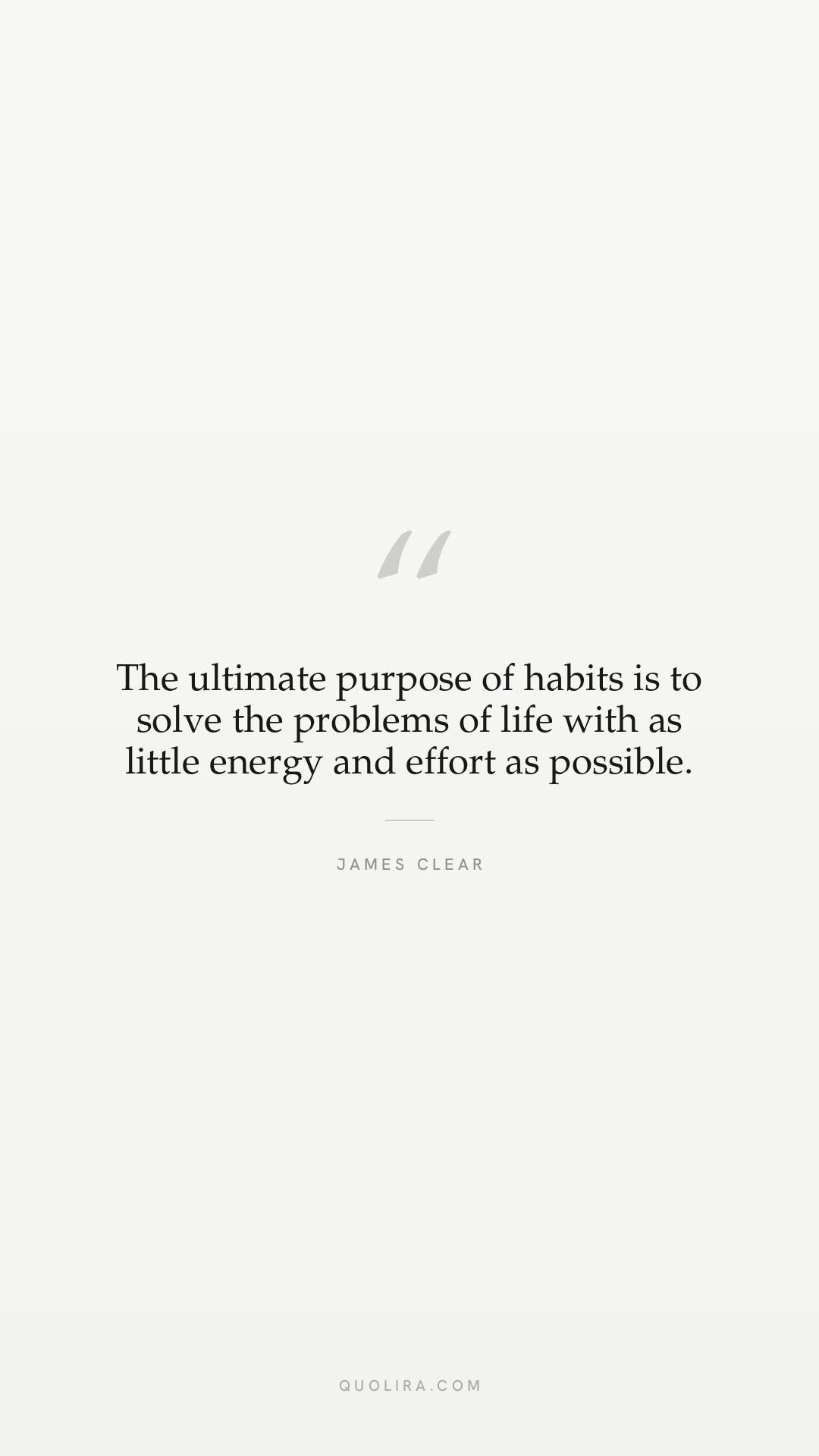
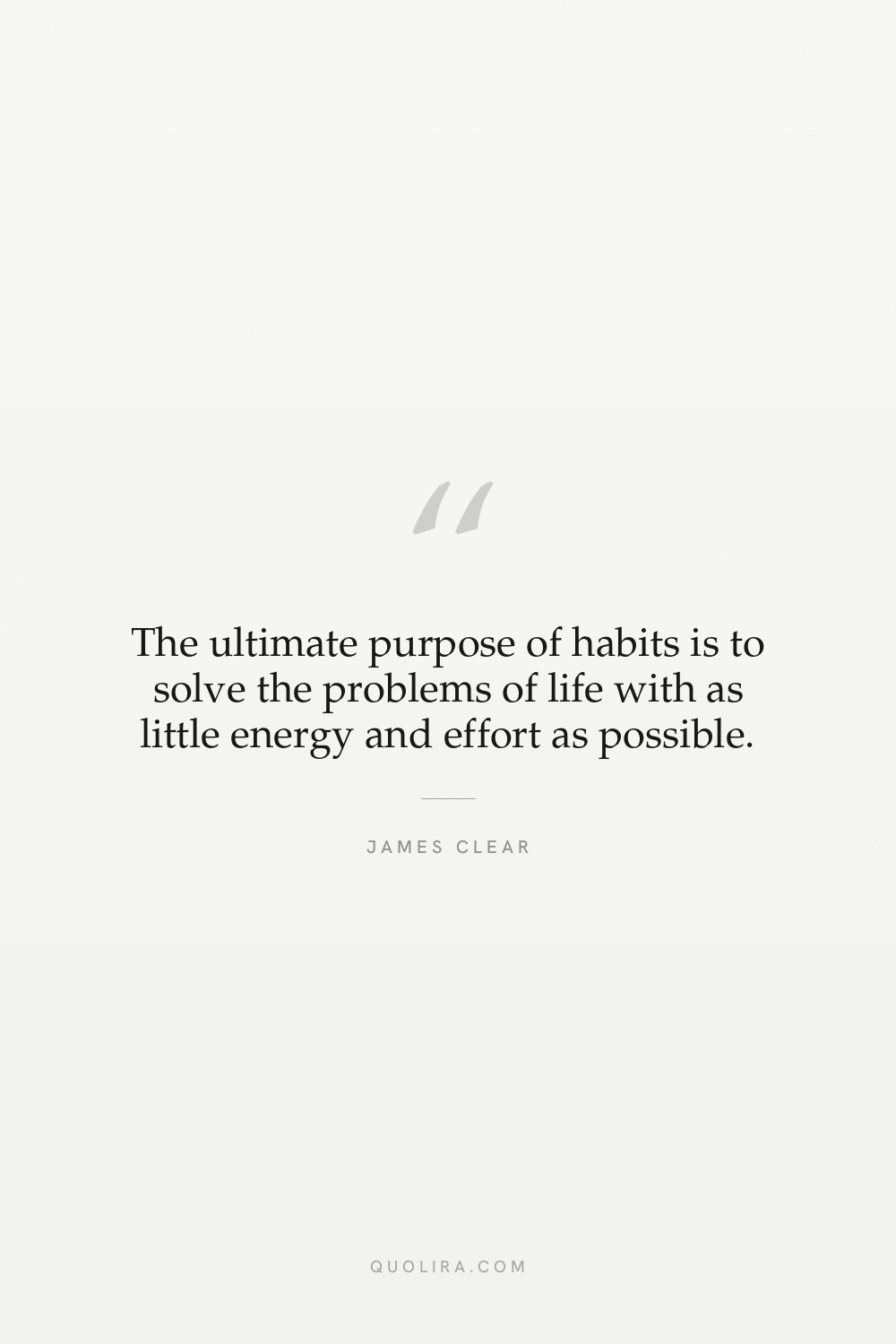
“The ultimate purpose of habits is to solve the problems of life with as little energy and effort as possible.”
James Clear · Atomic Habits, Chapter 3: How to Build Better Habits in 4 Simple Steps
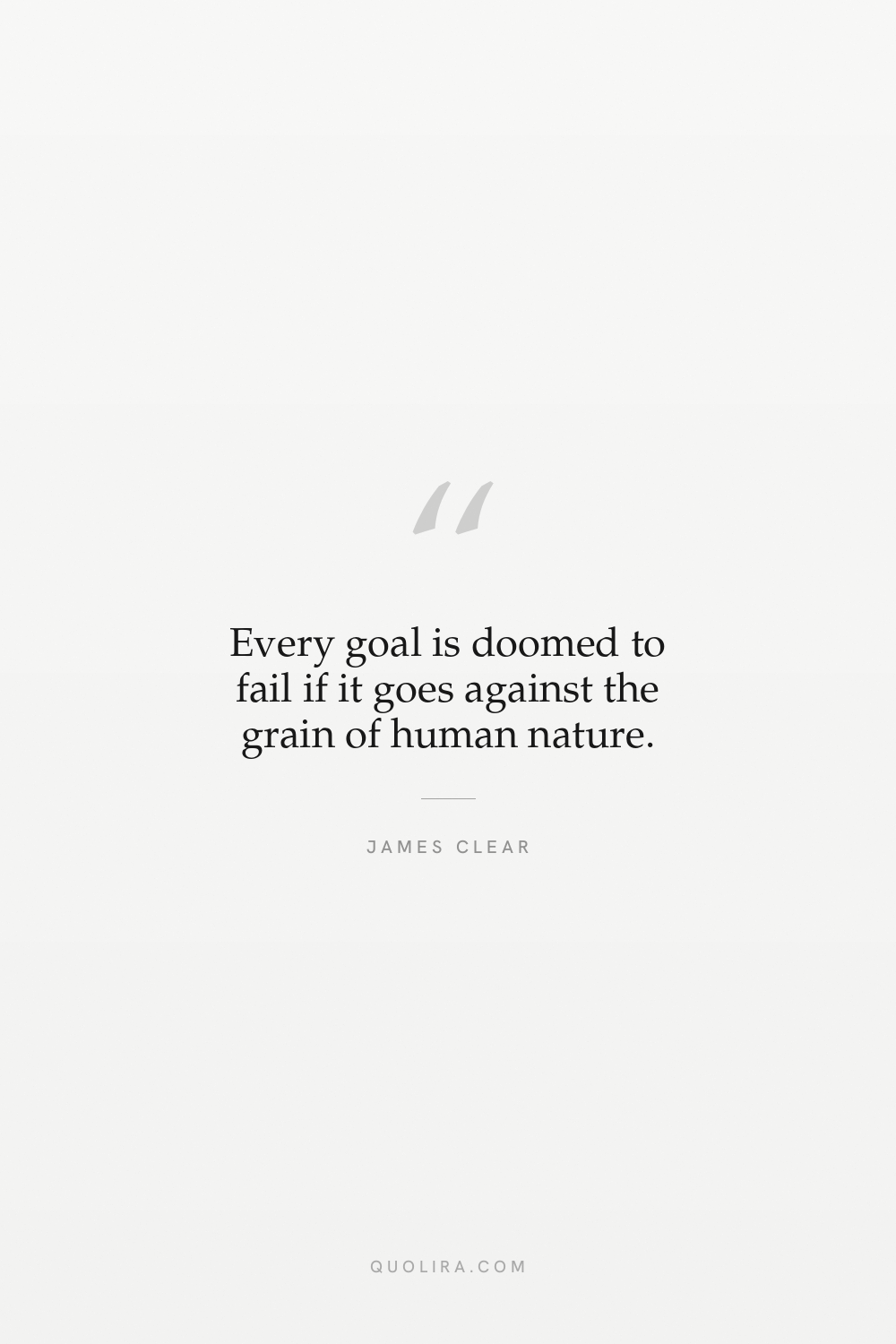
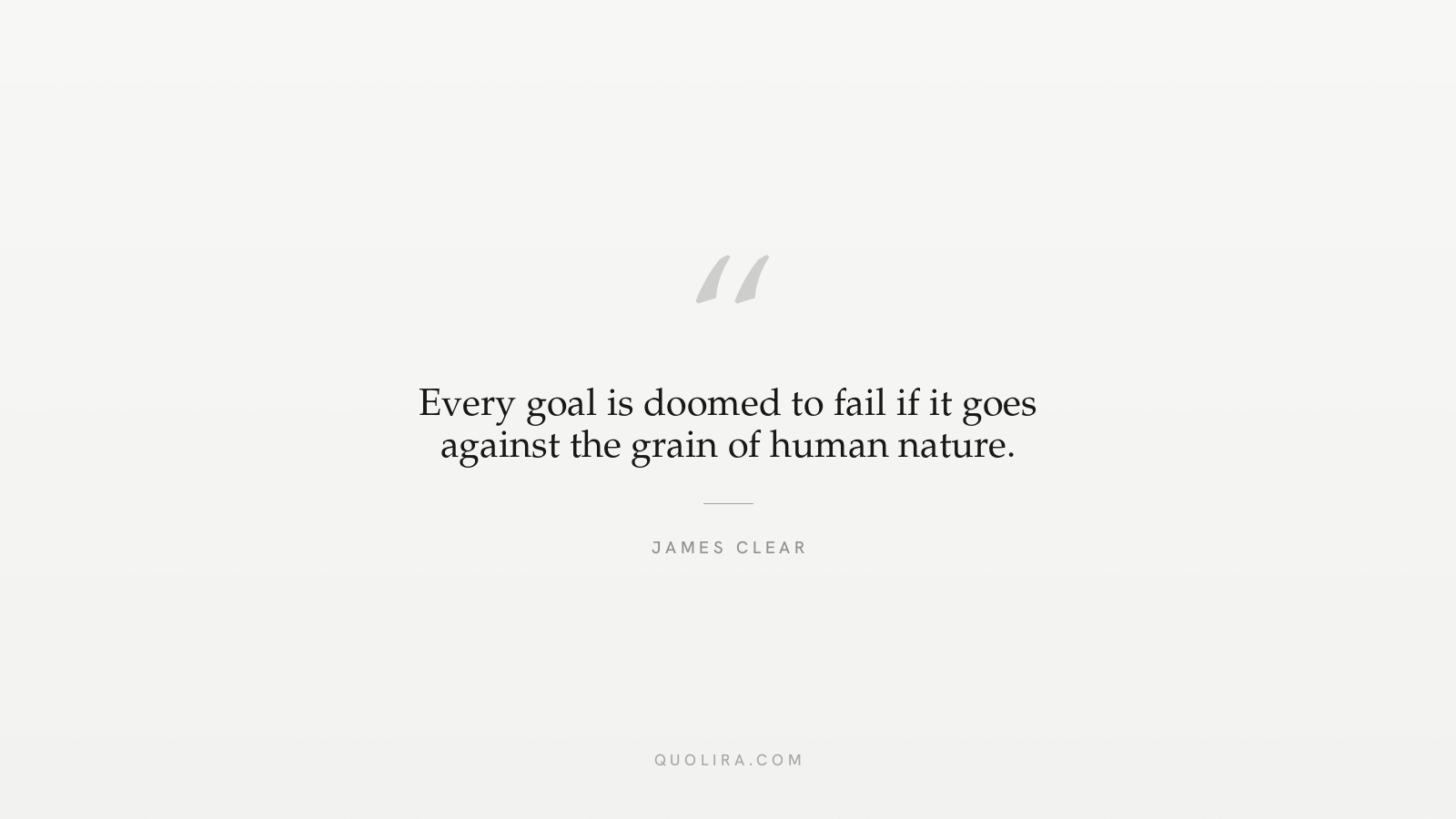
“Every goal is doomed to fail if it goes against the grain of human nature.”
James Clear · Atomic Habits, Chapter 3: How to Build Better Habits in 4 Simple Steps
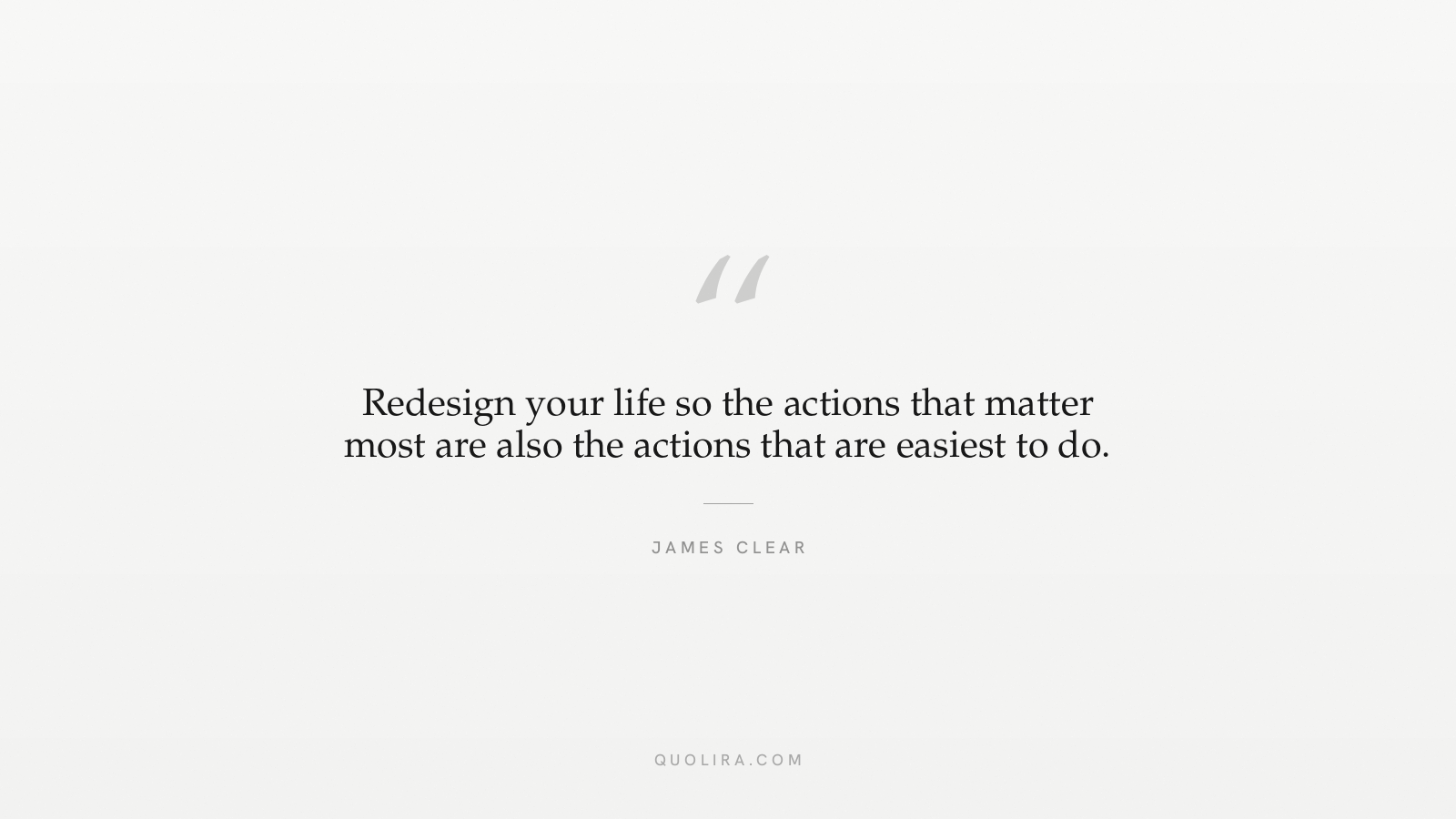
“Redesign your life so the actions that matter most are also the actions that are easiest to do.”
James Clear · Atomic Habits, Chapter 12: The Law of Least Effort
“The greater the friction, the less likely the habit.”
James Clear · Atomic Habits, Chapter 12: The Law of Least Effort
“Human behavior follows the Law of Least Effort.”
James Clear · Atomic Habits, Chapter 12: The Law of Least Effort
“Your habits are shaped by the systems in your life.”
James Clear · Atomic Habits, Chapter 3: How to Build Better Habits in 4 Simple Steps