“Your habits are shaped by the systems in your life.”
James Clear · Atomic Habits, Chapter 3: How to Build Better Habits in 4 Simple Steps
 quolira
.com
James Clear said it, in Atomic Habits, Chapter 12: The Law of Least Effort.
Clear names this principle in Chapter 12 and says we gravitate toward whatever takes the least work. Use it to your advantage by making the good option the easiest one on the menu.
From the collection: 25 Atomic Habits Quotes That Show How Small Daily Actions Build Who You Are · More James Clear quotes
The quote means that people usually take the path that requires the least effort available to them. When two options can achieve a similar result, the easier one tends to win out. This tendency influences both good habits and bad ones.
The statement appears in Atomic Habits, in Chapter 12, which is devoted to what James Clear calls the Law of Least Effort. Clear argues that human beings are wired to conserve energy, so behavior naturally drifts toward whatever demands the smallest amount of work. This is not a flaw in character but a feature of how people make decisions under limited attention. The chapter suggests that anyone hoping to build a new habit should make the desired action as simple as possible, while making unwanted actions require more steps. Understanding this principle helps explain why some routines stick and others quietly disappear.
James Clear is an author and speaker known for writing about habits, decision making, and personal growth. His book Atomic Habits is the source of this passage and has become one of his most widely read works. Clear focuses on turning research from psychology and behavioral science into practical ideas that readers can apply to daily life. His writing is generally concerned with the small, repeatable actions that shape a person over time.
“Your habits are shaped by the systems in your life.”
James Clear · Atomic Habits, Chapter 3: How to Build Better Habits in 4 Simple Steps
“People often choose products not because of what they are, but because of where they are.”
James Clear · Atomic Habits, Chapter 6: Motivation Is Overrated; Environment Often Matters More
“Every habit is context dependent.”
James Clear · Atomic Habits, Chapter 6: Motivation Is Overrated; Environment Often Matters More
“Environment is the invisible hand that shapes human behavior.”
James Clear · Atomic Habits, Chapter 6: Motivation Is Overrated; Environment Often Matters More
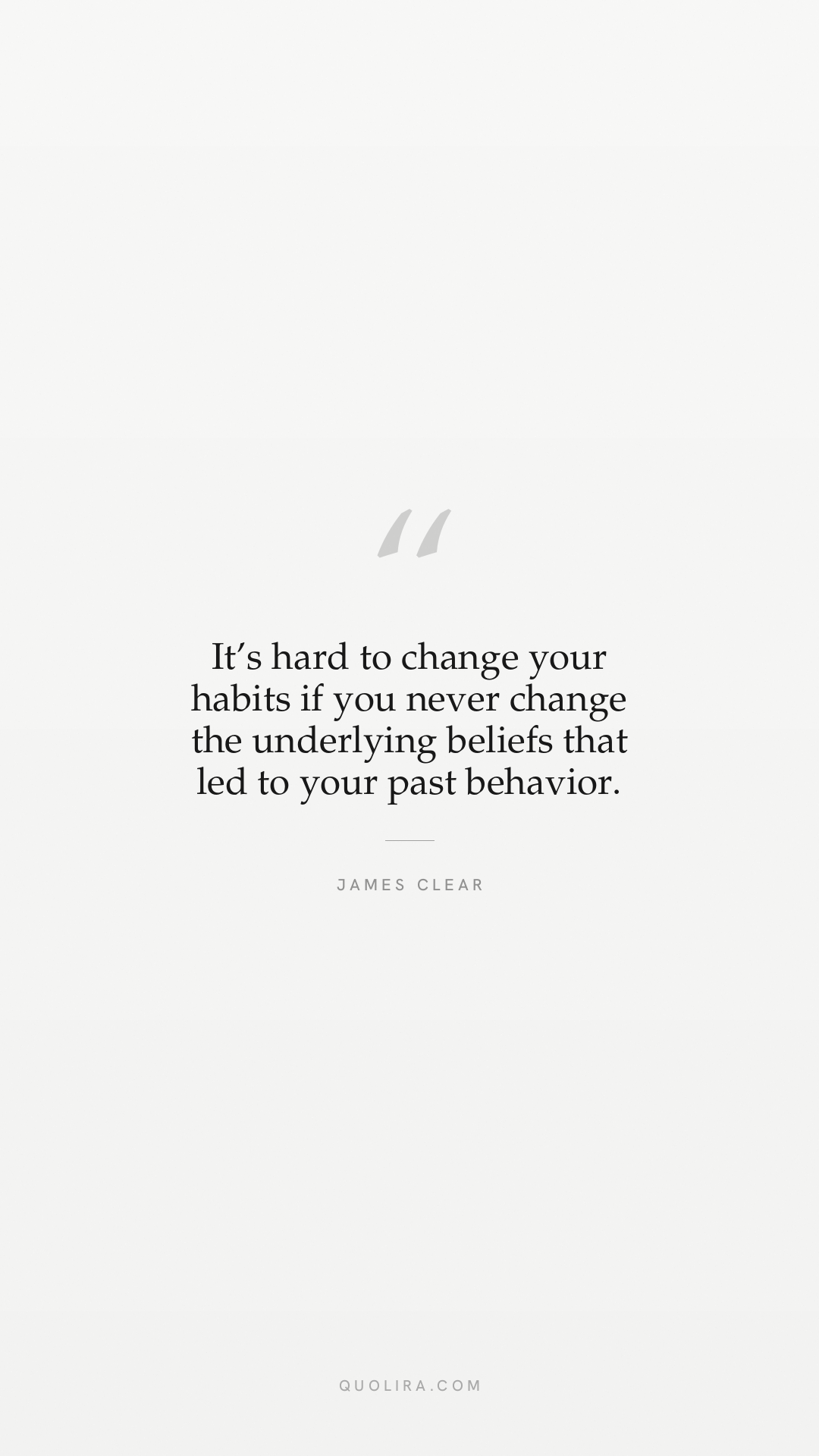
“It's hard to change your habits if you never change the underlying beliefs that led to your past behavior.”
James Clear · Atomic Habits, Chapter 2: How Your Habits Shape Your Identity (and Vice Versa)
“Small habits can make a meaningful difference by providing evidence of a new identity.”
James Clear · Atomic Habits, Chapter 2: How Your Habits Shape Your Identity (and Vice Versa)
“Behavior that is incongruent with the self will not last.”
James Clear · Atomic Habits, Chapter 2: How Your Habits Shape Your Identity (and Vice Versa)
“Each time you start a workout, you are an athlete.”
James Clear · Atomic Habits, Chapter 2: How Your Habits Shape Your Identity (and Vice Versa)
“Each time you practice the violin, you are a musician.”
James Clear · Atomic Habits, Chapter 2: How Your Habits Shape Your Identity (and Vice Versa)
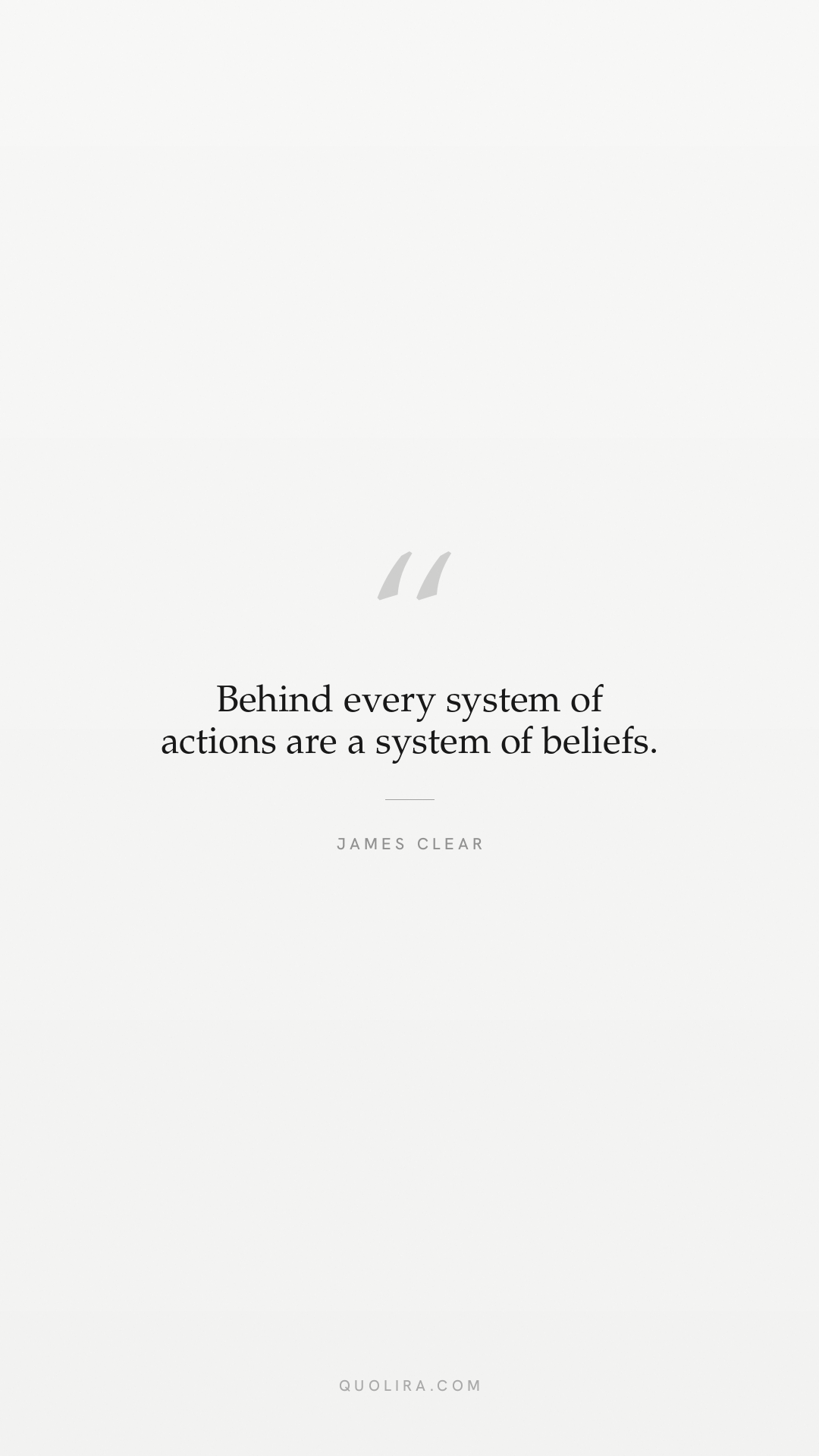
“Behind every system of actions are a system of beliefs.”
James Clear · Atomic Habits, Chapter 2: How Your Habits Shape Your Identity (and Vice Versa)
“Success is not a goal to reach or a finish line to cross. It is a system to improve, an endless process to refine.”
James Clear · Atomic Habits, Conclusion: The Secret to Results That Last
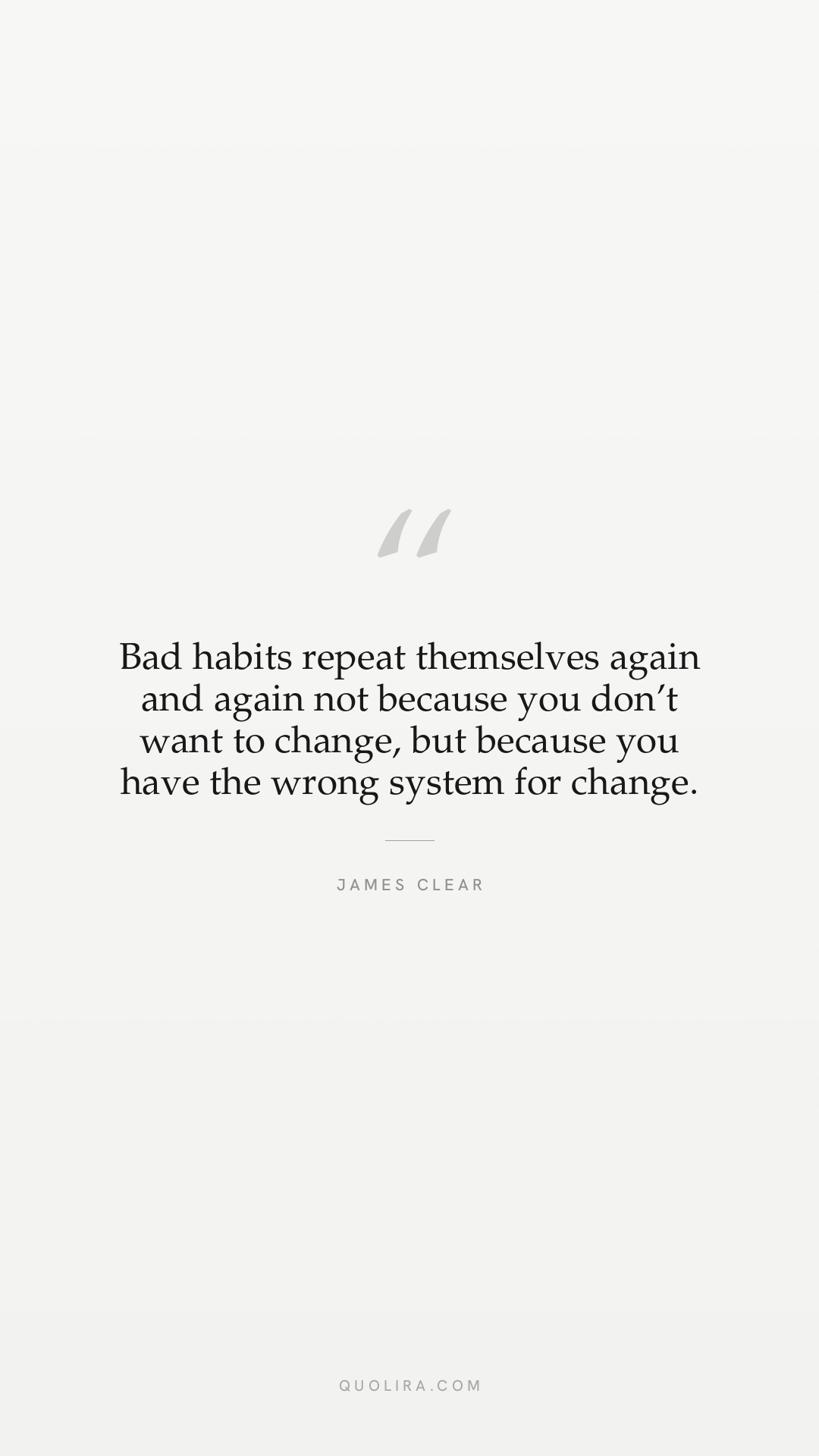
“Bad habits repeat themselves again and again not because you don't want to change, but because you have the wrong system for change.”
James Clear · Atomic Habits, Chapter 1: The Surprising Power of Atomic Habits