The Mountain Is You: Why Your Biggest Obstacle Lives Inside Your Pattern
Brianna Wiest's argument that your own repeated pattern is the real obstacle, and how to stop blaming outside circumstances.
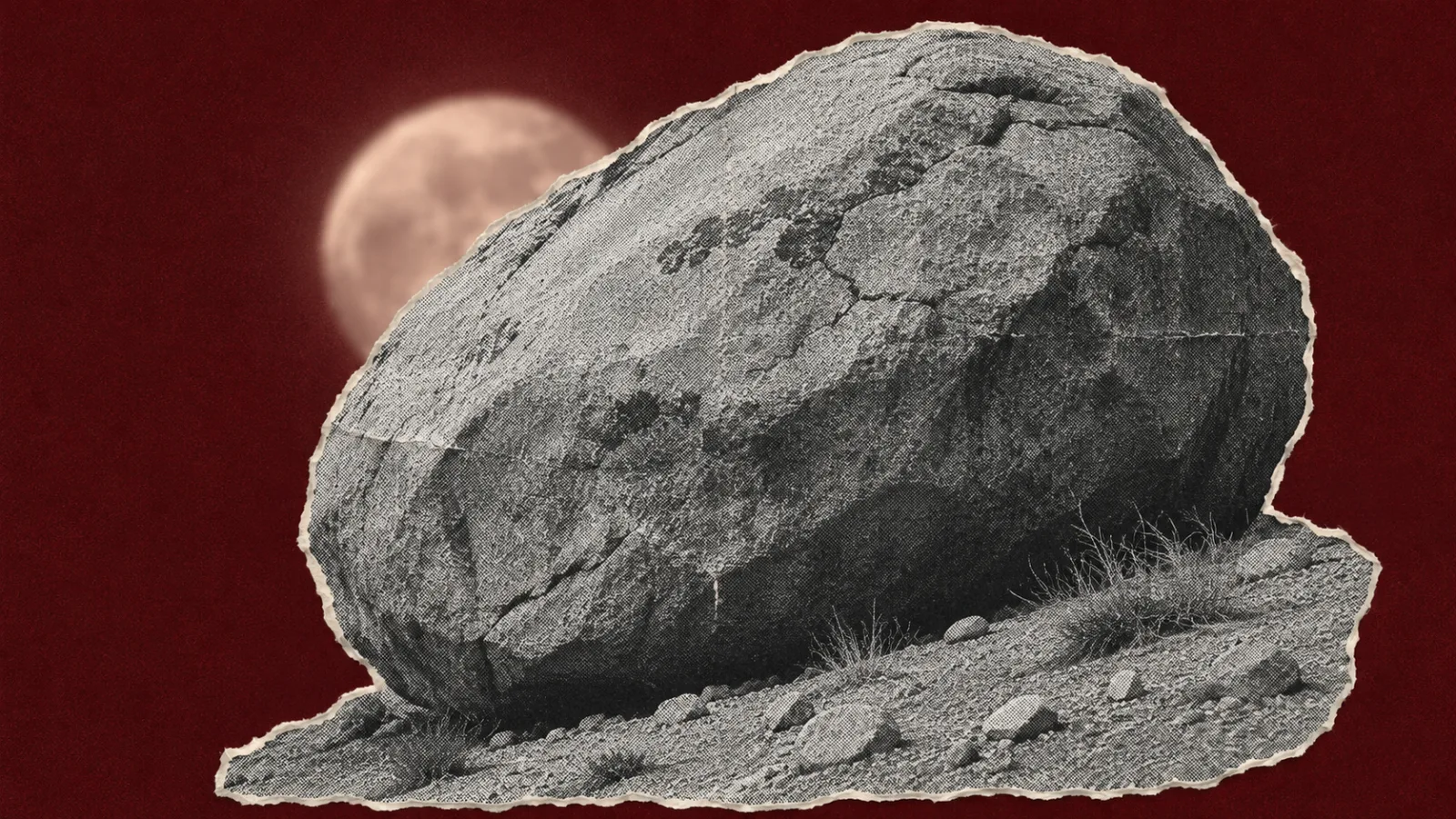
The Mountain Is You is Brianna Wiest's idea, from her 2020 book, that the thing standing between you and your goals is usually a pattern you run yourself. The phrase sounds like a slogan, but the book uses it as a diagnosis. When you keep closing the gap between where you are and where you want to be, only to hit the same wall, self-sabotage is probably doing the work. Wiest argues that the wall sits inside the pattern itself, protecting an unmet need. That claim is why the idea hits so hard for anyone who has blamed circumstances for years.
There is nothing holding you back in life more than yourself.
The Mountain Is You, in plain terms
Wiest's core claim is blunt. If there's an ongoing gap between where you are and where you want to be, and your efforts keep running into your own resistance, self-sabotage is almost always at work. The mountain in front of you is a pattern you keep rebuilding, usually without noticing.
There is nothing holding you back in life more than yourself.
That line opens Chapter 1, which carries the book's title. It sounds like a scolding, and I'll admit it stung when I first read it. But the idea is narrower than it looks. Wiest is describing a logic behind your resistance, and you can learn that logic.
Where the idea comes from
The book came out in 2020, and Wiest builds it on a long line of psychology. She tells the story of Carl Jung, who as a schoolboy hit his head and then began having fainting spells. Jung disliked school. Wiest reads those fainting spells as an unconscious way out of a room where he felt miserable. Jung later described neuroses as substitutes for legitimate suffering, and Wiest uses that idea to argue that a problem you can't stop may be standing in for a need you haven't admitted.
She also borrows from Gay Hendricks, whose 2009 book The Big Leap introduced the idea of an upper limit, a tolerance for how good life can feel before we pull back. Wiest's version is that we keep returning to what we already know, even when we think we're chasing happiness. That's the mechanism underneath the mountain. Our brains prefer the familiar, and the familiar includes the wall.
The title itself is a chapter heading, and the chapter does a neat trick. It moves the obstacle from the world to the person standing in front of it. That move is where most of the book's discomfort lives.
What it looks like in everyday life
The most useful parts of the book are the examples. Wiest describes self-sabotage in ordinary terms: dwelling on an ex, choosing friends who make you feel like you're in a contest, failing to promote your work well enough, or staying in a town you say you hate.
Take money. Someone who wants financial stability keeps wrecking their own progress. The book's answer is to look at what they were taught about money growing up. If your parents said that rich people are terrible, you'll likely resist having money, whatever your goals say. The fix is rewriting the belief the budget is fighting against, and a budgeting app can't do that part.
Another example hits closer to home for writers. Wiest suggests you may say you want to finish your great book when what you really want is praise. Ambition can be a costume for a need for approval. If that's true, a writing schedule alone won't help, because the schedule doesn't feed the need.
The pessimist is the third example. Some people only know how to connect with others by complaining. The negativity is often the only tool they've been given for closeness. You can't stop the complaining by willpower alone, because the complaining is still doing its job.
Why blaming circumstances keeps you stuck
Blaming the economy, a boss, or bad timing feels like relief. It's fast, and it gives you a clear villain. The trouble is that a villain outside you doesn't require any change inside you. The pattern follows you into the next job, which is why the same problem can show up in three different workplaces.
Wiest doesn't deny that conditions are real. The job market may be tight, and a bad boss is still a bad boss. What the book asks is whether your reaction to those conditions repeats something you've done before. If it does, the circumstances are only the setting for a pattern that was already running.
Here's where the book gets practical. Wiest separates core commitments from core needs. A core commitment is what your behavior keeps protecting, such as staying in control. The core need is its opposite, which in that case is trust. The rule she offers is that the less you feed the core need, the louder the symptoms get. So when a plan keeps collapsing, start by asking what you're not getting.
Blaming yourself is no fix either. Being mean to yourself can be a defense, a way of numbing the fear that someone else might say the same thing first. You end up as your own bully, and the bully keeps you from the thing you wanted in the first place.
A worked example
Here's how the idea might look for a hypothetical writer. Call her Dana. She has started three novels and finished none. Each time, she stalls around the third chapter, right when she'd have to share pages with someone.
Dana names the goal: finish a complete draft by spring. She writes down the exact point where she freezes, which is after feedback arrives. Then she looks at her other struggles. She notices she also starts job applications with energy and then goes quiet before the interview. The root repeats across her work life, so the pattern isn't about the novels.
Next she asks what the freeze protects her from. The answer she writes is "being judged and getting it wrong." Her core need becomes safety from criticism, and the pattern is keeping her away from criticism by keeping her away from finished work.
Her small test is modest. Each week she sends one finished scene to one trusted friend and records what happened. She doesn't need to finish the novel to start learning. The point is to give the new belief, that feedback is survivable, a chance to show up in real life.
Common misunderstandings
Several readers take the idea too far, and a few of those mistakes keep people stuck.
The first is treating self-sabotage as proof you're secretly bad at your goals. The pattern usually grew to protect you from something real. Judging it as a character flaw tends to bring back the self-blame Wiest warns against.
The second is expecting insight alone to end the pattern. Understanding the root helps, but the pattern is a habit. It loosens through repeated small actions that test a new belief, the same way any habit changes.
The third is cutting out every behavior that looks like sabotage. Rest, boundaries, and saying no are not always sabotage. Before you judge a behavior, ask what it's protecting. Some protections are worth keeping.
When a book isn't enough
A self-help book can help you notice patterns, but it can't treat depression, anxiety, or trauma. If a pattern keeps you from work, relationships, or basic daily life, or if it comes with persistent hopelessness, a licensed therapist is the right next step. Working on a pattern with a professional can be faster and safer than doing it alone with a book open on your desk.
How to practice it
Keep the process small. You don't need to audit your whole life in one afternoon.
- Name the goal you keep failing to reach, and write down the exact point where you usually quit or freeze.
- Look for the same root cause across two or three of your struggles. When the root repeats, you've found a core commitment.
- Ask what need that pattern is meeting, and write the opposite of it down as your core need.
- Trace the belief behind the pattern to its source, such as what you heard about money, health, or success at home.
- Pick one small action that tests a new belief, and repeat it daily for two weeks.
- When a strong feeling shows up, check whether it's about what's happening now or about a future you're imagining.
If you want more of the book's language before you start, a list of quotes from The Mountain Is You that expose self-sabotage gives you a handful of lines to test against your own week. For the bigger picture of moving obstacles, 14 quotes about moving mountains is a useful companion.
How it differs from the closest related ideas
Procrastination is a delay you can see. Self-sabotage is a pattern with a hidden payoff, and you can keep it up for years without feeling like you're avoiding anything. The payoff, whether that's comfort, safety, or approval, is what keeps the loop running. Procrastination asks for a push. Self-sabotage asks you to find out what the delay is buying you.
Accountability and self-blame look alike from a distance, but they point in different directions. Accountability asks what you can change this week. Self-blame asks you to punish yourself for the past, and Wiest treats that punishment as its own form of sabotage. The useful move is to read the pattern like a clue.
The idea also has a cousin in the beginner's mindset. Wiest notes that unfamiliar things feel uncomfortable even when they're good for us. Shoshin, the Zen idea of a beginner's mind, offers a way to meet that discomfort with curiosity instead of alarm. The two ideas pull in the same direction: treat the strange feeling as information, not as proof you're on the wrong path.
Sources
- The Mountain Is You by Brianna Wiest (2020)
- The Mountain Is You, Brianna Wiest
The mountain shifts when you stop blaming the terrain and start studying the pattern you walk every day.
Frequently asked questions
What does the mountain is you mean?
Who wrote The Mountain Is You?
How is self-sabotage different from procrastination?
How do I stop blaming circumstances for my goals?
Does the mountain is you idea mean everything is my fault?
Keep reading

16 Quotes About Regret and the Things We Wish We Had Done
A short list of the lines people keep returning to when they look back and wish they had moved sooner.
Ichigo Ichie Meaning: The Japanese Idea That Every Meeting Happens Once
A tea ceremony phrase that asks you to notice the people in front of you while they are still there.
25 Quotes About Loneliness and Being Alone That Still Sting
Real lines from poets, philosophers and novelists on the ache of being alone, and the quiet that sometimes follows it.