“Our language has wisely sensed the two sides of being alone. It has created the word loneliness to express the pain of being alone. And it has created the word solitude to express the glory of being alone.”
Paul Tillich · The Eternal Now, 1963
 quolira
.com
Ursula K. Le Guin said it, in Solitude, Fantasy & Science Fiction, 1994.
Le Guin's definition is cool and precise, almost like a lab note. For her, solitude is a condition: a self that does not need anyone else to make it whole. It's a useful test for whether your time alone is restoring you or just keeping you apart.
From the collection: 25 Quotes About Loneliness and Being Alone That Still Sting · More Ursula K. Le Guin quotes
Le Guin describes solitude as the absence of other people together with a self that is complete enough to need nothing from them. The point is not emptiness but wholeness, a state in which a person is at ease with their own company.
The line comes from Le Guin's essay titled Solitude, which appeared in Fantasy & Science Fiction in 1994. In it she separates being alone from loneliness, treating solitude as a condition to be valued rather than a wound to be endured. The essay fits her wider interest in inner life, quiet, and the difference between isolation and self-possession, themes that also appear throughout her fiction.
Ursula K. Le Guin (1929 to 2018) was an American writer best known for science fiction and fantasy, including The Left Hand of Darkness and the Earthsea books. She also wrote poetry, essays, and literary criticism, and she often used imagined societies and worlds to examine real questions about power, gender, and freedom. Her work earned major awards and a readership well beyond genre circles, and she remains one of the most respected American writers of the past century.
“Our language has wisely sensed the two sides of being alone. It has created the word loneliness to express the pain of being alone. And it has created the word solitude to express the glory of being alone.”
Paul Tillich · The Eternal Now, 1963
“Loneliness is the poverty of the self; solitude is the richness of the self.”
May Sarton · Mrs. Stevens Hears the Mermaids Singing, 1965
“We are for the most part more lonely when we go abroad among men than when we stay in our chambers.”
Henry David Thoreau · Walden, 1854
“I love to be alone. I never found the companion that was so companionable as solitude.”
Henry David Thoreau · Walden, 1854
“So lonely 'twas that God himself Scarce seemed there to be.”
Samuel Taylor Coleridge · The Rime of the Ancient Mariner, 1798
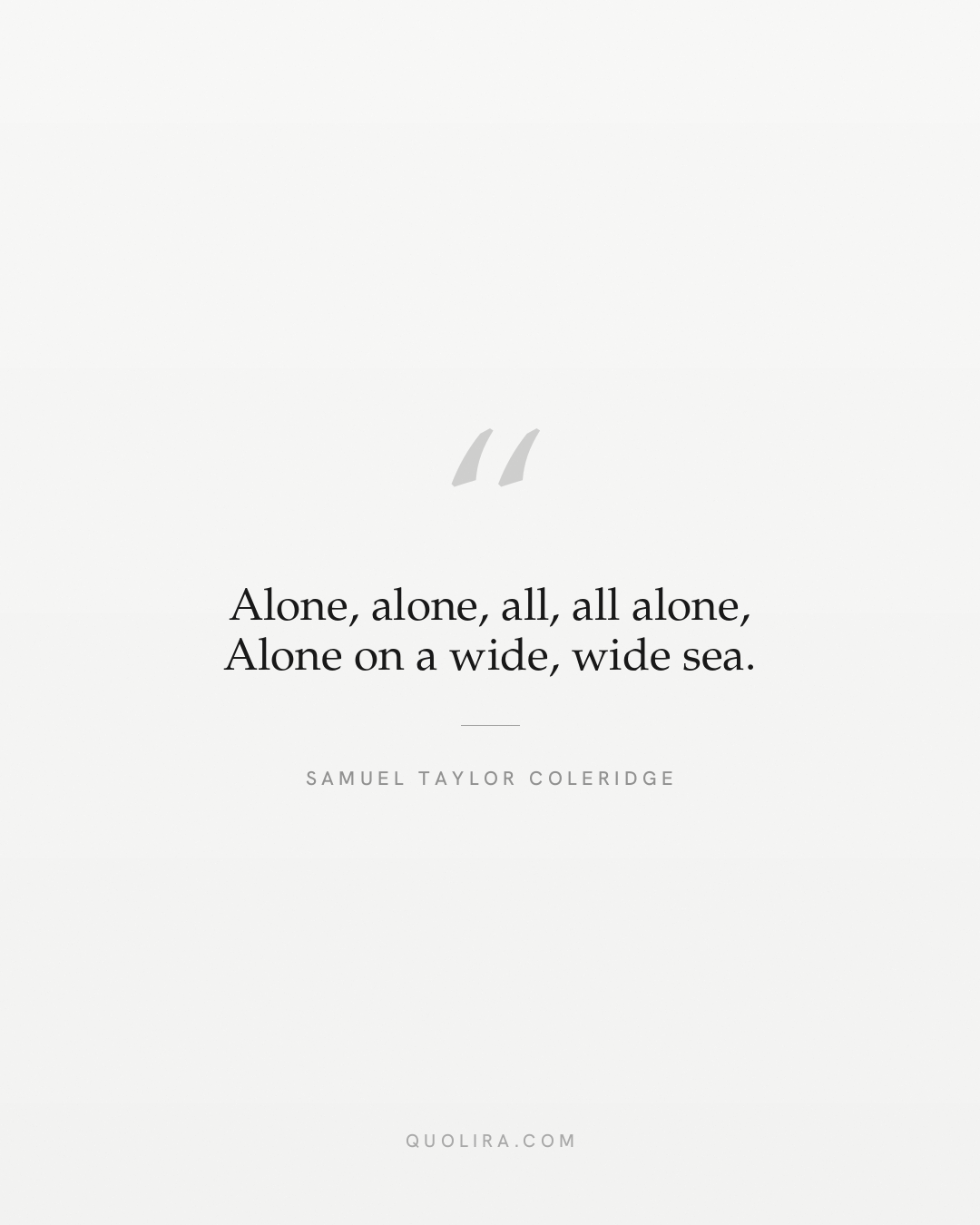
“Alone, alone, all, all alone, Alone on a wide, wide sea.”
Samuel Taylor Coleridge · The Rime of the Ancient Mariner, 1798
“Most days, we'd rather be wrong with the crowd than be right by ourselves.”
James Clear · Atomic Habits, Chapter 9: The Role of Family and Friends in Shaping Your Habits
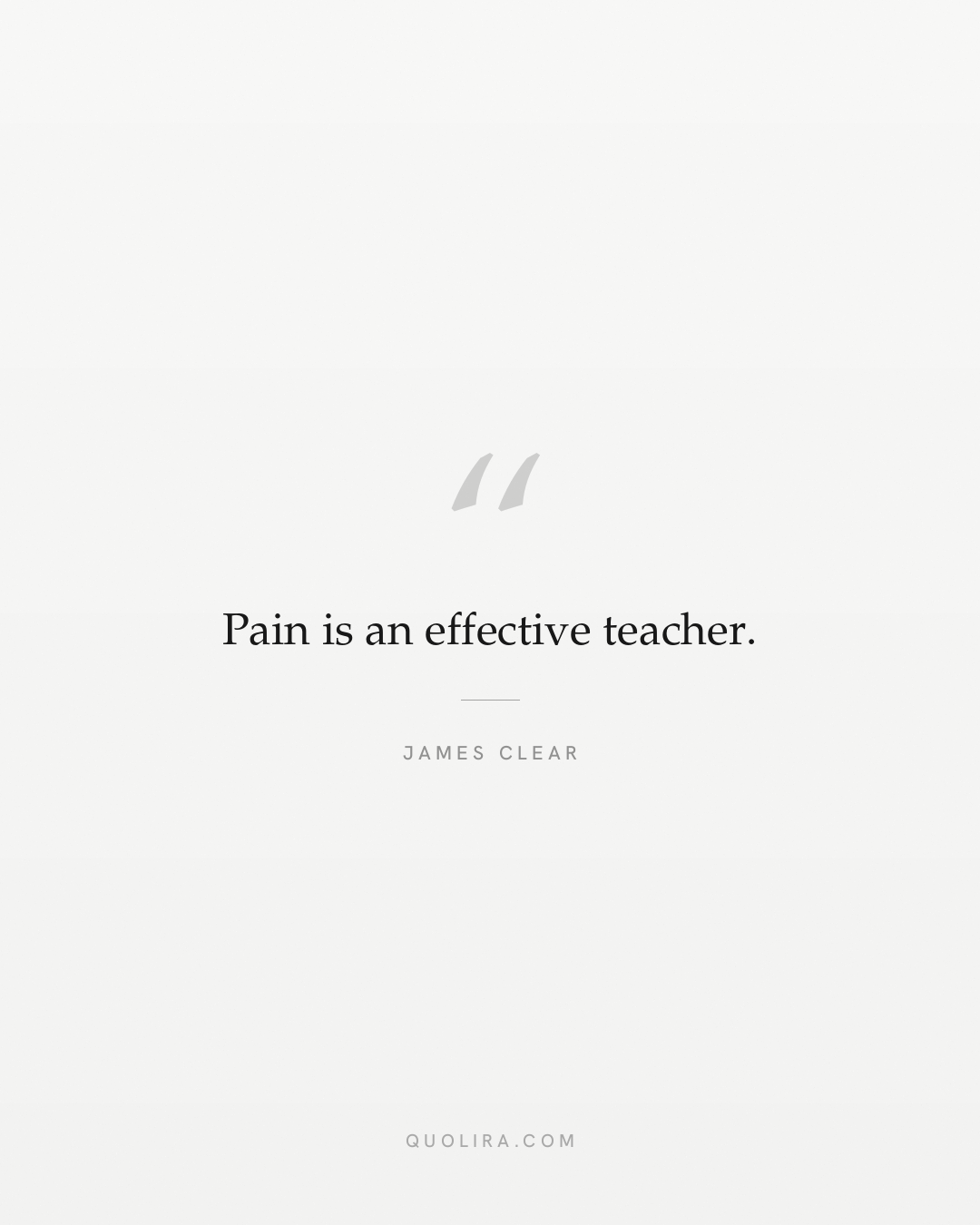
“Pain is an effective teacher.”
James Clear · Atomic Habits, Chapter 17: How an Accountability Partner Can Change Everything
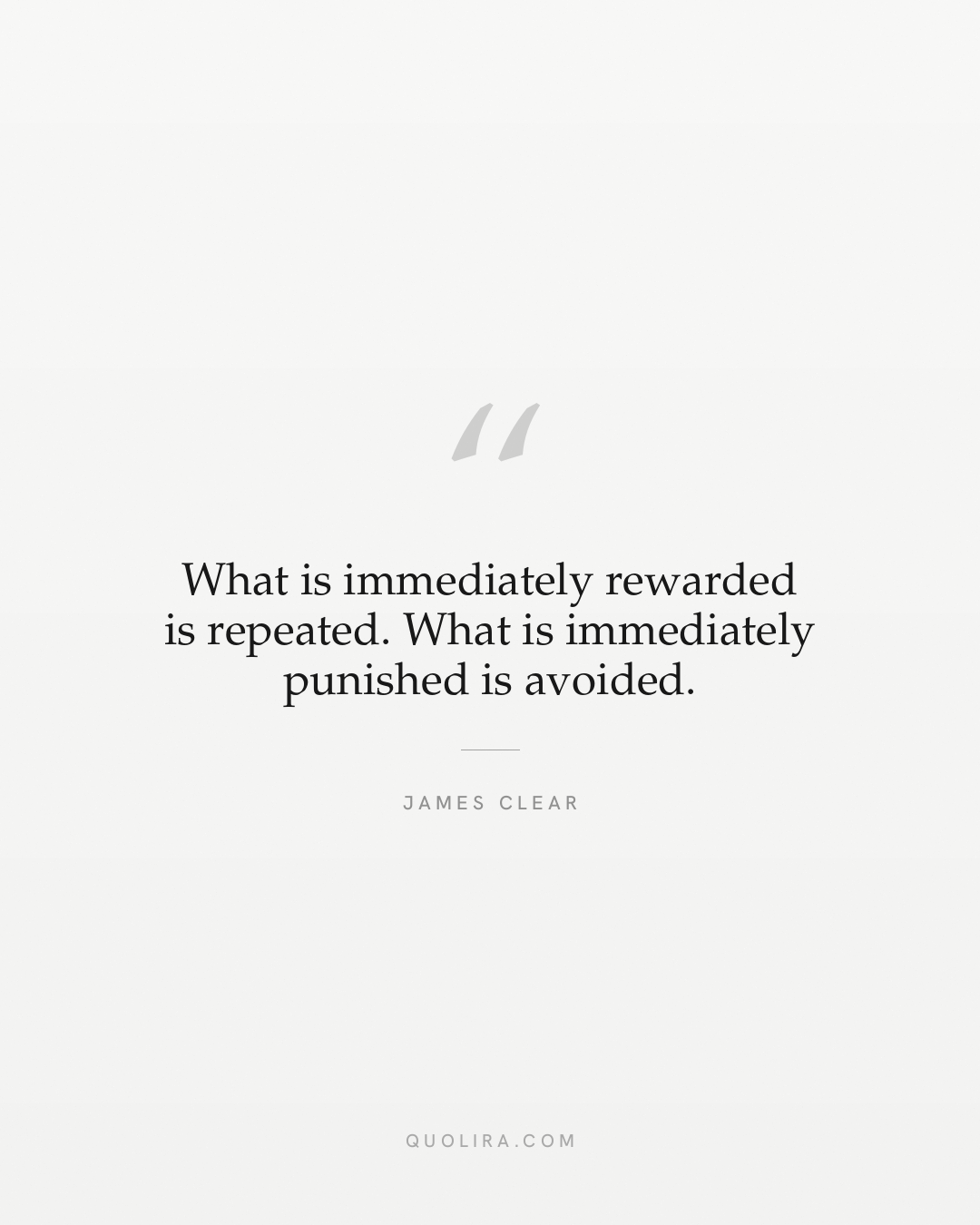
“What is immediately rewarded is repeated. What is immediately punished is avoided.”
James Clear · Atomic Habits, Chapter 15: The Cardinal Rule of Behavior Change
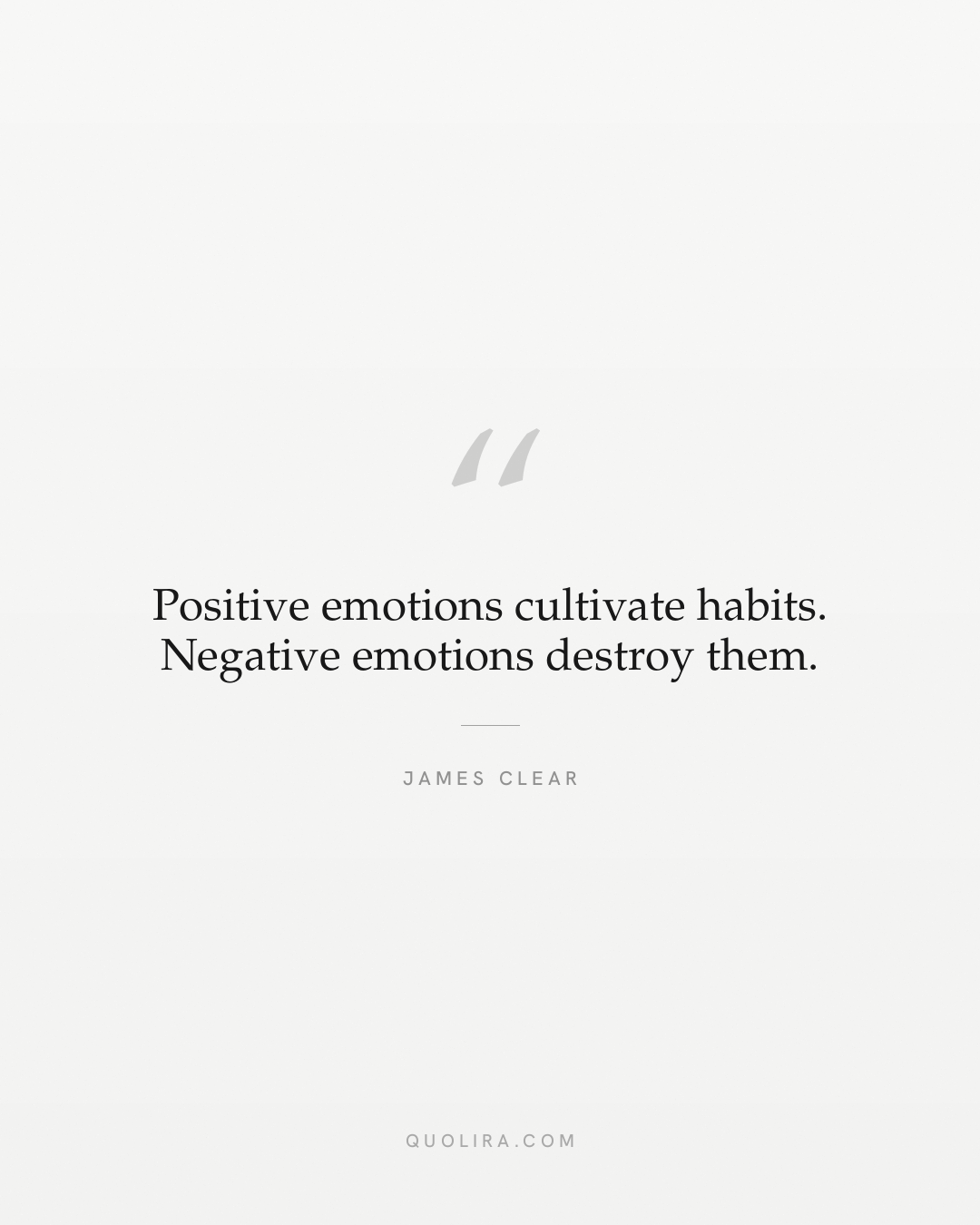
“Positive emotions cultivate habits. Negative emotions destroy them.”
James Clear · Atomic Habits, Chapter 15: The Cardinal Rule of Behavior Change
“A habit is a behavior that has been repeated enough times to become automatic.”
James Clear · Atomic Habits, Chapter 3: How to Build Better Habits in 4 Simple Steps
“The ultimate purpose of habits is to solve the problems of life with as little energy and effort as possible.”
James Clear · Atomic Habits, Chapter 3: How to Build Better Habits in 4 Simple Steps