12 Amor Fati Quotes on Loving Your Fate
Twelve reflective lines about accepting everything life hands you, even the hard parts.

Amor fati quotes cut straight to one idea: love your fate, all of it, not just the good bits. The phrase is Latin for love of fate, and it runs through Stoic philosophy and Nietzsche alike as a way to stop fighting reality. I pulled 12 real, correctly attributed lines below, each with a short note on why it lands.
Amor Fati Quotes from Nietzsche's Own Pen
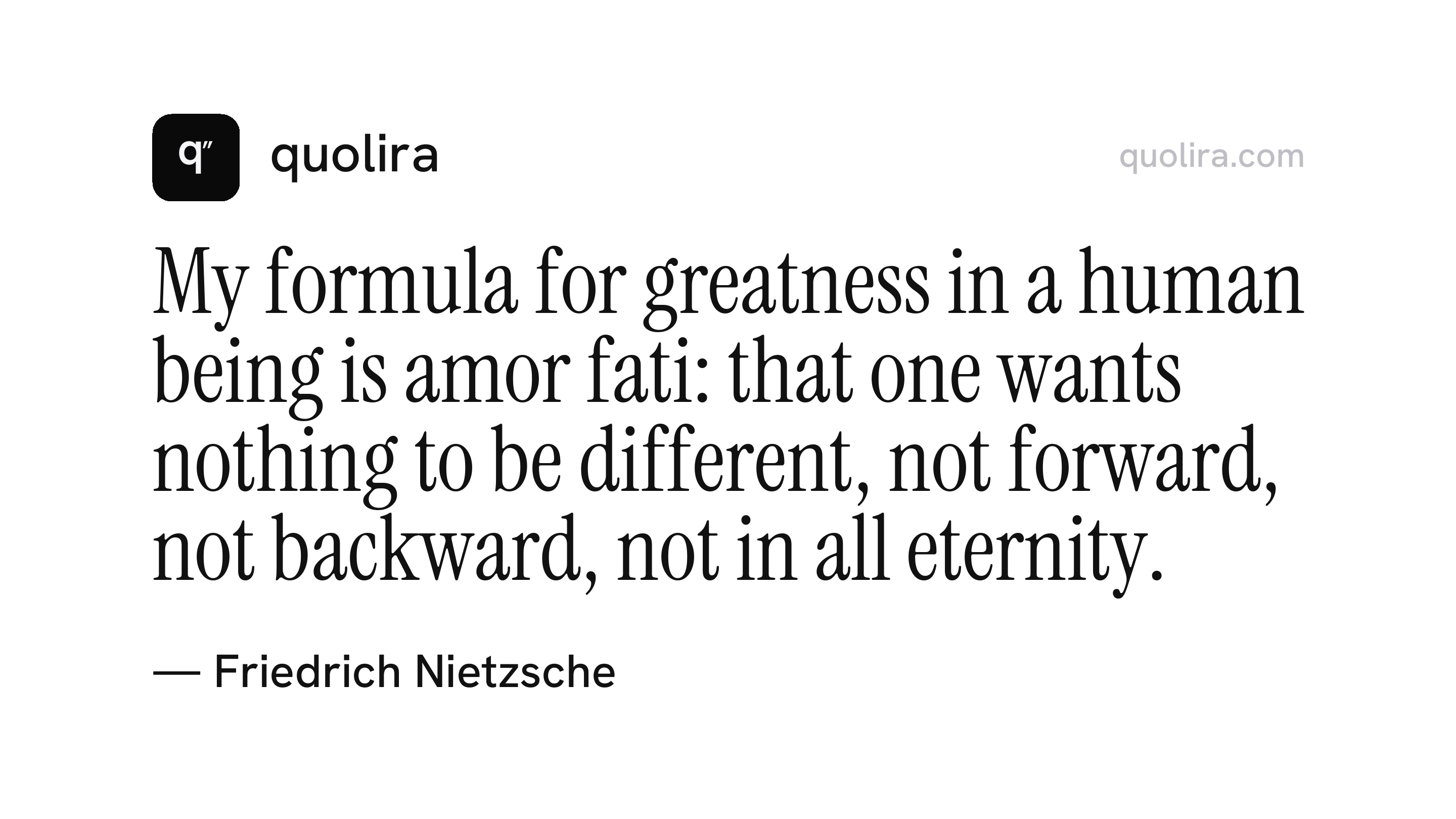
My formula for greatness in a human being is amor fati: that one wants nothing to be different, not forward, not backward, not in all eternity.

I want to learn more and more to see as beautiful what is necessary in things; then I shall be one of those who make things beautiful. Amor fati: let that be my love henceforth!
Friedrich Nietzsche The Gay Science, 1882
Here amor fati is a skill you train, not a mood you're born with. He treats loving the necessary as a craft you slowly get better at.

Amor Fati Quotes on Accepting Events as They Are
Do not seek to have events happen as you want them to, but instead want them to happen as they do happen, and your life will go well.
The Stoic root of amor fati in one sentence. Flip your wanting to match reality, and most of your frustration quietly evaporates.

Accept the things to which fate binds you, and love the people with whom fate brings you together, but do so with all your heart.
Marcus ties acceptance to love, not resignation. The whole heart part is what separates amor fati from just gritting your teeth.

A blazing fire makes flame and brightness out of everything that is thrown into it.
A perfect image for loving your fate: the fire doesn't sort the wood into good and bad, it just burns and gives light. Take whatever comes and turn it into fuel.

Amor Fati Quotes on Fate and Free Will
The willing are led by fate, the reluctant dragged.
Seneca (paraphrasing Cleanthes) makes the case plainly. Fate moves you either way, so you might as well walk instead of being dragged.

Everything that happens is either endurable or not. If it's endurable, then endure it. Stop complaining.
Blunt and a little funny. Marcus cuts through the drama and hands you a simple test for almost anything.
Attribution note: a modern paraphrase of Stoic ideas, not a verbatim line from the Meditations.

Amor Fati Quotes on Mortality and Living Fully
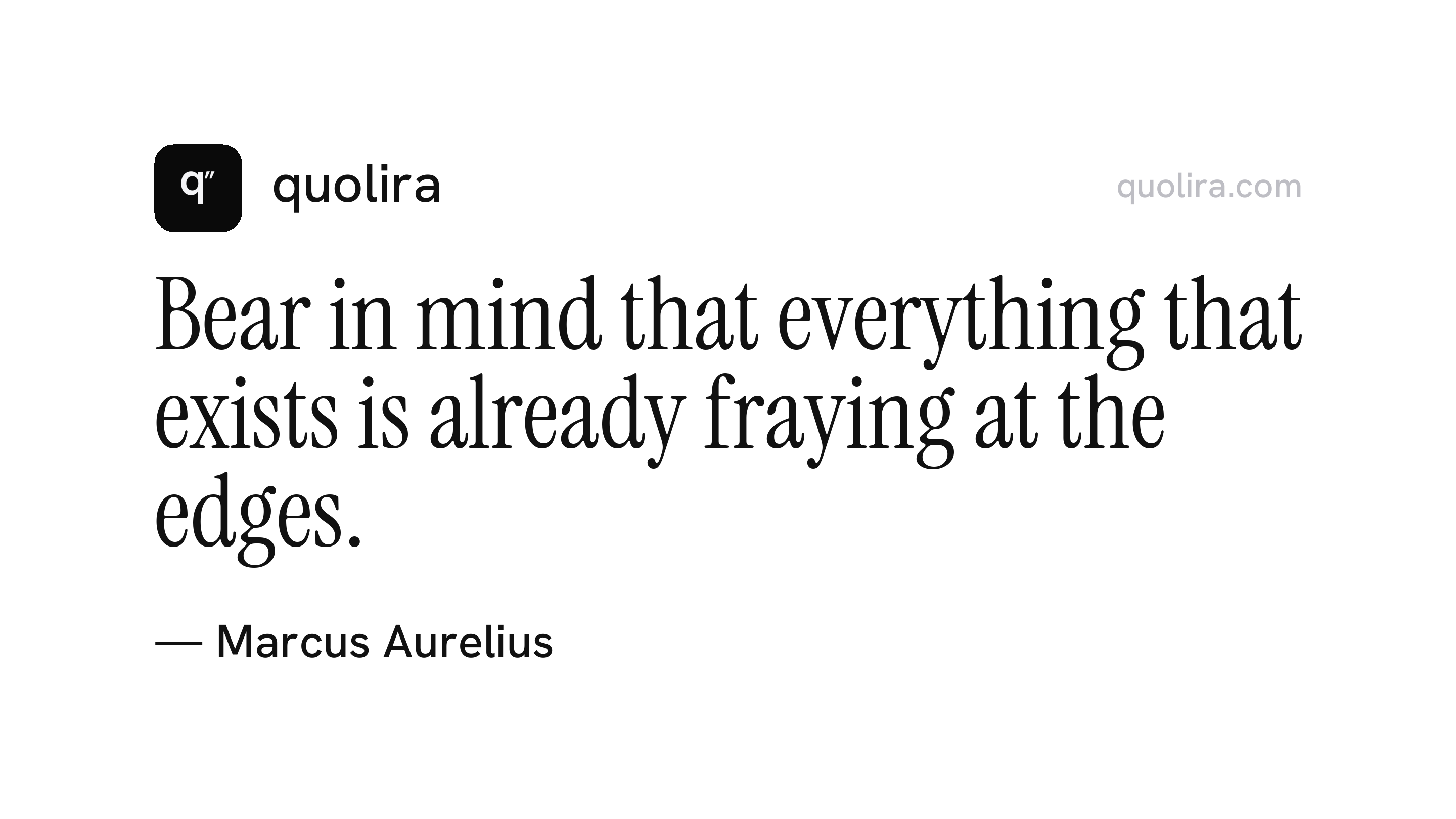
Bear in mind that everything that exists is already fraying at the edges.
Loving your fate is easier when you accept that everything is temporary anyway. Nothing you cling to was ever built to last.

Seek not that the things which happen should happen as you wish; but wish the things which happen to be as they are, and you will have a tranquil flow of life.
A longer version of his most famous idea, and the payoff is right there: tranquility. Amor fati is sold as peace, not effort.

Let each thing you would do, say, or intend, be like that of a dying person.
Death sharpens acceptance. When you remember the clock is running, arguing with your own life starts to feel like a waste.

He who fears death will never do anything worthy of a man who is alive.
Fear of what fate holds keeps people small. Seneca points out that dodging the worst outcome usually means dodging life itself.

Amor Fati Quotes on Turning Obstacles Into Growth
The impediment to action advances action. What stands in the way becomes the way.
The obstacle isn't in your path, it is the path. This is amor fati turned into a working method for getting things done.

Quotes often misattributed in this list
- "Everything that happens is either endurable or not. If it's endurable, then endure it. Stop complaining." This is a modern paraphrase of Stoic ideas, not a verbatim line from the Meditations.
Why these quotes matter
Amor fati, Latin for "love of fate," links Nietzsche's later writing with older Stoic ideas about accepting what you cannot control. Marcus Aurelius was Roman emperor from 161 to 180 and a Stoic philosopher, and he is the last of the rulers later known as the Five Good Emperors. Many of the lines above come from his private notes in the Meditations, which makes them read more like personal discipline than public instruction.
For a deeper look at the idea, read Amor Fati: Loving Your Life, Not Just Living It, or browse 17 Marcus Aurelius Quotes on Fate That Still Hit Hard and 9 Destiny 2 Quotes: Real Words on Fate, Purpose, and the Fight Worth Having.
Sources
Amor fati isn't passive surrender. It's saying yes to the whole story, then getting on with your day. Pick one line here and carry it into the next thing that goes sideways.
Frequently asked questions
What is the most famous amor fati quote?
What does amor fati mean?
Who said amor fati?
Is amor fati a Stoic idea?
Who said 'the willing are led by fate, the reluctant dragged'?
Keep reading

Ichigo Ichie Meaning: The Japanese Idea That Every Meeting Happens Once
A tea ceremony phrase that asks you to notice the people in front of you while they are still there.

25 Quotes About Loneliness and Being Alone That Still Sting
Real lines from poets, philosophers and novelists on the ache of being alone, and the quiet that sometimes follows it.



































Wabi Sabi Meaning: The Art of Seeing Beauty in What Is Worn
Wabi sabi is less a look for your living room than a habit of noticing what time and use have made beautiful.
This is the line that put the phrase on the map. Nietzsche isn't asking for grudging tolerance, he wants you to refuse to edit a single moment of your life.