“I am not a liberator. Liberators do not exist. The people liberate themselves.”
Che Guevara
 quolira
.com
quolira
quolira.com
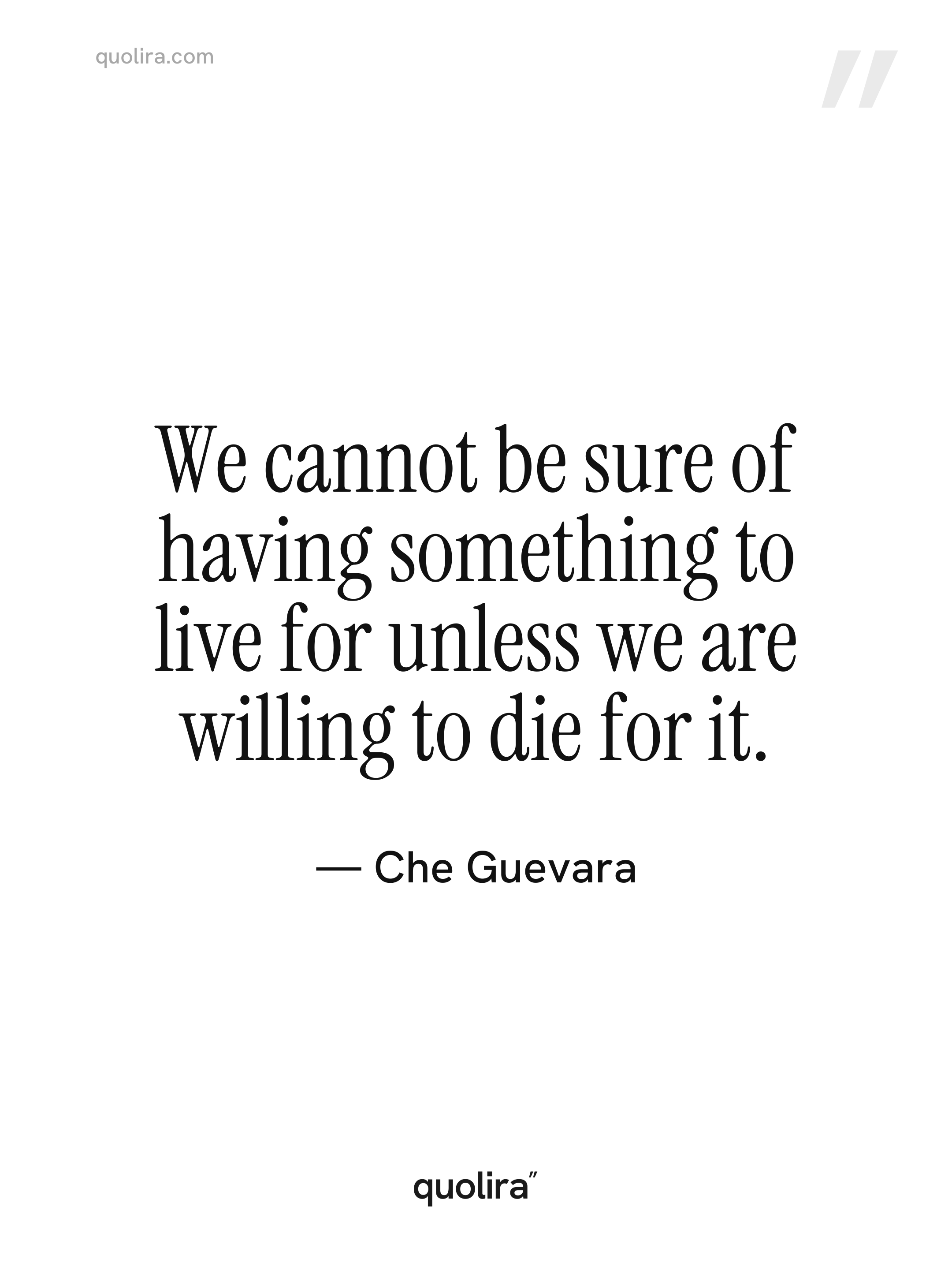
Guevara is expressing a deep conviction about commitment and meaning. The idea is that a cause only becomes truly worth living for when you are prepared to sacrifice everything for it. Half-hearted belief offers no real foundation. The statement challenges the reader to examine whether their values are genuinely held or merely convenient, arguing that the willingness to accept the ultimate cost is what transforms an idea into a true purpose.
This quote captures a theme that ran consistently through Guevara's writing and public statements: the demand for total commitment to revolutionary struggle. He wrote and spoke frequently about the psychological and moral qualities he believed a revolutionary needed, including courage, self-sacrifice, and an uncompromising dedication to the cause. The sentiment echoes ideas found in other traditions of political and philosophical thought as well, connecting the value of a life to the depth of one's willingness to risk it. The quote is widely attributed to Guevara, though tracing it to a single definitive source requires some care.
Che Guevara was born in Argentina in 1928 and trained as a physician before becoming a revolutionary. His travels through Latin America as a young man shaped his political consciousness, and he eventually joined Fidel Castro's movement, playing a significant role in the Cuban Revolution. After serving in the Cuban government, he continued pursuing guerrilla campaigns abroad until his death in Bolivia in 1967. He remains one of the most iconic and controversial figures in modern political history.
“I am not a liberator. Liberators do not exist. The people liberate themselves.”
Che Guevara
“The true revolutionary is guided by great feelings of love.”
Che Guevara · Message to the Tricontinental, 1967
“He is a wise man who does not grieve for the things which he has not, but rejoices for those which he has.”
Epictetus · Fragments
“Begin at once to live, and count each separate day as a separate life.”
Seneca · Letters to Lucilius
“Loss is nothing else but change, and change is Nature's delight.”
Marcus Aurelius · Meditations, Book IX
“Never let the future disturb you. You will meet it, if you have to, with the same weapons of reason which today arm you against the present.”
Marcus Aurelius · Meditations, Book VII
“How long are you going to wait before you demand the best for yourself?”
Epictetus · Discourses, Book I
“No man is free who is not master of himself.”
Epictetus · Fragments
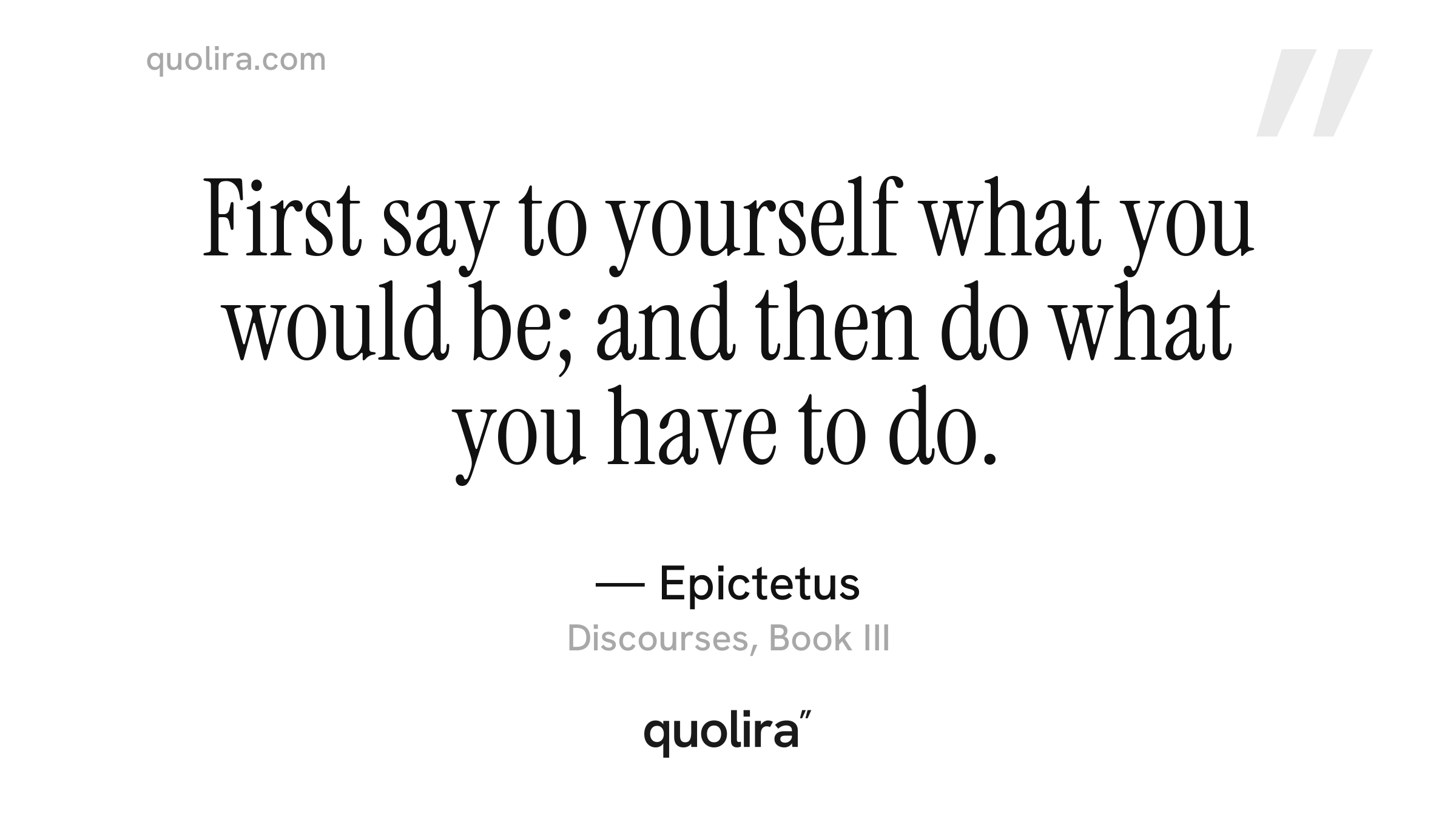
“First say to yourself what you would be; and then do what you have to do.”
Epictetus · Discourses, Book III
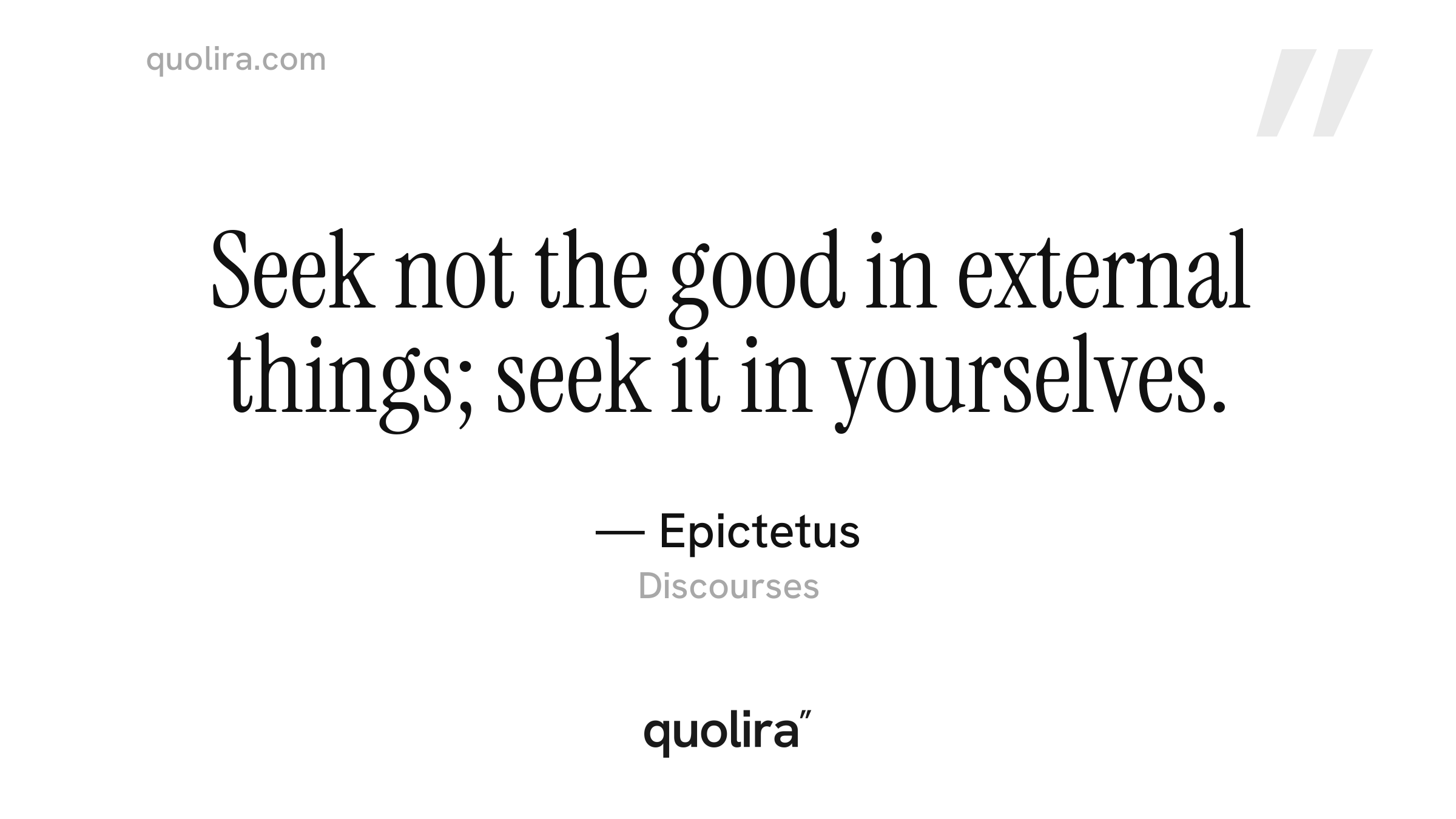
“Seek not the good in external things; seek it in yourselves.”
Epictetus · Discourses
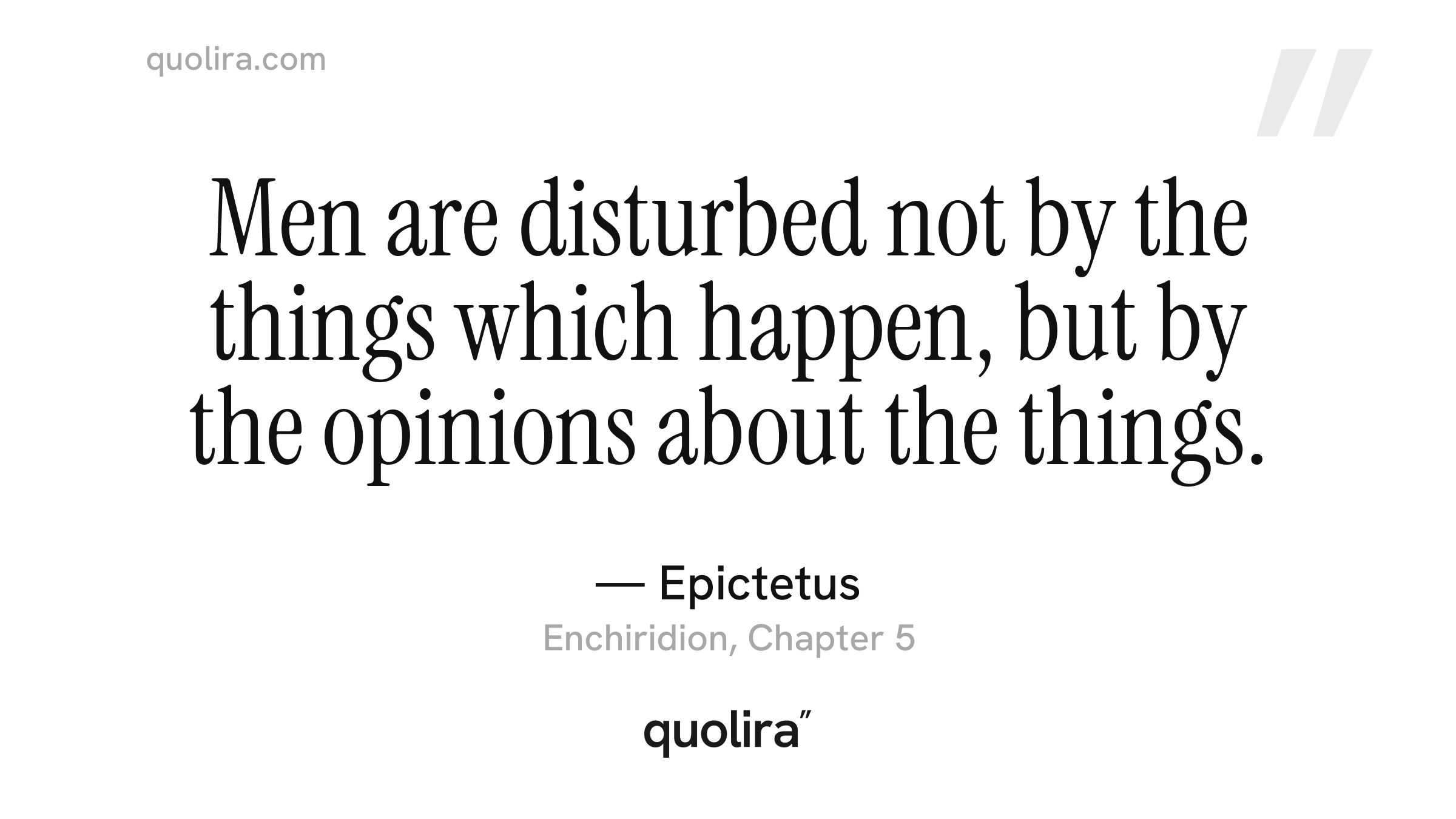
“Men are disturbed not by the things which happen, but by the opinions about the things.”
Epictetus · Enchiridion, Chapter 5
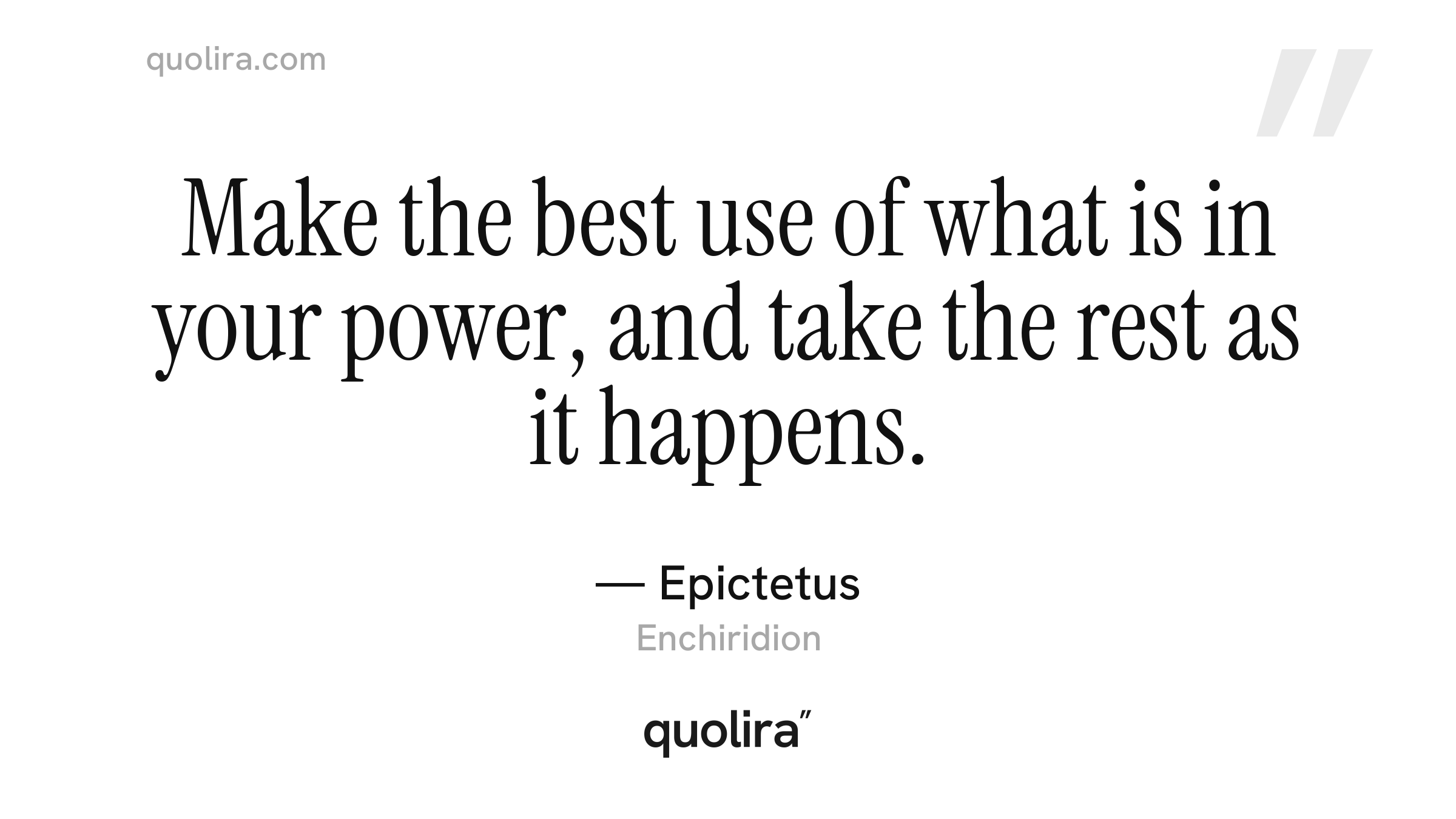
“Make the best use of what is in your power, and take the rest as it happens.”
Epictetus · Enchiridion