“How long are you going to wait before you demand the best for yourself?”
Epictetus · Discourses, Book I
 quolira
.com
quolira
quolira.com
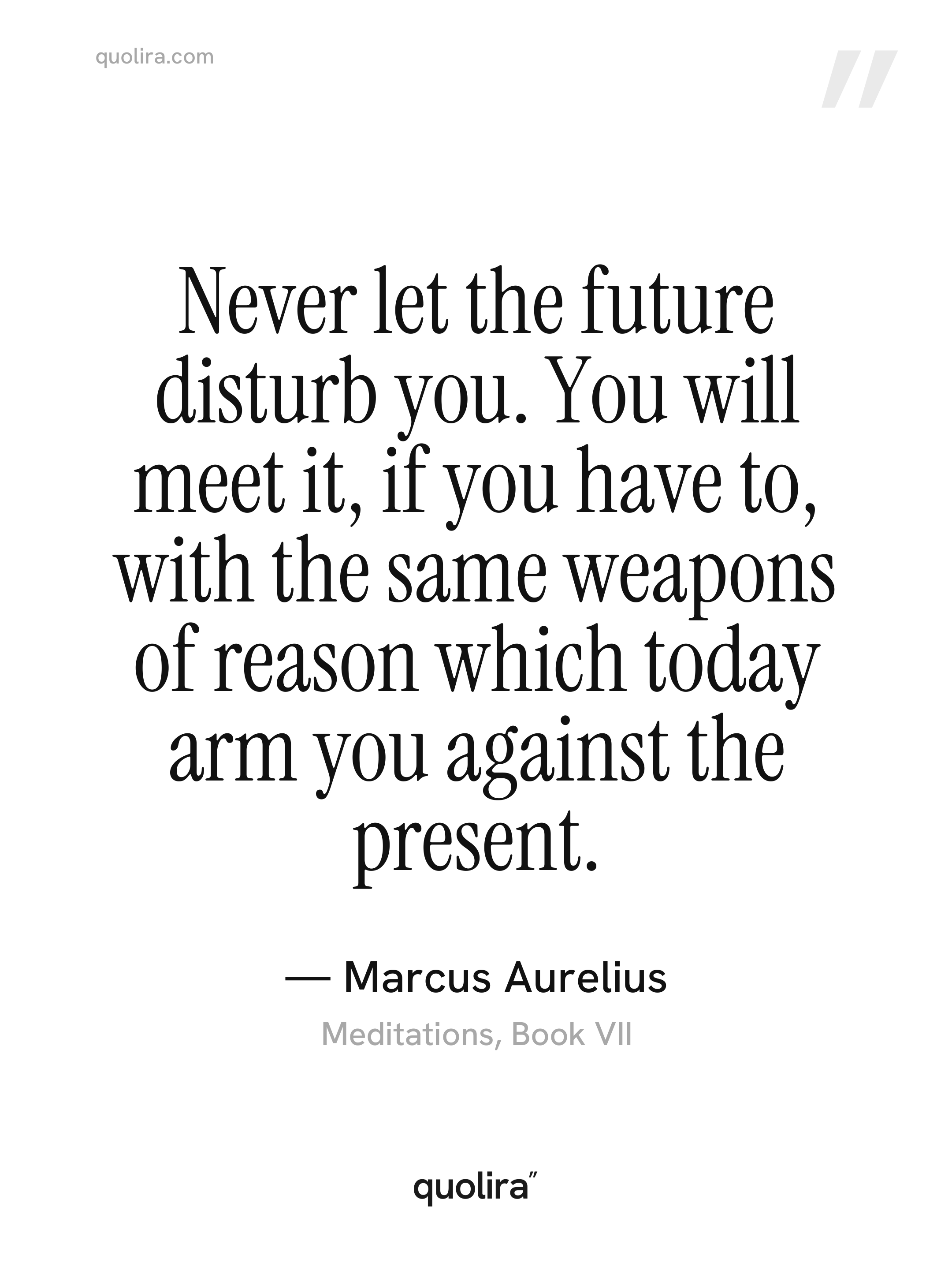
Marcus Aurelius is offering a practical remedy for anxiety about the future. His point is not that the future is harmless but that worrying about it in advance is irrational, because you have no tools available right now beyond reason itself. And crucially, reason is exactly what you will have when the future actually arrives. The same capacity that helps you handle today's difficulties will be present when tomorrow's difficulties materialize. There is therefore no need to borrow trouble from a time that has not come.
Meditations is a private journal Marcus Aurelius kept as a form of Stoic self-discipline, almost certainly never intended for publication. Book VII is part of a longer sustained effort by the author to remind himself of principles he already knew but needed to keep fresh. The Stoics placed great emphasis on living in the present moment and treating anxiety about the future as a misuse of the mind. Marcus returned to this theme repeatedly, suggesting it was something he personally struggled with, which makes the passage feel lived-in rather than merely philosophical.
Marcus Aurelius ruled as Roman emperor from 161 to 180, one of the most demanding periods in the empire's later history, marked by war and plague. He was deeply committed to Stoic philosophy throughout his adult life and studied it seriously before becoming emperor. Meditations was written as a personal discipline rather than a public document, which gives it an unusual intimacy for a work by a head of state. He is widely regarded as one of the most thoughtful and conscientious leaders of the ancient world.
“How long are you going to wait before you demand the best for yourself?”
Epictetus · Discourses, Book I
“No man is free who is not master of himself.”
Epictetus · Fragments
“First say to yourself what you would be; and then do what you have to do.”
Epictetus · Discourses, Book III
“Seek not the good in external things; seek it in yourselves.”
Epictetus · Discourses
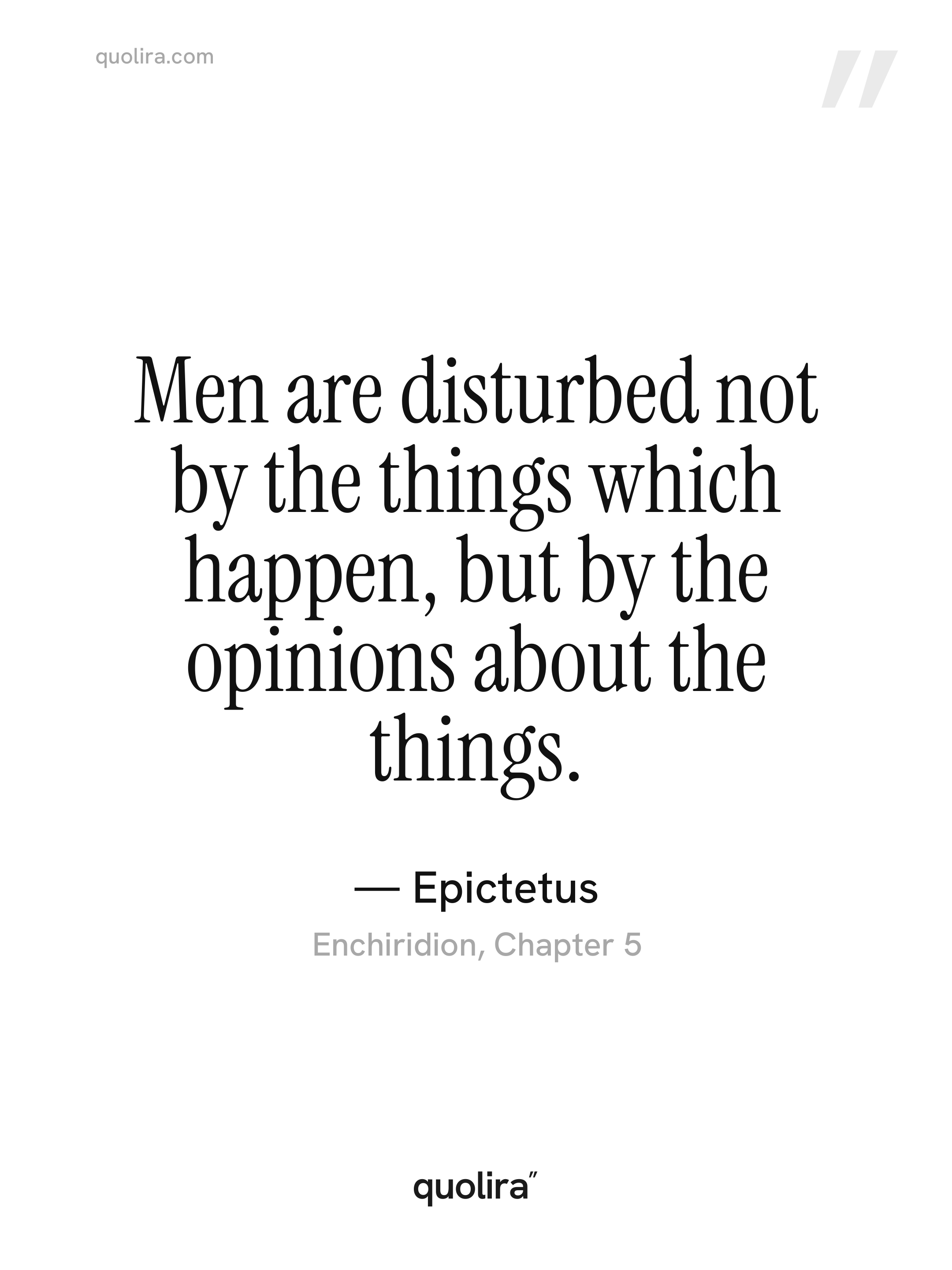
“Men are disturbed not by the things which happen, but by the opinions about the things.”
Epictetus · Enchiridion, Chapter 5
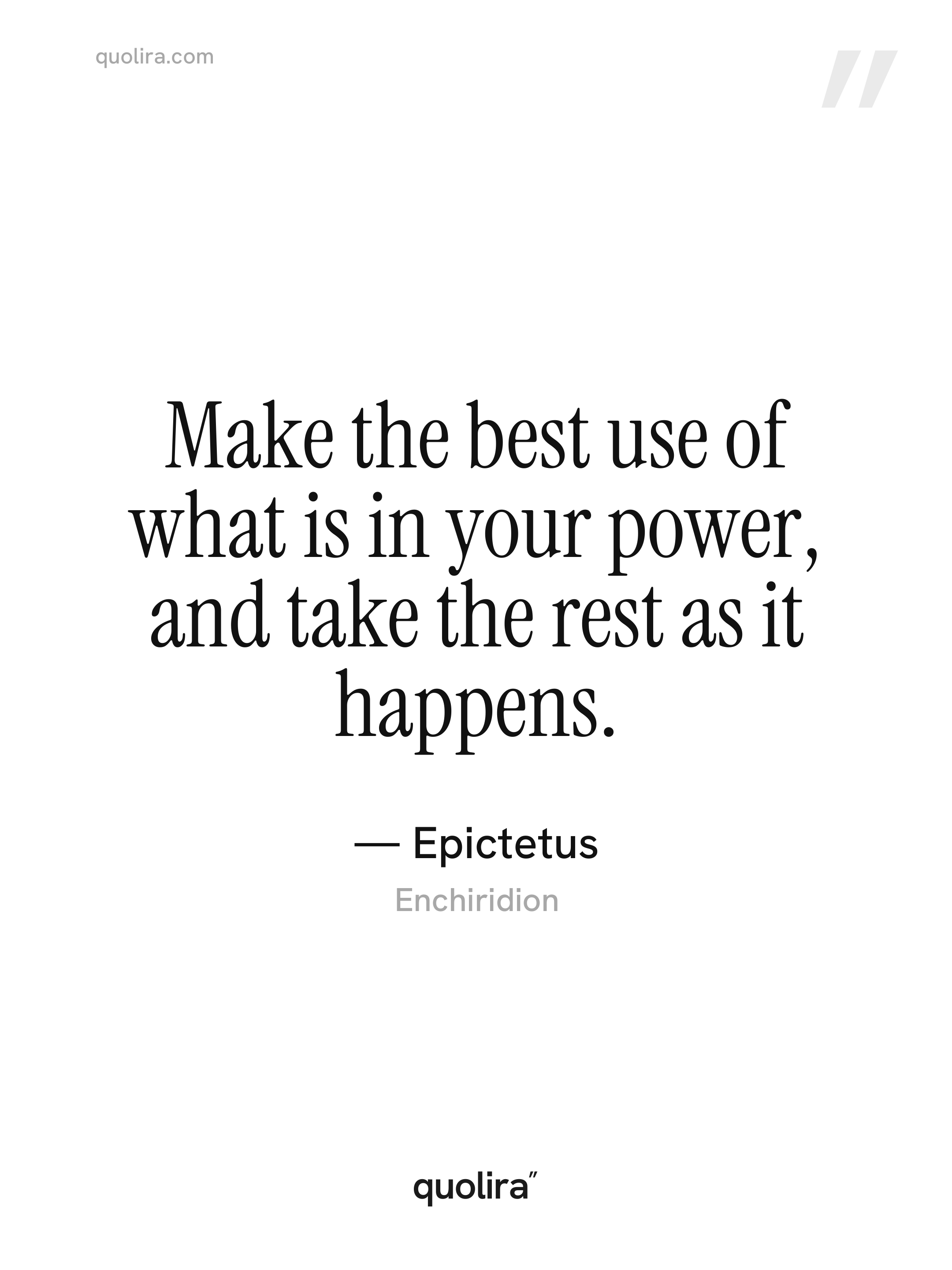
“Make the best use of what is in your power, and take the rest as it happens.”
Epictetus · Enchiridion
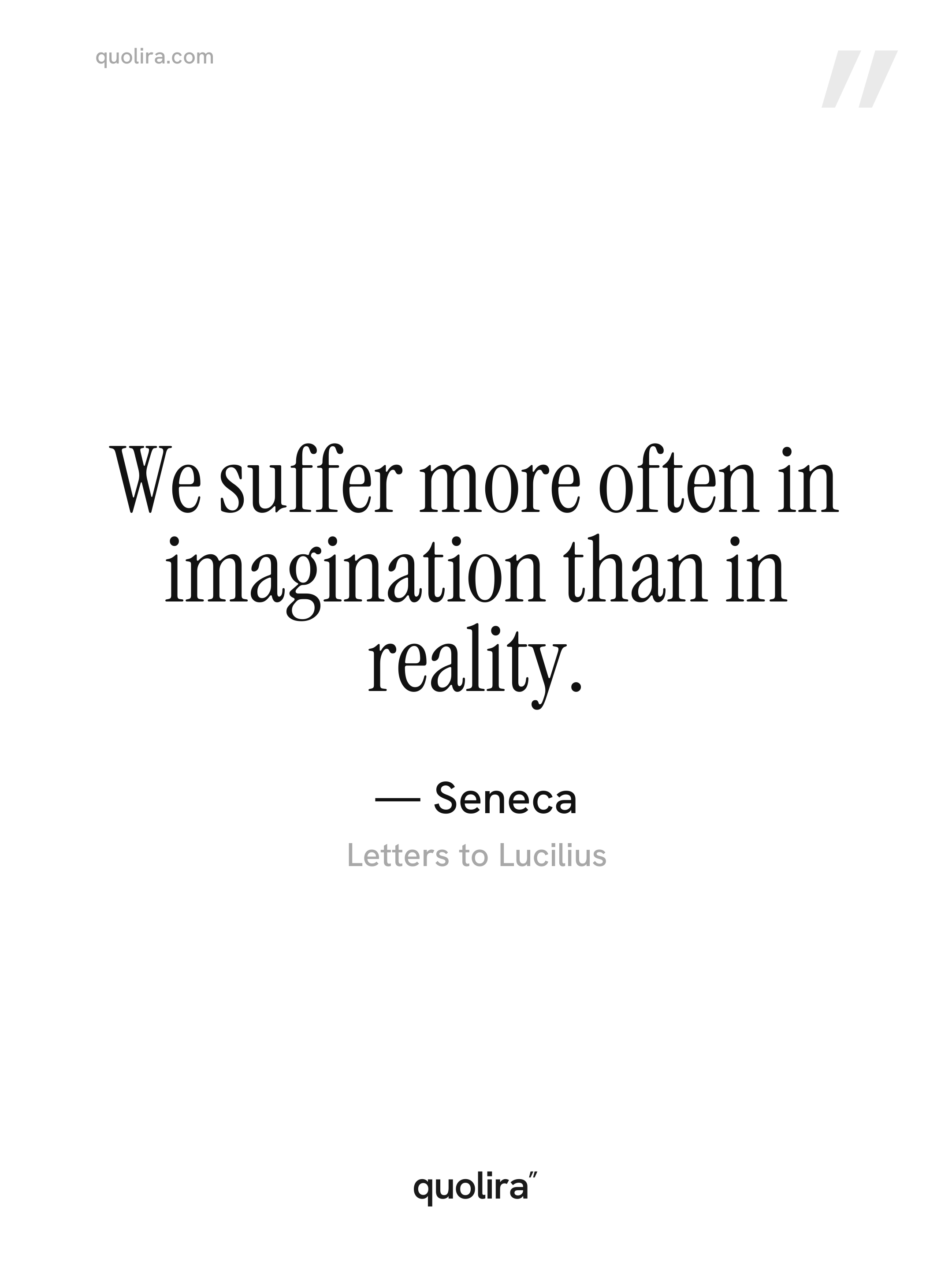
“We suffer more often in imagination than in reality.”
Seneca · Letters to Lucilius
“Dum differtur vita transcurrit.”
Seneca · Letters to Lucilius, Letter I
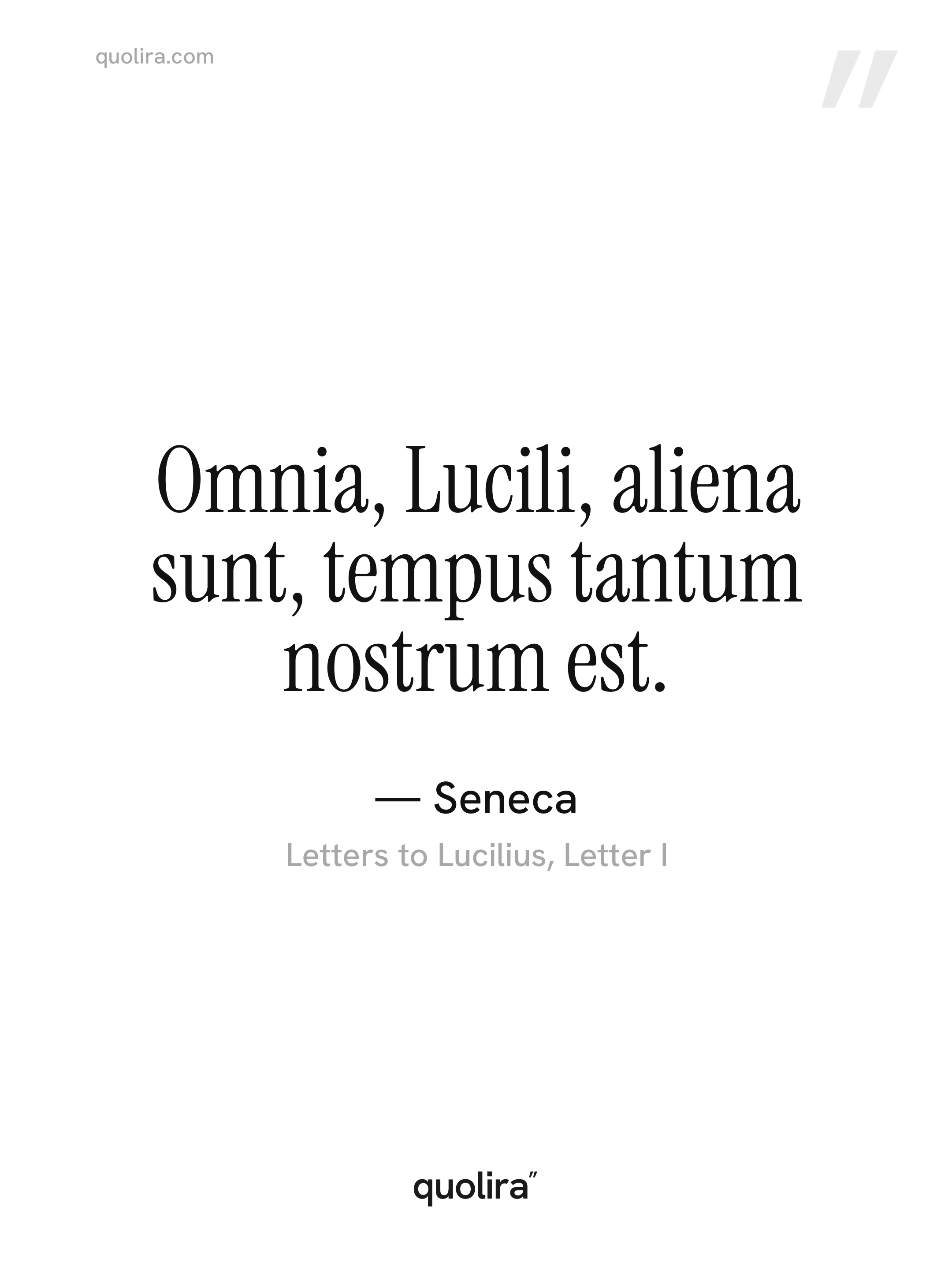
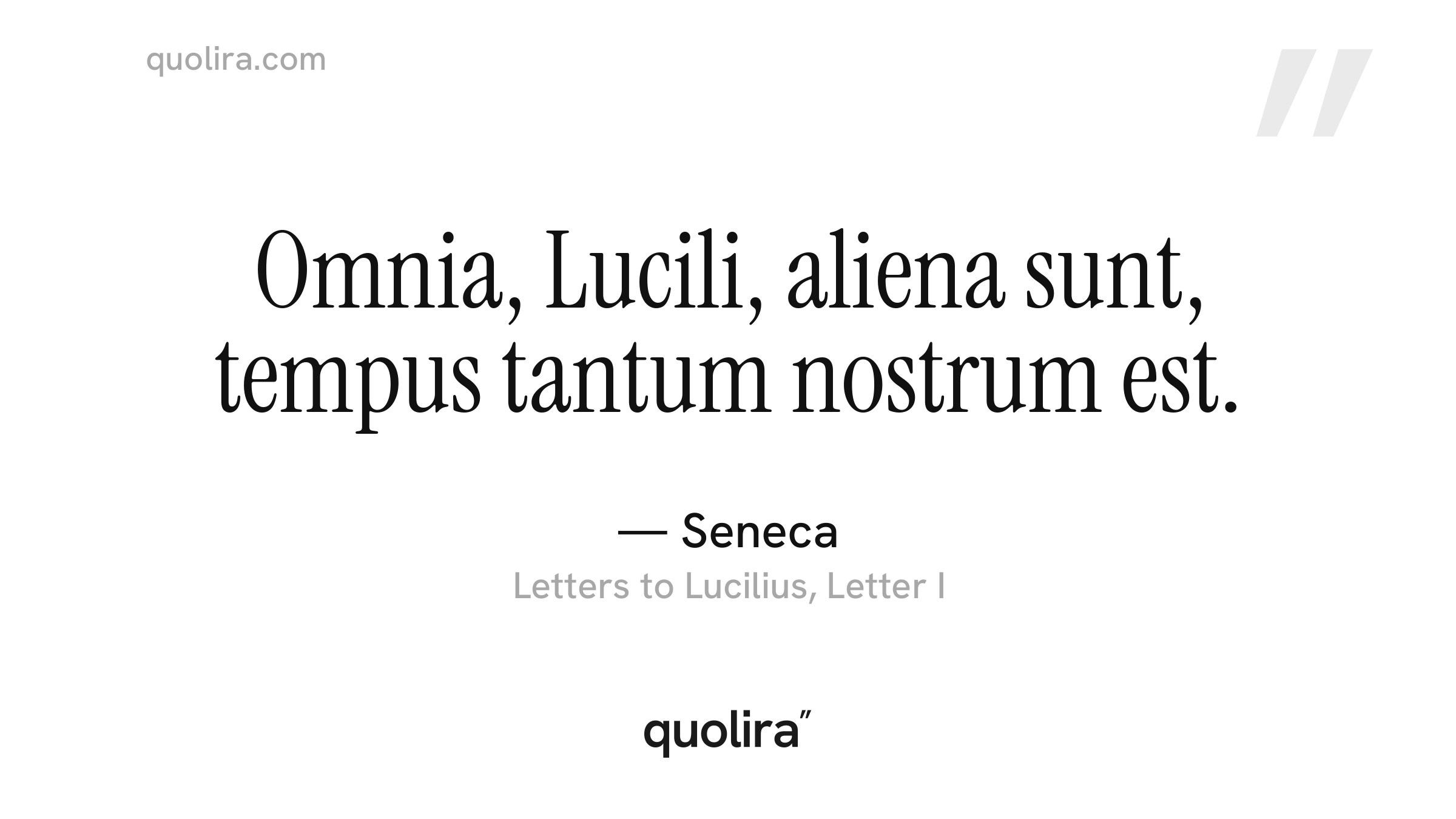
“Omnia, Lucili, aliena sunt, tempus tantum nostrum est.”
Seneca · Letters to Lucilius, Letter I
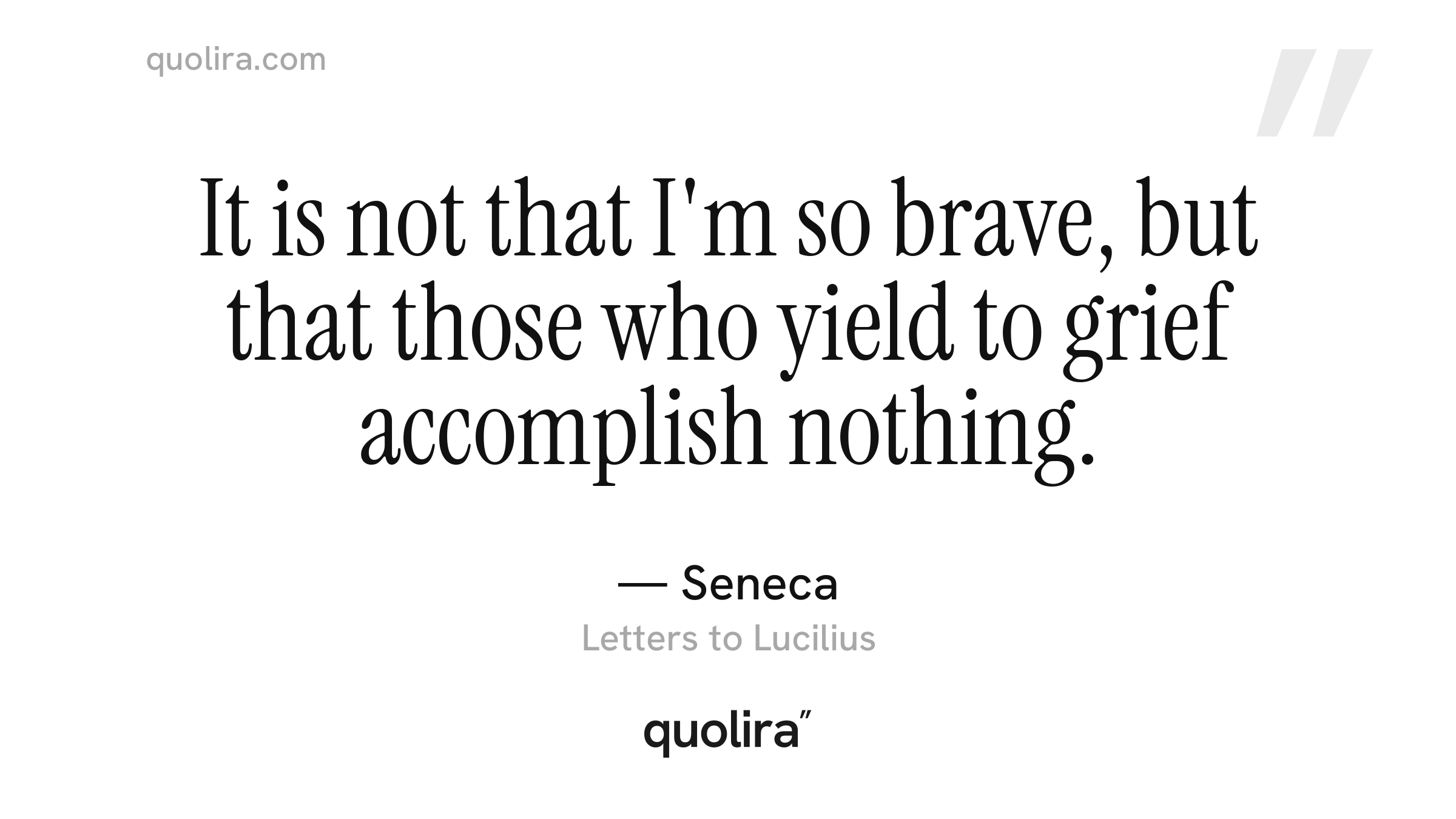
“It is not that I'm so brave, but that those who yield to grief accomplish nothing.”
Seneca · Letters to Lucilius
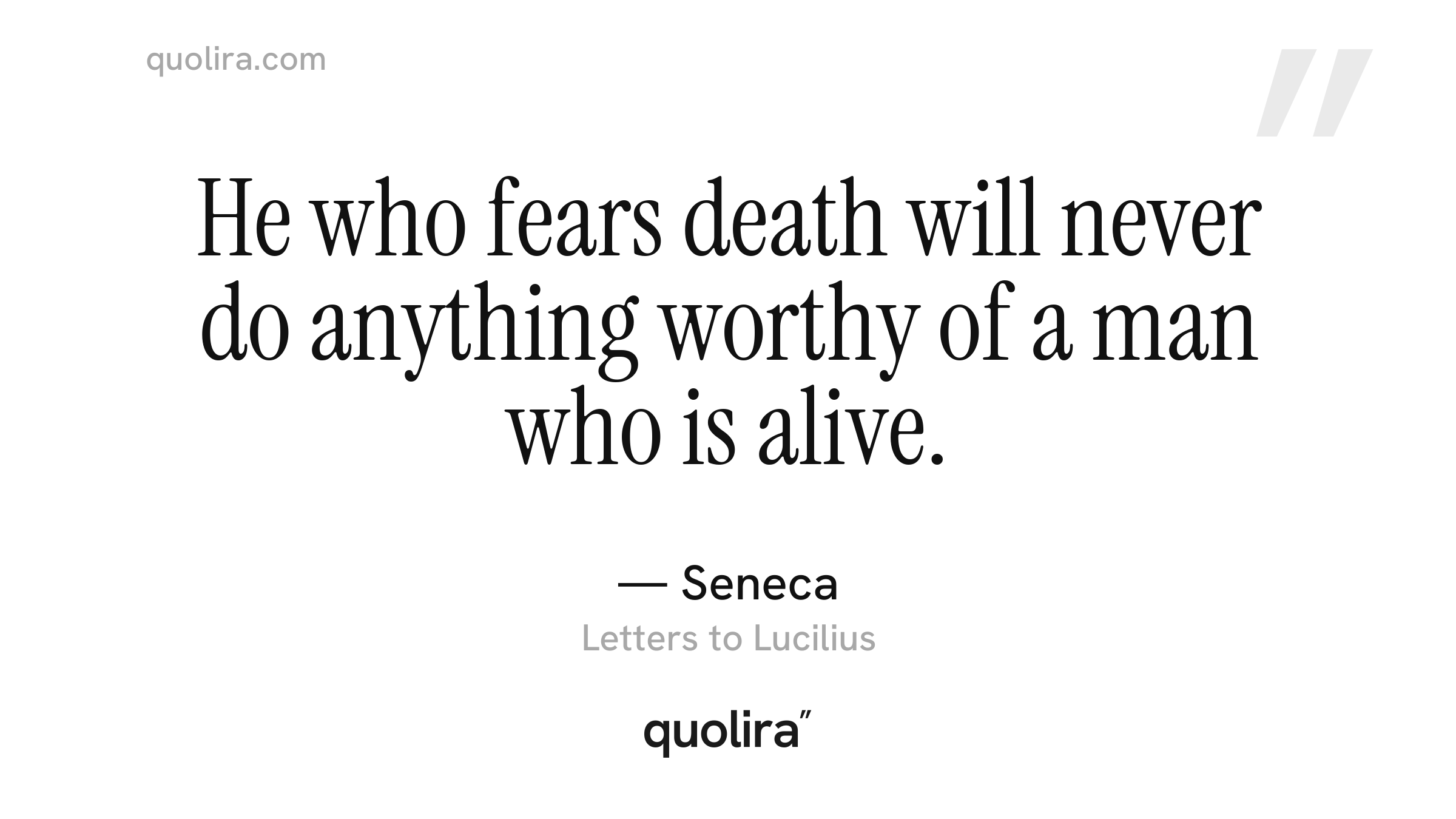
“He who fears death will never do anything worthy of a man who is alive.”
Seneca · Letters to Lucilius
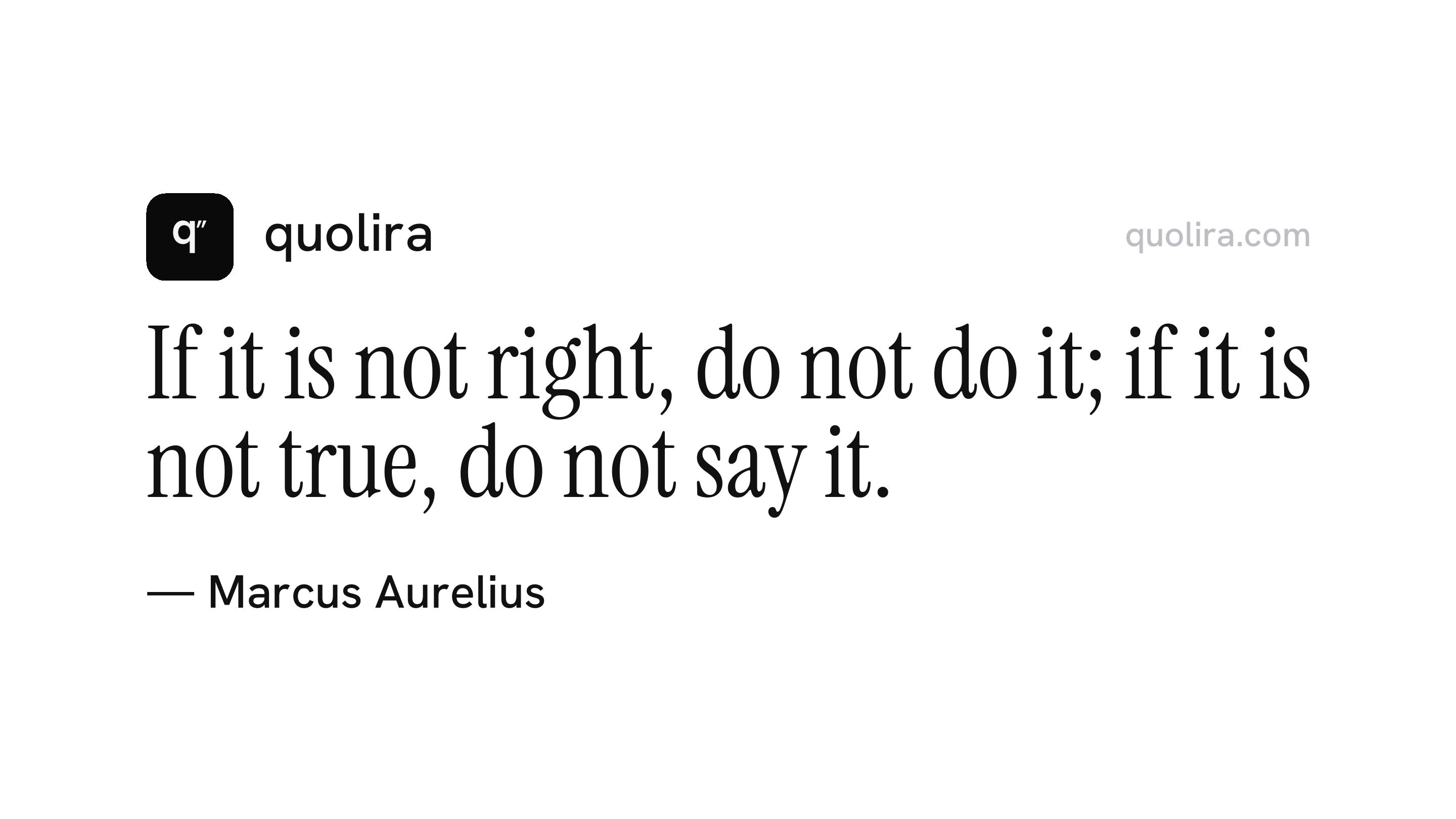
“If it is not right, do not do it; if it is not true, do not say it.”
Marcus Aurelius · Meditations, Book XII