“Never let the future disturb you. You will meet it, if you have to, with the same weapons of reason which today arm you against the present.”
Marcus Aurelius · Meditations, Book VII
 quolira
.com
quolira
quolira.com
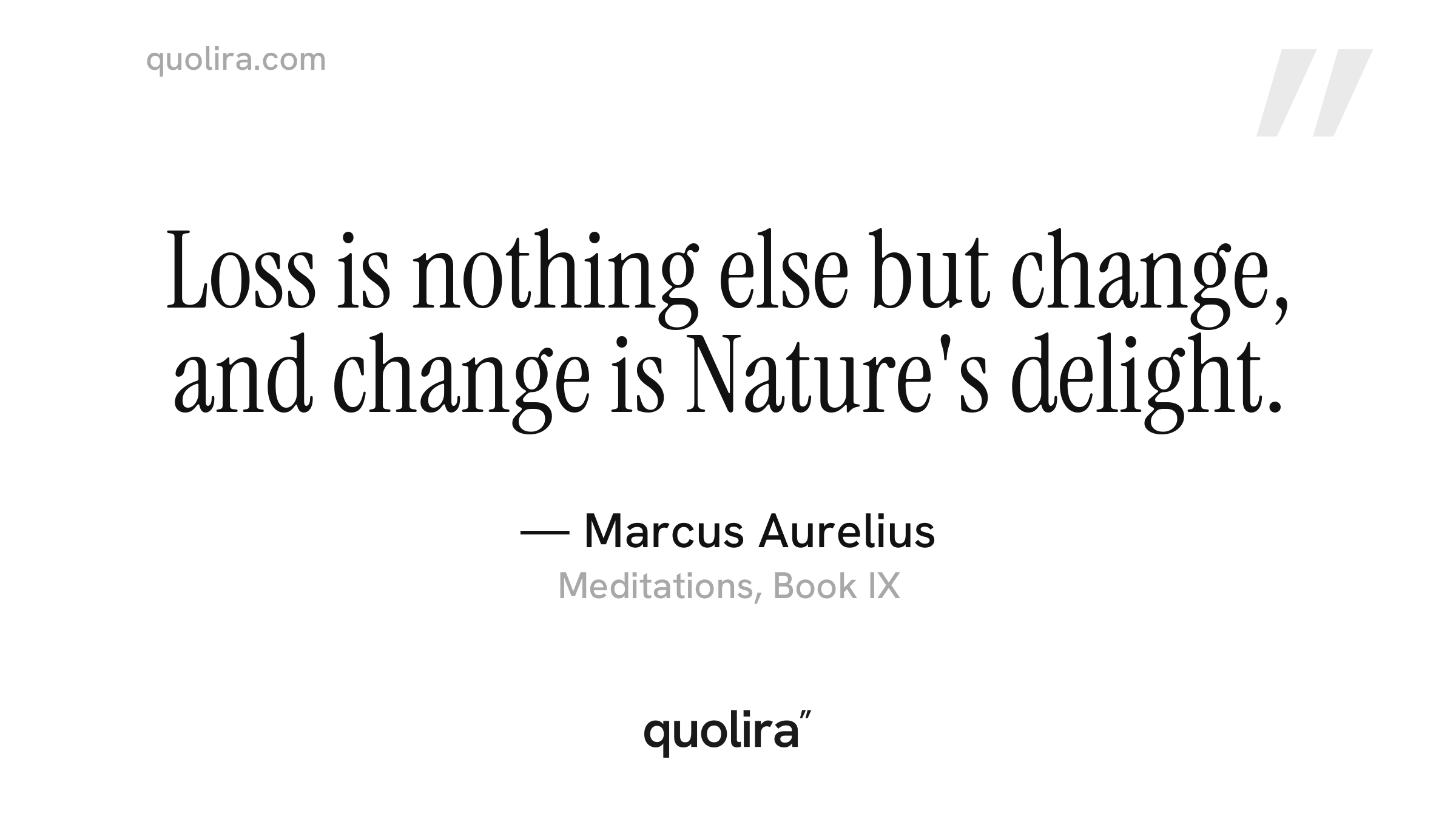
At first glance this sounds like cold comfort: calling loss simply a form of change does not make it hurt less. But Marcus Aurelius is pointing toward something deeper. He is arguing that clinging to any fixed state is a resistance to the fundamental nature of reality, and that resistance is the real source of suffering. Nature does not mourn change; it is the medium through which nature operates. Accepting loss as a natural transformation rather than a theft or a punishment shifts the emotional weight considerably.
Meditations, Book IX sits near the midpoint of this private journal and reflects a period of sustained philosophical self-examination. Marcus returned frequently to the theme of impermanence, drawing on earlier Stoic and Heraclitean ideas about constant flux. The Stoics believed that everything in the world is in a state of continuous transformation and that aligning oneself with that truth, rather than fighting it, is the path to equanimity. For Marcus, writing these thoughts down was itself a form of practice, a way of training his own responses to difficulty.
Marcus Aurelius served as Roman emperor from 161 to 180 and faced substantial personal and political losses during his reign, including the deaths of several children and prolonged military crises. His Meditations was a private philosophical notebook, written in Greek, that was not published in his lifetime. Despite the extraordinary pressures of his position, he maintained a consistent commitment to Stoic principles. He is remembered as a ruler who tried, with evident effort and occasional self-criticism, to live according to the philosophy he believed in.
“Never let the future disturb you. You will meet it, if you have to, with the same weapons of reason which today arm you against the present.”
Marcus Aurelius · Meditations, Book VII
“How long are you going to wait before you demand the best for yourself?”
Epictetus · Discourses, Book I
“No man is free who is not master of himself.”
Epictetus · Fragments
“First say to yourself what you would be; and then do what you have to do.”
Epictetus · Discourses, Book III
“Seek not the good in external things; seek it in yourselves.”
Epictetus · Discourses
“Men are disturbed not by the things which happen, but by the opinions about the things.”
Epictetus · Enchiridion, Chapter 5
“Make the best use of what is in your power, and take the rest as it happens.”
Epictetus · Enchiridion
“We suffer more often in imagination than in reality.”
Seneca · Letters to Lucilius
“Dum differtur vita transcurrit.”
Seneca · Letters to Lucilius, Letter I
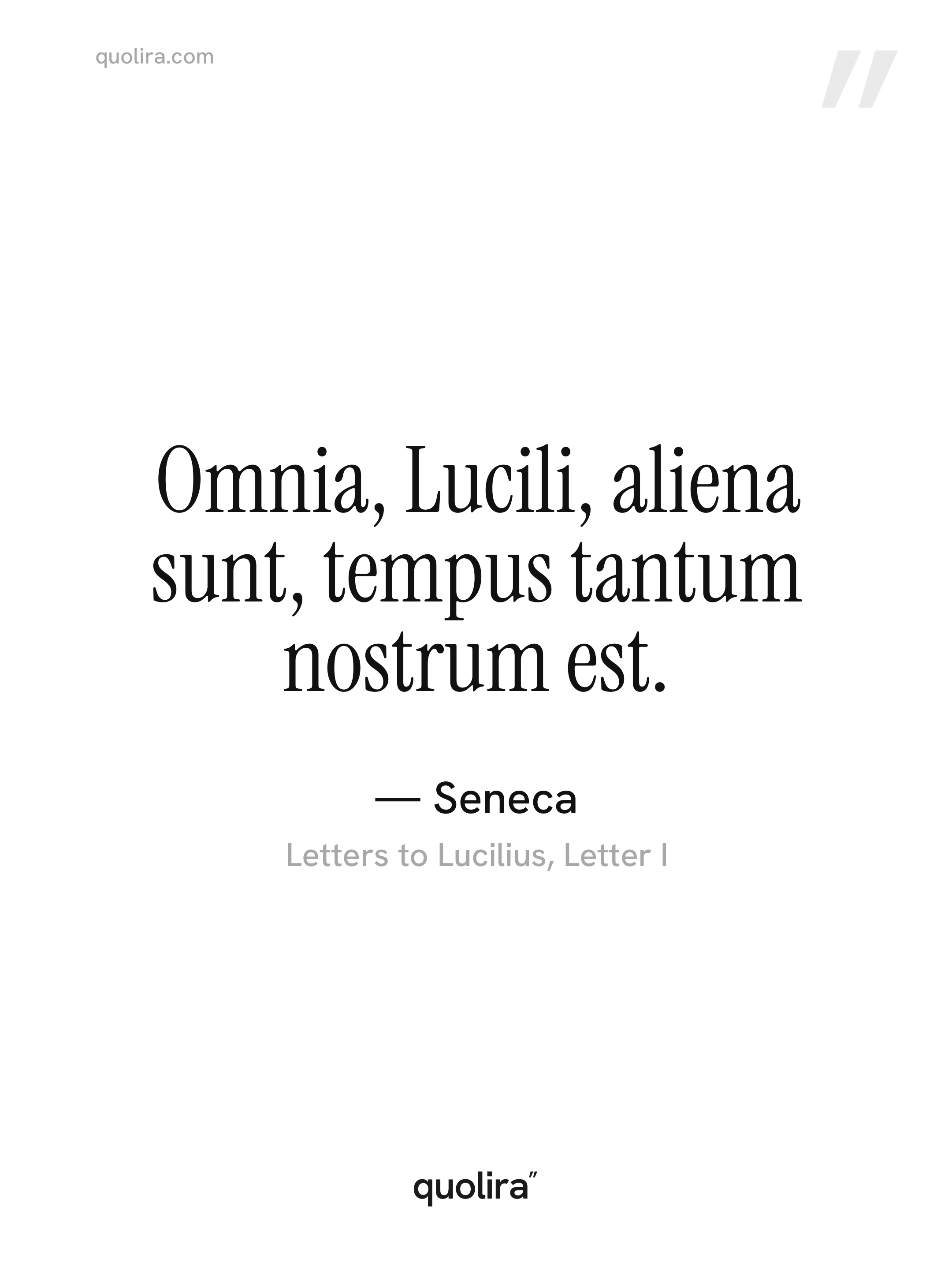
“Omnia, Lucili, aliena sunt, tempus tantum nostrum est.”
Seneca · Letters to Lucilius, Letter I
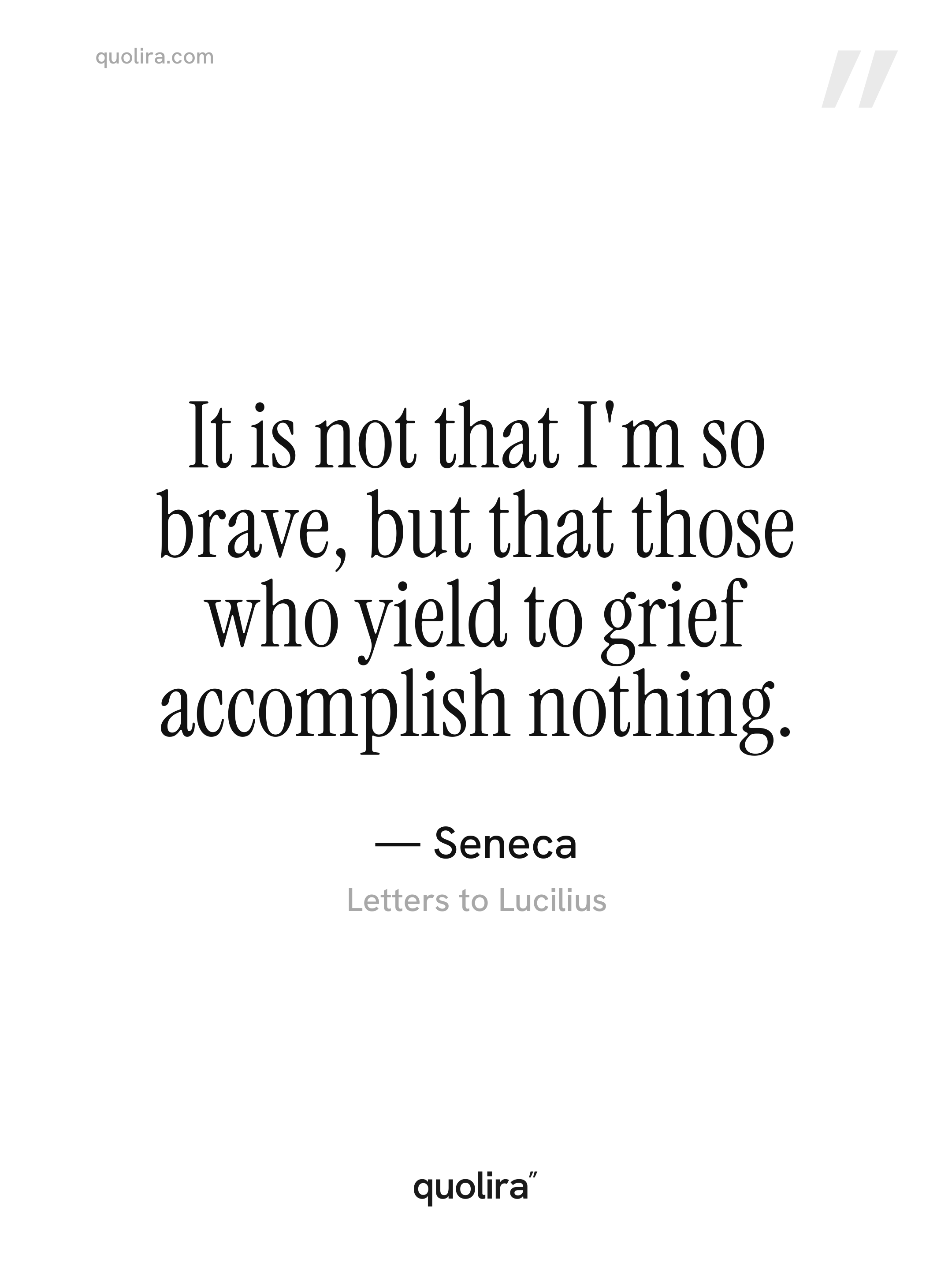
“It is not that I'm so brave, but that those who yield to grief accomplish nothing.”
Seneca · Letters to Lucilius
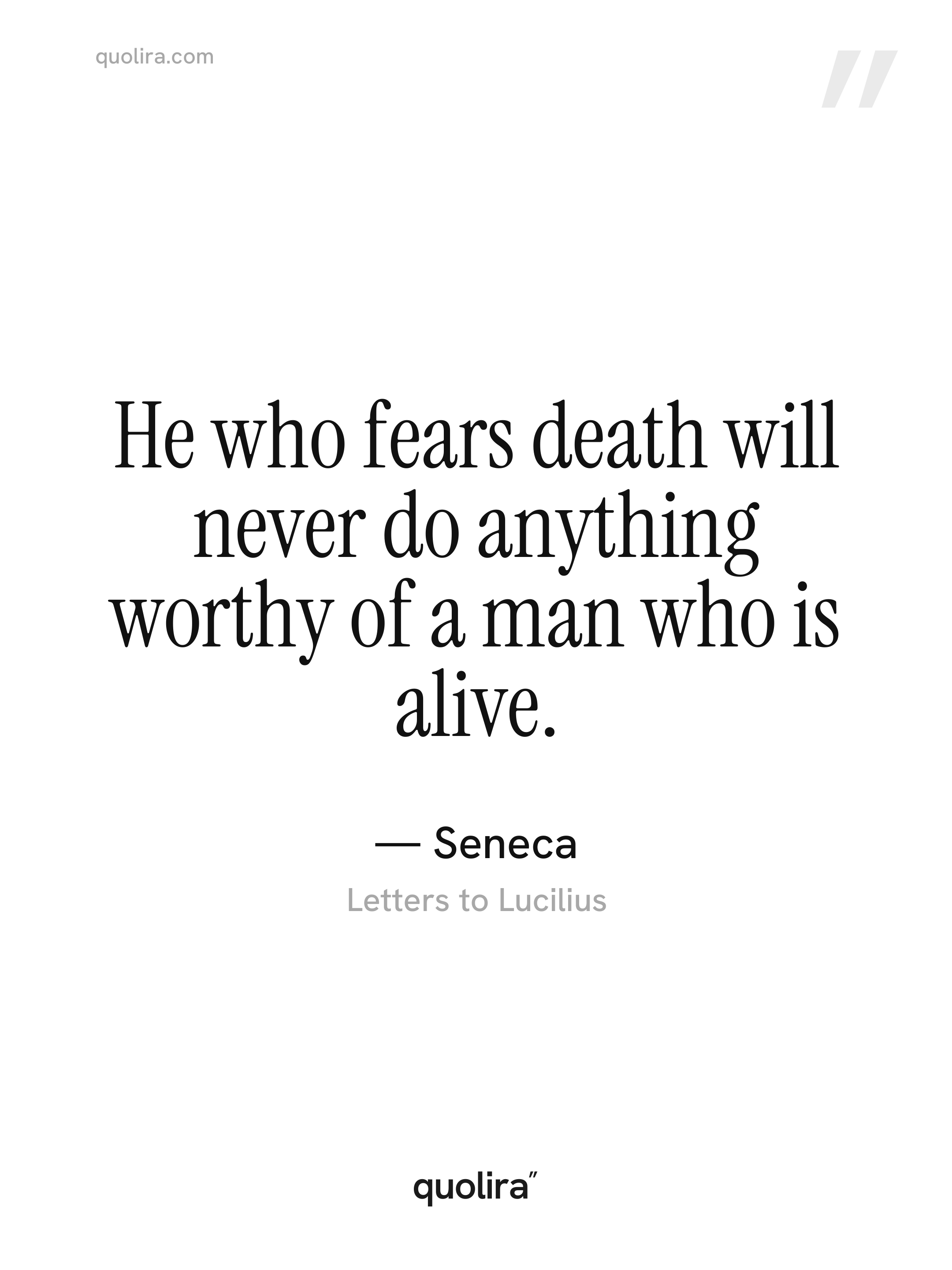
“He who fears death will never do anything worthy of a man who is alive.”
Seneca · Letters to Lucilius